44 Results for "

Amoeba proteus

" in MedChemExpress (MCE) Product Catalog:
Products (44)

44 Results for "Amoeba proteus" in MCE Product Catalog:

20
20 Publications Verification
Cat. No.: HY-19719
CAS No.: 1313881-70-7
Synonyms: ARQ-092
Target:  

Akt Parasite

Research Areas:  

Infection Cancer

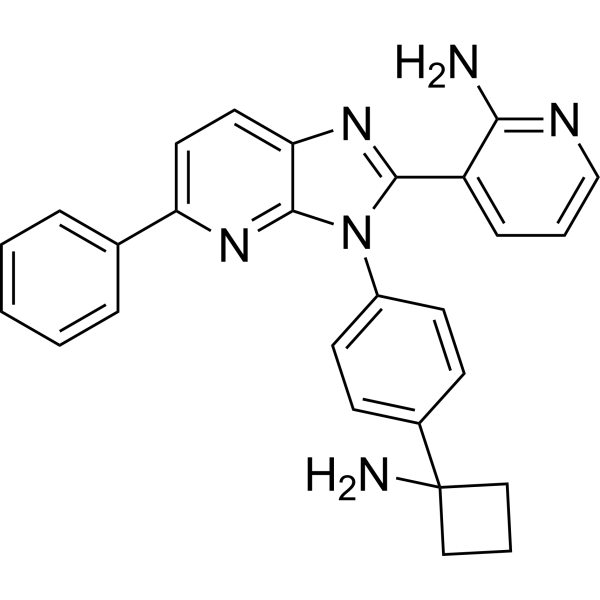
Miransertib (ARQ-092) is a potent, orally active, selective and allosteric Akt inhibitor with IC50s of 2.7 nM, 14 nM and 8.1 nM for Akt1, Akt2, Akt3, respectively. Miransertib is also a potent the AKT1-E17K mutant protein inhibitor and has the potential for PI3K/AKT-driven tumors and Proteus syndrome research . Miransertib is effective against Leishmania .
loading...
    loading...
20
20 Publications Verification
Cat. No.: HY-19719A
CAS No.: 1313883-00-9
Synonyms: ARQ-092 hydrochloride
Target:  

Akt Parasite

Research Areas:  

Infection Cancer

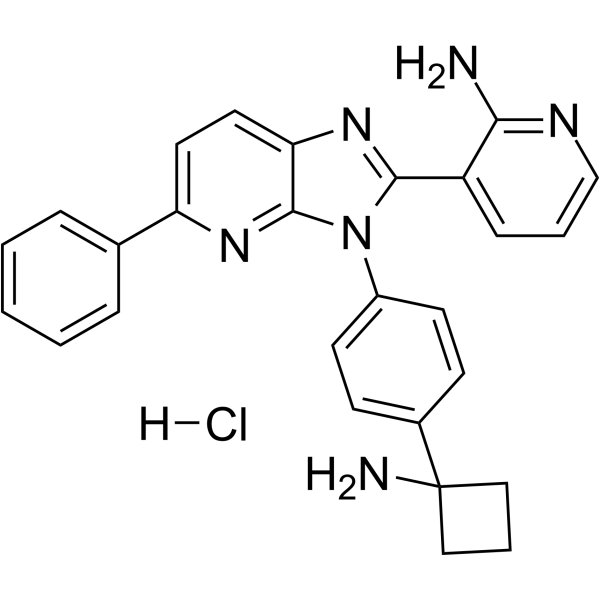
Miransertib hydrochloride (ARQ-092 hydrochloride) is a potent, orally active, selective and allosteric Akt inhibitor with IC50s of 2.7 nM, 14 nM and 8.1 nM for Akt1, Akt2, Akt3, respectively. Miransertib hydrochloride is also a potent the AKT1-E17K mutant protein inhibitor and has the potential for PI3K/AKT-driven tumors and Proteus syndrome research . Miransertib hydrochloride is effective against Leishmania .
loading...
    loading...
2
2 Cited Publications
Cat. No.: HY-N3101
CAS No.: 22384-63-0
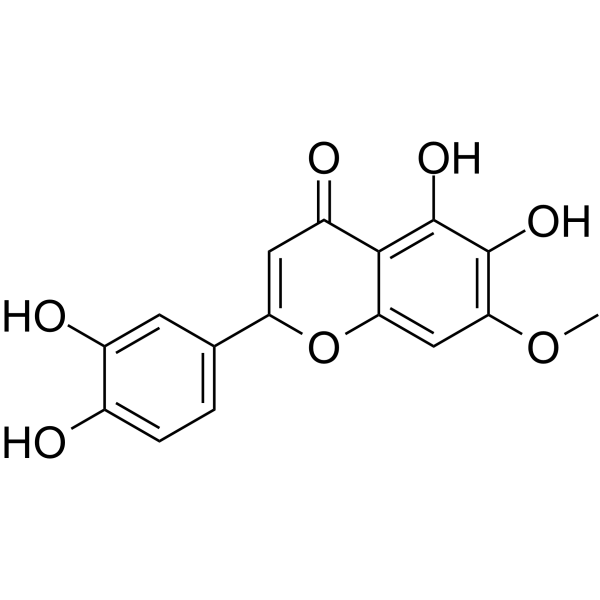
Pedalitin is a tyrosinase and α-glucosidase inhibitor with IC50 values of 0.28 mM and 0.29 mM, respectively, and can be isolated and extracted from Rabdosia serra. Pedalitin is a xanthine oxidase (Xanthine Oxidase) (IC50 = 3.7 µM) and myeloperoxidase (MPO) (IC50 = 3.8 nM) inhibitor. Pedalitin ameliorates NAFLD by downregulating the EGFR/IRS1/AKT1/FOXO1 signaling pathway and related inflammatory and lipid metabolism factors. Pedalitin reduces the risk of urinary tract infection and stones by inhibiting the expression of the urease UreC gene in Proteus mirabilis. Pedalitin also exhibits antifungal activity, with a MIC of 3.9 mg/L against Cryptococcus neoformans. Pedalitin can be used for research on non-alcoholic fatty liver disease, chronic kidney disease, kidney stones, cryptococcosis, and abdominal pain .
loading...
    loading...
1
1 Cited Publications
Cat. No.: HY-108307
CAS No.: 66803-19-8
Purity:  ≥98.0%
Synonyms: Gentamicin C2b sulfate; Antibiotic XK-62-2 sulfate; Sagamicin sulfate
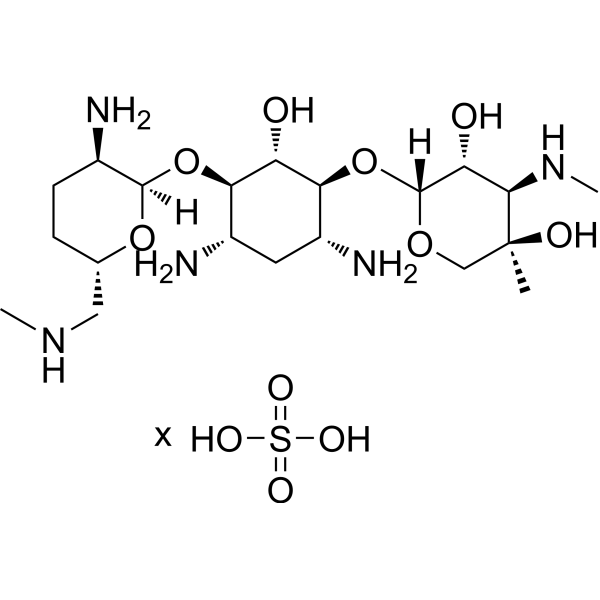
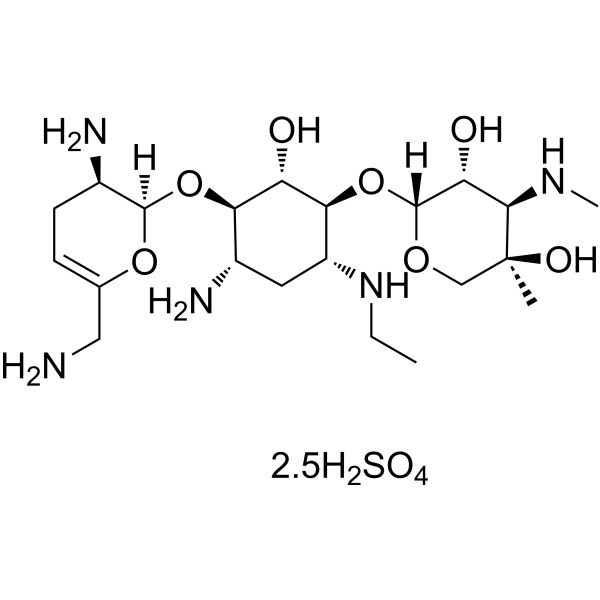
Micronomicin sulfate (Gentamicin C2b sulfate) is an aminoglycoside antibiotic isolated from Micromonospora. Micronomicin sulfate is a broad-spectrum antibiotic close to the gentamicin-type antibiotics, exhibits a high activity against Pseudomonas, Proteus, Klebsiella pneumoniae, Serratia, etc (MIC=0.001-8.3 μg/ml) .
loading...
    loading...
Cat. No.: HY-A0086
CAS No.: 56391-57-2
Synonyms: SCH-20569 sulfate
Target:  

Bacterial Antibiotic

Research Areas:  

Infection

Netilmicin (Sch 20569) sulfate is a broad-spectrum semisynthetic aminoglycoside antibiotic. Netilmicin sulfate exhibits antibacterial activity against aminoglycoside-susceptible gram-negative strains and aminoglycoside-resistant strain, such as Escherichia coli, Pseudomonas aeruginosa, Proteus, Staphylococcus aureus, Streptococcus, Serratia, and Enterobacter, with MIC of 0.125-8 μg/mL .
loading...
    loading...
Cat. No.: HY-119826
CAS No.: 62265-68-3
Purity:  99.69%
Synonyms: WIN-40014
Target:  

Parasite

Research Areas:  

Infection

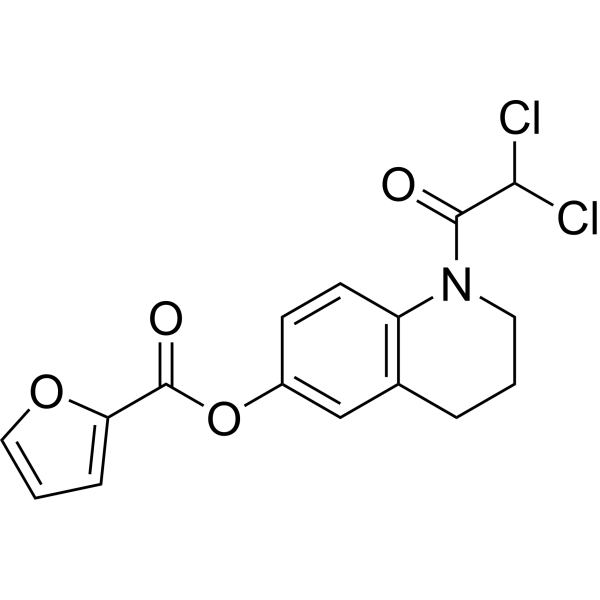
Quinfamide (WIN-40014) is an orally active class of dichloroacetyl derivative with significant anti-intestinal protozoan, particularly mmoeba histolytica activity. Quinfamide exhibits antiamoebic activity under solvent-free conditions with an IC50 of 28.15 μg/mL in a suspension condition. Quinfamide particles are actively engulfed by the amoebas, then cells are affected, and finally, amoebas are killed and lysed, and this process directly relies on the physical intake of the drug particles. Quinfamide can be used in the research of tropical parasitic infections such as amoebiasis and helminthiasis .
loading...
    loading...
Cat. No.: HY-N7101
CAS No.: 87239-81-4
Synonyms: U-76,252; CS-807
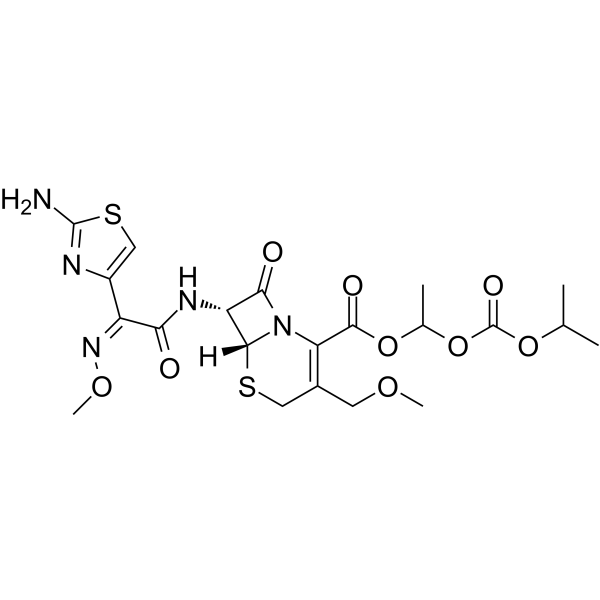
Cefpodoxime Proxetil is an orally active broad spectrum third-generation cephalosporin with potent antibacterial activity against both Gram-positive and Gram-negative bacteria including staphylococci, streptococci, Haemophilus influenzae, Neisseria gonorrhoeae, Escherichia coli, Klebsiella pnuemoniae, Citrobacter spp, and Proteus spp. Cefpodoxime Proxetil binds to penicillin binding proteins (PBPs), which inhibits peptidoglycan synthesis, finally results in interfering bacterial cell wall biosynthesis. Cefpodoxime Proxetil can be used against skin structure infections, acute otitis media, pharyngitis, tonsillitis, upper respiratory tract infection, urinary tract infections and sexually transmitted diseases .
loading...
    loading...
Cat. No.: HY-B1128A
CAS No.: 30034-03-8
Synonyms: Cephamandole sodium
Target:  

Antibiotic Bacterial

Research Areas:  

Infection

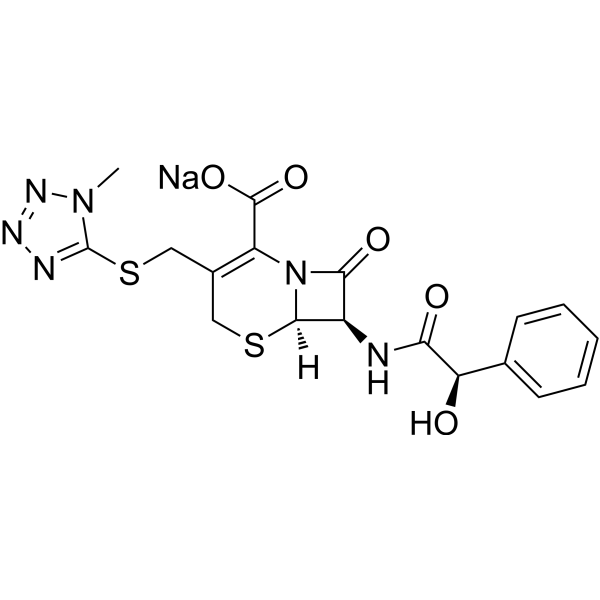
Cefamandole (Cephamandole) sodium is a semi-synthetic second-generation cephalosporin antibiotic with broad-spectrum antimicrobial activity. Cefamandole sodium is resistant to hydrolysis by β-lactamases produced by some Gram-negative bacteria. Cefamandole sodium kills Gram-positive cocci and various Gram-negative bacilli mainly by inhibiting cell wall synthesis, but it is inactive against Pseudomonas, Proteus vulgaris and Providencia stuartii, and its efficacy is affected by inoculum size. The plasma elimination half-life of Cefamandole sodium in rats is only 0.4 h, it is mainly excreted in urine in biologically active form, and it hardly penetrates the non-inflamed blood-brain barrier. Cefamandole sodium is widely used in studies related to bacterial infections .
loading...
    loading...
Cat. No.: HY-W020678
CAS No.: 96-17-3
Synonyms: 2-Methylbutyraldehyde
2-Methylbutanal (2-Methylbutyraldehyde) is a characteristic volatile biomarker for the detection of uropathogen Proteus .
loading...
    loading...
Cat. No.: HY-D1056B2
Synonyms: LPS, from bacterial (proteus mirabilis)
Lipopolysaccharides, from Proteus mirabilis are lipopolysaccharide endotoxins and TLR-4 activators derived from Proteus mirabilis, classified as S-type LPS, which can activate pathogen-associated molecular patterns (PAMP) of the immune system and induce cellular secretion of migrasomes. Lipopolysaccharides, from Proteus mirabilis exhibit a typical three-part structure: O-antigen, core oligosaccharide, and lipid A. Proteus mirabilis is a major pathogen causing urinary tract infections and may also contribute to rheumatoid arthritis. Lipopolysaccharides, from Proteus mirabilis also exhibit potential anti-tumor effects, demonstrating in vivo inhibitory activity against solid tumors such as meningosarcoma and Walker carcinosarcoma .
It is recommended to prepare a solution with concentration ≥2 mg/mL. Vortex thoroughly for more than 10 minutes. Due to the adsorption characteristics of LPS, silanized container or low adsorption centrifuge tubes should be used for aliquoting and storage, and mix thoroughly before use.
loading...
    loading...
Cat. No.: HY-127054
CAS No.: 56391-56-1
Synonyms: Sch 20569
Target:  

Antibiotic Bacterial

Research Areas:  

Infection

Netilmicin (Sch 20569) is a broad-spectrum semisynthetic aminoglycoside antibiotic. Netilmicin exhibits antibacterial activity against aminoglycoside-susceptible gram-negative strains and aminoglycoside-resistant strain, such as Escherichia coli, Pseudomonas aeruginosa, Proteus, Staphylococcus aureus, Streptococcus, Serratia, and Enterobacter, with MIC of 0.125-8 μg/mL .
loading...
    loading...
Cat. No.: HY-W007319
CAS No.: 637-44-5
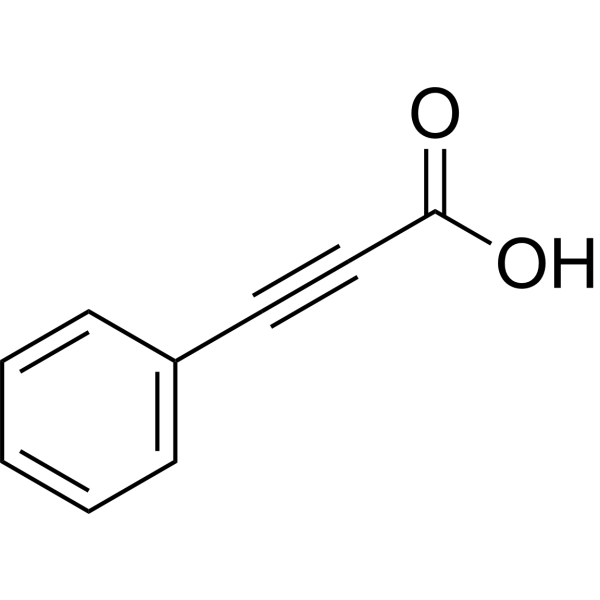
Phenylpropiolic acid is an Antibacterial agent. Phenylpropiolic acid is identified from the intracellular extract of Proteus mirabilis DMTMMR-11. Phenylpropiolic acid disrupts biofilm formation by reducing pathogen adhesion and enhancing biofilm clearance ability. Phenylpropiolic acid inhibits the growth of Yersinia enterocolitica, disrupts its cell membrane integrity, and increases the survival rate of infected Caenorhabditis elegans. Phenylpropiolic acid can be used in studies related to yersiniosis and gastroenteritis .
loading...
    loading...
Cat. No.: HY-B1128
CAS No.: 34444-01-4
Synonyms: Cephamandole
Target:  

Antibiotic Bacterial

Research Areas:  

Infection

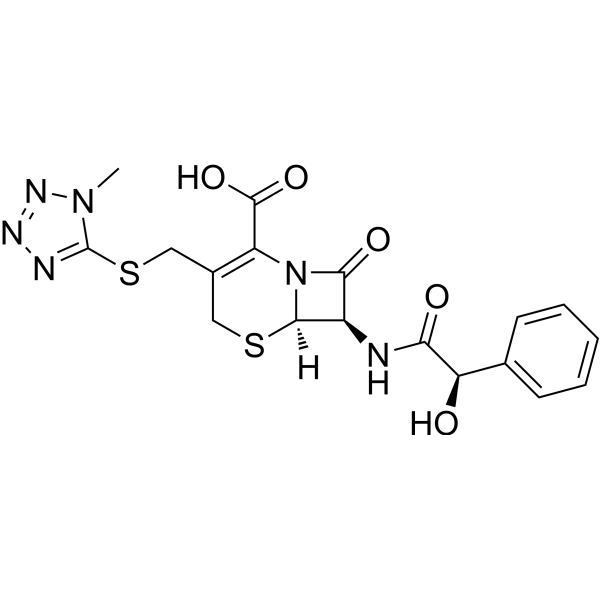
Cefamandole (Cephamandole) is a semi-synthetic second-generation cephalosporin antibiotic with broad-spectrum antimicrobial activity. Cefamandole is resistant to hydrolysis by β-lactamases produced by some Gram-negative bacteria. Cefamandole kills Gram-positive cocci and various Gram-negative bacilli mainly by inhibiting cell wall synthesis, but it is inactive against Pseudomonas, Proteus vulgaris and Providencia stuartii, and its efficacy is affected by inoculum size. The plasma elimination half-life of Cefamandole in rats is only 0.4 h, it is mainly excreted in urine in biologically active form, and it hardly penetrates the non-inflamed blood-brain barrier. Cefamandole is widely used in studies related to bacterial infections .
loading...
    loading...
Cat. No.: HY-123652
CAS No.: 25287-60-9
Target:  

Parasite

Research Areas:  

Infection

Etofamide is an antimicrobial agent with IC50 value of 5.96 mg/L against amoeba .
loading...
    loading...
Cat. No.: HY-139698
CAS No.: 1401527-90-9
Synonyms: LCB10-0200
Target:  

Antibiotic Bacterial

Research Areas:  

Infection

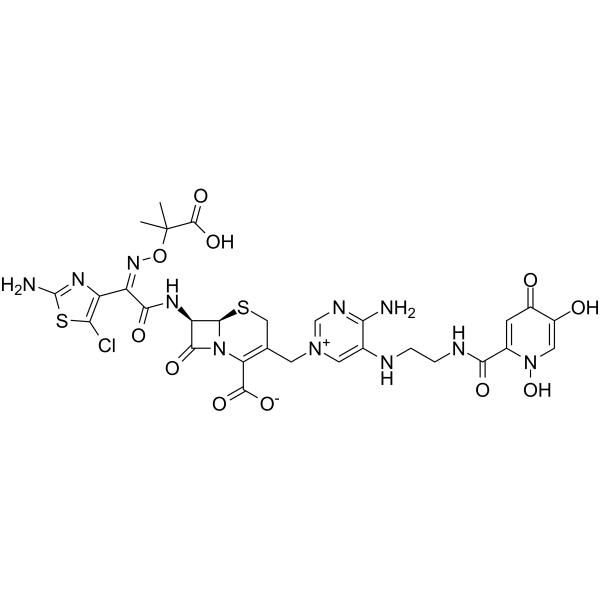
GT-1 (LCB10-0200), a siderophore-linked cephalosporin, is effective against clinical isolates of P. aeruginosa, Klebsiella oxytoca, Proteus spp., Serratia marcescens, and Enterobacter aerogenes.
loading...
    loading...
Cat. No.: HY-117108
CAS No.: 39391-39-4
Nocardicin A is a beta-lactam antibiotic with selective antibacterial activity. Nocardicin A has moderate antibacterial activity against a broad spectrum of Gram-negative bacteria including Proteus and Pseudomonas; it has no inhibitory effect on Staphylococcus, Mycobacterium, fungi, and yeast .
loading...
    loading...
Cat. No.: HY-D1056B1
Synonyms: LPS, from bacterial (proteus vulgaris)
Lipopolysaccharides, from Proteus vulgaris are lipopolysaccharide endotoxins and TLR-4 activators derived from Proteus vulgaris, classified as S-type LPS, which can activate pathogen-associated molecular patterns (PAMP) of the immune system and induce cellular secretion of migrasomes. Lipopolysaccharides, from Proteus vulgaris exhibit a typical three-part structure: O-antigen, core oligosaccharide, and lipid A. Lipopolysaccharides, from Proteus vulgaris possess a unique molecular structure and chitosan affinity (Kb=2.72 μM), surpassing that of Yersinia pseudotuberculosis (Kb=6.06 μM) and Escherichia coli (Kb=79.50 μM) .
It is recommended to prepare a solution with concentration ≥2 mg/mL. Vortex thoroughly for more than 10 minutes. Due to the adsorption characteristics of LPS, silanized container or low adsorption centrifuge tubes should be used for aliquoting and storage, and mix thoroughly before use.
loading...
    loading...
Cat. No.: HY-W145053
CAS No.: 149358-73-6
Synonyms: Sodium chloro(4-methylbenzenesulfonyl)azanide hydrate
Target:  

Factor Xa Bacterial

Research Areas:  

Infection

ChloraMine-T hydrate (Sodium chloro(4-methylbenzenesulfonyl)azanide (hydrate)) is a common reagent in various synthetic processes. It has been used as a reagent in aminohydroxylation and allylic amination reactions, a nitrogen source in aziridination reactions of alkenes and alkenes, and deprotection of sulfur groups in sulfur-containing compounds. It has been used as a reagent in the synthesis of factor Xa inhibitors. ChloraMine-T hydrate (Sodium chloro(4-methylbenzenesulfonyl)azanide (hydrate)) (0.2% w/v) is also an antimicrobial agent that kills Staphylococcus epidermidis, Staphylococcus aureus, Enterococcus faecalis, Escherichia coli, Proteus mirabilis, and Enterococcus cloacae.
loading...
    loading...
Cat. No.: HY-W588243
CAS No.: 481-19-6
Δ7-Stigmasterol is the major sterols of an amoeba.
loading...
    loading...
Cat. No.: HY-121159
CAS No.: 19149-54-3
Target:  

Endogenous Metabolite

Research Areas:  

Others

Alanopine is a non-sugar component of lipopolysaccharides of Providencia and Proteus .
loading...
    loading...

