



2-Methylbutanal

Based on 1 Customer Validation
2-Methylbutanal (2-Methylbutyraldehyde) is a short-chain aliphatic aldehyde and a characteristic volatile biomarker that can be used to detect the urinary tract pathogen Proteus. 2-Methylbutanal is an orally active CaSR activator and ENO1 inhibitor (Kd = 4.92 μM). 2-Methylbutanal activates oral CaSR to enhance the umami and salty taste of food. 2-Methylbutanal downregulates YAP1 by inhibiting the RNA-binding function of ENO1, thereby upregulating HPGD and reducing PGE2 production, ultimately relieving immunosuppression to promote the infiltration and activation of intratumoral CD8+ T cells. 2-Methylbutanal can be used in research on bacterial infections, colorectal cancer, and food flavor modulation.
Nos produits utilisent uniquement pour la recherche. Nous ne vendons pas aux patients.
- Pureté : 98.43%
- CAS No.: 96-17-3
- Formule: C5H10O
- Masse moléculaire:86.13
-
Stockage:
4°C, stored under nitrogen
* In solvent : -80°C, 6 months; -20°C, 1 month (stored under nitrogen)


To place orders, for customer services and technical support, please contact: MedChemExpress USA
Tel: 609-228-6898 E-mail: [email protected] [email protected]


-
 Activité biologique
-
Chemical Information
-
Solvant et solubilité
- Protocole
- Pureté et documentation
- Références
-
 Help & FAQs


-
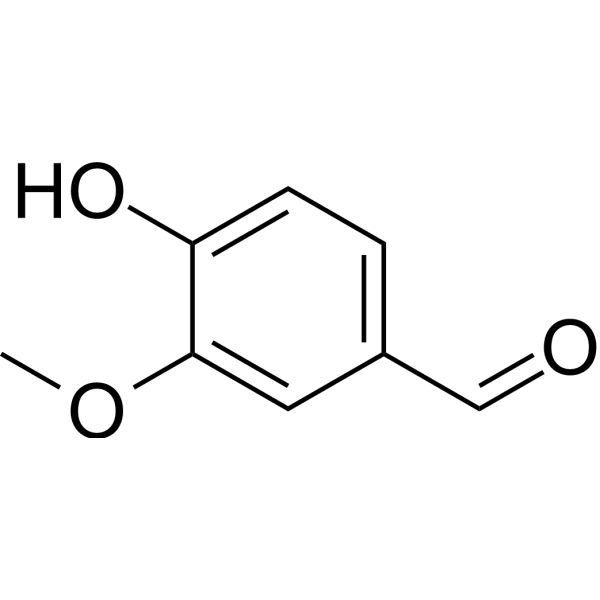
HY-N0098
VanillinPhenolic Aldehyde -
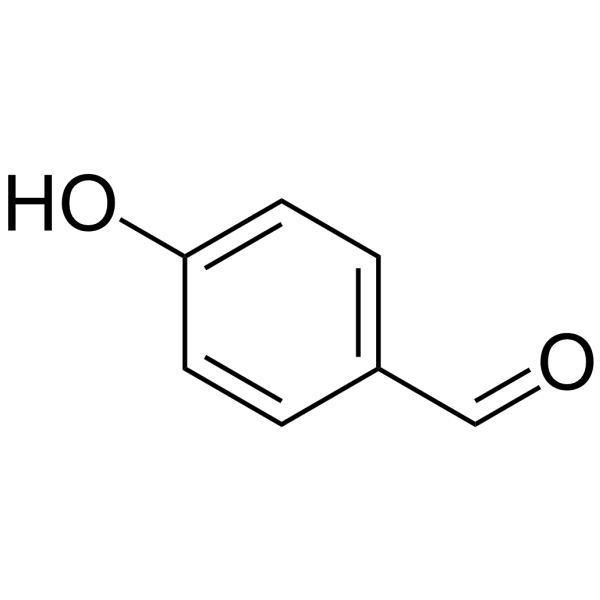
HY-Y0313
p-Hydroxybenzaldehyde -
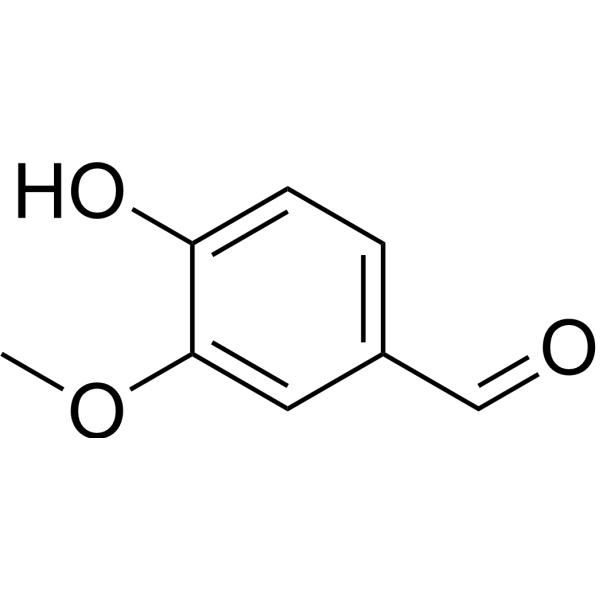
HY-N0098R
Vanillin (Standard) -

HY-Y0313R
p-Hydroxybenzaldehyde (Standard) -
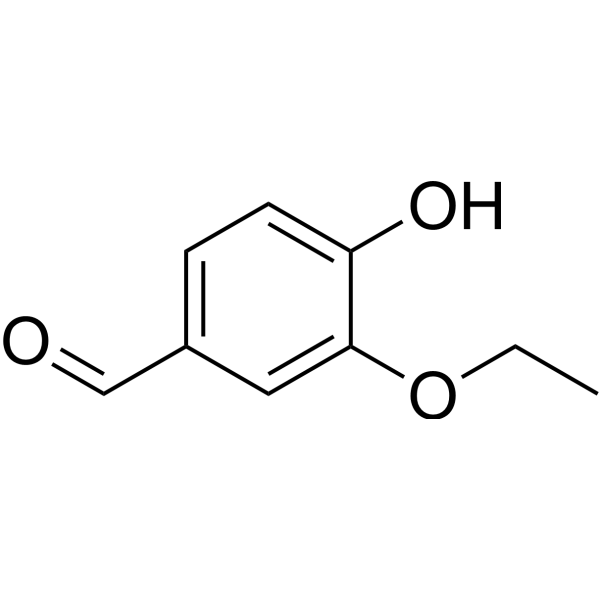
HY-B0940
EthylvanillinFlavouring Agent -
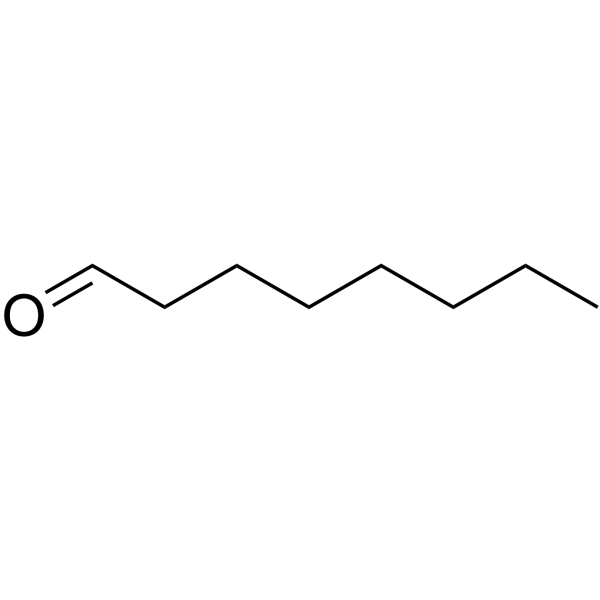
HY-N8015
OctanalAromatic Aldehyde -
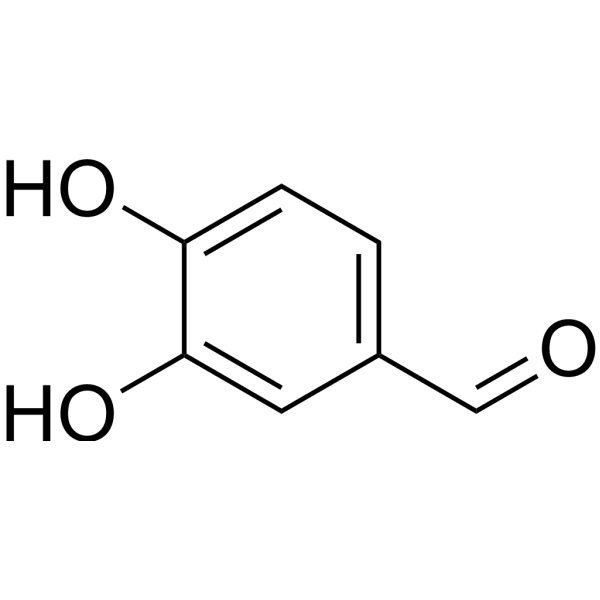
HY-N0295
ProtocatechualdehydePolyphenol Compound -
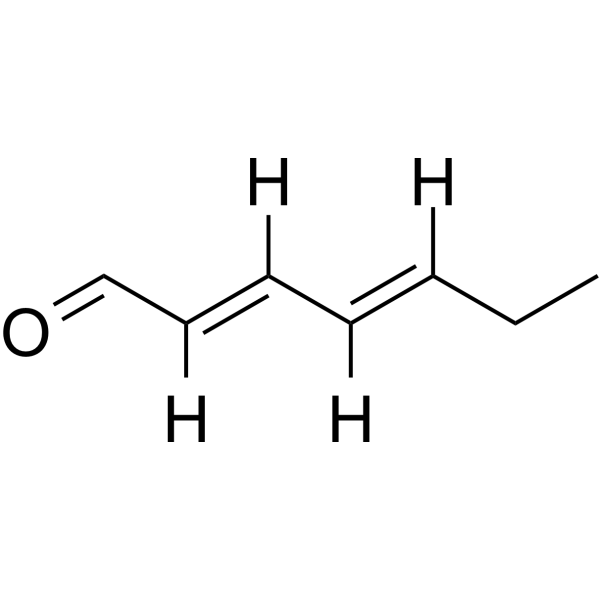
HY-W012952
(2E,4E)-Hepta-2,4-dienalBiochemical Assay Reagent -
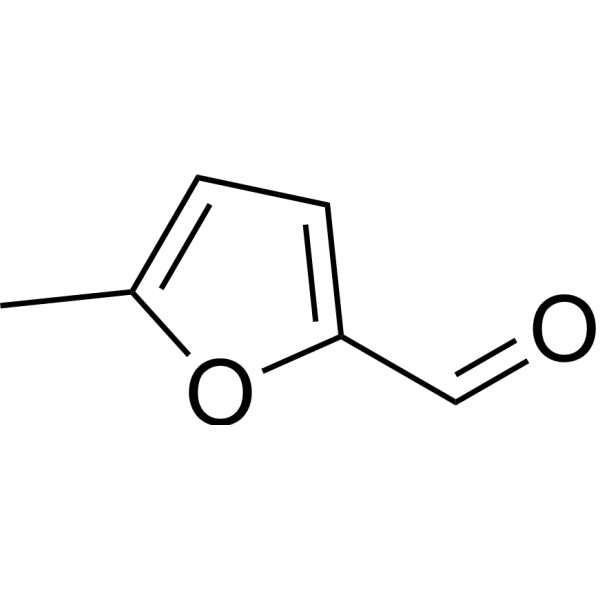
HY-Y0543
5-MethylfurfuralBiochemical Reagent -

HY-Y0785
Glyoxal (40% w/w in water)Drug Intermediate -
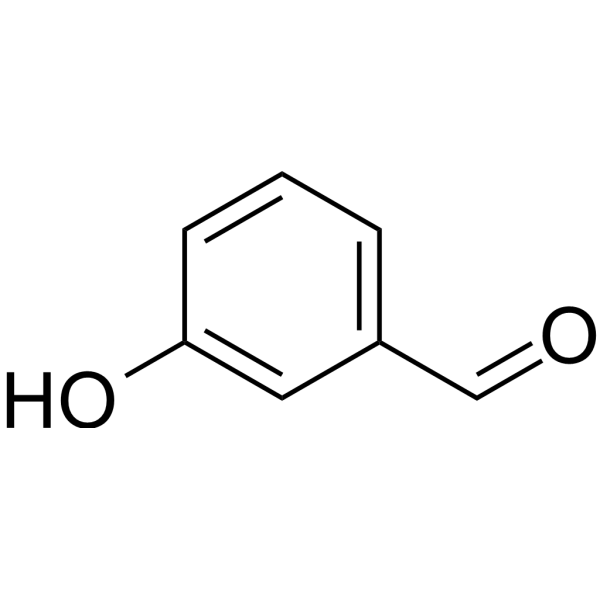
HY-76006
3-HydroxybenzaldehydeSubstrate For ALDH, Precursor Compound for Phenolic Compounds -
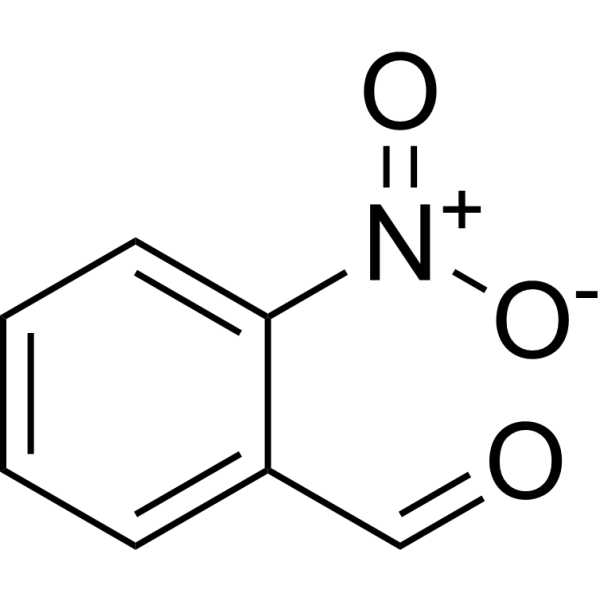
HY-W007454
2-NitrobenzaldehydeBiochemical Reagent
Voir tous les produits spécifiques à Isoform YAP
More

Activité biologique
Description
IC50 & Target
[5]|
YAP1 |
hENO1 4.92 μM (Kd) |
In Vitro
2-Methylbutanal (2-Methylbutyraldehyde) (300 μM; 48 h) binds to ENO1 protein in HCT116 cells and attenuates the binding of ENO1 to YAP1 mRNA, thereby reducing YAP1 protein expression[5].
2-Methylbutanal (30-300 μM) significantly downregulates intracellular and conditioned medium PGE2 levels and upregulates HPGD expression in HCT116 cells[5].
2-Methylbutanal (up to 300 μM; 24-48 h) increases immunogenic cell death signals (such as promoting HMGB1 release and calreticulin exposure) in HCT116 and SW480 without significantly directly affecting tumor cell viability or proliferation[5].
2-Methylbutanal (30-300 μM; 24-48 h) exerts an antitumor effect in PBMC co-culture systems with HCT116 or SW480 by reducing target tumor cell viability in an immune cell-dependent and concentration-dependent manner[5].
2-Methylbutanal directly binds recombinant human ENO1 with a Kd of 4.92 μM[5].
2-Methylbutanal, as one of the C3-C6 aliphatic aldehydes, activates human CaSR in a structure-dependent manner in PEAKrapid cells expressing CaSR[1].
MedChemExpress (MCE) has not independently confirmed the accuracy of these methods. They are for reference only. Further protocols information, click here.
-
Cell Line:Human peripheral blood mononuclear cells (PBMCs) and luciferase-labelled HCT116 or SW480 cells
-
Concentration:30, 300 μM
-
Incubation Time:24 h
-
Result:Significantly reduced the viability of target tumor cells in a concentration-dependent manner in the presence of immune cells.
In Vivo
MedChemExpress (MCE) has not independently confirmed the accuracy of these methods. They are for reference only.
-
Animal Model:C57BL/6 (SM-001; male, 6-8 weeks old)[5]
-
Dosage:50 mg/kg; 250 mg/kg; 500 mg/kg
-
Administration:p.o.; every other day; from day 7 after tumor implantation until day 21
-
Result:Reduced orthotopic tumor diameter at 50, 250, or 500 mg/kg.
Decreased the proportion of Ki-67+ cells and increased infiltration of CD3+CD8+ T cells across the tested dose range.


Chemical Information
-
CAS No. 96-17-3
-
Appearance Liquid (Density: 0.8131 g/cm3)
-
Masse moléculaire 86.13
-
Formule C5H10O
-
Color Colorless to light yellow
-
SMILES
CCC(C)C=O
-
Synonyms
2-Methylbutyraldehyde
-
Structure Classification
-
Initial Source
Proteus spp
-
Livraison
Room temperature in continental US; may vary elsewhere.
-
Stockage
4°C, stored under nitrogen
* In solvent : -80°C, 6 months; -20°C, 1 month (stored under nitrogen)


Solvant et solubilité
In Vitro:
DMSO : 100 mg/mL (1161.04 mM; Need ultrasonic; Hygroscopic DMSO has a significant impact on the solubility of product, please use newly opened DMSO)
Please refer to the solubility information to select the appropriate solvent. Once prepared, please aliquot and store the solution to prevent product inactivation from repeated freeze-thaw cycles.
Storage method and period of stock solution: -80°C, 6 months; -20°C, 1 month (stored under nitrogen). When stored at -80°C, please use it within 6 months. When stored at -20°C, please use it within 1 month.
Please refer to the solubility information to select the appropriate solvent. Once prepared, please aliquot and store the solution to prevent product inactivation from repeated freeze-thaw cycles.
Storage method and period of stock solution: -80°C, 6 months; -20°C, 1 month (stored under nitrogen). When stored at -80°C, please use it within 6 months. When stored at -20°C, please use it within 1 month.
Concentration (start) × Volume (start) = Concentration (final) × Volume (final)
In Vivo:
Select the appropriate dissolution method based on your experimental animal and administration route.
- For the following dissolution methods, please ensure to first prepare a clear stock solution using an In Vitro approach and then sequentially add co-solvents:
- To ensure reliable experimental results, the clarified stock solution can be appropriately stored based on storage conditions. As for the working solution for In Vivo experiments, it is recommended to prepare freshly and use it on the same day.
- The percentages shown for the solvents indicate their volumetric ratio in the final prepared solution. If precipitation or phase separation occurs during preparation, heat and/or sonication can be used to aid dissolution.
Add each solvent one by one: 10% DMSO 90% (20% SBE-β-CD in Saline)
Solubility: ≥ 5 mg/mL (58.05 mM); Clear solution
This protocol yields a clear solution of ≥ 5 mg/mL (saturation unknown).
Taking 1 mL working solution as an example, add 100 μL DMSO stock solution (50.0 mg/mL) to 900 μL 20% SBE-β-CD in Saline, and mix evenly.
Preparation of 20% SBE-β-CD in Saline (4°C, storage for one week): 2 g SBE-β-CD powder is dissolved in 10 mL Saline, completely dissolve until clear.
In Vivo Dissolution Calculator
Please enter the basic information of animal experiments:
-
-
-
-
Recommended: Prepare an additional quantity of animals to account for potential losses during experiments.
Please enter your animal formula composition:
-
%DMSO +
Recommended: Keep the proportion of DMSO in working solution below 2% if your animal is weak.
-
%+
-
+%Tween-80 + +
-
%Saline +
The co-solvents required include: DMSO, . All of co-solvents are available by MedChemExpress (MCE). , Tween 80. All of co-solvents are available by MedChemExpress (MCE).
Working solution concentration: 0.22 mg/mL
Method for preparing stock solution: mg drug dissolved in μL DMSO. Stock solution concentration: mg/mL. * In solvent : -80°C, 6 months; -20°C, 1 month (stored under nitrogen)
1. Take μL DMSO stock solution;
2. Add μL .
μL , mix evenly;
3. Then add μL Tween 80, mix evenly;
4. Then add μL
Please ensure that the stock solution in the first step is dissolved to a clear state, and add co-solvents in sequence. You can use ultrasonic heating (ultrasonic cleaner, recommended frequency 20-40 kHz), vortexing, etc. to assist dissolution.

Protocole
-
Research Protocol for Infectious Diseases
Infectious-disease experiments test how pathogens interact with host barriers, innate immune receptors, inflammatory signaling, pathogen replication, and tissue injury; pattern-recognition receptors such as TLRs, RIG-I-like receptors, NOD-like receptors, and inflammasomes detect microbial molecules and activate NF-κB, interferon, and cytokine responses. The central hypothesis is that infection severity reflects the balance between pathogen burden and host response: protective inflammation restricts pathogen growth, whereas excessive or mislocalized inflammation contributes to tissue damage and disease phenotype. Unresolved questions include which host pathways are protective versus pathogenic, why some infection models fail to translate to human disease, and which combined readouts best predict clinically relevant infection outcomes.


Pureté et documentation
-
Fiche technique (282 KB)
-
SDS (604 KB)
- English - EN (604 KB)
- Français - FR (604 KB)
- Deutsch - DE (604 KB)
- Norwegian - NO (604 KB)
- Español - ES (604 KB)
- Swedish - SV (604 KB)
- Italian - IT (604 KB)
- Korean - KR (604 KB)
- Portuguese - PT (604 KB)
-
Instruction de manipulation (2659 KB)
Références


Complete Stock Solution Preparation Table
Please refer to the solubility information to select the appropriate solvent. Once prepared, please aliquot and store the solution to prevent product inactivation from repeated freeze-thaw cycles.
Storage method and period of stock solution: -80°C, 6 months; -20°C, 1 month (stored under nitrogen). When stored at -80°C, please use it within 6 months. When stored at -20°C, please use it within 1 month.
| Optional Solvent | Concentration Solvent Mass | 1 mg | 5 mg | 10 mg | 25 mg |
|---|---|---|---|---|---|
| DMSO | 1 mM | 11.6104 mL | 58.0518 mL | 116.1036 mL | 290.2589 mL |
| 5 mM | 2.3221 mL | 11.6104 mL | 23.2207 mL | 58.0518 mL | |
| 10 mM | 1.1610 mL | 5.8052 mL | 11.6104 mL | 29.0259 mL | |
| 15 mM | 0.7740 mL | 3.8701 mL | 7.7402 mL | 19.3506 mL | |
| 20 mM | 0.5805 mL | 2.9026 mL | 5.8052 mL | 14.5129 mL | |
| 25 mM | 0.4644 mL | 2.3221 mL | 4.6441 mL | 11.6104 mL | |
| 30 mM | 0.3870 mL | 1.9351 mL | 3.8701 mL | 9.6753 mL | |
| 40 mM | 0.2903 mL | 1.4513 mL | 2.9026 mL | 7.2565 mL | |
| 50 mM | 0.2322 mL | 1.1610 mL | 2.3221 mL | 5.8052 mL | |
| 60 mM | 0.1935 mL | 0.9675 mL | 1.9351 mL | 4.8376 mL | |
| 80 mM | 0.1451 mL | 0.7256 mL | 1.4513 mL | 3.6282 mL | |
| 100 mM | 0.1161 mL | 0.5805 mL | 1.1610 mL | 2.9026 mL |


2-Methylbutanal Related Classifications
HY-W020678 Related Classifications
 Powered by Bioz