1. Search Result
Search Result
Results for "

Anopheles

" in MedChemExpress (MCE) Product Catalog:

16

Inhibitors & Agonists

1

Biochemical Assay Reagents

6

Natural
Products

Cat. No. Product Name Target Research Areas Chemical Structure
  • HY-Y0261A

    Environmental Pollutants Biochemical Assay Reagents Others
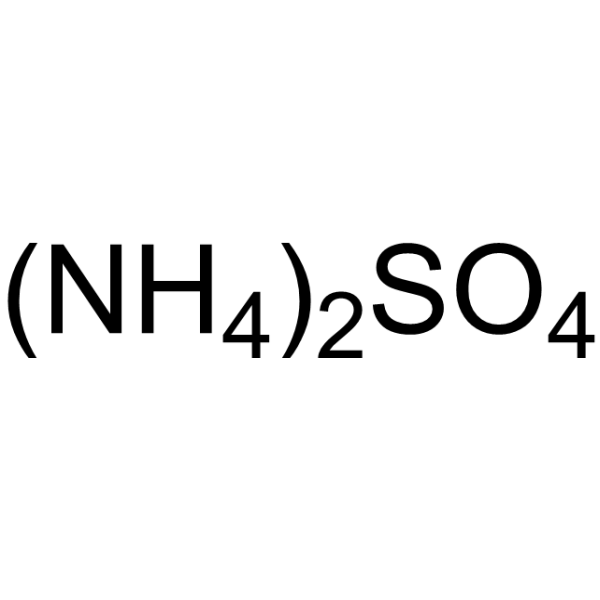
    Ammonium sulphate,≥99.0%,AR is an inorganic sulfate salt used for molecular biology . Ammonium sulphate,≥99.0%,AR can be used to precipitate proteins, separate antibodies, and enhance antigen-antibody reactions. Ammonium sulphate,≥99.0%,AR can serve as a nitrogen source in plant fertilizers and has developmentally toxicity to freshwater snails, but increases the number of Anopheles africanus and Culex mosquito larvae in rice paddies. Ammonium sulphate,≥99.0%,AR also inhibits the conversion of glucose to ascorbic acid in plants .
    Ammonium sulphate,≥99.0%,AR
  • HY-157355

    BHI

    Biochemical Assay Reagents Bacterial Infection
    Brain Heart Infusion Broth (BHI) is a bacterial culture medium that can be used for microbial culture .
    Brain Heart Infusion Broth
  • HY-134891

    (E)-4-Hydroxy-3-methyl-but-2-enyl diphosphate lithium

    Nuclear Factor of activated T Cells (NFAT) Infection Inflammation/Immunology
    HMBPP lithium is an intermediate in isoprenoid biosynthesis that can be produced by bacteria and protozoa that use the non-mevalonate pathway for isoprenoid biosynthesis. HMBPP lithium is a ligand of the internal domain of BTN3A1 and is an activator for human Vγ9/Vδ2 T cells. HMBPP lithium exhibits phagostimulant property in mosquitos .
    HMBPP lithium
  • HY-B2031
    Pyriproxyfen
    1 Publications Verification

    S-31183

    Autophagy Parasite Infection
    Pyriproxyfen (S-31183) is a juvenile hormone analog and insect growth regulator. Pyriproxyfen is used in research related to dengue fever and malaria .
    Pyriproxyfen
  • HY-N7916

    L-Menthone

    Environmental Pollutants Others
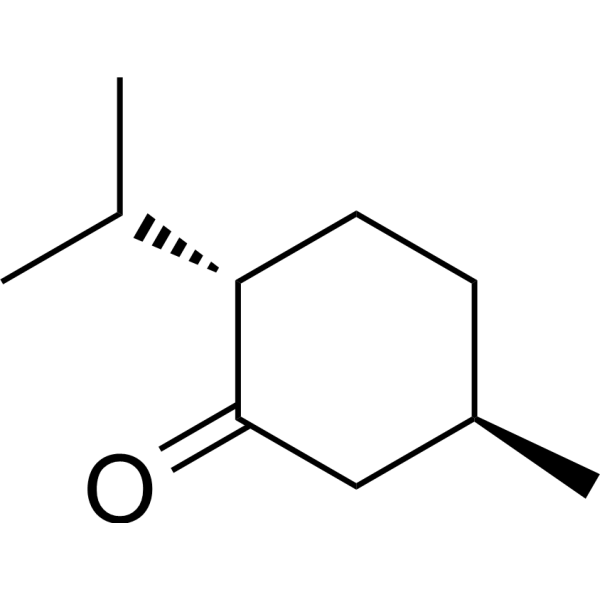
    (-)-Menthone is a monoterpene component of the essential oil of maturing peppermint. (+)-Neomenthyl-β-d-glucoside is a metabolite of (-)-Menthone .Mortality of two biological forms of Anopheles stephensi(larvae) exposed to about 45 ppm (-)-Menthone is 27.67% and 94.92%.
    (-)-Menthone
  • HY-118607

    Potassium Channel Parasite Infection
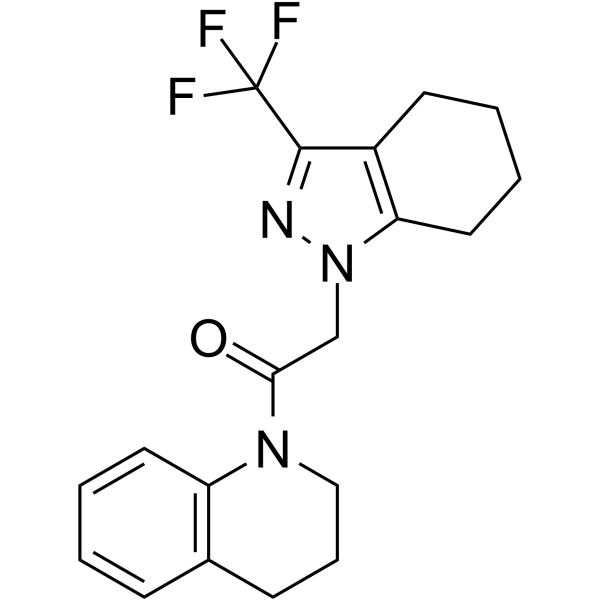
    VU041 is a first submicromolar-affinity inhibitor of Anopheles (An.) gambiae and Aedes (Ae.) aegypti inward rectifier potassium 1 (Kir1) channels with IC50 values of 2.5 μM and 1.7 μM, respectively. VU041 inhibits appreciably is mammalian Kir2.1 (IC50 of 12.7 μM), and has less inhibitory effect on mammalian Kir1.1, Kir4.1, Kir6.2/SUR1, and Kir7.1. VU041 also induces impaired Malpighian tubule function .
    VU041
  • HY-136330

    Insecticide Parasite Sodium Channel Infection
    Oxazosulfyl is a sulfyl insecticide with potent and cross-spectrum insecticidal activity. Oxazosulfyl inhibits sodium currents by binding to and stabilizing the slow-inactivated state of voltage-gated sodium channels, leading to insect paralysis. Oxazosulfyl's ability to block sodium channels is correlated with its insecticidal activity .
    Oxazosulfyl
  • HY-B2015

    Environmental Pollutants Insecticide Parasite Cholinesterase (ChE) Infection
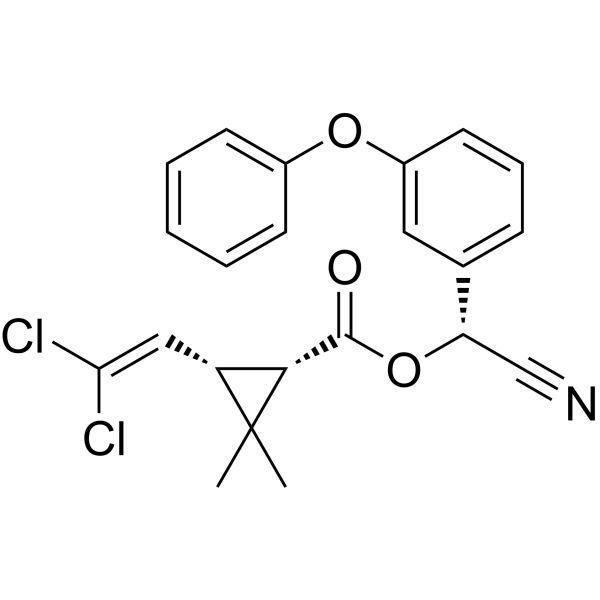
    Carbosulfan is an orally active AChE inhibitor that hydrolyzes to Carbofuran in organisms to exert insecticidal effects. Carbosulfan exhibits broad-spectrum insecticidal activity, and it also induces severe oxidative stress by enhancing lipid peroxidation and impairing the antioxidant defense system. Carbosulfan causes reproductive toxicity in male rats and developmental disorders in their offspring. Carbosulfan shows persistence in paddy field environments and potential hazards to non-target organisms, and it is commonly used in studies related to reproductive toxicity and environmental risk assessment .
    Carbosulfan
  • HY-W004287

    Amyloid-β Cholinesterase (ChE) Parasite Infection Neurological Disease
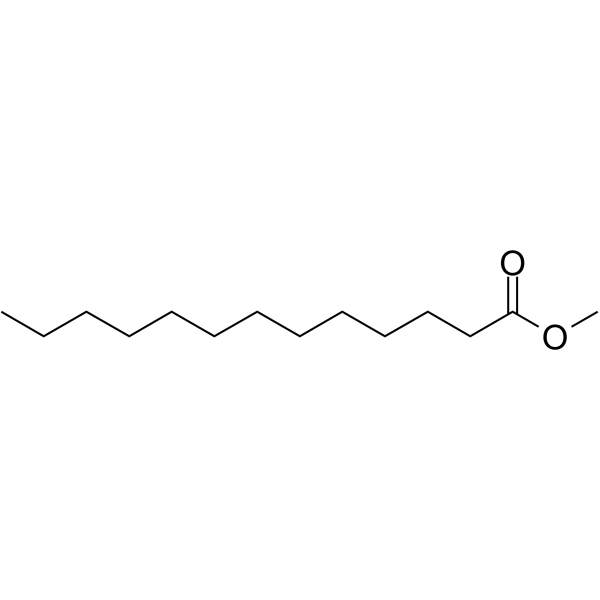
    Methyl tridecanoate is a fatty acid methyl ester. Methyl tridecanoate exhibits an IC50 of 3.26 μM and a Ki of 2.30 μM against AsOBP21f in Anopheles sinensis. Methyl tridecanoate induces electroantennographic responses in female Anopheles sinensis. Methyl tridecanoate shows a dose-dependent attractive effect on Anopheles sinensis. Methyl tridecanoate weakly inhibits β-amyloid aggregation and AChE activity. Methyl tridecanoate can be used in the research of malaria and Alzheimer's disease .
    Methyl tridecanoate
  • HY-168429

    Aminotransferases (Transaminases) Parasite Infection
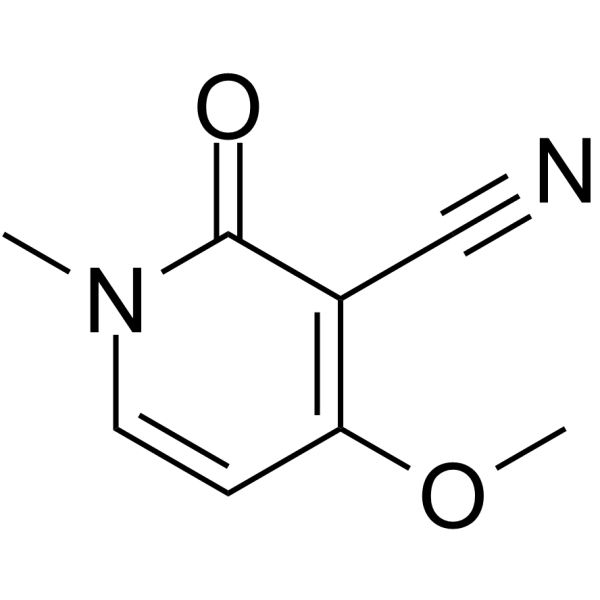
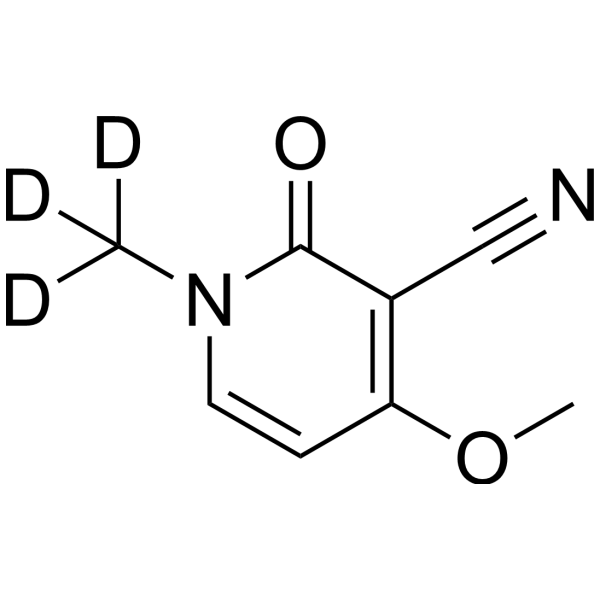
    3HKT-IN-1 (Compound 17122279) is an Anopheles gambiae 3-hydroxykynurenine transaminase (3HKT) inhibitor. 3HKT-IN-1 can be used for Malaria research .
    3HKT-IN-1
  • HY-N7916R

    L-Menthone (Standard)

    Reference Standards Others Others
    (-)-Menthone (Standard) is the analytical standard of (-)-Menthone. This product is intended for research and analytical applications. (-)-Menthone is a monoterpene component of the essential oil of maturing peppermint. (+)-Neomenthyl-β-d-glucoside is a metabolite of (-)-Menthone .Mortality of two biological forms of Anopheles stephensi(larvae) exposed to about 45 ppm (-)-Menthone is 27.67% and 94.92%.
    (-)-Menthone (Standard)
  • HY-169173

    Cholinesterase (ChE) Infection
    AL284 is a potent anopheles gambiae acetylcholinesterase 1 (AgAChE1) inhibitor. AL284 interactions with Tyr489Ag in the α-helix next to loop 2, and Trp441Ag at the top of the gorge. AL284 has the potential for the research of disease-transmitting mosquitoes .
    AL284
  • HY-182685

    Acetyl-CoA synthetase Parasite Infection
    MMV693183 is an orally active inhibitor of Plasmodium falciparum acetyl-CoA synthetase (AcAS), with an IC50 of 300 nM against Plasmodium falciparum. MMV693183 exhibits potent inhibitory activity against clinical isolates of malaria parasites, including Artemisinin (HY-B0094)-resistant strains. MMV693183 is metabolized in vivo into the active antimetabolite CoA-MMV693183, which exerts effects of killing asexual blood-stage parasites and blocking transmission to Anopheles mosquitoes by binding to and inhibiting the function of acetyl-CoA synthetase, thereby reducing the levels of acetyl-CoA and 4'-phosphopantetheine. In humanized mouse models, MMV693183 shows favorable in vivo efficacy, drug-like properties, and no significant cytotoxicity or off-target activity against human cells. MMV693183 is widely used in malaria-related research as a parasiticide and metabolic disruptor .
    MMV693183
  • HY-180778

    Insecticide Cholinesterase (ChE) Infection
    Insecticidal agent 28 (Compound 10) is an insecticide targeting the Culex pipiens. Insecticidal agent 28 exhibits LC₅₀ values for killing larvae and adults of 40.15 ppm and 55.02 ppm respectively. Insecticidal agent 28 inhibits the acetylcholinesterase (AchE) of the Anopheles gambiae. Insecticidal agent 28 shows lower cytotoxicity .
    Insecticidal agent 28
  • HY-N11234A

    Insecticide Infection
    (Z)-γ-Bisabolene is a monocyclic bisabolane-type sesquiterpene hydrocarbon found in the essential oil of Galinsoga parviflora, acting as a mosquito larvicide and oviposition deterrent. (Z)-γ-Bisabolene induces acute toxicity in larvae of six mosquito species. (Z)-γ-Bisabolene deters oviposition in gravid females of six mosquito species. (Z)-γ-Bisabolene can be used for the research of malaria, dengue, japanese encephalitis, zika virus .
    (Z)-γ-Bisabolene
  • HY-N19687

    Drug Derivative Infection
    Thevefolic acid B is a plant secondary metabolite specific to the nectar of Cascabela thevetia. Thevefolic acid B can be used to identify mosquito host plants and control vector-borne diseases .
    Thevefolic acid B

Inquiry Online

Your information is safe with us. * Required Fields.

Salutation


Country or Region *

Applicant Name *


Organization Name *

Department *


Email Address *


Product Name *

Cat. No.


Requested quantity *

Phone Number *


Remarks

Inquiry Online

Inquiry Information

Product Name:
Cat. No.:
Quantity:
MCE Japan Authorized Agent:

