1. Search Result
Search Result
Results for "

Cl-

" in MedChemExpress (MCE) Product Catalog:

569

Inhibitors & Agonists

2

Screening Libraries

35

Fluorescent Dyes

13

Biochemical Assay Reagents

43

Peptides

5

Inhibitory Antibodies

36

Natural
Products

58

Recombinant Proteins

35

Isotope-Labeled Compounds

58

Antibodies

8

Click Chemistry

22

Oligonucleotides

Targets Recommended:
Cat. No. Product Name Target Research Areas Chemical Structure
  • HY-B1743A
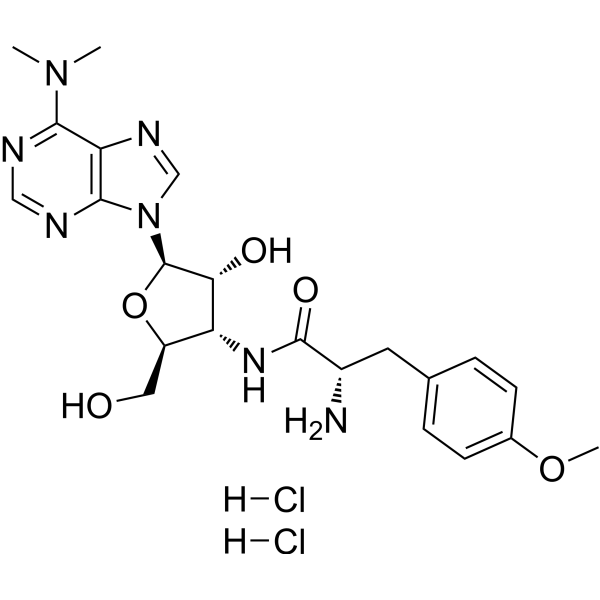
    Puromycin dihydrochloride
    Maximum Cited Publications
    387 Publications Verification

    Cl13900 dihydrochloride

    Bacterial Antibiotic Parasite Infection Cancer
    Puromycin dihydrochloride (CL13900 dihydrochloride), an aminonucleoside antibiotic, inhibits protein synthesis .
    Puromycin dihydrochloride
  • HY-B0146
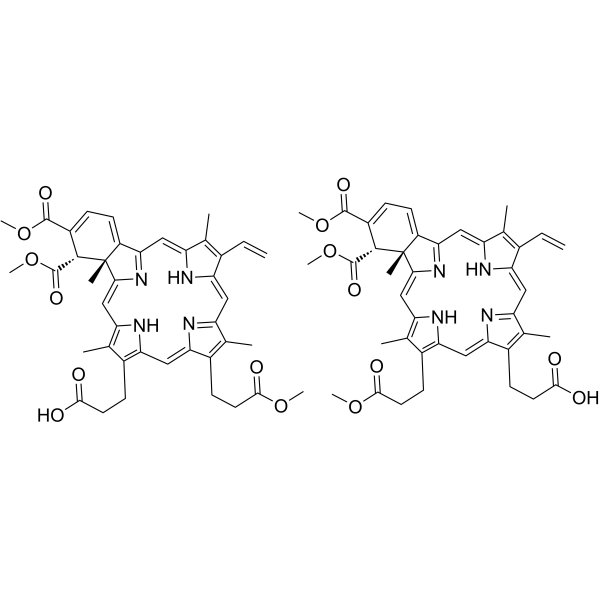
    Verteporfin
    265+ Cited Publications

    Cl 318952

    YAP Apoptosis Autophagy Photosensitizer Cancer
    Verteporfin (CL 318952) is a photosensitizer for photodynamic therapy to eliminate the abnormal blood vessels in the eye associated with conditions such as age-related macular degeneration. Verteporfin is a YAP inhibitor which disrupts YAP-TEAD interactions. Verteporfin induces cell apoptosis . Verteporfinis an autophagy inhibitor that blocks autophagy at an early stage by inhibiting autophagosome formation .
    Verteporfin
  • HY-100574A
    Cl-amidine hydrochloride
    20+ Cited Publications

    Protein Arginine Deiminase Apoptosis MicroRNA Inflammation/Immunology Cancer
    Cl-amidine hydrochloride is an orally active peptidylarginine deminase (PAD) inhibitor, with IC50 values of 0.8 μM, 6.2 μM and 5.9 μM for PAD1, PAD3, and PAD4, respectively. Cl-amidine hydrochloride induces apoptosis in cancer cells. Cl-amidine hydrochloride induces microRNA (miR)-16 (miRNA-16, microRNA-16) expression and causes cell cycle arrest. Cl-Amidine hydrochloride prevents histone 3 citrullination and neutrophil extracellular trap formation, and improves survival in a murine sepsis model .
    Cl-amidine hydrochloride
  • HY-116771A
    CL 316243
    20+ Cited Publications

    Adrenergic Receptor Metabolic Disease
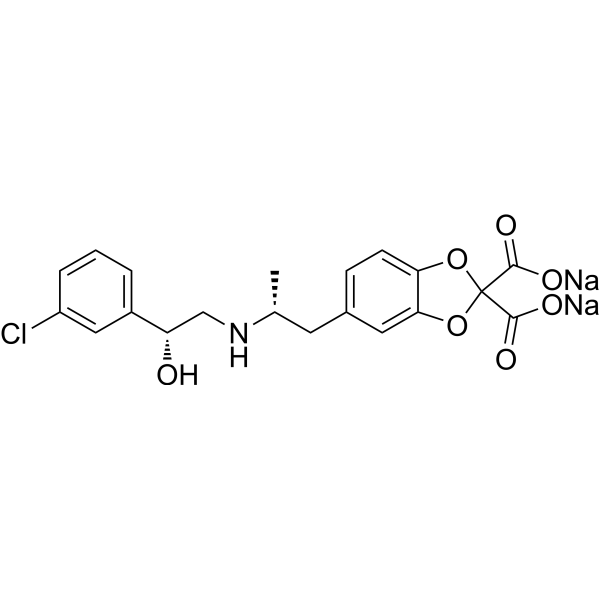
    CL316243 is a highly potent selective β3-adrenoceptor agonist with a EC50 of 3 nM, but is an extremely poor to β1/2- receptors [1].CL316243 is a effective stimulant of adipocyte lipolysis and increases brown adipose tissue thermogenesis and metabolic rate . CL316243 has the potential for the treatment obesity, diabetes and urge urinary incontinence .
    CL 316243
  • HY-128946
    CL2A-SN-38
    5 Publications Verification

    Drug-Linker Conjugates for ADC Inflammation/Immunology Cancer
    CL2A-SN-38 is a agent-linker conjugate composed of a potent a DNA Topoisomerase I inhibitor SN-38 and a linker CL2A to make antibody agent conjugate (ADC). CL2A-SN-38 provides significant and specific antitumor effects against a range of human solid tumor types. CL2A-SN-38 uses hydrolyzable linker to deliver active agents within tumor cells and in the tumor microenvironment, resulting in bystander effects .
    CL2A-SN-38
  • HY-B0777
    Moxidectin
    1 Publications Verification

    Cl301423

    Antibiotic BCRP P-glycoprotein Parasite Infection Neurological Disease
    Moxidectin (CL301423) is an orally active and brain-penetrant macrolide (ML) anthelmintic for the prevention and control of heartworms and roundworms. Moxidectin is also a substrate of BCRP and P-glycoprotein (P-gp) in vivo, and is secreted into breast milk and effluxed from the host and parasite mediated by Bcrp1 and P-gp. This may be related to the presence of chemical residues in milk .
    Moxidectin
  • HY-B1418
    Tazobactam
    15+ Cited Publications

    Cl-298741; YTR-830H

    Beta-lactamase Antibiotic Bacterial Infection Cancer
    Tazobactam (CL-298741) is a potent β-lactamases inhibitor and penicillin antibiotic. Tazobactam has antibacterial activity. Tazobactam can be used for pneumonia research .
    Tazobactam
  • HY-128945

    ADC Linker Inflammation/Immunology Cancer
    CL2A is a claevable complicated PEG8- and triazole-containing PABC-peptide-mc linker. CL2A is cleavable through pH sensitivity, giving rise to bystander effect, and binds the antibody at a cysteine residue via a disulfide bond. Labetuzumab govitecan used this linker .
    CL2A
  • HY-112542

    Cl-287088; LL-F28249 α

    Parasite Antibiotic Infection
    Nemadectin (CL-287088), an orally active broad-spectrum endectocide, is highly efficacious against natural infections of all the major canine gastrointestinal helminthes. Anthelmintic activity .
    Nemadectin
  • HY-100359
    CL-82198
    5+ Cited Publications

    MMP Inflammation/Immunology Cancer
    CL-82198 is a selective inhibitor of MMP-13. CL-82198 binds to the entire S1’ pocket of MMP-13, which is the basis for its selectivity towards MMP-13 and the lack of inhibitory activities against other MMPs . CL-82198 is a pharmacologic treatment for preventing osteoarthritis (OA) progression .
    CL-82198
  • HY-B0991
    Amoxapine
    4 Publications Verification

    Cl-67772

    Bacterial Autophagy Infection Cardiovascular Disease Neurological Disease Inflammation/Immunology
    Amoxapine (CL-67772) is a norepinephrine reuptake blocker and a 5-HT2/5-HT3 antagonist. Amoxapine can be used for the research of depression. Amoxapine has antibacterial activity. Amoxapine can enhance the killing effect of macrophages on mycobacterium by inducing autophagy, while protecting the cells from death .
    Amoxapine
  • HY-B1138
    Fenbufen
    1 Publications Verification

    Cl-82204

    COX Caspase Infection Neurological Disease Inflammation/Immunology Cancer
    Fenbufen (CL-82204) is an orally active non-steroidal anti-inflammatory drug (NSAID), with analgetic and antipyretic effects. Fenbufen has potent activity in a variety of animal model, including carageenin edema, UV erythema and adjuvant arthritis. Fenbufen has inhibitory activities against COX-1 and COX-2 with IC50s of 3.9 μM and 8.1 μM, respectively. Fenbufen is a caspases (caspase-1, 3, 4, 5, 9) inhibitor .
    Fenbufen
  • HY-126350
    CL2-SN-38
    1 Publications Verification

    Drug-Linker Conjugates for ADC Cancer
    CL2-SN-38 is a cleavable linker-based agent-Linker conjugate, it can conjugate with the anti-Trop-2-humanized antibody hRS7. CL2-SN-38 can be used for the reasearch of cancer .
    CL2-SN-38
  • HY-128799
    CL097
    2 Publications Verification

    Toll-like Receptor (TLR) Reactive Oxygen Species (ROS) Inflammation/Immunology
    CL097, a potent TLR7 and TLR8 agonist, induces pro-inflammatory cytokines in macrophages . CL097 induces NADPH oxidase priming, resulting in an increase of the fMLF-stimulated ROS production .
    CL097
  • HY-10325
    CL-387785
    2 Publications Verification

    EKI-785; WAY-EKI 785

    EGFR Apoptosis Endocrinology Cancer
    CL-387785 (EKI-785; WAY-EKI 785) is an orally active EGFR inhibitor with an IC50 of 370 pM. CL-387785 inhibits EGF-stimulated EGFR autophosphorylation with an IC50 of approximately 5 nM. CL-387,785 exerts selective inhibition on cell lines overexpressing EGFR or c-erbB-2, whereas it shows weak inhibitory effects on cell lines with low expression of these two receptors. CL-387785 effectively induces cell cycle arrest and apoptosis. CL-387785 can be used for the research of non-small cell lung cancer and autosomal recessive polycystic kidney disease .
    CL-387785
  • HY-103505

    GABA Receptor Neurological Disease
    CL 218872 is an orally active and selective ligand for the benzodiazepine receptor subtype BZ1. CL 218872 exhibits anxiolytic, sedative and anticonvulsant activities. CL 218872 can be used in researches of anxiety related disorders and epilepsy .
    CL 218872
  • HY-100574

    Protein Arginine Deiminase Apoptosis MicroRNA Inflammation/Immunology Cancer
    Cl-amidine is an orally active peptidylarginine deminase (PAD) inhibitor, with IC50 values of 0.8 μM, 6.2 μM and 5.9 μM for PAD1, PAD3, and PAD4, respectively. Cl-amidine induces apoptosis in cancer cells. Cl-amidine induces microRNA (miR)-16 (miRNA-16, microRNA-16) expression and causes cell cycle arrest. Cl-Amidine prevents histone 3 citrullination and neutrophil extracellular trap formation, and improves survival in a murine sepsis model .
    Cl-amidine
  • HY-139305
    CL4H6
    1 Publications Verification

    Liposome Cancer
    CL4H6 is a pH-sensitive cationic lipid. CL4H6 is the main component of lipid nanoparticles (LNPs), which can be used to target and deliver siRNA, and induces a potent gene-silencing response .
    CL4H6
  • HY-117066
    CL075
    3 Publications Verification

    3M002

    Toll-like Receptor (TLR) Inflammation/Immunology
    CL075 (3M002) is a selective TLR8 agonist with immunomodulating properties. CL075 triggers a MyD88-dependent signaling pathway to elicit production of inflammatory cytokines and type I interferons (IFNs) via activation of NF-κB and IRF7, respectively .
    CL075
  • HY-139909A
    CL2E-SN38 TFA
    1 Publications Verification

    Drug-Linker Conjugates for ADC Cancer
    CL2E-SN-38 TFA, a highly releasable and structurally stable antibody-SN-38-conjugate, is a part of the antibody drug conjugate (ADC). SN-38, the active metabolite of Irinotecan from camptothecins, is an Topoisomerase I inhibitor .
    CL2E-SN38 TFA
  • HY-100427

    Cl29926; (±)-Imazamox

    Environmental Pollutants Acetolactate Synthase (ALS) Others
    Imazamox (CL29926) is a systemic herbicide that inhibits the production of acetolactate synthase (ALS) in plants with high selectivity, high activity, safety and broadspectrum activity, which would then inhibit plant growth and ultimately lead to plant death .
    Imazamox
  • HY-112496

    PROTAC Linker 4

    PROTAC Linkers Cancer
    Cl-C6-PEG4-O-CH2COOH (PROTAC Linker 4) is a PEG-based PROTAC linker can be used in the synthesis of chloroalkane-containing PROTACs (HaloPROTACs) .
    Cl-C6-PEG4-O-CH2COOH
  • HY-148191

    HIV Protease Infection Cardiovascular Disease Inflammation/Immunology Cancer
    CL-197 is an orally active and long-acting purine anti-HIV nucleoside reverse transcriptase inhibitor (NRTI). CL-197 has potential effect on the research of viral, oncological and cerebrovascular diseases . CL-197 is a click chemistry reagent, it contains an Alkyne group and can undergo copper-catalyzed azide-alkyne cycloaddition (CuAAc) with molecules containing Azide groups.
    CL-197
  • HY-125390

    Cl-087

    Toll-like Receptor (TLR) Inflammation/Immunology Cancer
    SM-360320 (CL-087) is a potent, orally active TLR7 agonist. SM-360320 is a immuno-modulator and exerts an antitumor effect. SM-360320 can act in synergy with DNA vaccines leading to an enhanced Th1 antibody response . SM-360320 can inhibit HCV replication in hepatocytes via a type I IFN-independent mechanism in addition to its IFN-mediated activity .
    SM-360320
  • HY-W755338

    Cl-CCA

    Biochemical Assay Reagents Others
    4-Chloro-α-cyanocinnamic acid (Cl-CCA) is an advanced, rationally designed MALDI (Matrix-assisted laser desorption ionization) matrix .
    4-Chloro-α-cyanocinnamic acid
  • HY-118467
    Benzolamide
    2 Publications Verification

    Cl11366

    Carbonic Anhydrase Neurological Disease Cancer
    Benzolamide (CL11366) is a potent carbonic anhydrase (CA) inhibitor, with Kis of 15 nM, 9 nM, 94 nM and 78 nM for hCA I, hCA II, EcoCAγ and VchCAγ, respectively. Benzolamide also inhibits CAS3, with a Ki of 54 nM. Benzolamide can be used for the research of glaucoma and seizures .
    Benzolamide
  • HY-170868

    Drug-Linker Conjugates for ADC Cancer
    CL2A-FL118 is a drug-linker for synthesis of ADC molecule Sac-CL2A-FL118 .
    CL2A-FL118
  • HY-W074975

    5-Amino-1,3,4-thiadiazole-2-sulfonamide

    Carbonic Anhydrase Cancer
    CL 5343 (5-Amino-1,3,4-thiadiazole-2-sulfonamide) is a selective inhibitor of carbonic anhydrase B (HCA-B) and isoforms I, II, IV, and VII. CL 5343 has a Ki of 7.9 nM for hCA II. CL 5343 acts as a CA9 ligand to achieve targeted delivery of maytansine to the cell membrane of SKRC52 renal cancer cells. CL 5343 is useful in the development of therapeutics for diseases associated with CA overactivity, such as glaucoma, epilepsy, and cancer .
    CL 5343
  • HY-135905

    Toll-like Receptor (TLR) Inflammation/Immunology
    CL264 is a TLR7-specific agonist for innate immune signals research .
    CL264
  • HY-100935

    Cl 263780; (±)-2-Amino-5-[1-hydroxy-2-[(1-methylethyl)amino]ethyl]benzonitrile

    Adrenergic Receptor Metabolic Disease
    Cimaterol (CL 263780) is a β-adrenergic agonist on energy metabolism in ob/ob mice . The Kd for Cimaterol binding to the L6 β-receptor is 26 nM which is compatible with its EC50 for the stimulation of protein synthesis (approx 5 nM) .
    Cimaterol
  • HY-130178

    Endogenous Metabolite Infection
    CL-385319 is an N-substituted piperidine compound with inhibitory activity against H5N1 avian influenza A virus infection. CL-385319 exhibited an IC50 of 27.03±2.54 μM against infection of highly pathogenic H5N1 virus in Madin-Darby canine kidney cells (MDCK). CL-385319 had low cytotoxicity with a CC50 of 1.48 mM and was able to inhibit the entry of pseudoviruses carrying H5N1 strains from different sources, but had no inhibitory effect on the entry of VSV-G pseudotyped particles. Pseudoviruses with the M24A mutation in HA1 or the F110S mutation in HA2 were resistant to CL-385319, indicating that these two residues in the cavity region may be critical for the binding of CL-385319 .
    CL-385319
  • HY-116771
    CL 316243 free acid
    20+ Cited Publications

    Adrenergic Receptor Metabolic Disease
    CL316243 free acid is a highly potent selective β3-adrenoceptor agonist with a EC50 of 3 nM, but is an extremely poor to β1/2- receptors. CL316243 free acid is a effective stimulant of adipocyte lipolysis and increases brown adipose tissue thermogenesis and metabolic rate. CL316243 free acid has the potential for the treatment obesity, diabetes and urge urinary incontinence .
    CL 316243 free acid
  • HY-157252

    Liposome Cancer
    CL4F8-6 is an ionizable cationic lipid with a pKa of 6.14. CL4F8-6 can be used in lipid nanoparticles (LNPs)-based mRNA therapeutics .
    CL4F8-6
  • HY-128799A
    CL097 hydrochloride
    2 Publications Verification

    Toll-like Receptor (TLR) Reactive Oxygen Species (ROS) Inflammation/Immunology
    CL097, a potent TLR7 and TLR8 agonist, induces pro-inflammatory cytokines in macrophages . CL097 induces NADPH oxidase priming, resulting in an increase of the fMLF-stimulated ROS production .
    CL097 hydrochloride
  • HY-103245

    Androgen Receptor Cancer
    Cl-4AS-1, a potent steroidal androgen receptor (AR) agonist (IC50 = 12 nM), is also an inhibitor of 5α-reductase types I and II (IC50 = 6 and 10 nM, respectively) .
    Cl-4AS-1
  • HY-43055

    PROTAC Linkers Cancer
    Cl-PEG2-acid is a PEG-based PROTAC linker that can be used in the synthesis of PROTACs .
    Cl-PEG2-acid
  • HY-138643

    Amyloid-β Neurological Disease
    Cl-NQTrp signifcantly disrupts the preformed fbrillar aggregates of Tau-derived PHF6 (VQIVYK) peptide and full-length tau protein .
    Cl-NQTrp
  • HY-B1743AR

    Cl13900 dihydrochloride (Standard)

    Reference Standards Bacterial Antibiotic Parasite Infection
    Puromycin (dihydrochloride) (Standard) is the analytical standard of Puromycin (dihydrochloride). This product is intended for research and analytical applications. Puromycin dihydrochloride (CL13900 dihydrochloride), an aminonucleoside antibiotic, inhibits protein synthesis .
    Puromycin dihydrochloride (Standard)
  • HY-B0777S

    Cl-301423-d3

    Isotope-Labeled Compounds BCRP Parasite Antibiotic P-glycoprotein Infection
    Moxidectin-d3 (CL-301423-d3) is deuterium labeled Moxidectin. Moxidectin (CL301423) is an orally active macrolide (ML) anthelmintic for the prevention and control of heartworms and roundworms. Moxidectin is also a substrate of BCRP and P-glycoprotein (P-gp) in vivo, and is secreted into breast milk and effluxed from the host and parasite mediated by Bcrp1 and P-gp. This may be related to the presence of chemical residues in milk .
    Moxidectin-d3
  • HY-128947

    ADC Linker Cancer
    CL2 Linker is a cleavableADC linker. CL2-SN-38 and CL2A-SN-38 are equivalent in agent substitution (~6), cell binding (Kd ~1.2 nM), cytotoxicity (IC50 ~2.2 nM), and serum stability in vitro (t1/2 ~20 hours) .
    CL2 Linker
  • HY-100574B
    Cl-amidine TFA
    20+ Cited Publications

    Protein Arginine Deiminase Apoptosis MicroRNA Inflammation/Immunology Cancer
    Cl-amidine TFA is an orally active peptidylarginine deminase (PAD) inhibitor, with IC50 values of 0.8 μM, 6.2 μM and 5.9 μM for PAD1, PAD3, and PAD4, respectively. Cl-amidine TFA induces apoptosis in cancer cells. Cl-amidine TFA induces microRNA (miR)-16 (miRNA-16, microRNA-16) expression and causes cell cycle arrest. Cl-Amidine TFA prevents histone 3 citrullination and neutrophil extracellular trap formation, and improves survival in a murine sepsis model .
    Cl-amidine TFA
  • HY-177817

    RIG-I-like receptor (RLR) Infection
    CL9 sodium, a RIG-I-specific RNA aptamer, activates signaling pathways for IFNβ produciton and efficiently blocks viral replication. RIG-I is a cytosolic receptor for non-self RNA that mediates immune responses against viral infections through IFNα/β prod
    CL9 sodium
  • HY-B1418R

    Cl-298741 (Standard); YTR-830H (Standard)

    Beta-lactamase Reference Standards Antibiotic Bacterial Infection
    Tazobactam (Standard) is the analytical standard of Tazobactam. This product is intended for research and analytical applications. Tazobactam (CL-298741) is a potent β-lactamases inhibitor and penicillin antibiotic. Tazobactam has antibacterial activity. Tazobactam can be used for pneumonia research .
    Tazobactam (Standard)
  • HY-129344

    Acyltransferase Metabolic Disease
    CL 277082 is a potent and selective acyl CoA:cholesterol acyltransferase (ACAT) inhibitor in microsomes. CL 277082 inhibits ACAT with IC50 values of 0.14 μM for intestinal mucosal microsomes, 0.74 μM for liver, and 1.18 μM for rat adrenal. CL 277082 is a ACAT-catalyzed cholesterol esterification and cholesterol absorption inhibitor .
    CL 277082
  • HY-103229

    iGluR Neurological Disease
    Cl-HIBO is a highly subtype-selective GluR1/2 agonist (EC50=4.7 and 1.7 μM, respectively). Cl-HIBO is a potent AMPA receptor agonist (IC50=0.22 μM). Cl-HIBO has desensitizing properties .
    Cl-HIBO
  • HY-118657

    Cl-683; Pyrazapon

    Drug Derivative Neurological Disease
    Ripazepam (Cl-683) is a potential antianxiety agent. Ripazepam also is a pyrazolodiazepinone derivative and has anxiolytic effects .
    Ripazepam
  • HY-139909

    Drug-Linker Conjugates for ADC Cancer
    CL2E-SN-38, a highly releasable and structurally stable antibody-SN-38-conjugate, is a part of the antibody drug conjugate (ADC). SN-38, the active metabolite of Irinotecan from camptothecins, is an Topoisomerase I inhibitor .
    CL2E-SN38
  • HY-159865

    Liposome Others
    CL15F6 is an ionizable lipid that can be used to synthesize lipid nanoparticles (LNP) for delivering mRNA and other payloads .
    CL15F6
  • HY-B0991R

    Cl-67772 (Standard)

    Reference Standards Autophagy Bacterial Infection Cardiovascular Disease Neurological Disease Inflammation/Immunology
    Amoxapine (Standard) is the analytical standard of Amoxapine. This product is intended for research and analytical applications. Amoxapine (CL-67772) is a norepinephrine reuptake blocker and a 5-HT2/5-HT3 antagonist. Amoxapine can be used for the research of depression. Amoxapine has antibacterial activity. Amoxapine can enhance the killing effect of macrophages on mycobacterium by inducing autophagy, while protecting the cells from death .
    Amoxapine (Standard)
  • HY-B0146R

    Cl 318952 (Standard)

    Reference Standards YAP Apoptosis Autophagy Cancer
    Verteporfin (Standard) is the analytical standard of Verteporfin. This product is intended for research and analytical applications. Verteporfin (CL 318952) is a photosensitizer for photodynamic therapy to eliminate the abnormal blood vessels in the eye associated with conditions such as age-related macular degeneration. Verteporfin is a YAP inhibitor which disrupts YAP-TEAD interactions. Verteporfin induces cell apoptosis . Verteporfinis an autophagy inhibitor that blocks autophagy at an early stage by inhibiting autophagosome formation .
    Verteporfin (Standard)

Inquiry Online

Your information is safe with us. * Required Fields.

Salutation


Country or Region *

Applicant Name *


Organization Name *

Department *


Email Address *


Product Name *

Cat. No.


Requested quantity *

Phone Number *


Remarks

Inquiry Online

Inquiry Information

Product Name:
Cat. No.:
Quantity:
MCE Japan Authorized Agent:

