1. Search Result
Search Result
Results for "

Class IB

" in MedChemExpress (MCE) Product Catalog:

12

Inhibitors & Agonists

10

Recombinant Proteins

3

Isotope-Labeled Compounds

1

Antibodies

Cat. No. Product Name Target Research Areas Chemical Structure
  • HY-13591
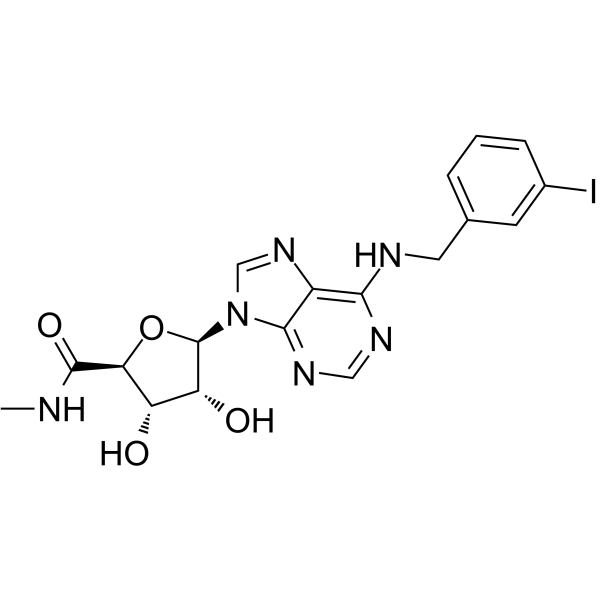
    Piclidenoson
    Maximum Cited Publications
    9 Publications Verification

    IB-MECA; CF-101

    Adenosine Receptor Apoptosis Inflammation/Immunology Cancer
    Piclidenoson (IB-MECA) is a first-in-class, orally active and selective A3 adenosine receptor (A3AR) agonist. Piclidenoson exhibits antiproliferative effect and induces apoptosis in different cancer cell types like melanoma, leukemia. Piclidenoson can be used for the research of autoimmune inflammatory diseases and COVID-19 .
    Piclidenoson
  • HY-A0093
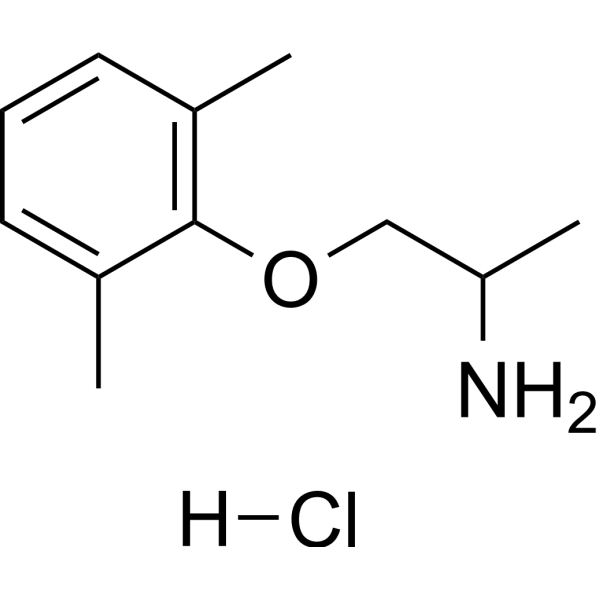
    Mexiletine hydrochloride
    2 Publications Verification

    KOE-1173 hydrochloride

    Sodium Channel Cardiovascular Disease Neurological Disease
    Mexiletine is an orally effective antiarrhythmic agent which has also been found to be effective for myotonia and neuropathic pain. Mexiletine exerts its efficacy through blocking sodium channels (IC50 : 75±8 μM for tonic block, 23.6±2.8 μM for use-dependent block), therefore can be used for cardiovascular and neurological research .
    Mexiletine hydrochloride
  • HY-A0236

    Sodium Channel Potassium Channel Calcium Channel Calmodulin Cardiovascular Disease
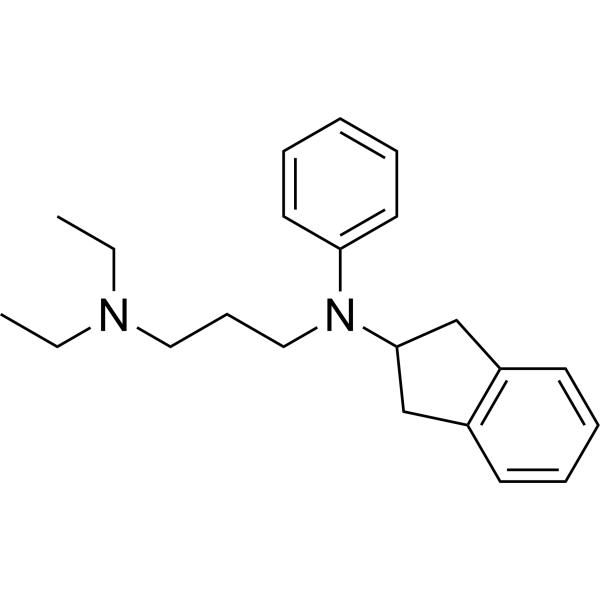
    Aprindine is an Ib-class anti-arrhythmic agent. Aprindine mainly exerts its effect by blocking sodium channels (INa), thereby reducing the excitability and conduction velocity of cardiac muscle cells. Aprindine significantly inhibits delayed potassium currents, which helps to prolong the atrial effective refractory period (AERP) and inhibit the occurrence of atrial fibrillation. Aprindine can also regulate intracellular calcium ion concentration by inhibiting Na +/Ca 2+ exchange current (INCX), thereby further stabilizing cardiac electrical activity. Aprindine can be used for the study of atrial fibrillation (AF) and ventricular arrhythmias .
    Aprindine
  • HY-A0236A

    Sodium Channel Potassium Channel Calcium Channel Calmodulin Cardiovascular Disease
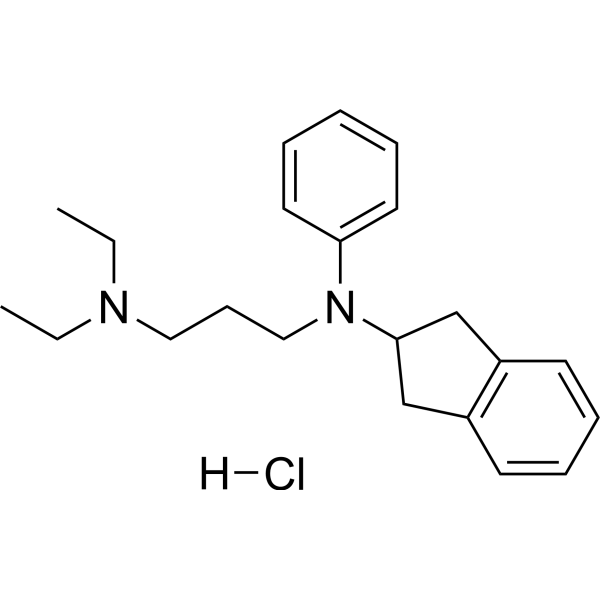
    Aprindine hydrochloride is an Ib-class anti-arrhythmic agent. Aprindine hydrochloride mainly exerts its effect by blocking sodium channels (INa), thereby reducing the excitability and conduction velocity of cardiac muscle cells. Aprindine hydrochloride significantly inhibits delayed potassium currents, which helps to prolong the atrial effective refractory period (AERP) and inhibit the occurrence of atrial fibrillation. Aprindine hydrochloride can also regulate intracellular calcium ion concentration by inhibiting Na +/Ca 2+ exchange current (INCX), thereby further stabilizing cardiac electrical activity. Aprindine hydrochloride can be used for the study of atrial fibrillation (AF) and ventricular arrhythmias .
    Aprindine hydrochloride
  • HY-106718

    Sodium Channel Cardiovascular Disease
    Barucainide is an Ib-class anti-arrhythmic agent (moderately blocking sodium channel). Barucainide exhibits concentration-dependent inhibitory effects on the maximum upstroke velocity (Vmax) of Purkinje fibers and ventricular muscle in dogs. Barucainide significantly shortens the action potential duration (APD). Barucainide significantly inhibits the pacemaker activity frequency of atrial tissue in rabbits and the enhanced automaticity of Purkinje fibers under normal resting potential in response to isoproterenol. Barucainide cannot inhibit the abnormal automaticity emission frequency of canine Purkinje fibers induced by barium. Barucainide can be used for research on arrhythmias .
    Barucainide
  • HY-A0093S

    KOE-1173-d6 hydrochloride

    Sodium Channel Cardiovascular Disease
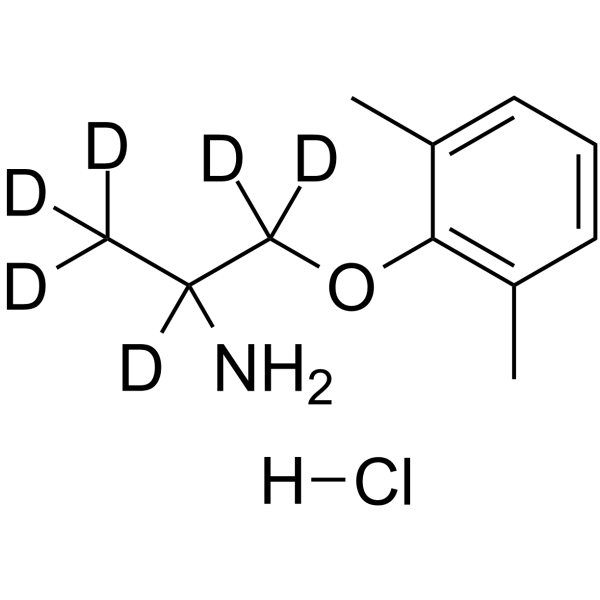
    Mexiletine-d6 (hydrochloride) is a deuterium labeled Mexiletine hydrochloride (KOE-1173 hydrochloride). Mexiletine hydrochloride, a Class IB antianhythmic, is a non-selective voltage-gated sodium channel blocker .
    Mexiletine-d6 hydrochloride
  • HY-161239A

    Antibiotic Infection Cancer
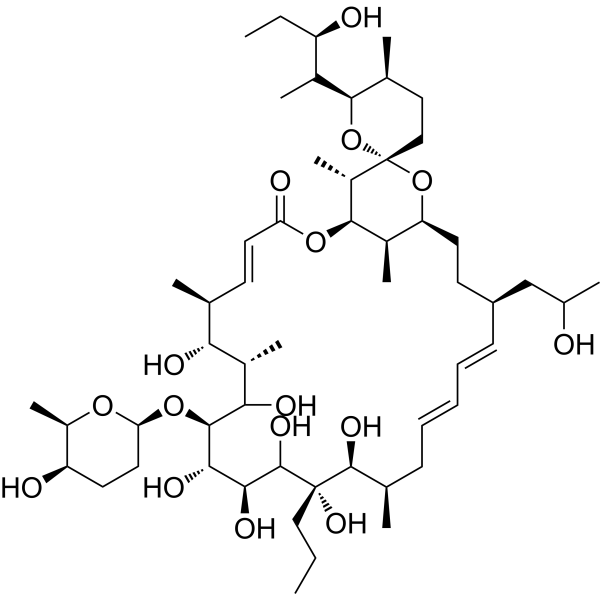
    IB-96212 (compound 5) is a member of oligomycin class which can be extracted ftom the marine Micromonospora sp. L-25-ES25-008 ref. IB-96212 is an antitumor antibiotic against P-388, it also exhibits antimicrobial activity against Micrococcus luteus .
    IB-96212
  • HY-A0093S1

    KOE-1173-d3 hydrochloride

    Isotope-Labeled Compounds Sodium Channel Cardiovascular Disease
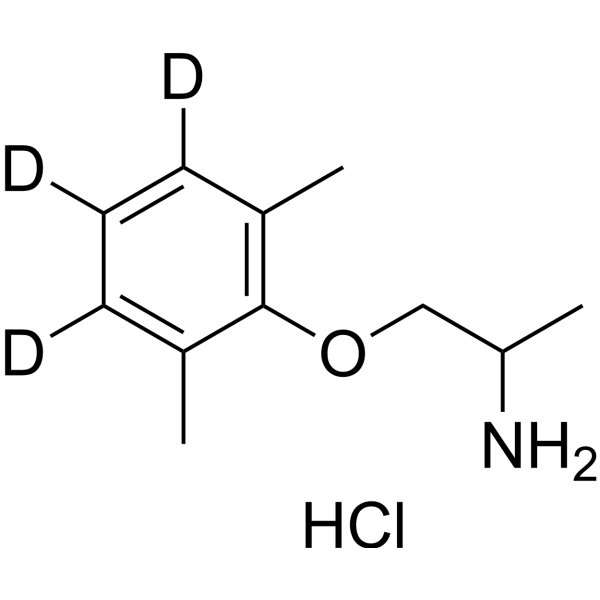
    Mexiletine-d3 (hydrochloride) is deuterium labeled Mexiletine (hydrochloride). Mexiletine hydrochloride (KOE-1173 hydrochloride), a Class IB antianhythmic, is a non-selective voltage-gated sodium channel blocker[1][2].
    Mexiletine-d3 hydrochloride
  • HY-W710915

    Isotope-Labeled Compounds Potassium Channel Cardiovascular Disease
    Aprindine hydrochloride-d10 is the deuterium labeled Aprindine hydrochloride (HY-A0236A). Aprindine hydrochloride is a class I-b anti-arrhythmic agent and a hERG channel blocker with an IC50 of 0.23 μM. Aprindine hydrochloride has inhibitory effects on Na+/Ca2+ exchanger currents, which is partly responsible for their antiarrhythmic and cardioprotective effects. Aprindine hydrochloride is widely used for trial and ventricular tachyarrhythmias research research.
    Aprindine hydrochloride-d10
  • HY-A0093R

    KOE-1173 hydrochloride (Standard)

    Sodium Channel Reference Standards Cardiovascular Disease Neurological Disease
    Mexiletine (hydrochloride) (Standard) is the analytical standard of Mexiletine (hydrochloride). This product is intended for research and analytical applications. Mexiletine is an orally effective antiarrhythmic agent which has also been found to be effective for myotonia and neuropathic pain. Mexiletine exerts its efficacy through blocking sodium channels (IC50 : 75±8 μM for tonic block, 23.6±2.8 μM for use-dependent block), therefore can be used for cardiovascular and neurological research .
    Mexiletine hydrochloride (Standard)
  • HY-402739

    CCR Inflammation/Immunology
    CCR2-IN-1 (Compound HO11553-TM) is a G protein-coupled receptor CCR2 inhibitor. CCR2-IN-1 slows the progression of idiopathic pulmonary fibrosis. CCR2-IN-1 can be used for the research of idiopathic pulmonary fibrosis .
    CCR2-IN-1
  • HY-A0236AR

    Reference Standards Sodium Channel Potassium Channel Calcium Channel Calmodulin Cardiovascular Disease
    Aprindine hydrochloride (Standard) is the analytical reference standard of Aprindine hydrochloride (HY-A0236A). This product is used for research and analytical applications. Aprindine hydrochloride is an Ib-class anti-arrhythmic agent. Aprindine hydrochloride mainly exerts its effect by blocking sodium channels (INa), thereby reducing the excitability and conduction velocity of cardiac muscle cells. Aprindine hydrochloride significantly inhibits delayed potassium currents, which helps to prolong the atrial effective refractory period (AERP) and inhibit the occurrence of atrial fibrillation. Aprindine hydrochloride can also regulate intracellular calcium ion concentration by inhibiting Na +/Ca 2+ exchange current (INCX), thereby further stabilizing cardiac electrical activity. Aprindine hydrochloride can be used for the study of atrial fibrillation (AF) and ventricular arrhythmias.
    Aprindine hydrochloride (Standard)

Inquiry Online

Your information is safe with us. * Required Fields.

Salutation


Country or Region *

Applicant Name *


Organization Name *

Department *


Email Address *


Product Name *

Cat. No.


Requested quantity *

Phone Number *


Remarks

Inquiry Online

Inquiry Information

Product Name:
Cat. No.:
Quantity:
MCE Japan Authorized Agent:

