1. Search Result
Search Result
Results for "

DTH

" in MedChemExpress (MCE) Product Catalog:

9

Inhibitors & Agonists

1

Natural
Products

Cat. No. Product Name Target Research Areas Chemical Structure
  • HY-N0856

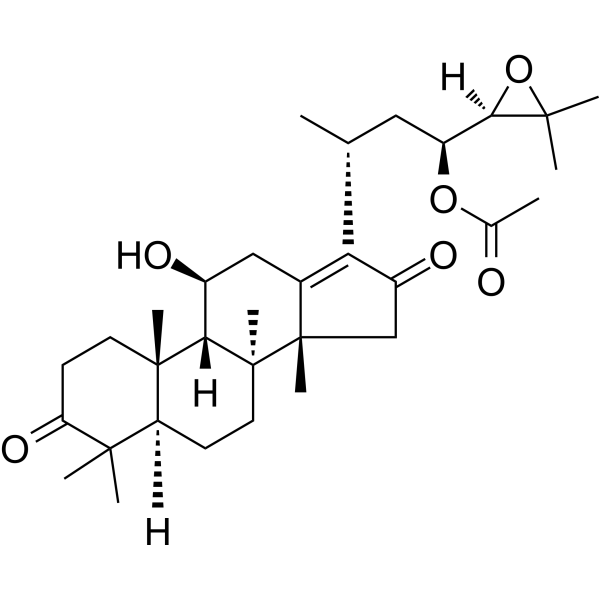
    23-O-Acetylalisol C; Alisol C monoacetate

    Others Cardiovascular Disease
    Alisol C 23-acetate, a natural product extracted from Alisma orinentale, can significantly and strongly inhibit DTH response after oral administration.
    Alisol C 23-acetate
  • HY-175397

    DFHBI-thalidomide

    PROTACs NF-κB Early 2 Factor (E2F) Bcl-2 Family VEGFR Cancer
    Dth (DFHBI-thalidomide) is an RNA aptamer-based PROTAC degrader. Dth can degrade a variety of endogenous proteins (such as mCherry, p50, p65 and E2F1) by replacing the 3′ module on the RNA scaffold with the RNA aptamer corresponding to the target protein. Dth upregulates IκB-α and Bax, and downregulates Bcl-2 and VEGF. Dth generates green fluorescence upon binding to the Broccoli RNA aptamer, enabling the tracing of RNA scaffolds. Dth can be used in cancer-related research .
    Dth
  • HY-16384

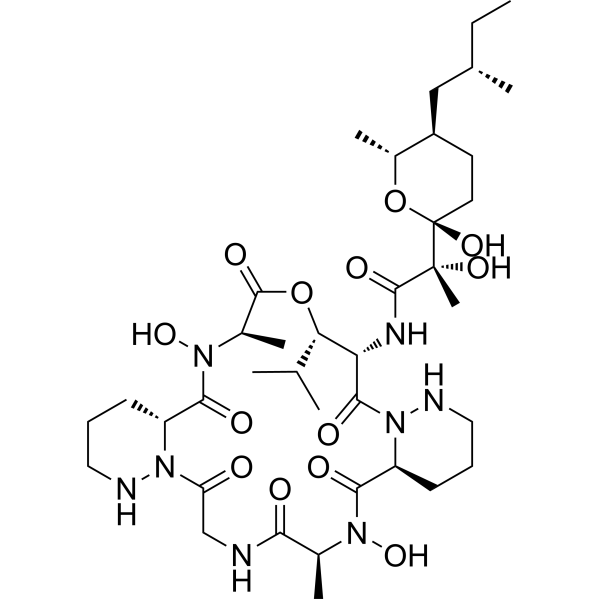
    Antibiotic L 156602; PD 124966

    Complement System Inflammation/Immunology
    L-156602 is a C5a receptor antagonist. L-156602 inhibits inflammation, and the migration of monocytes and neutrophils to the infiltrating site in mouse inflammatory models. L-156602 suppresses the efferent phase of delayed-type hypersensitivity (DTH) .
    L-156602
  • HY-176801

    Ligands for Target Protein for PROTAC Cancer
    Oxide-DFHBI-demethyl is a target aptamer ligand (Ligand for Target Protein for PROTAC). Oxide-DFHBI-demethyl can be used for synthesis of RNA aptamer-based PROTAC Dth (HY-175397) .
    Oxide-DFHBI-demethyl
  • HY-161833

    Interleukin Related TNF Receptor Inflammation/Immunology
    HSP90-IN-31 (compound Be01) causes reduction of CD80 and CD86 expression on dendritic cells (DCs). HSP90-IN-31 decreases the production of pro-inflammatory cytokines (IL-6, TNF-α, and IL-1β) in BMDC and peritoneal macrophages stimulated by LPS (HY-D1056). Under the delayed-type hypersensitivity (DTH) mice model, HSP90-IN-31 reduces ear swelling and pro-inflammatory cytokines in the spleen .
    HSP90-IN-31
  • HY-121365

    Bacterial Infection
    Forphenicinol is an immunomodulator and a derivative of the bacterial metabolite forphenicine. It increases the phagocytosis of yeast by peritoneal macrophages isolated from thioglycolate-stimulated mice. Forphenicinol (100 μg/animal) prevents cyclophosphamide-induced suppression of delayed-type hypersensitivity (DTH), as well as enhances DTH in response to the hapten oxazolone or sheep red blood cells in mice. It enhances the bactericidal activity of macrophages against P. aeruginosa in mice when administered at a dose of 0.5 mg/kg.2 Forphenicinol (15.6-1,000 μg/animal) increases survival in a mouse model of P. aeruginosa infection. It also inhibits tumor growth in S180 sarcoma and IMC carcinoma mouse xenograft models when administered at doses ranging from 0.05 to 5 mg/kg per day.
    Forphenicinol
  • HY-108492

    LPL Receptor Inflammation/Immunology
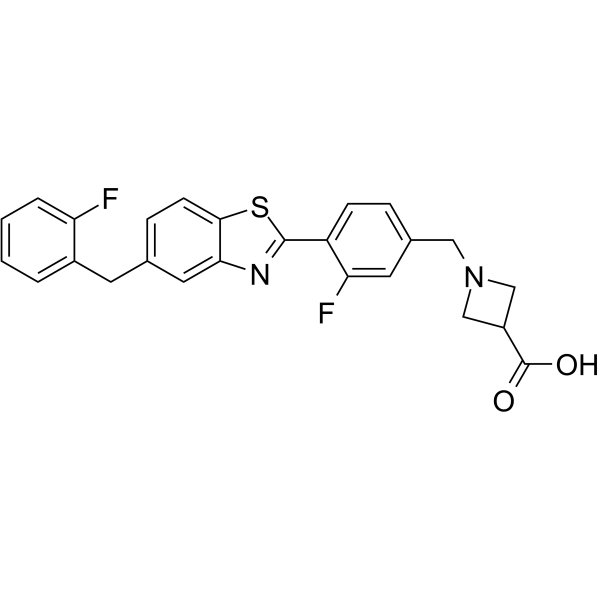
    TC-SP 14 (compound 14) is an orally active and potent S1P1 agonist (EC50 = 0.042 μM) with minimal activity at S1P3 (EC50 = 3.47 μM). TC-SP 14 significantly reduces blood lymphocyte counts and attenuates a delayed type hypersensitivity (DTH) response to antigen challenge .
    TC-SP 14
  • HY-176802

    Target Protein Ligand-Linker Conjugates Cancer
    Oxide-DFHBI-demethyl-C6-NH2 is a Target Protein Ligand-Linker Conjugate that incorporates a target aptamer ligand (HY-176801) and a PROTAC linker (HY-79577), which recruits E3 ligases. Oxide-DFHBI-demethyl-C6-NH2 can be used for synthesis of RNA aptamer-based PROTAC Dth (HY-175397) .
    Oxide-DFHBI-demethyl-C6-NH2
  • HY-165564

    Drug Derivative Inflammation/Immunology
    SM-8849 is a thiazole derivative with anti-arthritis activity. SM-8849 specifically targets and inactivates T cells involved in delayed-type hypersensitivity (DTH) reactions, thereby inhibiting the core immunopathological process of arthritis, but has little effect on the humoral immune process such as antibody production. In a mouse arthritis model induced by Type II Collagen (HY-NP003), SM-8849 significantly alleviated clinical symptoms, reduced bone destruction and joint damage. SM-8849 can be used for the study of autoimmune diseases such as rheumatoid arthritis .
    SM-8849

Inquiry Online

Your information is safe with us. * Required Fields.

Salutation


Country or Region *

Applicant Name *


Organization Name *

Department *


Email Address *


Product Name *

Cat. No.


Requested quantity *

Phone Number *


Remarks

Inquiry Online

Inquiry Information

Product Name:
Cat. No.:
Quantity:
MCE Japan Authorized Agent:

