121 Results for "

EDC

" in MedChemExpress (MCE) Product Catalog:
Products (121)

121 Results for "EDC" in MCE Product Catalog:

18
18 Publications Verification
Cat. No.: HY-18260
CAS No.: 80-05-7
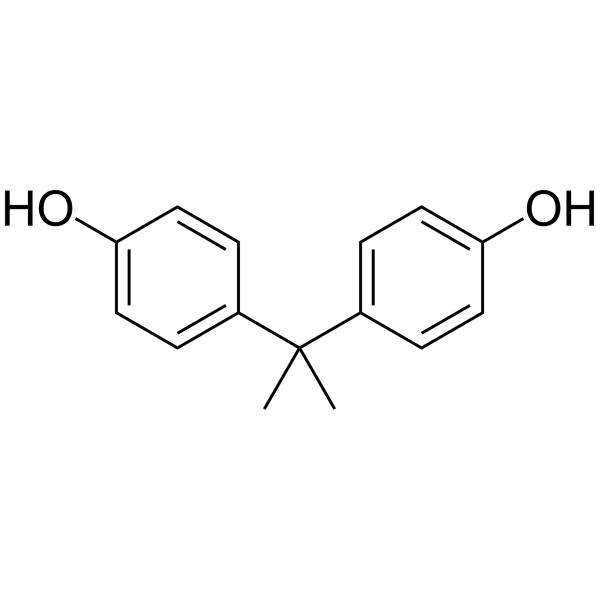
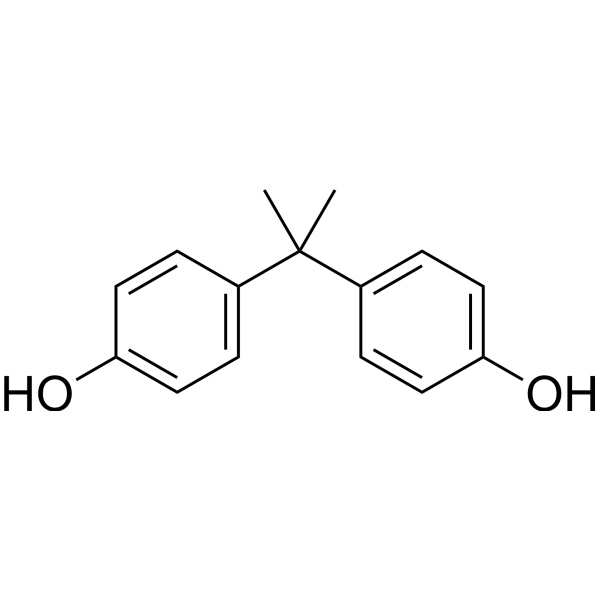
Bisphenol A is a phenolic, organic synthetic compound widely used in the production of polycarbonate plastics and epoxy resins. Bisphenol A is a reproductive, developmental, and systemic toxicant, often classified as an endocrine-disrupting compound (EDC). Bisphenol A is associated with many diseases, including cancers, cardiovascular diseases, respiratory diseases, diabetes, kidney diseases, obesity, and reproductivedisorders .
loading...
    loading...
18
18 Publications Verification
Cat. No.: HY-18260R
CAS No.: 80-05-7
Bisphenol A (Standard) is the analytical standard of Bisphenol A. This product is intended for research and analytical applications. Bisphenol A is a phenolic, organic synthetic compound widely used in the production of polycarbonate plastics and epoxy resins. Bisphenol A is a reproductive, developmental, and systemic toxicant, often classified as an endocrine-disrupting compound (EDC). Bisphenol A is associated with many diseases, including cardiovascular diseases, respiratory diseases, diabetes, kidney diseases, obesity, and reproductivedisorders .
loading...
    loading...
6
6 Cited Publications
Cat. No.: HY-A0067
CAS No.: 131-57-7
Synonyms: Benzophenone 3
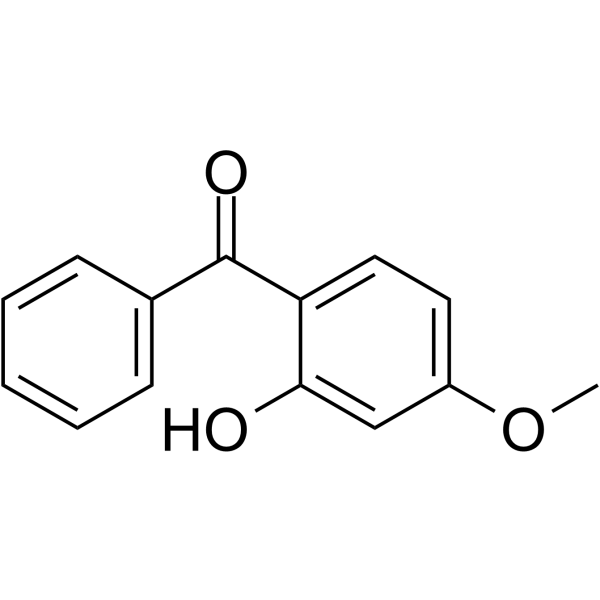
Oxybenzone (Benzophenone 3) is a commonly used UV filter in sun tans and skin protectants. Oxybenzone act as endocrine disrupting chemicals (EDCs) and can pass through the placental and blood-brain barriers. Benzophenone-3 impairs autophagy, alters epigenetic status, and disrupts retinoid X receptor signaling in apoptotic neuronal cells .
loading...
    loading...
3
3 Cited Publications
Cat. No.: HY-K0225

MCE Carboxyl Magnetic beads (200 nm, 10 mg/mL) are characterized by superparamagnetism, fast magnetic response, abundant carboxyl functional groups, monodispersity, and submicron scale particle size. Biological ligands (proteins, peptides, oligonucleotides, drug molecules, etc.) can be covalently coupled to the surface of microspheres under the action of special chemical reagents (such as EDC).

loading...
    loading...
2
2 Cited Publications
Cat. No.: HY-B2080A
CAS No.: 36637-19-1
Synonyms: EDC hydrochloride
Target:  

Sodium Channel

Research Areas:  

Infection Others

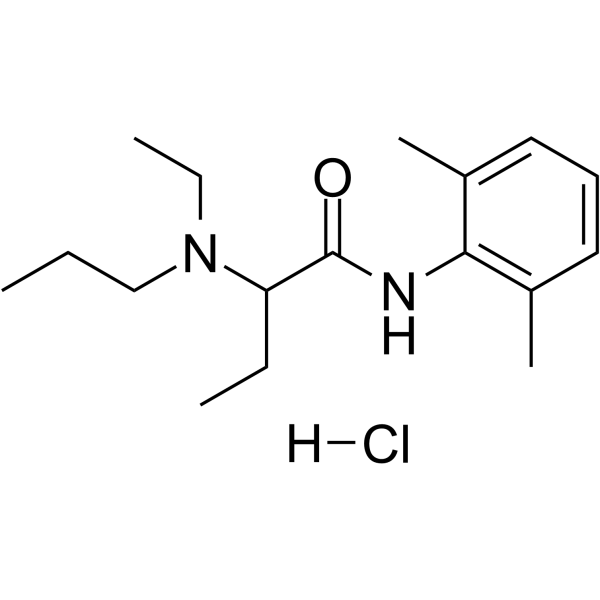
Etidocaine (hydrochloride) is a long aminoamide local agent that can suppress or relieve pain .
loading...
    loading...
Cat. No.: HY-18260S2
CAS No.: 263261-65-0
Bisphenol A- 13C12 is the 13C-labeled Bisphenol A (HY-18260). Bisphenol A is a phenolic, organic synthetic compound widely used in the production of polycarbonate plastics and epoxy resins. Bisphenol A is a reproductive, developmental, and systemic toxicant, often classified as an endocrine-disrupting compound (EDC). Bisphenol A is associated with many diseases, including cancers, cardiovascular diseases, respiratory diseases, diabetes, kidney diseases, obesity, and reproductivedisorders .
loading...
    loading...
Cat. No.: HY-18260S
CAS No.: 96210-87-6
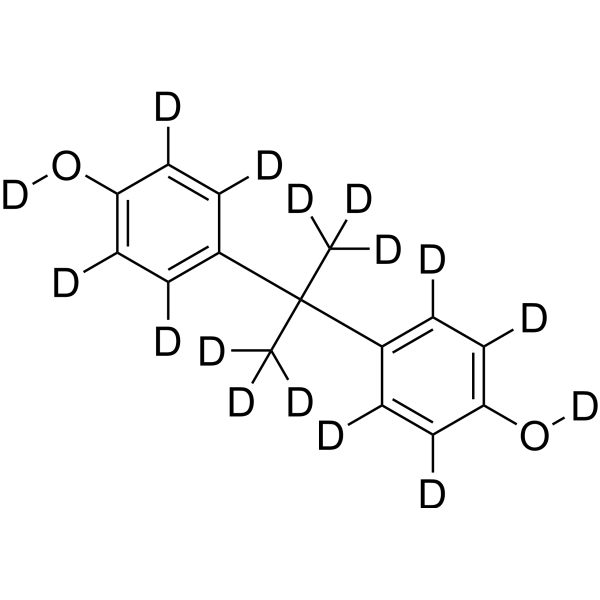
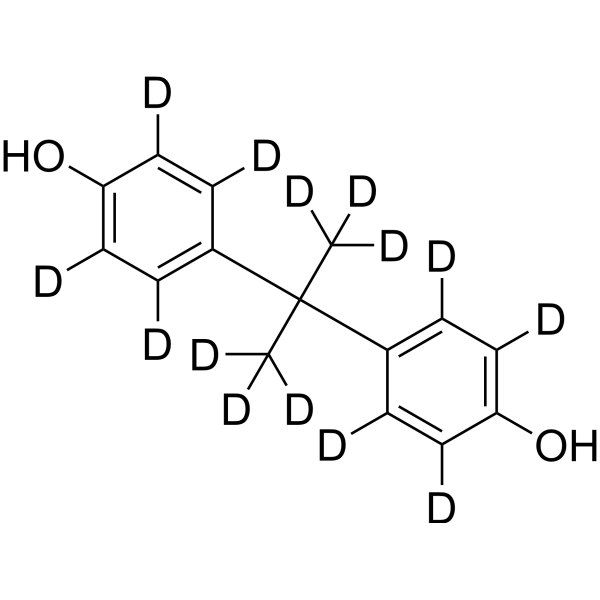
Bisphenol A-d16 is the deuterium labeled Bisphenol A . Bisphenol A is a phenolic, organic synthetic compound widely used in the production of polycarbonate plastics and epoxy resins. Bisphenol A is a reproductive, developmental, and systemic toxicant, often classified as an endocrine-disrupting compound (EDC). Bisphenol A is associated with many diseases, including cardiovascular diseases, respiratory diseases, diabetes, kidney diseases, obesity, and reproductivedisorders .
loading...
    loading...
Cat. No.: HY-W012001
CAS No.: 60142-89-4
Target:  

PROTAC Linkers

Research Areas:  

Cancer

Boc-7-Aminoheptanoic acid can be used as a PROTAC linker in the synthesis of PROTACs and other conjugation applications. Boc-7-Aminoheptanoic acid is an alkane chain with terminal carboxlic acid and Boc-protected amino groups. The terminal carboxylic acid can react with primary amine groups in the presence of activators (e.g. EDC, or HATU) to form a stable amide bond. The Boc group can be deprotected under mild acidic conditions to form the free amine.
loading...
    loading...
Cat. No.: HY-W654077
Synonyms: BPAF-d4; 4,4'-(Perfluoropropane-2,2-diyl)diphenol-d4
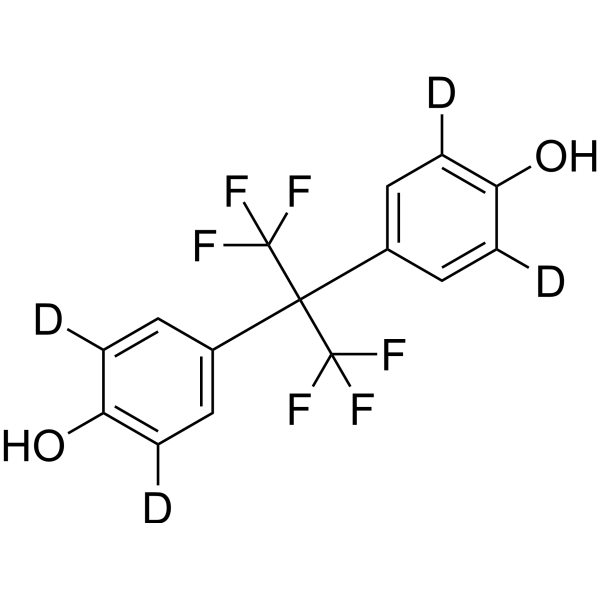
Bisphenol AF-d4 is the isotope labelled analog of Bisphenol AF (HY-W013782). Bisphenol AF is a full agonist for the estrogen receptor. Bisphenol AF acts as an endocrine-disrupting chemical (EDC), activating estrogen through the estrogen receptor Era. Bisphenol AF-d4 can be used for the research of endocrinology and cancer .
loading...
    loading...
Cat. No.: HY-18260S1
CAS No.: 86588-58-1
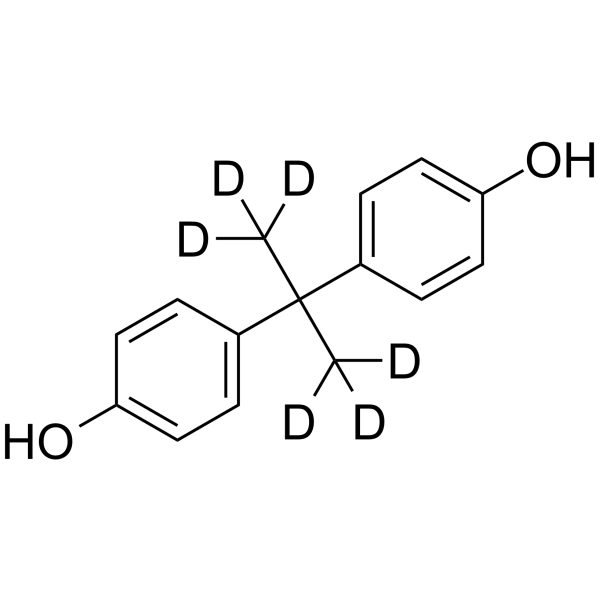
Bisphenol A-d6 is the deuterium labeled Bisphenol A. Bisphenol A is a phenolic, organic synthetic compound widely used in the production of polycarbonate plastics and epoxy resins. Bisphenol A is a reproductive, developmental, and systemic toxicant, often classified as an endocrine-disrupting compound (EDC). Bisphenol A is associated with many diseases, including cardiovascular diseases, respiratory diseases, diabetes, kidney diseases, obesity, and reproductivedisorders .
loading...
    loading...
Cat. No.: HY-18260S6
CAS No.: 120155-79-5
Bisphenol A-d14 is a deuterium labeled Bisphenol A (HY-18260). Bisphenol A is a phenolic, organic synthetic compound widely used in the production of polycarbonate plastics and epoxy resins. Bisphenol A is a reproductive, developmental, and systemic toxicant, often classified as an endocrine-disrupting compound (EDC). Bisphenol A is associated with many diseases, including cardiovascular diseases, respiratory diseases, diabetes, kidney diseases, obesity, and reproductivedisorders .
loading...
    loading...
Cat. No.: HY-D2751
CAS No.: 1178534-61-6
BP Fluor 488 Cadaverine is a carboxyl/carbonyl reactive building block used widely to modify carboxylic groups in the presence of activators (e.g. EDC or DCC) or activated esters (e.g. NHS esters) through a stable amide bond.
loading...
    loading...
Cat. No.: HY-W441002
CAS No.: 248253-94-3
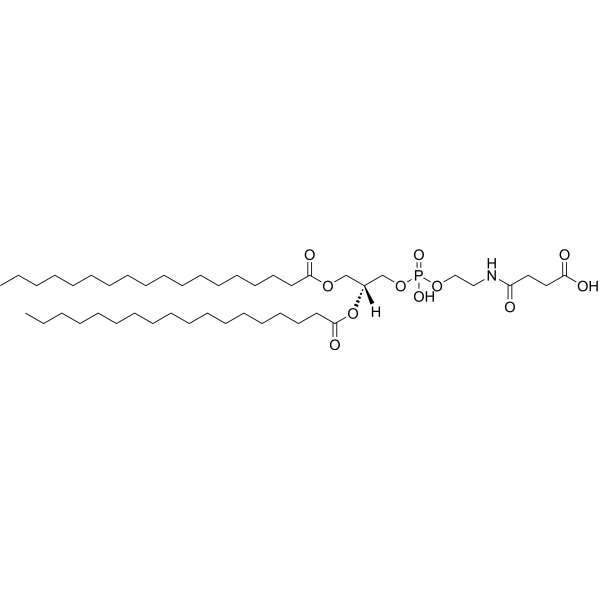
DSPE-succinic acid is a derivative of Succinic acid (HY-N0420) and an intermediate of DSPE-Doxorubicin. DSPE-succinic acid can be used to synthesize DSPE-Doxorubicin via EDC/NHS activation. DSPE-succinic acid is applicable to the research of triple-negative breast cancer .
loading...
    loading...
Cat. No.: HY-W097128
CAS No.: 128917-74-8
Target:  

PROTAC Linkers

Research Areas:  

Cancer

Fmoc-12-aminododecanoic acid is an alkane chain with terminal Fmoc-protected amine and carboxylic acid groups. The compound can be used as a PROTAC linker in the synthesis of PROTACs. The Fmoc group can be deprotected under basic condition to obtain the free amine which can be used for further conjugations. The terminal carboxylic acid can react with primary amine groups in the presence of activators (e.g. EDC, or HATU) to form a stable amide bond.
loading...
    loading...
Cat. No.: HY-B2080
CAS No.: 36637-18-0
Synonyms: EDC
Target:  

Sodium Channel

Research Areas:  

Infection Others

Etidocaine (EDC) is a long aminoamide local anesthetic .
loading...
    loading...
Cat. No.: HY-W008213
CAS No.: 6342-60-5
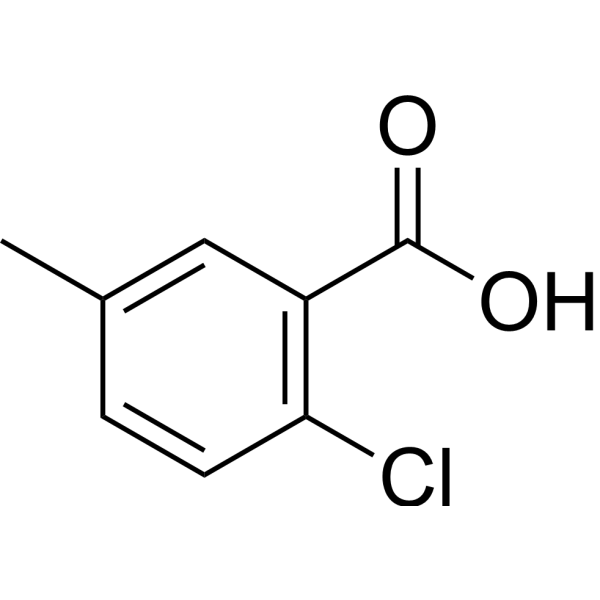
2-Chloro-5-methylbenzoic acid can be used to synthesize amide when coupled with 1-Adamantylmethanamine. 2-Chloro-5-methylbenzoic acid can also give analog when coupled with an amine using EDC hydrochlorie and Et3N in anhydrous CH2Cl2 .
loading...
    loading...
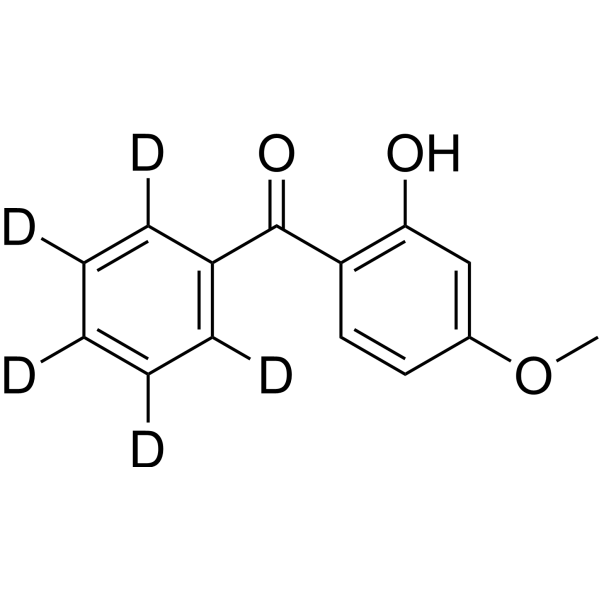
Cat. No.: HY-A0067S
CAS No.: 1219798-54-5
Oxybenzone-d5 is the deuterium labeled Oxybenzone . Oxybenzone (Benzophenone 3) is a commonly used UV filter in sun tans and skin protectants. Oxybenzone act as endocrine disrupting chemicals (EDCs) and can pass through the placental and blood-brain barriers. Benzophenone-3 impairs autophagy, alters epigenetic status, and disrupts retinoid X receptor signaling in apoptotic neuronal cells .
loading...
    loading...
Cat. No.: HY-W005828
CAS No.: 173435-78-4
Target:  

PROTAC Linkers

Research Areas:  

Cancer

9-(Boc-amino)nonanoic Acid is an alkane chain with terminal carboxlic acid and Boc-protected amino groups. 9-(Boc-amino)nonanoic acid can be used as a PROTAC linker in the synthesis of PROTACs. The terminal carboxylic acid can react with primary amine groups in the presence of activators (e.g. EDC, or HATU) to form a stable amide bond. The Boc group can be deprotected under mild acidic conditions to form the free amine.
loading...
    loading...
Cat. No.: HY-W009030
CAS No.: 126631-93-4
Target:  

PROTAC Linkers

Research Areas:  

Cancer

N-Fmoc-8-aminooctanoic acid can be used as a PROTAC linker in the synthesis of PROTACs. N-Fmoc-8-aminooctanoic acid is an alkane chain with terminal Fmoc-protected amine and carboxylic acid groups. The Fmoc group can be deprotected under basic condition to obtain the free amine which can be used for further conjugations. The terminal carboxylic acid can react with primary amine groups in the presence of activators (e.g. EDC, or HATU) to form a stable amide bond.
loading...
    loading...
Cat. No.: HY-W009056
CAS No.: 127582-76-7
Target:  

PROTAC Linkers

Research Areas:  

Cancer

Fmoc-7-amino-heptanoic acid is an alkane chain with terminal Fmoc-protected amine and carboxylic acid groups. Fmoc-7-amino-heptanoic acid can be used as a PROTAC linker in the synthesis of PROTACs. The Fmoc group can be deprotected under basic condition to obtain the free amine which can be used for further conjugations. The terminal carboxylic acid can react with primary amine groups in the presence of activators (e.g. EDC, or HATU) to form a stable amide bond.
loading...
    loading...

