1. Search Result
Search Result
Results for "

GC-MS

" in MedChemExpress (MCE) Product Catalog:

35

Inhibitors & Agonists

1

Fluorescent Dye

4

Biochemical Assay Reagents

2

Peptides

15

Natural
Products

4

Isotope-Labeled Compounds

2

Oligonucleotides

Cat. No. Product Name Target Research Areas Chemical Structure
  • HY-W004290

    Methyl margarate

    Environmental Pollutants Biochemical Assay Reagents Others
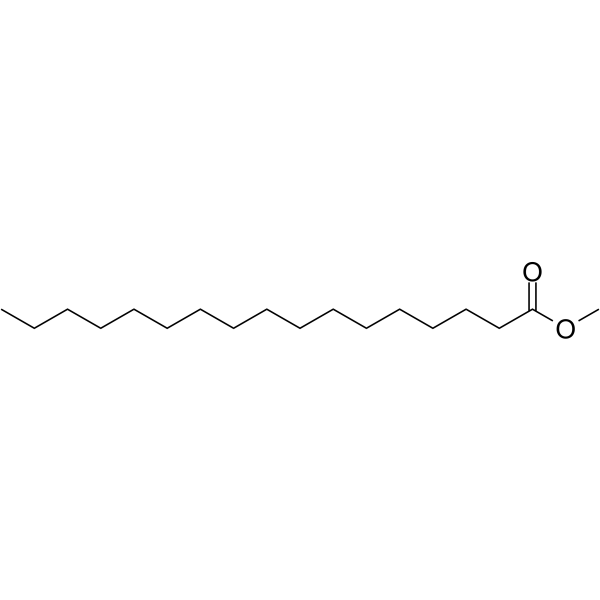
    Methyl heptadecanoate (Methyl margarate) is a methyl ester derivative of heptadecanoic acid (HY-W004284). Methyl heptadecanoate is used as an internal standard for the quantitative calibration of fatty acids in GC-MS analysis .
    Methyl heptadecanoate
  • HY-124265

    Endogenous Metabolite Metabolic Disease
    4β-Hydroxycholesterol is a major Cholesterol (HY-N0322) metabolite and a precursor in the synthesis of bile acids that is found in human circulation .
    4β-Hydroxycholesterol
  • HY-W089645

    N-Methyl-n-trimethylsilyltrifluoroacetamide

    Biochemical Assay Reagents Cancer
    2,2,2-Trifluoro-N-methyl-N-(trimethylsilyl)acetamide (N-Methyl-n-trimethylsilyltrifluoroacetamide) is an ester product commonly used for silylation reactions in analyticalchemistry. 2,2,2-Trifluoro-N-methyl-N-(trimethylsilyl)acetamide can be used in the derivatization step of metabolomics analysis with gas chromatography/mass spectrometry (GC/MS) or as a derivatization reagent in GC with flame ionization detection analysis. 2,2,2-Trifluoro-N-methyl-N-(trimethylsilyl)acetamide can be used in research for studying Tamoxifen (HY-13757A) resistant breast cancer cells and other disease pathways .
    2,2,2-Trifluoro-N-methyl-N-(trimethylsilyl)acetamide
  • HY-34487

    Resorcinol dimethyl ether

    Environmental Pollutants Drug Intermediate Others
    1,3-Dimethoxybenzene (Resorcinol dimethyl ether) is a volatile compound with a sweet medicinal odour carrying hazelnut, resinous, and woody notes. 1,3-Dimethoxybenzene is identified as a new volatile component of Douro region grape musts and port wines .
    1,3-Dimethoxybenzene
  • HY-132184

    5,6-EET; (±)5,6-EpETrE

    Adrenergic Receptor Calcium Channel Endocrinology
    5,6-Epoxyeicosatrienoic acid (5,6-EET; (±)5,6-EpETrE) is a fully racemic version of the enantiomeric forms biosynthesized from arachidonic acid by cytochrome P450 enzymes. In solution, 5,6-Epoxyeicosatrienoic acid degrades into 5,6-DiHET and 5,6-δ-lactone, which can be converted to 5,6-DiHET and quantified by GC-MS. In neuroendocrine cells, such as the anterior pituitary and pancreatic islets, 5,6-Epoxyeicosatrienoic acid has been implicated in the mobilization of calcium and hormone secretion. 5,6-Epoxyeicosatrienoic acid is an inhibitor of T-type voltage-gated calcium channels (Cav3) that inhibits isoforms Cav3.1, Cav3.2 (IC50=0.54 μM), and Cav3. and decreases nifedipine-resistant phenylephrine-induced vasoconstriction in isolated mouse mesenteric arteries via Cav3.2 blockade when used at a concentration of 3 μM. In addition, it is a substrate of COX-1 and COX-2.
    5,6-Epoxyeicosatrienoic acid
  • HY-W110929

    Xylene blue; C.I. Acid blue 1

    Environmental Pollutants Biochemical Assay Reagents Others
    Acid blue 1 (Xylene blue) is an anionic triarylmethane dye and substrate for photocatalytic degradation .
    Acid blue 1
  • HY-W004290S

    Isotope-Labeled Compounds Biochemical Assay Reagents Drug Derivative Others
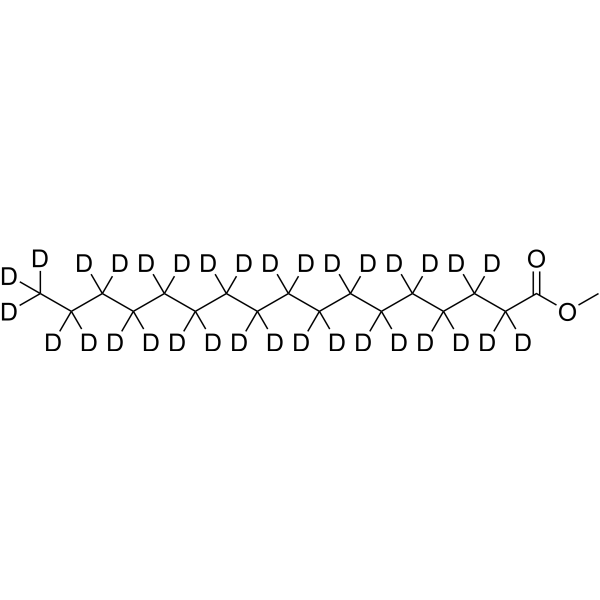
    Methyl heptadecanoate-d33 is the deuterium labeled Methyl heptadecanoate (HY-W004290). Methyl heptadecanoate (C17:0 methyl ester) is the methyl ester derivative of heptadecanoic acid (HY-W004284). Methyl heptadecanoate is used as an internal standard for quantitative calibration of fatty acids in GC-MS analysis .
    Methyl heptadecanoate-d33
  • HY-130189

    Drug Metabolite Others
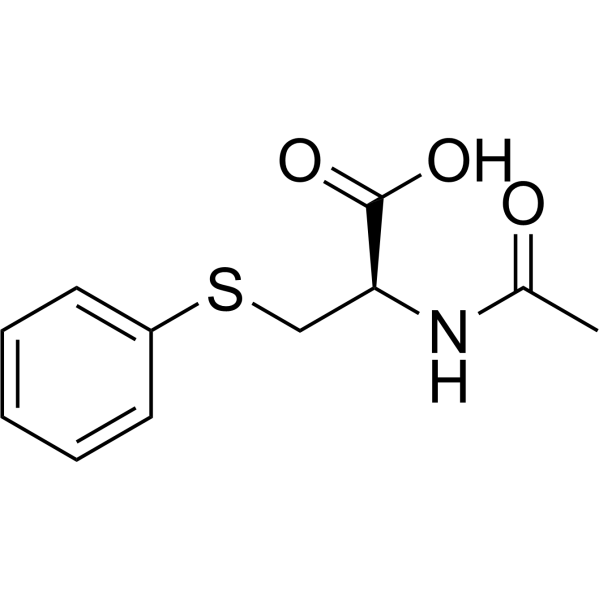
    S-Phenylmercapturic acid, a metabolite of benzene, can be used as a biomarker, identified by GC, HPLC (UV or fluorescence detection), GC-MS, LC-MS/MS or immunoassay .
    S-Phenylmercapturic acid
  • HY-W015466

    Endogenous Metabolite Metabolic Disease
    Acetylvaline is an amino acid derivative belonging to the N-acetylated amino acid family. Acetylvaline can be detected in small quantities in the urine of healthy individuals but shows significantly abnormal excretion in the urine of patients with maple syrup urine disease (MSUD). Acetylvaline can be used to detect MSUD .
    Acetylvaline
  • HY-W016103

    Bacterial Drug Intermediate Infection
    1-Hydroxy-2-naphthoic acid is a ubiquitous bicyclic intermediate metabolite in the microbial degradation process of polycyclic aromatic hydrocarbons (PAHs). 1-Hydroxy-2-naphthoic acid can be converted into 1,2-naphthalenediol, which enters the naphthalene degradation pathway and participates in the tricarboxylic acid (TCA) cycle to achieve complete mineralization .
    1-Hydroxy-2-naphthoic acid
  • HY-130189R

    Drug Metabolite Reference Standards Others
    S-Phenylmercapturic acid (Standard) is the analytical standard of S-Phenylmercapturic acid. This product is intended for research and analytical applications. S-Phenylmercapturic acid, a metabolite of benzene, can be used as a biomarker, identified by GC, HPLC (UV or fluorescence detection), GC-MS, LC-MS/MS or immunoassay .
    S-Phenylmercapturic acid (Standard)
  • HY-W127357

    Biochemical Assay Reagents Others
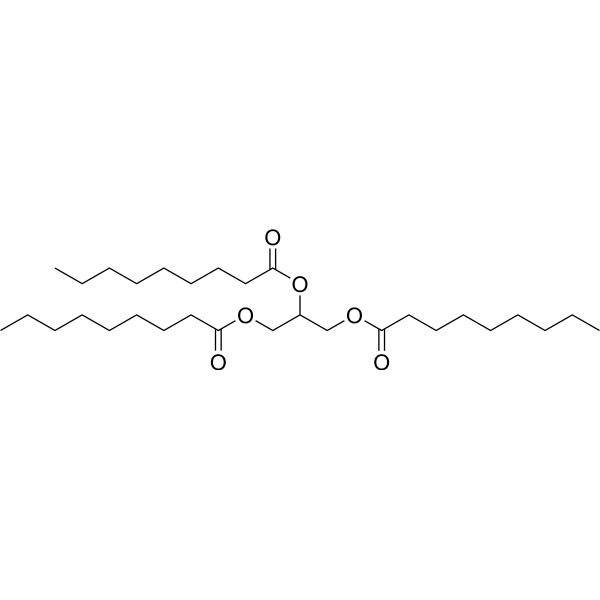
    Glyceryl trinonanoate is a triacylglycerol containing nonanoic acid at the sn-1, sn-2 and sn-3 positions. It has been found in Schizochytrium biomass. 1 1,2,3-Trinonanoyl-rac-glycerol increases blood levels of the ketone body D-(-)-3-hydroxybutyrate in neonatal rhesus monkeys. 2|1. Mioso, R., Toledo Marante, FJ, González, JE, et al. Schizochytrium sp. metabolite analysis. Oleaginous microbial sources of biodiesel by GC-MS. braz. J. Microbiology. 45(2), 403-409 (2014).|2. Tetrick, MA, Greer, FR and Benevenga, NJ Blood D- ( )-3-Hydroxybutyric acid concentration. Compare. medicine. 60(6), 486-490 (2010).
    Tripelargonin
  • HY-W007704

    Fungal Infection
    Methyl cyclohexanecarboxylate is a compound related to 2-cyclohexenylcarbonyl CoA. Methyl cyclohexanecarboxylate is produced during the incubation of 2-cyclohexenylcarbonyl CoA with cell-free extracts of Streptomyces collinus .
    Methyl cyclohexanecarboxylate
  • HY-W010221

    Trimethylanilinium hydroxide (ca. 8.5% in Methanol)

    Biochemical Assay Reagents Others
    Phenyltrimethylammonium hydroxide (Trimethylanilinium hydroxide (ca. 8.5% in Methanol)) is a derivatization reagent. Phenyltrimethylammonium hydroxide converts phenolic compounds including pentachlorophenol herbicides into methyl ethers .
    Phenyltrimethylammonium hydroxide
  • HY-119963A

    Bacterial Infection Inflammation/Immunology
    trans-β-Terpineol is a cyclic monoterpene alcohol present in Greek propolis and the essential oil of Peganum harmala seeds, with biological activities. trans-β-Terpineol serves as a substrate for biotransformation in tobacco suspension cells, where allylic hydroxylation occurs at specific sites. trans-β-Terpineol can be isolated from the leaves of Euryops arabicus. Terpineol (HY-N7851) exhibits antioxidant and antibacterial activities, and trans-β-terpineol is the bioactive compound responsible for the antibacterial effect in Euryops arabicus .
    trans-β-Terpineol
  • HY-N15629

    NSC 402921

    Biochemical Assay Reagents Others
    Melicopicine (NSC 402921) (Compound 2) is an acridone alkaloid. Melicopicine is a 1,2,3,4-tetraoxygenated acridone precursor, which can be co-isolated from S. megistophylla and detected by GC-MS in the extract from S. follicularis .
    Melicopicine
  • HY-W718719

    Others Others
    Tricyclene is a natural bicyclic monoterpene hydrocarbon, and it is one of the main components in the essential oil of Salvia aegyptiaca L .
    Tricyclene
  • HY-W127496

    Biochemical Assay Reagents Others
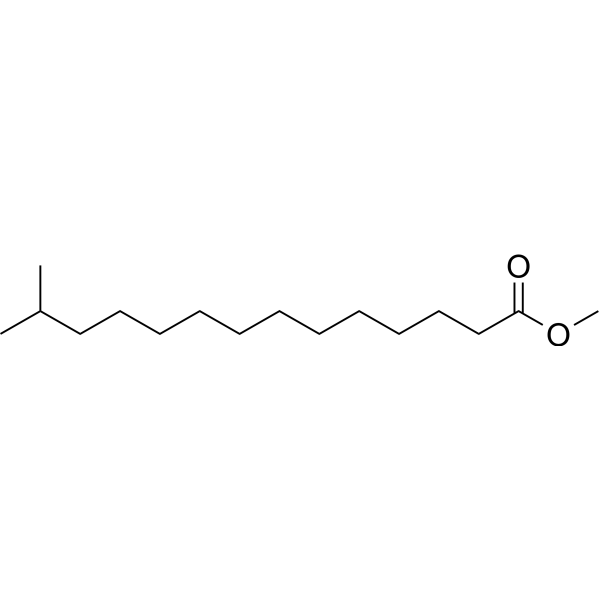
    Methyl 13-Methyltetradecanoate is a methylated bacterial fatty acid methyl ester. By GC-MS, it has been used as a marker of bacteria in sewage sludge and bacterial contamination in pharmaceutical manufacturing.
    Methyl 13-methyltetradecanoate
  • HY-N17261

    Others Others
    10-Nonacosanol is a long-chain fatty alcohol that can be found in Lonicera fragrantissima.
    10-Nonacosanol
  • HY-W102335

    Amino Acid Derivatives Inflammation/Immunology Cancer
    (Rac)-Threonine (Compound 19) is an amino acid derivative that can be found in the methanol (MeOH) extract of Rumex roseus L. The MeOH extract containing (Rac)-Threonine exhibits antioxidant and cytotoxic properties .
    (Rac)-Threonine
  • HY-155789

    Ceramide trihexoside (d18:1/17:0); Gb3(d18:1)(C17:0)

    Biochemical Assay Reagents Others
    C17 Globotriaosylceramide (d18:1/17:0) is a sphygosine lipid that can be used to quantify Globotriaosylceramide in plasma and urine of patients with Fabry disease by gas chromatography-mass spectrometry (GC-MS) .
    C17 Globotriaosylceramide (d18:1/17:0)
  • HY-W004290R

    Methyl margarate (Standard)

    Reference Standards Biochemical Assay Reagents Drug Derivative Others
    Methyl heptadecanoate (Standard) is the analytical standard of Methyl heptadecanoate (HY-W004290). This product is intended for research and analytical applications. Methyl heptadecanoate (C17:0 methyl ester) is the methyl ester derivative of heptadecanoic acid (HY-W004284). Methyl heptadecanoate is used as an internal standard for quantitative calibration of fatty acids in GC-MS analysis .
    Methyl heptadecanoate (Standard)
  • HY-130229

    (±)5,6-DiHETrE lactone

    Drug Derivative Cardiovascular Disease
    5,6-DiHET lactone ((±)5,6-DiHETrE lactone) is a lactonized form of 5,6-EET and 5,6-DiHET. In solution, 5(6)-EET degrades into 5(6)-DiHET and 5(6)-δ-lactone, which can be converted to 5(6)-DiHET and quantified by GC-MS.1 5,6-DiHET potently induces vasodilation of isolated canine coronary arterioles, with 41 and 100% inhibition occurring at 0.01 and 100 pM, respectively. It also induces vasodilation in isolated human microvessels and increases intracellular calcium levels in a dose-dependent manner, an effect that can be blocked by the nitric oxide scavenger L-NAME.
    (±)5,6-DHET lactone
  • HY-RS05335

    Small Interfering RNA (siRNA) Others

    GCM1 Human Pre-designed siRNA Set A contains three designed siRNAs for GCM1 gene (Human), as well as a negative control, a positive control, and a FAM-labeled negative control.

    GCM1 Human Pre-designed siRNA Set A
    GCM1 Human Pre-designed siRNA Set A
  • HY-RS05336

    Small Interfering RNA (siRNA) Others

    GCM2 Human Pre-designed siRNA Set A contains three designed siRNAs for GCM2 gene (Human), as well as a negative control, a positive control, and a FAM-labeled negative control.

    GCM2 Human Pre-designed siRNA Set A
    GCM2 Human Pre-designed siRNA Set A
  • HY-W015466S

    Endogenous Metabolite Metabolic Disease
    Acetylvaline- 15N is the 15N-labeled Acetylvaline (HY-W015466). Acetylvaline is an amino acid derivative belonging to the N-acetylated amino acid family. Acetylvaline can be detected in small quantities in the urine of healthy individuals but shows significantly abnormal excretion in the urine of patients with maple syrup urine disease (MSUD). Acetylvaline can be used to detect MSUD.
    Acetylvaline-15N
  • HY-W015466R

    Reference Standards Endogenous Metabolite Metabolic Disease
    Acetylvaline (Standard) is an analytical standard for acetylvaline (HY-W015466). This product is intended for research and analytical applications. Acetylvaline is an amino acid derivative that belongs to the N-acetylated amino acid family. Acetylvaline is detected in low levels in the urine of healthy individuals, but significant abnormal excretion is observed in the urine of individuals with maple syrup urine disease (MSUD). Acetylvaline can be used to detect MSUD.
    Acetylvaline (Standard)
  • HY-W015466S1

    Isotope-Labeled Compounds Endogenous Metabolite Metabolic Disease
    Acetylvaline-13C2 is the 13C-labeled Acetylvaline (HY-W015466). Acetylvaline is an amino acid derivative belonging to the N-acetylated amino acid family. Acetylvaline can be detected in small quantities in the urine of healthy individuals but shows significantly abnormal excretion in the urine of patients with maple syrup urine disease (MSUD). Acetylvaline can be used to detect MSUD.
    Acetylvaline-13C2
  • HY-W747972

    Drug Intermediate Infection
    Hydrosorbaldehyde is a green leaf volatile and also the main contributor to the fresh, grassy aroma of tea leaves. Hydrosorbaldehyde undergoes irreversible conversion to (E)-2-hexenal via (Z)-3:(E)-2-hexenal isomerase (CsHI). Hydrosorbaldehyde plays a key role in protecting plants against biotic stresses (such as pathogens and insects) and acting as a signaling chemical .
    Hydrosorbaldehyde
  • HY-W099771

    p-Propylanisole

    Environmental Pollutants Biochemical Assay Reagents Others
    4-Propylanisole (p-Propylanisole) is a biochemical analysis reagent. Structurally similar to Estragole (HY-N5060), 4-Propylanisole can be used as an internal standard for the GC-MS quantification of Estragole in fennel tea .
    4-Propylanisole
  • HY-P1938S1

    Isotope-Labeled Compounds Others
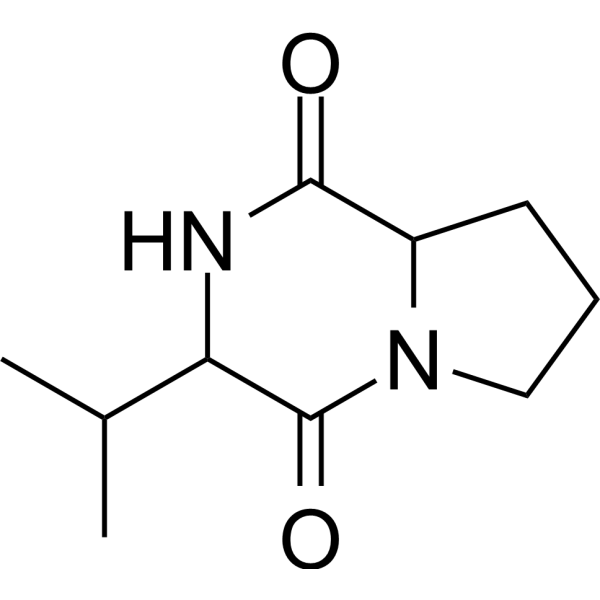
    Cyclo(Pro-Val)-d4 is the deuterium labeled Cyclo(Pro-Val) (HY-N11615). Cyclo(Pro-Val) can be isolated from Pseudomonas fluorescens GcM5-1A and has cytotoxicity .
    Cyclo(Pro-Val)-d4
  • HY-N18169

    Others Others
    Cadalene is a natural product present in the essential oil of Pelargonium sp. (rose-scented geranium) cultivated in Cuba .
    Cadalene
  • HY-N18206

    Others Others
    Clavolonine is a lycopodane-group Lycopodium alkaloid.Clavolonine can be found in the aerial parts of Huperzia saururus .
    Clavolonine
  • HY-N18251

    Fungal Infection Inflammation/Immunology
    trans-β-Bergamotene is a sesquiterpene hydrocarbon and antifungal agent found in the essential oil of Bixa orellana L. leaves. trans-β-Bergamotene possesses antiungal and anti-inflammatory properties. trans-β-Bergamotene can be used for the research of Candida albicans infection .
    trans-β-Bergamotene
  • HY-113053F

    PGA1-biotin

    Drug Derivative Infection
    Prostaglandin A1-biotin (PGA1-biotin) is a biotin-labeled Prostaglandin A1 (HY-113053). Prostaglandin A1-biotin can be found in the culture filtrate of rhizobia, and the culture filtrate containing this compound exhibits significant antiviral activity .
    Prostaglandin A1-biotin

Inquiry Online

Your information is safe with us. * Required Fields.

Salutation


Country or Region *

Applicant Name *


Organization Name *

Department *


Email Address *


Product Name *

Cat. No.


Requested quantity *

Phone Number *


Remarks

Inquiry Online

Inquiry Information

Product Name:
Cat. No.:
Quantity:
MCE Japan Authorized Agent:

