




Search Result
Results for "
HGFs
" in MedChemExpress (MCE) Product Catalog:
| Cat. No. |
Product Name |
Target |
Research Areas |
Chemical Structure |
-
- HY-P99250
-
|
MetMAb
|
c-Met/HGFR
|
Cancer
|
|
Onartuzumab (MetMAb) is a unique, humanized and affinity-matured monovalent (one-armed) monoclonal antibody against the MET receptor. Onartuzumab potently inhibits HGF binding and receptor phosphorylation and signaling. Onartuzumab has antibody-like pharmacokinetics and antitumor activity .
|
-
-
- HY-P99391
-
|
ABT-700; ABBV-400 Antibody
|
c-Met/HGFR
Apoptosis
|
Cancer
|
|
Telisotuzumab (ABT-700) is a bivalent humanized IgG1 anti-c-Met monoclonal antibody. Telisotuzumab binds cellular c-Met and disrupts its productive dimerization and activation induced by HGF or by the high density of c-Met on the cell surface independent of ligand. Telisotuzumab induces apoptosis. Telisotuzumab can be used for the study of cancers harboring amplified MET, such as gastric and lung cancers .
|
-
-
- HY-B2176R
-
|
Adenosine 5'-triphosphate (Standard)
|
Reference Standards
Endogenous Metabolite
|
Metabolic Disease
Inflammation/Immunology
|
ATP (Standard) is the analytical standard of ATP. This product is intended for research and analytical applications. ATP (Adenosine 5'-triphosphate) is a central component of energy storage and metabolism in vivo. ATP provides the metabolic energy to drive metabolic pumps and serves as a coenzyme in cells. ATP is an important endogenous signaling molecule in immunity and inflammation .
In Vitro: ATP (5 mM; 1 hour) co-treatment with LPS (1 μg/mL) has a synergistic effect on the activation of the NLRP3 inflammasome in HGFs .
ATP (2 mM; 0.5-24 hours) induces secretion of IL-1β, KC and MIP-2 from BMDMs in a caspase-1 activation-dependent manner .
ATP promotes neutrophil chemotaxis in vitro .
In Vivo: ATP (50 mg/kg; i.p.) protects mice against bacterial infection in vivo .
ATP induces the secretion of IL-1β, KC and MIP-2 and neutrophils recruitment in vivo .
|
-
-
- HY-P99192
-
|
LY2875358
|
c-Met/HGFR
|
Cancer
|
|
Emibetuzumab (LY2875358) is a humanized bivalent MET antibody (IgG4 type). Emibetuzumab shows high neutralization and internalization activities, resulting in inhibition of both HGF-dependent and HGF-independent MET pathway activation and tumor growth. Emibetuzumab can be used in study of cancer .
|
-
-
- HY-A0020
-
|
ED-71; 2-(3-hydroxypropoxy)-1,25-dihydroxyvitamin D3
|
VD/VDR
Apoptosis
|
Metabolic Disease
Inflammation/Immunology
Cancer
|
|
Eldecalcitol (ED-71) is an orally active vitamin D3 analogue, inhibits bone resorption and increases bone mineral density. Eldecalcitol (ED-71) displays anti-tumor effect and inhibits cell proliferation, migration and induces apoptosis by suppressing GPx-1 .
|
-
-
- HY-16969
-
|
PNB-0408; N-hexanoic-Try-Ile-(6)-amino hexanoic amide; Hexanoyl-Tyr-Ile-Ahx-NH2
|
c-Met/HGFR
|
Neurological Disease
|
|
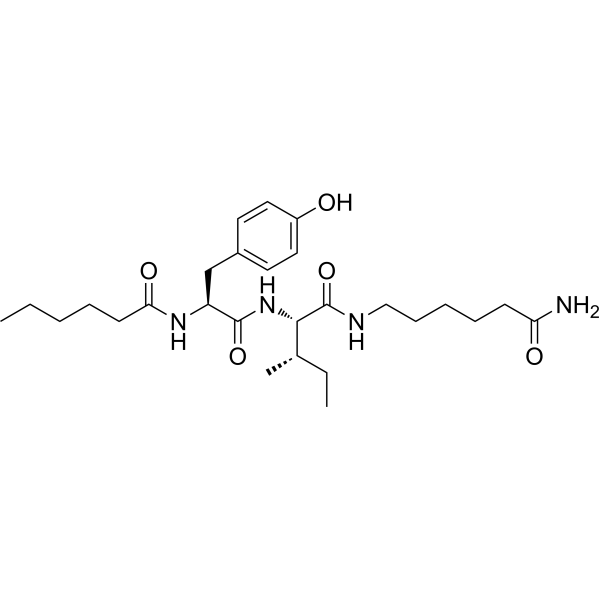
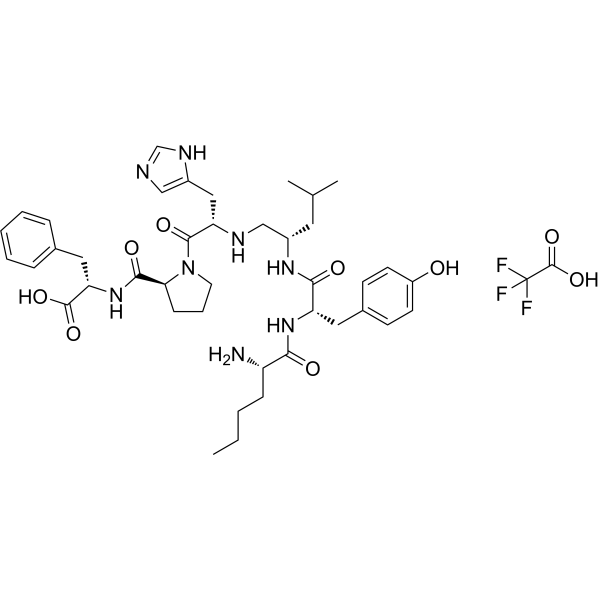
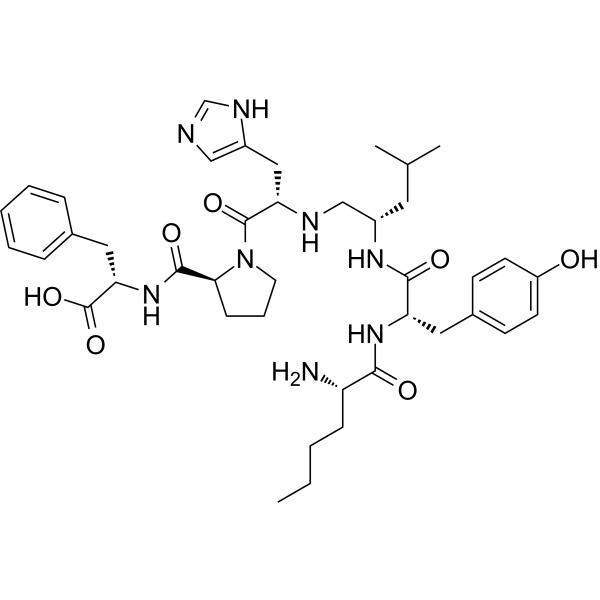
Dihexa, an oligopeptide drug, is an orally active and blood-brain barrier-permeable angiotensin IV analog. Dihexa binds to hepatocyte growth factor (HGF) with high affinity (Kd=65 pM) and potentiates its activity at its receptor, c-Met. Dihexa exhibits excellent antidementia activity and improves cognitive function in animal models. Dihexa may have therapeutic potential as a treatment Alzheimer’s disease .
|
-
-
- HY-18696
-
AMG-337
3 Publications Verification
|
c-Met/HGFR
Caspase
Apoptosis
|
Cancer
|
|
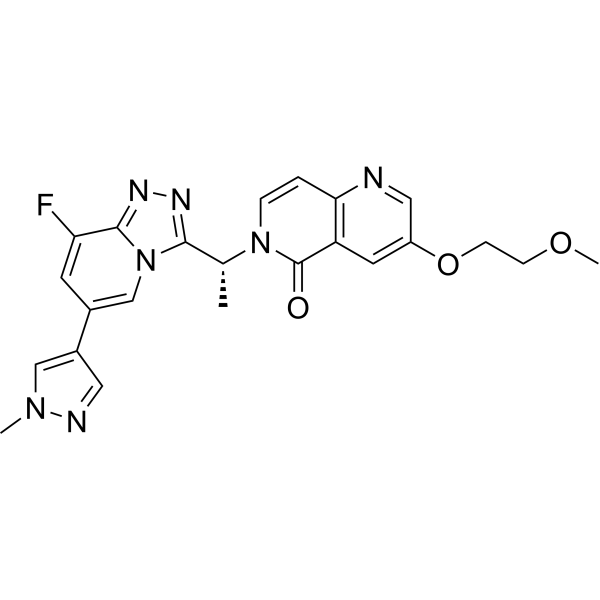
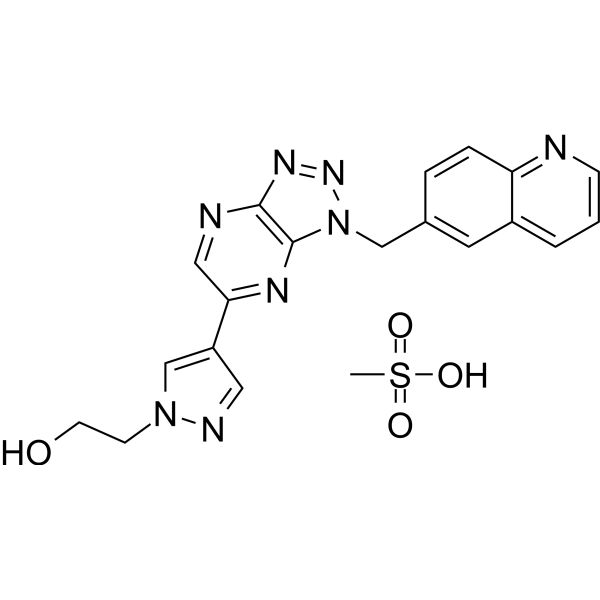
AMG-337 is a potent, orally active, selective MET kinase inhibitor with IC50 values of 1, 1, 4.7, 5, 21.5, 1077 and >4000 nM of WT MET, H1094R MET, M1250T MET, HGF-stimulated pMET (PC3 cells) MET, V1092I MET, Y1230H MET, and D1228H MET, respectively. AMG 337 inhibits the phosphorylation of MET and downstream effectors in MET-amplified cancer cell lines, resulting in an inhibition of MET-dependent cell proliferation and induction of apoptosis .
|
-
-
- HY-137455
-
-
-
- HY-P99217
-
|
AMG 102
|
c-Met/HGFR
|
Cancer
|
|
Rilotumumab (AMG 102) is an anti-HGF (anti-hepatocyte growth factor) monoclonal antibody, inhibits HGF/MET-driven signaling. Rilotumumab shows anti-tumor activity, and can be used in castration-resistant prostate cancer (CRPC) and solid tumor research .
|
-
-
- HY-P99196
-
|
|
c-Met/HGFR
|
Cancer
|
|
Ficlatuzumab is a monoclonal antibody (McAb) targeting human hepatocyte growth factor (HGF). Ficlatuzumab blocks the activation of the HGF/c-Met signaling pathway, and inhibits c-Met receptor-mediated cancer cell proliferation, migration, and invasion .
|
-
-
- HY-106961
-
|
ONO-AP 500-02
|
Prostaglandin Receptor
|
Cardiovascular Disease
|
|
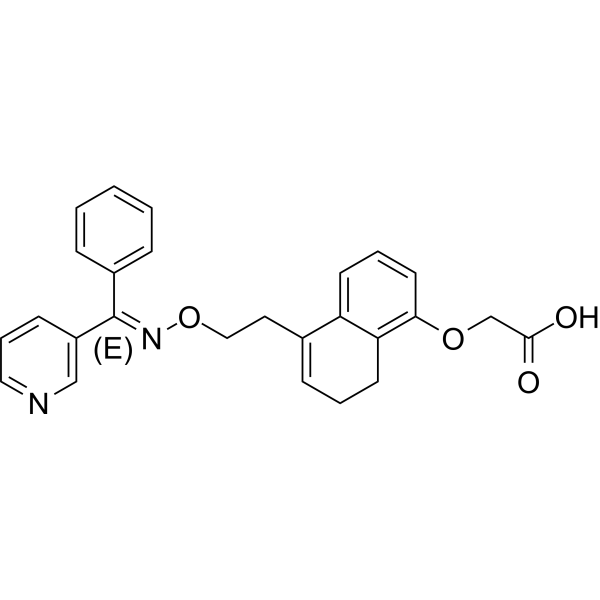
ONO 1301 (ONO-AP 500-02), a prostaglandin (PG) I2 mimetic, is an orally active, long-acting prostacyclin agonist with thromboxane-synthase inhibitory activity. ONO 1301 promotes production of hepatocyte growth factor (HGF) from various cell types and ameliorates ischemia-induced left ventricle dysfunction in the mouse, rat and pig .
|
-
-
- HY-114363A
-
|
|
c-Met/HGFR
|
Cancer
|
|
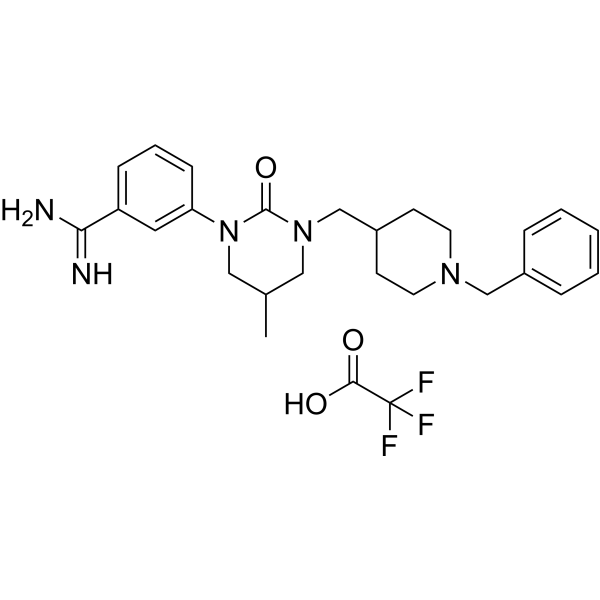
SRI 31215 (TFA) is a Matriptase/Hepsin/hepatocyte growth factor activator (HGFA) triplex inhibitor and mimics the activity of HAI-1/2 (endogenous inhibitors of HGF activation). SRI 31215 has potent inhibitory activity against matriptase, hepsin and HGFA with IC50 values of 0.69 μM, 0.65 μM and 0.30 μM, respectively. SRI 31215 can be used for the research of cancer .
|
-
-
- HY-106961A
-
|
(Z)-ONO-AP 500-02
|
Prostaglandin Receptor
|
Cardiovascular Disease
|
|
(Z)-ONO 1301 is the isomer of ONO 1301 (HY-106961), and can be used as an experimental control. ONO 1301 (ONO-AP 500-02), a prostaglandin (PG) I2 mimetic, is an orally active, long-acting prostacyclin agonist with thromboxane-synthase inhibitory activity. ONO 1301 promotes production of hepatocyte growth factor (HGF) from various cell types and ameliorates ischemia-induced left ventricle dysfunction in the mouse, rat and pig .
|
-
-
- HY-P1415A
-
-
-
- HY-176901
-
|
|
c-Met/HGFR
|
Cancer
|
|
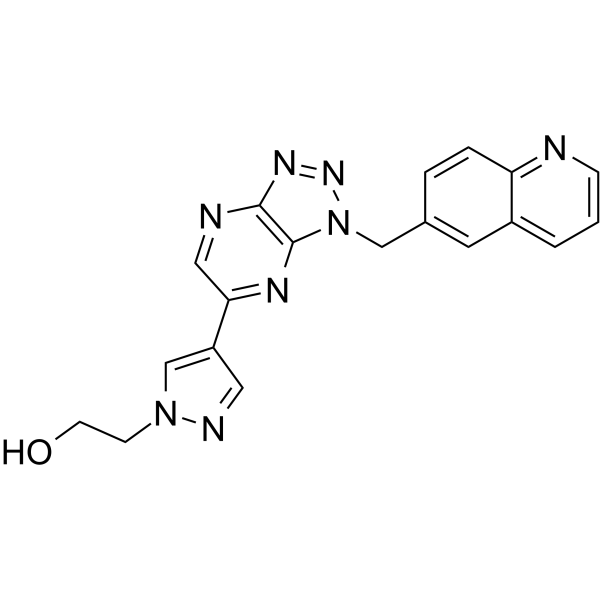
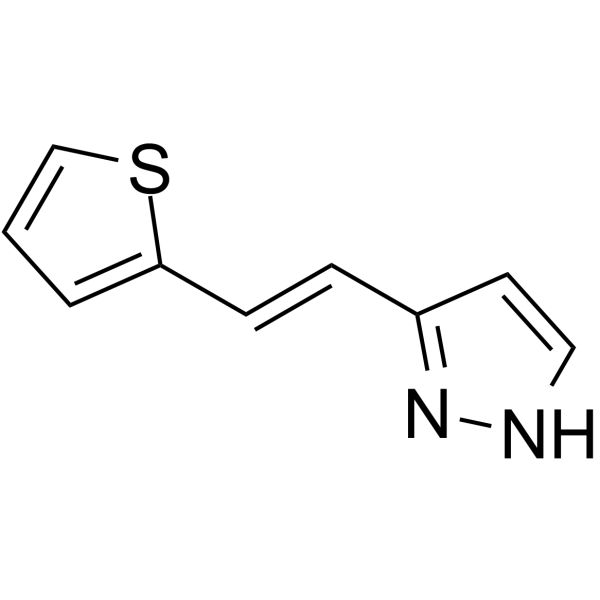
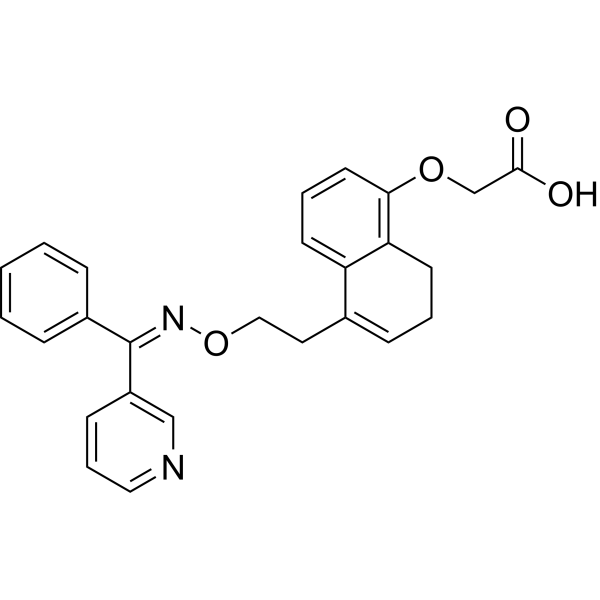
HGF-IN-1 ((the compound on the left in the second line of page 77) is a HGF inhibitor. HGF-IN-1 can be used in cancer research .
|
-
-
- HY-114363
-
|
|
c-Met/HGFR
|
Cancer
|
|
SRI 31215 is a Matriptase/Hepsin/hepatocyte growth factor activator (HGFA) triplex inhibitor and mimics the activity of HAI-1/2 (endogenous inhibitors of HGF activation). SRI 31215 has potent inhibitory activity against matriptase, hepsin and HGFA with IC50 values of 0.69 μM, 0.65 μM and 0.30 μM, respectively. SRI 31215 can be used for the research of cancer .
|
-
-
- HY-120159
-
|
|
SHP2
SHP1
Phosphatase
|
Cancer
|
|
GS-493 is a selective protein tyrosine phosphatase SHP2 (PTPN11) inhibitor with an IC50 of 71 nM. GS-493 is 29- and 45-fold more active toward SHP2 than related SHP1 and PTP1B. GS-493 blocks cellular motility and growth of cancer cells. Antitumor activity .
|
-
-
- HY-P991660
-
|
|
c-Met/HGFR
|
Cancer
|
|
ARGX-111 is an anti-MET antibody. ARGX-111 blocks HGF-dependent and -independent signaling, downregulating MET expression on the tumor cell surface. ARGX-111 depletes MET-expressing circulating tumor cells through enhanced antibody-dependent cell-mediated cytotoxicity (ADCC), thereby inhibiting tumor metastasis. ARGX-111 depletes circulating tumor cells and inhibits bone and lung metastasis in an orthotopic mouse model of metastatic breast cancer. ARGX-111 is promising for research in breast cancer and other cancers .
|
-
-
- HY-P991589
-
|
NOV-1105
|
c-Met/HGFR
|
Cancer
|
|
SFN68 is a humanized IgG1 neutralizing monoclonal antibody targeting HGF. SFN68 significantly inhibits HGF/c-Met interaction, c-Met activation, and, cell scattering and proliferation mediated by HGF. SFN68 can be used for cancers research .
|
-
-
- HY-P1415
-
-
-
- HY-P991565
-
|
|
c-Met/HGFR
|
Cancer
|
|
CE-355621 is a humanized anti-c-Met IgG1 monoclonal antibody. CE-355621 can effectively bind with human c-Met (KD = 200 pM, IC50 = 466 pM) in A549 cells and cyno c-Met (KD = 610 pM) in cynomolgus kidney cells. CE-355621 inhibits the c-Met signaling pathway by blocking HGF binding. CE-355621 significantly inhibits the growth of tumors dependent on the c-Met/HGF pathway. CE-355621 can be used for research on cancer such as glioblastoma and gastric cancer .
|
-
-
- HY-P99391A
-
|
ABT-700 (powder)
|
c-Met/HGFR
Apoptosis
|
Cancer
|
|
Telisotuzumab (ABT-700) (powder) is a bivalent humanized IgG1 anti-c-Met monoclonal antibody. Telisotuzumab (powder) binds cellular c-Met and disrupts its productive dimerization and activation induced by HGF or by the high density of c-Met on the cell surface independent of ligand. Telisotuzumab (powder) induces apoptosis. Telisotuzumab (powder) can be used for the study of cancers harboring amplified MET, such as gastric and lung cancers .
|
-
-
- HY-10338A
-
|
|
c-Met/HGFR
VEGFR
|
Cancer
|
|
Foretinib phosphate is an orally bioavailable small molecule with potential anti-tumor activity. Foretinib phosphate can selectively inhibit hepatocyte growth factor (HGF) receptor c-MET and vascular endothelial growth factor receptor 2 (VEGFR2), thereby potentially inhibiting tumor angiogenesis, tumor cell proliferation and metastasis. Foretinib phosphate shows different anti-cancer activity from cabozantinib in lung cancer cells and has stronger inhibitory effects on targets such as MEK1/2, FER and AURKB .
|
-
-
- HY-165284
-
|
|
c-Met/HGFR
Anaplastic lymphoma kinase (ALK)
|
Cancer
|
|
CM-118 is a potent and selective c-Met and ALK inhibitor. CM-118 inhibits the HGF-induced c-Met phosphorylation. CM-118 inhibits phosphorylation of ALK, EML4-ALKv1, ALK F1174L, and EMl4-ALKv1 L1196M, with respective IC50 values 0.92, 1.25, 1.9, and 3.5 μM. CM-118 exhibits anticancer activity against cancers dependent on the c-Met or ALK oncogenic pathways .
|
-
-
- HY-E70758
-
|
|
c-Met/HGFR
|
Cancer
|
|
Mesenchymal-to-epithelial transition (MET) is a receptor tyrosine kinase for hepatocyte growth factor (HGF). MET overactivation is strongly associated with angiogenesis, cellular motility, growth, and invasion. Aberrant MET signaling can drive tumorigenesis in several cancer types through various molecular mechanisms, including MET amplification, MET exon 14 skipping mutation, MET overexpression, and MET fusions. MET Y1235D is a mutant of MET. MET Y1235D Recombinant Human Active Protein Kinase is a recombinant MET Y1235D protein that can be used to study MET Y1235D-related functions .
|
-
-
- HY-E70751
-
|
|
c-Met/HGFR
|
Cancer
|
|
Mesenchymal-to-epithelial transition (MET) is a receptor tyrosine kinase for hepatocyte growth factor (HGF). MET overactivation is strongly associated with angiogenesis, cellular motility, growth, and invasion. Aberrant MET signaling can drive tumorigenesis in several cancer types through various molecular mechanisms, including MET amplification, MET exon 14 skipping mutation, MET overexpression, and MET fusions. MET G1163R is a mutant of MET. MET G1163R Recombinant Human Active Protein Kinase is a recombinant MET G1163R protein that can be used to study MET G1163R-related functions .
|
-
-
- HY-A0020R
-
|
ED-71 (Standard); 2-(3-hydroxypropoxy)-1,25-dihydroxyvitamin D3 (Standard)
|
Reference Standards
VD/VDR
Apoptosis
|
Metabolic Disease
Inflammation/Immunology
Cancer
|
|
Eldecalcitol (Standard) is the analytical standard of Eldecalcitol. This product is intended for research and analytical applications. Eldecalcitol (ED-71) is an orally active vitamin D3 analogue, inhibits bone resorption and increases bone mineral density. Eldecalcitol (ED-71) displays anti-tumor effect and inhibits cell proliferation, migration and induces apoptosis by suppressing GPx-1 .
|
-
-
- HY-RS06152
-
|
|
Small Interfering RNA (siRNA)
|
Others
|
|
HGF Human Pre-designed siRNA Set A contains three designed siRNAs for HGF gene (Human), as well as a negative control, a positive control, and a FAM-labeled negative control.
|
-
HGF Human Pre-designed siRNA Set A
-
- HY-RS16504
-
|
|
Small Interfering RNA (siRNA)
|
Others
|
|
Hgf Mouse Pre-designed siRNA Set A contains three designed siRNAs for Hgf gene (Mouse), as well as a negative control, a positive control, and a FAM-labeled negative control.
|
-
Hgf Mouse Pre-designed siRNA Set A
-
- HY-174670
-
|
|
mRNA
|
Cancer
|
|
Human HGF mRNA encodes the human hepatocyte growth factor (HGF) protein, a protein that binds to the hepatocyte growth factor receptor to regulate cell growth, cell motility and morphogenesis in numerous cell and tissue types. It also plays a role in angiogenesis, tumorogenesis, and tissue regeneration.
|
-
-
- HY-145263
-
|
|
Ser/Thr Protease
|
Cancer
|
|
VD2173 is a side chain cyclized macrocyclic peptide inhibitor of HGF-activating serine proteases. VD2173 potently inhibits matriptase and hepsin. VD2173 can be used for the research of lung cancer .
|
-
-
- HY-P990949
-
|
YYB-101; ABX101
|
c-Met/HGFR
|
Inflammation/Immunology
|
|
HY-P990949 is an HGF-targeting IgG4κ type humanized antibody, the recommed isotype control is Human IgG4 (S228P) kappa, Isotype Control (HY-P99003) .
|
-
-
- HY-N13286
-
|
|
Bacterial
|
Infection
|
|
Glycozolidal (compound 12) is a carbazole alkaloid with antibacterial activity against P. gingivalis. Glycozolidal is cytotoxic against human gingival fibroblasts (HGFs) and monocytes (U937) in vitro with IC50 values of 120.86 µg/mL and 97.74 µg/mL, respectively .
|
-
-
- HY-154988
-
|
|
MARK
|
Neurological Disease
Cancer
|
|
MARK4 inhibitor 4 is a MARK4 inhibitor with an IC50 of 1.49 μM. MARK4 inhibitor 4 can be used in cancer and tau lesion-related research .
|
-
-
- HY-E70754
-
|
|
c-Met/HGFR
|
Cancer
|
|
Mesenchymal-to-epithelial transition (MET) is a receptor tyrosine kinase for hepatocyte growth factor (HGF). MET overactivation is strongly associated with angiogenesis, cellular motility, growth, and invasion. Aberrant MET signaling can drive tumorigenesis in several cancer types through various molecular mechanisms, including MET amplification, MET exon 14 skipping mutation, MET overexpression, and MET fusions. MET Y1230A is a mutant of MET. MET Y1230A Recombinant Human Active Protein Kinase is a recombinant MET Y1230A protein that can be used to study MET Y1230A-related functions .
|
-
-
- HY-E70756
-
|
|
c-Met/HGFR
|
Cancer
|
|
Mesenchymal-to-epithelial transition (MET) is a receptor tyrosine kinase for hepatocyte growth factor (HGF). MET overactivation is strongly associated with angiogenesis, cellular motility, growth, and invasion. Aberrant MET signaling can drive tumorigenesis in several cancer types through various molecular mechanisms, including MET amplification, MET exon 14 skipping mutation, MET overexpression, and MET fusions. MET Y1230D is a mutant of MET. MET Y1230D Recombinant Human Active Protein Kinase is a recombinant MET Y1230D protein that can be used to study MET Y1230D-related functions .
|
-
-
- HY-E70749
-
|
|
c-Met/HGFR
|
Cancer
|
|
Mesenchymal-to-epithelial transition (MET) is a receptor tyrosine kinase for hepatocyte growth factor (HGF). MET overactivation is strongly associated with angiogenesis, cellular motility, growth, and invasion. Aberrant MET signaling can drive tumorigenesis in several cancer types through various molecular mechanisms, including MET amplification, MET exon 14 skipping mutation, MET overexpression, and MET fusions. MET D1228N is a mutant of MET. MET D1228N Recombinant Human Active Protein Kinase is a recombinant MET D1228N protein that can be used to study MET D1228N-related functions .
|
-
-
- HY-E70748
-
|
|
c-Met/HGFR
|
Cancer
|
|
Mesenchymal-to-epithelial transition (MET) is a receptor tyrosine kinase for hepatocyte growth factor (HGF). MET overactivation is strongly associated with angiogenesis, cellular motility, growth, and invasion. Aberrant MET signaling can drive tumorigenesis in several cancer types through various molecular mechanisms, including MET amplification, MET exon 14 skipping mutation, MET overexpression, and MET fusions. MET D1228H is a mutant of MET. MET D1228H Recombinant Human Active Protein Kinase is a recombinant MET D1228H protein that can be used to study MET D1228H-related functions .
|
-
-
- HY-E70755
-
|
|
c-Met/HGFR
|
Cancer
|
|
Mesenchymal-to-epithelial transition (MET) is a receptor tyrosine kinase for hepatocyte growth factor (HGF). MET overactivation is strongly associated with angiogenesis, cellular motility, growth, and invasion. Aberrant MET signaling can drive tumorigenesis in several cancer types through various molecular mechanisms, including MET amplification, MET exon 14 skipping mutation, MET overexpression, and MET fusions. MET Y1230C is a mutant of MET. MET Y1230C Recombinant Human Active Protein Kinase is a recombinant MET Y1230C protein that can be used to study MET Y1230C-related functions .
|
-
-
- HY-E70752
-
|
|
c-Met/HGFR
|
Cancer
|
|
Mesenchymal-to-epithelial transition (MET) is a receptor tyrosine kinase for hepatocyte growth factor (HGF). MET overactivation is strongly associated with angiogenesis, cellular motility, growth, and invasion. Aberrant MET signaling can drive tumorigenesis in several cancer types through various molecular mechanisms, including MET amplification, MET exon 14 skipping mutation, MET overexpression, and MET fusions. MET L1195V is a mutant of MET. MET L1195V Recombinant Human Active Protein Kinase is a recombinant MET L1195V protein that can be used to study MET L1195V-related functions .
|
-
-
- HY-E70757
-
|
|
c-Met/HGFR
|
Cancer
|
|
Mesenchymal-to-epithelial transition (MET) is a receptor tyrosine kinase for hepatocyte growth factor (HGF). MET overactivation is strongly associated with angiogenesis, cellular motility, growth, and invasion. Aberrant MET signaling can drive tumorigenesis in several cancer types through various molecular mechanisms, including MET amplification, MET exon 14 skipping mutation, MET overexpression, and MET fusions. MET Y1230H is a mutant of MET. MET Y1230H Recombinant Human Active Protein Kinase is a recombinant MET Y1230H protein that can be used to study MET Y1230H-related functions .
|
-
-
- HY-E70753
-
|
|
c-Met/HGFR
|
Cancer
|
|
Mesenchymal-to-epithelial transition (MET) is a receptor tyrosine kinase for hepatocyte growth factor (HGF). MET overactivation is strongly associated with angiogenesis, cellular motility, growth, and invasion. Aberrant MET signaling can drive tumorigenesis in several cancer types through various molecular mechanisms, including MET amplification, MET exon 14 skipping mutation, MET overexpression, and MET fusions. MET M1250T is a mutant of MET. MET M1250T Recombinant Human Active Protein Kinase is a recombinant MET M1250T protein that can be used to study MET M1250T-related functions .
|
-
-
- HY-106961R
-
|
ONO-AP 500-02 (Standard)
|
Reference Standards
Prostaglandin Receptor
|
Cardiovascular Disease
|
|
ONO 1301 (Standard) (ONO-AP 500-02 (Standard)) is the analytical standard of ONO 1301 (HY-106961). This product is intended for research and analytical applications. ONO 1301 (ONO-AP 500-02), a prostaglandin (PG) I2 mimetic, is an orally active, long-acting prostacyclin agonist with thromboxane-synthase inhibitory activity. ONO 1301 promotes production of hepatocyte growth factor (HGF) from various cell types and ameliorates ischemia-induced left ventricle dysfunction in the mouse, rat and pig .
|
-
-
- HY-RS22936
-
|
|
Small Interfering RNA (siRNA)
|
Others
|
|
Hgf Rat Pre-designed siRNA Set A contains three designed siRNAs for Hgf gene (Rat), as well as a negative control, a positive control, and a FAM-labeled negative control.
|
-
Hgf Rat Pre-designed siRNA Set A
-
- HY-E70750
-
|
|
c-Met/HGFR
|
Cancer
|
|
Mesenchymal-to-epithelial transition (MET) is a receptor tyrosine kinase for hepatocyte growth factor (HGF). MET overactivation is strongly associated with angiogenesis, cellular motility, growth, and invasion. Aberrant MET signaling can drive tumorigenesis in several cancer types through various molecular mechanisms, including MET amplification, MET exon 14 skipping mutation, MET overexpression, and MET fusions. MET F1200I is a mutant of MET. MET F1200I Recombinant Human Active Protein Kinase is a recombinant MET F1200I protein that can be used to study MET F1200I-related functions .
|
-
-
- HY-N17854
-
|
|
Drug Derivative
|
Others
|
|
3β-O-α-L-Arabinopyranosylsiaresinolic acid 28-O-β-D-glucopyranosyl ester is a triterpene glycoside found in the roots of Sanguisorba officinalis. 3β-O-α-L-Arabinopyranosylsiaresinolic acid 28-O-β-D-glucopyranosyl ester is non-cytotoxic and does not exhibit cytotoxic activity against human oral squamous cell carcinoma cells or normal human gingival fibroblasts .
|
-
-
- HY-N17359
-
|
|
Drug Derivative
|
Cancer
|
|
Mulberrofuran W is a 2-arylbenzofuran with a farnesyl group that exists in the root bark of Morus mongolica. It also acts as a cytotoxic agent with low cytotoxicity and weak tumor specificity .
|
-
| Cat. No. |
Product Name |
Target |
Research Area |
| Cat. No. |
Product Name |
Target |
Research Area |
Image |
-
- HY-P99250
-
|
MetMAb
|
c-Met/HGFR
|
Cancer
|
|
Onartuzumab (MetMAb) is a unique, humanized and affinity-matured monovalent (one-armed) monoclonal antibody against the MET receptor. Onartuzumab potently inhibits HGF binding and receptor phosphorylation and signaling. Onartuzumab has antibody-like pharmacokinetics and antitumor activity .
|
-
(5)
-
- HY-P99391
-
|
ABT-700; ABBV-400 Antibody
|
c-Met/HGFR
Apoptosis
|
Cancer
|
|
Telisotuzumab (ABT-700) is a bivalent humanized IgG1 anti-c-Met monoclonal antibody. Telisotuzumab binds cellular c-Met and disrupts its productive dimerization and activation induced by HGF or by the high density of c-Met on the cell surface independent of ligand. Telisotuzumab induces apoptosis. Telisotuzumab can be used for the study of cancers harboring amplified MET, such as gastric and lung cancers .
|
-
(5)
-
- HY-P99192
-
|
LY2875358
|
c-Met/HGFR
|
Cancer
|
|
Emibetuzumab (LY2875358) is a humanized bivalent MET antibody (IgG4 type). Emibetuzumab shows high neutralization and internalization activities, resulting in inhibition of both HGF-dependent and HGF-independent MET pathway activation and tumor growth. Emibetuzumab can be used in study of cancer .
|
-
(5)
-
- HY-P99217
-
|
AMG 102
|
c-Met/HGFR
|
Cancer
|
|
Rilotumumab (AMG 102) is an anti-HGF (anti-hepatocyte growth factor) monoclonal antibody, inhibits HGF/MET-driven signaling. Rilotumumab shows anti-tumor activity, and can be used in castration-resistant prostate cancer (CRPC) and solid tumor research .
|
-
(5)
-
- HY-P99196
-
|
|
c-Met/HGFR
|
Cancer
|
|
Ficlatuzumab is a monoclonal antibody (McAb) targeting human hepatocyte growth factor (HGF). Ficlatuzumab blocks the activation of the HGF/c-Met signaling pathway, and inhibits c-Met receptor-mediated cancer cell proliferation, migration, and invasion .
|
-
(5)
-
- HY-P991660
-
|
|
c-Met/HGFR
|
Cancer
|
|
ARGX-111 is an anti-MET antibody. ARGX-111 blocks HGF-dependent and -independent signaling, downregulating MET expression on the tumor cell surface. ARGX-111 depletes MET-expressing circulating tumor cells through enhanced antibody-dependent cell-mediated cytotoxicity (ADCC), thereby inhibiting tumor metastasis. ARGX-111 depletes circulating tumor cells and inhibits bone and lung metastasis in an orthotopic mouse model of metastatic breast cancer. ARGX-111 is promising for research in breast cancer and other cancers .
|
-
(5)
-
- HY-P991589
-
|
NOV-1105
|
c-Met/HGFR
|
Cancer
|
|
SFN68 is a humanized IgG1 neutralizing monoclonal antibody targeting HGF. SFN68 significantly inhibits HGF/c-Met interaction, c-Met activation, and, cell scattering and proliferation mediated by HGF. SFN68 can be used for cancers research .
|
-
(5)
-
- HY-P991565
-
|
|
c-Met/HGFR
|
Cancer
|
|
CE-355621 is a humanized anti-c-Met IgG1 monoclonal antibody. CE-355621 can effectively bind with human c-Met (KD = 200 pM, IC50 = 466 pM) in A549 cells and cyno c-Met (KD = 610 pM) in cynomolgus kidney cells. CE-355621 inhibits the c-Met signaling pathway by blocking HGF binding. CE-355621 significantly inhibits the growth of tumors dependent on the c-Met/HGF pathway. CE-355621 can be used for research on cancer such as glioblastoma and gastric cancer .
|
-
(5)
-
- HY-P99391A
-
|
ABT-700 (powder)
|
c-Met/HGFR
Apoptosis
|
Cancer
|
|
Telisotuzumab (ABT-700) (powder) is a bivalent humanized IgG1 anti-c-Met monoclonal antibody. Telisotuzumab (powder) binds cellular c-Met and disrupts its productive dimerization and activation induced by HGF or by the high density of c-Met on the cell surface independent of ligand. Telisotuzumab (powder) induces apoptosis. Telisotuzumab (powder) can be used for the study of cancers harboring amplified MET, such as gastric and lung cancers .
|
-
(5)
-
- HY-P990430
-
|
TAK-701
|
Inhibitory Antibodies
|
Inflammation/Immunology
|
|
Anti-HGF/SF Antibody (TAK-701) is a humanized antibody expressed in CHO, targeting HGF/SF. Anti-HGF/SF Antibody (TAK-701) has a huIgG1 heavy chain and a huκ light chain, with a predicted molecular weight (MW) of 153.8 kDa. The isotype control for Anti-HGF/SF Antibody (TAK-701) can refer to Human IgG1 kappa, Isotype Control (HY-P99001).
|
-
(5)
-
- HY-P990949
-
|
YYB-101; ABX101
|
c-Met/HGFR
|
Inflammation/Immunology
|
|
HY-P990949 is an HGF-targeting IgG4κ type humanized antibody, the recommed isotype control is Human IgG4 (S228P) kappa, Isotype Control (HY-P99003) .
|
-
(5)
| Cat. No. |
Product Name |
Category |
Target |
Chemical Structure |
| Cat. No. |
Product Name |
|
Classification |
-
- HY-RS06152
-
|
|
|
siRNAs
Human Pre-designed siRNA Sets
|
|
HGF Human Pre-designed siRNA Set A contains three designed siRNAs for HGF gene (Human), as well as a negative control, a positive control, and a FAM-labeled negative control.
|
-
- HY-RS16504
-
|
|
|
siRNAs
Mouse Pre-designed siRNA Sets
|
|
Hgf Mouse Pre-designed siRNA Set A contains three designed siRNAs for Hgf gene (Mouse), as well as a negative control, a positive control, and a FAM-labeled negative control.
|
-
- HY-174670
-
|
|
|
mRNA
|
|
Human HGF mRNA encodes the human hepatocyte growth factor (HGF) protein, a protein that binds to the hepatocyte growth factor receptor to regulate cell growth, cell motility and morphogenesis in numerous cell and tissue types. It also plays a role in angiogenesis, tumorogenesis, and tissue regeneration.
|
-
- HY-RS22936
-
|
|
|
siRNAs
Rat Pre-designed siRNA Sets
|
|
Hgf Rat Pre-designed siRNA Set A contains three designed siRNAs for Hgf gene (Rat), as well as a negative control, a positive control, and a FAM-labeled negative control.
|
Your information is safe with us. * Required Fields.
Inquiry Information
- Product Name:
- Cat. No.:
- Quantity:
- MCE Japan Authorized Agent:

