
20 Results for "

HSPCs

" in MedChemExpress (MCE) Product Catalog:
Products (20)

20 Results for "HSPCs" in MCE Product Catalog:

6
6 Publications Verification
Cat. No.: HY-101395A
CAS No.: 909725-62-8
Purity:  98.22%
Target:  

LPL Receptor Apoptosis

Research Areas:  

Metabolic Disease Cancer

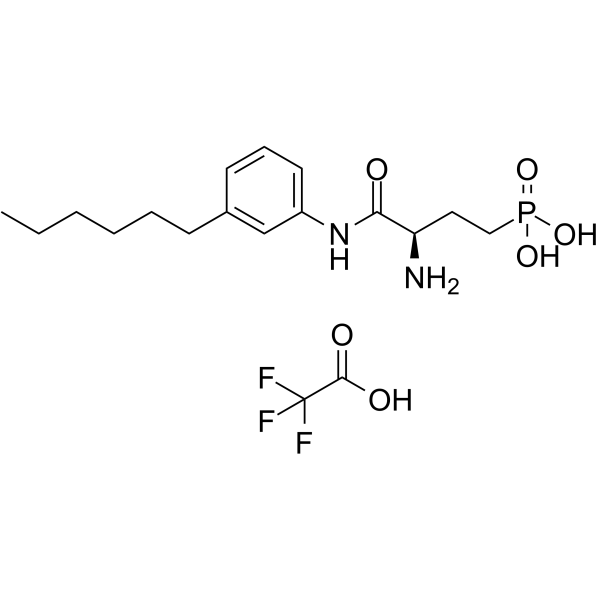
W146 TFA is a selective antagonist of sphingosine-1-phosphate receptor 1 (S1PR1) with an EC50 value of 398 nM.
loading...
    loading...
4
4 Cited Publications
Cat. No.: HY-P1122
CAS No.: 83602-39-5
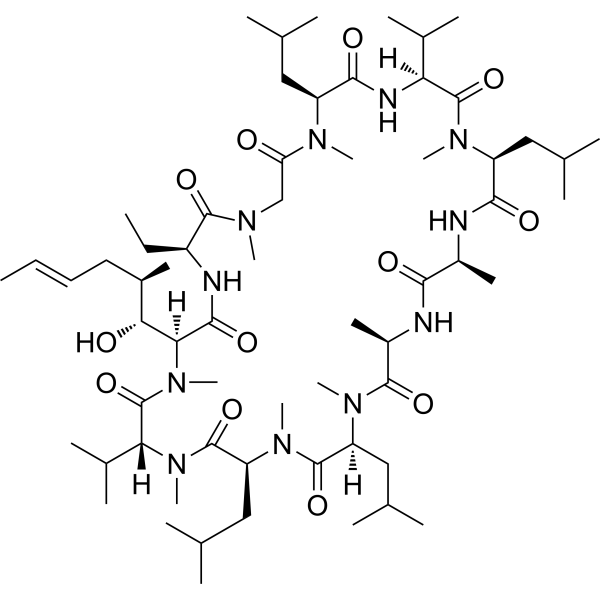
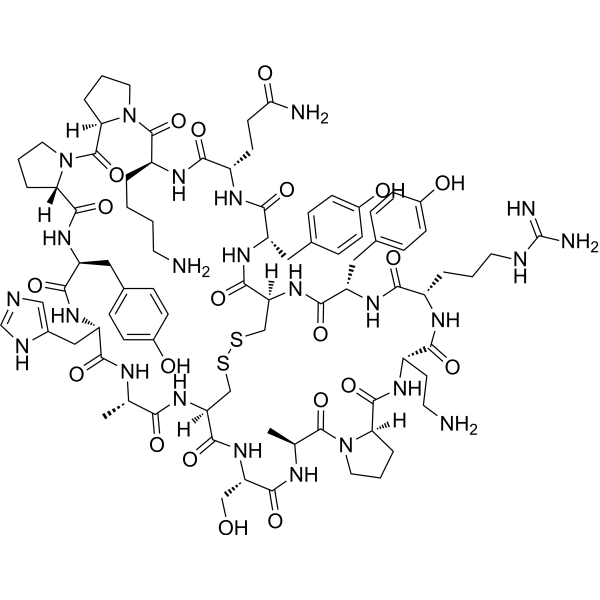
Cyclosporin H is a selective and potent inhibitor of FPR-1 (formyl peptide receptor 1). Cyclosporin H, a viral transduction enhancer, increases lentiviral transduction up to 10-fold in human cord blood-derived hematopoietic stem and progenitor cells (HSPCs). Cyclosporin H displays an additive effect when combined with Rapamycin (HY-10219) or Prostaglandin E2 (HY-101952). Cyclosporin H lacks immunosuppressant activity of Cyclosporin A.
loading...
    loading...
4
4 Cited Publications
Cat. No.: HY-P0172
CAS No.: 1337878-62-2
Target:  

CXCR

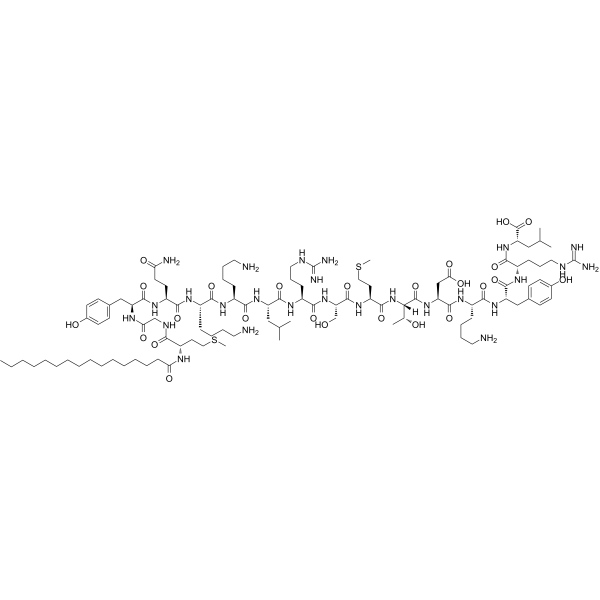
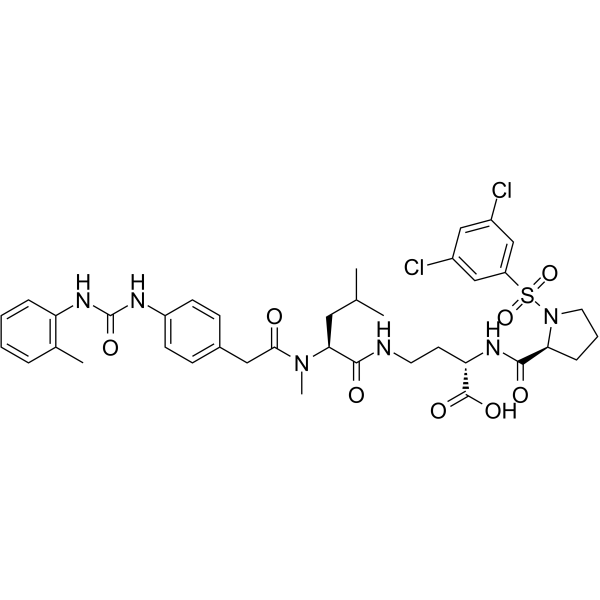
ATI-2341 is a potent and functionally selective allosteric agonist of C-X-C chemokine receptor type 4 (CXCR4), which functions as a biased ligand, favoring Gαi activation over Gα13. ATI-2341 activates the inhibitory heterotrimeric G protein (Gi) to promote inhibition of cAMP production and induce calcium mobilization. ATI-2341 is a potent and efficacious mobilizer of bone marrow polymorphonuclear neutrophils (PMNs) and hematopoietic stem and progenitor cells (HSPCs) .
loading...
    loading...
4
4 Cited Publications
Cat. No.: HY-P0172A
Target:  

CXCR

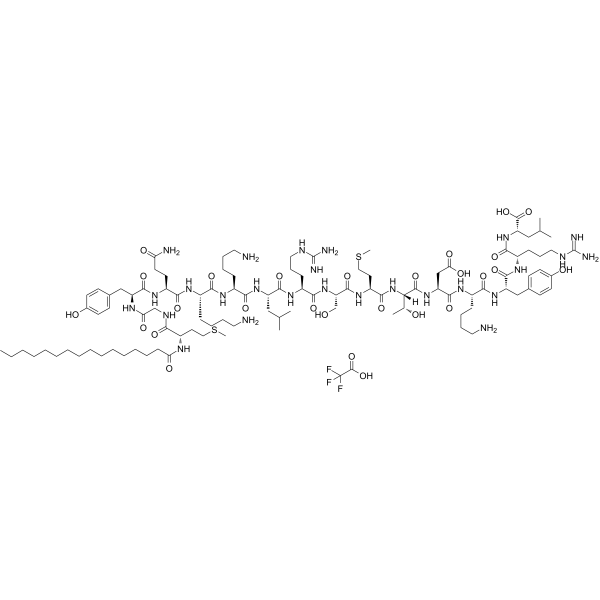
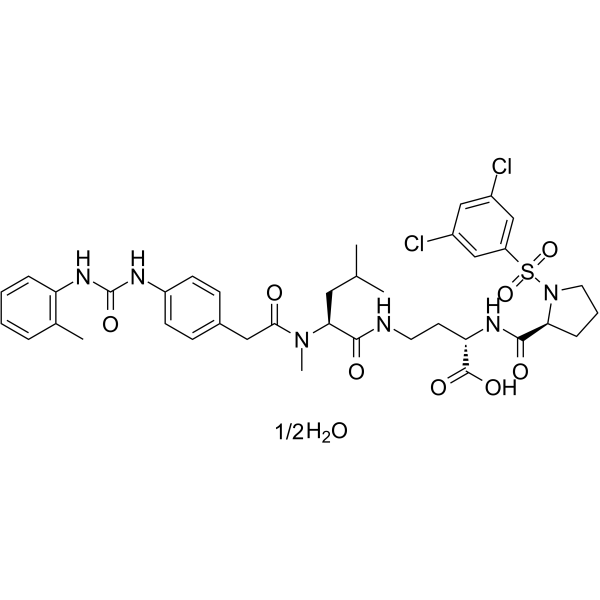
ATI-2341 is a potent and functionally selective allosteric agonist of C-X-C chemokine receptor type 4 (CXCR4), which functions as a biased ligand, favoring Gαi activation over Gα13. ATI-2341 activates the inhibitory heterotrimeric G protein (Gi) to promote inhibition of cAMP production and induce calcium mobilization. ATI-2341 is a potent and efficacious mobilizer of bone marrow polymorphonuclear neutrophils (PMNs) and hematopoietic stem and progenitor cells (HSPCs) .
loading...
    loading...
2
2 Cited Publications
Cat. No.: HY-107589
CAS No.: 327613-57-0
Purity:  99.96%
Target:  

Integrin

Research Areas:  

Inflammation/Immunology

BIO5192 is a selective and potent integrin α4β1 (VLA-4) inhibitor (Kd<10 pM). BIO5192 selectively binds to α4β1 (IC50=1.8 nM) over a range of other integrins. BIO5192 results in a 30-fold increase in mobilization of murine hematopoietic stem and progenitors (HSPCs) over basal levels .
loading...
    loading...
2
2 Cited Publications
Cat. No.: HY-19867A
CAS No.: 1191450-19-7
Synonyms: TG-0054 hydrobromide
Target:  

CXCR

Research Areas:  

Cardiovascular Disease Cancer

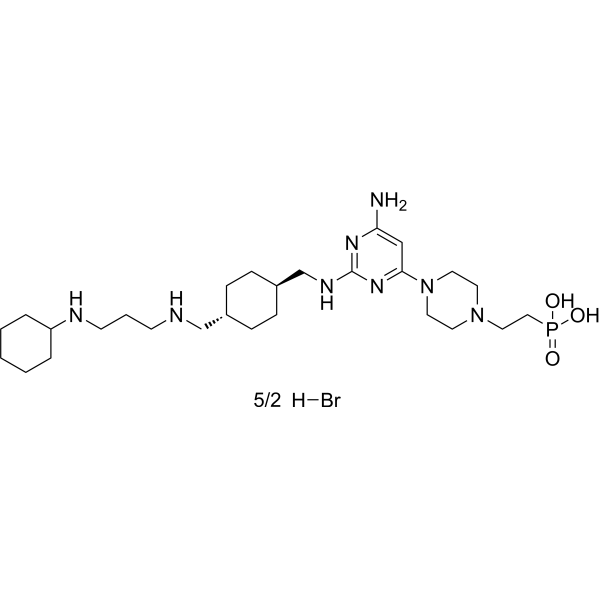
Burixafor (TG-0054) hydrobromide is a potent CXCR4 antagonist with a pIC50 of 7.4. Burixafor hydrobromide inhibits the binding of CXCL12 to CXCR4, antagonizes CXCL12-induced recruitment of Gαᵢ and β-arrestin2, and blocks the downstream Gαᵢ-mediated inhibitory effect on cAMP signal transduction. Burixafor hydrobromide mobilizes CD34 + hematopoietic stem/progenitor cells (HSPC) from the bone marrow to the peripheral blood. Burixafor hydrobromide can be used for research on autologous hematopoietic stem cell transplantation (ASCT) .
loading...
    loading...
2
2 Cited Publications
Cat. No.: HY-107589A
Purity:  99.96%
Target:  

Integrin

Research Areas:  

Inflammation/Immunology

BIO5192 hydrate is a selective and potent integrin α4β1 (VLA-4) inhibitor (Kd<10 pM). BIO5192 hydrate selectively binds to α4β1 (IC50=1.8 nM) over a range of other integrins. BIO5192 hydrate results in a 30-fold increase in mobilization of murine hematopoietic stem and progenitors (HSPCs) over basal levels .
loading...
    loading...
1
1 Cited Publications
Cat. No.: HY-P1682A
Synonyms: POL6326 TFA
Target:  

CXCR Arrestin

Research Areas:  

Cancer

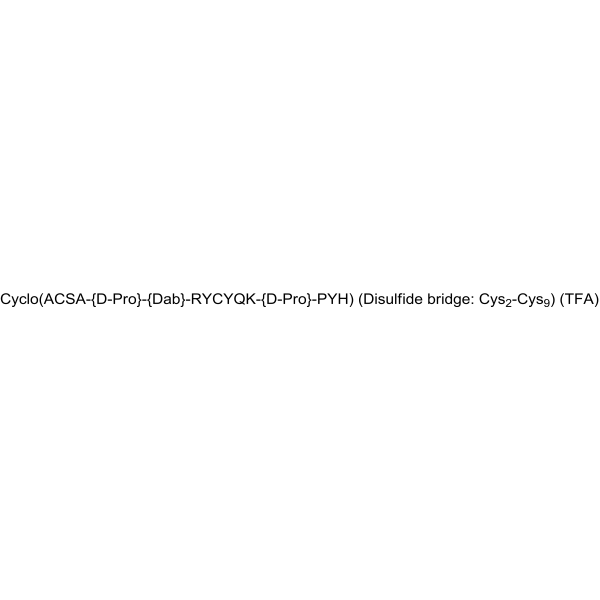
Balixafortide TFA (POL6326 TFA) is a potent, selective, well-tolerated peptidic CXCR4 antagonist with an IC50 < 10 nM. Balixafortide TFA shows 1000-fold selective for CXCR4 than a large panel of receptors including CXCR7. Balixafortide TFA blocks β-arrestin recruitment and calcium flux with IC50s < 10 nM. Balixafortide TFA is also a potent hematopoietic stem and progenitor cell (HSPC) mobilizing agent. Anti-cancer effects .
loading...
    loading...
1
1 Cited Publications
Cat. No.: HY-P1682
CAS No.: 1051366-32-5
Synonyms: POL6326
Target:  

CXCR Arrestin

Research Areas:  

Cancer

Balixafortide (POL6326) is a potent, selective, well-tolerated peptidic CXCR4 antagonist with an IC50 < 10 nM. Balixafortide shows 1000-fold selective for CXCR4 than a large panel of receptors including CXCR7. Balixafortide blocks β-arrestin recruitment and calcium flux with IC50s < 10 nM. Balixafortide is also a potent hematopoietic stem and progenitor cell (HSPC) mobilizing agent. Anti-cancer effects .
loading...
    loading...
Cat. No.: HY-42990
CAS No.: 97281-48-6
Synonyms: HSPC; Hydrogenated soybean phosphatidylcholine
Target:  

Liposome

Research Areas:  

Metabolic Disease

Hydrogenated soya phosphatidylcholine (hydrogenated soybean phosphatidylcholine) is a natural product. Hydrogenated soya phosphatidylcholine can extend drug release in regard to drug loading and solubility for oral drug delivery of watersoluble drugs .
loading...
    loading...
Cat. No.: HY-122822
CAS No.: 2260944-68-9
GSK699 is a KAT2A/B/PCAF/GCN5 PROTAC degrader . GSK699 induces proteasome-dependent degradation of KAT2A, KAT2B, PCAF and GCN5, regulates the histone acetyltransferase activity of the SAGA complex, and reduces the level of histone H3K9ac. GSK699 inhibits the growth of neuroblastoma, acute myeloid leukemia and small cell lung cancer cells. GSK699 reduces the production of inflammatory cytokines and chemokines, and impairs LPS-stimulated immune cell responses. GSK699 is applicable to research related to acute myeloid leukemia, small cell lung cancer, neuroblastoma and inflammatory diseases .
loading...
    loading...
Cat. No.: HY-169327
CAS No.: 2415160-21-1
Research Areas:  

Cancer

MD-265 is a PROTAC degrader targeting MDM2, which activates p53 in cancer cells carrying wild-type p53. MD-265 induces MDM2 degradation by recruiting the CRL4-CRBN ligase complex via the ubiquitination and proteasomal degradation pathway. MD-265 upregulates p53 target genes, induces apoptosis, reduces Mcl-1 levels, increases caspase-3 cleavage, and inhibits colony formation of wild-type p53 leukemia stem cells. MD-265 can be used in research related to leukemia and acute myeloid leukemia .
loading...
    loading...
Cat. No.: HY-P10999
Synonyms: P55
Research Areas:  

Others

INF7TAT-P55 (P55) is a polypeptide derived from INF7TAT (HY-P11000) with G1K, G20L and Y22N mutations. INF7TAT-P55 serves as a delivery carrier to deliver preassembled CRISPR ribonucleases into cells for genome editing .
loading...
    loading...
Cat. No.: HY-139938
CAS No.: 90693-45-1
Synonyms: 11,12-EET methyl ester; (±)11,12-EpETrE methyl ester
(±)11(12)-EET methyl ester (11,12-EET-methyl ester) is a methylated derivative of 11,12-epoxyeicosatrienoic acid (11,12-EET) (HY-130494). (±)11(12)-EET methyl ester cannot induce β-arrestin recruitment of the G protein-coupled receptor GPR132. (±)11(12)-EET methyl ester fails to enhance the expression of hematopoietic stem and progenitor cell (HSPC) markers. (±)11(12)-EET methyl ester can be used as a negative control molecule to study the structure-function relationship of 11,12-EET, facilitating the analysis of the role of the oxygenated fatty acid-GPR132 signaling axis in hematopoiesis .
loading...
    loading...
Cat. No.: HY-139938S
Synonyms: 11,12-EET methyl ester-d11; (±)11,12-EpETrE methyl ester-d11
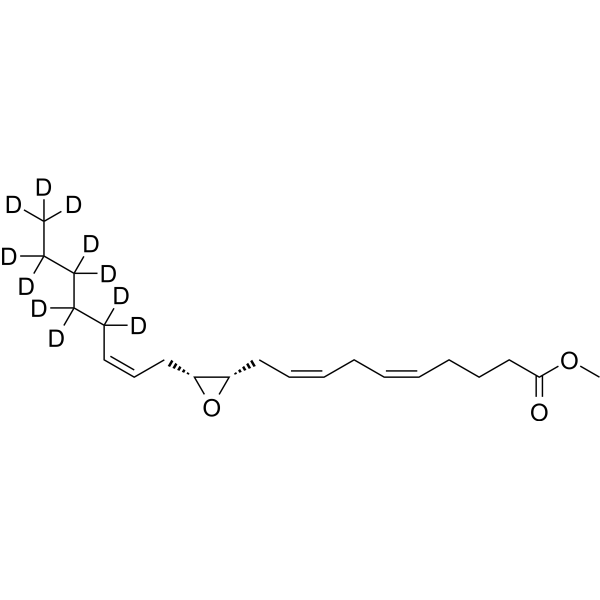
(±)11(12)-EET-d11 methyl ester (11,12-EET methyl ester-d11) is the deuterium labeled (±)11(12)-EET methyl ester (HY-139938). (±)11(12)-EET methyl ester (11,12-EET-methyl ester) is a methylated derivative of 11,12-epoxyeicosatrienoic acid (11,12-EET) (HY-130494). (±)11(12)-EET methyl ester cannot induce β-arrestin recruitment of the G protein-coupled receptor GPR132. (±)11(12)-EET methyl ester fails to enhance the expression of hematopoietic stem and progenitor cell (HSPC) markers. (±)11(12)-EET methyl ester can be used as a negative control molecule to study the structure-function relationship of 11,12-EET, facilitating the analysis of the role of the oxygenated fatty acid-GPR132 signaling axis in hematopoiesis .
loading...
    loading...
Cat. No.: HY-101395AR
CAS No.: 909725-62-8
W146 (TFA) (Standard) is the analytical standard of W146 (TFA) (HY-101395A). This product is intended for research and analytical applications. W146 TFA is a selective antagonist of sphingosine-1-phosphate receptor 1 (S1PR1) with an EC50 value of 398 nM.
loading...
    loading...
Cat. No.: HY-19867
CAS No.: 1191448-17-5
Synonyms: TG-0054
Target:  

CXCR

Research Areas:  

Cancer

Burixafor (TG-0054) is a potent CXCR4 antagonist with a pIC50 of 7.4. Burixafor inhibits the binding of CXCL12 to CXCR4, antagonizes CXCL12-induced recruitment of Gαᵢ and β-arrestin2, and blocks the downstream Gαᵢ-mediated inhibitory effect on cAMP signal transduction. Burixafor mobilizes CD34 + hematopoietic stem/progenitor cells (HSPC) from the bone marrow to the peripheral blood. Burixafor can be used for research on autologous hematopoietic stem cell transplantation (ASCT) .
loading...
    loading...
Cat. No.: HY-107589R
CAS No.: 327613-57-0
Research Areas:  

Inflammation/Immunology

BIO5192 (Standard) is the analytical standard of BIO5192 (HY-107589). This product is intended for research and analytical applications. BIO5192 is a selective and potent integrin α4β1 (VLA-4) inhibitor (Kd<10 pM). BIO5192 selectively binds to α4β1 (IC50=1.8 nM) over a range of other integrins. BIO5192 results in a 30-fold increase in mobilization of murine hematopoietic stem and progenitors (HSPCs) over basal levels .
loading...
    loading...
Cat. No.: HY-179551S
(±)11(12)-EET-d11 Methyl ester is the deuterium labeled (±)11(12)-EET methyl ester (HY-139938). (±)11(12)-EET methyl ester is a methylated derivative of 11,12-epoxyeicosatrienoic acid (11,12-EET) (HY-130494). (±)11(12)-EET methyl ester cannot induce β-arrestin recruitment of the G protein-coupled receptor GPR132. (±)11(12)-EET methyl ester fails to enhance the expression of hematopoietic stem and progenitor cell (HSPC) markers. (±)11(12)-EET methyl ester can be used as a negative control molecule to study the structure-function relationship of 11,12-EET, facilitating the analysis of the role of the oxygenated fatty acid-GPR132 signaling axis in hematopoiesis.
loading...
    loading...
Cat. No.: HY-P991888

Target:  

STAT

Research Areas:  

Cardiovascular Disease Cancer

INCA033989 is a fully human IgG1 monoclonal antibody targeting mutCALR (KD = 1.75 nM for mutCALR del52; KD = 6.78 nM for mutCALR ins5). INCA033989 antagonizes mutCALR-driven signaling and proliferation. INCA033989 selectively inhibits pSTAT3/pSTAT5. INCA033989 prevents thrombocytosis and reduces the expansion of mutCALR-positive cells. INCA033989 is useful for research on myeloproliferative neoplasms .
loading...
    loading...
  • 1

