17 Results for "

Hep3B hepatocellular carcinoma cells

" in MedChemExpress (MCE) Product Catalog:
Products (17)

17 Results for "Hep3B hepatocellular carcinoma cells" in MCE Product Catalog:

Cat. No.: HY-W599279
CAS No.: 2761170-84-5
ABS-752 is an orally active prodrug targeting CRBN-modulating molecular glue with selectivity in protein degradation. ABS-752 preferentially degrades GSPT1 and induces cytotoxicity through this degradation, while it also degrades NEK7, SALL4 and CK1α, with weaker degradation potency against CK1α. As a prodrug, ABS-752 requires metabolic activation to ABT-002 to form the active complex; VAP-1 mediates its conversion to an aldehyde intermediate. ABS-752 induces cell death, reduces cell viability, and exhibits antitumor activity, leading to regression and inhibition of tumor growth. ABS-752 shows no cytotoxicity in primary human hepatocytes. ABS-752 can be used in the research of hepatocellular carcinoma .
loading...
    loading...
Cat. No.: HY-P10323
Synonyms: Tumstatin (74-98), human
Target:  

Integrin FAK mTOR Apoptosis

Research Areas:  

Cancer

T7 Peptide is a protein synthesis inhibitor and anti-angiogenic agent, with a Kd of 10 nM for human transferrin receptor. T7 Peptide inhibits the phosphorylation of focal adhesion kinase, the activation of phosphatidylinositol 3-kinase and Akt, the kinase activity of mTOR, as well as the phosphorylation of 4E-BP1 in endothelial cells. T7 Peptide induces G0/G1 cell cycle arrest, apoptosis and protective autophagy in hepatocellular carcinoma cells, and suppresses tumor growth in mouse models. T7 Peptide is applicable to research related to cancer, glioblastoma, hepatocellular carcinoma and glioma .
loading...
    loading...
Cat. No.: HY-168574
CAS No.: 3059333-98-8
Target:  

PROTACs Sirtuin Apoptosis

Research Areas:  

Cancer

SZU-B6 is an orally active SIRT6 PROTAC degrader with DC50 values of 45 nM in SK-HEP-1 cells and 154 nM in Huh-7 cells, respectively. SZU-B6 mediates proteasome-dependent degradation of SIRT6 by recruiting the CRBN E3 ubiquitin ligase. SZU-B6 impairs DNA damage repair and promotes radiosensitization of cancer cells. SZU-B6 induces cell cycle arrest and apoptosis in cancer cells. SZU-B6 inhibits the proliferation of liver cancer cells. SZU-B6 suppresses the tumor growth of hepatocellular carcinoma and intrahepatic cholangiocarcinoma in mice. SZU-B6 can be used in research related to hepatocellular carcinoma and intrahepatic cholangiocarcinoma .
loading...
    loading...
Cat. No.: HY-B1272A
CAS No.: 50-47-5
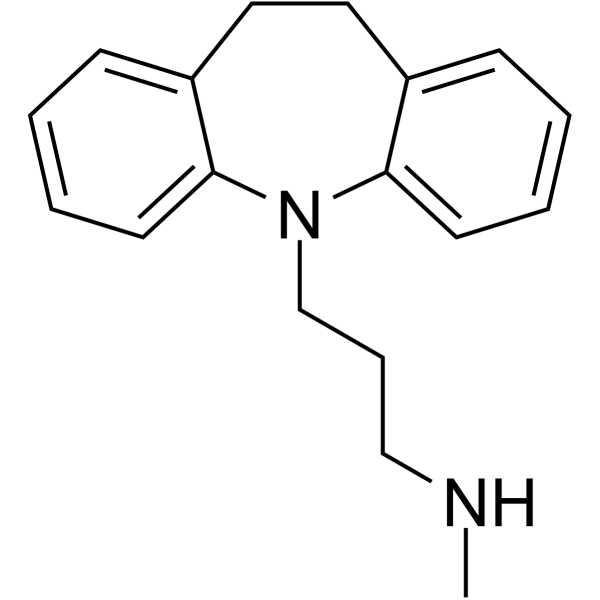
Desipramine is a first-generation tricyclic antidepressant. Desipramine selectively binds to norepinephrine transporter and blocks neuronal norepinephrine reuptake. Desipramine activates MAPK signaling via ERK1/2, JNK, and p38, represses NF-κB and AP-1 activity, and induces apoptosis via ROS elevation, mitochondrial membrane potential reduction, and intracellular calcium increase. Desipramine also shows anyi-inflammatory activity, inhibiting TNF-α production. Desipramine can be used for the research of hepatocellular cancer, inflammation, and neurological diseases .
loading...
    loading...
Cat. No.: HY-146350
CAS No.: 2414906-32-2
Research Areas:  

Cancer

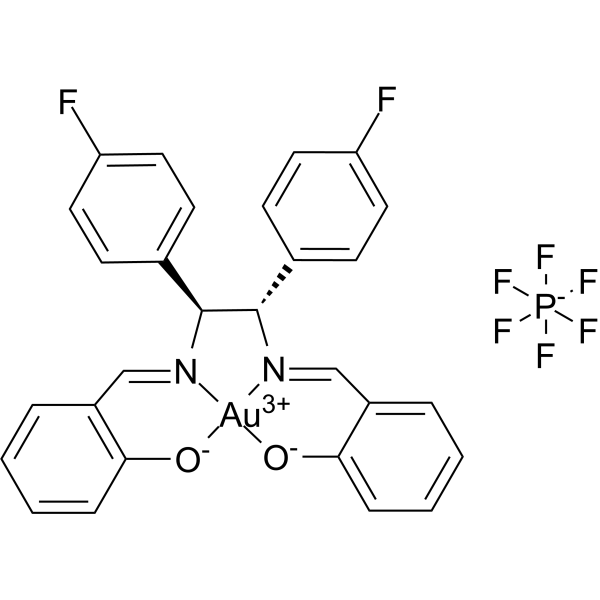
TrxR-IN-4 is a thioredoxin reductase (TrxR) inhibitor with a rat IC50 of 0.37 μM. TrxR-IN-4 inhibits TrxR activity, elevates reactive oxygen species (ROS) and induces apoptosis. TrxR-IN-4 mediates endoplasmic reticulum stress and induces mitochondrial dysfunction. TrxR-IN-4 can be used for the research of hepatocellular carcinoma .
loading...
    loading...
Cat. No.: HY-145836
CAS No.: 2765240-52-4
Target:  

FGFR

Research Areas:  

Cancer

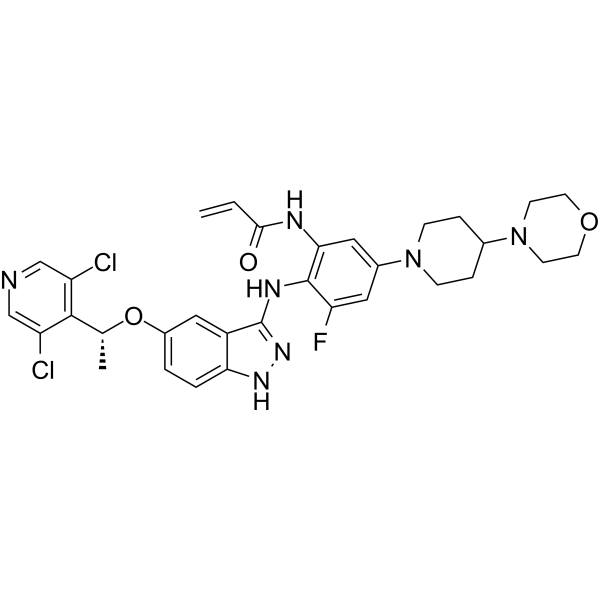
FGFR4-IN-8 (Compound 7v) is an ATP-competitive, highly selective covalent inhibitor of wild-type and gatekeeper mutant FGFR4. FGFR4-IN-8 exhibits excellent potency against FGFR4, FGFR4 V550L, FGFR4 V550M and FGFR4 C552S with IC50s of 0.5, 0.25, 1.6, 931 nM, respectively. FGFR4-IN-8 exhibits potent antiproliferative activity against Hep3B hepatocellular carcinoma cells with the IC50 value of 29 nM. FGFR4-IN-8 demonstrates modest in vivo antitumor efficacy in nude mice bearing the Huh-7 xenograft model .
loading...
    loading...
Cat. No.: HY-161617
CAS No.: 2549160-15-6
Research Areas:  

Cancer

LASSBio-2052 is a derivative of N-acylhydrazone with antitumor activity against hepatocellular carcinoma (HCC). LASSBio-2052 inhibits HCC cells HepG2 and Hep3B, with IC50 of 18 and 41 μM. LASSBio-2052 arrests the cell cycle at G2/M phase, through downregulation of FOXM1. LASSBio-2052 induces apoptosis in HCC cells .
loading...
    loading...
Cat. No.: HY-175553
Target:  

VEGFR Apoptosis

Research Areas:  

Cancer

VEGFR-2-IN-72 is a selective VEGFR-2 inhibitor with an IC50 of 22.2 nM. VEGFR-2-IN-72 exhibits anticancer activity against HepG2 and Hep3B human HCC cell lines with IC50s of 15.7 and 2.4 μM. VEGFR-2-IN-72 can cause a mild blockage of the cell cycle and induce cell aopoptosis. VEGFR-2-IN-72 can used for the study of hepatocellular carcinoma (HCC) .
loading...
    loading...
Cat. No.: HY-P11937
Target:  

Glycoprotein VI

Research Areas:  

Cancer

ALLANHEELFQTGGGSC is a Glypican-3 (GPC3) targeting peptide that can be conjugated to fluorescent dyes via cysteine residues. ALLANHEELFQTGGGSC consists of a 12-amino-acid GPC3-binding peptide (ALLANHEELFQT) and a C-terminal GGGSC linker. ALLANHEELFQTGGGSC dose-dependently competes with and inhibits the binding of GPC3-targeting fluorescent probes to Hep3B hepatocellular carcinoma cells. ALLANHEELFQTGGGSC can be used for the construction of GPC3-targeted molecular probes and hepatocellular carcinoma-related research .
loading...
    loading...
Cat. No.: HY-162802
Target:  

Apoptosis PI3K Akt PARP CDK

Research Areas:  

Cancer

PI3K/AKT-IN-4 (compound 3) is a diterpenoid that can be isolated from the roots and rhizomes of Salvia castanea Dielsf. PI3K/AKT-IN-4 has antitumor activity, inhibiting cell viability and proliferation (IC50=4.72 μM) and promoting apoptosis by blocking the G0/G1 phase of the Hep3B cell cycle, inducing mitochondrial dysfunction and oxidative stress. In addition, PI3K/AKT-IN-4 inhibits hepatocellular carcinoma by inhibiting the PI3K-Akt signaling pathway and binding to PARP1 and CDK2 targets .
loading...
    loading...
Cat. No.: HY-161854
Target:  

HDAC

Research Areas:  

Cancer

LASSBio-1911 is a potent inhibitor of HDAC6. LASSBio-1911 shows antitumor in hepatocellular carcinoma (HCC) cells with minimal on normal cells .
loading...
    loading...
Cat. No.: HY-158248
CAS No.: 3036751-84-2
Target:  

FGFR

Research Areas:  

Cancer

FGFR4-IN-19 (compound 8B) is a potent covalent fibroblast growth factor receptor 4 (FGFR4) inhibitor (IC50=1.2 nM). FGFR4-IN-19 achieves high efficiency and isotype selectivity by covalently targeting a rare cysteine (C552) in the FGFR4 kinase domain. FGFR4-IN-19 can be used for hepatocellular carcinoma (HCC) research .
loading...
    loading...
Cat. No.: HY-188006
CAS No.: 3052938-18-5
Research Areas:  

Cancer

GSPT1 degrader-18 is a GSPT1 degrader that inhibits the proliferation of cancer cells. GSPT1 degrader-18 has weak ability to induce the formation of the GSPT1-CRBN/DDB1 ternary complex and belongs to a weak molecular glue. GSPT1 degrader-18 can be used in cancer-related research .
loading...
    loading...
Cat. No.: HY-183936
Target:  

SHP2 p38 MAPK ERK

Research Areas:  

Cancer

SDUY127 is a bivalent SHP2 inhibitor with an IC50 value of 16 nM. SDUY127 binds simultaneously to the tunnel allosteric site and latch allosteric site of SHP2 at a 1:1 stoichiometric ratio, stabilizes the protein in an inactive conformation, and induces sustained inhibition of the MAPK signaling pathway. SDUY127 can be used in research related to leukemia and hepatocellular carcinoma .
loading...
    loading...
Cat. No.: HY-P11938
Target:  

Glycoprotein VI

Research Areas:  

Cancer

GPC3-targeting peptide 2, scrambled control serves as the scrambled negative control for GPC3-targeting peptide 2. GPC3-targeting peptide 2, scrambled control can be used as a control peptide to verify the specific binding of GPC3-targeting peptides to cancer cells and tumors overexpressing GPC3 .
loading...
    loading...
Cat. No.: HY-W998347
CAS No.: 2922884-90-8
ABS-752 hydrochloride is an orally active prodrug targeting CRBN-modulating molecular glue with selectivity in protein degradation. ABS-752 hydrochloride preferentially degrades GSPT1 and induces cytotoxicity through this degradation, while it also degrades NEK7, SALL4 and CK1α, with weaker degradation potency against CK1α. As a prodrug, ABS-752 hydrochloride requires metabolic activation to ABT-002 to form the active complex; VAP-1 mediates its conversion to an aldehyde intermediate. ABS-752 hydrochloride induces cell death, reduces cell viability, and exhibits antitumor activity, leading to regression and inhibition of tumor growth. ABS-752 hydrochloride shows no cytotoxicity in primary human hepatocytes. ABS-752 hydrochloride can be used in the research of hepatocellular carcinoma .
loading...
    loading...
Cat. No.: HY-P11936
CAS No.: 2244402-11-5
Research Areas:  

Cancer

GPC3 targeting peptide 2 is a glypican-3 (GPC3) targeting peptide that binds specifically to GPC3 with a Kd of 39.5 nM. GPC3 targeting peptide 2 can be conjugated to IRDye800 via a GGGSC linker for near-infrared fluorescence and photoacoustic imaging, with a tumor-to-adjacent liver fluorescence intensity ratio of approximately 2-fold. GPC3 targeting peptide 2 shows high specificity for immunofluorescence staining of HCC specimens. GPC3 targeting peptide 2 can be used in studies related to GPC3-targeted molecular imaging and early detection of hepatocellular carcinoma .
loading...
    loading...
  • 1

