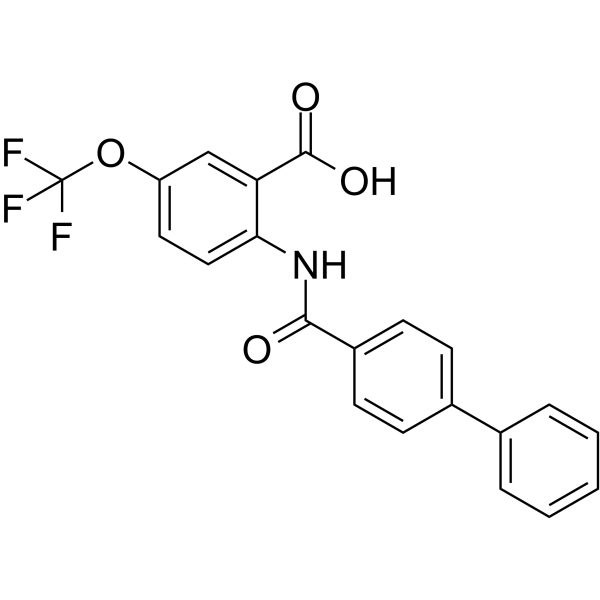
1. Search Result
Search Result
Results for "

Huh7

" in MedChemExpress (MCE) Product Catalog:

168

Inhibitors & Agonists

1

Peptides

34

Natural
Products

2

Isotope-Labeled Compounds

1

Click Chemistry

1

Oligonucleotides

Cat. No. Product Name Target Research Areas Chemical Structure
  • HY-B0670A
    Dihydroergotamine mesylate
    5 Publications Verification

    5-HT Receptor Infection Neurological Disease Metabolic Disease Cancer
    Dihydroergotamine mesylate is a BBB-permeable ergot alkaloid that can be used for the research of migraines .
    Dihydroergotamine mesylate
  • HY-125731
    Glycodeoxycholic acid
    3 Publications Verification

    Endogenous Metabolite STAT Autophagy Inflammation/Immunology Cancer
    Glycodeoxycholic Acid is a natural product found in Streptomyces nigricans, Trypanosoma brucei and C. elegans. Glycodeoxycholic Acid induces hepatocyte necrosis and autophagy in patients with obstructive cholestasis .
    Glycodeoxycholic acid
  • HY-15858
    AP-III-a4
    15+ Cited Publications

    ENOblock

    Enolase Apoptosis Metabolic Disease Cancer
    AP-III-a4 (ENOblock) is a nonsubstrate analogue enolase inhibitor with an IC50 of 0.576 uM. AP-III-a4 can be used for the research of cancer and diabetic .
    AP-III-a4
  • HY-B1030
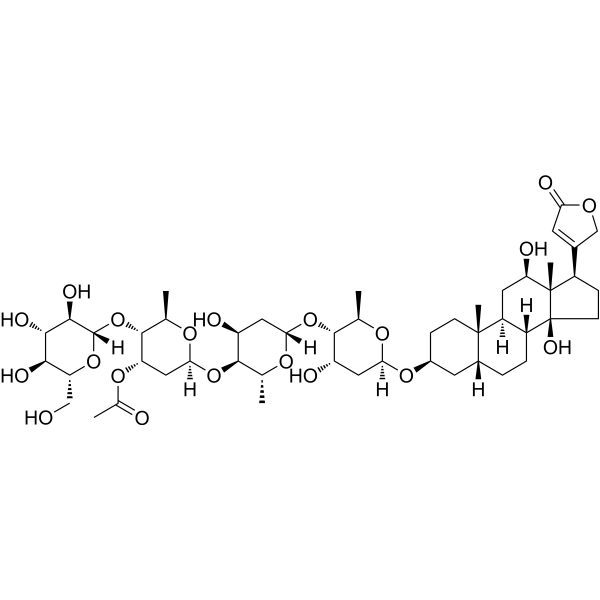
    Lanatoside C
    5+ Cited Publications

    Flavivirus Dengue Virus Autophagy Enterovirus Cardiovascular Disease Cancer
    Lanatoside C is a cardiac glycoside, can be used in the treatment of congestive heart failure and cardiac arrhythmia.Lanatoside C has an IC50 of 0.19 μM for dengue virus infection in HuH-7 cells. Lanatoside C can effectively inhibit all four serotypes of dengue virus, flavivirus Kunjin, alphavirus Chikungunya, Sindbis virus and the human enterovirus 71 .
    Lanatoside C
  • HY-B0338

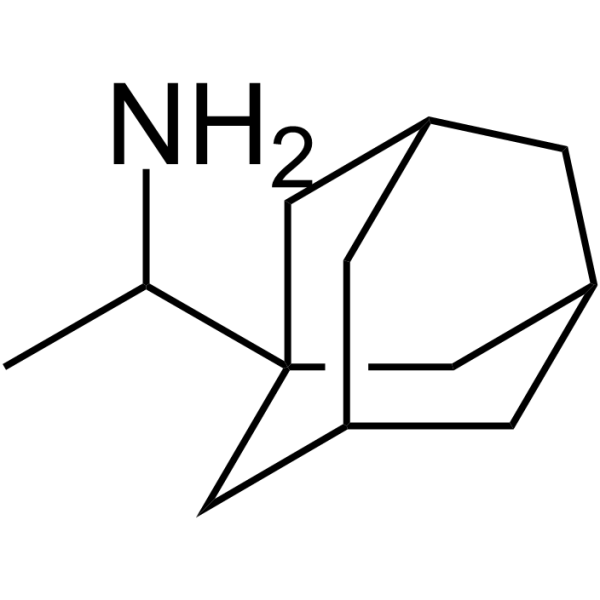
    1-Rimantadine

    Influenza Virus Autophagy Infection
    Rimantadine (1-Rimantadine) is an orally active inhibitor for M2 protein, which blocks the hydrogen ion channel activity, prevents the entry and replication of the virus, and exhibits board-spectrum antiviral activity. Rimantadine significantly inhibits hepatitis A virus (HAV) replication at the post-entry stage in Huh7 cells. Rimantadine enhances autophagy. Rimantadine has a significant protective effect against H3N2 virus in mouse model .
    Rimantadine
  • HY-101568
    Roblitinib
    5+ Cited Publications

    FGF-401

    FGFR Cancer
    Roblitinib (FGF-401) is an orally active and highly selective FGFR4 inhibitor with an IC50 of 1.9 nM . Roblitinib has antitumor activity .
    Roblitinib
  • HY-134929
    Benitrobenrazide
    2 Publications Verification

    BNBZ; Hexokinase 2 inhibitor 1

    Hexokinase Apoptosis Cancer
    Benitrobenrazide (BNBZ) is the orally active inhibitor for hexokinase 2 with an IC50 of 0.53 µM. Benitrobenrazide causes DNA damage, and exhibits antitumor effect .
    Benitrobenrazide
  • HY-120356A
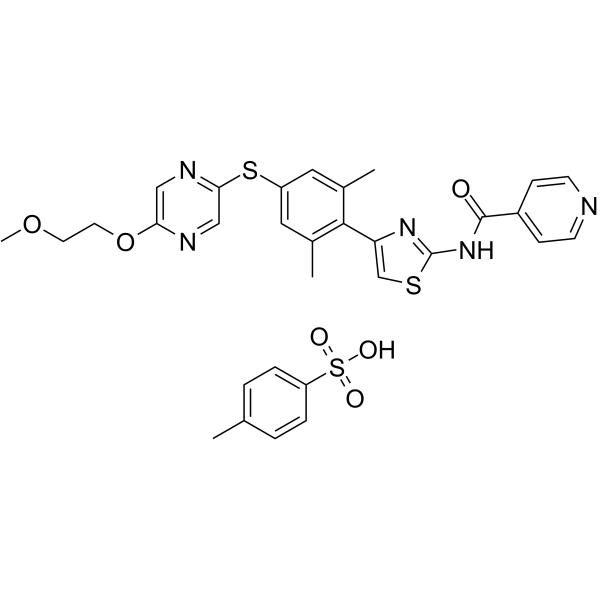
    T-1101 tosylate
    1 Publications Verification

    TAI-95 tosylate

    NEKs Apoptosis Cancer
    T-1101 tosylate (TAI-95 tosylate) is the tosylate salt form of T-1101 (HY-120356). T-1101 tosylate is an orally active inhibitor for mitose regulating highly expressed oncoprotein 1 (Hec1). T-1101 tosylate blocks the interaction between Hec1 and NEK2, exhibits cytotoxicity in human liver cancer cells with GI50 of 15-70 nM. T-1101 tosylate induces apoptosis in Huh-7. T-1101 tosylate exhibits antitumor efficacy in mouse models .
    T-1101 tosylate
  • HY-B0338A

    Influenza Virus Autophagy Infection
    Rimantadine hydrochloride (Flumadine hydrochloride) is an orally active inhibitor for M2 protein, that blocks the hydrogen ion channel activity, prevents the entry and replication of the virus, and exhibits board-spectrum antiviral activity .
    Rimantadine hydrochloride
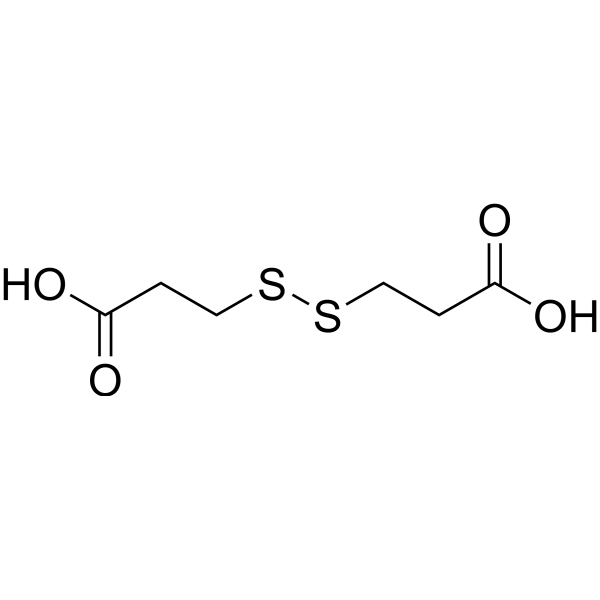
  • HY-W014395

    Reactive Oxygen Species (ROS) Apoptosis Cancer
    Dithiodipropionic acid can interact with CPUL1 (HY-151802) (a TrxR inhibitor) to form nanoaggregates (CPUL1-DA NAs). CPUL1-DA NAs generates more abundant ROS to induce cell apoptosis than that of free CPUL1, and improves antitumor efficacy against HUH7 cancer cells .
    Dithiodipropionic acid
  • HY-168016

    PROTACs YAP Cancer
    PROTAC YAP degrader-1 is a VHL-recruiting PROTAC degrader (DC50=8.2 μM) and antiproliferative agent that targets YAP. PROTAC YAP degrader-1 recruits the E3 ligase VHL and binds to VHL to form a ternary complex containing YAP. PROTAC YAP degrader-1 inhibits the nuclear localization of YAP in cancer cells, reduces YAP/TEAD-mediated transcription, and induces TAZ protein degradation. PROTAC YAP degrader-1 reduces the oncogenic activity of YAP and exerts antiproliferative effects in the Huh7 xenograft mouse model. PROTAC YAP degrader-1 can be used for the research of hepatocellular carcinoma and mesothelioma .
    PROTAC YAP degrader-1
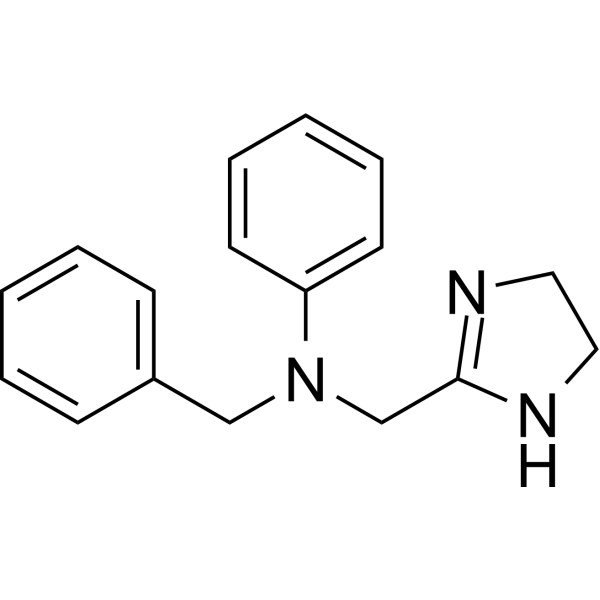
  • HY-B1067

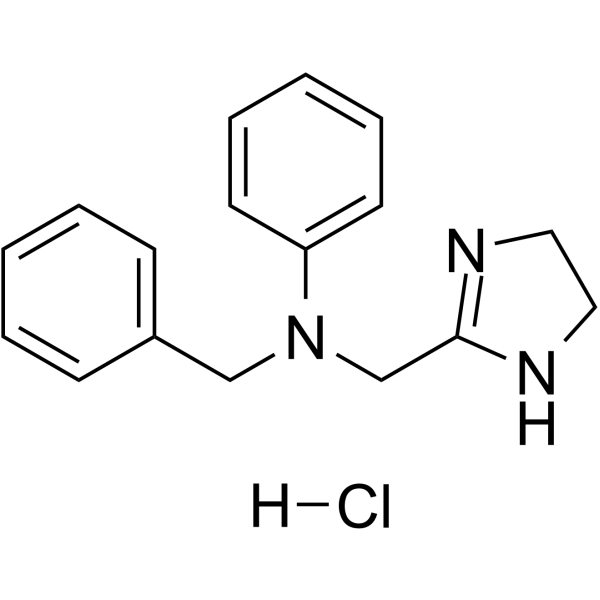
    Phenazoline hydrochloride

    Histamine Receptor HBV Neurological Disease Endocrinology
    Antazoline hydrochloride is a histamine H1 receptor antagonist with anticholinergic and antiviral properties. Antazoline hydrochloride can prevent histamine from acting on target cells through a reversible competition effect on histamine receptor sites of these cells. Antazoline hydrochloride can exert an antiallegic effect and prevent the occurrence of physiological reactions from the effect of blocking as well as inhibiting H1 receptor. Antazoline hydrochloride can effectively reduce HBV DNA in the extracellular supernatant in a dose-dependent manner, with EC50 of 2.910 μmol/L in HepAD38 cells. Antazoline hydrochloride also has a significant inhibitory effect on HBV DNA in the extracellular supernatant of Huh7 cells (EC50 = 2.349 μmol/L). Antazoline hydrochloride has anti-arrhythmic effect in acute myocardial infarctions. Antazoline hydrochloride can be studied in research for cardiovascular diseases, and HBV .
    Antazoline hydrochloride
  • HY-160093

    PTEN Akt PI3K Metabolic Disease
    SQLE-IN-1 (compound 19) is a squalene epoxidase (SQLE) inhibitor. SQLE-IN-1 inhibits the proliferation and migration of Huh7 cells. SQLE-IN-1 inhibits the cell cholesterol generation. SQLE-IN-1 increases the expression of PTEN and inhibits PI3K and AKT .
    SQLE-IN-1
  • HY-13337

    INX-08189

    HCV Infection
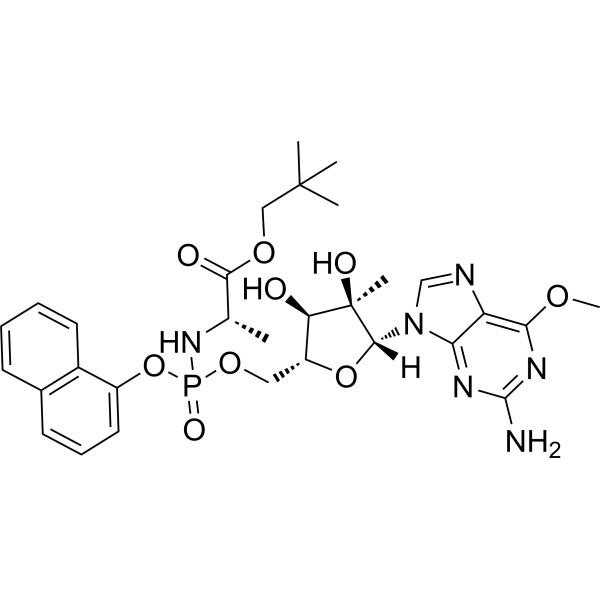
    BMS-986094 (INX-08189) is a potent inhibitor of hepatitis C virus (HCV) replication, with an EC50 of 35 nM at 24 h in Huh-7 cells. BMS-986094 is a phosphoramidate proagent of 6-O-methyl-2’-C-methyl guanosine. BMS-986094 can be used for the research of chronic HCV infection .
    BMS-986094
  • HY-15858A
    AP-III-a4 hydrochloride
    15+ Cited Publications

    ENOblock hydrochloride

    Enolase Apoptosis Metabolic Disease Cancer
    AP-III-a4 (ENOblock) hydrochloride is a nonsubstrate analogue enolase inhibitor with an IC50 of 0.576 uM. AP-III-a4 hydrochloride can be used for the research of cancer and diabetic .
    AP-III-a4 hydrochloride
  • HY-B0914A
    10-Undecenoic acid zinc salt
    2 Publications Verification

    Zinc undecylenate

    Fungal Bacterial Amyloid-β Reactive Oxygen Species (ROS) Proteasome Infection Neurological Disease Endocrinology Cancer
    10-Undecenoic acid zinc salt (Undecylenic acid zinc salt) is an antifungal agent. 10-Undecenoic acid zinc salt inhibits oligomerization, scavenges ROS and inhibits μ-calpain activity. 10-Undecenoic acid zinc salt has neuroprotective effects. 10-Undecenoic acid zinc salt has anticancer effects on a variety of tumors. 10-Undecenoic acid zinc salt inhibits C. albicans biofilm formation and MRSA infection. 10-Undecenoic acid zinc salt inhibits quorum sensing signals of Bacillus subtilis and Pseudomonas aeruginosa [7] .
    10-Undecenoic acid zinc salt
  • HY-N2232

    N-trans-Feruloyloctopamine

    Akt p38 MAPK Apoptosis Cadherin Cancer
    N-Feruloyloctopamine (N-trans-Feruloyloctopamine) is an antioxidant component that can be isolated from garlic skin. N-Feruloyloctopamine can inhibit tumor cell proliferation and invasion, and induce apoptosis. N-Feruloyloctopamine has antitumor activity and can be used in the research of tumors such as hepatocellular carcinoma .
    N-​Feruloyloctopamine
  • HY-112659

    MicroRNA Neurological Disease Cancer
    Lin28-let-7 antagonist 1 (compound 1632) is a potent antagonist of Lin28/pre-let-7 interaction. Lin28-let-7 antagonist 1 inhibits Lin28A binding to pre-let-7a-2, with an IC50 of 8 μM. Lin28-let-7 antagonist 1 inhibits proliferation in human cancer cells .
    Lin28-let-7 antagonist 1
  • HY-W013403

    IFNAR Infection
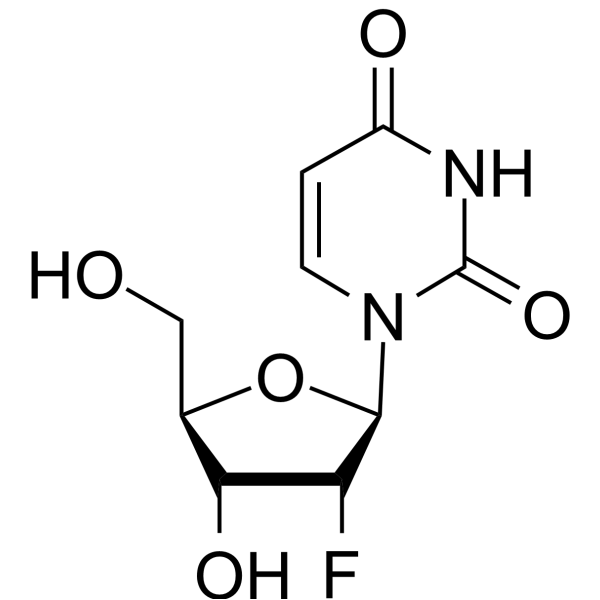
    2'-Deoxy-2'-fluorouridine is a derivative of the pyrimidine nucleoside uridine. 2'-Deoxy-2'-fluorouridine is a nucleoside analog that inhibits the replication of wild-type viruses by binding to the viral RNA. Hepatitis C polyU/UC RNA strands containing 2'-Deoxy-2'-fluorouridine, bind to RIG-I but do not activate RIG-I signaling in a reporter assay using Huh7 cells. 2'-Deoxy-2'-fluorouridine also has been used as a starting material in the synthesis of respiratory syncytial virus (RSV) polymerase inhibitors. 2'-Deoxy-2'-fluorouridine can incorporate into DNA and RNA in rat and woodchuck model upon administration. 2'-Deoxy-2'-fluorouridine can be studied in anti-viral research .
    2'-Deoxy-2'-fluorouridine
  • HY-146178

    Insulin Receptor Cancer
    IMP2-IN-1 (compound 4) is a potent IMP2 inhibitor with IC50 value of 81.3~127.5 for IMP2 RNA sequence. IMP2-IN-1 reduces IMP2 in SW480 cells. IMP2-IN-1 significantly reduces the viability of both differentiated and non-differentiated Huh7 cells .
    IMP2-IN-1
  • HY-156202

    Histone Demethylase PD-1/PD-L1 Apoptosis Cancer
    Geranylgeranoic acid (Compound 5) is inhibits lysine-specific demethylase 1 (LSD1) with an IC50 value of 46.97 µM. Geranylgeranoic acid induces apoptosis via loss of the mitochondrial membrane potential and activation of interleukin-1β-converting enzyme (ICE) and cysteine protease precursor 32 (CPP32) in Huh7 and PLC/PRF/5 human hepatoma cells and MLE-10 transformed mouse hepatocytes. Geranylgeranoic acid an isoprenoid with anticancer activity, which is found in S. chinensis .
    Geranylgeranoic acid
  • HY-121204

    3-Methylthiopropyl isothiocyanate

    Apoptosis Reactive Oxygen Species (ROS) Cancer
    Iberverin (-Methylthiopropyl isothiocyanate) is a sulforaphane homolog. Iberverin has anticancer activity. Iberverin inhibits cell proliferation and migration. Iberverin induces mitochondrial-related apoptosis and intracellular reactive oxygen species .
    Iberverin
  • HY-168574

    PROTACs Sirtuin Apoptosis Cancer
    SZU-B6 is a PROTAC degrader for SIRT6 with DC50 of 45 nM and 154 nM in cell SK-HEP-1 and Huh-7. SZU-B6 inhibits the proliferation of cell SK-HEP-1 with an IC50 of 1.51 μM, inhibits the colony formation of SK-HEP-1 and Huh-7, induces apoptosis and arrests the cell cycle at G2/M phase in SK-HEP-1. SZU-B6 exhibits antitumor efficacy in mouse model. (Pink: ligand for target protein (HY-16605); Black: linker (HY-W012935); BLue: ligand for E3 ligase (HY-W453548)
    SZU-B6
  • HY-169120

    Telomerase Cancer
    FKB04 is a telomeric repeat binding factor 2 (TRF2) inhibitor that exerts its antitumor activity by disrupting the telomere maintenance mechanism in liver cancer cells, leading to T-loop defects, telomere shortening, and cellular senescence. Additionally, FKB04 can inhibit tumor growth in a human liver cancer xenograft mouse model (with Huh-7 cells implanted in BALB/c mice). FKB04 can be used in liver cancer research .
    FKB04
  • HY-103222

    3',4'-Dimethoxy-αNF

    Aryl Hydrocarbon Receptor Inflammation/Immunology
    DiMNF (3',4'-Dimethoxy-αNF) is a selective aryl hydrocarbon receptor (AHR) modulator. DiMNF is a competitive AHR ligand (IC50 = 21 nM) with apparent antagonistic activity. DiMNF can be used as an anti-inflammatory agent .
    DiMNF
  • HY-144645

    Flavivirus Dengue Virus Virus Protease DNA/RNA Synthesis Infection
    SP-471P is a potent dengue virus (DENV) protease inhibitor with EC50s of 5.9 μM, 1.4 μM, 5.1 μM and 1.7 μM for DENV1, DENV2, DENV3 and DENV4, respectively and CC50 value over 100 μM. SP-471P can reduce DENV viral RNA synthesis .
    SP-471P
  • HY-139212

    IRE1 Others
    IXA6 is a novel IRE1/XBP1s activator, and can induce IRE1 RNase activity .
    IXA6
  • HY-101954A

    ORI-9020 ammonium; SB-9000 ammonium

    HBV Infection Inflammation/Immunology
    Inarigivir (ORI-9020) ammonium is a dinucleotide antiviral drug that can significantly reduce liver HBV DNA in transgenic mice expressing hepatitis B virus. Inarigivir (ORI-9020) ammonium acts as a RIG-I (Retinoic acid-inducible gene-I) agonist to activate cellular innate immune responses .
    Inarigivir ammonium
  • HY-125731R

    Reference Standards Endogenous Metabolite STAT Autophagy Inflammation/Immunology Cancer
    Glycodeoxycholic Acid (Standard) is the analytical standard of Glycodeoxycholic Acid. This product is intended for research and analytical applications. Glycodeoxycholic Acid is a natural product found in Streptomyces nigricans, Trypanosoma brucei and C. elegans. Glycodeoxycholic Acid induces hepatocyte necrosis and autophagy in patients with obstructive cholestasis .
    Glycodeoxycholic Acid (Standard)
  • HY-101954

    ORI-9020; SB-9000

    HBV Infection
    Inarigivir (ORI-9020) is a dinucleotide antiviral drug that can significantly reduce liver HBV DNA in transgenic mice expressing hepatitis B virus. Inarigivir (ORI-9020) act as a RIG-I agonist to activate cellular innate immune responses .
    Inarigivir
  • HY-120088
    PF-06446846
    5+ Cited Publications

    PCSK9 Cardiovascular Disease
    PF-06446846 is an orally active proprotein convertase subtilisin/kexin type 9 (PCSK9) inhibitor. PF-06446846 directly and selectively inhibits translation of PCSK9 by stalling the 80S ribosome in the proximity of codon region .
    PF-06446846
  • HY-B1067A

    Phenazoline

    Histamine Receptor Neurological Disease Endocrinology
    Antazoline (Phenazoline) is a histamine H1 receptor antagonist with anticholinergic and antiviral properties. Antazoline can prevent histamine from acting on target cells through a reversible competition effect on histamine receptor sites of these cells. Antazoline can exert an antiallegic effect and prevent the occurrence of physiological reactions from the effect of blocking as well as inhibiting H1 receptor. Antazoline can effectively reduce HBV DNA in the extracellular supernatant in a dose-dependent manner, with EC50 of 2.910 μmol/L in HepAD38 cells. Antazoline also has a significant inhibitory effect on HBV DNA in the extracellular supernatant of Huh7 cells (EC50 = 2.349 μmol/L). Antazoline has anti-arrhythmic effect in acute myocardial infarctions. Antazoline can be studied in research for cardiovascular diseases, and HBV .
    Antazoline
  • HY-162616

    HDAC Apoptosis Cancer
    SelSA is a selective, orally active inhibitor for histone deacetylase 6 (HDAC6) with IC50 of 56.9 nM. SelSA inhibits the phosphorylation of ERK1/2. SelSA inhibits the proliferation of breast cancer cells and hepatocellular carcinoma cells with IC50 of 0.58-2.6 μM, inhibits cell migration and invasion of Huh7, and induces apoptosis. SelSA exhibits antitumor activity in mouse model .
    SelSA
  • HY-B1899R

    Taurodeoxycholate (Standard)

    Reference Standards Endogenous Metabolite G protein-coupled Bile Acid Receptor 1 PARP Apoptosis NF-κB PKA Neurological Disease Inflammation/Immunology
    Taurodeoxycholic acid (Standard) is the analytical standard of Taurodeoxycholic acid. This product is intended for research and analytical applications. Taurodeoxycholate sodium salt is a bile salt-related anionic detergent. Taurodeoxycholic acid is formed in the liver by conjugation of deoxycholate with Taurine (HY-B0351). Taurodeoxycholic acid is used for isolation of membrane proteins including inner mitochondrial membrane proteins. Taurodeoxycholic acid (TDCA) exhibits anti-inflammatory and neuroprotective effects[1][2][3][9][10].
    Taurodeoxycholic acid (Standard)
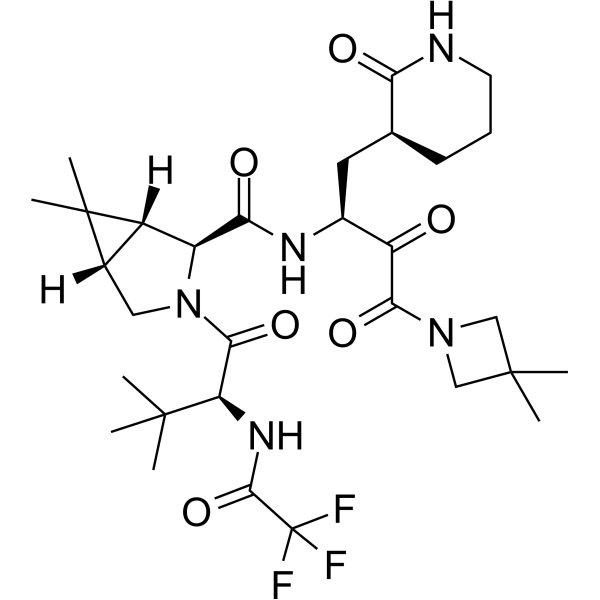
  • HY-158073

    SARS-CoV Infection
    ML2006a4 is an orally active inhibitor for SARS-CoV-2 main protease (M pro) with IC50 in picomolare value. ML2006a4 is cell permeable and antiviral active, that inhibits replication in SARS-CoV-2 in cells Huh7.5.1-ACE2-TMPRSS2 (Huh7.5.1++) in picomolare level
    ML2006a4
  • HY-172880

    Polo-like Kinase (PLK) Apoptosis Cancer
    PLK1-IN-15 (Compound 7n) is a PLK1 inhibitor (IC50: 38.5 nM). PLK1-IN-15 exhibits antiproliferative activity against HepG2, Huh7, H1299 and A549 cells (IC50: 2.03, 2.08, 4.79 and 17.11 μM, respectively). PLK1-IN-15 induces cell cycle arrest at the G2/M phase and apoptosis, and has anticancer activity .
    PLK1-IN-15
  • HY-178098

    YAP Cancer
    TEAD-IN-21 is a potent and orally active pan-TEAD inhibitor with an IC50 of 3 nM. TEAD-IN-21 effectively inhibited the proliferation of Huh-7 cells. TEAD-IN-21 selectively downregulates TEAD-dependent downstream genes. TEAD-IN-21 achieves tumor regression in a liver cancer-derived tumor xenograft mice model. TEAD-IN-21 can be used in the research of hepatocellular carcinoma (HCC) .
    TEAD-IN-21
  • HY-159174

    Ephrin Receptor Cyclin G-associated Kinase (GAK) Dengue Virus Infection
    EPHA2/A4/GAK-IN-1 (compound 55) is a potent inhibitor of EPHA2/EPHA4 and GAK with KD values of 180.5 nM for EPHA2 and 19.2 nM for GAK, respectively. EPHA2/GAK-IN-1 shows an extrapolated half-life time of 4.6 h in a microsomal stability assay. EPHA2/GAK-IN-1 shows antiviral activity and prevents dengue virus infection of Huh7 liver cells .
    EPHA2/A4/GAK-IN-1
  • HY-120356

    TAI-95

    Apoptosis NEKs Cancer
    T-1101 (TAI-95) is an orally active inhibitor for mitose regulating highly expressed oncoprotein 1 (Hec1). T-1101 blocks the interaction between Hec1 and NEK2, exhibits cytotoxicity in human liver cancer cells with GI50 of 15-70 nM. T-1101 induces apoptosis in Huh-7. T-1101 exhibits antitumor efficacy in mouse models .
    T-1101
  • HY-B1030R

    Dengue Virus Flavivirus Reference Standards CHIKV Autophagy Enterovirus Cardiovascular Disease Cancer
    Lanatoside C (Standard) is the analytical standard of Lanatoside C. This product is intended for research and analytical applications. Lanatoside C is a cardiac glycoside, can be used in the treatment of congestive heart failure and cardiac arrhythmia.Lanatoside C has an IC50 of 0.19 μM for dengue virus infection in HuH-7 cells. Lanatoside C can effectively inhibit all four serotypes of dengue virus, flavivirus Kunjin, alphavirus Chikungunya, Sindbis virus and the human enterovirus 71 .
    Lanatoside C (Standard)
  • HY-14844

    MIV-210

    HBV Infection
    Lagociclovir (FLG) is a nucleoside analogue that inhibits wild-type hepatitis B virus (HBV) replication in a human hepatoma cell line permanently expressing HBV .
    Lagociclovir
  • HY-111003

    NZ-4

    HBV Infection
    Isothiafludine is an orally active non-nucleosidic anti-HBV compound. Isothiafludine inhibits hepatitis B virus replication by blocking pregenomic RNA encapsidation .
    Isothiafludine
  • HY-175204

    AUTACs SHP2 Apoptosis Autophagy Atg8/LC3 Cancer
    SHP2 protein degrader-3 is a SHP2 AUTAC degrader. SHP2 protein degrader-3 shows dose-dependent SHP2 degradation ability (DC50 = 3.22 μM) and anti-tumor activity (IC50 = 5.59 μM) in HeLa cells. SHP2 protein degrader-3 induces degradation through the LC3-mediated autophagy pathway, which can be inhibited by lysosome inhibitors. SHP2 protein degrader-3 induces apoptosis in various cancer cells (HeLa cells, HepG2 cells, LoVo cells, Huh-7 cells) (SHP2 Ligand : (HY-100388); LC3 Ligand: (HY-10542); Linker : (HY-128834)) .
    SHP2 protein degrader-3
  • HY-168102

    Microtubule/Tubulin Apoptosis Cancer
    Antiproliferative agent-59 (Compound 14u) is an inhibitor for tubulin polymerization. Antiproliferative agent-59 exhibits antiproliferative activities against cancer cells Huh7, SGC-7901, and MCF-7 with IC50 of 0.03, 0.18, and 0.13μM. Antiproliferative agent-59 arrests the cell cycle at G2/M phase and induces apoptosis in Huh7 cell. Antiproliferative agent-59 exhibits antitumor efficacy against liver cancer in Huh7 xenograft mouse models, without significant toxicity .
    Antiproliferative agent-59
  • HY-N12887

    Mitochondrial Metabolism Others Cancer
    Mycothiazole is an inhibitor for mitochondrial electron transport chain (ETC) complex I. Mycothiazole exhibits cytotoxicity in cancer cells Huh7 (IC50 is 55.8 μM), U87 and MCF7. Mycothiazole induces apoptosis in Huh7. Mycothiazole utilizes the unfolded protein response (UPR) and heat shock response (HSR) pathway involved transcription factors ATFS-1 and HSF1, to extend the lifespan of C. elegans .
    Mycothiazole
  • HY-155759

    NF-κB Interleukin Related Caspase Apoptosis Inflammation/Immunology Cancer
    HMGB1-IN-2 (compound 15) is an inhibitor of highly conserved nuclear protein (HMGB1), showing NO inhibitory effect with IC50 value of 20.2 μM in RAW264.7 cells. HMGB1-IN-2 (30 μM) decreases the level of IL-1 β, TNF-α, caspase-1 p20, inhibits the phosphorylation of NF-κB p65, exhibits anti-apoptotic activity. HMGB1-IN-2 (15 mg/kg; ip) relives kidney injury in septic acute kidney injury mouse. HMGB1-IN-2 inhibits Huh7 cells and A549 cells with IC50s of 77.0 μM, and 82.0 μM, respectively .
    HMGB1-IN-2
  • HY-W411439

    GLUT Metabolic Disease
    1-O-p-Coumaroyl-β-D-glucose can promote glucose uptake in HuH7 cells, and be be extracted from Luffa cylindrica (L.) Roem (sponge gourds) .
    1-O-p-Coumaroyl-β-D-glucose
  • HY-29866

    Microtubule/Tubulin Cancer
    Tubulin polymerization-IN-75 (Compound 6) is an inhibitor for tubulin polymerization with an IC50 of 30 μM. Tubulin polymerization-IN-75 inhibits the proliferation of cancer cell Huh7 and 293T with IC50 of 14.3 μM and 13.8 μM .
    Tubulin polymerization-IN-75
  • HY-162327

    PROTACs HBV Infection
    PROTAC PAPD5 degrader 1 (compound 12b) inhibits both hepatitis A (HAV) and hepatitis B virus (HBV) in vitro and in vivo , with IC50 and CC50 of 10.59 μM and > 50 μM, respectively in Huh7 cells .
    PROTAC PAPD5 degrader 1
  • HY-163569

    FGFR Cancer
    FGFR4-IN-20 (comp 11) is an orally active and selective FGFR4 inhibitor with IC50s of 19 and 36 nM against Huh7 cells and FGFR4 enzyme. FGFR4-IN-20 can be used for hepatocellular carcinoma research .
    FGFR4-IN-20

Inquiry Online

Your information is safe with us. * Required Fields.

Salutation


Country or Region *

Applicant Name *


Organization Name *

Department *


Email Address *


Product Name *

Cat. No.


Requested quantity *

Phone Number *


Remarks

Inquiry Online

Inquiry Information

Product Name:
Cat. No.:
Quantity:
MCE Japan Authorized Agent:

