

1. Search Result
Search Result
Results for "

IAV

" in MedChemExpress (MCE) Product Catalog:

48

Inhibitors & Agonists

1

Peptides

4

Inhibitory Antibodies

4

Natural
Products

Cat. No. Product Name Target Research Areas Chemical Structure
  • HY-128965

    NeuGc; GcNeu

    Influenza Virus Endogenous Metabolite Infection Cancer
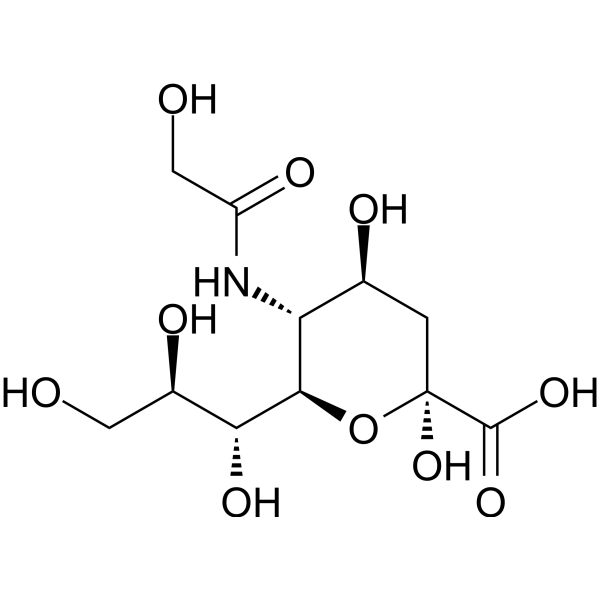
    N-Glycolylneuraminic acid is a nonhuman sialic acid molecule synthesized in pigs but not in humans. N-Glycolylneuraminic acid works as a decoy receptor of N-Glycolylneuraminic acid-binding influenza A viruses (IAVs) .
    N-Glycolylneuraminic acid
  • HY-134608

    Co-PPIX

    Reactive Oxygen Species (ROS) Influenza Virus Infection
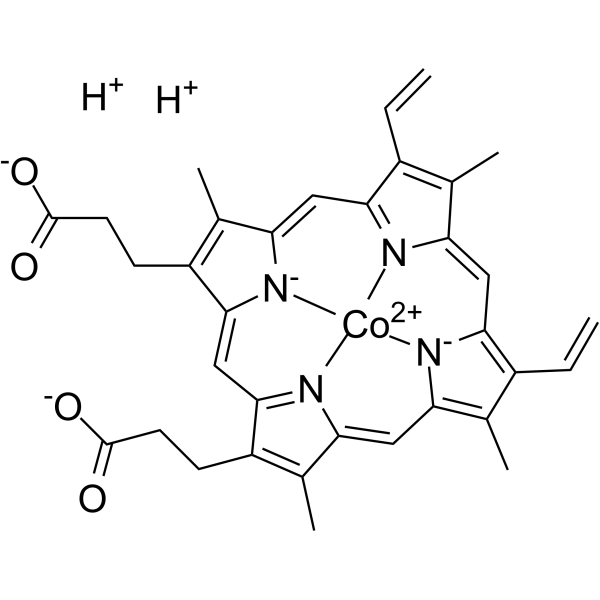
    Cobalt protoporphyrin IX (Co-PPIX) is a potent and specific heme oxygenase-1 (HO-1) inducer. Cobalt protoporphyrin IX exhibits broad-spectrum antiviral activities against Influenza A virus (IAV) .
    Cobalt protoporphyrin IX
  • HY-175469

    Influenza Virus Infection
    VNT-101 is an orally active influenza A (IAV) inhibitor. VNT-101 disrupts NP-NP PPI to block NP oligomerization and destabilize the viral ribonucleoprotein (RNP) complex, with potent antiviral activity across multiple influenza A subtypes. VNT-101 exhibits EC50 values of 4-5 nM in cellular cytopathic effect (CPE) assay, 4-8 nM in neuraminidase (NA) assay, and 21-45 nM in RNP assay. VNT-101 demonstrates robust in vivo antiviral efficacy in mice infected with lethal H1N1 virus. VNT-101 can be used for the study of influenza A infection .
    VNT-101
  • HY-P99637

    MHAA4549A; RG7745

    Influenza Virus Infection
    Gedivumab (MHAA4549A; RG7745) is a human monoclonal antibody that targets influenza A virus (IAV) with high specificity and binds to the highly conserved stem region of the IAV haemagglutinin protein, thereby preventing haemagglutinin maturation and blocking haemagglutinin-mediated membrane fusion in the intranucleosome. Gedivumab can be used in IAV infection disease studies .
    Gedivumab
  • HY-W031757

    Influenza Virus Bacterial Dipeptidyl Peptidase COX NF-κB AP-1 RIG-I-like receptor (RLR) STAT Infection Neurological Disease Inflammation/Immunology
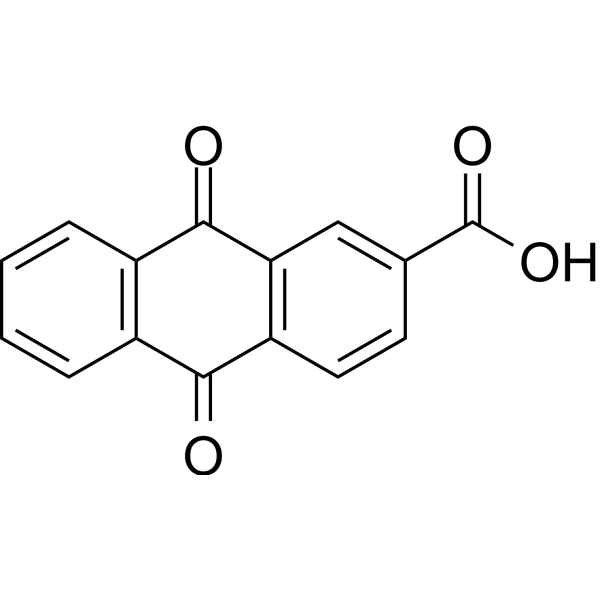
    Anthraquinone-2-carboxylic acid is an orally active anthraquinone compound and Antibacterial agent. Anthraquinone-2-carboxylic acid can be isolated from Bajitian. Anthraquinone-2-carboxylic acid inhibits the activation of DPP-IV, COX-2, NF-κB and AP-1. Anthraquinone-2-carboxylic acid blocks IAV-induced activation of the RIG-I/STAT1 pathway, alleviates IAV-mediated weight loss, and protects against lethal IAV infection. Anthraquinone-2-carboxylic acid inhibits the growth of various Staphylococcus strains. It possesses potent anti-inflammatory, immunomodulatory, analgesic and antibacterial activities .\n


    Anthraquinone-2-carboxylic acid
  • HY-158312
    UH15-38
    1 Publications Verification

    Necroptosis RIP kinase Influenza Virus Infection Inflammation/Immunology
    UH15-38 is a potent RIPK3 inhibitor with an IC50 value of 20 nM. UH15-38 blocks IAV (influenza A virus)-activated necroptosis. UH15-38 dampens IAV-induced lung injury .
    UH15-38
  • HY-N0891

    Tubeimoside-B

    EGFR TGF-β Receptor RIG-I-like receptor (RLR) SARS-CoV Infection Neurological Disease Cancer
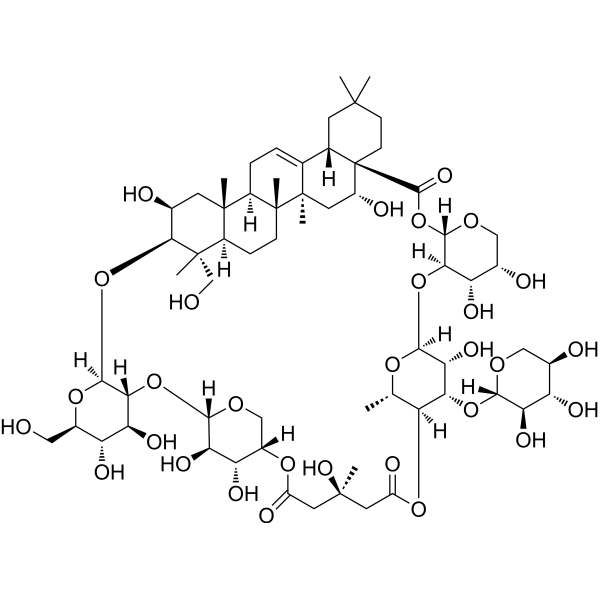
    Tubeimoside II is an orally active triterpenoid saponin and antiviral agent that binds to PACT/PRKRA with Kd values of 5.37 μM and 133.1 μM, respectively. Tubeimoside II inhibits oxidase-dependent EGFR activation and reduces TGF-β1-induced oxidative stress. Tubeimoside II activates the RIG-I signaling pathway and increases IFN-β secretion. Tubeimoside II suppresses TPA-induced ear edema, mouse sarcoma 180 growth, and TPA-induced skin tumor formation. Tubeimoside II exerts broad-spectrum antiviral activity against SARS-CoV-2, HCoV-OC43, and IAV-H1N1/FM1. Tubeimoside II can be used in research related to retinoblastoma, respiratory viral infections, skin tumors, and sarcoma 180 .
    Tubeimoside II
  • HY-156048
    Trifluoromethyl-tubercidin
    2 Publications Verification

    TFMT

    Influenza Virus Infection
    Trifluoromethyl-tubercidin (TFMT) is an inhibitor of 2'-O-ribose methyltransferase 1 (MTr1). Trifluoromethyl-tubercidin can inhibit the replication of influenza A and B viruses by interfering with the cap-snatching process of the influenza virus. Trifluoromethyl-tubercidin has antiviral activity and low toxicity .
    Trifluoromethyl-tubercidin
  • HY-P99620

    CT-P22; CT120

    Influenza Virus Infection
    Firivumab (CT-P22; CT120) is a human IgG1 monoclonal influenza A virus hemagglutinin (Anti-IAV HA) antibody. Firivumab is capable of neutralizing H1N1, H5N1, H6N1, H6N2, H8N4, H8N8, H9N2 and H12N7. Firivumab shows protection against H1N1 virus in mice .
    Firivumab
  • HY-177119

    PROTACs RIP kinase Mixed Lineage Kinase Infection Inflammation/Immunology
    ZBP1 Covalent PROTAC-1 is a covalent Z-DNA binding protein 1 ZBP1 PROTAC degrader, with its DC50 being 25.69 nM. ZBP1 Covalent PROTAC-1 integrates the ligand that recruits the VHL E3 ubiquitin ligase and the DNA aptamer (Aptamer Z3) with the specific Zα domain that can bind to ZBP1, which has a high affinity (KD = 2.71 nM) with ZBP1. After degrading ZBP1, the phosphorylation levels of downstream signaling molecules RIPK3 and MLKL significantly decrease. ZBP1 Covalent PROTAC-1, encapsulated by nano-liposomes, significantly improves the survival rate of mice infected with influenza A virus (IAV) after administration via the trachea .
    ZBP1 Covalent PROTAC-1
  • HY-P990187

    MHC Influenza Virus Infection Inflammation/Immunology
    Anti-Mouse MHC Class II (I-A/I-E) Antibody (M5/114) is a rat-derived IgG2b type antibody inhibitor, targeting to mouse MHC Class II. Anti-Mouse MHC Class II (I-A/I-E) Antibody (M5/114) reacts with mouse MHC Class II haplotypes I-Ab, I-Ad, I-Aq, I-Ed, and I-Ek. Anti-Mouse MHC Class II (I-A/I-E) Antibody (M5/114) does not react with I-Af, I-Ak, or I-As haplotypes. Anti-Mouse MHC Class II (I-A/I-E) Antibody (M5/114) blocks MHC Class II and inhibit T cell generation. Anti-Mouse MHC Class II (I-A/I-E) Antibody (M5/114) can be used for the researches of infection and immunology, such as influenza A virus (IAV) infection .
    Anti-Mouse MHC Class II (I-A/I-E) Antibody (M5/114)
  • HY-143494

    RSV Influenza Virus Infection
    RSV/IAV-IN-3 (compound 14'i) is a dual inhibitor of respiratory syncytial virus (RSV) and influenza A virus (IAV) with EC50 values of 2.92 µM and 1.90 µM,respectively. RSV/IAV-IN-3 has antiviral effect against H1N1 and H3N2 with EC50 values of 3.25 µM and 1.50 µM in MDCK cells, respectively. RSV/IAV-IN-3 significantly inhibits the activity of luciferase in a dose-dependent manner, with an EC50 of 3.89 µM. RSV/IAV-IN-3 inhibits IAV infectivity and RdRp activity. RSV/IAV-IN-3 inhibits IAV and RSV replication at the post-entry stage .
    RSV/IAV-IN-3
  • HY-124449

    ME-5343

    TRP Channel Others
    Afidopyropen (ME-5343) is an Afidopyropen targets sucking insects such as whiteflies, aphids, and leafhoppers by acting on the Nanchung (Nan) and Inactive (Iav) encoding gene of insects, and affecting TRPV channel. Afidopyropen can be used for many crops for its degradability .
    Afidopyropen
  • HY-P990188

    MHC Inflammation/Immunology
    Anti-Mouse MHC class II (I-A) Antibody (Y-3P) is a mouse-derived IgG2a κ type antibody inhibitor, targeting to mouse MHC class II. Anti-Mouse MHC class II (I-A) Antibody (Y-3P) reacts with mouse MHC Class II haplotypes I-Ab, I-Af, I-Ap, I-Aq, I-Ar, I-As, I-Au, I-Av, and weakly with I-Ak. Anti-Mouse MHC class II (I-A) Antibody (Y-3P) blocks MHC class II and inhibits expansion of regulate T cells. Anti-Mouse MHC class II (I-A) Antibody (Y-3P) can be used for the immunology research .
    Anti-Mouse MHC class II (I-A) Antibody (Y-3P)
  • HY-161820

    Influenza Virus Infection
    IAV-IN-3 (Compound (R,S)-16s) is an anti-influenza A virus (IAV) agent (EC50 = 0.134 μM) with weak cytotoxicity (CC50 = 15.35 μM for MDCK cells). IAV-IN-3 inhibits IAV polymerase with an IC50 of 0.045 μM .
    IAV-IN-3
  • HY-130627

    RSV Influenza Virus Infection
    RSV/IAV-IN-2 (compound 14c) is a potent and dual inhibitor of RSV/IAV. RSV/IAV-IN-2 has lesser cytotoxicity than the clinical agent, Ribavirin. RSV/IAV-IN-2 has the potential for the research of RSV and/or IAV infections .
    RSV/IAV-IN-2
  • HY-130626

    RSV Influenza Virus Infection
    RSV/IAV-IN-1 (compound 14e) is a potent and dual inhibitor of RSV/IAV. RSV/IAV-IN-1 has lesser cytotoxicity than the clinical agent, Ribavirin. RSV/IAV-IN-1 has the potential for the research of RSV and/or IAV infections .
    RSV/IAV-IN-1
  • HY-151967

    Influenza Virus Infection
    Anti-IAV agent 1 (Compound (R)-1a) is an orally active anti-influenza A virus (IAV) agent with IC50s of 0.03 and 0.06 μM against IAV H1N1 and Oseltamivir-resistant IAV H1N1 strains, respectively .
    Anti-IAV agent 1
  • HY-131179

    Influenza Virus Infection
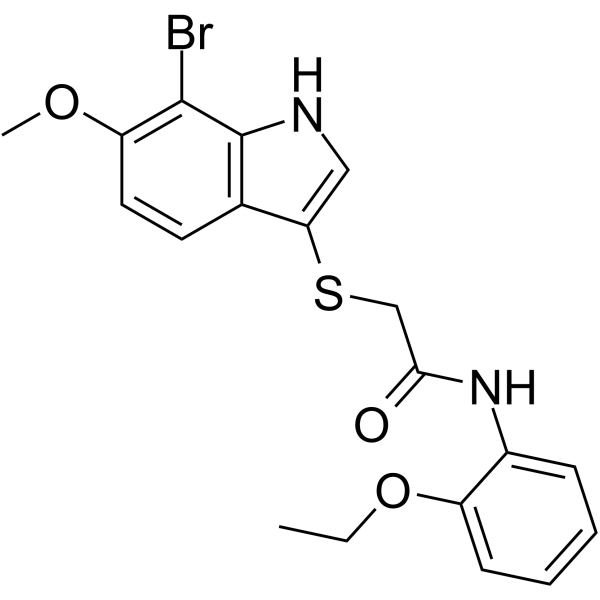
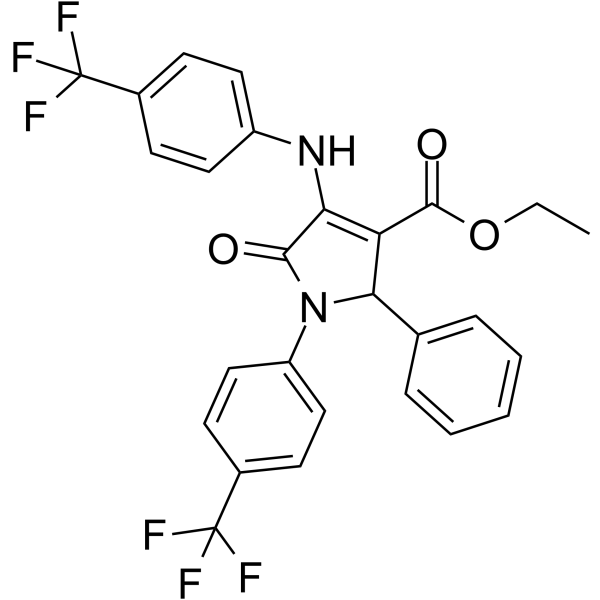
    Influenza A virus-IN-1 is a dihydropyrrolidones derivative and is a potent inhibitor against wide subtypes of influenza A virus (IAV) with IC50 values from 3.11 μM to 7.13 μM. Influenza A virus-IN-1 efficiently inhibits replication of IAV, up-regulates the expression of key antiviral cytokines IFN-β and antiviral protein MxA .
    Influenza A virus-IN-1
  • HY-158097

    Influenza Virus Infection
    IAV-IN-2 (Compound MC-22) inhibits for Influenza A Virus (IAV) through blocking the entry of IAV into host cell via clathrin-mediated endocytosis (CME) .
    IAV-IN-2
  • HY-177791

    PROTACs Influenza Virus Infection
    vRNPs degrader-1 is a potent PROTAC viral ribonucleoproteins (vRNPs) degrader. vRNPs degrader-1 shows broad-spectrum anti-influenza A viruses (IAV) activity by targeting the conserved 5′ end of viral RNA, thereby inducing proteasomal degradation of viral proteins. vRNPs degrader-1 inhibits H1N1, H9N2, and H3N2 infection in mice. vRNPs degrader-1 can be used for influenza research .
    vRNPs degrader-1
  • HY-169924

    Influenza Virus Cancer
    IAV replication-IN-1 (compound 3h) is reduce the upregulation of inflammatory factors and apoptosis induced by IAV infection.alleviate the lung injury caused by IAV infection .
    IAV replication-IN-1
  • HY-100858

    Influenza Virus Infection
    PP7 is a potent PB1-PB2 interaction inhibitor with an IC50 of 8.6 μM, and their inhibition against viral polymerase activity (IC50=9.5 μM). PP7 shows antiviral activities against influenza A virus (IAV), including A(H1N1)pdm09 (EC50=1.4 μM), A(H7N9) and A(H9N2) subtypes .
    PP7
  • HY-175808

    Influenza Virus Infection
    VF-57a (Compound 23) is an Influenza A virus (IAV) fusion inhibitor. VF-57 has potent antiviral activities against authentic A/H1N1 virus with EC50s of 0.92 and 0.31 μM for the A/H1N1 PR8 and A/H1N1 Virg09 strains, respectively. VF-57 significantly inhibits HA-mediated cell entry of A/H1N1- and A/H5N1-pseudoviruses, prevents the HA refolding at pH 5.2. VF-57a can be used for IAV infections research .
    VF-57a
  • HY-175559

    Influenza Virus Infection
    TTHP 512 is an influenza A virus (IAV) inhibitor. TTHP 512 demonstrates significant antiviral activity with an IC50 value of 1.46 μM. TTHP 512 inhibits the expression of viral nucleoprotein (NP) and PB2 protein, thereby disrupting the viral replication process. TTHP 512 is promising for research of influenza A virus .
    TTHP 512
  • HY-149034

    S5

    Influenza Virus Infection Cancer
    Influenza A virus-IN-8 (S5) is a macrocyclic peptide with no cytotoxic. Influenza A virus-IN-8 is also a potent Influenza A Virus (IAV) inhibitor (with sufficient protease stability) with IC50s of 6.7 and 6.6 nM for H1 and H5 variants, respectively. Influenza A virus-IN-8 shows good affinitiescan to H1 variants, binds to a conserved region in the HA stem with a Kd of 1.0 nM .
    Influenza A virus-IN-8
  • HY-143495

    RSV Influenza Virus Infection
    RSV-IN-3 (Compound 1) is a dual inhibitor of respiratory syncytial virus (RSV) and influenza virus A (IAV). RSV-IN-3 shows anti-RSV activity (EC50 = 32.70 μM) .
    RSV-IN-3
  • HY-143496

    RSV Influenza Virus Infection
    RSV-IN-4 (Compound 2) is a dual inhibitor of respiratory syncytial virus (RSV) and influenza virus A (IAV). RSV-IN-4 shows anti-RSV activity (EC50 = 11.76 μM) .
    RSV-IN-4
  • HY-128965R

    NeuGc (Standard); GcNeu (Standard)

    Reference Standards Influenza Virus Endogenous Metabolite Infection Cancer
    N-Glycolylneuraminic acid (Standard) is the analytical standard of N-Glycolylneuraminic acid. This product is intended for research and analytical applications. N-Glycolylneuraminic acid is a nonhuman sialic acid molecule synthesized in pigs but not in humans. N-Glycolylneuraminic acid works as a decoy receptor of N-Glycolylneuraminic acid-binding influenza A viruses (IAVs) .
    N-Glycolylneuraminic acid (Standard)
  • HY-135766

    (+)-Colletodiol

    Influenza Virus Infection
    Colletodiol is a fungal metabolite that has been found in D. grovesii and has immunosuppressant and antiviral activities. It inhibits concanavalin A- or LPS-induced proliferation of isolated mouse splenocytes (IC50s=12 and 5 μg/mL, respectively).1 Colletodiol inhibits influenza A viral replication in HeLa-IAV-Luc cells.
    Colletodiol
  • HY-155514

    Influenza Virus Inflammation/Immunology
    HA-IN-1 (compound 5g) is a Hemagglutinin (HA) ligand with high affinity, targeting to the trypsin cleavage site of HA. HA-IN-1 inhibits HA-mediated membrane fusion and reduces the pulmonary virus titer in vivo. HA-IN-1 is a potential influenza A virus (IAV) inhibitor, and an anti-influenza agent .
    HA-IN-1
  • HY-163364

    Influenza Virus Infection
    DS-22-inf-021 is a neuraminidase (NA) inhibitor. DS-22-inf-021 has antiviral activity against influenza viruses .
    DS-22-inf-021
  • HY-170646

    Influenza Virus Infection
    Influenza A virus-IN-15 (Compound 9b), a quinoline derivative, is a broad-spectrum inhibitor of influenza A viruses with acceptable cytotoxicity (IC50: 0.88-6.33 μM). Influenza A virus-IN-15 can inhibit the transcription and replication of viral RNA and is used in research for its antiviral effects against influenza A viruses (IAV) .
    Influenza A virus-IN-15
  • HY-151267

    SARS-CoV Infection
    SARS-CoV-2-IN-25 (Compound CP026) is a potent SARS-CoV-2 spike pseudoparticle transduction inhibitor with an IC50 of 1.6 μM. SARS-CoV-2-IN-25 inhibits enveloped viruses and liposomes .
    SARS-CoV-2-IN-25
  • HY-151267A

    SARS-CoV Infection
    SARS-CoV-2-IN-25 (Compound CP026) disodium is a potent SARS-CoV-2 spike pseudoparticle transduction inhibitor with an IC50 of 1.6 μM. SARS-CoV-2-IN-25 disodium inhibits enveloped viruses and liposomes .
    SARS-CoV-2-IN-25 disodium
  • HY-183313

    Influenza Virus Apoptosis NF-κB Interleukin Related NO Synthase Toll-like Receptor (TLR) Infection
    IAV-IN-5 is an orally active inhibitor of influenza A virus (IAV). IAV-IN-5 inhibits viral replication, blocks virus-induced apoptosis (Apoptosis), oxidative stress and cytokine storm, and regulates host immune signaling pathways. IAV-IN-5 reduces viral load and inflammatory cytokine levels in lung tissues of IAV-infected mouse models, alleviates body weight loss and pulmonary pathological damage. IAV-IN-5 can be used in studies related to influenza A virus infection .
    IAV-IN-5
  • HY-162701

    SARS-CoV Influenza Virus RSV HSV Infection
    Antiviral agent 58 (Compound J1) is an orally active antiviral agent with broad-spectrum antiviral activity against enveloped viruses, including influenza A virus (IAV), respiratory syncytial virus (RSV), severe acute respiratory syndrome coronavirus 2 (SARS-CoV-2), human coronavirus OC43 (HCoV-OC43), herpes simplex virus type 1 (HSV-1), and HSV-2 .
    Antiviral agent 58
  • HY-162492

    Influenza Virus Infection
    Influenza A virus-IN-14 (Compound 37) is an inhibitor for influenza virus type A (IAV), which inhibits H1N1 with an EC50 of 23 nM. Influenza A virus-IN-14 exhibits low cytotoxicity with CC50 of more than 100 μM. Influenza A virus-IN-14 inhibits cytopathic effect and improves the survival rates of cell Calu3. Influenza A virus-IN-14 exhibits synergistic activity with the neuraminidase inhibitor Oseltamivir (HY-13317). Influenza A virus-IN-14 exhibits poor pharmacokinetic properties in CD-1 mouse .
    Influenza A virus-IN-14
  • HY-151269A

    SARS-CoV Infection
    SARS-CoV-2-IN-23 disodium is a two-armed diphosphate ester and medium length molecular tweezers. SARS-CoV-2-IN-23 disodium exhibits antiviral activity with IC50s of 8.2 μM and 2.6 μM against SARS-CoV-2 activity and the spike pseudoparticle transduction, respectively. SARS-CoV-2-IN-23 disodium induces liposomal membrane disruption with an EC50 value of 4.4 μM .
    SARS-CoV-2-IN-23 disodium
  • HY-151269

    SARS-CoV Infection
    SARS-CoV-2-IN-23 is a two-armed diphosphate ester and medium length molecular tweezers. SARS-CoV-2-IN-23 exhibits antiviral activity with IC50s of 8.2 μM and 2.6 μM against SARS-CoV-2 activity and the spike pseudoparticle transduction, respectively. SARS-CoV-2-IN-23 induces liposomal membrane disruption with an EC50 value of 4.4 μM .
    SARS-CoV-2-IN-26
  • HY-151276A

    SARS-CoV Infection
    SARS-CoV-2-IN-29 disodium is a two-armed diphosphate ester with benzene system and molecular tweezers. SARS-CoV-2-IN-29 disodium exhibits antiviral activity with IC50s of 1.5 μM and 1.6 μM against SARS-CoV-2 activity and the spike pseudoparticle transduction, respectively. SARS-CoV-2-IN-29 disodium induces liposomal membrane disruption with an EC50 value of 3.0 μM .
    SARS-CoV-2-IN-29 disodium
  • HY-151278

    SARS-CoV Infection
    SARS-CoV-2-IN-30 is a two-armed diphosphate ester with benzene system and molecular tweezers. SARS-CoV-2-IN-30 exhibits antiviral activity with IC50s of 0.6 μM and 6.9 μM against SARS-CoV-2 activity and the spike pseudoparticle transduction, respectively. SARS-CoV-2-IN-30 induces liposomal membrane disruption with an EC50 value of 6.9 μM .
    SARS-CoV-2-IN-30
  • HY-151276

    SARS-CoV Infection
    SARS-CoV-2-IN-29 is a two-armed diphosphate ester with benzene system and molecular tweezers. SARS-CoV-2-IN-29 exhibits antiviral activity with IC50s of 1.5 μM and 1.6 μM against SARS-CoV-2 activity and the spike pseudoparticle transduction, respectively. SARS-CoV-2-IN-29 induces liposomal membrane disruption with an EC50 value of 3.0 μM .
    SARS-CoV-2-IN-29
  • HY-151278A

    SARS-CoV Infection
    SARS-CoV-2-IN-30 disodium is a two-armed diphosphate ester with benzene system and molecular tweezers. SARS-CoV-2-IN-30 disodium exhibits antiviral activity with IC50s of 0.6 μM and 6.9 μM against SARS-CoV-2 activity and the spike pseudoparticle transduction, respectively. SARS-CoV-2-IN-30 disodium induces liposomal membrane disruption with an EC50 value of 6.9 μM .
    SARS-CoV-2-IN-30 disodium
  • HY-151274

    SARS-CoV Infection
    SARS-CoV-2-IN-28 is a two-armed diphosphate ester with C7 alkyl and molecular tweezers with extended length. SARS-CoV-2-IN-28 exhibits antiviral activity with IC50s of 0.4 μM and 1.0 μM against SARS-CoV-2 activity and the spike pseudoparticle transduction, respectively. SARS-CoV-2-IN-28 induces liposomal membrane disruption with an EC50 value of 4.4 μM .
    SARS-CoV-2-IN-28
  • HY-151274A

    SARS-CoV Infection
    SARS-CoV-2-IN-28 disodium is a two-armed diphosphate ester with C7 alkyl and molecular tweezers with extended length. SARS-CoV-2-IN-28 disodium exhibits antiviral activity with IC50s of 0.4 μM and 1.0 μM against SARS-CoV-2 activity and the spike pseudoparticle transduction, respectively. SARS-CoV-2-IN-28 disodium induces liposomal membrane disruption with an EC50 value of 4.4 μM .
    SARS-CoV-2-IN-28 disodium
  • HY-151271

    SARS-CoV Infection
    SARS-CoV-2-IN-27 is a two-armed diphosphate ester with C6 alkyl and molecular tweezers with extended length. SARS-CoV-2-IN-27 exhibits antiviral activity with IC50s of 1.0 μM and 1.7 μM against SARS-CoV-2 activity and the spike pseudoparticle transduction, respectively. SARS-CoV-2-IN-27 induces liposomal membrane disruption with an EC50 value of 6.5 μM .
    SARS-CoV-2-IN-27
  • HY-151271A

    SARS-CoV Infection
    SARS-CoV-2-IN-27 disodium is a two-armed diphosphate ester with C6 alkyl and molecular tweezers with extended length. SARS-CoV-2-IN-27 disodium exhibits antiviral activity with IC50s of 1.0 μM and 1.7 μM against SARS-CoV-2 activity and the spike pseudoparticle transduction, respectively. SARS-CoV-2-IN-27 disodium induces liposomal membrane disruption with an EC50 value of 6.5 μM .
    SARS-CoV-2-IN-27 disodium

Inquiry Online

Your information is safe with us. * Required Fields.

Salutation


Country or Region *

Applicant Name *


Organization Name *

Department *


Email Address *


Product Name *

Cat. No.


Requested quantity *

Phone Number *


Remarks

Inquiry Online

Inquiry Information

Product Name:
Cat. No.:
Quantity:
MCE Japan Authorized Agent:

