
16 Results for "

IP3R

" in MedChemExpress (MCE) Product Catalog:
Products (16)

16 Results for "IP3R" in MCE Product Catalog:

81
81 Publications Verification
Cat. No.: HY-W009724
CAS No.: 524-95-8
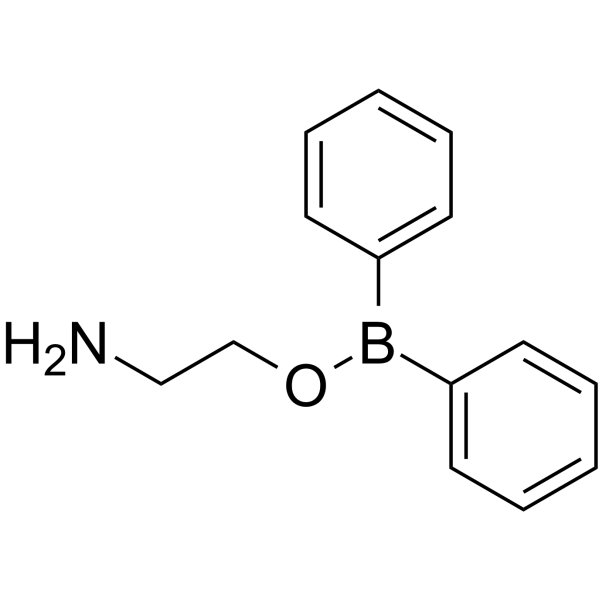
Synonyms: 2-APB
2-Aminoethyl diphenylborinate (2-APB) is a cell-permeable inhibitor of Inositol triphosphate receptor (IP3R). 2-Aminoethyl diphenylborinate also inhibits the store-operated Ca 2+ (SOC) channel and activates some TRP channels (V1, V2 and V3). Additionally, 2-Aminoethyl diphenylborinate has inhibitory effects on vasospasm. At high concentrations, it exhibits specific anti-inflammatory and antioxidant effects in neural tissue [3] .
loading...
    loading...
11
11 Cited Publications
Cat. No.: HY-103312
CAS No.: 88903-69-9
Purity:  ≥99.0%
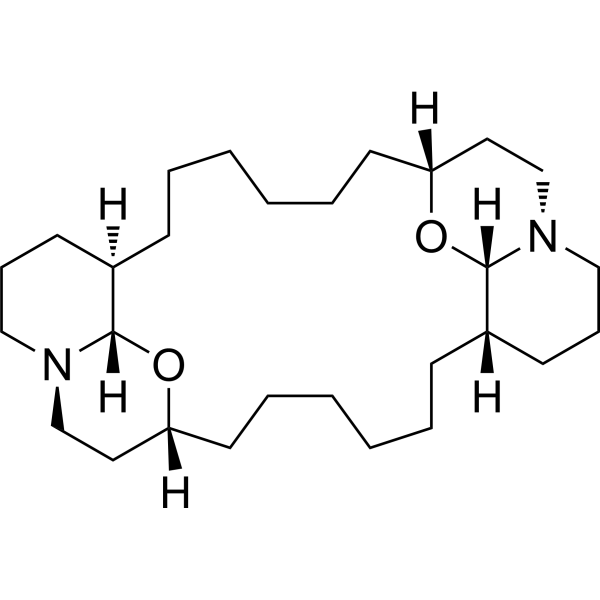
Synonyms: (-)-Xestospongin C
Xestospongin C ((-)-Xestospongin C) is a selective, reversible inositol 1,4,5-trisphosphate receptor (IP3R) inhibitor. Xestospongin C acts as an inhibitor of the sarcoplasmic/endoplasmic reticulum Ca 2+ ATPase (SERCA) pump of internal stores. Xestospongin C blocks IP3-induced Ca 2+ release from cerebellar microsomes with an IC50 of 358 nM. Xestospongin C is a valuable tool for investigating the structure and function of IP3Rs and Ca 2+ signaling in neuronal and nonneuronal cells [3].
loading...
    loading...
1
1 Cited Publications
Cat. No.: HY-129139
CAS No.: 111613-04-8
Purity:  95.71%
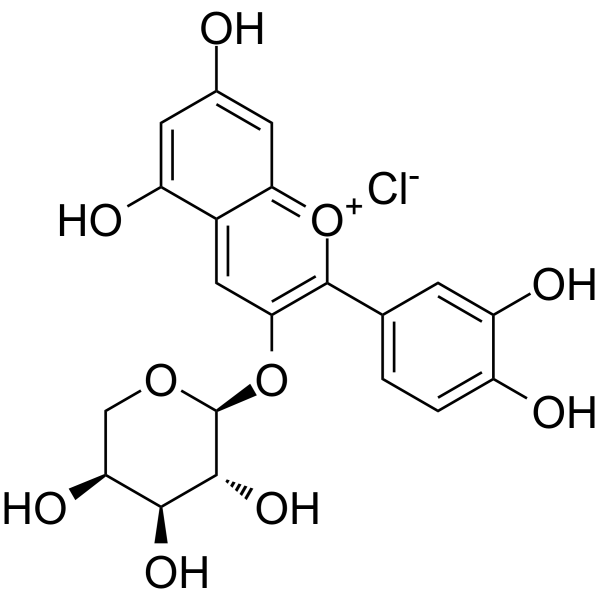
Cyanidin-3-O-arabinoside is a p38 MAPK phosphorylation inhibitor. Cyanidin-3-O-arabinoside reduces the expression of VDAC1, inhibits mtROS accumulation, reverses cellular senescence, blocks excessive mitochondrial calcium influx, reduces the formation of mitochondria-associated endoplasmic reticulum membranes, and suppresses the VDAC1-IP3R1 interaction. Cyanidin-3-O-arabinoside activates hair follicle stem cell proliferation and improves the condition of slowed hair growth. Cyanidin-3-O-arabinoside is applicable to research related to colon cancer and androgenetic alopecia .
loading...
    loading...
Cat. No.: HY-P10849
CAS No.: 3061802-23-8
Target:  

Calcium Channel

Research Areas:  

Others

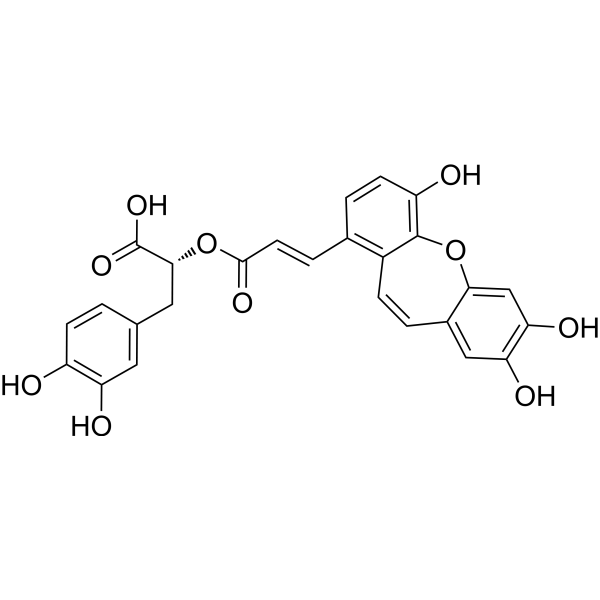
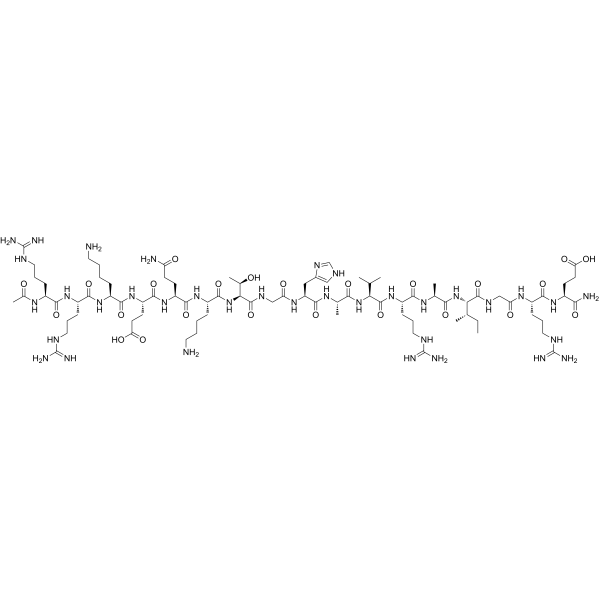
IP3RPEP6 is an IP3R competitive inhibitor. IP3RPEP6 has the IC50 values of 9.0 μM, 3.9 μM and 4.3 μM for IP3R1, IP3R2 and IP3R3, respectively. IP3RPEP6 does not affect the Ryanodine receptor and Cx43 hemichannels. IP3RPEP6 regulates calcium signaling within cells .
loading...
    loading...
Cat. No.: HY-P1341
CAS No.: 343268-91-7
Synonyms: Orexin A (17-33) (human, mouse, rat, bovine)
OXA (17-33) (Orexin A (17-33) (human, mouse, rat, bovine)) is the shortest active orexin peptide that selectively targets OX1 (EC50=8.29 nM), with 23-fold selectivity for the OX1 receptor over the OX2 receptor. The activity of OXA (17-33) depends on the Tyr17, Leu20, Asn25, His26 residues and the spatial conformation of the α-helix. OXA (17-33) activates signaling pathways involving inositol-1,4,5-trisphosphate receptor (IP3R), phospholipase D (PL-D) and choline-Sigma-1R, thereby increasing the cytoplasmic Ca 2+ level in nucleus accumbens neurons, an effect that is blocked by Sigma-1R antagonists. OXA (17-33) serves as an important biological probe for investigating the function of the OX1 receptor. OXA (17-33) can be modified via incorporation of mixed disulfide bonds of homocysteine and cysteamine, and is widely used in studies related to insomnia and narcolepsy [3].
loading...
    loading...
Cat. No.: HY-P10815
Research Areas:  

Others

IP3RCYT is an IP3R inhibitory peptide, which can inhibit the binding of cytochrome C to IP3R with an IC50 about 100 nM. IP3RCYT regulates calcium signaling within cells. P3RCYT inhibits apoptosis in HeLa and Jurkat cells treated with Staurosporine (HY-15141) or Membrane-bound Fas ligand (FasL) .
loading...
    loading...
Cat. No.: HY-162774A
Target:  

Apoptosis

Research Areas:  

Cancer

GRP75-IN-1 hydrochloride (compound 33) is an anti-endometrial cancer (EC) agent that induces apoptosis. GRP75-IN-1 hydrochloride reduces Ca 2+ levels in mitochondria by targeting GRP75 and disrupting its interaction with IP3R .
loading...
    loading...
Cat. No.: HY-100617A
CAS No.: 7292-81-1
Synonyms: (RS)-4-Carboxyphenylglycine
Target:  

mGluR

Research Areas:  

Others

(RS)-4CPG ((RS)-4-Carboxyphenylglycine) is a type I metabotropic glutamate receptor antagonist with activity in blocking LTP induction. In mice lacking IP3R1, (RS)-4CPG (500μM) nearly blocked long-term potentiation (LTP) induced by type I metabotropic glutamate receptor activation, with LTP of 117.6±1.7% (n = 8) in IP3R1(-/-) mice and 116.9±1.8% (n = 5) in IP3R1(+/+) mice.
loading...
    loading...
Cat. No.: HY-162774
CAS No.: 2922680-16-6
Target:  

Apoptosis

Research Areas:  

Cancer

GRP75-IN-1 (Compound 33) is an anti-endometrial cancer (EC) agent. GRP75-IN-1 induces apoptosis in endometrial cancer cells. GRP75-IN-1 hydrochloride reduces mitochondrial Ca 2+ levels by targeting GRP75 and disrupting its interaction with IP3R. GRP75-IN-1 inhibits tumor growth in human endometrial cancer xenograft animal models. GRP75-IN-1 can be used for research in endometrial cancer .
loading...
    loading...
Cat. No.: HY-172803
CAS No.: 2723569-00-2
Target:  

Ferroptosis ERK MEK p38 MAPK

Research Areas:  

Inflammation/Immunology

Ferroptosis inducer-7 is an orally active and selective ferroptosis inducer via inositol 1,4,5-trisphosphate receptor (IP3R)/calcium release-activated calcium channel protein (ORAI). Ferroptosis inducer-7 exhibits a notable effect in alleviating anemia symptoms, suppressing bone marrow CTLs activation, and improving hematopoietic function in immune-mediated bone marrow failure. Ferroptosis inducer-7 can be studied in research for aplastic anemia .
loading...
    loading...
Cat. No.: HY-P10166
CAS No.: 209251-66-1
Target:  

Peptides

Research Areas:  

Others

MLCK Peptide, control is a myosin light-chain kinase. Adding MLCK peptide to permeabilized L15 cells dramatically decreased IICR. MLCK peptide caused a reduction in the extent of IICR with no change in the affinity of IP3 for the IP3R .
loading...
    loading...
Cat. No.: HY-P81851
Synonyms: 5-trisphosphate receptor; Inositol 1; InsP3R1; IP3; IP3 receptor; IP3R 1; IP3R; IP3R1; Itpr1; SCA15; SCA16; SCA29

Host:  

Rabbit

Application:  

WB

Reactivity:  

Human, Mouse, Rat

loading...
    loading...
Cat. No.: HY-RS06993
Research Areas:  

Others

ITPR3 Human Pre-designed siRNA Set A contains three designed siRNAs for ITPR3 gene (Human), as well as a negative control, a positive control, and a FAM-labeled negative control.

loading...
    loading...
Cat. No.: HY-181529
CAS No.: 1212623-02-3
Target:  

VDAC PERK

Research Areas:  

Cancer

NCATS-SM0225 is an endoplasmic reticulum-associated degradation (ERAD) inhibitor and a direct binder of VDAC1, VDAC2 and VDAC3. NCATS-SM0225 exhibits an IC50of 1.02 μM for ERAD and a Kd of 3.13 μM for human VDAC1 binding. NCATS-SM0225 disrupts cellular calcium homeostasis, enhances VDAC1-IP3R coupling and activating PERK. NCATS-SM0225 selectively kills cancer cells, exhibits tumor growth inhibitory effects in melanoma xenograft models. NCATS-SM0225 can be used for research on multiple cancers including melanoma, as well as the molecular mechanisms of ERAD and calcium homeostasis regulation .
loading...
    loading...
Cat. No.: HY-RS06991
Research Areas:  

Others

ITPR1 Human Pre-designed siRNA Set A contains three designed siRNAs for ITPR1 gene (Human), as well as a negative control, a positive control, and a FAM-labeled negative control.

loading...
    loading...
Cat. No.: HY-182360
Cytisine-Platinum(IV) Prodrug-1 is a Pt(IV) prodrug incorporating the natural compound Cytisine (HY-N0175) with antiproliferative activity against tumor cells. Cytisine-Platinum(IV) Prodrug-1 promotes calcium transfer across the IP3R1-GRP75-VDAC1 axis to drive mitochondrial calcium overload. Cytisine-Platinum(IV) Prodrug-1 initiates unfolded protein response via PERK, eIF2α, ATF4, and CHOP to modulate Bcl-2 and Bax, triggering apoptosis. Cytisine-Platinum(IV) Prodrug-1 induces mitochondrial dysfunction, ROS production, reduced ATP synthesis, DNA damage, and S-phase cell cycle arrest. Cytisine-Platinum(IV) Prodrug-1 activates the cGAS-STING pathway, reduces PD-L1 expression, drives immunogenic cell death. Cytisine-Platinum(IV) Prodrug-1 exhibits high physiological stability, efficient cellular accumulation, and enhanced platinum-DNA binding, and inhibits tumor growth in mouse models with reduced systemic toxicity. Cytisine-Platinum(IV) Prodrug-1 can be used for the research of lung cancer .
loading...
    loading...
  • 1

