37 Results for "

IgG-bead incubation

" in MedChemExpress (MCE) Product Catalog:
Products (37)

37 Results for "IgG-bead incubation" in MCE Product Catalog:

Cat. No.: HY-156820
CAS No.: 3077339-82-0
Research Areas:  

Cancer

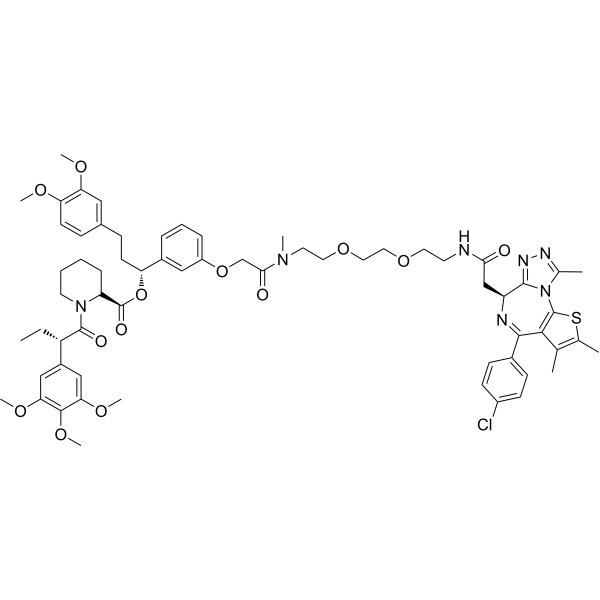
HLDA-221 is a non-covalent regulated induced proximity targeting chimeras (RIPTAC). The binding of HLDA-221 to BRD4-BD1 is significantly increased after pre-incubation with FKBP. HLDA-221 can be used in cancer research .
loading...
    loading...
Cat. No.: HY-172404
CAS No.: 9016-17-5
Target:  

Endogenous Metabolite

Research Areas:  

Cancer

Arylsulfatase is a hydrolase with substrate specificity for potassium 6-benzoyl-2-naphthyl sulfate. Arylsulfatase exhibits optimal activity at 37°C, and its incubation time is tissue-dependent. Arylsulfatase can be used in tumor-related research .
loading...
    loading...
Cat. No.: HY-148692
Purity:  99.70%
Target:  

STAT

Research Areas:  

Cancer

OSM-SMI-10B a derivative of OSM-SMI-10. OSM-SMI-10B significantly reduces OSM-induced STAT3 phosphorylation in cancer cells upon co-incubation with OSM (Oncostatin M) .
loading...
    loading...
Cat. No.: HY-137959
CAS No.: 250780-40-6
Telmisartan acyl-β-D-glucuronide is an acyl-β-D-glucuronide and a metabolite of Telmisartan (HY-13955). Telmisartan acyl-β-D-glucuronide can be converted back to Telmisartan upon incubation with Glucuronidase. Partial acyl migration of Telmisartan acyl-β-D-glucuronide occurs under physiological conditions .
loading...
    loading...
Cat. No.: HY-103291
CAS No.: 126959-88-4
Purity:  99.96%
Sar-[D-Phe8]-des-Arg9-Bradykinin is a agonist of B1 receptor. Sar-[D-Phe8]-des-Arg9-Bradykinin selectively amplifies the contractile response when incubation with human recombinant interleukin-1 β (IL-1 β) in rabbit aortic rings .
loading...
    loading...
Cat. No.: HY-D1632
CAS No.: 460085-45-4
Target:  

Fluorescent Dye

Research Areas:  

Metabolic Disease

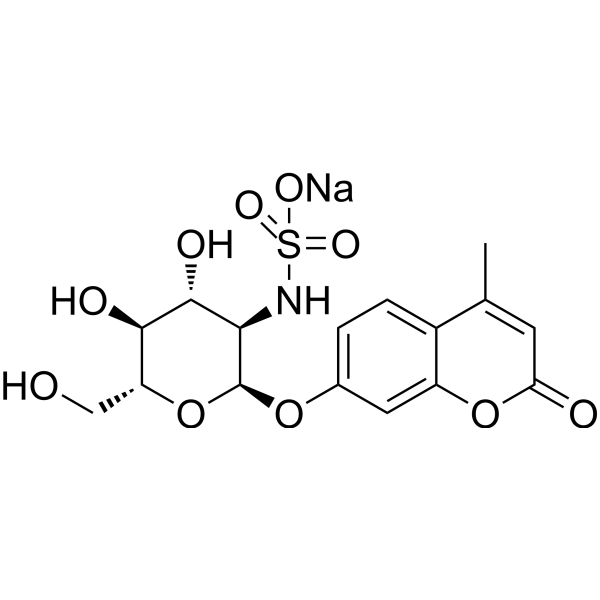
4-MU-α-GlcNS sodium is a fluorogenic substrate for heparan sulfate sulfamidase, with apparent Km values of 4 mM and 8 mM for fibroblast and leukocyte enzymes, respectively. 4-MU-α-GlcNS sodium undergoes enzymatic desulfation to generate an intermediate, which requires a second incubation with yeast α-glucosidase to hydrolyze and release 4-methylumbelliferone, detected by fluorescence at Ex/Em = 365/450 nm. 4-MU-α-GlcNS sodium is suitable for fibroblast homogenates, leukocytes, and dried leukocyte filter paper samples, and can be used for the detection and study of enzyme activity in mucopolysaccharidosis type IIIA .
loading...
    loading...
Cat. No.: HY-176540
CAS No.: 2699937-76-1
Target:  

Microtubule/Tubulin

Research Areas:  

Neurological Disease

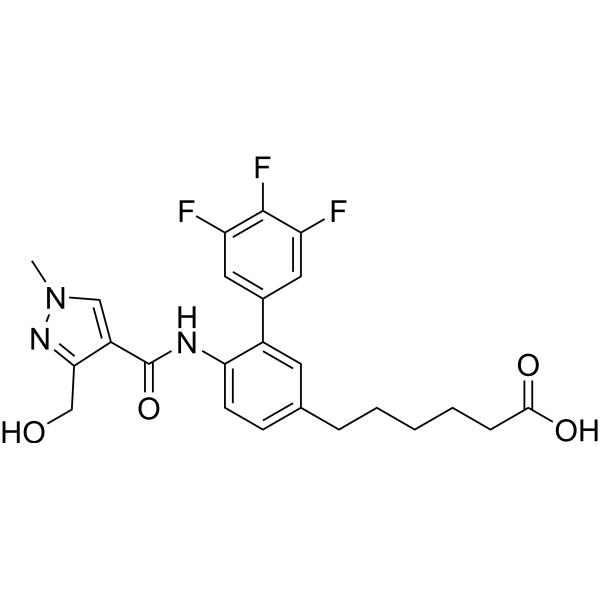
Microtubule stabilizer-1 (compound 69) is a brain-penetrant microtubule (MT) stabilizer. Microtubule stabilizer-1 increases acetylated α-tubulin (AcTub) levels and prevents the characteristic loss of neuronal MTs that is observed after incubation with Okadaic acid (HY-N6785). Microtubule stabilizer-1 can be used for the study of Alzheimer’s disease (AD) and related neurodegenerative tauopathies .
loading...
    loading...
Cat. No.: HY-B2220B
CAS No.: 9012-54-8
Research Areas:  

Others

Thermostable cellulase recombinant is a cellulose hydrolase present in hyperthermophiles, which catalyzes the hydrolysis of β-1,4 glycosidic bonds in cellulose. Thermostable cellulase recombinant targets carboxymethyl cellulose (CMC) as its primary substrate, and retains high residual activity even after incubation at high temperatures. The activity of Thermostable cellulase recombinant is inhibited by ionic and non-ionic detergents, and can be enhanced by cobalt ions. Thermostable cellulase recombinant can be applied in the paper industry .
loading...
    loading...
Cat. No.: HY-W007704
CAS No.: 4630-82-4
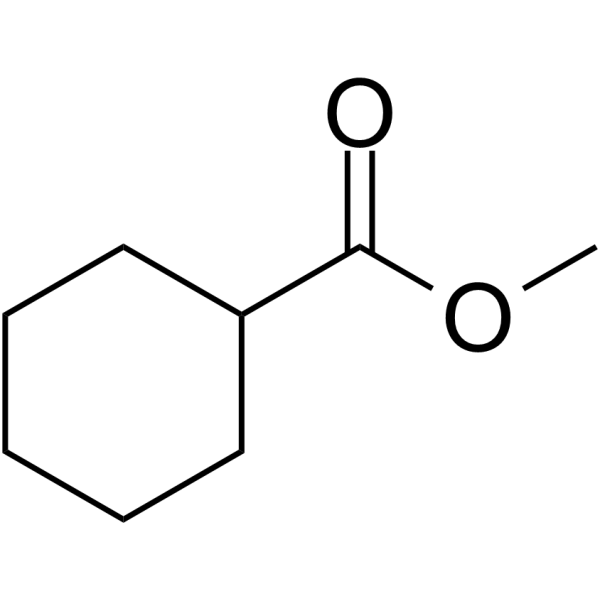
Methyl cyclohexanecarboxylate is a compound related to 2-cyclohexenylcarbonyl CoA. Methyl cyclohexanecarboxylate is produced during the incubation of 2-cyclohexenylcarbonyl CoA with cell-free extracts of Streptomyces collinus .
loading...
    loading...
Cat. No.: HY-130238
CAS No.: 90780-54-4
Synonyms: (±)8-HDoHE; 8-hydroxy Docosahexaenoic acid; (±)8-HDoHE
Target:  

Endogenous Metabolite

Research Areas:  

Metabolic Disease

(±)8-HDHA is an autoxidation product of docosahexaenoic acid (DHA) in vitro. It is also produced from incubations of DHA in rat liver, brain, and intestinal microsomes. (±)8-HDHA is a potential marker of oxidative stress in brain and retina where DHA is an abundant polyunsaturated fatty acid.
loading...
    loading...
Cat. No.: HY-130288
CAS No.: 90780-53-3
Synonyms: (±)13-HDoHE; 13-hydroxy Docosahexaenoic acid; (±)13-HDoHE
Target:  

Lipoxygenase

Research Areas:  

Inflammation/Immunology

(±)13-HDHA is an autoxidation product of docosahexaenoic acid (DHA) in vitro. It is also produced from incubations of DHA in rat liver, brain, and intestinal microsomes. Fresh water hydra is shown to metabolize DHA to 13(R)-HDHA, presumably via the 11R-lipoxygenase activity. (±)13-HDHA is a potential marker of oxidative stress in brain and retina where DHA is an abundant polyunsaturated fatty acid.
loading...
    loading...
Cat. No.: HY-W040176
CAS No.: 799268-45-4
Synonyms: N-Palmitoyl-tyrosine phosphoric acid ammonium
N-PTyrosine PA (N-Palmitoyl-tyrosine phosphoric acid) ammonium is a lysophosphatidic acid (LPA) receptor modulator, which exhibits weak inhibitory activity against LPA1 and partial agonist properties towards LPA5. N-PTyrosine PA ammonium inhibits the activation of LPA receptors and downstream responses by competing with agonists for binding sites. N-PTyrosine PA ammonium can induce morphological changes and aggregation, and also inhibit LPA-induced morphological changes through receptor desensitization caused by pre-incubation. N-PTyrosine PA ammonium can be used in the research of related diseases such as atherosclerosis and acute ischemic syndromes (e.g., unstable angina, myocardial infarction, stroke) .
loading...
    loading...
Cat. No.: HY-145408
CAS No.: 2747919-19-1
Target:  

CDK

Research Areas:  

Cancer

CDK7/9-IN-1 is a cyclin-dependent kinases 7/9 (CDK7/9) inhibitor. CDK7/9-IN-1 selectively inhibits CDK7 over CDK9. CDK7/9-IN-1 inhibits CDK7 with IC50s of 0.0656 μM and 0.00574 μM without pre-incubation and after 3 hours pre-incubation, respectively. CDK7/9-IN-1 inhibits CDK9 with an IC50 of 2.14 μM after 3 hours pre-incubation. CDK7/9-IN-1 can be used for the research of cancer .
loading...
    loading...
Cat. No.: HY-162599
Spirohypertone B is a potent Tumor necrosis factor-α (TNF-α) inhibitor. Spirohypertone B protects L929 cells from death induced by co-incubation with TNF-α and Actinomycin D (HY-17559) .
loading...
    loading...
Cat. No.: HY-122558
CAS No.: 1263409-34-2
Research Areas:  

Neurological Disease

AM432 (sodium) is a potent and selective antagonist of the DP2 receptor (CRTH2). AM432 (sodium) exhibits excellent potency in a human whole blood eosinophil shape change assay with prolonged incubation. AM432 (sodium) also demonstrates excellent pharmacokinetics in dog and mouse models of inflammatory disease .
loading...
    loading...
Cat. No.: HY-149738
CAS No.: 2408732-55-6
Research Areas:  

Others

FXh is a functionalized hapten activated by incubation with N, N′-disuccinimidyl carbonate, and Et3N in acetonitrile at 0 °C. FXh can improve the affinity of antigens .
loading...
    loading...
Cat. No.: HY-113929
CAS No.: 106900-12-3
Synonyms: R-58425
Target:  

Opioid Receptor

Research Areas:  

Inflammation/Immunology

Loperamide oxide (R-58425) is a orally active prodrug of the Loperamide (HY-156131). Loperamide oxide incubation with the contents of the intestinal lumen inhibits fluid secretion under aerobic conditions .
loading...
    loading...
Cat. No.: HY-172764
CAS No.: 1821706-67-5
Target:  

NO Synthase

Research Areas:  

Metabolic Disease

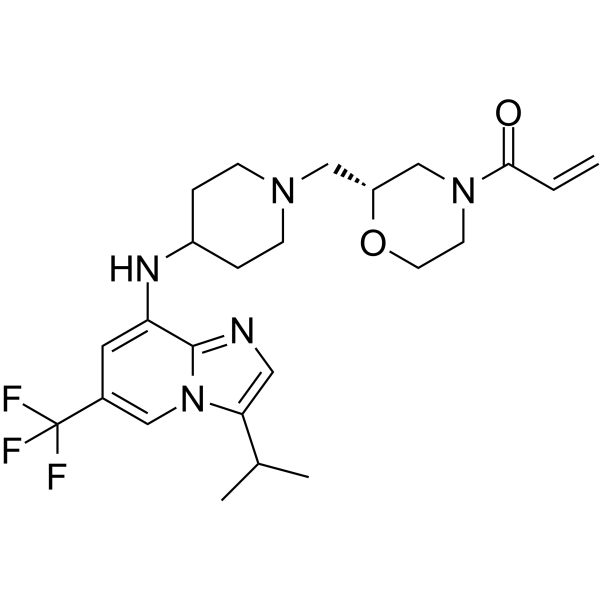
L-ENIPO (hydrochloride) is an inhibitor of iNOS, nNOS, and eNOS with Ki values of 17, 10.3, and 58.2 μM. L-ENIPO (hydrochloride) exerts reversible tight binding inhibition selective for iNOS with longer incubation time .
loading...
    loading...
Cat. No.: HY-149737
Target:  

Hapten

Research Areas:  

Others

FXn is a hapten that can be used for the generation of mAbs. FXh is activated by incubation with N, N′-disuccinimidyl carbonate, and Et3N in acetonitrile at 0 °C. FXn is covalently linked to the protein via N-hydroxy succinimidyl ester .
loading...
    loading...
Cat. No.: HY-130287
CAS No.: 90780-51-1
Synonyms: (±)16-HDoHE; 16-hydroxy Docosahexaenoic acid; (±)16-HDoHE
Target:  

Endogenous Metabolite

Research Areas:  

Metabolic Disease

(±)16-HDHA is an autoxidation product of docosahexaenoic acid (DHA) in vitro. It is also produced from incubations of DHA in rat liver, brain, and intestinal microsomes. (±)16-HDHA is a potential marker of oxidative stress in brain and retina where DHA is an abundant polyunsaturated fatty acid.
loading...
    loading...