11 Results for "

Inactivated virus

" in MedChemExpress (MCE) Product Catalog:
Products (11)

11 Results for "Inactivated virus" in MCE Product Catalog:

1
1 Cited Publications
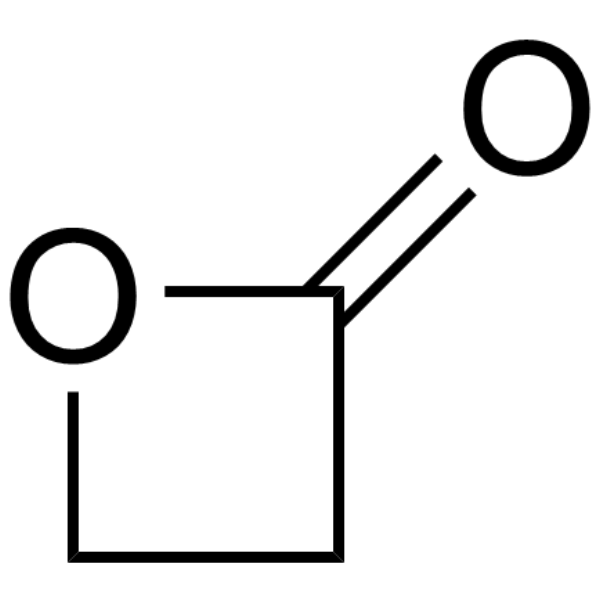
Cat. No.: HY-107931
CAS No.: 57-57-8
Purity:  99.36%
Synonyms: β-propiolactone; 2-Oxetanone; Betaprone
Research Areas:  

Infection

Propiolactone (β-propiolactone; 2-Oxetanone) is a viral chemical inactivator that causes the infectious inactivation of viruses. Propiolactone was co-incubated with SARS-CoV at a ratio of 1:1000 (v:v) and used as a bacteriostatic agent to formulate the BPL-inactivated influenza virus vaccine (Flu-BPL) .
loading...
    loading...
1
1 Cited Publications
Cat. No.: HY-137265
CAS No.: 62442-61-9
Target:  

Flavivirus

Research Areas:  

Infection

Aminomethyltrioxsalen hydrochloride is a psoralen derivative. Aminomethyltrioxsalen hydrochloride can penetrate intact cells and react with nucleic acid secondary structures in vivo without disrupting the tissue structure of natural nucleoproteins. Aminomethyltrioxsalen hydrochloride inactivates viruses by crosslinking nucleic acid pyrimidine residues after exposure to UV-A radiation. Aminomethyltrioxsalen hydrochloride can be used in research related to dengue virus infection .
loading...
    loading...
1
1 Cited Publications
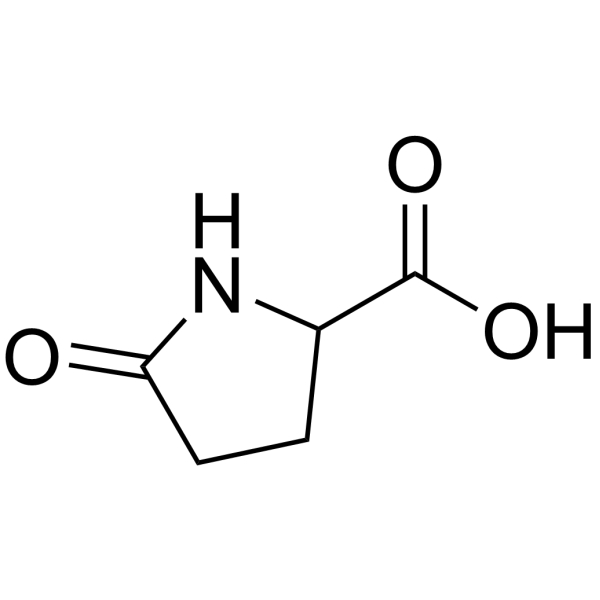
Cat. No.: HY-W012738
CAS No.: 149-87-1
Research Areas:  

Infection

DL-Pyroglutamic acid (CAE) as an inactivator of hepatitis B surface, inactivates vaccinia virus, herpes simplex virus, and influenza virus except poliovirus. DL-Pyroglutamic acid is also a possible inhibitor of GABA transaminase, increases GABA amount with antiepileptic action .
loading...
    loading...
Cat. No.: HY-156786
CAS No.: 1471479-22-7
TLD-1433 is the fourth-generation ruthenium (II) based photodynamic compound (PDC). TLD-1433 is activated by green light (525 ± 25 nm) and efficiently generates ROS to achieve pathogen inactivation. After photoinactivation, TLD-1433 significantly induces lipid peroxidation of the cell membrane, which can directly damage the integrity of the viral envelope. TLD-1433 has ID50 for enveloped viruses (such as H1N1 influenza virus, coronavirus OC43, HSV-1, Zika virus) is as low as nanomolar level; for non-enveloped viruses (such as adenovirus Ad5, mammalian rotavirus MRV), a concentration of micro-molar level is required for inactivation. TLD-1433 has antigen retention property and can be used for the preparation of inactivated vaccines .
loading...
    loading...
Cat. No.: HY-106991
CAS No.: 878189-87-8
Synonyms: S-303
Research Areas:  

Infection

Amustaline (S-303) is a compound used for inactivating pathogens in blood components and belongs to the category of nucleic acid-targeted chemical decontaminants. Amustaline has the ability to inactivate viruses and is effective against mosquito-borne viruses such as Chikungunya virus (CHIKV), Dengue virus (DENV), and Zika virus (ZIKV). When combined with glutathione (Glutathione, GSH), which acts as a neutralizer to counteract adverse reactions, Amustaline ensures the stability of red blood cell membranes. Amustaline is mainly used for inactivating pathogens in red blood cell concentrates (RBCC) to reduce the risk of transfusion-transmitted infections (TTI) .
loading...
    loading...
Cat. No.: HY-107931R
CAS No.: 57-57-8
Synonyms: β-propiolactone (Standard); 2-Oxetanone (Standard); Betaprone (Standard)
Research Areas:  

Infection

Propiolactone (Standard) is the analytical standard of Propiolactone. This product is intended for research and analytical applications. Propiolactone (β-propiolactone; 2-Oxetanone) is a viral chemical inactivator that causes the infectious inactivation of viruses. Propiolactone was co-incubated with SARS-CoV at a ratio of 1:1000 (v:v) and used as a bacteriostatic agent to formulate the BPL-inactivated influenza virus vaccine (Flu-BPL) .
loading...
    loading...
Cat. No.: HY-163754
CAS No.: 412315-55-0
Target:  

TMV

Research Areas:  

Infection

TMV-IN-9 (compound A6) is an antiviral agent that displays excellent inactivating against tobacco mosaic virus (TMV) with an EC50 of 62.8 μg/mL. TMV-IN-9 shows strong binding capacity to TMV coat protein with a binding affinity value of 1.862 μM. TMV-IN-9 obviously destroys the integrity of the TMV particles and blocked the virus from infecting the host .
loading...
    loading...
Cat. No.: HY-119853
CAS No.: 800-24-8
Synonyms: NSC-17262
Target:  

Drug Derivative

Research Areas:  

Infection

Bayer A 139 is an ethylene-menaquinone that inactivates fowl plaque virus activity. Bayer A 139 can react with nucleic acids at pH ≦ 7 .
loading...
    loading...
Cat. No.: HY-B2180
CAS No.: 2893-78-9
Research Areas:  

Infection

Dichloroisocyanurate sodium is a synthetic organochlorine compound belonging to triazine derivatives, and is commonly used as a disinfectant and biocide. Dichloroisocyanurate sodium can release hypochlorous acid to inactivate waterborne bacteria, viruses, helminths and protozoa, and can act as a hypochlorous acid reservoir to provide sustained biocidal protection .
loading...
    loading...
Cat. No.: HY-114562
CAS No.: 10500-82-0
Synonyms: UK 2054 hydrochloride
Target:  

Influenza Virus

Research Areas:  

Infection

Famotine hydrochloride (UK 2054 hydrochloride) is a broad-spectrum antiviral agent as well as an inhibitor of viral and bacterial neuraminidase. Famotine hydrochloride blocks the uptake of Influenza Virus, delays the viral eclipse phase and release, binds reversibly to influenza virus particles, and competes for host cell receptors. Famotine hydrochloride inhibits viral growth and cytopathic effects in vitro, directly inactivates viruses, and interferes with intracellular viral replication steps. Famotine hydrochloride can be used in studies related to viral infections .
loading...
    loading...
Cat. No.: HY-N11608
CAS No.: 95753-52-9
3,5-Di-O-galloylshikimic acid is a naturally derived phenolic acid compound with potential antiviral and hepatoprotective activities. 3,5-Di-O-galloylshikimic acid inhibits HIV replication, inactivates HIV viral particles and blocks virus-cell interactions. 3,5-Di-O-galloylshikimic acid has the potential to bind simultaneously to SARS-CoV-2 main protease (Mpro) and human ACE2 receptor. 3,5-Di-O-galloylshikimic acid can be used in studies related to coronavirus disease 2019 (COVID-19), acquired immunodeficiency syndrome (AIDS) and acute liver injury .
loading...
    loading...
  • 1

