885 Results for "

Interactors

" in MedChemExpress (MCE) Product Catalog:
Products (885)

885 Results for "Interactors" in MCE Product Catalog:

850
850 Publications Verification
Referencia número: HY-16658B
No. CAS: 161401-82-7
Synonyms: Z-VAD(OH)-FMK
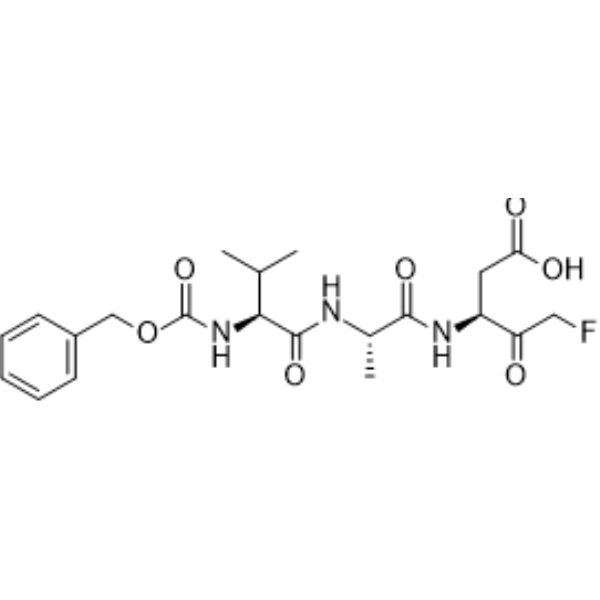
Z-VAD-FMK is a pan-caspase inhibitor and also an ICE-like protease inhibitor, which inhibits apoptosis by preventing the processing of CPP32 to its active form. Z-VAD-FMK sensitivity varies primarily due to differential expression of receptor-interacting protein 1 (RIP1). Z-VAD-FMK limits the cryopreservation-induced apoptosis by reducing caspase-3 activity of in vitro produced bovine embryos. Z-VAD-FMK is immunosuppressive in vitro and inhibits T cell proliferation without blocking the processing of caspase-8 and caspase-3. Z-VAD-FMK leads to a decrease in intracellular glutathione (GSH) with a concomitant increase in reactive oxygen species (ROS) levels in activated T cells. Z-VAD-FMK is due to oxidative stress via the depletion of GSH. Z-VAD-FMK can be used for the study of acute pancreatitis .
loading...
    loading...
62
62 Cited Publications
Referencia número: HY-134813
No. CAS: 2621928-55-8
Pureza:  99.97%
Target:  

Ras

Áreas de investigación:  

Cancer

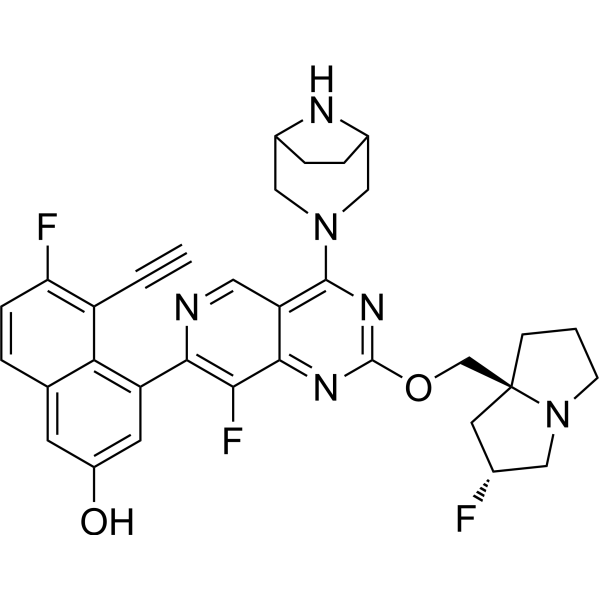
MRTX1133 is a noncovalent, potent, and selective alkyne-based KRAS G12D inhibitor. MRTX1133 optimally fills the switch II pocket and extends three substituents to favorably interact with the protein, resulting in an estimated KD against KRAS G12D of 0.2 pM. MRTX1133 prevents SOS1-catalyzed nucleotide exchange and/or formation of the KRAS G12D/GTP/RAF1 complex, thereby inhibiting mutant KRAS-dependent signal transduction. MRTX1133 selectively inhibits KRAS G12D mutant, but not KRAS wild-type, tumor cells. MRTX1133 has single digit nanomolar activity in cellular assays and marked in vivo efficacy in tumor models harboring KRAS G12D mutations .
loading...
    loading...
39
39 Cited Publications
Referencia número: HY-12646
No. CAS: 1281870-42-5
Pureza:  99.93%
Target:  

Ras Apoptosis

Áreas de investigación:  

Cancer

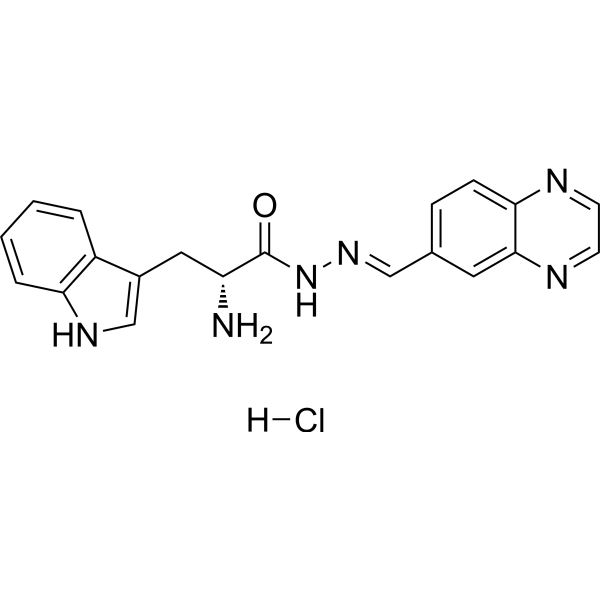
Rhosin hydrochloride is a potent, specific RhoA subfamily Rho GTPases inhibitor. Rhosin hydrochloride specifically binds to RhoA to inhibit RhoA-GEF interaction with a Kd of ~ 0.4 uM, and does not interact with Cdc42 or Rac1, nor the GEF, LARG. Rhosin hydrochloride induces cell apoptosis . Rhosin hydrochloride promotes stress resiliency through enhancing D1-MSN plasticity and reducing hyperexcitability .
loading...
    loading...
39
39 Cited Publications
Referencia número: HY-12646A
No. CAS: 1173671-63-0
Pureza:  95.08%
Target:  

Ras Apoptosis

Áreas de investigación:  

Cancer

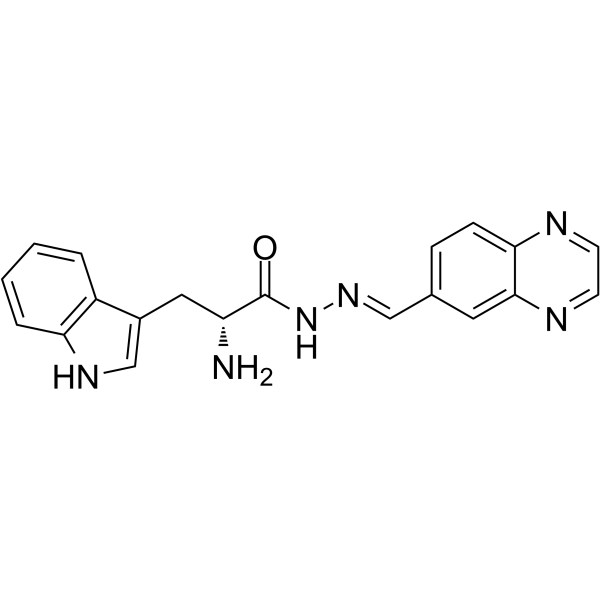
Rhosin is a potent, specific RhoA subfamily Rho GTPases inhibitor, which specifically binds to RhoA to inhibit RhoA-GEF interaction with a Kd of ~ 0.4 uM, and does not interact with Cdc42 or Rac1, nor the GEF, LARG. Rhosin induces cell apoptosis . Rhosin promotes stress resiliency through enhancing D1-MSN plasticity and reducing hyperexcitability .
loading...
    loading...
37
37 Cited Publications
Referencia número: HY-10984
No. CAS: 19171-19-8
Pureza:  99.88%
Synonyms: CC-4047
Áreas de investigación:  

Cancer

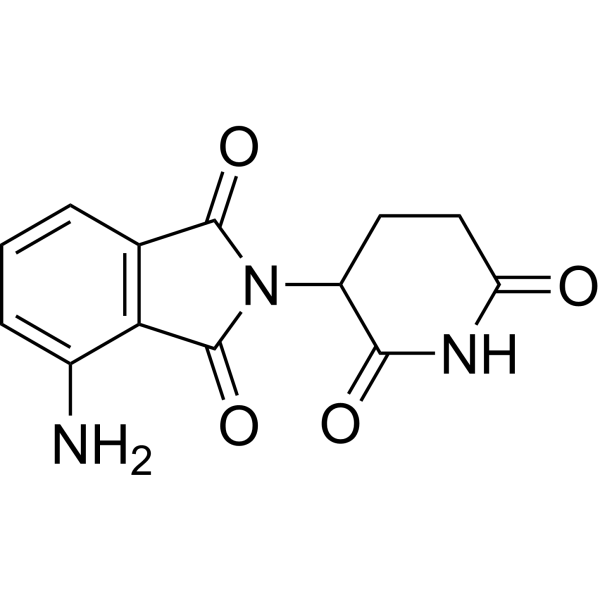
Pomalidomide, the third-generation immunomodulatory agent, acts as molecular glue. Pomalidomide interacts with the E3 ligase cereblon and induces degradation of essential Ikaros transcription factors.
loading...
    loading...
34
34 Cited Publications
Referencia número: HY-15176C
No. CAS: 2517456-88-9
Synonyms: RR82 trihydrochloride
Áreas de investigación:  

Cancer

Pyridostatin (RR82) trihydrochloride is a G-quadruplex (G4) inducer/stabilizer with a Kd of 490 nM. Pyridostatin trihydrochloride also acts as an inhibitor of Zika virus (ZIKV) NS2B-NS3 protease, with an IC50 of 11.0 μM. Pyridostatin trihydrochloride interacts with G-quadruplex structures, regulates the expression of SRC and SUB1, and induces replication- and transcription-dependent DNA damage, growth arrest, and genomic instability. Pyridostatin trihydrochloride exhibits antiproliferative and antiviral activities. Pyridostatin trihydrochloride can be used in studies related to breast cancer, cervical cancer, and Zika virus infection .
loading...
    loading...
34
34 Cited Publications
Referencia número: HY-15176B
No. CAS: 1472611-44-1
Pureza:  99.54%
Synonyms: RR82 TFA
Áreas de investigación:  

Cancer

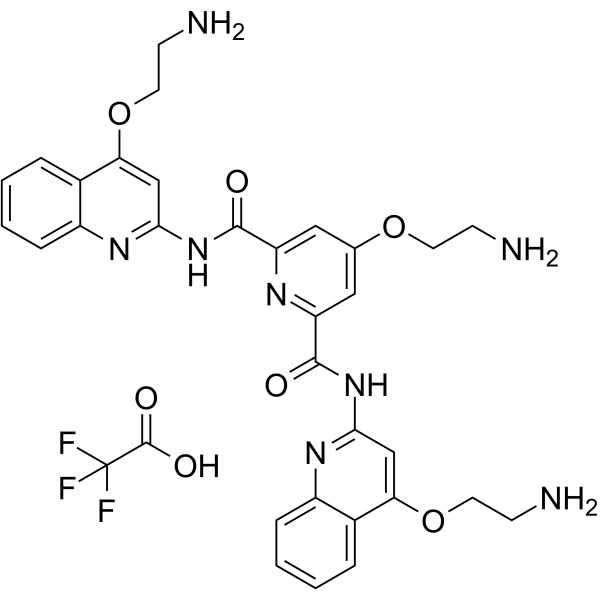
Pyridostatin (RR82) TFA is a G-quadruplex (G4) inducer/stabilizer with a Kd of 490 nM. Pyridostatin TFA also acts as an inhibitor of Zika virus (ZIKV) NS2B-NS3 protease, with an IC50 of 11.0 μM. Pyridostatin TFA interacts with G-quadruplex structures, regulates the expression of SRC and SUB1, and induces replication- and transcription-dependent DNA damage, growth arrest, and genomic instability. Pyridostatin TFA exhibits antiproliferative and antiviral activities. Pyridostatin TFA can be used in studies related to breast cancer, cervical cancer, and Zika virus infection .
loading...
    loading...
32
32 Cited Publications
Referencia número: HY-13771A
No. CAS: 2898-95-5
Pureza:  99.06%
Synonyms: Ursodeoxycholate sodium; Ursodiol sodium; UCDA sodium
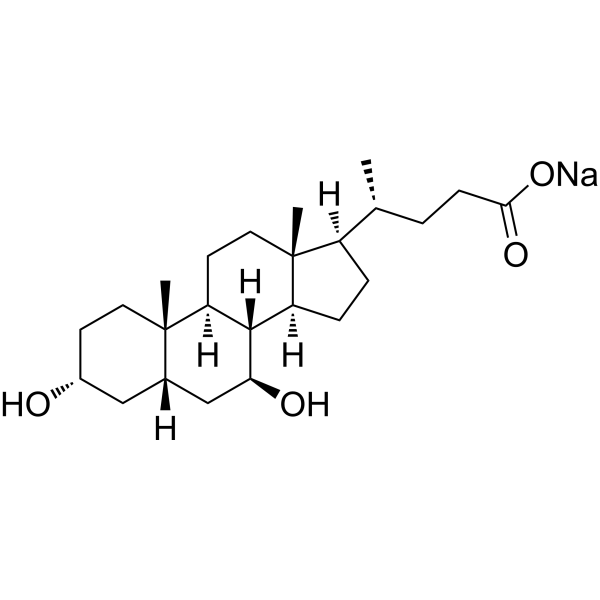
Ursodeoxycholic acid (Ursodeoxycholate) sodium is a secondary bile acid issued from the transformation of (cheno)deoxycholic acid by intestinal bacteria, acting as a key regulator of the intestinal barrier integrity and essential for lipid metabolism. Ursodeoxycholic acid sodium acts as signaling molecule, exerting its effects by interacting with bile acid activated receptors, including G-protein coupled bile acid receptor 5 (TGR5, GPCR19) and the farnesoid X receptor (FXR). Ursodeoxycholic acid sodium can be used for the research of a variety of hepatic and gastrointestinal diseases. Orally active .
loading...
    loading...
32
32 Cited Publications
Referencia número: HY-13771
No. CAS: 128-13-2
Pureza:  99.94%
Synonyms: Ursodeoxycholate; Ursodiol; UDCA
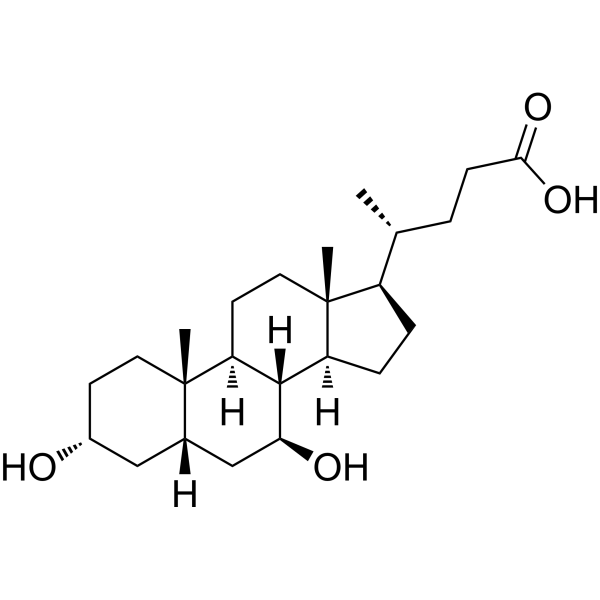
Ursodeoxycholic acid (Ursodeoxycholate) is a secondary bile acid issued from the transformation of (cheno)deoxycholic acid by intestinal bacteria, acting as a key regulator of the intestinal barrier integrity and essential for lipid metabolism. Ursodeoxycholic acid acts as signaling molecule, exerting its effects by interacting with bile acid activated receptors, including G-protein coupled bile acid receptor 5 (TGR5, GPCR19) and the farnesoid X receptor (FXR). Ursodeoxycholic acid can be used for the research of a variety of hepatic and gastrointestinal diseases. Ursodeoxycholic acid also reduces ACE2 expression and is beneficial for reducing SARS-CoV-2 infection. Orally active .
loading...
    loading...
29
29 Cited Publications
Referencia número: HY-101903
No. CAS: 300657-03-8
Pureza:  99.93%
Target:  

FABP

Áreas de investigación:  

Cardiovascular Disease Metabolic Disease

BMS-309403 is a potent, orally active and selective adipocyte fatty acid binding protein (also known as FABP4, aP2) inhibitor with Kis of <2, 250, and 350 nM for FABP4, FABP3, and FABP5, respectively. BMS-309403 interacts with the fatty-acid-binding pocket within the interior of the protein and competitively inhibits the binding of endogenous fatty acids. BMS-309403 improves endothelial function in apolipoprotein E-deficient mice and in cultured human endothelial cells .
loading...
    loading...
29
29 Cited Publications
Referencia número: HY-101903A
No. CAS: 2802523-05-1
Pureza:  99.93%
Target:  

FABP

Áreas de investigación:  

Cardiovascular Disease Metabolic Disease

BMS-309403 sodium is a potent, orally active, and selective adipocyte fatty acid binding protein (also known as FABP4, aP2) inhibitor, with Kis of <2, 250, and 350 nM for FABP4, FABP3, and FABP5, respectively. BMS-309403 sodium interacts with the fatty-acid-binding pocket within the interior of the protein and competitively inhibits the binding of endogenous fatty acids. BMS-309403 sodium improves endothelial function in apolipoprotein E-deficient mice and in cultured human endothelial cells .
loading...
    loading...
27
27 Cited Publications
Referencia número: HY-N6718
No. CAS: 480-49-9
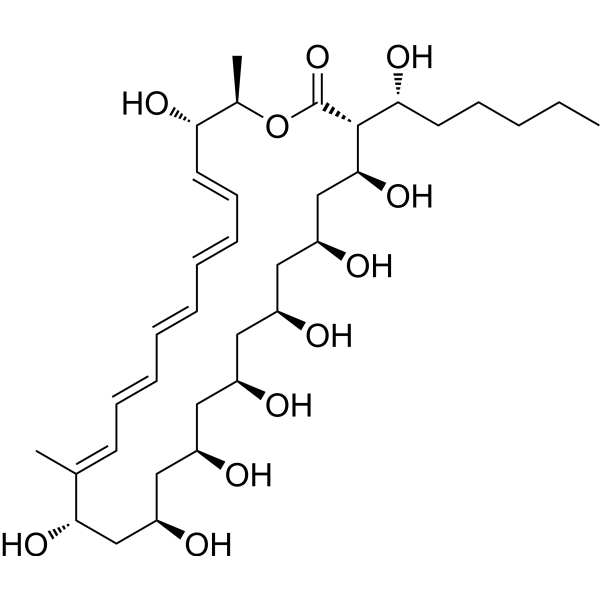
Filipin III is the major component of Filipin, a 28-membered ring pentaene macrolide antifungal antibiotic produced by S. filipinensis, S. avermitilis and S. miharaensis. Filipin interacts with membrane sterols causing the alteration of membrane structure .
loading...
    loading...
24
24 Cited Publications
Referencia número: HY-34758
No. CAS: 684-93-5
Áreas de investigación:  

Cancer

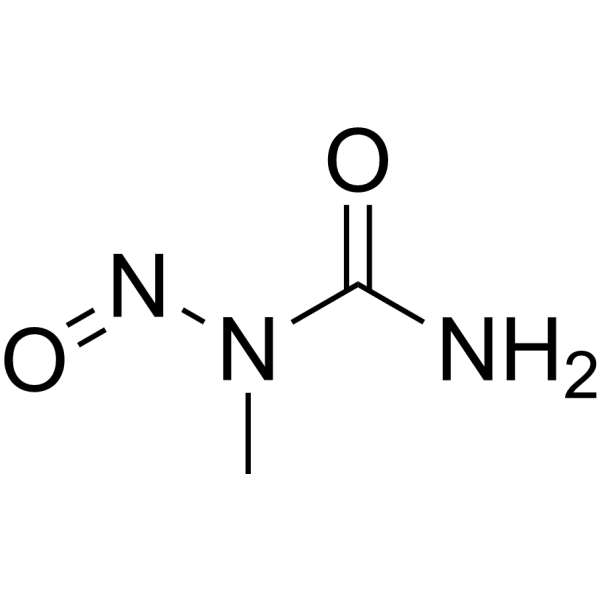
N-Nitroso-N-methylurea (NMU;MNU;NMH) is a potent carcinogen, mutagen and teratogenand. N-Nitroso-N-methylurea is a direct-acting alkylating agent that interacts with DNA. N-Nitroso-N-methylurea targets multiple animal organs to cause various cancer and/or degenerative disease. N-Nitroso-N-methylurea is also a precursor in the synthesis of diazomethane .
loading...
    loading...
23
23 Cited Publications
Referencia número: HY-101084
No. CAS: 113104-25-9
Pureza:  ≥98.0%
Áreas de investigación:  

Cancer

NSC 228155 is an activator of EGFR, binds to the extracellular region of EGFR and enhance tyrosine phosphorylation of EGFR . NSC 228155 is also a potent inhibitor of KIX-KID interaction, inhibits kinase-inducible domain (KID) from CREB and KID-interacting domain (KIX) from CBP, with an IC50 of 0.36 μM .
loading...
    loading...
23
23 Cited Publications
Referencia número: HY-W011500
No. CAS: 51805-45-9
Synonyms: Tris(2-​carboxyethyl)​phosphine hydrochloride
Target:  

Drug Derivative

Áreas de investigación:  

Others

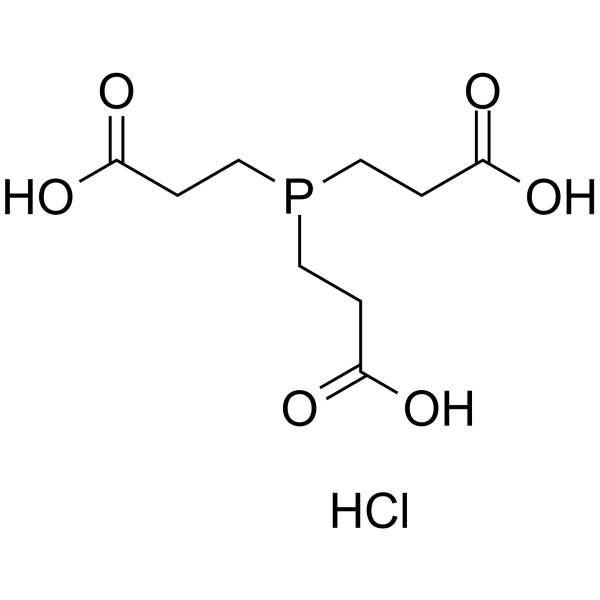
TCEP hydrochloride (Tris(2-carboxyethyl)phosphine hydrochloride) is a non-thiol reducing agent that is more stable and produces a faster S-S reductive reaction than other chemical reductants. TCEP hydrochloride is a trialkylphosphine, selectively reduces protein disuldes without altering the properties or interacting with thiol-directed agents in the reaction mixture. TCEP hydrochloride is also a commonly used reducing agent in the DNA/AuNP chemistry .
loading...
    loading...
15
15 Cited Publications
Referencia número: HY-12837
No. CAS: 496807-64-8
Pureza:  99.73%
Áreas de investigación:  

Others

EN460 is a selective endoplasmic reticulum oxidation 1 (ERO1) inhibitor. EN460 (IC50 of 1.9 μM) interacts selectively with the reduced, active form of ERO1α and prevents its reoxidation .
loading...
    loading...
15
15 Cited Publications
Referencia número: HY-32219
No. CAS: 701232-20-4
Target:  

Acyltransferase

Áreas de investigación:  

Metabolic Disease

T863 is an orally active, selective and potent DGAT1 (acyl-CoA:diacylglycerol acyltransferase 1) inhibitor with an IC50 of 15 nM. T863 has no inhibitory activity against human MGAT3, human DGAT2, or human MGAT2. T863 interacts with the acyl-CoA binding site of DGAT1, and inhibits triacylglycerol synthesis in cells .
loading...
    loading...
15
15 Cited Publications
Referencia número: HY-15592
No. CAS: 1051375-10-0
Pureza:  99.91%
Synonyms: GSK-1265744; S/GSK1265744
Target:  

OAT HIV HIV Integrase

Áreas de investigación:  

Infection

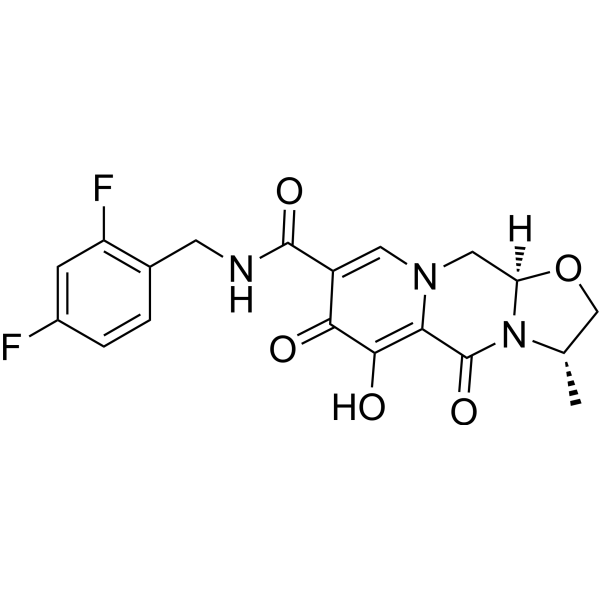
Cabotegravir (GSK-1265744) is a orally active and long-acting HIV integrase strand transfer inhibitor and organic anion transporter 1/3 (OAT1/OAT3) inhibitor with IC50 values of 2.5 nM, 0.41 μM and 0.81 μM for HIVADA, OAT3 and OAT1, respectively. Cabotegravir is primarily metabolized by uridine diphosphate glucuronosyltransferase (UGT) 1A1, with low potential to interact with other antiretroviral agents (ARVs). Cabotegravir can be used to research AIDS .
loading...
    loading...
15
15 Cited Publications
Referencia número: HY-15592A
No. CAS: 1051375-13-3
Pureza:  99.87%
Synonyms: GSK-1265744 sodium; S/GSK1265744 sodium
Target:  

OAT HIV HIV Integrase

Áreas de investigación:  

Infection

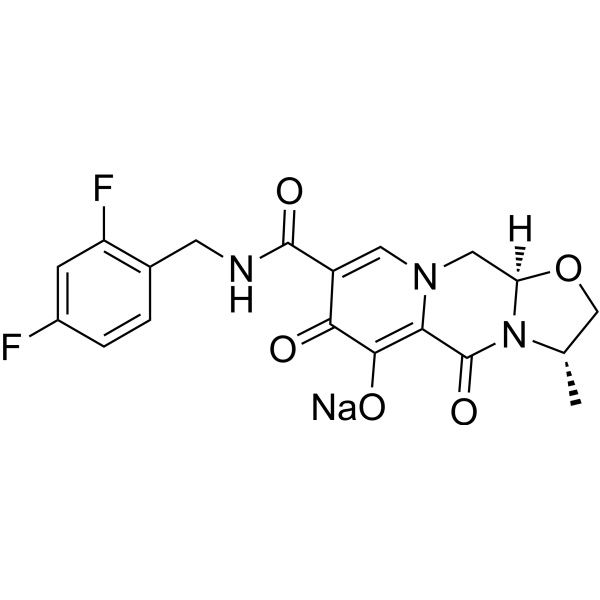
Cabotegravir (GSK-1265744) sodium is a orally active and long-acting HIV integrase strand transfer inhibitor and organic anion transporter 1/3 (OAT1/OAT3) inhibitor with IC50 values of 2.5 nM, 0.41 μM and 0.81 μM for HIVADA, OAT3 and OAT1, respectively. Cabotegravir sodium is primarily metabolized by uridine diphosphate glucuronosyltransferase (UGT) 1A1, with low potential to interact with other antiretroviral agents (ARVs). Cabotegravir sodium can be used to research AIDS .
loading...
    loading...
12
12 Cited Publications
Referencia número: HY-120142
No. CAS: 2012591-09-0
Pureza:  99.09%
Target:  

Apoptosis

Áreas de investigación:  

Cancer

EC359 is a potent, selective, high affinity and orally active leukemia inhibitory factor receptor (LIFR) inhibitor with a Kd of 10.2 nM, which directly interacts with LIFR to effectively block LIF/LIFR interactions . EC359 is a click chemistry reagent, it contains an Alkyne group and can undergo copper-catalyzed azide-alkyne cycloaddition (CuAAc) with molecules containing Azide groups.
loading...
    loading...

