Search Result
Results for "
K. pneumonia
" in MedChemExpress (MCE) Product Catalog:
-
- HY-16566A
-
|
Kanamycin A sulfate
|
Bacterial
Antibiotic
|
Infection
|
|
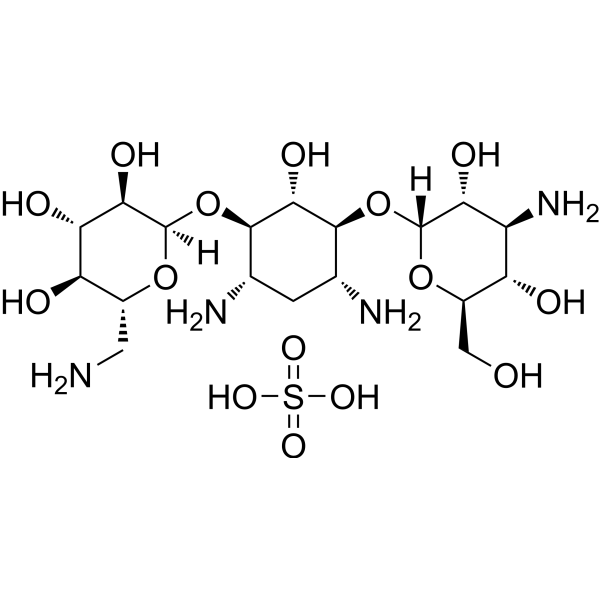
Kanamycin (Kanamycin A) sulfate is an orally active antibacterial (gram-negative/positive bacteria) agent, inhibits translocation and causes misencoding by binding to the 70 S ribosomal subunit. Kanamycin sulfate shows good inhibitory activity to both M. tuberculosis (sensitive and drug-resistant ) and K. pneumonia, which can be used in studies of tuberculosis and pneumonia .
|
-
-
- HY-16566
-
Kanamycin
Maximum Cited Publications
29 Publications Verification
Kanamycin A
|
Antibiotic
Bacterial
|
Infection
Inflammation/Immunology
|
|
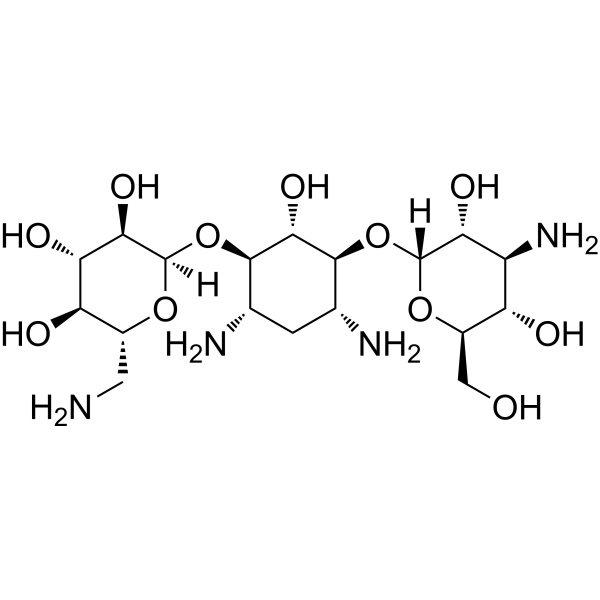
Kanamycin (Kanamycin A) is an orally active antibacterial (gram-negative/positive bacteria) agent, inhibits translocation and causes misencoding by binding to the 70 S ribosomal subunit. Kanamycin shows good inhibitory activity to both M. tuberculosis (sensitive and drug-resistant ) and K. pneumonia, which can be used in studies of tuberculosis and pneumonia .
|
-
-
- HY-N2187
-
|
|
Bacterial
HIF/HIF Prolyl-Hydroxylase
PI3K
Apoptosis
|
Infection
Cardiovascular Disease
Cancer
|
|
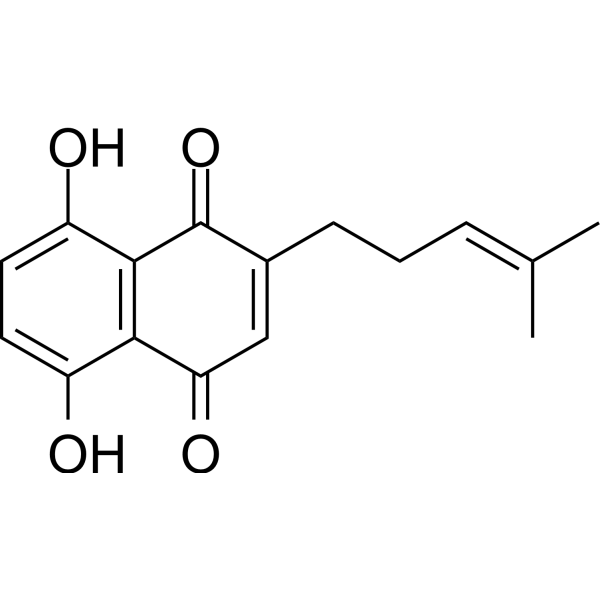
Deoxyshikonin increases the expression of VEGF-C and VEGF-A mRNA in HMVEC-dLy, promotes HIF-1α and HIF-1β subunit interaction and binds to specific DNA sequences targeted by HIF. Deoxyshikonin inhibited colorectal cancer (CRC) through the PI3K/Akt/mTOR pathway. Deoxyshikonin has proangiogenesis effect and antitumor activity. Deoxyshikonin is an antibacterial agent against methicillin-resistant S. aureus (MRSA) and S. pneumonia (MIC=17 μg/mL) .
|
-
-
- HY-B1422
-
|
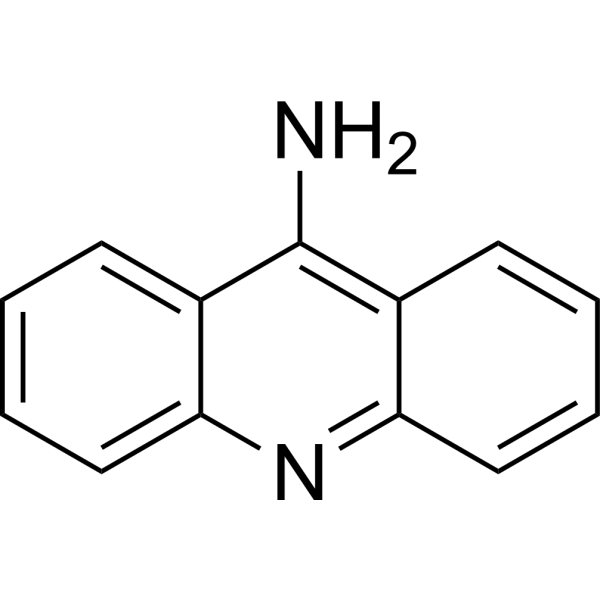
Aminacrine
|
Bacterial
HIV
|
Infection
|
|
9-Aminoacridine, a fluorescent probe, acts as an indicator of pH for quantitative determination of transmembrane pH gradients (inside acidic). 9-Aminoacridine is an antimicrobial. 9-Aminoacridine exerts its antimicrobial activity by interacting with specific bacterial DNA and disrupting the proton motive force in K. pneumoniae. 9-Aminoacridine is a HIV-1 inhibitor and inhibits HIV LTR transcription highly dependent on the presence and location of the amino moiety. 9-Aminoacridine inhibits virus replication in HIV-1 infected cell lines. 9-Aminoacridine is used as a Rifampin (RIF; HY-B0272) adjuvant for the multidrug-resistant K. pneumoniae infections .
|
-
-
- HY-N0392
-
|
|
Toll-like Receptor (TLR)
PI3K
Akt
NF-κB
MDM-2/p53
Caspase
MEK
Bcl-2 Family
p38 MAPK
Mitophagy
Reactive Oxygen Species (ROS)
Apoptosis
Calcium Channel
|
Cardiovascular Disease
Infection
Neurological Disease
|
|
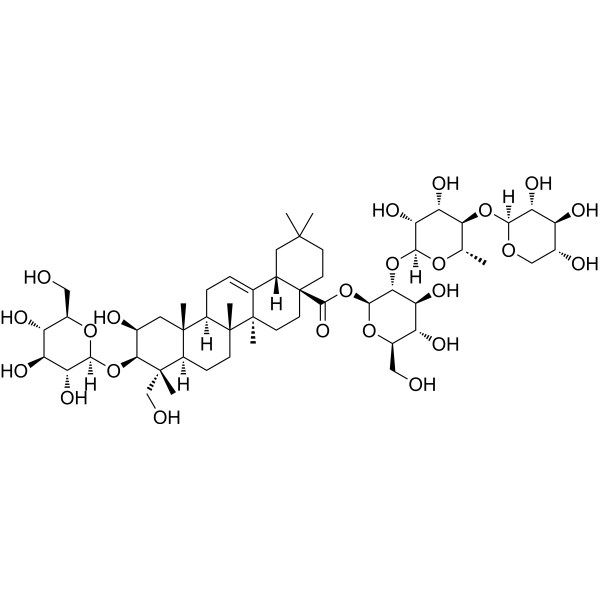
Polygalasaponin F is an orally active triterpenoid saponin monomer. Polygalasaponin F downregulates the expression of Bax, p53, caspase-3, NF-κB p65 and MEK1; restores and upregulates the expression of Bcl-2; activates the PI3K/Akt signaling pathway; inhibits the phosphorylation of p38 MAPK, nuclear translocation of NF-κB, TLR4-mediated signaling pathway, mitophagy (Mitophagy) and ROS production; enhances cell viability and suppresses apoptosis (Apoptosis). Polygalasaponin F maintains mitochondrial function, alleviates Ca 2+ overload, upregulates pCREB and BDNF, preserves cell viability and inhibits the release of inflammatory cytokines. Polygalasaponin F alleviates lung injury induced by influenza A H1N1 and cerebral ischemia-reperfusion injury. Polygalasaponin F is applicable to researches related to Parkinson's disease, cerebral ischemia, pneumonia induced by influenza A H1N1, stroke and Alzheimer's disease .
|
-
-
- HY-157536
-
|
|
Bacterial
|
Infection
Inflammation/Immunology
|
|
SMT-738 is a bacterial bactericide. SMT-738 targets the small molecules responsible for lipoprotein transport in Enterobacteriaceae, causing abnormal lipoprotein localization and bacterial cell death. SMT-738 inhibits the growth of E. coli and K. pneumoniae. SMT-738 reduces bacterial loads in mouse models of urinary tract infection, bloodstream infection, and pulmonary infection caused by Enterobacterales. SMT-738 can be used in the research of Enterobacteriaceae infections, urinary tract infections, bloodstream infections, and pneumonia .
|
-
-
- HY-16566R
-
|
Kanamycin A (Standard)
|
Reference Standards
Antibiotic
Bacterial
|
Infection
Inflammation/Immunology
|
|
Kanamycin (Standard) is the analytical standard of Kanamycin. This product is intended for research and analytical applications. Kanamycin (Kanamycin A) is an orally active antibacterial (gram-negative/positive bacteria) agent, inhibits translocation and causes misencoding by binding to the 70 S ribosomal subunit. Kanamycin shows good inhibitory activity to both M. tuberculosis (sensitive and drug-resistant ) and K. pneumonia, which can be used in studies of tuberculosis and pneumonia[1][2][3][4].
|
-
-
- HY-16566AR
-
|
Kanamycin A sulfate (Standard)
|
Reference Standards
Bacterial
Antibiotic
|
Infection
|
|
Kanamycin (sulfate) (Standard) is the analytical standard of Kanamycin (sulfate). This product is intended for research and analytical applications. Kanamycin (Kanamycin A) sulfate is an orally active antibacterial (gram-negative/positive bacteria) agent, inhibits translocation and causes misencoding by binding to the 70 S ribosomal subunit. Kanamycin sulfate shows good inhibitory activity to both M. tuberculosis (sensitive and drug-resistant ) and K. pneumonia, which can be used in studies of tuberculosis and pneumonia .
|
-
-
- HY-174980
-
|
|
Bacterial
|
Infection
|
|
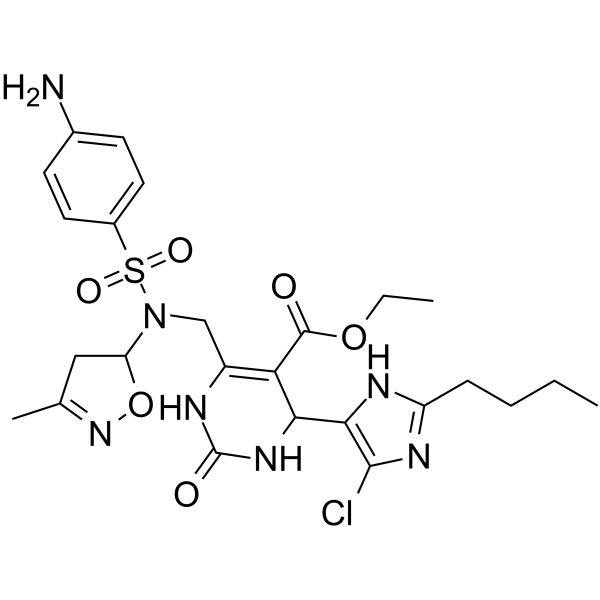
KPC-2-IN-3 (Compound 3b) is a KPC-2 inhibitor with IC50 of 0.533 μM and Kiof 0.194 μM. KPC-2-IN-3 has an antimicrobial activity against carbapenem-resistant K. pneumonia K47-25 and reduces bacterial count with a postantibiotic effect in synergy with Meropenem (HY-13678). KPC-2-IN-3 significantly reduces lung bacterial load in a murine pneumonia model .
|
-
-
- HY-147878
-
|
|
Bacterial
|
Infection
|
|
Antibacterial agent 111 (Compound 3) is an antibacterial agent with MIC values of 3.90 μg/mL and 0.49 μg/mL against B. cereus and K. pneumonia, respectively. Antibacterial agent 111 firmly binds with tyrosyl-tRNA synthetase residues .
|
-
-
- HY-N3929
-
|
|
Others
|
Others
|
|
Gardenine is a metabolite produced from Gardenoside (HY-N1478) by K. pneumonia .
|
-
-
- HY-P0263R
-
|
|
Reference Standards
Bacterial
Fungal
Antibiotic
|
Infection
|
|
Kanamycin (sulfate) (Standard) is the analytical standard of Kanamycin (sulfate). This product is intended for research and analytical applications. Kanamycin (Kanamycin A) sulfate is an orally active antibacterial (gram-negative/positive bacteria) agent, inhibits translocation and causes misencoding by binding to the 70 S ribosomal subunit. Kanamycin sulfate shows good inhibitory activity to both M. tuberculosis (sensitive and drug-resistant ) and K. pneumonia, which can be used in studies of tuberculosis and pneumonia .
|
-
-
- HY-N1654
-
|
|
Bacterial
|
Infection
|
|
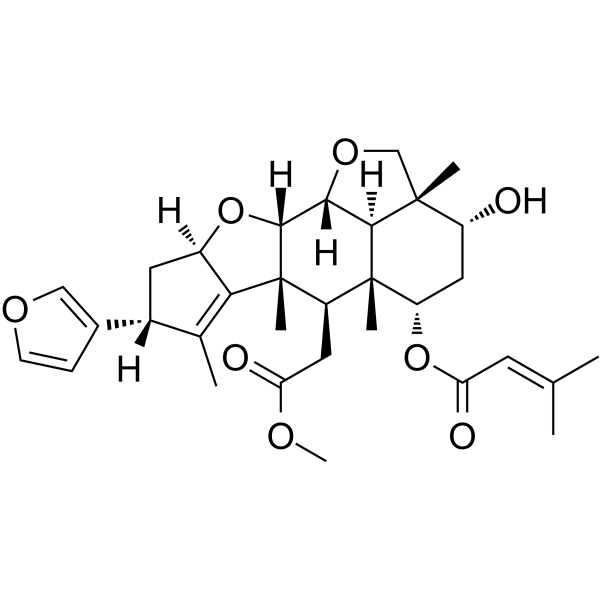
2',3'-Dehydrosalannol is a potent antibacterial agent. 2',3'-Dehydrosalannol shows antibacterial activity against K. pneumonia ATCC 13883, P. aeruginosa ATCC 27853, S. aureus ATCC 25922, E. coli ATCC 11775, and E. faecalis ATCC 10541, with MIC values of 0.78, 1.56, 1.56, 6.25, and 25 μg/mL, respectively .
|
-
-
- HY-B1422R
-
|
Aminacrine (Standard)
|
Reference Standards
Bacterial
HIV
|
Infection
|
|
9-Aminoacridine (Standard) is the analytical standard of 9-Aminoacridine. This product is intended for research and analytical applications. 9-Aminoacridine, a fluorescent probe, acts as an indicator of pH for quantitative determination of transmembrane pH gradients (inside acidic). 9-Aminoacridine is an antimicrobial. 9-Aminoacridine exerts its antimicrobial activity by interacting with specific bacterial DNA and disrupting the proton motive force in K. pneumoniae. 9-Aminoacridine is a HIV-1 inhibitor and inhibits HIV LTR transcription highly dependent on the presence and location of the amino moiety. 9-Aminoacridine inhibits virus replication in HIV-1 infected cell lines. 9-Aminoacridine is used as a Rifampin (RIF; HY-B0272) adjuvant for the multidrug-resistant K. pneumoniae infections .
|
-
-
- HY-131044
-
|
|
Bacterial
Fungal
|
Infection
|
|
5-[(2-Nitrophenyl)methylene]-2,4-thiazolidinedione (Compound 4) has antimicrobial, anti-diabetic and antioxidant activities. 5-[(2-Nitrophenyl)methylene]-2,4-thiazolidinedione inhibits B. subtilis, S. aureus, K. pneumonia, E. coli, and S. typhi with MICs of 4.5-9.9 μΜ/mL, and inhibits A. niger and C. albicans with MICs of 4.99 μΜ/mL .
|
-
-
- HY-175724
-
|
|
Beta-lactamase
Bacterial
|
Infection
|
|
MBL-IN-6 (Compound 6d) is a Metallo-β-lactamase (MBL) inhibitor with Kis of 2.6 and 0.08 μM for NDM-1 and VIM-2, respectively. MBL-IN-6 has a synergistic activities with Imipenem (HY-B1369A) on MBL-producing clinical isolates (such as E. coli SI-M001, K. pneumonia T2301 and S. marcescens SI-1591) with MICs of 2-64 μg/mL. MBL-IN-6 does not have off-target effects without ACE-1 inhibition activity. MBL-IN-6 can be used for antimicrobial resistance research .
|
-
-
- HY-N0392R
-
|
|
Reference Standards
Toll-like Receptor (TLR)
PI3K
Akt
NF-κB
|
Inflammation/Immunology
Cancer
|
|
Polygalasaponin F (Standard) is the analytical standard of Polygalasaponin F. This product is intended for research and analytical applications. Polygalasaponin F is an orally active triterpenoid saponin monomer. Polygalasaponin F downregulates the expression of Bax, p53, caspase-3, NF-κB p65 and MEK1; restores and upregulates the expression of Bcl-2; activates the PI3K/Akt signaling pathway; inhibits the phosphorylation of p38 MAPK, nuclear translocation of NF-κB, TLR4-mediated signaling pathway, mitophagy (Mitophagy) and ROS production; enhances cell viability and suppresses apoptosis (Apoptosis). Polygalasaponin F maintains mitochondrial function, alleviates Ca 2+ overload, upregulates pCREB and BDNF, preserves cell viability and inhibits the release of inflammatory cytokines. Polygalasaponin F alleviates lung injury induced by influenza A H1N1 and cerebral ischemia-reperfusion injury. Polygalasaponin F is applicable to researches related to Parkinson's disease, cerebral ischemia, pneumonia induced by influenza A H1N1, stroke and Alzheimer's disease.
|
-
-
- HY-107044
-
|
|
Bacterial
Topoisomerase
|
Infection
|
|
DK 507k is an orally active 8-methoxyquinolone Antibacterial agent. DK 507k targets DNA gyrase subunit A (GyrA) and modulates the function of GyrA. DK 507k inhibits the growth of various Gram-positive and Gram-negative bacteria, including Pseudomonas aeruginosa and Methicillin (HY-121544)-resistant Staphylococcus aureus. DK 507k eliminates Penicillin-tolerant Streptococcus pneumoniae from the lungs of mice. DK 507k can be used in research related to sepsis and *Streptococcus pneumoniae* pneumonia .
|
-
-
- HY-179632
-
|
|
Bacterial
|
Infection
|
|
Antibacterial agent 311 (Compound 4f) is an antibacterial agent. Antibacterial agent 311 exhibits antibacterial activities against P. aeruginosa, S. aureus, E. coli, K. pneumonia, E. CTXM1, E. NDM1 with MICs of 0.8, 1, 1, 1, 0.7, 0.7 mg/mL .
|
-
-
- HY-B1422
-
|
Aminacrine
|
蛍光色素
|
|
9-Aminoacridine, a fluorescent probe, acts as an indicator of pH for quantitative determination of transmembrane pH gradients (inside acidic). 9-Aminoacridine is an antimicrobial. 9-Aminoacridine exerts its antimicrobial activity by interacting with specific bacterial DNA and disrupting the proton motive force in K. pneumoniae. 9-Aminoacridine is a HIV-1 inhibitor and inhibits HIV LTR transcription highly dependent on the presence and location of the amino moiety. 9-Aminoacridine inhibits virus replication in HIV-1 infected cell lines. 9-Aminoacridine is used as a Rifampin (RIF; HY-B0272) adjuvant for the multidrug-resistant K. pneumoniae infections .
|
-
- HY-B1422R
-
|
Aminacrine (Standard)
|
蛍光色素
|
|
9-Aminoacridine (Standard) is the analytical standard of 9-Aminoacridine. This product is intended for research and analytical applications. 9-Aminoacridine, a fluorescent probe, acts as an indicator of pH for quantitative determination of transmembrane pH gradients (inside acidic). 9-Aminoacridine is an antimicrobial. 9-Aminoacridine exerts its antimicrobial activity by interacting with specific bacterial DNA and disrupting the proton motive force in K. pneumoniae. 9-Aminoacridine is a HIV-1 inhibitor and inhibits HIV LTR transcription highly dependent on the presence and location of the amino moiety. 9-Aminoacridine inhibits virus replication in HIV-1 infected cell lines. 9-Aminoacridine is used as a Rifampin (RIF; HY-B0272) adjuvant for the multidrug-resistant K. pneumoniae infections .
|
-
- HY-P0263R
-
|
|
Reference Standards
Bacterial
Fungal
Antibiotic
|
Infection
|
|
Kanamycin (sulfate) (Standard) is the analytical standard of Kanamycin (sulfate). This product is intended for research and analytical applications. Kanamycin (Kanamycin A) sulfate is an orally active antibacterial (gram-negative/positive bacteria) agent, inhibits translocation and causes misencoding by binding to the 70 S ribosomal subunit. Kanamycin sulfate shows good inhibitory activity to both M. tuberculosis (sensitive and drug-resistant ) and K. pneumonia, which can be used in studies of tuberculosis and pneumonia .
|
| 製品番号 |
製品名 |
Category |
Target |
構造式 |
-
- HY-16566A
-
-
-
- HY-N2187
-
-
-
- HY-N0392
-
|
|
Triterpenes
Structural Classification
Classification of Application Fields
Terpenoids
Polygalaceae
Polygala japonica Houtt.
Plants
Inflammation/Immunology
Disease Research Fields
Source Classification
|
Toll-like Receptor (TLR)
PI3K
Akt
NF-κB
MDM-2/p53
Caspase
MEK
Bcl-2 Family
p38 MAPK
Mitophagy
Reactive Oxygen Species (ROS)
Apoptosis
Calcium Channel
|
|
Polygalasaponin F is an orally active triterpenoid saponin monomer. Polygalasaponin F downregulates the expression of Bax, p53, caspase-3, NF-κB p65 and MEK1; restores and upregulates the expression of Bcl-2; activates the PI3K/Akt signaling pathway; inhibits the phosphorylation of p38 MAPK, nuclear translocation of NF-κB, TLR4-mediated signaling pathway, mitophagy (Mitophagy) and ROS production; enhances cell viability and suppresses apoptosis (Apoptosis). Polygalasaponin F maintains mitochondrial function, alleviates Ca 2+ overload, upregulates pCREB and BDNF, preserves cell viability and inhibits the release of inflammatory cytokines. Polygalasaponin F alleviates lung injury induced by influenza A H1N1 and cerebral ischemia-reperfusion injury. Polygalasaponin F is applicable to researches related to Parkinson's disease, cerebral ischemia, pneumonia induced by influenza A H1N1, stroke and Alzheimer's disease .
|
-
-
- HY-16566R
-
|
Kanamycin A (Standard)
|
Microorganisms
Source Classification
|
Reference Standards
Antibiotic
Bacterial
|
|
Kanamycin (Standard) is the analytical standard of Kanamycin. This product is intended for research and analytical applications. Kanamycin (Kanamycin A) is an orally active antibacterial (gram-negative/positive bacteria) agent, inhibits translocation and causes misencoding by binding to the 70 S ribosomal subunit. Kanamycin shows good inhibitory activity to both M. tuberculosis (sensitive and drug-resistant ) and K. pneumonia, which can be used in studies of tuberculosis and pneumonia[1][2][3][4].
|
-
-
- HY-16566AR
-
-
-
- HY-N3929
-
-
-
- HY-P0263R
-
|
|
Structural Classification
天然物
Animals
Source Classification
|
Reference Standards
Bacterial
Fungal
Antibiotic
|
|
Kanamycin (sulfate) (Standard) is the analytical standard of Kanamycin (sulfate). This product is intended for research and analytical applications. Kanamycin (Kanamycin A) sulfate is an orally active antibacterial (gram-negative/positive bacteria) agent, inhibits translocation and causes misencoding by binding to the 70 S ribosomal subunit. Kanamycin sulfate shows good inhibitory activity to both M. tuberculosis (sensitive and drug-resistant ) and K. pneumonia, which can be used in studies of tuberculosis and pneumonia .
|
-
-
- HY-N1654
-
|
|
Infection
天然物
Classification of Application Fields
Azadirachta indica A. Juss.
Plants
Meliaceae
Disease Research Fields
Source Classification
|
Bacterial
|
|
2',3'-Dehydrosalannol is a potent antibacterial agent. 2',3'-Dehydrosalannol shows antibacterial activity against K. pneumonia ATCC 13883, P. aeruginosa ATCC 27853, S. aureus ATCC 25922, E. coli ATCC 11775, and E. faecalis ATCC 10541, with MIC values of 0.78, 1.56, 1.56, 6.25, and 25 μg/mL, respectively .
|
-
-
- HY-N0392R
-
|
|
Triterpenes
Structural Classification
Terpenoids
Polygalaceae
Polygala japonica Houtt.
Plants
Source Classification
|
Reference Standards
Toll-like Receptor (TLR)
PI3K
Akt
NF-κB
|
|
Polygalasaponin F (Standard) is the analytical standard of Polygalasaponin F. This product is intended for research and analytical applications. Polygalasaponin F is an orally active triterpenoid saponin monomer. Polygalasaponin F downregulates the expression of Bax, p53, caspase-3, NF-κB p65 and MEK1; restores and upregulates the expression of Bcl-2; activates the PI3K/Akt signaling pathway; inhibits the phosphorylation of p38 MAPK, nuclear translocation of NF-κB, TLR4-mediated signaling pathway, mitophagy (Mitophagy) and ROS production; enhances cell viability and suppresses apoptosis (Apoptosis). Polygalasaponin F maintains mitochondrial function, alleviates Ca 2+ overload, upregulates pCREB and BDNF, preserves cell viability and inhibits the release of inflammatory cytokines. Polygalasaponin F alleviates lung injury induced by influenza A H1N1 and cerebral ischemia-reperfusion injury. Polygalasaponin F is applicable to researches related to Parkinson's disease, cerebral ischemia, pneumonia induced by influenza A H1N1, stroke and Alzheimer's disease.
|
-
入力情報は安全に管理されます. ※ 必須入力項目.
Inquiry Information
- 製品名:
- 製品番号:
- 数量:
- MCE 日本正規代理店: