Search Result
Results for "
L-proline
" in MedChemExpress (MCE) Product Catalog:
5
Biochemical Assay Reagents
12
Isotope-Labeled Compounds
| Cat. No. |
Product Name |
Target |
Research Areas |
Chemical Structure |
-
- HY-Y0252
-
-
-
- HY-N0455
-
-
-
- HY-N0455A
-
|
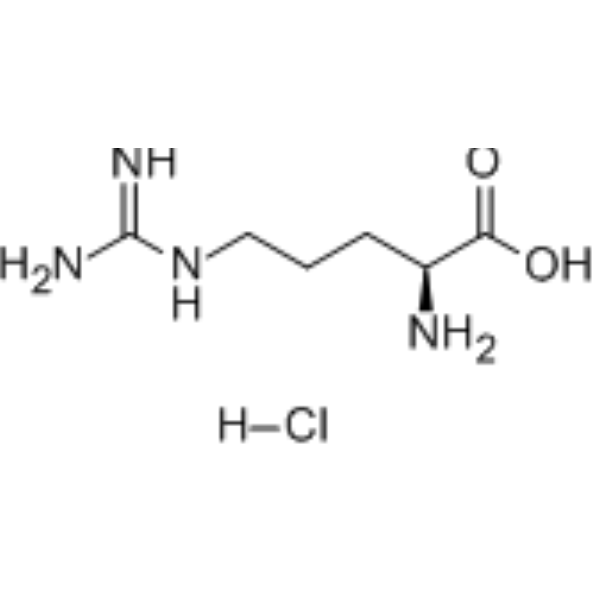
(S)-(+)-Arginine hydrochloride
|
NO Synthase
Endogenous Metabolite
|
Cardiovascular Disease
Inflammation/Immunology
|
|
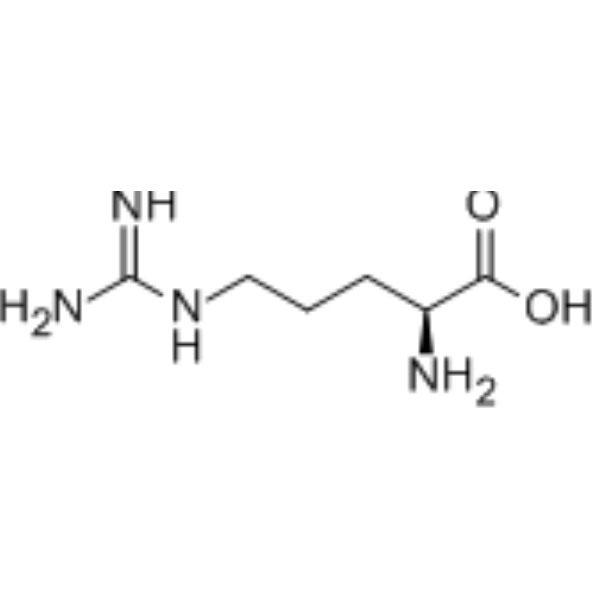
L-Arginine ((S)-(+)-Arginine) is the substrate for the endothelial nitric oxide synthase (eNOS) to generate NO. L-Arginine is transported into vascular smooth muscle cells by the cationic amino acid transporter family of proteins where it is metabolized to nitric oxide (NO), polyamines, or L-proline. L-Arginine is a potent vasodilator, and can be used to induce experimental acute pancreatitis .
|
-
-
- HY-Y0252R
-
-
-
- HY-Y0252S
-
|
|
Endogenous Metabolite
|
Others
|
|
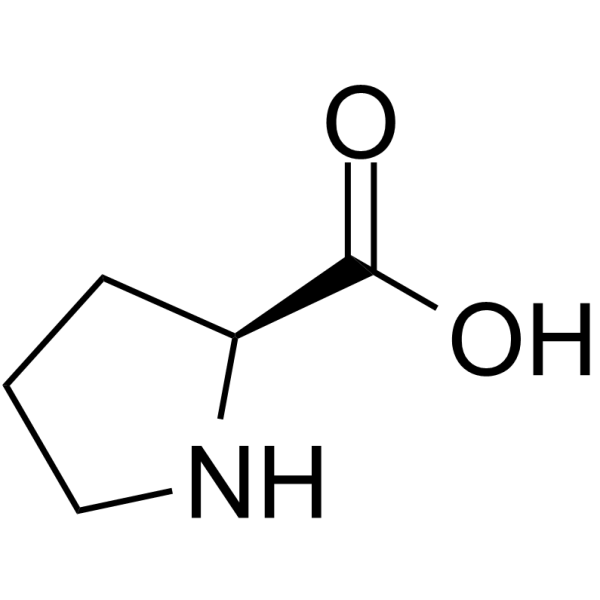
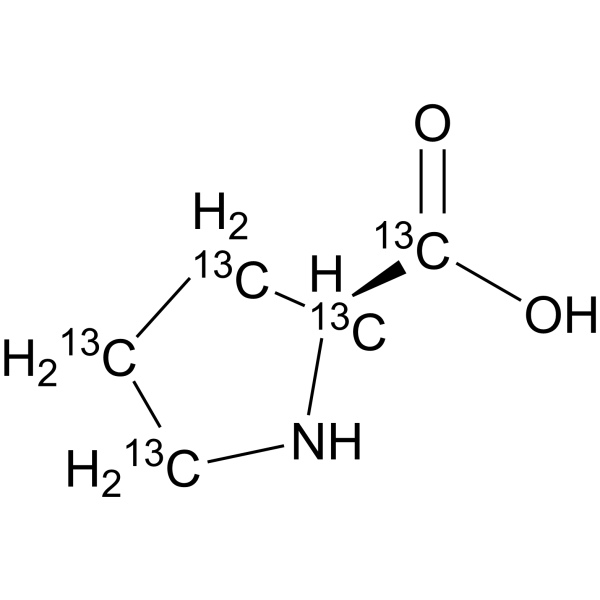
L-Proline- 13C5 is the 13C-labeled L-Proline. L-Proline is one of the twenty amino acids used in living organisms as the building blocks of proteins.
|
-
-
- HY-W016887
-
|
H-Gly-Pro-OH; Gly-Pro
|
Endogenous Metabolite
Apoptosis
|
Metabolic Disease
Cancer
|
|
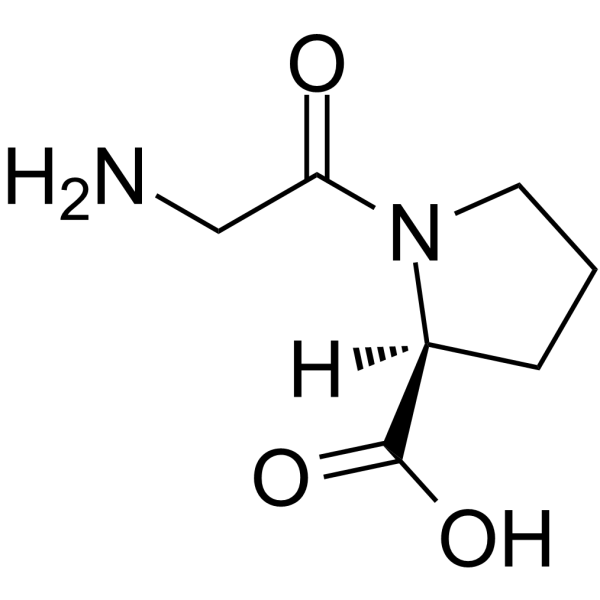
Glycyl-L-proline (H-Gly-Pro-OH) is a dipeptide. Glycyl-L-proline can induce MCF-7 cells apoptosis. Glycyl-L-proline can enhance the inhibitory effect of the PRODH/POX knockout on collagen and DNA biosynthesis. Glycyl-L-proline can inhibit Gly-Sar and L-proline transport. Glycyl-L-proline can be used for the researches of cancer and metabolic disease, such as breast cancer .
|
-
-
- HY-14894A
-
|
|
SGLT
|
Metabolic Disease
|
|
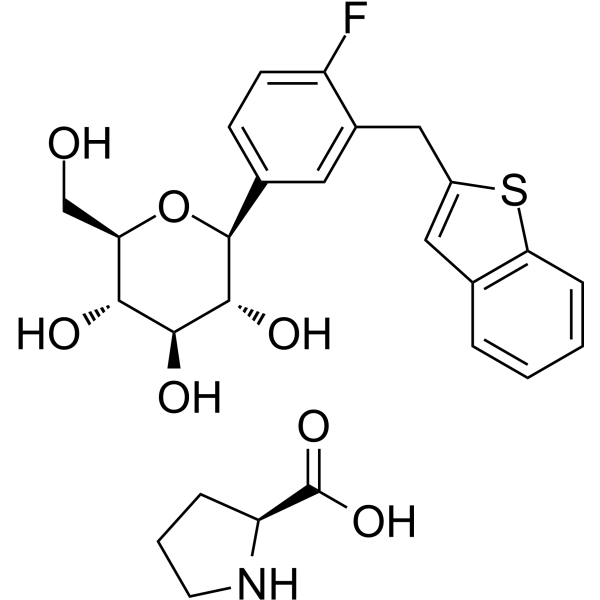
Ipragliflozin (L-Proline) is a highly potent and selective SGLT2 inhibitor with an IC50 of 2.8 nM; little and NO potency for SGLT1/3/4/5/6.
|
-
-
- HY-17490
-
|
N-Acetyl-L-hydroxyproline
|
Amino Acid Derivatives
|
Inflammation/Immunology
|
|
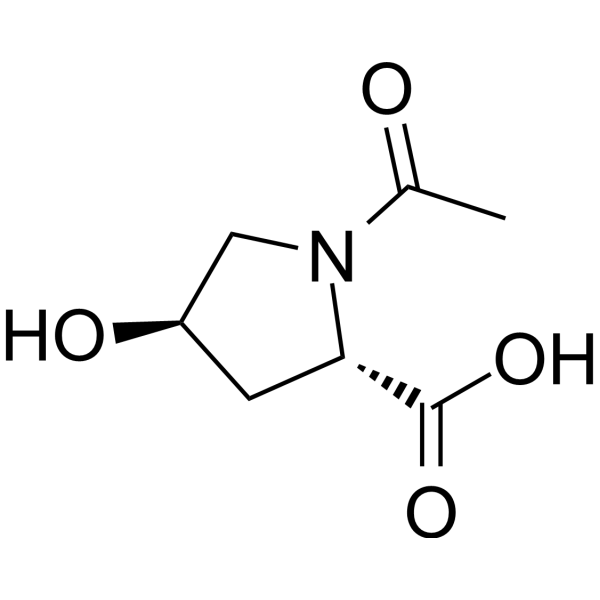
Oxaceprol (N-Acetyl-L-hydroxyproline), an orally active derivative of L-proline, possesses distinct anti-inflammatory activity. Oxaceprol is usually used for the research of osteoarthritis and rheumatoid arthritis .
|
-
-
- HY-Y0252S1
-
|
|
Endogenous Metabolite
|
Others
|
|
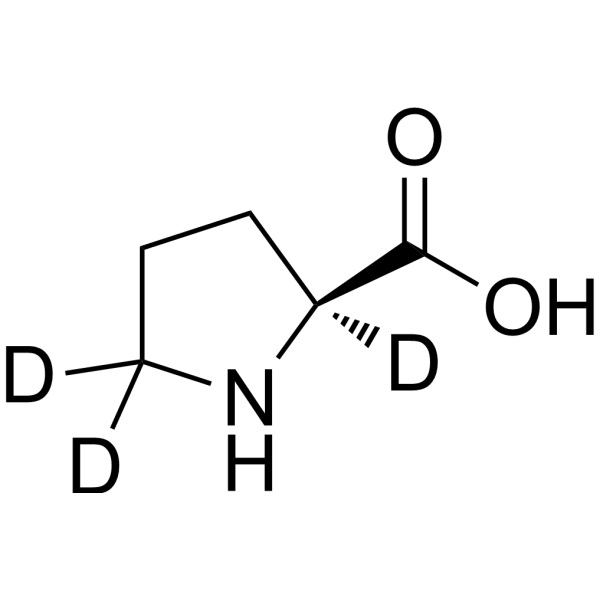
L-Proline-d3 is the deuterium labeled L-Proline. L-Proline is one of the twenty amino acids used in living organisms as the building blocks of proteins.
|
-
-
- HY-Y0755
-
|
|
ADC Linker
PROTAC Linkers
|
Cancer
|
|
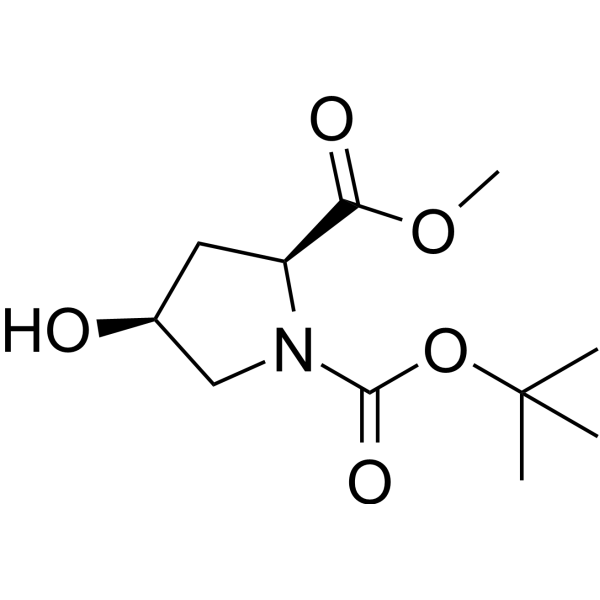
N-Boc-cis-4-hydroxy-L-proline methyl ester is a non-cleavable ADC linker used in the synthesis of antibody-drug conjugates (ADCs). N-Boc-cis-4-hydroxy-L-proline methyl ester is also a alkyl chain-based PROTAC linker that can be used in the synthesis of PROTACs[2
|
-
-
- HY-Y0252S5
-
|
|
Endogenous Metabolite
|
Others
|
|
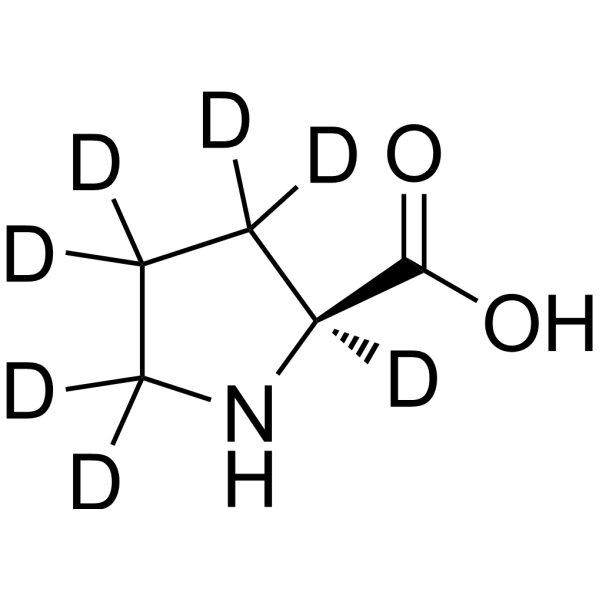
L-Proline-d7 is the deuterium labeled L-Proline. L-Proline is one of the twenty amino acids used in living organisms as the building blocks of proteins.
|
-
-
- HY-N0455R
-
|
|
Reference Standards
NO Synthase
Endogenous Metabolite
|
Cardiovascular Disease
Cancer
|
|
L-Arginine (Standard) is the analytical standard of L-Arginine. This product is intended for research and analytical applications. L-Arginine ((S)-(+)-Arginine) is the substrate for the endothelial nitric oxide synthase (eNOS) to generate NO. L-Arginine is transported into vascular smooth muscle cells by the cationic amino acid transporter family of proteins where it is metabolized to nitric oxide (NO), polyamines, or L-proline. L-Arginine is a potent vasodilator, and can be used to induce experimental acute pancreatitis .
|
-
-
- HY-40114
-
-
-
- HY-21754
-
|
N-Methyl-L-proline
|
Others
|
Others
|
|
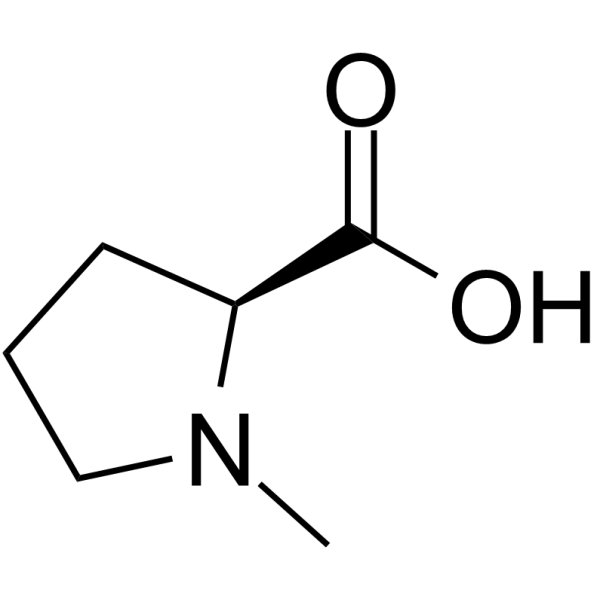
Hygric acid (N-Methyl-L-proline) is a proline analog that is found in bergamot, various citrus juices, and alfalfa seedlings .
|
-
-
- HY-40136
-
|
|
Endogenous Metabolite
|
Cardiovascular Disease
Metabolic Disease
Endocrinology
Cancer
|
|
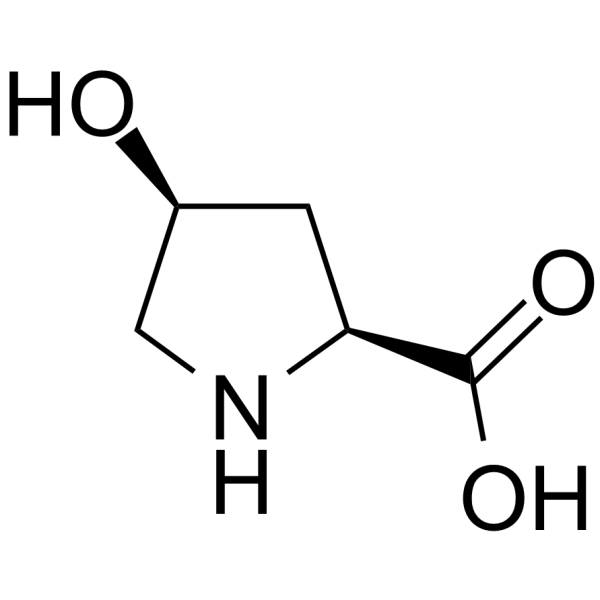
cis-4-Hydroxy-L-proline is an orally active proline analog and collagen production inhibitor. cis-4-Hydroxy-L-proline inhibits cell growth by preventing the deposition of triple helical collagen on the cell layer. cis-4-Hydroxy-L-proline inhibits N-nitrosomethylurea-induced breast tumor growth. cis-4-Hydroxy-L-proline improves lung compliance and reduces prostate weight. cis-4-Hydroxy-L-proline can be used in the study of hypoxic pulmonary hypertension .
|
-
-
- HY-142035
-
|
|
Mitochondrial Metabolism
|
Neurological Disease
Metabolic Disease
Inflammation/Immunology
Cancer
|
|
N-Propargylglycine is a brain-penetrant and orally active PRODH inhibitor. N-Propargylglycine covalently modifies enzyme-bound FAD and active site lysine, causing enzyme structural distortion, protein decay, and irreversible inhibition of proline and 4-hydroxyproline catabolism. N-Propargylglycine induces UPRmt, upregulates mitochondrial chaperones and YME1L1, enhances mitochondrial proteostasis, blocks astrocytic L-proline consumption, and abolishes L-proline’s ATP-maintaining and viability-protective effects. N-Propargylglycine stimulates neural processes, increases brain proline, hydroxyproline, and sarcosine levels, partially normalizes Huntington’s disease whole brain transcriptomes. N-Propargylglycine reduces hyperoxaluria, prevents calcium oxalate stone formation, reduces kidney tubular damage, and restores weight and survival in Grhpr knockout mice. N-Propargylglycine can be used for the research of breast cancer, neurodegenerative disorders, Huntington’s disease, and primary hyperoxaluria type 2 .
|
-
-
- HY-Y0252S4
-
|
|
Endogenous Metabolite
|
Others
|
|
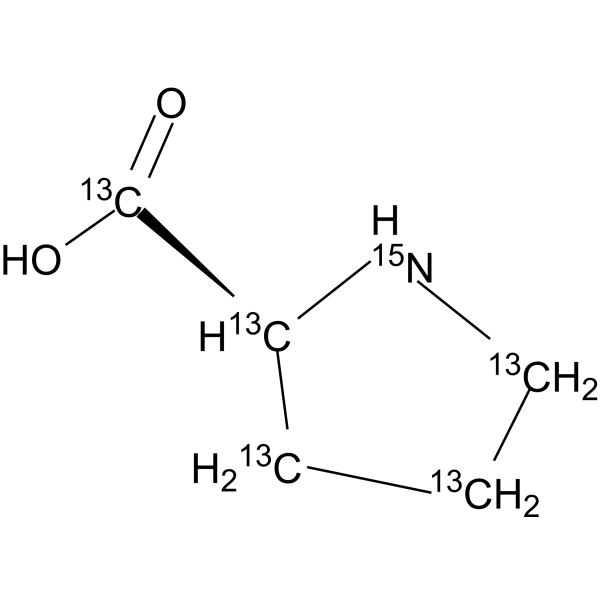
L-Proline- 13C5,1- 15N is the 13C- and 15N-labeled L-Proline. L-Proline is one of the twenty amino acids used in living organisms as the building blocks of proteins.
|
-
-
- HY-N2368A
-
|
|
GABA Receptor
|
Neurological Disease
|
|
Arecaidine hydrochloride, a pyridine alkaloid, is a potent GABA uptake inhibitor. Arecaidine hydrochloride is a substrate of H +-coupled amino acid transporter 1 (PAT1, SLC36A1) and competitively inhibits L-proline uptake .
|
-
-
- HY-W016042
-
|
|
Drug Intermediate
|
Others
|
|
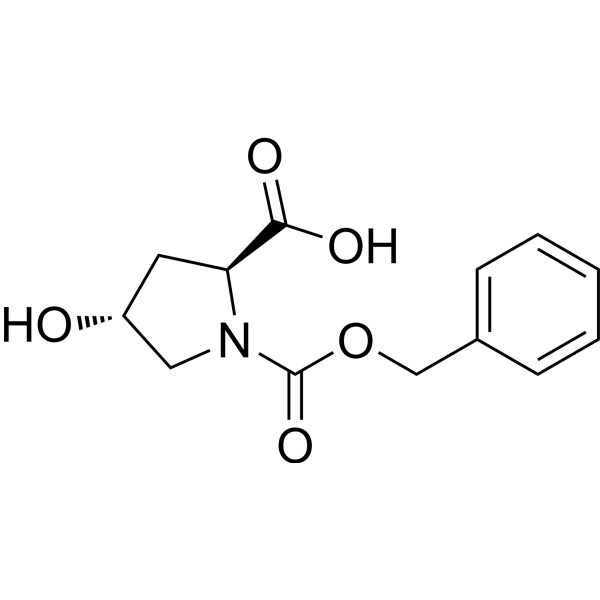
N-Cbz-Hydroxy-L-proline is a chiral N-Cbz-protected amino acid derivative. N-Cbz-Hydroxy-L-proline is commonly used in the synthesis of polypeptides and pharmaceutical intermediates. N-Cbz-Hydroxy-L-proline undergoes decarboxylation under AlCl3/HFIP conditions .
|
-
-
- HY-W015897
-
-
-
- HY-Y0252S3
-
|
|
Endogenous Metabolite
|
Others
|
|
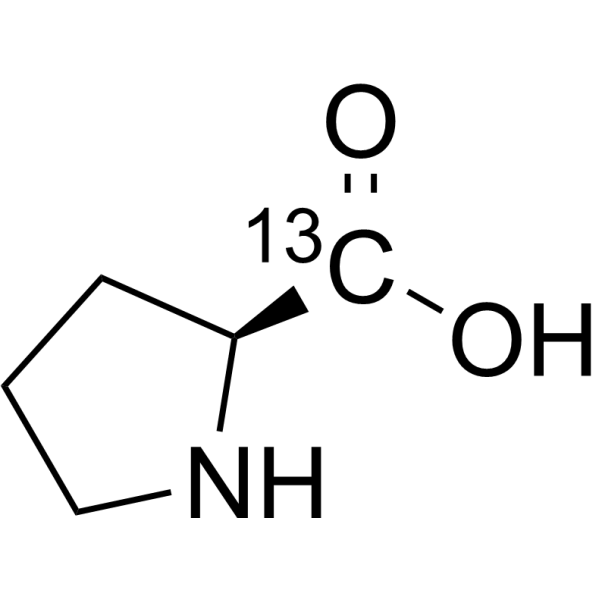
L-Proline- 13C is the 13C-labeled L-Proline. L-Proline is one of the twenty amino acids used in living organisms as the building blocks of proteins.
|
-
-
- HY-W008129
-
|
|
Drug Intermediate
Bacterial
|
Infection
|
|
H-D-cis-Hyp-OH is a proline derivative and also a substrate of cis-4-hydroxy-D-proline dehydrogenase from Sinorhizobium meliloti. H-D-cis-Hyp-OH serves as a starting material for the synthesis of conformationally constrained pyrrolidine PNA adenine monomers .
|
-
-
- HY-W004114
-
-
-
- HY-144250S
-
-
-
- HY-Y0252S2
-
|
|
Endogenous Metabolite
|
Others
|
|
L-Proline- 15N is the 15N-labeled L-Proline. L-Proline is one of the twenty amino acids used in living organisms as the building blocks of proteins .
|
-
-
- HY-N2368B
-
|
|
GABA Receptor
|
Neurological Disease
|
|
Arecaidine hydrobromide, a pyridine alkaloid, is a potent GABA uptake inhibitor. Arecaidine hydrobromide is a substrate of H +-coupled amino acid transporter 1 (PAT1, SLC36A1) and competitively inhibits L-proline uptake .
|
-
-
- HY-100836
-
-
-
- HY-W003222
-
|
|
Drug Intermediate
|
Metabolic Disease
|
|
N-tert-Boc-cis-4-fluoro-L-proline (Compound 11) is a drug intermediate for the synthesis of 4-fluoropyrrolidine-2-carbonitrile DPP-4 inhibitor. N-tert-Boc-cis-4-fluoro-L-proline can be used to study type 2 diabetes .
|
-
-
- HY-W016887R
-
|
H-Gly-Pro-OH (Standard); Gly-Pro (Standard)
|
Reference Standards
Endogenous Metabolite
|
Metabolic Disease
|
|
H-Gly-Pro-OH (Standard) is the analytical standard of H-Gly-Pro-OH. This product is intended for research and analytical applications. H-Gly-Pro-OH is an end product of collagen metabolism that is further cleaved by prolidase.
|
-
-
- HY-167566
-
-
-
- HY-WAA0253
-
-
-
- HY-W046071
-
|
|
Drug Intermediate
|
Others
|
|
N-Boc-trans-4-fluoro-L-proline is a non-natural amino acid substitute used to construct monoclonal antibodies that specifically target the seed conformation of tau protein .
|
-
-
- HY-W002886
-
|
|
ADC Linker
PROTAC Linkers
|
Cancer
|
|
N-Boc-cis-4-hydroxy-L-proline is a non-cleavable ADC linker used in the synthesis of antibody-drug conjugates (ADCs). N-Boc-cis-4-hydroxy-L-proline is also a alkyl chain-based PROTAC linker that can be used in the synthesis of PROTACs[2
|
-
-
- HY-134935
-
-
-
- HY-41318
-
|
1,2-Pyrrolidinedicarboxylic acid, 2-methyl 1-(phenylmethyl) ester, (S)-; Methyl (S)-N-(benzyloxycarbonyl)prolinate
|
Amino Acid Derivatives
|
Others
|
|
N-Z-L-proline methyl ester is a proline derivative .
|
-
-
- HY-W011155
-
-
-
- HY-W019213
-
|
|
ADC Linker
PROTAC Linkers
|
Cancer
|
|
cis-4-Hydroxy-L-proline hydrochloride is a cleavable ADC linker used in the synthesis of antibody-drug conjugates (ADCs). cis-4-Hydroxy-L-proline hydrochloride is also a PEG-based PROTAC linker that can be used in the synthesis of PROTACs.
|
-
-
- HY-40136S
-
|
|
Isotope-Labeled Compounds
Endogenous Metabolite
|
Cardiovascular Disease
Metabolic Disease
Endocrinology
Cancer
|
|
cis-4-Hydroxy-L-proline-d3 is the deuterium labeled cis-4-Hydroxy-L-proline (HY-40136). cis-4-Hydroxy-L-proline is an orally active proline analog and collagen production inhibitor. cis-4-Hydroxy-L-proline inhibits cell growth by preventing the deposition of triple helical collagen on the cell layer. cis-4-Hydroxy-L-proline inhibits N-nitrosomethylurea-induced breast tumor growth. cis-4-Hydroxy-L-proline improves lung compliance and reduces prostate weight. cis-4-Hydroxy-L-proline can be used in the study of hypoxic pulmonary hypertension .
|
-
-
- HY-137859
-
-
-
- HY-Y0252S8
-
-
-
- HY-W014540
-
|
tert-Butyl L-prolinate hydrochloride
|
Biochemical Assay Reagents
|
|
|
L-Proline tert-butyl ester hydrochloride (tert-Butyl L-prolinate hydrochloride) is a biologically active compound that has the activity of inhibiting cysteine and cathepsins, and is therefore widely used in the research and development of protease inhibitors. The characteristics of L-Proline tert-butyl ester hydrochloride make it of great significance in the field of biochemistry.
|
-
-
- HY-131096
-
|
H-Pro-4MβNA hydrochloride
|
Drug Intermediate
|
Cancer
|
|
L-Proline 4-methoxy-β-naphthylamide hydrochloride (H-Pro-4MβNA hydrochloride) can be used for Fap-activated anti-tumor compounds preparaction .
|
-
-
- HY-168772
-
|
H-Gly-Pro-OH TFA
|
Amino Acid Derivatives
|
Others
|
|
Glycyl-L-Proline TFA (H-Gly-Pro-OH TFA) is a dipeptide, which is composed of a glycine and a L-proline. Glycyl-L-Proline TFA can be used in research about the co-relationship between transmembrane potential/proton gradient and intestinal transport .
|
-
-
- HY-40118
-
|
Boc-L-proline methyl ester
|
Liposome
|
Others
|
|
Boc-Pro-OMe (Boc-L-proline methyl ester) is a lipid compound that can be used for liposome preparation. Liposomes are the main component of vesicles with concentric phospholipid bilayer membranes, which can be used to construct drug delivery systems for anti-cancer and anti-infection fields. Highly polar water-soluble loads can be captured in the internal aqueous space of liposomes, while lipophilic loads can be distributed into the lipid bilayer and become part of the lipid bilayer. Especially for the delivery of antisense oligonucleotides, it can overcome the problems of inefficient cellular uptake and rapid loss in the body.
|
-
-
- HY-W414638
-
|
N-Fmoc-L-proline N-succinimidyl ester
|
Drug Intermediate
|
Others
|
|
Fmoc-pro-osu (N-Fmoc-L-proline N-succinimidyl esterl) is a drug intermediate for synthesis of various active compounds.
|
-
-
- HY-W022138
-
-
-
- HY-N0455C
-
|
|
NO Synthase
Endogenous Metabolite
|
Cardiovascular Disease
Inflammation/Immunology
|
|
L-Arginine arginine is the substrate for the endothelial nitric oxide synthase (eNOS) to generate NO. L-Arginine is transported into vascular smooth muscle cells by the cationic amino acid transporter family of proteins where it is metabolized to nitric oxide (NO), polyamines, or L-proline. L-Arginine is a potent vasodilator, and can be used to induce experimental acute pancreatitis .
|
-
-
- HY-N2368AR
-
|
|
Reference Standards
GABA Receptor
|
Neurological Disease
|
|
Arecaidine hydrochloride, a pyridine alkaloid, is a potent GABA uptake inhibitor. Arecaidine hydrochloride is a substrate of H+-coupled amino acid transporter 1 (PAT1, SLC36A1) and competitively inhibits L-proline uptake .
|
-
-
- HY-CE01671
-
-
-
- HY-40136R
-
|
|
Reference Standards
Endogenous Metabolite
|
Cardiovascular Disease
Metabolic Disease
Endocrinology
Cancer
|
|
cis-4-Hydroxy-L-proline (Standard) is the analytical standard of cis-4-Hydroxy-L-proline (HY-40136). This product is intended for research and analytical applications. cis-4-Hydroxy-L-proline is an orally active proline analog and collagen production inhibitor. cis-4-Hydroxy-L-proline inhibits cell growth by preventing the deposition of triple helical collagen on the cell layer. cis-4-Hydroxy-L-proline inhibits N-nitrosomethylurea-induced breast tumor growth. cis-4-Hydroxy-L-proline improves lung compliance and reduces prostate weight. cis-4-Hydroxy-L-proline can be used in the study of hypoxic pulmonary hypertension .
|
-
- HY-W142044
-
-
- HY-W057465
-
-
- HY-W142047
-
-
- HY-44070
-
-
- HY-42418
-
|
|
Drug Intermediate
|
Others
|
|
3-Methyl-N-{[(2-methyl-2-propanyl)oxy]carbonyl}-L-valyl-(4R)-4-hydroxy-L-proline is a drug intermediate for synthesis of various active compounds.
|
-
- HY-W516983
-
|
(4R)-1-Methyl-4-propyl-L-proline hydrochloride
|
Drug Intermediate
|
Others
|
|
(2S,4R)-1-methyl-4-propylpyrrolidine-2-carboxylic acid ((4R)-1-Methyl-4-propyl-L-proline) hydrochloride is a Lincomycin (HY-117660) impurity.
|
-
- HY-17490R
-
|
N-Acetyl-L-hydroxyproline (Standard)
|
Amino Acid Derivatives
Reference Standards
|
Inflammation/Immunology
|
|
Oxaceprol (Standard) is the analytical standard of Oxaceprol. This product is intended for research and analytical applications. Oxaceprol (N-Acetyl-L-hydroxyproline), an orally active derivative of L-proline, possesses distinct anti-inflammatory activity. Oxaceprol is usually used for the research of osteoarthritis and rheumatoid arthritis .
|
-
- HY-17490S
-
|
N-Acetyl-L-hydroxyproline-d3
|
Isotope-Labeled Compounds
Amino Acid Derivatives
|
Inflammation/Immunology
|
|
Oxaceprol-d3 (N-Acetyl-L-hydroxyproline-d3) is deuterium labeled Oxaceprol. Oxaceprol (N-Acetyl-L-hydroxyproline), an orally active derivative of L-proline, possesses distinct anti-inflammatory activity. Oxaceprol is usually used for the research of osteoarthritis and rheumatoid arthritis .
|
-
- HY-W740245
-
|
|
Isotope-Labeled Compounds
GABA Receptor
|
Neurological Disease
|
|
Arecaidine-d5 hydrobromide is the deuterium labeled Arecaidine hydrobromide (HY-N2368B). Arecaidine hydrobromide, a pyridine alkaloid, is a potent GABA uptake inhibitor. Arecaidine hydrobromide is a substrate of H+-coupled amino acid transporter 1 (PAT1, SLC36A1) and competitively inhibits L-proline uptake .
|
-
- HY-N0455AR
-
|
(S)-(+)-Arginine hydrochloride (Standard)
|
Reference Standards
NO Synthase
Endogenous Metabolite
|
Cancer
|
|
L-Arginine (hydrochloride) (Standard) is the analytical standard of L-Arginine (hydrochloride). This product is intended for research and analytical applications. L-Arginine ((S)-(+)-Arginine) is the substrate for the endothelial nitric oxide synthase (eNOS) to generate NO. L-Arginine is transported into vascular smooth muscle cells by the cationic amino acid transporter family of proteins where it is metabolized to nitric oxide (NO), polyamines, or L-proline. L-Arginine is a potent vasodilator, and can be used to induce experimental acute pancreatitis .
|
-
- HY-Y0252S7
-
|
|
Endogenous Metabolite
|
Others
|
|
L-Proline- 15N,d7 is the deuterium and 15N labeled L-Proline . L-Proline is one of the twenty amino acids used in living organisms as the building blocks of proteins.
|
-
- HY-W384897
-
-
- HY-W051173
-
|
|
Biochemical Assay Reagents
|
Others
|
|
(Methoxycarbonyl)-L-valyl-L-proline is a biochemical reagent that can be used as a biological material or organic compound for life science related research.
|
-
- HY-136665
-
|
tert-Butoxycarbonyl-D-phenylalanyl-L-proline
|
Drug Intermediate
|
Others
|
|
Boc-D-Phe-Pro-OH (tert-Butoxycarbonyl-D-phenylalanyl-L-proline) is a synthetic intermediate useful for pharmaceutical synthesis.
|
-
| Cat. No. |
Product Name |
Type |
-
- HY-40114
-
|
|
Biochemical Assay Reagents
|
|
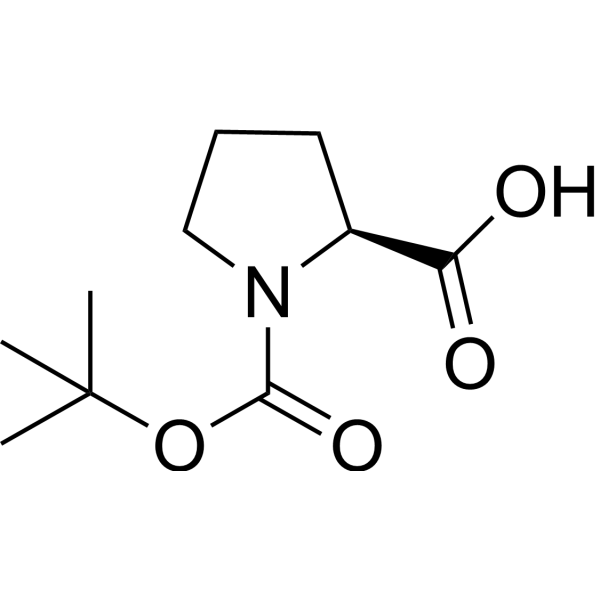
Boc-L-proline is an amino acid derivative. As an important intermediate in organic synthesis, Boc-L-proline can be used for peptide synthesis .
|
-
- HY-W016042
-
|
|
Biochemical Assay Reagents
|
|
N-Cbz-Hydroxy-L-proline is a chiral N-Cbz-protected amino acid derivative. N-Cbz-Hydroxy-L-proline is commonly used in the synthesis of polypeptides and pharmaceutical intermediates. N-Cbz-Hydroxy-L-proline undergoes decarboxylation under AlCl3/HFIP conditions .
|
-
- HY-167566
-
-
- HY-137859
-
-
- HY-W014540
-
|
tert-Butyl L-prolinate hydrochloride
|
Biochemical Assay Reagents
|
|
L-Proline tert-butyl ester hydrochloride (tert-Butyl L-prolinate hydrochloride) is a biologically active compound that has the activity of inhibiting cysteine and cathepsins, and is therefore widely used in the research and development of protease inhibitors. The characteristics of L-Proline tert-butyl ester hydrochloride make it of great significance in the field of biochemistry.
|
| Cat. No. |
Product Name |
Target |
Research Area |
-
- HY-W016887
-
|
H-Gly-Pro-OH; Gly-Pro
|
Endogenous Metabolite
Apoptosis
|
Metabolic Disease
Cancer
|
|
Glycyl-L-proline (H-Gly-Pro-OH) is a dipeptide. Glycyl-L-proline can induce MCF-7 cells apoptosis. Glycyl-L-proline can enhance the inhibitory effect of the PRODH/POX knockout on collagen and DNA biosynthesis. Glycyl-L-proline can inhibit Gly-Sar and L-proline transport. Glycyl-L-proline can be used for the researches of cancer and metabolic disease, such as breast cancer .
|
-
- HY-17490
-
|
N-Acetyl-L-hydroxyproline
|
Amino Acid Derivatives
|
Inflammation/Immunology
|
|
Oxaceprol (N-Acetyl-L-hydroxyproline), an orally active derivative of L-proline, possesses distinct anti-inflammatory activity. Oxaceprol is usually used for the research of osteoarthritis and rheumatoid arthritis .
|
-
- HY-W015897
-
-
- HY-W004114
-
-
- HY-W003222
-
|
|
Drug Intermediate
|
Metabolic Disease
|
|
N-tert-Boc-cis-4-fluoro-L-proline (Compound 11) is a drug intermediate for the synthesis of 4-fluoropyrrolidine-2-carbonitrile DPP-4 inhibitor. N-tert-Boc-cis-4-fluoro-L-proline can be used to study type 2 diabetes .
|
-
- HY-111922
-
|
Glycyl-glycyl-L-proline; Gly-Gly-Pro
|
Peptides
|
Others
|
|
H-Gly-Gly-Pro-OH is a peptide with 3 amino acid.
|
-
- HY-W016887R
-
|
H-Gly-Pro-OH (Standard); Gly-Pro (Standard)
|
Reference Standards
Endogenous Metabolite
|
Metabolic Disease
|
|
H-Gly-Pro-OH (Standard) is the analytical standard of H-Gly-Pro-OH. This product is intended for research and analytical applications. H-Gly-Pro-OH is an end product of collagen metabolism that is further cleaved by prolidase.
|
-
- HY-WAA0253
-
-
- HY-W046071
-
|
|
Drug Intermediate
|
Others
|
|
N-Boc-trans-4-fluoro-L-proline is a non-natural amino acid substitute used to construct monoclonal antibodies that specifically target the seed conformation of tau protein .
|
-
- HY-134935
-
-
- HY-P5338
-
|
L-Alanyl-(4R)-4-hydroxy-L-proline; Ala-Hyp
|
Peptides
|
Others
|
|
H-Ala-Hyp-OH is a biological active peptide.
|
-
- HY-41318
-
|
1,2-Pyrrolidinedicarboxylic acid, 2-methyl 1-(phenylmethyl) ester, (S)-; Methyl (S)-N-(benzyloxycarbonyl)prolinate
|
Amino Acid Derivatives
|
Others
|
|
N-Z-L-proline methyl ester is a proline derivative .
|
-
- HY-W011155
-
-
- HY-40118
-
|
Boc-L-proline methyl ester
|
Liposome
|
Others
|
|
Boc-Pro-OMe (Boc-L-proline methyl ester) is a lipid compound that can be used for liposome preparation. Liposomes are the main component of vesicles with concentric phospholipid bilayer membranes, which can be used to construct drug delivery systems for anti-cancer and anti-infection fields. Highly polar water-soluble loads can be captured in the internal aqueous space of liposomes, while lipophilic loads can be distributed into the lipid bilayer and become part of the lipid bilayer. Especially for the delivery of antisense oligonucleotides, it can overcome the problems of inefficient cellular uptake and rapid loss in the body.
|
-
- HY-W022138
-
-
- HY-W142044
-
-
- HY-W057465
-
-
- HY-W142047
-
-
- HY-44070
-
-
- HY-17490R
-
|
N-Acetyl-L-hydroxyproline (Standard)
|
Amino Acid Derivatives
Reference Standards
|
Inflammation/Immunology
|
|
Oxaceprol (Standard) is the analytical standard of Oxaceprol. This product is intended for research and analytical applications. Oxaceprol (N-Acetyl-L-hydroxyproline), an orally active derivative of L-proline, possesses distinct anti-inflammatory activity. Oxaceprol is usually used for the research of osteoarthritis and rheumatoid arthritis .
|
-
- HY-W051173
-
|
|
Biochemical Assay Reagents
|
Others
|
|
(Methoxycarbonyl)-L-valyl-L-proline is a biochemical reagent that can be used as a biological material or organic compound for life science related research.
|
| Cat. No. |
Product Name |
Category |
Target |
Chemical Structure |
| Cat. No. |
Product Name |
Chemical Structure |
-
- HY-Y0252S
-
|
|
|
L-Proline- 13C5 is the 13C-labeled L-Proline. L-Proline is one of the twenty amino acids used in living organisms as the building blocks of proteins.
|
-
-
- HY-Y0252S1
-
|
|
|
L-Proline-d3 is the deuterium labeled L-Proline. L-Proline is one of the twenty amino acids used in living organisms as the building blocks of proteins.
|
-
-
- HY-Y0252S5
-
|
|
|
L-Proline-d7 is the deuterium labeled L-Proline. L-Proline is one of the twenty amino acids used in living organisms as the building blocks of proteins.
|
-
-
- HY-Y0252S4
-
|
|
|
L-Proline- 13C5,1- 15N is the 13C- and 15N-labeled L-Proline. L-Proline is one of the twenty amino acids used in living organisms as the building blocks of proteins.
|
-
-
- HY-Y0252S3
-
|
|
|
L-Proline- 13C is the 13C-labeled L-Proline. L-Proline is one of the twenty amino acids used in living organisms as the building blocks of proteins.
|
-
-
- HY-144250S
-
|
|
|
Glycyl-L-proline- 15N,d2 (trifluoroacetate) is a 15N-labeled and deuterium labeled Glycyl-L-proline .
|
-
-
- HY-Y0252S2
-
|
|
|
L-Proline- 15N is the 15N-labeled L-Proline. L-Proline is one of the twenty amino acids used in living organisms as the building blocks of proteins .
|
-
-
- HY-40136S
-
|
|
|
cis-4-Hydroxy-L-proline-d3 is the deuterium labeled cis-4-Hydroxy-L-proline (HY-40136). cis-4-Hydroxy-L-proline is an orally active proline analog and collagen production inhibitor. cis-4-Hydroxy-L-proline inhibits cell growth by preventing the deposition of triple helical collagen on the cell layer. cis-4-Hydroxy-L-proline inhibits N-nitrosomethylurea-induced breast tumor growth. cis-4-Hydroxy-L-proline improves lung compliance and reduces prostate weight. cis-4-Hydroxy-L-proline can be used in the study of hypoxic pulmonary hypertension .
|
-
-
- HY-Y0252S8
-
|
|
|
L-Proline-d4 is the deuterium labeled L-Proline (HY-Y0252). L-Proline is one of the twenty amino acids used in living organisms as the building blocks of proteins.
|
-
-
- HY-17490S
-
|
|
|
Oxaceprol-d3 (N-Acetyl-L-hydroxyproline-d3) is deuterium labeled Oxaceprol. Oxaceprol (N-Acetyl-L-hydroxyproline), an orally active derivative of L-proline, possesses distinct anti-inflammatory activity. Oxaceprol is usually used for the research of osteoarthritis and rheumatoid arthritis .
|
-
-
- HY-W740245
-
|
|
|
Arecaidine-d5 hydrobromide is the deuterium labeled Arecaidine hydrobromide (HY-N2368B). Arecaidine hydrobromide, a pyridine alkaloid, is a potent GABA uptake inhibitor. Arecaidine hydrobromide is a substrate of H+-coupled amino acid transporter 1 (PAT1, SLC36A1) and competitively inhibits L-proline uptake .
|
-
-
- HY-Y0252S7
-
|
|
|
L-Proline- 15N,d7 is the deuterium and 15N labeled L-Proline . L-Proline is one of the twenty amino acids used in living organisms as the building blocks of proteins.
|
-
| Cat. No. |
Product Name |
|
Classification |
-
- HY-142035
-
|
|
|
Alkynes
|
|
N-Propargylglycine is a brain-penetrant and orally active PRODH inhibitor. N-Propargylglycine covalently modifies enzyme-bound FAD and active site lysine, causing enzyme structural distortion, protein decay, and irreversible inhibition of proline and 4-hydroxyproline catabolism. N-Propargylglycine induces UPRmt, upregulates mitochondrial chaperones and YME1L1, enhances mitochondrial proteostasis, blocks astrocytic L-proline consumption, and abolishes L-proline’s ATP-maintaining and viability-protective effects. N-Propargylglycine stimulates neural processes, increases brain proline, hydroxyproline, and sarcosine levels, partially normalizes Huntington’s disease whole brain transcriptomes. N-Propargylglycine reduces hyperoxaluria, prevents calcium oxalate stone formation, reduces kidney tubular damage, and restores weight and survival in Grhpr knockout mice. N-Propargylglycine can be used for the research of breast cancer, neurodegenerative disorders, Huntington’s disease, and primary hyperoxaluria type 2 .
|
| Cat. No. |
Product Name |
|
Classification |
-
- HY-N0455
-
|
|
|
Solubilizing Agents
|
|
L-Arginine ((S)-(+)-Arginine) is the substrate for the endothelial nitric oxide synthase (eNOS) to generate NO. L-Arginine is transported into vascular smooth muscle cells by the cationic amino acid transporter family of proteins where it is metabolized to nitric oxide (NO), polyamines, or L-proline. L-Arginine is a potent vasodilator, and can be used to induce experimental acute pancreatitis .
|
Your information is safe with us. * Required Fields.
Inquiry Information
- Product Name:
- Cat. No.:
- Quantity:
- MCE Japan Authorized Agent:

