18 Results for "

LPO

" in MedChemExpress (MCE) Product Catalog:
Products (18)

18 Results for "LPO" in MCE Product Catalog:

2
2 Cited Publications
Cat. No.: HY-141809
CAS No.: 2761004-85-5
Purity:  99.83%
Research Areas:  

Cancer

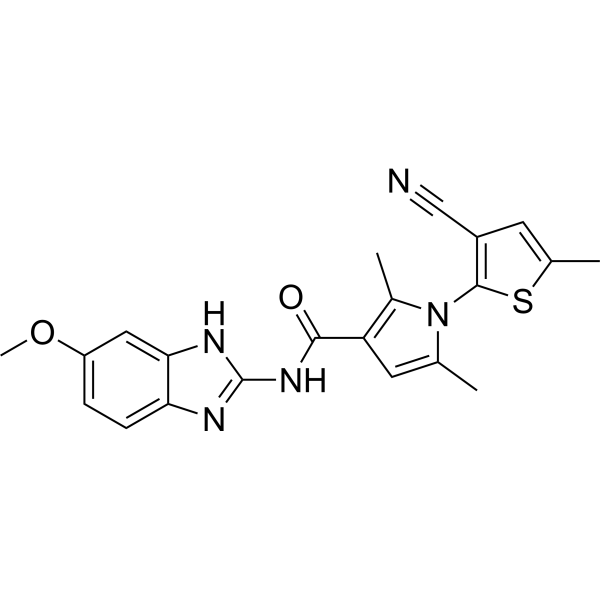
GPX4-IN-3 (26a) is a potent glutathione peroxidase 4 (GPX4) inhibitor as a selective ferroptosis inducer. GPX4-IN-3 (26a) exhibits 71.7% inhibition for GPX4 with 1 μM .
loading...
    loading...
1
1 Cited Publications
Cat. No.: HY-P5381
CAS No.: 329902-61-6
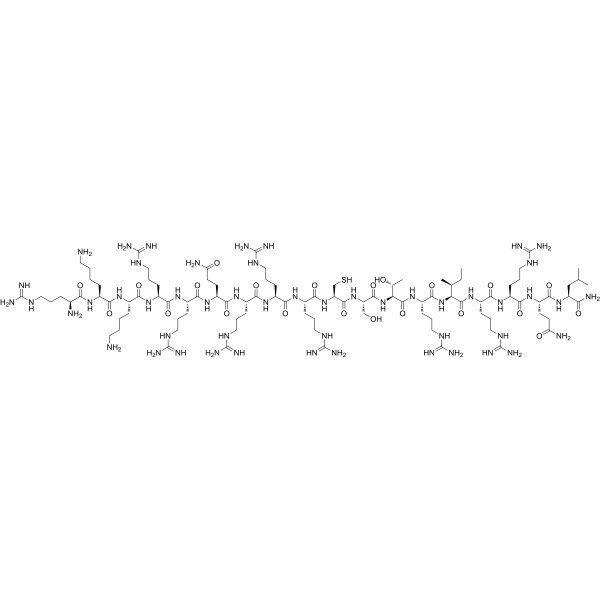
gp91 ds-tat, a biological active peptide, is a NADPH oxidase 2 (Nox2) inhibitor. gp91 ds-tat blocks NADPH oxidase-dependent superoxide production. gp91 ds-tat ameliorates high glucose-induced increase in total ROS, LPOs and iron levels. gp91 ds-tat inhibits homocysteine (Hcy)-induced activation of NLRP3 inflammasomes and restores Hcy-inhibited lysosomal TRPML1 channel activity. gp91 ds-tat improves cerebrovascular and cognitive function in APP/PS1 mice. gp91 ds-tat can be used for the study of Alzheimer’s disease (AD), glomerular inflammation and cardiovascular disease .
loading...
    loading...
Cat. No.: HY-156418
CAS No.: 2787598-01-8
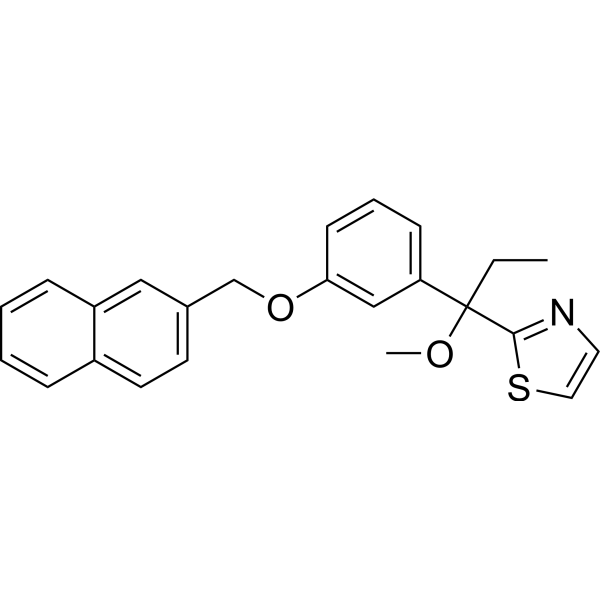
KY386 is a DHX33 helicase inhibitor with an IC50 of 0.019 μM. KY386 inhibits the cell viability of various cancer cells. KY386 induces ferroptosis in cancer cells, and induces apoptosis in some cancer cell lines. KY386 increases the intracellular levels of ROS, LPO and Fe 2+, and decreases the level of GSH in cancer cells . KY386 inhibits the growth of gastric cancer and colon cancer xenografts in nude mice. KY386 is applicable to the related research on liver cancer, lung cancer, pancreatic cancer, colorectal cancer, gastric cancer, breast cancer, leukemia, renal cancer, prostate cancer, esophageal cancer, cervical cancer, brain cancer (glioblastoma) and melanoma .
loading...
    loading...
Cat. No.: HY-D2878
CAS No.: 1187472-58-7
MitoPeDPP is a mitochondrial-targeted fluorescent probe that is sensitive to LPO. MitoPeDPP is synthesized from diphenylpyrenephosphine. MitoPeDPP can be used to study the occurrence of mitochondrial LPO in RSL3-induced oligodendrocyte ferroptosis .
loading...
    loading...
Cat. No.: HY-178364
CAS No.: 3102894-57-2
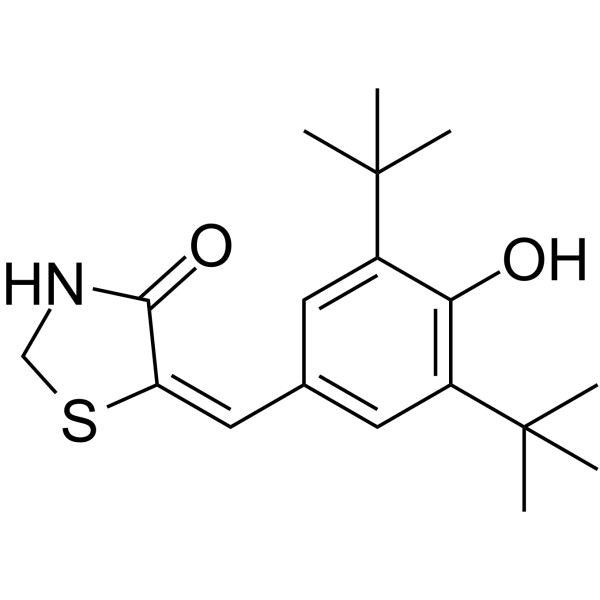
GPX4-IN-19 is an effective GPX4 inhibitor (IC50 = 0.311 μM), covalently binds to the Sec 46 site of GPX4. GPX4-IN-19 shows strong anti-proliferative activity with high ferroptosis selectivity. GPX4-IN-19 causes intracellular Fe 2+ accumulation, leading to increased levels of lipid peroxides (LPOs) and reactive oxygen species (ROS), which induces ferroptosis and subsequently results in DNA damage. GPX4-IN-19 can be used for the study of Triple-Negative Breast Cancer (TNBC) .
loading...
    loading...
Cat. No.: HY-161460
CAS No.: 3063813-06-6
Ferroptosis-IN-7(Compound 26) is a ferroptosis inhibitor which can restore cell viability, reduce iron accumulation and scavenge reactive oxygen species. Ferroptosis-IN-7 can be used for vascular diseases research .
loading...
    loading...
Cat. No.: HY-177483
Synonyms: Oxaliplatin-artesunate
OART (Oxaliplatin-artesunate) is a ferroptosis inducer. OART significantly inhibits tumor cell proliferation. OART induces cytoplasmic and mitochondrial LPO to promote tumor ferroptosis, via destroying glutathione-mediated ferroptosis defense system and enhancing iron-dependent Fenton reaction. OART enhances tumor immunogenicity, transforming tumor environment from immunosuppressive to immunosensitive. OART has strong tumor regression in tumor-bearing mouse models. OART can be used for cancer immunotherapy research .
loading...
    loading...
Cat. No.: HY-175633
ML210-ansaFc (Compound III-13) is a covalent GPX4 inhibitor with a -ferrocenophane group (IC50 of 3.4 μM). ML210-ansaFc potently induces ferroptosis by increasing the level of ROSand promoting lipid peroxidation (LPO) in cancers cells. ML210-ansaFc has an anticancer activity and suppresses tumor growth in tumor 3D spheroids. ML210-ansaFc can be used for cancer therapy resistance research .
loading...
    loading...
Cat. No.: HY-175698
Ferroptosis inducer-9 is a ferroptosis inducer and colchicine site tubulin polymerization inhibitor. Ferroptosis inducer-9 inhibits MCF-7 cell growth with an IC50 of 14 nM and inhibits [ 3H]colchicine binding. Ferroptosis inducer-9 reduces expression of GPX4 and FTH, increases COX2 and ACSL4, lowers GSH, NADP+, and NADPH levels, increases LPO, MDA, and Fe(II) levels, and decreases SOD concentrations. Ferroptosis inducer-9 demonstrates significant anti-tumor efficacy in HCT116 CRC xenograft model. Ferroptosis inducer-9 can be used for the study of triple negative breast cancer (TNBC) and colorectal cancer (CRC) .
loading...
    loading...
Cat. No.: HY-RS07773
Research Areas:  

Others

LPO Human Pre-designed siRNA Set A contains three designed siRNAs for LPO gene (Human), as well as a negative control, a positive control, and a FAM-labeled negative control.

loading...
    loading...
Cat. No.: HY-100148
CAS No.: 129424-08-4
Synonyms: ZM-211965
Target:  

Lipoxygenase

Research Areas:  

Inflammation/Immunology

ICI 211965 (ZM-211965) is a selective and orally potent 5-Lipoxygenase (5-LPO) inhibitor.
loading...
    loading...
Cat. No.: HY-101579
CAS No.: 107889-32-7
Research Areas:  

Inflammation/Immunology

LY 178002 is a potent inhibitor of 5-lipoxygenase (5-LPO), phospholipase A2, with IC50 of 0.6 μM for 5-lipoxygenase, inhibits cellular production of LTB4 by human polymorphonuclear leukocytes, and shows relatively weak inhibition on cyclooxygenase.
loading...
    loading...
Cat. No.: HY-113455S1
Synonyms: Alpha-dimorphecolic acid-13C18
9(S)-HODE- 13C18 ((+)-α-Dimophecolic acid- 13C18) is 13C labeled 9S-HODE. 9S-HODE (Alpha-dimorphecolic acid) is an octadecadienoic acid and the main active derivative of linoleic acid, which can reduce the viability of HL-60 cells and induce apoptosis. 9S-HODE is rich in lipid peroxidation (LPO) products and is almost an ideal marker for LPO .
loading...
    loading...
Cat. No.: HY-161388
Target:  

Ferroptosis Mitophagy

Research Areas:  

Cancer

NSCLC-IN-1 (Compound A10-2) induces mitophagy and ferroptosis through targeting transmembrane BAX inhibitor motif containing 6 (TMBIM6). NSCLC-IN-1 induces mitochondrial Ca 2+ imbalance, leading to mitochondrial damage. NSCLC-IN-1 reduces intracellular glutathione (GSH), increases the accumulation of lipid peroxides (LPO) and malondialdehyde (MDA) content. NSCLC-IN-1 is a potent anti-NSCLC agent .
loading...
    loading...
Cat. No.: HY-161930
PROTAC GPX4 degrader-3 is a glutathione peroxidase 4 (GPX4) PROTAC degrader with a DC50 of 0.019 μM in HT1080 cells. PROTAC GPX4 degrader-3 degrades GPX4 primarily via the ubiquitin-proteasome system (UPS) in a dose- and time-dependent manner. PROTAC GPX4 degrader-3 induces lipid peroxidation (LPO) and ROS accumulation, thereby triggering ferroptosis (ferroptosis). PROTAC GPX4 degrader-3 exhibits in vitro anti-tumor activity against cancer cells. PROTAC GPX4 degrader-3 can be used in the research of fibrosarcoma, triple-negative breast cancer, and renal cell carcinoma .
loading...
    loading...
Cat. No.: HY-RS17622
Research Areas:  

Others

Lpo Mouse Pre-designed siRNA Set A contains three designed siRNAs for Lpo gene (Mouse), as well as a negative control, a positive control, and a FAM-labeled negative control.

loading...
    loading...
Cat. No.: HY-RS24082
Research Areas:  

Others

Lpo Rat Pre-designed siRNA Set A contains three designed siRNAs for Lpo gene (Rat), as well as a negative control, a positive control, and a FAM-labeled negative control.

loading...
    loading...
Cat. No.: HY-182066
Target:  

PANoptosis

Research Areas:  

Cancer

Photosensitizer-9 is an iridium (III)-based photosensitizer with anti-melanoma activity. Photosensitizer-9 exhibits significant phototoxicity (IC50=0.98 μM) and an ideal phototoxicity index (PI=3.05). Under light irradiation, Photosensitizer-9 generates large amounts of intracellular •OH in an oxygen-independent manner. Photosensitizer-9 mediates photodynamic therapy under hypoxic conditions and synergistically activates PANoptosis (by upregulating cleaved Caspase-3, GSDMD-N, p-MLKL), ferroptosis (by disrupting the GSH-GPX4-LPO axis), apoptosis, pyroptosis and necroptosis in melanoma cells. Photosensitizer-9 induces immunogenic cell death by promoting the release of damage-associated molecular patterns under hypoxic conditions and increases the maturation rate of dendritic cells. Photosensitizer-9 reduces tumor volume in melanoma-bearing mice. Photosensitizer-9 is applicable to relevant studies on melanoma .
loading...
    loading...
  • 1

