
1. Search Result
Search Result
Results for "

Memory loss

" in MedChemExpress (MCE) Product Catalog:

13

Inhibitors & Agonists

2

Peptides

1

Inhibitory Antibodies

5

Natural
Products

Cat. No. Product Name Target Research Areas Chemical Structure
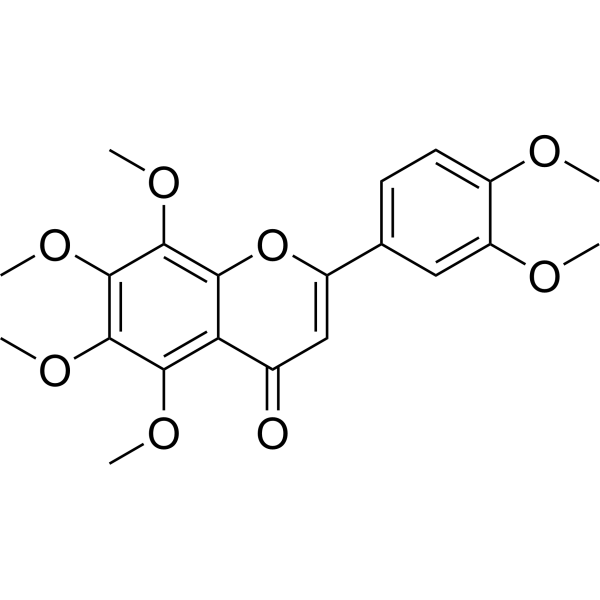
  • HY-N0155
    Nobiletin
    Maximum Cited Publications
    27 Publications Verification

    ROR Reactive Oxygen Species (ROS) Apoptosis Autophagy Neurological Disease Inflammation/Immunology Cancer
    Nobiletin is a poly-methoxylated flavone from the citrus peel that improves memory loss. Nobiletin is a retinoid acid receptor-related orphan receptors (RORs) agonist. Nobiletin can reduce reactive oxygen species (ROS) levels in differentiated C2C12 myotubes and has anti-inflammation and anti-cancer properties, including anti-angiogenesis, anti-proliferation, anti-metastasis and induced apoptosis .
    Nobiletin
  • HY-B0193
    Prazosin
    15+ Cited Publications

    Adrenergic Receptor Cardiovascular Disease Endocrinology
    Prazosin is an α-adrenergic receptor antagonist. Prazosin can reduce inflammation, relieve anxiety, alleviate panic, prevent memory decline, and modulate the pain-relieving effects of opioids. Prazosin can be used in the study of hypertension and Alzheimer’s disease .
    Prazosin
  • HY-P5912

    iGluR Calcium Channel Neurological Disease
    GluN1 (356-385) is a polypeptide targeting NMDAR GluN1. GluN1 (356-385) induces the production of autoantibodies, which reduce the density of cell surface NMDAR clusters, impair long-term potentiation, and decrease NMDAR-mediated Ca 2+ influx. As an immunogen, GluN1 (356-385) induces symptoms similar to anti-NMDAR encephalitis, including memory loss, in mice. GluN1 (356-385) can be used to establish a mouse model that mimics the pathogenesis of anti-NMDAR encephalitis. GluN1 (356-385) is applicable to research related to anti-NMDAR encephalitis .
    GluN1(356-385)
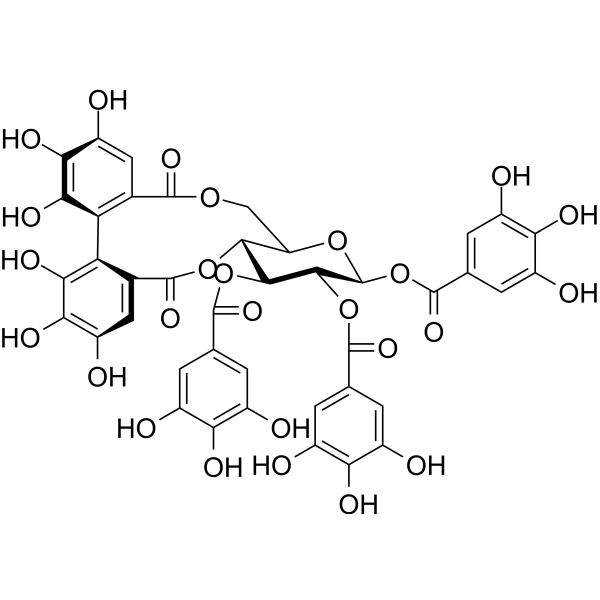
  • HY-N9386
    Tellimagrandin II
    1 Publications Verification

    Eugeniin

    Bacterial Antibiotic Infection Neurological Disease Inflammation/Immunology
    Tellimagrandin II (Eugeniin), with oral activity, is the first intermediate of the ellagitannin series derived from 4C1-glucose. It inhibits the resistance of Staphylococcus aureus by disrupting the integrity of the cell wall, leading to the loss of cytoplasmic contents. Additionally, Tellimagrandin II exhibits anti-inflammatory effects and inhibits acetylcholinesterase (AChE) activity, improving memory impairment. Tellimagrandin II holds potential for research in the fields of antibacterial, anti-inflammatory, and neurodegenerative diseases .
    Tellimagrandin II
  • HY-164288

    TDI-006570

    Cyclic GMP-AMP Synthase STING Neurological Disease Inflammation/Immunology
    TDI-6570 (TDI-006570) is a blood-brain barrier-permeable, orally active cGAS inhibitor with an IC50 of 1.64 μM. TDI-6570 exhibits high gastrointestinal absorption and a long brain half-life in mice, and shows no toxicity to primary neurons. By inhibiting the cGAS-STING-IFN signaling pathway, TDI-6570 reduces STING levels and the activation of TBK1, blocks double-stranded DNA-induced cGAS activation and downstream interferon-stimulated gene expression, thereby reducing tau protein spread and improving synaptic loss. TDI-6570 reverses memory deficits, increases the amplitude of long-term potentiation, enhances the MEF2C transcriptional network, restores PSD-95 and vGAT punctate structures, and significantly improves cognitive resilience. TDI-6570 can be applied to the research of Alzheimer's disease, Parkinson's disease, systemic lupus erythematosus, as well as various central nervous system and autoimmune diseases .
    TDI-6570
  • HY-148325

    nAChR Neurological Disease
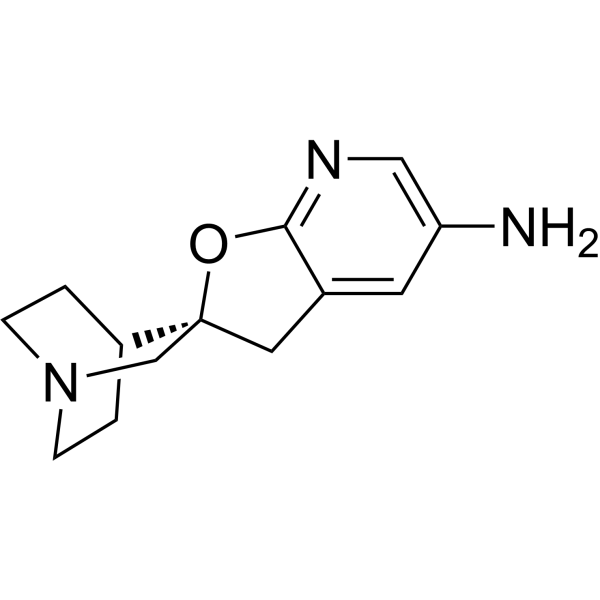
    α7 Nicotinic receptor agonist-1 (Preparation 5) is an α7 nAChR agonist. α7 Nicotinic receptor agonist-1 can be used in studies of psychiatric disorders (such as schizophrenia, manic or hypomanic depression and anxiety disorders) and intellectual disorders (such as alzheimer's disease, learning deficits, cognitive deficits, attention deficits, memory loss, lewy body dementia and attention deficit hyperactivity disorder) .
    α7 Nicotinic receptor agonist-1
  • HY-D0186R

    Reference Standards Endogenous Metabolite Thymidylate Synthase Infection
    2'-Deoxyuridine (Standard) is the analytical standard of 2'-Deoxyuridine. This product is intended for research and analytical applications. 2’-deoxyuridine is a brain-penetrant pyrimidines nucleotide that is associated with nervous system diseases. 2'-Deoxyuridine could increase chromosome breakage and results in a decreased thymidylate synthetase activity. 2'-Deoxyuridine is a precursor in the synthesis of Edoxudine (HY-B1011) and also an analogue of 5-ethynyl-2'-deoxyuridine, EdU (HY-118411). 2’-deoxyuridine reduces microglial activation and improve oxidative stress damage by modulating glycolytic metabolism on the Aβ25-35-induced brain injury, which is promising for research of Alzheimer’s disease (AD) . In Vitro:The interaction between the 2-deoxyuridine and the column increases the duration of retention of 2-deoxyuridine .
    Gradient elution with sodium acetate buffer-ACN eluent on two ZIC-HILIC homemade columns separates 2-deoxyuridine in under 9 min .
    In Vivo:2'-Deoxyuridine (34.42 ng/mL, gavage, 15 min) passes the blood-brain barrier (BBB) to enter the hippocampus of mice brain .
    2'-Deoxyuridine (20 mg/kg, gavage, daily for 4 weeks) improves cognition and memory loss and attenuates the damage to the hippocampus in Aβ25-35-induced mice model .
    2'-Deoxyuridine (Standard)
  • HY-P991535

    Amyloid-β Neurological Disease
    PMN310 is a monoclonal antibody targeting amyloid-β oligomers (AβO). PMN310 prevents AβO-induced memory loss and reduces synaptic loss and inflammation in vivo. PMN310 is potentially useful in Alzheimer's disease research .
    PMN310
  • HY-W841438

    Amyloid-β Tau Protein Neurological Disease
    Lithium orotate is an orally active lithium supplement with reduced binding that can bypass amyloid sequestration in AD mice models. Lithium orotate can prevent Aβ plaque deposition and phospho-tau accumulation and reverse AD pathology, neuroinflammatory changes and memory loss in AD mice models and ageing wild-type mice. Lithium orotate can be used for the research of alcoholism and Alzheimer’s disease .
    Lithium orotate
  • HY-136094

    Sirtuin Neurological Disease
    SRT3657 is a brain-permeable activator of SIRT1, with neuroprotective effect .
    SRT3657
  • HY-N0155R

    Reference Standards ROR Reactive Oxygen Species (ROS) Apoptosis Autophagy Neurological Disease Inflammation/Immunology Cancer
    Nobiletin (Standard) is the analytical standard of Nobiletin. This product is intended for research and analytical applications. Nobiletin is a poly-methoxylated flavone from the citrus peel that improves memory loss. Nobiletin is a retinoid acid receptor-related orphan receptors (RORs) agonist. Nobiletin can reduce reactive oxygen species (ROS) levels in differentiated C2C12 myotubes and has anti-inflammation and anti-cancer properties, including anti-angiogenesis, anti-proliferation, anti-metastasis and induced apoptosis .
    Nobiletin (Standard)
  • HY-101196

    Endogenous Metabolite Neurological Disease
    PG 9 maleate is a compound with analgesic and anti-memory loss activity. PG 9 maleate exerts analgesic effects by enhancing central cholinergic transmission. PG 9 maleate protects against memory loss caused by scopolamine or dicyclomine within a specific dose range. The affinity profile of PG 9 maleate indicates significant selectivity among the M4/M1 receptor subtypes, which may be the mechanism for its analgesic and anti-memory loss effects. PG 9 maleate can increase the release of acetylcholine, thereby improving its biological activity .
    PG 9 maleate
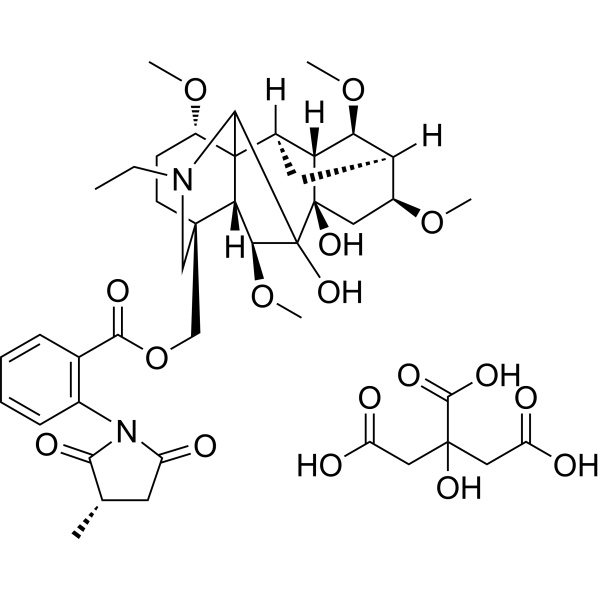
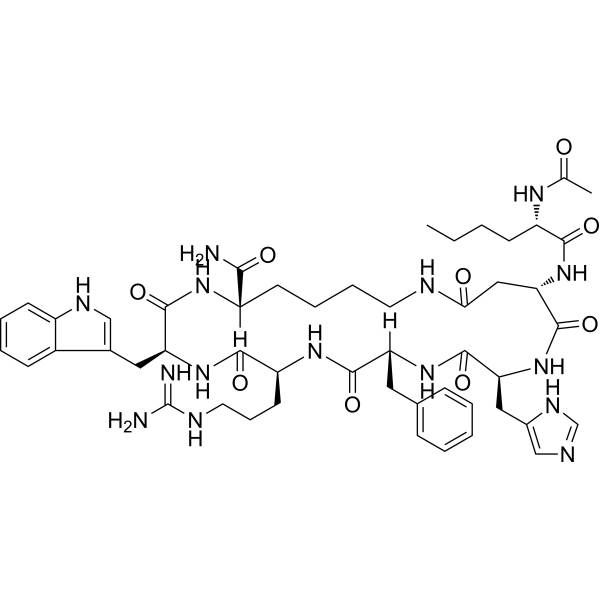
  • HY-P0267A

    Melanocortin Receptor Neurological Disease Metabolic Disease Endocrinology
    Melanotan (MT)-II acetate is a melanocortin receptor agonist that crosses the blood-brain barrier. Melanotan (MT)-II acetate activates melanocortin receptor 3 and melanocortin receptor 4, and stimulates the release of central endogenous oxytocin. Melanotan (MT)-II acetate reverses recognition memory impairment, increased anxiety levels and reduced exploratory tendency in zebrafish exposed to short-term high-fat diet. Melanotan (MT)-II acetate improves impaired social behavior indicators in mouse models of autism spectrum disorder. Melanotan (MT)-II acetate induces weight loss, reduces food intake and exerts anorectic effects. Melanotan (MT)-II acetate increases intracavernous pressure and erectile activity in brown rats. Melanotan (MT)-II acetate can be used in studies related to memory impairment, anxiety, reduced exploratory behavior, autism spectrum disorder, obesity and erectile dysfunction .
    Melanotan (MT)-II acetate

Inquiry Online

Your information is safe with us. * Required Fields.

Salutation


Country or Region *

Applicant Name *


Organization Name *

Department *


Email Address *


Product Name *

Cat. No.


Requested quantity *

Phone Number *


Remarks

Inquiry Online

Inquiry Information

Product Name:
Cat. No.:
Quantity:
MCE Japan Authorized Agent:

