






84 Results for "

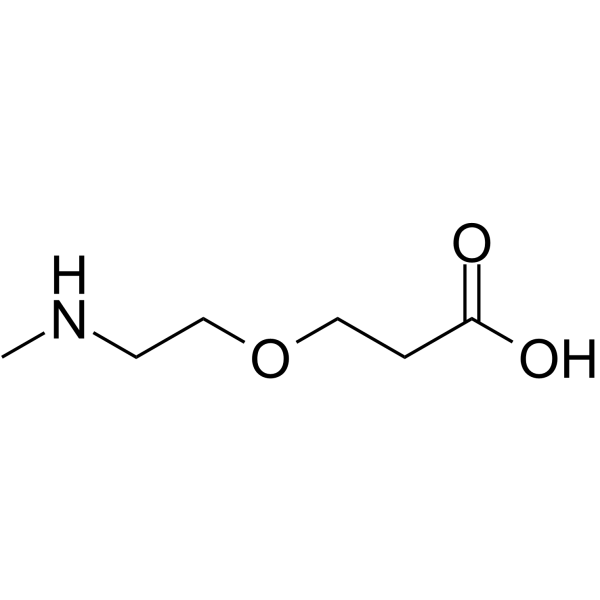
Methylamino-PEG1-acid

" in MedChemExpress (MCE) Product Catalog:
Products (84)

84 Results for "Methylamino-PEG1-acid" in MCE Product Catalog:

Cat. No.: HY-140000
CAS No.: 1367918-21-5
Target:  

PROTAC Linkers

Research Areas:  

Cancer

Methylamino-PEG1-acid is a PEG-based PROTAC linker that can be used in the synthesis of PROTACs [1].
loading...
    loading...
43
43 Publications Verification
Cat. No.: HY-P0014
CAS No.: 204656-20-2
Liraglutide is a glucagon-like peptide-1 (GLP-1) receptor agonist used clinically to treat type 2 diabetes mellitus.
loading...
    loading...
43
43 Publications Verification
Cat. No.: HY-P0014B
Target:  

GLP Receptor

Research Areas:  

Metabolic Disease

Liraglutide (TFA) is an agonist of glucagon-like peptide 1 receptor (GLP-1). Liraglutide (TFA) can activate GLP-1, leading to the release of insulin in the presence of increased glucose concentration. Liraglutide (TFA) also reduces glucagon secretion in a glucose-dependent manner. Liraglutide (TFA) can be studied in research on type 2 diabetes [1].
loading...
    loading...
4
4 Cited Publications
Cat. No.: HY-P2336A
Target:  

Melanocortin Receptor

Research Areas:  

Cancer

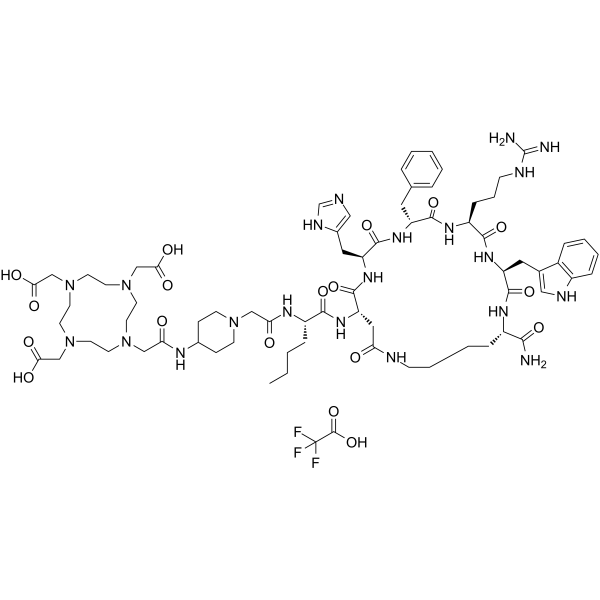
CCZ01048 TFA, a α-MSH analogue, exhibits high binding affinity to melanocortin 1 receptor (MC1R) with a Ki of 0.31 nM. CCZ01048 TFA shows rapid internalization into B16F10 melanoma cells and high in vivo stability. CCZ01048 TFA is a promising candidate for PET imaging of malignant melanoma [1].
loading...
    loading...
3
3 Cited Publications
Cat. No.: HY-P3462
CAS No.: 1415456-99-3
Target:  

CGRP Receptor

Research Areas:  

Metabolic Disease

Cagrilintide is an investigational novel long-acting acylated amylin analogue, acts as nonselective amylin receptors (AMYR) and calcitonin G protein-coupled receptor (CTR) agonist. Cagrilintide induces significant weight loss and reduces food intake. Cagrilintide has the potential for the research of obesity [1] .
loading...
    loading...
3
3 Cited Publications
Cat. No.: HY-P3462A
Target:  

CGRP Receptor

Research Areas:  

Metabolic Disease

Cagrilintide acetate is a non-selective AMYR/CTR agonist and long-acting acylated amylase analogue. Cagrilintide acetate causes a reduction in food intake and significant weight loss in a dose-dependent manner. Cagrilintide acetate can be used in obesity studies [1] .
loading...
    loading...
1
1 Cited Publications
Cat. No.: HY-134124
CAS No.: 92614-59-0
Purity:  95.8%
Research Areas:  

Metabolic Disease

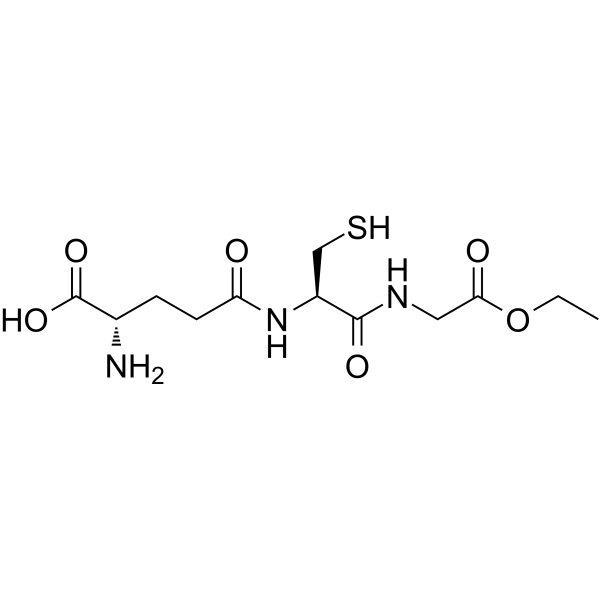
Glutathione ethyl ester is a cell-permeable GSH donor and provides an efficient supply of GSH to the oocyte. Glutathione ethyl ester shows positive effect on the in vitro production of embryos by enhancement of the antioxidative defense [1].
loading...
    loading...
1
1 Cited Publications
Cat. No.: HY-A0248A
CAS No.: 4135-11-9
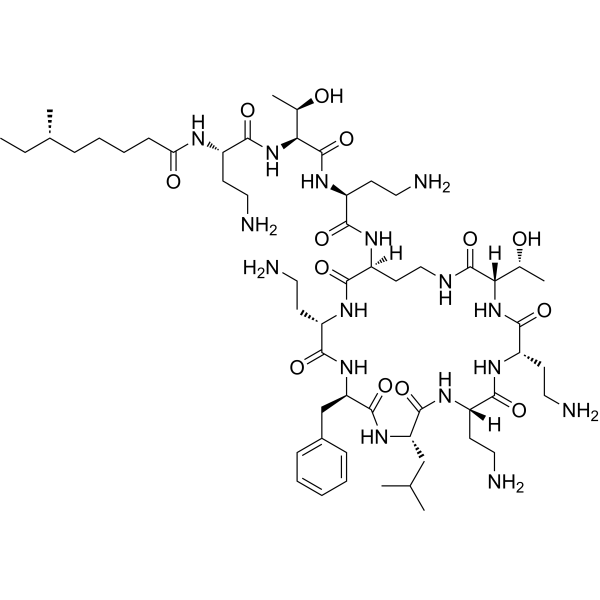
Polymyxin B1 is a potent antimicrobial lipopeptide first derived from Bacilus polymyxa. Polymyxin B1 is the major component in Polymyxin B (HY-A0248). Polymyxin B1 can induce lysis of bacterial cells through interaction with their membranes. Polymyxin B1 has the potential for multidrug-resistant Gram-negative bacterial infections treatment [1] .
loading...
    loading...
1
1 Cited Publications
Cat. No.: HY-P2231
CAS No.: 1686108-82-6
Synonyms: MEDI0382
Target:  

GCGR

Research Areas:  

Metabolic Disease

Cotadutide (MEDI0382) is a potent dual agonist of glucagon-like peptide-1 (GLP-1) and GCGR with EC50 values of 6.9 pM and 10.2 pM, respectively. Cotadutide exhibits ability to facilitate both weight loss and glycaemic control, and alleviate fibrosis. Cotadutide can be used in the research of obesity and type 2 diabetes (T2D) [1] .
loading...
    loading...
1
1 Cited Publications
Cat. No.: HY-P2231A
Synonyms: MEDI0382 acetate
Target:  

GCGR

Research Areas:  

Metabolic Disease

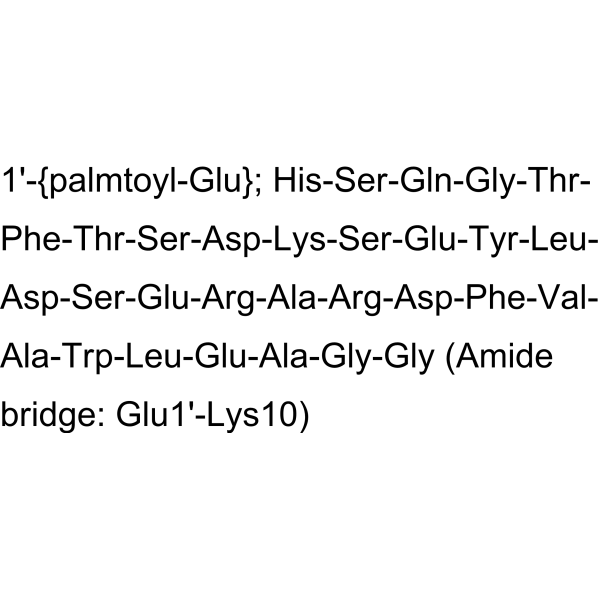
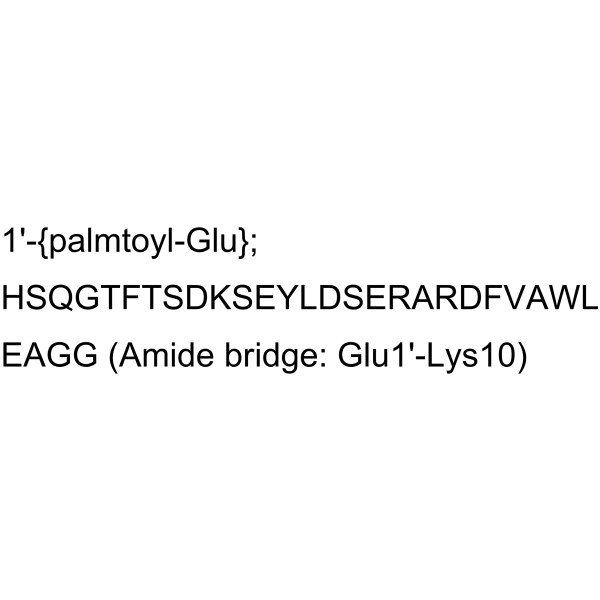
Cotadutide (MEDI0382) acetate is a potent dual agonist of glucagon-like peptide-1 (GLP-1) and GCGR with EC50 values of 6.9 pM and 10.2 pM, respectively. Cotadutide acetate exhibits ability to facilitate both weight loss and glycaemic control, and alleviate fibrosis. Cotadutide acetate can be used in the research of obesity and type 2 diabetes (T2D) [1] .
loading...
    loading...
1
1 Cited Publications
Cat. No.: HY-105055
CAS No.: 77327-05-0
Purity:  99.95%
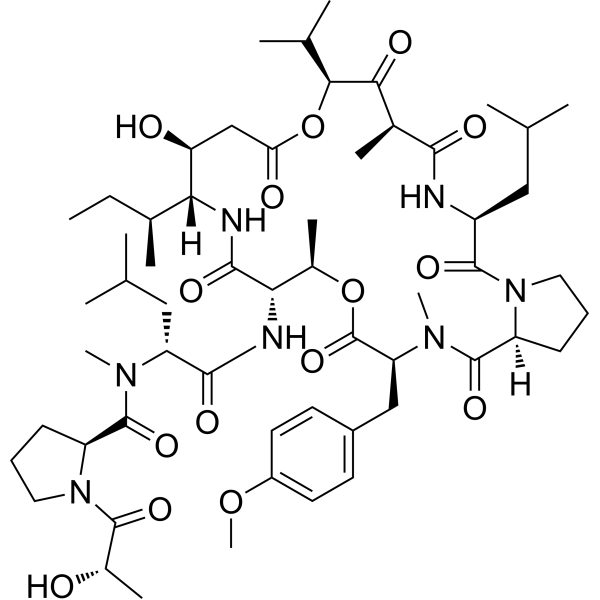
Didemnin B is a depsipeptide extracted from the marine tunicate Trididemnin cyanophorum. Didemnin B can be used for the research of cancer [1].
loading...
    loading...
1
1 Cited Publications
Cat. No.: HY-P1108
CAS No.: 681260-70-8
Target:  

CRFR

Astressin 2B is a blood-brain barrier-impermeable, highly selective CRFR2 antagonist (rCRFR2, IC50=0.57 nM). Astressin 2B blocks the protective effects mediated by CRFR2, thereby exacerbating indomethacin (HY-14397)-induced hemorrhagic intestinal injury in rats. Astressin 2B reverses the protective effects of Urocortin 1 against intestinal hypermotility, bacterial invasion and upregulation of inflammatory mediators. Astressin 2B also blocks the anxiogenic effect of Urocortin 2 and attenuates stress-induced anxiety-related behaviors. In the Clostridioides difficile toxin A (C. difficile toxin A)-mediated enteritis model, Astressin 2B mimics the phenotype of CRFR2-deficient mice, significantly exacerbating intestinal epithelial damage, edema, neutrophil migration and the expression of multiple proinflammatory cytokines. Astressin 2B is an important tool molecule for investigating the intestinal protective mechanisms of CRFR2 [1] .
loading...
    loading...
1
1 Cited Publications
Cat. No.: HY-P1108A
Target:  

CRFR

Astressin 2B TFA is a blood-brain barrier-impermeable, highly selective CRFR2 antagonist (rCRFR2, IC50=0.57 nM). Astressin 2B TFA blocks the protective effects mediated by CRFR2, thereby exacerbating indomethacin (HY-14397)-induced hemorrhagic intestinal injury in rats. Astressin 2B TFA reverses the protective effects of Urocortin 1 against intestinal hypermotility, bacterial invasion and upregulation of inflammatory mediators. Astressin 2B TFA also blocks the anxiogenic effect of Urocortin 2 and attenuates stress-induced anxiety-related behaviors. In the Clostridioides difficile toxin A (C. difficile toxin A)-mediated enteritis model, Astressin 2B TFA mimics the phenotype of CRFR2-deficient mice, significantly exacerbating intestinal epithelial damage, edema, neutrophil migration and the expression of multiple proinflammatory cytokines. Astressin 2B TFA is an important tool molecule for investigating the intestinal protective mechanisms of CRFR2 [1] .
loading...
    loading...
1
1 Cited Publications
Cat. No.: HY-P3291
CAS No.: 2296814-85-0
Synonyms: ZP7570
Target:  

GCGR

Research Areas:  

Metabolic Disease

Dapiglutide (ZP7570) is a long-acting glucagon-like peptide-1 receptor 1R (GLP-1R)/Glucagon-like peptide-2 receptor (GLP-2R) dual agonist. Dapiglutide alleviates intestinal dysfunction in a mouse short bowel model and has anti-obesity effects [1] .
loading...
    loading...
1
1 Cited Publications
Cat. No.: HY-P10218
CAS No.: 479482-23-0
Target:  

MARCKS PKC

Research Areas:  

Inflammation/Immunology Cancer

MANS peptide is an inhibitor for myristoylated alanine-rich C kinase substrate (MARCKS), which competes with MARCKS in cells for membrane binding, and thus inhibits the stimulation of mucin secretion and tumor metastasis [1].
loading...
    loading...
1
1 Cited Publications
Cat. No.: HY-P10218A
Target:  

MARCKS PKC

Research Areas:  

Inflammation/Immunology Cancer

MANS peptide TFA is the TFA salt form of MANS peptide (HY-P10218). MANS peptide TFA is an inhibitor for myristoylated alanine-rich C kinase substrate (MARCKS), which competes with MARCKS in cells for membrane binding, and thus inhibits the stimulation of mucin secretion and tumor metastasis [1].
loading...
    loading...
1
1 Cited Publications
Cat. No.: HY-P10869
dCNP binds to NPR-B/C receptor, activates cGMP signaling pathway, and regulates vascular function. dCNP exhibits anti-hypoxia property through downregulation of hypoxia-related genes expressions like HIF1α and HIF2α. dCNP inhibits the induction of tumor stroma and exhibits anti-fibrosis activity. dCNP upregulates CTLs, NK cells, and conventional type 1 dendritic cells in tumors, and activates immune responses [1].
loading...
    loading...
Cat. No.: HY-P10272
CAS No.: 1628323-80-7
Synonyms: PTG-300
Target:  

Ferroportin

Research Areas:  

Others

Rusfertide is a peptide mimetic of natural hepcidin, which targets and degrades ferroportin, reduces serum iron and transferrin-saturation, and thus regulates the production of red blood cells. Rusfertide ameliorates the polycythemia vera, β-thalassemia and hereditary hemochromatosis [1] .
loading...
    loading...
Cat. No.: HY-P4070
CAS No.: 1188379-43-2
Target:  

Insulin Receptor

Research Areas:  

Metabolic Disease

Insulin icodec is an Insulin (HY-P0035) analog that strongly but reversibly binds to albumin. Insulin icodec has long plasma half-life. Insulin icodec modulates insulin receptor activity, controls blood glucose levels, reduces HbA1c levels, and binds reversibly to human serum albumin. Insulin icodec can be used for the research of type 2 diabetes mellitus [1] .
loading...
    loading...
Cat. No.: HY-P5362
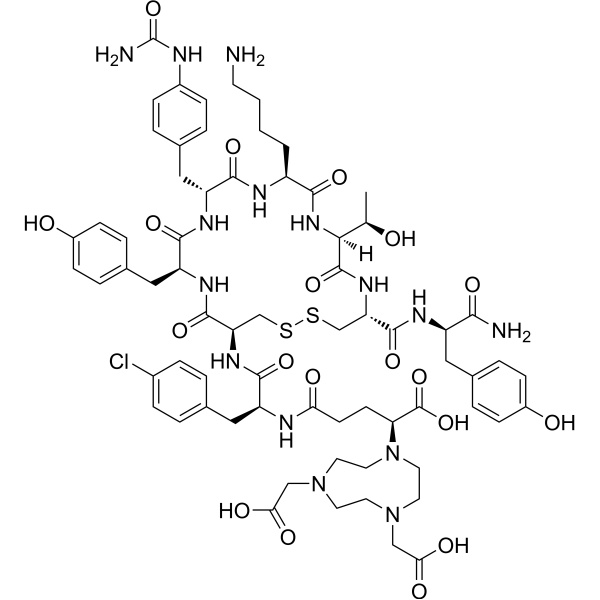
NODAGA-LM3 is a ligand that can cross the blood-brain barrier and targets somatostatin receptor SSTR2 with high affinity (IC50 = 1.3 nM). NODAGA-LM3 does not trigger the internalization of SSTR2 and can inhibit agonist-induced internalization processes. NODAGA-LM3 shows low uptake in normal tissues such as the liver and spleen, but high uptake in the lungs and blood pool. 68Ga-labeled NODAGA-LM3 can serve as a PET imaging agent for well-differentiated neuroendocrine tumors, and is applied in studies related to small cell lung cancer and well-differentiated neuroendocrine tumors [1] .
loading...
    loading...

