



5403 Results for "

Multivariate statistical analysis

" in MedChemExpress (MCE) Product Catalog:
Products (5403)

5403 Results for "Multivariate statistical analysis" in MCE Product Catalog:

160
160 Publications Verification
Art. -Nr.: HY-D0815
CAS. Nr.: 25535-16-4
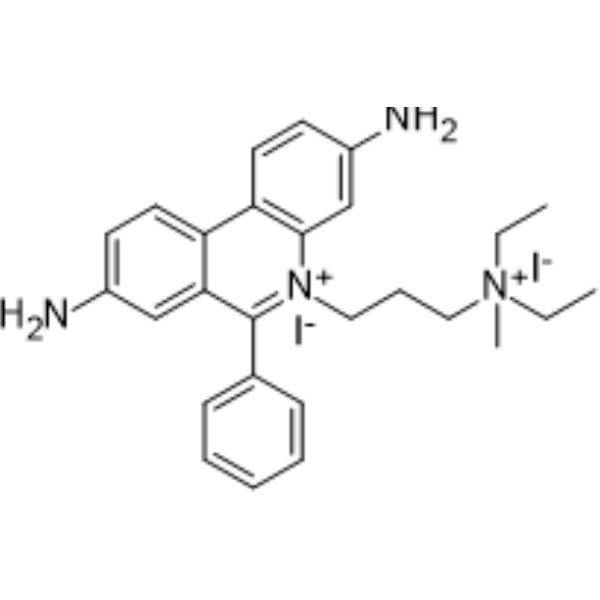
Propidium Iodide (PI) is a nuclear staining agent that stains DNA. Propidium Iodide is an analogue of ethidine bromide that emits red fluorescence upon embedding in double-stranded DNA. Propidium Iodide cannot pass through living cell membranes, but it can pass through damaged cell membranes to stain the nucleus. Propidium Iodide has a fluorescence wavelength of 493/617 nm and a wavelength of 536/635 nm after Mosaic with DNA. Propidium Iodide is commonly used in the detection of apoptosis (apoptosis) or necrosis (necrosis), and is often used in flow cytometry analysis.
loading...
    loading...
76
76 Cited Publications
Art. -Nr.: HY-13318A
CAS. Nr.: 1415963-60-8
Reinheit:  94.33%
Synonyms: GS 4071 hydrochloride; Ro 64-0802 hydrochloride; Oseltamivir carboxylate hydrochloride
Target:  

Drug Metabolite

Forschungsgebiete:  

Infection

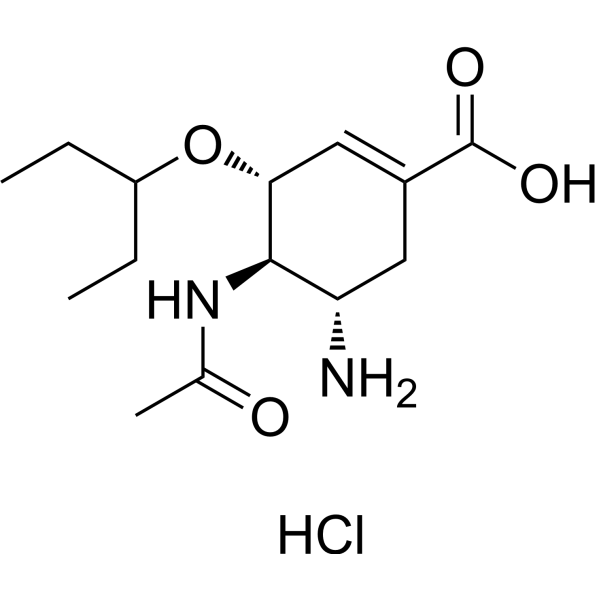
Oseltamivir acid hydrochloride is an active metabolite of the antiviral agent Oseltamivir (HY-13317) ethylester. Oseltamivir acid hydrochloride belongs to baseline toxicants in toxicity ratio analysis .
loading...
    loading...
30
30 Cited Publications
Art. -Nr.: HY-K1071

MCE Cell Cycle and Apoptosis Analysis Kit (PI staining) provides a convenient method to detect cell cycle and cell apoptosis.


loading...
    loading...
17
17 Cited Publications
Art. -Nr.: HY-W728531
CAS. Nr.: 1213701-11-1
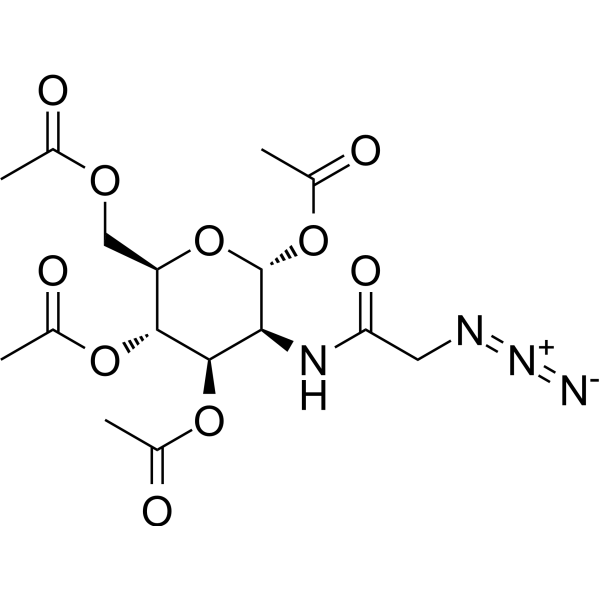
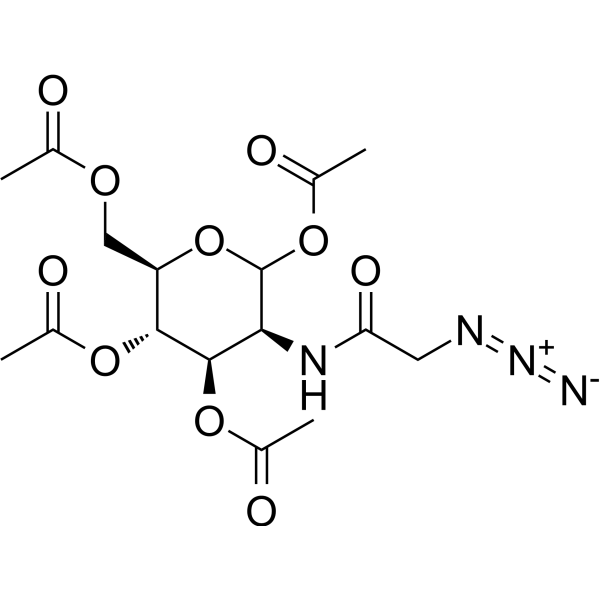
Ac4ManNAz can be taken up by cells and is an azide-containing metabolic glycoprotein labeling reagent that selectively modifies proteins. Commonly used for cell labeling, tracking and proteomic analysis. Ac4ManNAz contains an Azide group and can undergo copper-catalyzed azide-alkyne cycloaddition reaction (CuAAc) with molecules containing Alkyne groups. Ac4ManNAz can also undergo strain-promoted alkyne-azide cycloaddition (SPAAC) with molecules containing DBCO or BCN groups.
loading...
    loading...
9
9 Cited Publications
Art. -Nr.: HY-153006
CAS. Nr.: 106070-31-9
Reinheit:  99.14%
Synonyms: DCFH2
Forschungsgebiete:  

Others

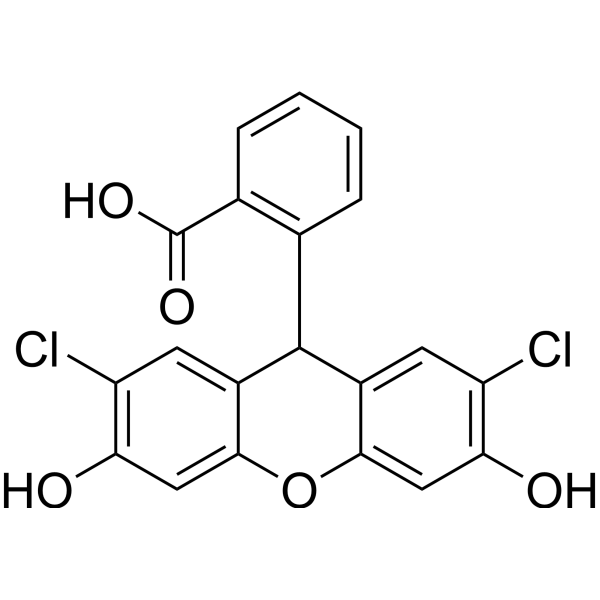
2,7-Dichlorodihydrofluorescein (DCFH2) is a non-fluorescent reactive oxygen species (ROS) probe with an excitation wavelength of 485-500 nm and an emission wavelength of 515-530 nm. 2,7-Dichlorodihydrofluorescein is first hydrolyzed by intracellular esterases and then oxidized by ROS to generate non-biomembrane-permeable, highly fluorescent 2,7-dichlorofluorescein (DCF). The fluorescence intensity of DCF is positively correlated with the ROS concentration. 2,7-Dichlorodihydrofluorescein can undergo oxidation reactions with a variety of ROS (such as ·OH, H2O2, ONOO -, etc.) and is used to quantitatively detect the level of oxidative stress inside and outside cells. It is suitable for oxidative stress analysis in in vitro cell models and in vivo targeted delivery (such as liver-targeted liposomes) .
loading...
    loading...
8
8 Cited Publications
Art. -Nr.: HY-P99977

Target:  

Inhibitory Antibodies

Forschungsgebiete:  

Inflammation/Immunology

Mouse IgG1 kappa, Isotype Control is a negative control reagent/isotype control for mouse-derived IgG1κ antibodies. Mouse IgG1 kappa, Isotype Control, by maintaining the same immunoglobulin structure (including isotype, light chain, etc.) as the specific mouse IgG1κ subtype primary antibody, eliminates false positive signals caused by non-specific binding in immunological experiments, thus playing a core role in verifying the specificity of the experiment. Mouse IgG1 kappa, Isotype Control can be applied to immunolocalization experiments in the field of cell biology, such as immunofluorescence staining and immunohistochemistry, assisting in research on protein subcellular localization and cell structure analysis, ensuring the reliability of experimental results .
loading...
    loading...
7
7 Cited Publications
Art. -Nr.: HY-W011793
CAS. Nr.: 13957-31-8
Forschungsgebiete:  

Others

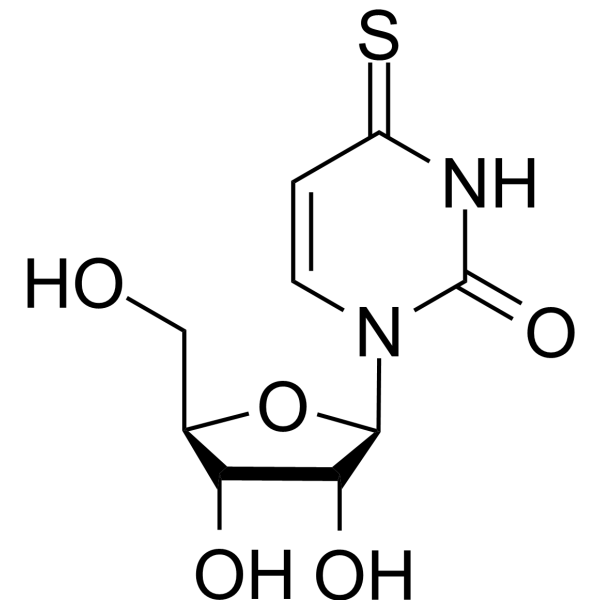
4-Thiouridine is a ribonucleoside analog, it is widely used in RNA analysis and (m)RNA labeling. 4-Thiouridine inhibits rRNA synthesis and causes a nucleolar stress response .
loading...
    loading...
7
7 Cited Publications
Art. -Nr.: HY-153118
CAS. Nr.: 73049-39-5
Synonyms: ctDNA sodium, Type I, fibers; DNA sodium, from calf thymus, Type I, fibers; Thymonucleic acid sodium, Type I, fibers
Forschungsgebiete:  

Others Cancer

Deoxyribonucleic acid sodium, from calf thymus, Type I, fibers is the sodium salts form of Calf thymus DNA (HY-109517). Calf thymus DNA is a double-stranded template DNA isolated from calf thymus. It can be used to study the interaction between DNA and DNA binding agents, as well as the structure and function of DNA, for DNA quantification and used as a substrate for DNA polymerase analysis, etc​ .
loading...
    loading...
7
7 Cited Publications
Art. -Nr.: HY-118297
CAS. Nr.: 361154-30-5
Reinheit:  99.74%
Forschungsgebiete:  

Metabolic Disease

Ac4ManNAz is an azido-containing metabolic glycoprotein labeling reagent. Ac4ManNAz can be used to selectively modify proteins. Ac4ManNAz can be used in cell labeling, tracking and proteomic analysis . Ac4ManNAz is a click chemistry reagent, it contains an Azide group and can undergo copper-catalyzed azide-alkyne cycloaddition reaction (CuAAc) with molecules containing Alkyne groups. It can also undergo strain-promoted alkyne-azide cycloaddition (SPAAC) reactions with molecules containing DBCO or BCN groups.
loading...
    loading...
6
6 Cited Publications
Art. -Nr.: HY-117695
CAS. Nr.: 148757-94-2
Reinheit:  ≥95.0%
Synonyms: 6-Aminoquinolyl-N-hydroxysccinimidyl carbamate
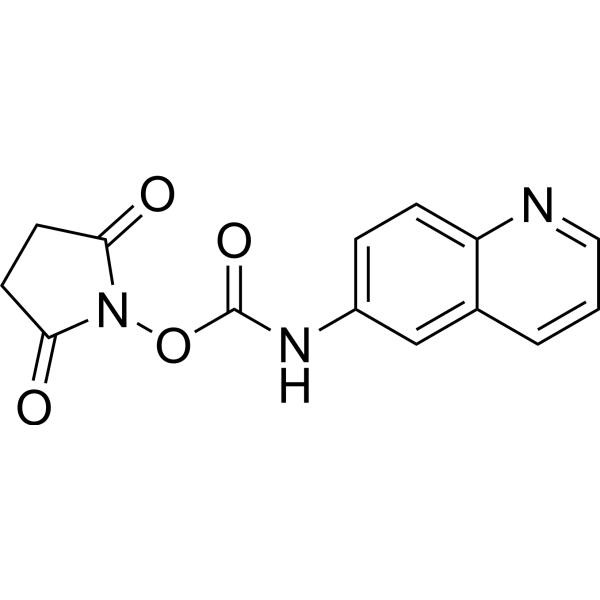
AQC (6-Aminoquinolyl-N-hydroxysccinimidyl carbamate) is a reagent used for amino acid or protein sequence analysis by HPLC with fluorescence detection. AQC reacts with primary and secondary amino acids to yield fluorescent derivates, allowing amino acid detection at under-picomolar levels .
loading...
    loading...
5
5 Cited Publications
Art. -Nr.: HY-D1191
CAS. Nr.: 2225748-05-8
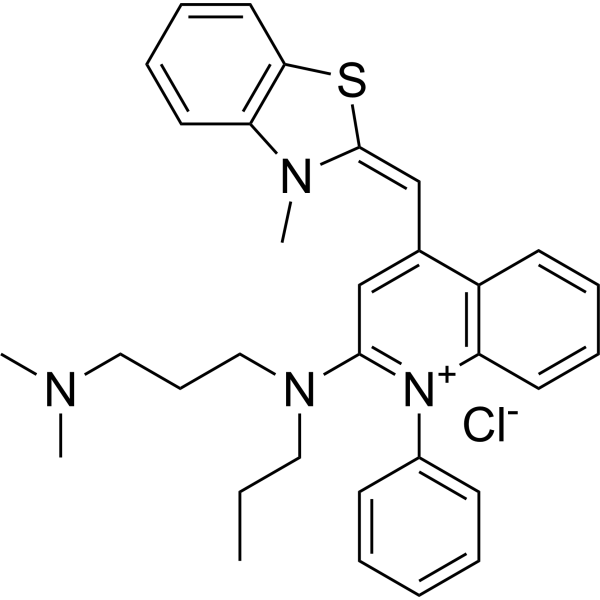
SYBR Green I chloride is a highly sensitive fluorescent nucleic acid dye that binds specifically to the minor groove of double-stranded DNA or intercalates between base pairs. SYBR Green I chloride exhibits weak fluorescence in the unbound state but emits bright fluorescence upon binding, and it preferentially binds to large-fragment DNA and DNA with high G+C content. SYBR Green I chloride is suitable for real-time PCR technology; its fluorescence intensity correlates with the amount and size of amplification products, enabling accurate quantification of gene expression and discrimination of amplicons via melting curve analysis without additional post-processing. SYBR Green I chloride is widely used in preclinical in vitro nucleic acid detection .
loading...
    loading...
4
4 Cited Publications
Art. -Nr.: HY-D0913
CAS. Nr.: 73043-80-8
Synonyms: 1M7
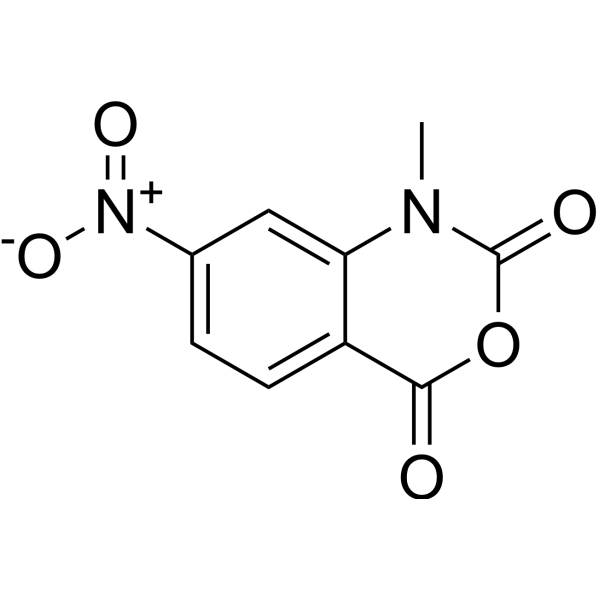
1-Methyl-7-nitroisatoic anhydride (1M7) is a reagent that detects local nucleotide flexibility, for probing 2'-hydroxyl reactivity, can be used for RNA structure analysis .
loading...
    loading...
4
4 Cited Publications
Art. -Nr.: HY-D0971
CAS. Nr.: 92-32-0
Synonyms: Pyronine G; C.I. 45005
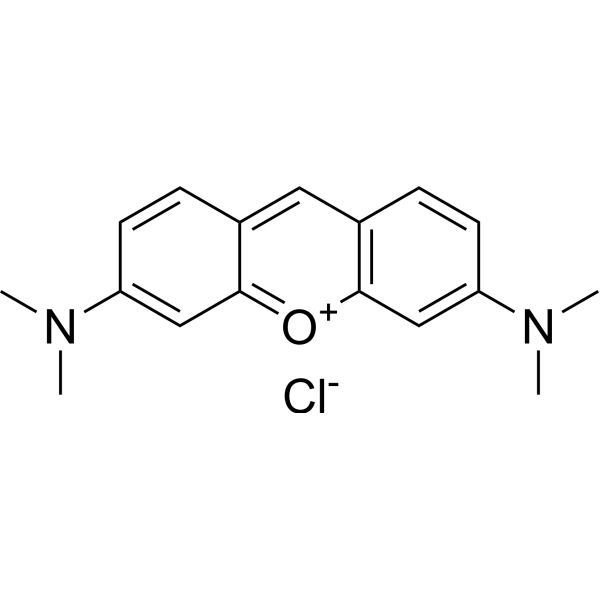
Pyronin Y (Pyronine G) is a cationic dye that intercalates RNA and has been used to target cell structures including RNA, DNA and organelles. Pyronin Y forms fluorescent complexes with double-stranded nucleic acids (especially RNA) enabling semi-quantitative analysis of cellular RNA. Pyronin Y can be used to identify specific RNA subspecies of ribonuclear proteins complexes in live cells .
loading...
    loading...
3
3 Cited Publications
Art. -Nr.: HY-W093399
CAS. Nr.: 1066-33-7
Ammonium bicarbonate,AR,99% is an analytical reagent-grade ammonium bicarbonate. Ammonium bicarbonate has antifungal activity. Ammonium bicarbonate is widely used in laboratory analysis, food processing, agricultural fertilization and other fields .
loading...
    loading...
3
3 Cited Publications
Art. -Nr.: HY-15985
CAS. Nr.: 1439934-41-4
Target:  

Akt

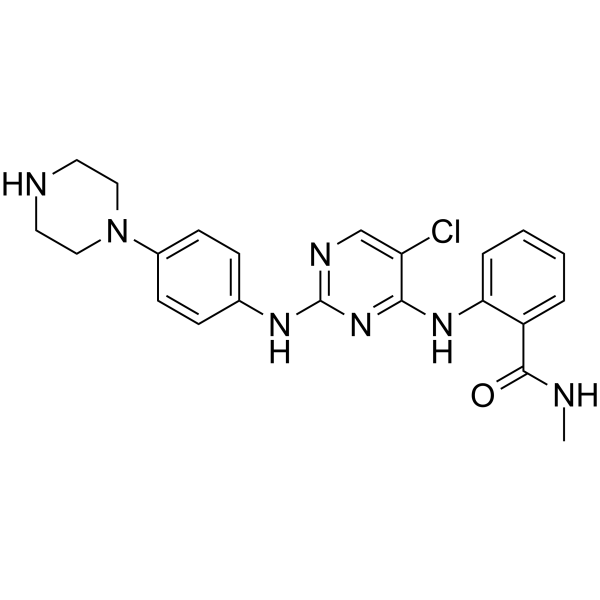
CTX-0294885 is a broad spectrum kinase inhibitor that can capture 235 kinases from MDA-MB-231 cells, and can capture all members of the AKT family. CTX-0294885 is a powerful reagent for analysis of kinome signaling networks that can be used for the research of diseases like inflammation, diabetes, and cancer .
loading...
    loading...
3
3 Cited Publications
Art. -Nr.: HY-15985A
CAS. Nr.: 2319590-02-6
Target:  

Akt

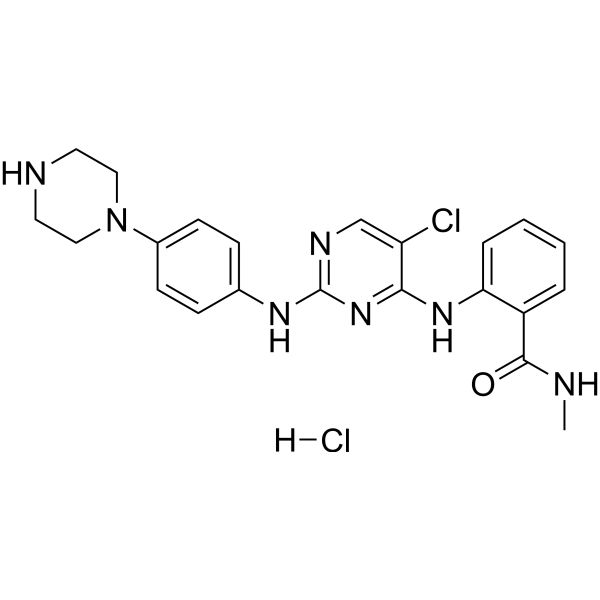
CTX-0294885 hydrochloride is a broad spectrum kinase inhibitor that can capture 235 kinases from MDA-MB-231 cells, and can capture all members of the AKT family. CTX-0294885 hydrochloride is a powerful reagent for analysis of kinome signaling networks that can be used for the research of diseases like inflammation, diabetes, and cancer .
loading...
    loading...
3
3 Cited Publications
Art. -Nr.: HY-125913
CAS. Nr.: 618-39-3
Target:  

Ser/Thr Protease

Forschungsgebiete:  

Inflammation/Immunology

Benzamidine is a competitive protease inhibitor that blocks the hydrolytic cleavage of glucagon by plasmin, trypsin and thrombin. Benzamidine effectively inhibits the degradation of glucagon by relevant proteases during the collection, storage and analysis of human plasma and blood samples. During in vivo metabolism, Benzamidine undergoes N-hydroxylation and produces multiple metabolites, exhibiting characteristics of delayed excretion or biphasic elimination. Benzamidine only induces slight single-strand DNA breaks at high concentrations and shows no significant genotoxic potential overall. Benzamidine may interfere with the detection of some glucagon antisera, but does not affect key antigen-antibody affinity at specific concentrations. Benzamidine can be used as a stabilizer in glucagon radioimmunoassays to ensure the accuracy and recovery rate of detection results .
loading...
    loading...
3
3 Cited Publications
Art. -Nr.: HY-W018781
CAS. Nr.: 1670-14-0
Target:  

Ser/Thr Protease

Forschungsgebiete:  

Cancer

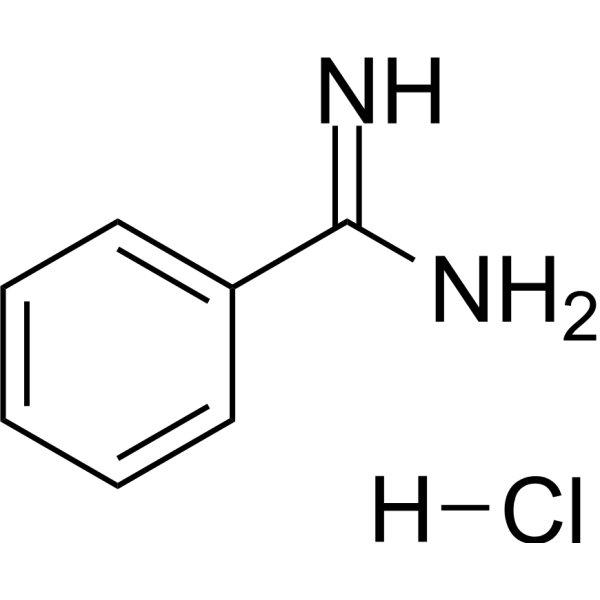
Benzamidine hydrochloride is a competitive protease inhibitor that blocks the hydrolytic cleavage of glucagon by plasmin, trypsin and thrombin. Benzamidine hydrochloride effectively inhibits the degradation of glucagon by relevant proteases during the collection, storage and analysis of human plasma and blood samples. During in vivo metabolism, Benzamidine hydrochloride undergoes N-hydroxylation and produces multiple metabolites, exhibiting characteristics of delayed excretion or biphasic elimination. Benzamidine hydrochloride only induces slight single-strand DNA breaks at high concentrations and shows no significant genotoxic potential overall. Benzamidine hydrochloride may interfere with the detection of some glucagon antisera, but does not affect key antigen-antibody affinity at specific concentrations. Benzamidine hydrochloride can be used as a stabilizer in glucagon radioimmunoassays to ensure the accuracy and recovery rate of detection results .
loading...
    loading...
3
3 Cited Publications
Art. -Nr.: HY-W087937
CAS. Nr.: 206752-36-5
Synonyms: Benzenecarboximidamide hydrochloride hydrate
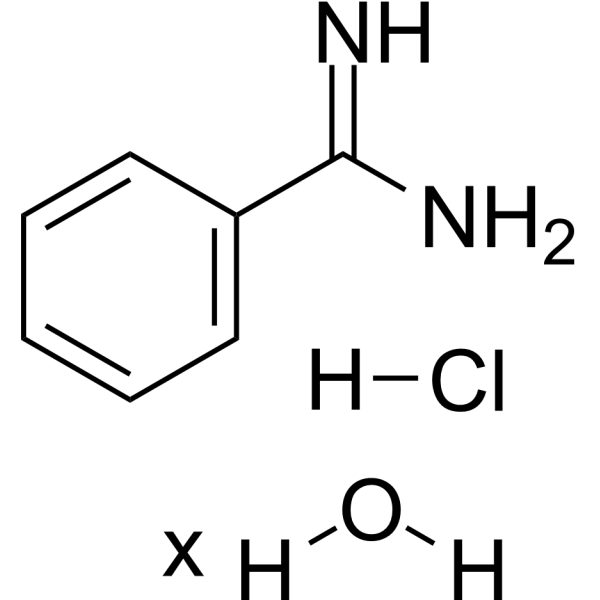
Benzamidine (Benzenecarboximidamide) hydrochloride hydrate is a competitive protease inhibitor that blocks the hydrolytic cleavage of glucagon by plasmin, trypsin and thrombin. Benzamidine hydrochloride hydrate effectively inhibits the degradation of glucagon by relevant proteases during the collection, storage and analysis of human plasma and blood samples. During in vivo metabolism, Benzamidine hydrochloride hydrate undergoes N-hydroxylation and produces multiple metabolites, exhibiting characteristics of delayed excretion or biphasic elimination. Benzamidine hydrochloride hydrate only induces slight single-strand DNA breaks at high concentrations and shows no significant genotoxic potential overall. Benzamidine hydrochloride hydrate may interfere with the detection of some glucagon antisera, but does not affect key antigen-antibody affinity at specific concentrations. Benzamidine hydrochloride hydrate can be used as a stabilizer in glucagon radioimmunoassays to ensure the accuracy and recovery rate of detection results .
loading...
    loading...
2
2 Cited Publications
Art. -Nr.: HY-K1062

MCE Exosome Isolation and Purification Kit provides a simple and effective method to isolate and purify intact exosomes from cell culture media that can be used for electron microscope analysis, NTA analysis, WB, qPCR, etc.


loading...
    loading...

