
1. Search Result
Search Result
Results for "

Nucleic acid staining

" in MedChemExpress (MCE) Product Catalog:

16

Inhibitors & Agonists

11

Fluorescent Dyes

2

MCE Kits

1

Isotope-Labeled Compounds

Cat. No. Product Name Target Research Areas Chemical Structure
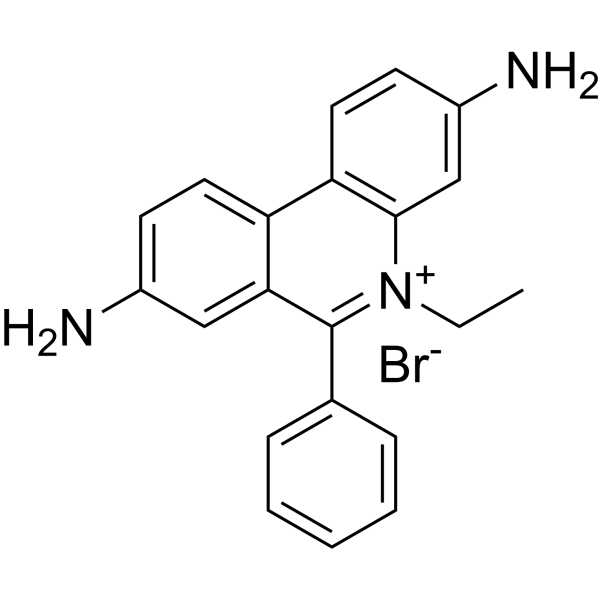
  • HY-D0021
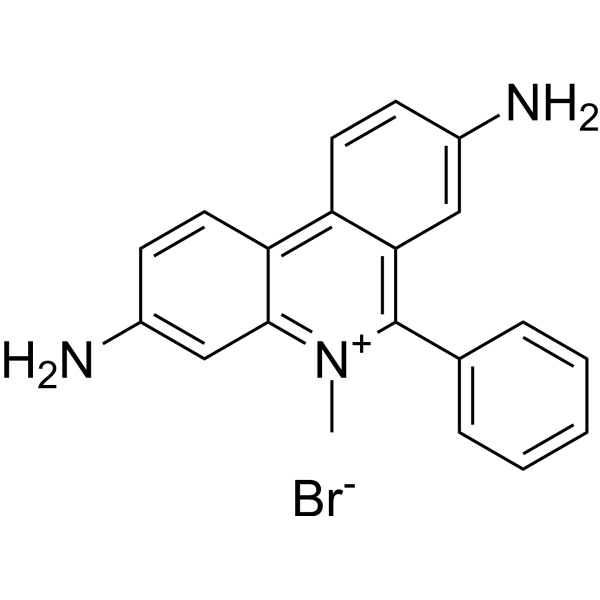
    EthD bromide
    Maximum Cited Publications
    26 Publications Verification

    EtBr; Homidium bromide

    DNA Stain Others
    EthD bromide is an intercalating agent commonly used as a fluorescent tag (nucleic acid stain) in molecular biology laboratories for techniques such as agarose gel electrophoresis.
    EthD bromide
  • HY-13735
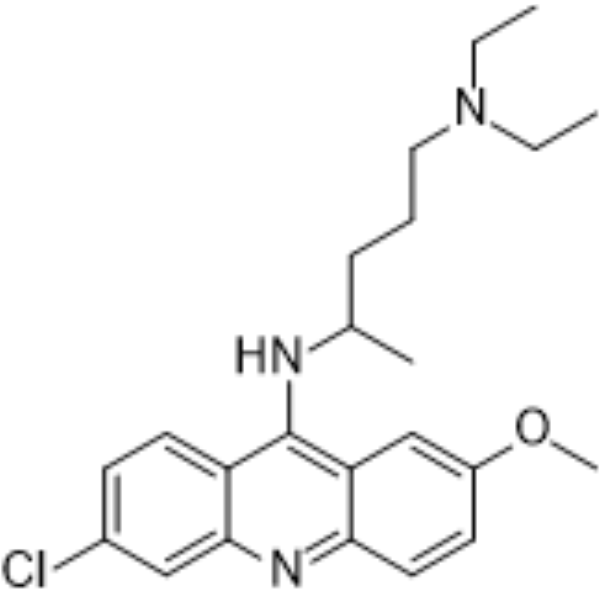
    Quinacrine
    5+ Cited Publications

    Acriquine

    Parasite Sodium Channel DNA Stain Apoptosis Aldehyde Oxidase (AO) Infection Neurological Disease Cancer
    Quinacrine (Acriquine) is an antimalarial and anti-cancer agent. Quinacrine also inhibits human aldehyde oxidase (IC50: 3.3 μM). Quinacrine has affinity for nucleic acids, and stains DNA and RNA in fixed cells (Ex/Em: 436/525 nm) .
    Quinacrine
  • HY-D0150
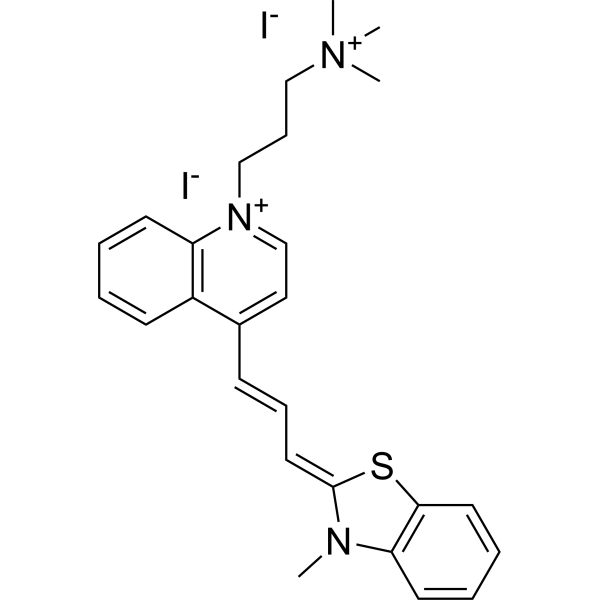
    Thiazole Orange
    1 Publications Verification

    Fluorescent Dye Others
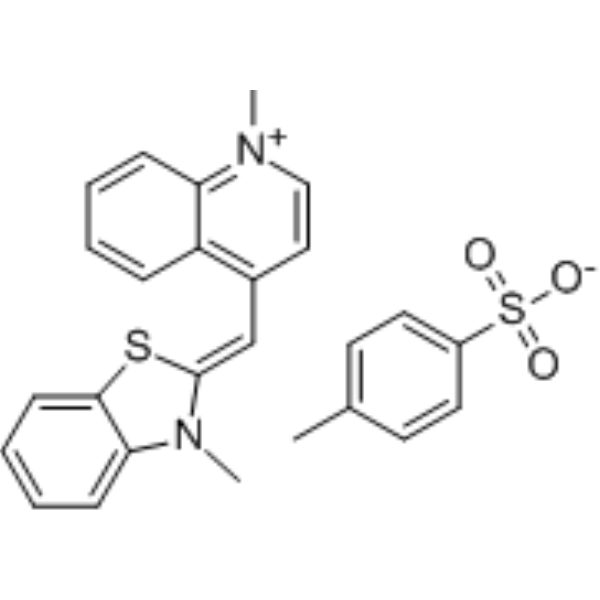
    Thiazole Orange is an asymmetric anthocyanin dye that can be coupled with oligonucleotides (ONs) to prepare fluorescent hybridization probes. Thiazole Orange has been widely used in biomolecular detection and staining of DNA/ RNA in gels and can be used for reticulocyte analysis. Thiazole orange generates a significant fluorescence enhancement and high quantum yield when it binds with nucleic acids, especially RNA. Thiazole orange can permeate living cell membranes. Thiazole orange can use UV light for detection, but can also be detected with blue light. The excitation and emission of Thiazole orange are λex = 510 nm (488 nm and 470 nm also show strong excitation) and λem = 527 nm, respectively .
    Thiazole Orange
  • HY-D0093
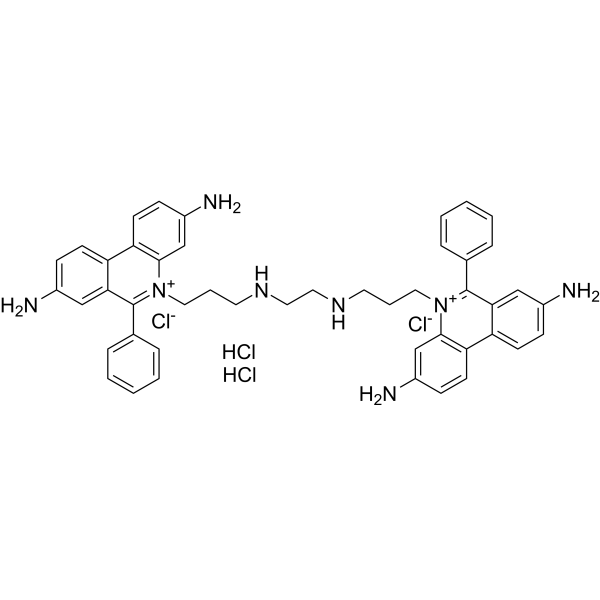
    Ethidium homodimer
    4 Publications Verification

    EthD-1

    DNA Stain Others
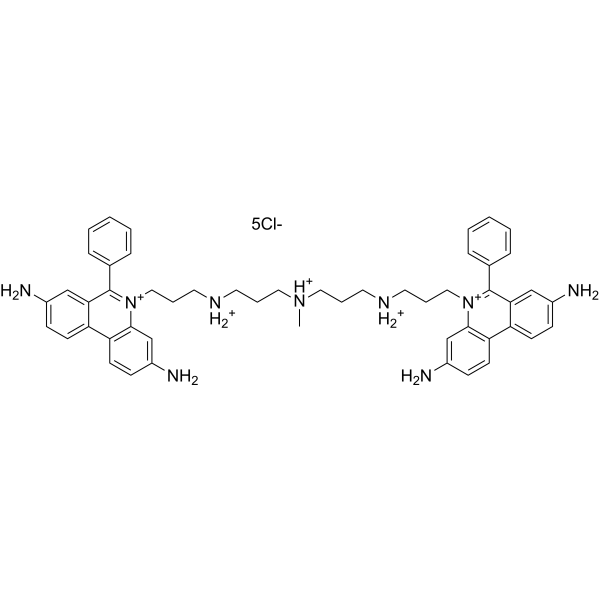
    Ethidium homodimer (EthD-1) is a high-affinity fluorescent nucleic acid dye commonly used to stain mammals, bacteria, yeast, and fungi. Ethidium homodimer binds to DNA or RNA, enhancing fluorescence more than 30 times. The Ethidium homodimer has a strong positive charge, so it cannot cross cell membranes and stain living cells; But the Ethidium homodimer can cross the disordered region of the dead cell membrane to reach the nucleus and embed the DNA double strand to produce red fluorescence. Therefore, Ethidium homodimer is a relatively sensitive nucleic acid stain that can accurately detect nucleic acids in solution or in decomposing cells. Ethidium homodimer binds DNA, Ex/Em=528/617 nm .
    Ethidium homodimer
  • HY-D0996

    DNA Stain Others
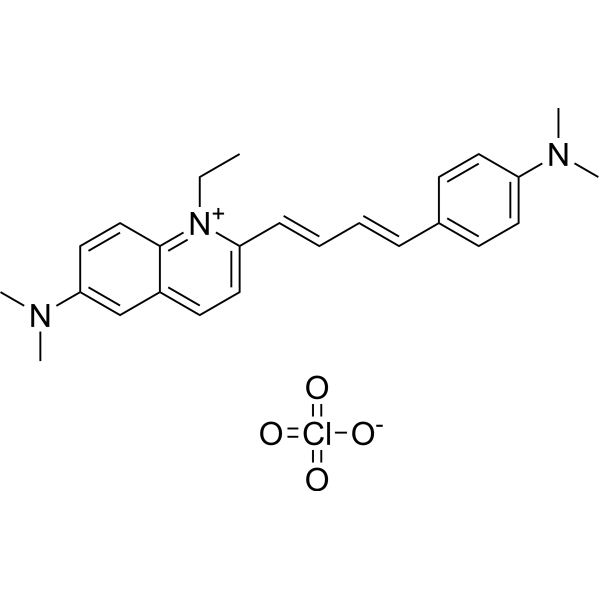
    Lds-751 is a nucleic acid stain that mainly detects DNA. Lds-751 is a nucleic acid stain that mainly detects DNA. Lds-751 has a high affinity for DNA and fluorescence is enhanced after binding, but the maximum emission wavelength is 670nm. Lds-751 and Thiazole orange can be used for the differentiation of red blood cells, platelets, reticulocytes, and nucleated cells and can be stimulated at 488nm. Studies have shown that LDS-751 binds almost exclusively to mitochondria when incubated with nucleated living cells. After nucleated Acridine Orange (HY-101879) staining and LDS-751 treatment of cells, confocal microscopy revealed almost no co-location of the cells. Staining with Rhodamine 123 (HY-D0816), a dye known to bind polarized mitochondria, was almost identical to the pattern observed with LDS-751 .
    LDS-751
  • HY-DY1050

    DNA Stain Others
    Ethidium bromide (solution) is an intercalating agent commonly used as a fluorescent tag (nucleic acid stain) in molecular biology laboratories for techniques such as agarose gel electrophoresis.
    Solvent and Concentration: Sterile water: 10 mg/Ml
    Ethidium bromide (solution)
  • HY-W088068

    Fluorescent Dye Others
    Wright's stain is a composite cell stain that mainly binds to intracellular nucleic acids, proteins and other components through thiazine dyes (such as methylene blue) and eosin. Wright's stain is pH-dependent (optimal pH 6.4-6.7) and achieves cell morphology resolution by differentially staining the cytoplasm and nucleus. Under alkaline conditions, thiazine dyes bind to nucleic acids to form purple, and acidic eosin binds to cytoplasmic proteins to form red, which can form contrasting cell morphological features. Wright's stain can clearly display the fine structures of blood cells and bone marrow cells (such as nuclear chromatin and granules) and quickly evaluate cell morphological abnormalities .
    Wright's stain
  • HY-117070

    Fluorescent Dye Others
    TO-PRO-3 iodide is a cell-impermeant nucleic acid stain. TO-PRO-3 iodide is useful as a nuclear counterstain and dead cell indicator (Ex/Em = 642/661 nm).
    TO-PRO-3 iodide
  • HY-W133919

    Environmental Pollutants Biochemical Assay Reagents Others
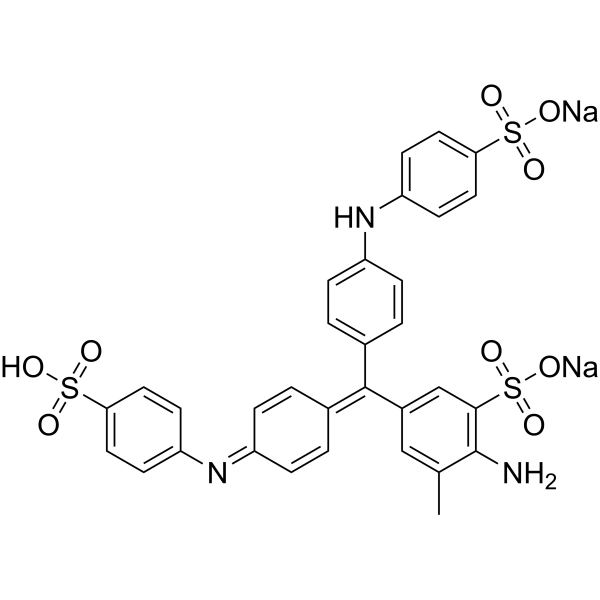
    Aniline Blue sodium is a water-soluble dye commonly used as a biological stain for the detection of nucleic acids and proteins in various laboratory procedures such as electrophoresis and microscopy. Aniline Blue sodium has unique chemical properties that allow it to bind to specific cellular components, producing a color change that facilitates their visualization and analysis.
    Aniline Blue sodium
  • HY-D1723
    EthD-III
    1 Publications Verification

    DNA Stain Others
    EthD-III is a nucleic acid probe. EthD-III is a red fluorescent stain that can be used to detect dead cells. EthD-III enters cells with damaged membranes and binds to nucleic acids, resulting in bright red fluorescence in dead cells (Ex/Em=530/645 nm) .
    EthD-III
  • HY-W250143

    Biochemical Assay Reagents Others
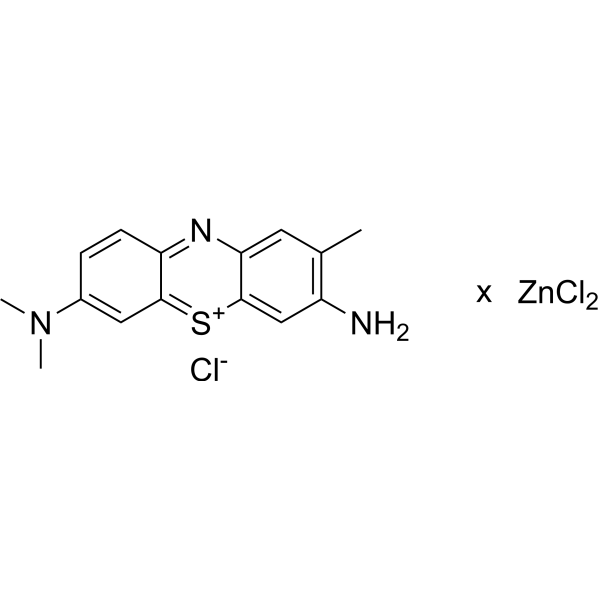
    Toluidine blue (ZnCl2) is a basic thiazine dye commonly used as a biological stain for microscopy. It has a deep bluish-purple color and is commonly used to stain nucleic acids such as DNA and RNA, as well as to stain mast cells, cartilage, and other connective tissues. Toluidine blue (ZnCl2) stains the acidic components of these tissues, such as sulfated or carboxylated mucopolysaccharides. It is frequently used in histology, cytology, and pathology applications to aid in the diagnosis of various diseases and conditions. The dye is usually applied to tissue sections prior to microscopic examination and can be differentiated using an acidic alcohol solution. Toluidine blue (ZnCl2) is a relatively simple and inexpensive stain with good reproducibility, making it a popular choice for many laboratories.
    Toluidine blue (ZnCl2)
  • HY-114227

    DNA Stain Inflammation/Immunology
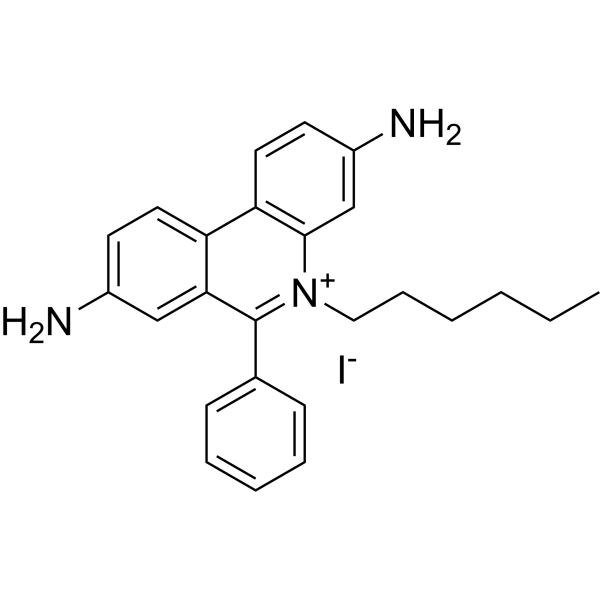
    Hexidium iodide, a fluorescent nucleic binding acid stain (excitation/emission ~ 518/600 nm), permeants to mammalian cells and selectively stains almost all gram-positive bacteria. Hexidium iodide can bind to the DNA of all bacteria after permeabilization by EDTA .
    Hexidium iodide
  • HY-13735R

    Acriquine (Standard)

    Parasite Sodium Channel DNA Stain Apoptosis Reference Standards Infection Neurological Disease Cancer
    Quinacrine (Standard) is the analytical standard of Quinacrine. This product is intended for research and analytical applications. Quinacrine (Acriquine) is an antimalarial and anti-cancer agent. Quinacrine also inhibits human aldehyde oxidase (IC50: 3.3 μM). Quinacrine has affinity for nucleic acids, and stains DNA and RNA in fixed cells (Ex/Em: 436/525 nm) .
    Quinacrine (Standard)
  • HY-D0021S

    EtBr-d5; Homidium-d5 bromide

    Isotope-Labeled Compounds DNA Stain Others
    EthD-d5 bromide is the deuterium labeled Ethidium bromide. EthD bromide is an intercalating agent commonly used as a fluorescent tag (nucleic acid stain) in molecular biology laboratories for techniques such as agarose gel electrophoresis.
    EthD-d5 bromide
  • HY-D3405

    Fluorescent Dye Others
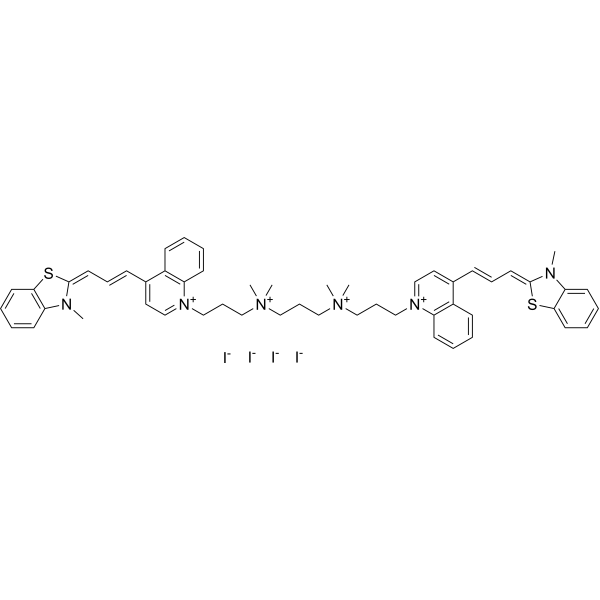
    BO-TAP-3 is an orange fluorescent carbocyanine monomer dye, and it is also a cell impermeable nucleic acid staining agent. When there is no nucleic acid present, BO-TAP-3 shows a non-fluorescent state. However, when it binds to double-stranded DNA, it exhibits multiple fluorescence enhancement effects. BO-TAP-3 can be used for cell nucleus and cytoplasm imaging, bacterial and sperm labeling, and can also be applied in nucleic acid detection and amplification research. It can also be used as a temperature sensor (Ex/Em = 564/600 nM).
    BO-TAP-3
  • HY-DY1097

    Fluorescent Dye Others
    Thiazole Orange (solution) is an asymmetric anthocyanin dye that can be coupled with oligonucleotides (ONs) to prepare fluorescent hybridization probes. Thiazole Orange has been widely used in biomolecular detection and staining of DNA/ RNA in gels and can be used for reticulocyte analysis. Thiazole orange generates a significant fluorescence enhancement and high quantum yield when it binds with nucleic acids, especially RNA. Thiazole orange can permeate living cell membranes. Thiazole orange can use UV light for detection, but can also be detected with blue light. The excitation and emission of Thiazole orange are λex = 510 nm (488 nm and 470 nm also show strong excitation) and λem = 527 nm, respectively .
    Solvent and concentration: DMSO: 10 mM
    The 1 mL volume is defined as the base specification. All larger sizes correspond to incremental volumes of this base.
    Thiazole Orange (solution)

Inquiry Online

Your information is safe with us. * Required Fields.

Salutation


Country or Region *

Applicant Name *


Organization Name *

Department *


Email Address *


Product Name *

Cat. No.


Requested quantity *

Phone Number *


Remarks

Inquiry Online

Inquiry Information

Product Name:
Cat. No.:
Quantity:
MCE Japan Authorized Agent:

