28 Results for "

PKD2

" in MedChemExpress (MCE) Product Catalog:
Products (28)

28 Results for "PKD2" in MCE Product Catalog:

  • Isoforms Recommended:
  • Targets Recommended:
31
31 Publications Verification
Cat. No.: HY-13687
CAS No.: 873225-46-8
Purity:  99.88%
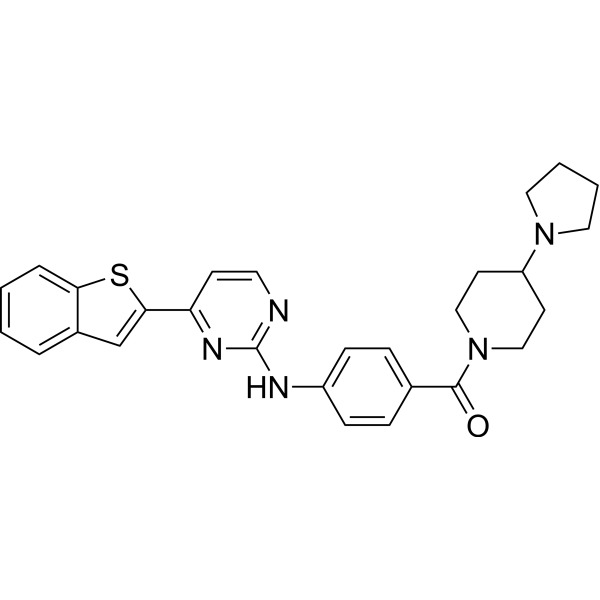
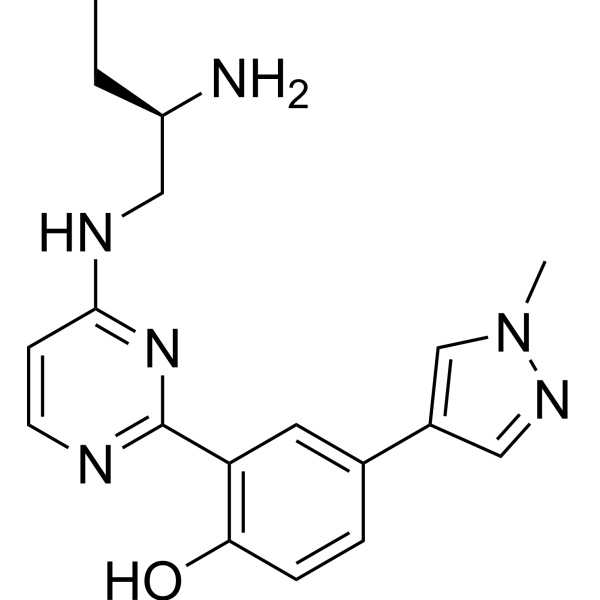
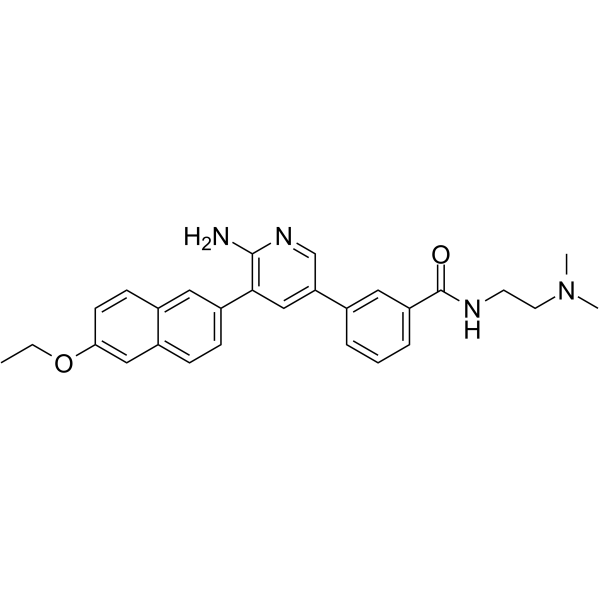
IKK 16 is an orally active IKK inhibitor. IKK 16 shows IC50s of 40 nM, 70 nM, 200 nM, and 50 nM for IKK2, IKK complex, IKK1, and LRRK 2, respectively. IKK 16 is also a pan-PKD inhibitor, inhibiting PKD1, PKD2, and PKD3 with IC50s of 153.9, 115, and 99.7 nM, respectively. IKK 16 is also an ABCB1 inhibitor, interfering with the binding of ABCB1 to its substrates. IKK 16 protects against LPS (HY-D1056)-induced multiple organ dysfunction by reducing the acute inflammatory response induced by endotoxin exposure. IKK 16 can restore renal function and alleviate fibrosis in acute kidney injury. IKK 16 attenuates cardiac dysfunction associated with polymicrobial sepsis in mice with type 2 diabetes mellitus (T2DM) by inhibiting the NF-κB pathway [2] .
loading...
    loading...
31
31 Publications Verification
Cat. No.: HY-13687A
CAS No.: 1186195-62-9
Purity:  99.95%
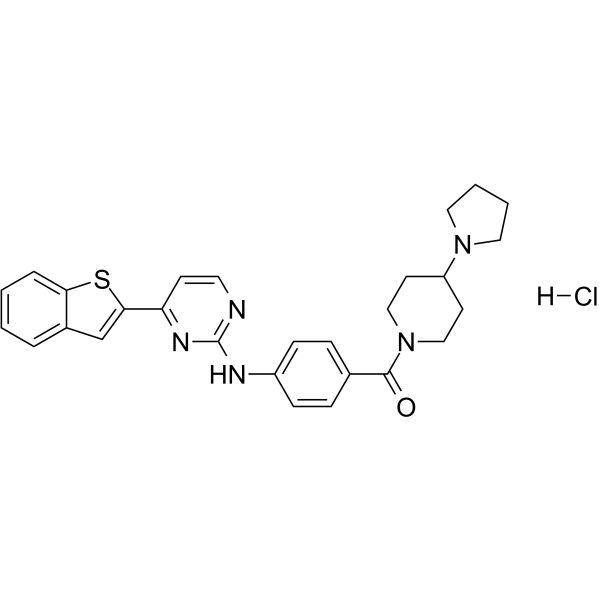
IKK 16 hydrochloride is an orally active IKK inhibitor. IKK 16 hydrochloride shows IC50s of 40 nM, 70 nM, 200 nM, and 50 nM for IKK2, IKK complex, IKK1, and LRRK 2, respectively. IKK 16 hydrochloride is also a pan-PKD inhibitor, inhibiting PKD1, PKD2, and PKD3 with IC50s of 153.9, 115, and 99.7 nM, respectively. IKK 16 hydrochloride is also an ABCB1 inhibitor, interfering with the binding of ABCB1 to its substrates. IKK 16 hydrochloride protects against LPS (HY-D1056)-induced multiple organ dysfunction by reducing the acute inflammatory response induced by endotoxin exposure. IKK 16 hydrochloride can restore renal function and alleviate fibrosis in acute kidney injury. IKK 16 hydrochloride attenuates cardiac dysfunction associated with polymicrobial sepsis in mice with type 2 diabetes mellitus (T2DM) by inhibiting the NF-κB pathway [2] .
loading...
    loading...
6
6 Cited Publications
Cat. No.: HY-12239
CAS No.: 521937-07-5
Purity:  99.13%
Target:  

PKD

Research Areas:  

Cancer

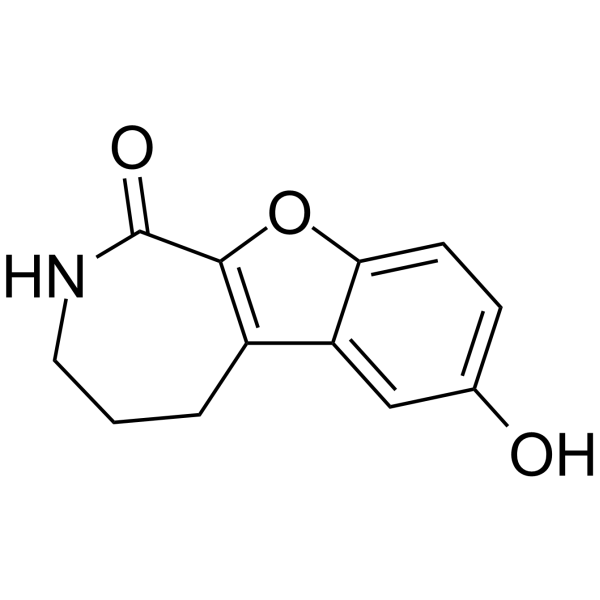
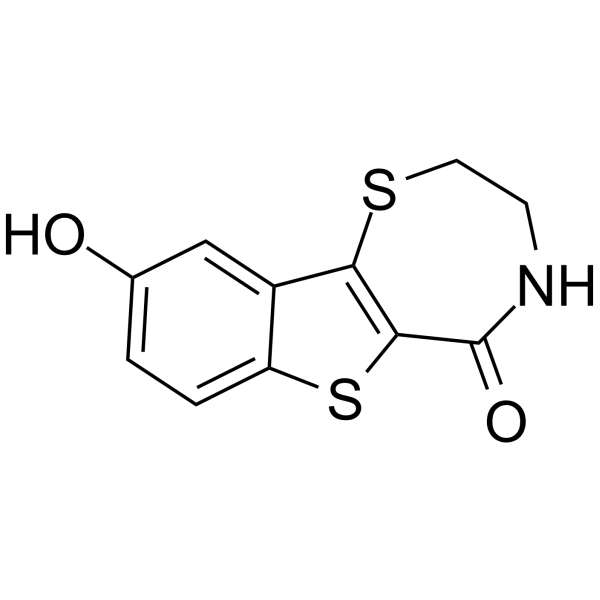
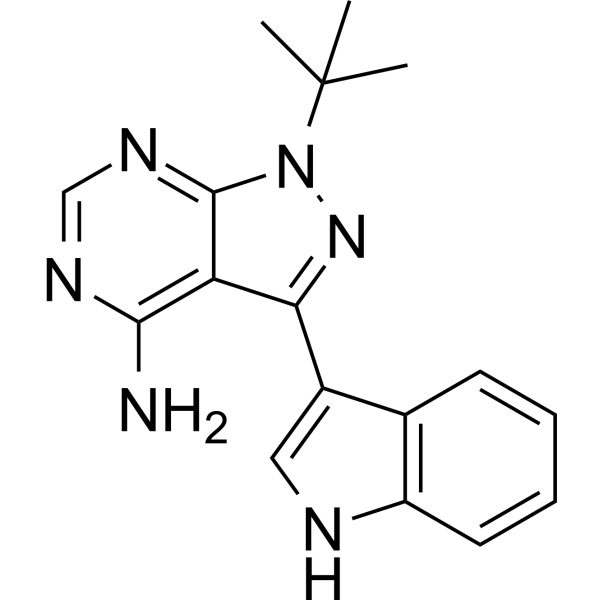
CID755673 is a potent PKD inhibitor with IC50s of 182 nM, 280 nM and 227 nM for PKD1, PKD2 and PKD3, respectively.
loading...
    loading...
3
3 Cited Publications
Cat. No.: HY-15698A
CAS No.: 1883545-60-5
Purity:  99.92%
Target:  

PKD Pim Apoptosis

Research Areas:  

Inflammation/Immunology Cancer

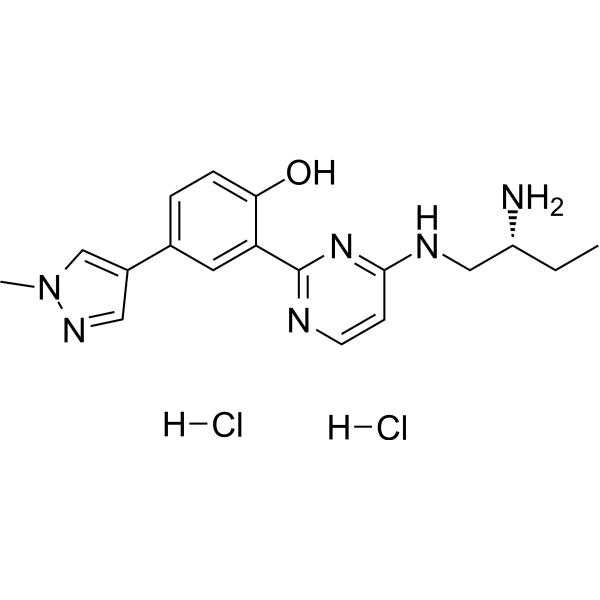
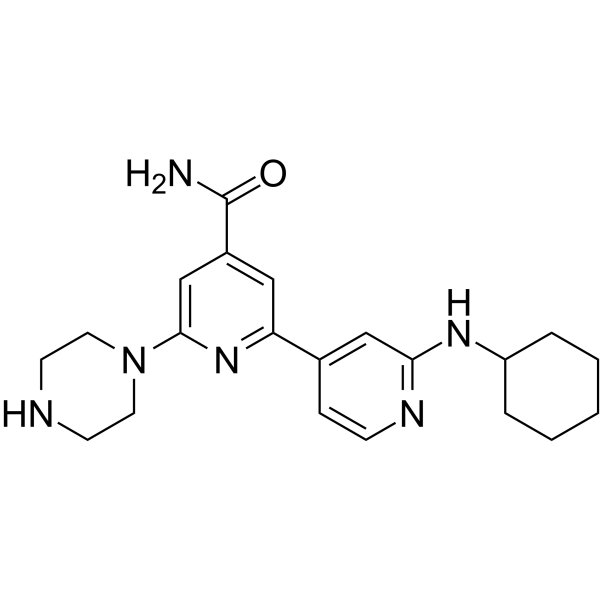
CRT0066101 dihydrochloride is a potent and orally active PKD inhibitor with IC50 values of 1 nM, 2.5 nM and 2 nM for PKD1, PKD2, and PKD3, respectively . CRT0066101 dihydrochloride is also a potent PIM2 inhibitor with an IC50 of ~135.7 nM. CRT0066101 dihydrochloride exhibits anti-inflammatory activity in mice LPS (HY-D1056)-induced lung injury models, and has anticancer effects [2] .
loading...
    loading...
3
3 Cited Publications
Cat. No.: HY-15698
CAS No.: 956123-34-5
Purity:  99.66%
Target:  

PKD Pim Apoptosis

Research Areas:  

Inflammation/Immunology Cancer

CRT0066101 is a potent and orally active PKD inhibitor with IC50 values of 1 nM, 2.5 nM and 2 nM for PKD1, PKD2, and PKD3, respectively . CRT0066101 is also a potent PIM2 inhibitor with an IC50 of ~135.7 nM. CRT0066101 exhibits anti-inflammatory activity in mice LPS (HY-D1056)-induced lung injury models, and has anticancer effects [2] .
loading...
    loading...
3
3 Cited Publications
Cat. No.: HY-15698B
CAS No.: 1781742-22-0
Target:  

PKD Pim Apoptosis

Research Areas:  

Inflammation/Immunology Cancer

CRT0066101 trihydrochloride is the trihydrochloride salt form of CRT0066101 (HY-15698). CRT0066101 trihydrochloride is an orally active PKD inhibitor with IC50 values of 1 nM, 2.5 nM and 2 nM for PKD1, PKD2, and PKD3, respectively. CRT0066101 trihydrochloride is also an inhibitor for PIM2 with an IC50 of ~135.7 nM. CRT0066101 trihydrochloride exhibits anti-inflammatory activity in mice LPS (HY-D1056)-induced lung injury models, and has anticancer effects [2] .
loading...
    loading...
2
2 Cited Publications
Cat. No.: HY-15528
CAS No.: 1233533-04-4
Purity:  98.08%
Target:  

PKD

Research Areas:  

Cancer

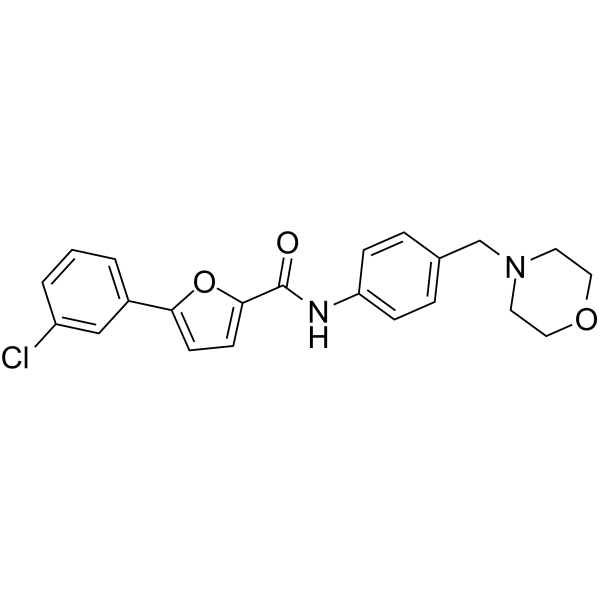
kb NB 142-70 is a potent PKD inhibitor, with IC50s of 28.3, 58.7 and 53.2 nM for PKD1, PKD2, and PKD3, respectively. kb NB 142-70 also has antitumor activity.
loading...
    loading...
Cat. No.: HY-13454
CAS No.: 638156-11-3
Purity:  96.98%
Target:  

PKD

Research Areas:  

Cancer

CID 2011756 is an ATP competitive PKD inhibitor, with an IC50 of 3.2 µM for PKD1 in cell free assay, and also shows cellular pan-PKD inhibitory activity against PKD2 and PKD3 (IC50, 0.6 and 0.7 µM, respectively). CID 2011756 also has antitumor activity.
loading...
    loading...
Cat. No.: HY-150364A
CAS No.: 2921918-19-4
Synonyms: RGLS8429 sodium; RG1015 sodium
Target:  

MicroRNA

Research Areas:  

Metabolic Disease

Farabursen sodium (RGLS8429 sodium; RG1015 sodium) is a miR-17 inhibitor. Farabursen sodium inhibits the function of the miR-17 family, relieves the inhibitory effect on miR-17 target genes including PKD1 and PKD2, and increases the level of PC1/2. Farabursen sodium slows the growth of renal cysts, reduces the ratio of kidney weight to body weight, and decreases the cyst index and proliferation index. Farabursen sodium is applicable to research related to autosomal dominant polycystic kidney disease [2].
loading...
    loading...
Cat. No.: HY-150364
CAS No.: 2953012-32-1
Synonyms: RGLS8429; RG1015
Target:  

MicroRNA

Research Areas:  

Metabolic Disease

Farabursen (RGLS8429; RG1015) is a blood-brain barrier-permeable miR-17 inhibitor. Farabursen derepresses Pkd1 and Pkd2, the target genes of miR-17, increases the levels of PC1 and PC2, and reduces cyst growth. Farabursen decreases renal cyst growth, kidney weight-to-body weight ratio, cyst index, proliferation index, and blood urea nitrogen levels in mouse models. Farabursen is applicable to research related to autosomal dominant polycystic kidney disease [2].
loading...
    loading...
Cat. No.: HY-118052
CAS No.: 1201673-28-0
Purity:  99.60%
Target:  

PKD HDAC

Research Areas:  

Cardiovascular Disease

BPKDi is an inhibitor of PKD. BPKDi inhibits three members of the PKD family, PKD1, PKD2, and PKD3, with IC50 values of 1 nM, 9 nM, and 1 nM, respectively. BPKDi blocks signal-dependent phosphorylation and nuclear export of class IIa HDACs in cardiomyocytes and concomitantly suppresses hypertrophy of these cells .
loading...
    loading...
Cat. No.: HY-151374
CAS No.: 2227110-54-3
Purity:  99.58%
Target:  

PKD

Research Areas:  

Cancer

3-IN-PP1 is a protein kinase D (PKD) inhibitor. 3-IN-PP1 has potent pan-PKD inhibitory activity for PKD1, PKD2 and PKD3 with IC50 values of 108, 94 and 108 nM, respectively. 3-IN-PP1 also is a broad spectrum anticancer agent and has inhibition of several tumor cells growth. 3-IN-PP1 can be used for the research of cancer .
loading...
    loading...
Cat. No.: HY-112547
CAS No.: 1034297-58-9
Synonyms: CRT0066051
Target:  

PKD

Research Areas:  

Others

CRT5, a pyrazine benzamide, is a potent and selective inhibitor for all three isoforms of PKD in endothelial cells treated with VEGF (IC50s = 1, 2, and 1.5 nM for PKD1, PKD2, and PKD3, respectively). CRT5 decreases VEGF-induced endothelial migration, proliferation and tubulogenesis .
loading...
    loading...
Cat. No.: HY-RS10591
Research Areas:  

Others

PKD2 Human Pre-designed siRNA Set A contains three designed siRNAs for PKD2 gene (Human), as well as a negative control, a positive control, and a FAM-labeled negative control.

loading...
    loading...
Cat. No.: HY-RS10592
Research Areas:  

Others

Pkd2 Mouse Pre-designed siRNA Set A contains three designed siRNAs for Pkd2 gene (Mouse), as well as a negative control, a positive control, and a FAM-labeled negative control.

loading...
    loading...
Cat. No.: HY-RS10593
Research Areas:  

Others

Pkd2 Rat Pre-designed siRNA Set A contains three designed siRNAs for Pkd2 gene (Rat), as well as a negative control, a positive control, and a FAM-labeled negative control.

loading...
    loading...
Cat. No.: HY-RS16302
Research Areas:  

Metabolic Disease

PKD2 Pig Pre-designed siRNA Set A contains three designed siRNAs for PKD2 gene (Pig), as well as a negative control, a positive control, and a FAM-labeled negative control.

loading...
    loading...
Cat. No.: HY-13687R
CAS No.: 873225-46-8
IKK 16 (Standard) is the analytical standard of IKK 16. This product is intended for research and analytical applications. IKK 16 hydrochloride is an orally active IKK inhibitor. IKK 16 hydrochloride shows IC50s of 40 nM, 70 nM, 200 nM, and 50 nM for IKK2, IKK complex, IKK1, and LRRK 2, respectively. IKK 16 hydrochloride is also a pan-PKD inhibitor, inhibiting PKD1, PKD2, and PKD3 with IC50s of 153.9, 115, and 99.7 nM, respectively. IKK 16 hydrochloride is also an ABCB1 inhibitor, interfering with the binding of ABCB1 to its substrates. IKK 16 hydrochloride protects against LPS (HY-D1056)-induced multiple organ dysfunction by reducing the acute inflammatory response induced by endotoxin exposure. IKK 16 hydrochloride can restore renal function and alleviate fibrosis in acute kidney injury. IKK 16 hydrochloride attenuates cardiac dysfunction associated with polymicrobial sepsis in mice with type 2 diabetes mellitus (T2DM) by inhibiting the NF-κB pathway.
loading...
    loading...
Cat. No.: HY-15528R
CAS No.: 1233533-04-4
Target:  

PKD

Research Areas:  

Cancer

kb NB 142-70 (Standard) is the analytical standard of kb NB 142-70. This product is intended for research and analytical applications. kb NB 142-70 is a potent PKD inhibitor, with IC50s of 28.3, 58.7 and 53.2 nM for PKD1, PKD2, and PKD3, respectively. kb NB 142-70 also has antitumor activity.
loading...
    loading...
Cat. No.: HY-117051
CAS No.: 1046490-67-8
Target:  

HSP

Research Areas:  

Cancer

STA-2842 is an inhibitor of heat shock protein HSP90 with potential to inhibit autosomal dominant polycystic kidney disease (ADPKD). ADPKD is caused by inherited mutations in the PKD1 or PKD2 genes that abnormally activate multiple signaling proteins and pathways that regulate cell proliferation. STA-2842 can significantly reduce initial renal cyst formation and kidney growth in mice, and slow disease progression in mice with existing cysts.
loading...
    loading...

