1. Search Result
Search Result
Results for "

PSII

" in MedChemExpress (MCE) Product Catalog:

17

Inhibitors & Agonists

9

Natural
Products

6

Isotope-Labeled Compounds

Cat. No. Product Name Target Research Areas Chemical Structure
  • HY-B1776
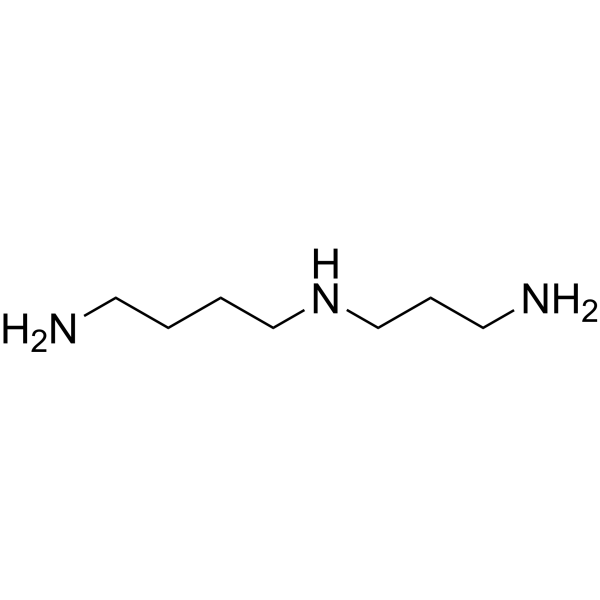
    Spermidine
    15+ Cited Publications

    Endogenous Metabolite Metabolic Disease
    Spermidine maintains cell membrane stability, increases antioxidant enzymes activities, improving photosystem II (PSII), and relevant gene expression. Spermidine significantly decreases the H2O2 and O2 .- contents .
    Spermidine
  • HY-B1776A
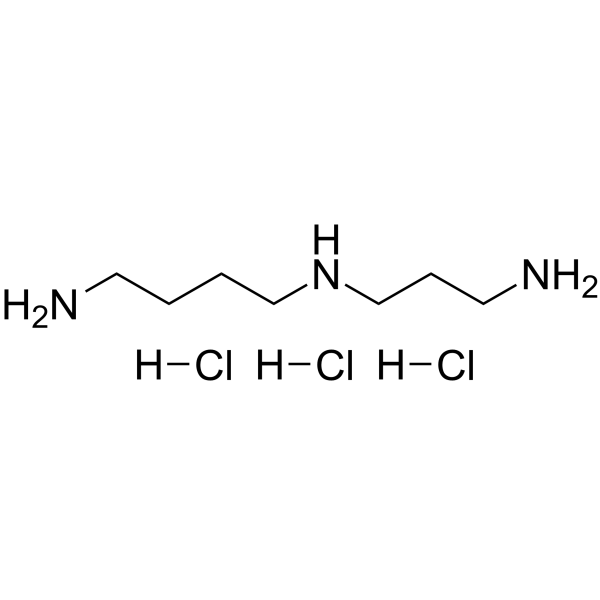
    Spermidine hydrochloride
    15+ Cited Publications

    Endogenous Metabolite Metabolic Disease
    Spermidine hydrochloride maintains cell membrane stability, increases antioxidant enzymes activities, improving photosystem II (PSII), and relevant gene expression. Spermidine hydrochloride significantly decreases the H2O2 and O2 .- contents .
    Spermidine hydrochloride
  • HY-B1776R

    Reference Standards Endogenous Metabolite Metabolic Disease
    Spermidine (Standard) is the analytical standard of Spermidine. This product is intended for research and analytical applications. Spermidine maintains cell membrane stability, increases antioxidant enzymes activities, improving photosystem II (PSII), and relevant gene expression. Spermidine significantly decreases the H2O2 and O2.- contents .
    Spermidine (Standard)
  • HY-N6715

    Influenza Virus Bacterial Enterovirus Photosystem II Infection Cancer
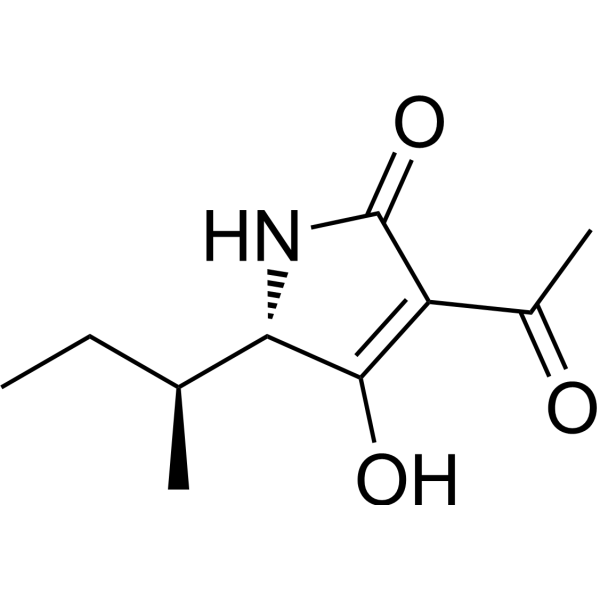
    Tenuazonic acid is a nonhost-selective mycotoxin belonging to the tetramic acids family. Tenuazonic acid inhibits protein biosynthesis on ribosomes by suppressing the release of new protein. Tenuazonic acid is acutely toxic, and oral LD50 is set between 81-186 mg/kg in rats and mice. Tenuazonic acid blocks electron transport beyond the primary quinone receptor (QA) by interacting with the D1 protein and is a photosystem II (PSII) inhibitor. In addition, Tenuazonic acid has antiviral effects on measles virus, enterovirus, respiratory virus and so on. Tenuazonic acid has an inhibitory effect on skin cancer .
    Tenuazonic acid
  • HY-B1776AS1
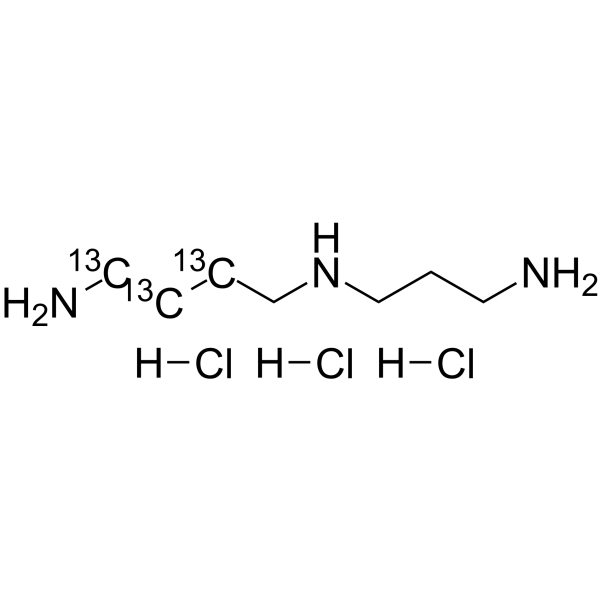
    Spermidine-13C4 hydrochloride
    1 Publications Verification

    Isotope-Labeled Compounds Endogenous Metabolite Metabolic Disease
    Spermidine- 13C4 (hydrochloride) is the 13C-labeled Spermidine trihydrochloride. Spermidine hydrochloride maintains cell membrane stability, increases antioxidant enzymes activities, improving photosystem II (PSII), and relevant gene expression. Spermidine hydrochloride significantly decreases the H2O2 and O2.- contents .
    Spermidine-13C4 hydrochloride
  • HY-17513

    BAY314666; BAY-MKH 3586

    Environmental Pollutants Herbicide Others
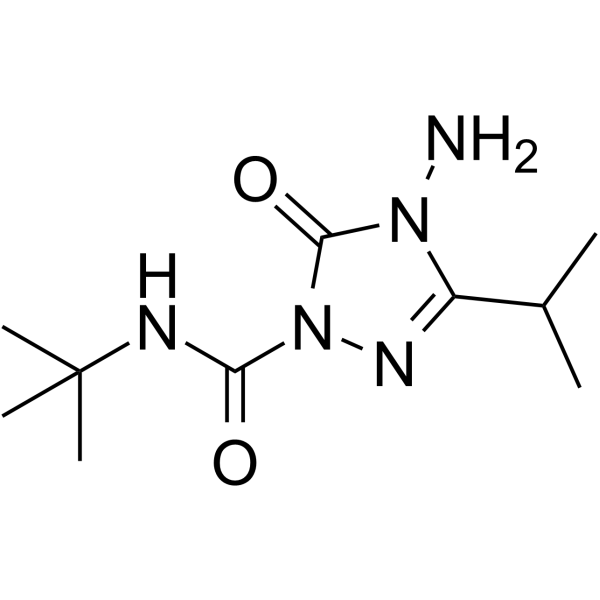
    Amicarbazone (BAY-MKH3586; BAY314666) acts as a potent inhibitor of photosynthetic electron transport by binding to the Qb domain of photosystem II (PSII); it is a herbicide with broad-spectrum weed control activity .
    Amicarbazone
  • HY-B1776S
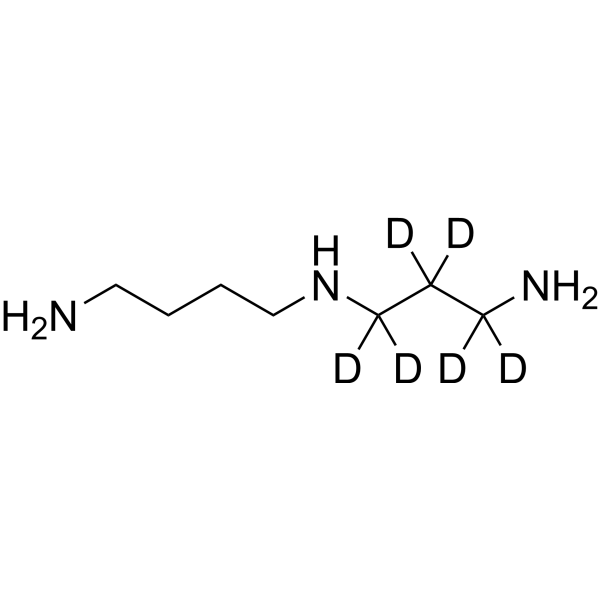
    Spermidine-d6
    1 Publications Verification

    Endogenous Metabolite Metabolic Disease
    Spermidine-d6 is the deuterium labeled Spermidine . Spermidine maintains cell membrane stability, increases antioxidant enzymes activities, improving photosystem II (PSII), and relevant gene expression. Spermidine significantly decreases the H2O2 and O2.- contents .
    Spermidine-d6
  • HY-B1776AS

    Isotope-Labeled Compounds Endogenous Metabolite Metabolic Disease
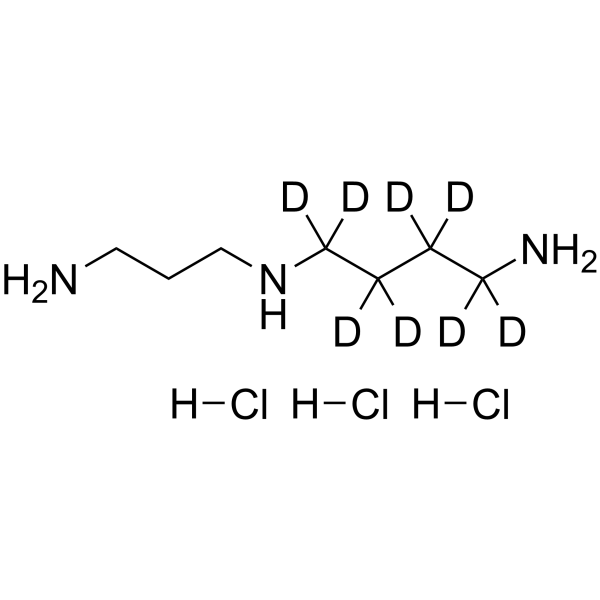
    Spermidine-d8 (hydrochloride)e is the deuterium labeled Spermidine trihydrochloride. Spermidine hydrochloride maintains cell membrane stability, increases antioxidant enzymes activities, improving photosystem II (PSII), and relevant gene expression. Spermidine hydrochloride significantly decreases the H2O2 and O2.- contents .
    Spermidine-d8 hydrochloride
  • HY-W653921

    Isotope-Labeled Compounds Enterovirus Photosystem II Influenza Virus Bacterial Infection Cancer
    Tenuazonic acid-d13 is deuterium labeled Tenuazonic acid. Tenuazonic acid is a nonhost-selective mycotoxin belonging to the tetramic acids family. Tenuazonic acid inhibits protein biosynthesis on ribosomes by suppressing the release of new protein. Tenuazonic acid is acutely toxic, and oral LD50 is set between 81-186 mg/kg in rats and mice. Tenuazonic acid blocks electron transport beyond the primary quinone receptor (QA) by interacting with the D1 protein and is a photosystem II (PSII) inhibitor. In addition, Tenuazonic acid has antiviral effects on measles virus, enterovirus, respiratory virus and so on. Tenuazonic acid has an inhibitory effect on skin cancer .
    Tenuazonic acid-d13
  • HY-W725574

    BAS 29095

    Photosystem II Others
    Dimidazon (BAS 29095) is a weak electron transport inhibitor targeting photosystem II (PSII). Dimidazon inhibits electron transfer from the primary electron acceptor Q in PSII to photosystem I. Dimidazon is promising for research of photosynthesis regulation and weed control .
    Dimidazon
  • HY-N6715R

    Reference Standards Influenza Virus Bacterial Enterovirus Photosystem II Infection Cancer
    Tenuazonic acid (Standard) is the analytical standard of Tenuazonic acid. This product is intended for research and analytical applications. Tenuazonic acid is a nonhost-selective mycotoxin belonging to the tetramic acids family. Tenuazonic acid inhibits protein biosynthesis on ribosomes by suppressing the release of new protein. Tenuazonic acid is acutely toxic, and oral LD50 is set between 81-186 mg/kg in rats and mice. Tenuazonic acid blocks electron transport beyond the primary quinone receptor (QA) by interacting with the D1 protein and is a photosystem II (PSII) inhibitor. In addition, Tenuazonic acid has antiviral effects on measles virus, enterovirus, respiratory virus and so on. Tenuazonic acid has an inhibitory effect on skin cancer .
    Tenuazonic acid (Standard)
  • HY-N15688

    Endogenous Metabolite Others
    Diatoxanthin is a cytochrome and phycoxanthin byproduct that can be extracted from the algae F. pinnata cells. Diatoxanthin can be used as a biomarker to evaluate the inhibitory effects of biocides on diatom photosystem II (PSII) .
    Diatoxanthin
  • HY-N6715S

    Influenza Virus Bacterial Isotope-Labeled Compounds Infection
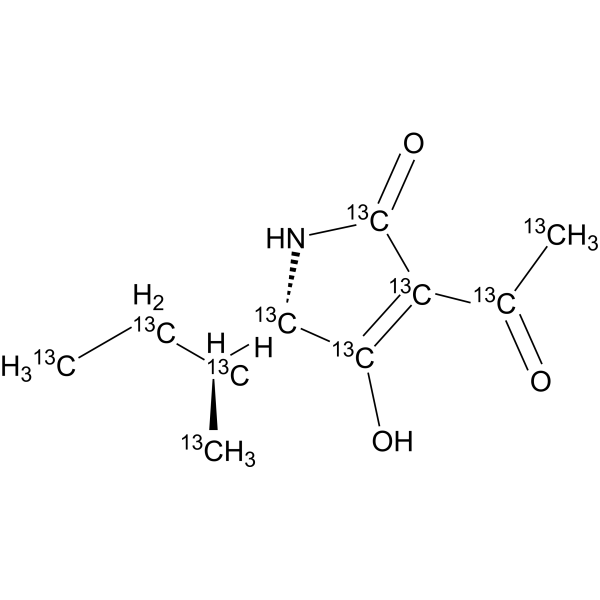
    Tenuazonic acid- 13C10 is 13C labeled Tenuazonic acid (HY-N6715). Tenuazonic acid is a nonhost-selective mycotoxin belonging to the tetramic acids family. Tenuazonic acid inhibits protein biosynthesis on ribosomes by suppressing the release of new protein. Tenuazonic acid is acutely toxic, and oral LD50 is set between 81-186 mg/kg in rats and mice. Tenuazonic acid blocks electron transport beyond the primary quinone receptor (QA) by interacting with the D1 protein and is a photosystem II (PSII) inhibitor. In addition, Tenuazonic acid has antiviral effects on measles virus, enterovirus, respiratory virus and so on. Tenuazonic acid has an inhibitory effect on skin cancer .
    Tenuazonic acid-13C10
  • HY-N11882

    PQ-9

    Reactive Oxygen Species (ROS) Others
    Plastoquinone (PQ-9) is a photosynthetic electron carrier as well as a redox sensor capable of regulating state transitions and gene expression. Plastoquinone transfers electrons to the cytochrome b6/f complex via the Q cycle, and participates in the establishment of the thylakoid transmembrane pH gradient. Plastoquinone can react with ROS. Plastoquinone is used in plant photosynthesis research .
    Plastoquinone
  • HY-B1776AR

    Reference Standards Endogenous Metabolite Metabolic Disease
    Spermidine (hydrochloride) (Standard) is the analytical standard of Spermidine (hydrochloride). This product is intended for research and analytical applications. Spermidine hydrochloride maintains cell membrane stability, increases antioxidant enzymes activities, improving photosystem II (PSII), and relevant gene expression. Spermidine hydrochloride significantly decreases the H2O2 and O2.- contents .
    Spermidine hydrochloride (Standard)
  • HY-W778649

    Isotope-Labeled Compounds Herbicide Photosystem II Others
    Sarmentine-d8 is the deuterium labeled Sarmentine. Sarmentine is a broad-spectrum contact herbicide and PSII inhibitor, with an IC50 of 3.0 μM and a Ki of 1.5 μM against spinach, an IC50 of 1.72 μM against wild-type Amaranthus retroflexus, and an IC50 of 0.97 μM against triazine-resistant Amaranthus retroflexus. Sarmentine competitively binds to the QB binding site of plastoquinone on PSII, thereby blocking photosynthetic electron transport. Sarmentine inhibits enoyl-ACP reductase in Arabidopsis thaliana by targeting the early fatty acid synthesis process, with an IC50 of 18.3 μM. Sarmentine induces light-independent loss of plasma membrane integrity and electrolyte leakage. Sarmentine also exhibits antiplasmodial, antimycobacterial, antituberculous, and antiplatelet aggregation activities .
    Sarmentine-d8
  • HY-W099725

    Herbicide Photosystem II Cardiovascular Disease Infection
    Sarmentine is a broad-spectrum contact herbicide and PSII inhibitor, with an IC50 of 3.0 μM and a Ki of 1.5 μM against spinach, an IC50 of 1.72 μM against wild-type Amaranthus retroflexus, and an IC50 of 0.97 μM against triazine-resistant Amaranthus retroflexus. Sarmentine competitively binds to the QB binding site of plastoquinone on PSII, thereby blocking photosynthetic electron transport. Sarmentine inhibits enoyl-ACP reductase in Arabidopsis thaliana by targeting the early fatty acid synthesis process, with an IC50 of 18.3 μM. Sarmentine induces light-independent loss of plasma membrane integrity and electrolyte leakage. Sarmentine also exhibits antiplasmodial, antimycobacterial, antituberculous, and antiplatelet aggregation activities .
    Sarmentine

Inquiry Online

Your information is safe with us. * Required Fields.

Salutation


Country or Region *

Applicant Name *


Organization Name *

Department *


Email Address *


Product Name *

Cat. No.


Requested quantity *

Phone Number *


Remarks

Inquiry Online

Inquiry Information

Product Name:
Cat. No.:
Quantity:
MCE Japan Authorized Agent:

