Search Result
Results for "
Potassium p-nitrophenyl
" in MedChemExpress (MCE) Product Catalog:
26
Biochemical Assay Reagents
| Cat. No. |
Product Name |
Target |
Research Areas |
Chemical Structure |
-
- HY-20336
-
|
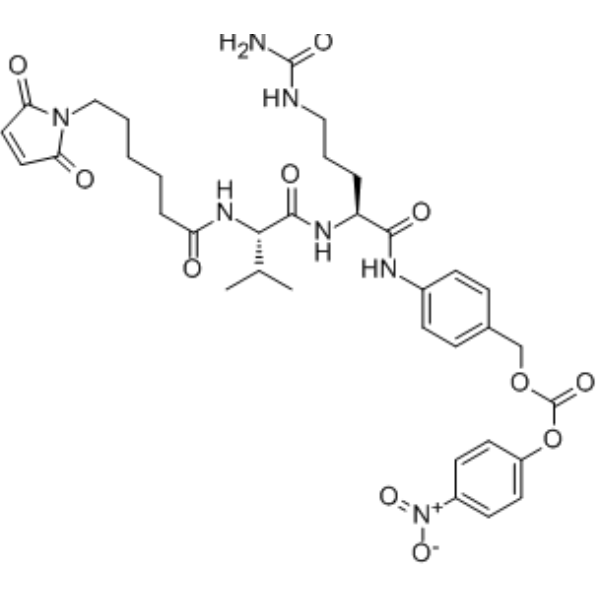
Maleimidocaproyl-L-valine-L-citrulline-p-aminobenzyl alcohol p-nitrophenyl carbonate
|
ADC Linker
|
Others
Inflammation/Immunology
Cancer
|
|
Mc-Val-Cit-PABC-PNP is a cathepsin cleavable linker for antibody-drug conjugates (ADCs) which couples the antibody element to the effecting compound. Mc-Val-Cit-PABC-PNP can be used in the synthesis of ADCs .
|
-
-
- HY-15928
-
|
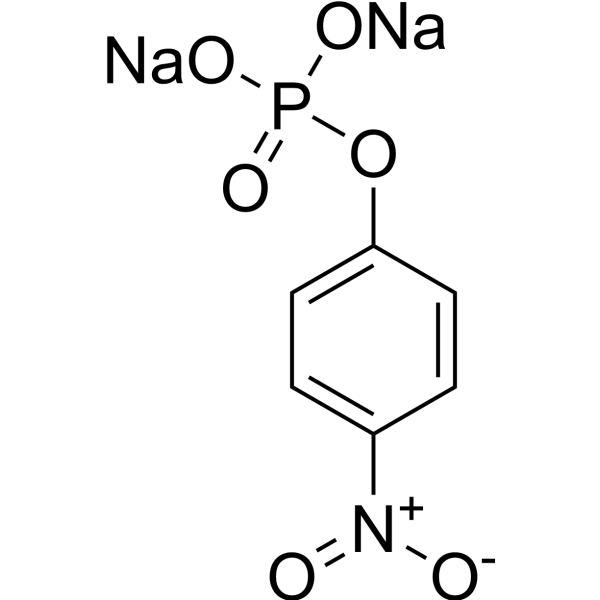
p-nitrophenyl phosphate disodium
|
Fluorescent Dye
|
Others
|
|
4-Nitrophenyl phosphate (p-Nitrophenyl phosphate) disodium is a non-proteinaceous chromogenic substrate for alkaline and acid phosphatases used in ELISA and conventional spectrophotometric assays.
|
-
-
- HY-116022A
-
|
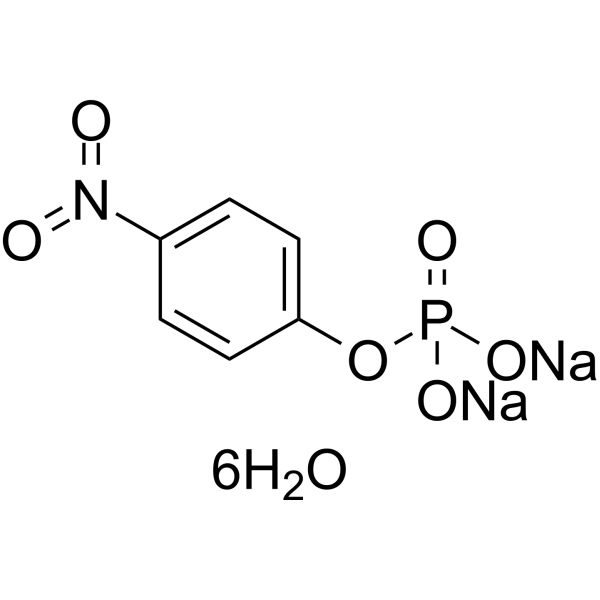
p-nitrophenyl phosphate disodium hexahydrate
|
Biochemical Assay Reagents
|
Others
|
|
4-Nitrophenyl phosphate (p-nitrophenyl phosphate) disodium hexahydrate is widely used as a small molecule phosphotyrosine-like substrate in activity assays for protein tyrosine phosphatases. 4-Nitrophenyl phosphate disodium hexahydrate is a colorless substrate that upon hydrolysis is converted to a yellow 4-nitrophenolate ion that can be monitored by absorbance at 405 nm .
|
-
-
- HY-116022
-
|
p-nitrophenyl phosphate
|
Biochemical Assay Reagents
|
Others
|
|
4-Nitrophenyl phosphate (p-Nitrophenyl phosphate) is widely used as a small molecule phosphotyrosine-like substrate in activity assays for protein tyrosine phosphatases.4-Nitrophenyl phosphate is a colorless substrate that upon hydrolysis is converted to a yellow 4-nitrophenolate ion that can be monitored by absorbance at 405 nm .
|
-
-
- HY-137822
-
|
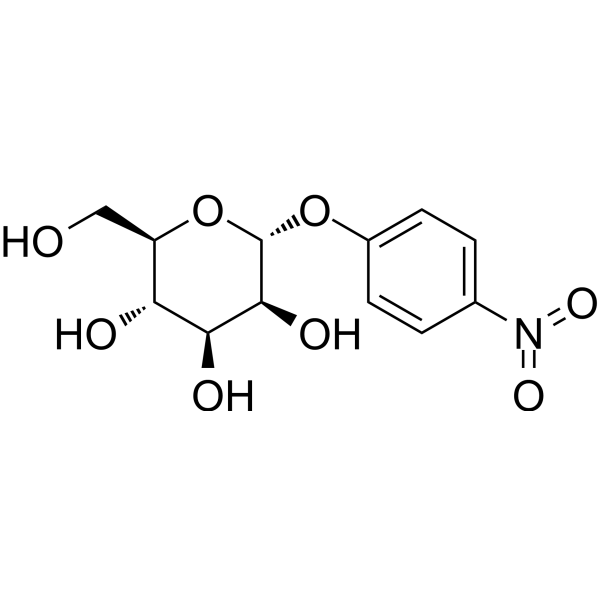
4-nitrophenyl a-D-mannopyranoside
|
Glycosidase
|
Others
|
|
p-Nitrophenyl α-D-mannopyranoside (4-Nitrophenyl α-D-mannopyranoside) is a chromogenic glycosidic ligand. p-Nitrophenyl α-D-mannopyranoside features a sugar moiety (α-D-mannopyranose) with the mannose-characteristic axial hydroxyl group at the C2 position and a ligand portion (p-nitrophenol) that provides ultraviolet-visible light absorption properties. p-Nitrophenyl α-D-mannopyranoside can be used to determine glycosidase activity and characterize the sugar recognition properties of lectins (such as Concanavalin A (HY-P2149)) .
|
-
-
- HY-W013168
-
|
4-nitrophenyl hexadecanoate; p-nitrophenyl Palmitate; pNpp
|
Lipase
|
Others
|
|
4-Nitrophenyl palmitate (4-Nitrophenyl hexadecanoate) is a chromogenic substrate for lipases and esterases. Upon enzymatic hydrolysis, 4-Nitrophenyl palmitate releases p-nitrophenol, which can be quantified by colorimetric detection at 410 nm as a measure of enzymatic activity. 4-Nitrophenyl palmitate is used to characterize the activity of various bacterial and mammalian enzymes, including those from Burkholderia and porcine pancreatic lipase .
|
-
-
- HY-137807
-
|
|
Endogenous Metabolite
|
Cancer
|
|
Thymidine 5′-monophosphate p-nitrophenyl ester sodium (Compound 2a) is the derivative of thymidine 5'-phosphate (TMP). Thymidine 5′-monophosphate p-nitrophenyl ester sodium is potential as an antitumor prodrug .
|
-
-
- HY-137827
-
|
p-nitrophenyl β-D-Cellobioside
|
Glycosidase
|
Others
|
|
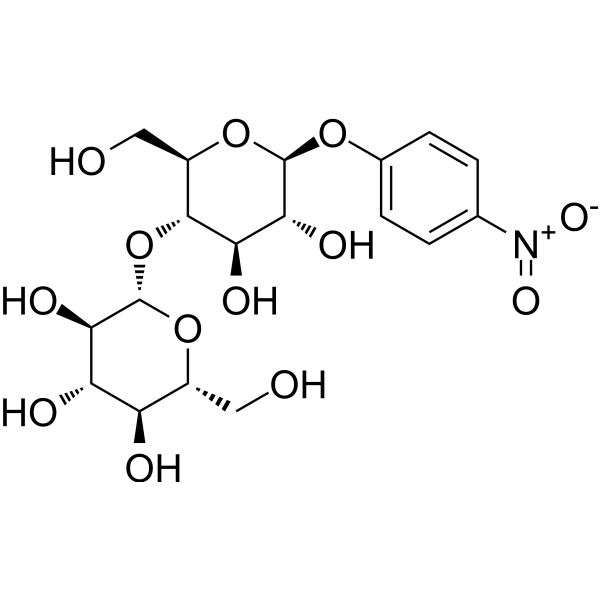
4-Nitrophenyl β-D-Cellobioside (p-Nitrophenyl β-D-cellobioside) is a cellotriose analog. 4-Nitrophenyl β-D-Cellobioside is hydrolyzed by β-glucosidases such as TxGH116 and ThCel7B. 4-Nitrophenyl β-D-Cellobioside can also be hydrolyzed by exoglucanases and endoglucanases to produce p-nitrophenol (PNP). 4-Nitrophenyl β-D-Cellobioside can be used to detect cellulase activity .
|
-
-
- HY-W009454
-
|
4-Nitopheyl Sulfate Potassium
|
Fluorescent Dye
|
Others
|
|
Potassium p-nitrophenyl sulfate (4-Nitophenyl Sulfate potassium) serves as a chromogenic substrate for arylsulfatases. Potassium p-nitrophenyl sulfate releases nitrophenol under the cleavage action of arylsulfatases, and the activity of arylsulfatases can be quantitatively determined via colorimetric detection at 400 nm. Potassium p-nitrophenyl sulfate is commonly used in enzyme inhibition assays and metabolite analog-related studies .
|
-
-
- HY-134420
-
|
PNP α-L-Fuc
|
Glycosidase
|
Others
|
|
p-Nitrophenyl α-L-fucoside (PNP α-L-Fuc) is a specific substrate of Pecten maximus α-L-fucosidase, with a Km value of 650 µM. p-Nitrophenyl α-L-fucoside serves as a substrate for ClAgl29A and ClAgl29B. Enzymatic hydrolysis of p-Nitrophenyl α-L-fucoside releases p-nitrophenol and α-L-fucose, where the latter undergoes mutarotation over time to form β-L-fucose. p-Nitrophenyl α-L-fucoside is not the preferred substrate for ClAgl29A and ClAgl29B .
|
-
-
- HY-100045
-
|
4-nitrophenylphosphorylcholine; 4-nitrophenylphosphorylcholine; O-(4-nitrophenylphosphoryl)choline
|
Endogenous Metabolite
|
Metabolic Disease
|
|
p-Nitrophenyl phosphorylcholine (4-Nitrophenylphosphorylcholine) is a chromogenic substrate that is used to measure phospholipase C (PLC) activity. Hydrolysis of p-nitrophenylphosphorylcholine by PLC results in the liberation of p-nitrophenol, which can be measured at 405 nm at pH 7.2-7.5.
|
-
-
- HY-137878
-
|
PNP-α-NeuNAc
|
Biochemical Assay Reagents
|
Others
|
|
2-O-(p-Nitrophenyl)-α-D-N-acetylneuraminic acid (PNP-α-NeuNAc) is a classic chromogenic substrate for neuraminidase. 2-O-(p-Nitrophenyl)-α-D-N-acetylneuraminic acid releases p-nitrophenol upon enzymatic hydrolysis, allowing quantification of enzyme activity and inhibitory effects via spectrophotometry. 2-O-(p-Nitrophenyl)-α-D-N-acetylneuraminic acid (PNP-α-NeuNAc) acts as a sialyl donor in the process of enzyme-catalyzed trans-sialylation .
|
-
-
- HY-137812
-
|
|
Biochemical Assay Reagents
Glycosidase
|
Others
|
|
p-Nitrophenyl β-D-lactoside is a substrate of β-lactosidase and can be used to determine β-lactosinase activity. p-Nitrophenyl β-D-lactoside is a substrate of cellobiohydrolase. p-Nitrophenyl β-D-lactoside is a class of biochemical reagents used in glycobiology research .
|
-
-
- HY-W011410
-
|
p-nitrophenyl β-D-Mannopyranoside
|
Glycosidase
|
Others
|
|
4-Nitrophenyl β-D-mannopyranoside is a useful substrate for β-D-mannopyranosidase. 4-Nitrophenyl β-D-mannopyranoside is also a substrate for GH1-glucosidase (EaBgl1A) and α-L-rhamnosidase .
|
-
-
- HY-138959
-
|
p-nitrophenyl caprylate
|
Lipase
|
Others
|
|
4-Nitrophenyl octanoate (p-Nitrophenyl caprylate) is an aromatic ester compound which can be used as a substrate for pancreatic lipase.
4-Nitrophenyl octanoate contains an ester bond that can be hydrolyzed under the action of lipase, releasing p-nitrophenol as a yellow product.
4-Nitrophenyl octanoate can be used to assay the activities of lipases and esterases .
|
-
-
- HY-W011655
-
|
p-nitrophenyl alpha-D-xylopyranoside
|
Biochemical Assay Reagents
|
Others
|
|
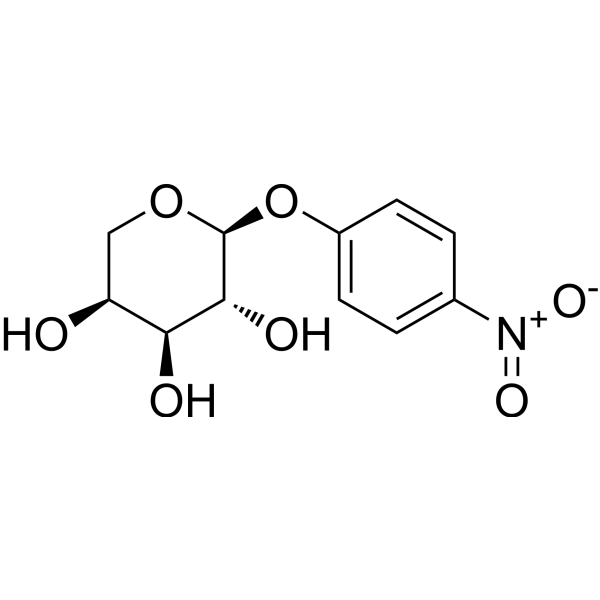
p-Nitrophenyl α-D-xylopyranoside (p-Nitrophenyl alpha-D-xylopyranoside) is a chromogenic substrate for α-xylosidase .
|
-
-
- HY-134429
-
|
|
Biochemical Assay Reagents
|
Others
|
|
p-Nitrophenyl α-L-arabinopyranoside is a biochemical reagent. p-Nitrophenyl α-L-arabinopyranoside can be hydrolyzed by recombinant BgaA (rBgaA, isolated from E. coli BL21 (DE3) strain harboring pEBGA29). p-Nitrophenyl α-L-arabinopyranoside has potential application in enzyme activity detection .
|
-
-
- HY-139069
-
-
-
- HY-134430
-
|
Tetradecanoic acid, 4-nitrophenyl ester
|
Biochemical Assay Reagents
|
Others
|
|
p-Nitrophenyl myristate (Tetradecanoic acid, 4-nitrophenyl ester) is a biochemical assay reagent.
|
-
-
- HY-W776875
-
-
-
- HY-158199
-
|
|
ADC Linker
|
Cancer
|
|
BCN-HS-PEG2-bis(PNP) (Compound 62) is a p-nitrophenyl-containing ADC linker that can be used to further couple ADC cytotoxins with peptide linkers. BCN-HS-PEG2-bis(PNP) can conjugate with vc-PABC-MMAE (HY-15162) to form Drug-Linker Conjugates for ADC .
|
-
-
- HY-167253
-
|
|
Biochemical Assay Reagents
|
Others
|
|
p-Nitrophenyl 4,6-benzylidene-β-D-glucopyranoside is a class of biochemical reagents used in glycobiology research. Glycobiology studies the structure, synthesis, biology, and evolution of sugars. It involves carbohydrate chemistry, enzymology of glycan formation and degradation, protein-glycan recognition, and the role of glycans in biological systems. This field is closely related to basic research, biomedicine, and biotechnology .
|
-
-
- HY-139143
-
|
|
FAAH
|
Others
|
|
WWL154, an analog of JZL184 that maintains the SH-reactive p-nitrophenyl carbamate group, is a FAAH-4 inhibitor .
|
-
-
- HY-W698765
-
|
|
Biochemical Assay Reagents
|
Others
|
|
Methyl p-nitrophenyl 2,3,4-tri-O-acetyl-β-D-glucouronate is a class of biochemical reagents used in glycobiology research. Glycobiology studies the structure, synthesis, biology, and evolution of sugars. It involves carbohydrate chemistry, enzymology of glycan formation and degradation, protein-glycan recognition, and the role of glycans in biological systems. This field is closely related to basic research, biomedicine, and biotechnology .
|
-
-
- HY-W396250
-
|
|
Biochemical Assay Reagents
|
Others
|
|
p-Nitrophenyl 2,3,4,6-tetra-O-acetyl-α-D-mannopyranoside is a class of biochemical reagents used in glycobiology research. Glycobiology studies the structure, synthesis, biology, and evolution of sugars. It involves carbohydrate chemistry, enzymology of glycan formation and degradation, protein-glycan recognition, and the role of glycans in biological systems. This field is closely related to basic research, biomedicine, and biotechnology .
|
-
-
- HY-116022B
-
|
p-nitrophenyl phosphate ditromethamine
|
Biochemical Assay Reagents
|
Others
|
|
4-Nitrophenyl phosphate ditromethamine is an enzyme substrate commonly used in biochemical assays to measure the activity of various phosphatases, including alkaline phosphatase. 4-Nitrophenylphosphate has unique chemical properties that allow it to be hydrolyzed by phosphatases, releasing a yellow product that can be detected spectrophotometrically.
|
-
-
- HY-116022C
-
-
-
- HY-W776848
-
-
-
- HY-W739832
-
|
|
Biochemical Assay Reagents
|
Others
|
|
p-Nitrophenyl β-D-cellobioside heptacetate is a class of biochemical reagents used in glycobiology research. Glycobiology studies the structure, synthesis, biology, and evolution of sugars. It involves carbohydrate chemistry, enzymology of glycan formation and degradation, protein-glycan recognition, and the role of glycans in biological systems. This field is closely related to basic research, biomedicine, and biotechnology .
|
-
-
- HY-W416325
-
-
-
- HY-W302789
-
-
-
- HY-W416326
-
-
-
- HY-N14194
-
|
|
Lipase
|
Others
|
|
Esterastin is a lipase inhibitor with an IC50 value of 2 ng/mL when p-nitrophenyl acetate is used as a substrate .
|
-
-
- HY-W416323
-
-
-
- HY-W699023
-
|
|
Biochemical Assay Reagents
|
Others
|
|
p-Nitrophenyl 2-acetamido-2-deoxy-3-O-(2,3,4,6-tetra-O-acetyl-β-D-galactopyranosyl)-α-D-galactopyranoside is a class of biochemical reagents used in glycobiology research. Glycobiology studies the structure, synthesis, biology, and evolution of sugars. It involves carbohydrate chemistry, enzymology of glycan formation and degradation, protein-glycan recognition, and the role of glycans in biological systems. This field is closely related to basic research, biomedicine, and biotechnology .
|
-
-
- HY-W739389
-
-
-
- HY-W699276
-
-
-
- HY-W357155
-
|
Galactosyl-N-acetylglucosaminyl-β-p-nitrophenyl
|
Biochemical Assay Reagents
|
Others
|
|
Gal1-β-3GlcNAc-β-PNP (Galactosyl-N-acetylglucosaminyl-β-p-nitrophenyl) is a class of biochemical reagents used in glycobiology research. Glycobiology studies the structure, synthesis, biology, and evolution of sugars. It involves carbohydrate chemistry, enzymology of glycan formation and degradation, protein-glycan recognition, and the role of glycans in biological systems. This field is closely related to basic research, biomedicine, and biotechnology .
|
-
-
- HY-P2863A
-
|
|
Endogenous Metabolite
|
Metabolic Disease
|
|
Deoxyribonuclease II, Bovine (EC 3.1.22.1) hydrolyzes deoxyribonucleotide linkages in native and denatured DNA yielding products with 3'-phosphates. In vitro, its optimum pH range is 4.5-5.0. Deoxyribonuclease II, Bovine (EC 3.1.22.1) also acts upon p-nitrophenyl-phosphodiesters at pH 5.6-5.9.
|
-
-
- HY-E71168
-
|
|
Biochemical Assay Reagents
|
Others
|
|
1,6-α-D-Mannosidase (EC 3.2.1.163) is specific for (1→6)-linked mannobiose and has no activity towards any other linkages, or towards p-nitrophenyl-α-D-mannopyranoside or baker's yeast mannan. It is strongly inhibited by Mn2+ but does not require Ca2+ or any other metal cofactor for activity.
|
-
-
- HY-P2999B
-
|
|
Endogenous Metabolite
|
Metabolic Disease
|
|
β-N-Acetylglucosaminidase, Canavalia ensiformis (EC 3.2.1.52), can release terminally β-linked N-acetylglucosamine and N-acetylgalactosamine from a variety of substrates. The activity of β-N-Acetylglucosaminidase can be determined using the chromogenic substrate p-nitrophenyl-N-acetyl-β-D-glucosinolate. β-N-Acetylglucosaminidase degrades the terminal non-reducing N-acetyl-D-aminohexose residue.
|
-
-
- HY-P2999C
-
|
|
Endogenous Metabolite
|
Metabolic Disease
|
|
β-N-Acetylglucosaminidase, Human (EC 3.2.1.52), can release terminally β-linked N-acetylglucosamine and N-acetylgalactosamine from a variety of substrates. The activity of β-N-Acetylglucosaminidase can be determined using the chromogenic substrate p-nitrophenyl-N-acetyl-β-D-glucosinolate. β-N-Acetylglucosaminidase degrades the terminal non-reducing N-acetyl-D-aminohexose residue.
|
-
-
- HY-P2999A
-
|
|
Endogenous Metabolite
|
Metabolic Disease
|
|
β-N-Acetylglucosaminidase, Bovine (EC 3.2.1.52), can release terminally β-linked N-acetylglucosamine and N-acetylgalactosamine from a variety of substrates. The activity of β-N-Acetylglucosaminidase can be determined using the chromogenic substrate p-nitrophenyl-N-acetyl-β-D-glucosinolate. β-N-Acetylglucosaminidase degrades the terminal non-reducing N-acetyl-D-aminohexose residue.
|
-
| Cat. No. |
Product Name |
Type |
-
- HY-15928
-
|
p-nitrophenyl phosphate disodium
|
Fluorescent Dyes
|
|
4-Nitrophenyl phosphate (p-Nitrophenyl phosphate) disodium is a non-proteinaceous chromogenic substrate for alkaline and acid phosphatases used in ELISA and conventional spectrophotometric assays.
|
-
- HY-W013168
-
|
4-nitrophenyl hexadecanoate; p-nitrophenyl Palmitate; pNpp
|
Fluorescent Dyes
|
|
4-Nitrophenyl palmitate (4-Nitrophenyl hexadecanoate) is a chromogenic substrate for lipases and esterases. Upon enzymatic hydrolysis, 4-Nitrophenyl palmitate releases p-nitrophenol, which can be quantified by colorimetric detection at 410 nm as a measure of enzymatic activity. 4-Nitrophenyl palmitate is used to characterize the activity of various bacterial and mammalian enzymes, including those from Burkholderia and porcine pancreatic lipase .
|
-
- HY-100045
-
|
4-nitrophenylphosphorylcholine; 4-nitrophenylphosphorylcholine; O-(4-nitrophenylphosphoryl)choline
|
Fluorescent Dyes
|
|
p-Nitrophenyl phosphorylcholine (4-Nitrophenylphosphorylcholine) is a chromogenic substrate that is used to measure phospholipase C (PLC) activity. Hydrolysis of p-nitrophenylphosphorylcholine by PLC results in the liberation of p-nitrophenol, which can be measured at 405 nm at pH 7.2-7.5.
|
| Cat. No. |
Product Name |
Type |
-
- HY-116022A
-
|
p-nitrophenyl phosphate disodium hexahydrate
|
Biochemical Assay Reagents
|
|
4-Nitrophenyl phosphate (p-nitrophenyl phosphate) disodium hexahydrate is widely used as a small molecule phosphotyrosine-like substrate in activity assays for protein tyrosine phosphatases. 4-Nitrophenyl phosphate disodium hexahydrate is a colorless substrate that upon hydrolysis is converted to a yellow 4-nitrophenolate ion that can be monitored by absorbance at 405 nm .
|
-
- HY-137822
-
|
4-nitrophenyl a-D-mannopyranoside
|
Biochemical Assay Reagents
|
|
p-Nitrophenyl α-D-mannopyranoside (4-Nitrophenyl α-D-mannopyranoside) is a chromogenic glycosidic ligand. p-Nitrophenyl α-D-mannopyranoside features a sugar moiety (α-D-mannopyranose) with the mannose-characteristic axial hydroxyl group at the C2 position and a ligand portion (p-nitrophenol) that provides ultraviolet-visible light absorption properties. p-Nitrophenyl α-D-mannopyranoside can be used to determine glycosidase activity and characterize the sugar recognition properties of lectins (such as Concanavalin A (HY-P2149)) .
|
-
- HY-134420
-
|
PNP α-L-Fuc
|
Biochemical Assay Reagents
|
|
p-Nitrophenyl α-L-fucoside (PNP α-L-Fuc) is a specific substrate of Pecten maximus α-L-fucosidase, with a Km value of 650 µM. p-Nitrophenyl α-L-fucoside serves as a substrate for ClAgl29A and ClAgl29B. Enzymatic hydrolysis of p-Nitrophenyl α-L-fucoside releases p-nitrophenol and α-L-fucose, where the latter undergoes mutarotation over time to form β-L-fucose. p-Nitrophenyl α-L-fucoside is not the preferred substrate for ClAgl29A and ClAgl29B .
|
-
- HY-137878
-
|
PNP-α-NeuNAc
|
Biochemical Assay Reagents
|
|
2-O-(p-Nitrophenyl)-α-D-N-acetylneuraminic acid (PNP-α-NeuNAc) is a classic chromogenic substrate for neuraminidase. 2-O-(p-Nitrophenyl)-α-D-N-acetylneuraminic acid releases p-nitrophenol upon enzymatic hydrolysis, allowing quantification of enzyme activity and inhibitory effects via spectrophotometry. 2-O-(p-Nitrophenyl)-α-D-N-acetylneuraminic acid (PNP-α-NeuNAc) acts as a sialyl donor in the process of enzyme-catalyzed trans-sialylation .
|
-
- HY-137812
-
|
|
Biochemical Assay Reagents
|
|
p-Nitrophenyl β-D-lactoside is a substrate of β-lactosidase and can be used to determine β-lactosinase activity. p-Nitrophenyl β-D-lactoside is a substrate of cellobiohydrolase. p-Nitrophenyl β-D-lactoside is a class of biochemical reagents used in glycobiology research .
|
-
- HY-W011410
-
|
p-nitrophenyl β-D-Mannopyranoside
|
Biochemical Assay Reagents
|
|
4-Nitrophenyl β-D-mannopyranoside is a useful substrate for β-D-mannopyranosidase. 4-Nitrophenyl β-D-mannopyranoside is also a substrate for GH1-glucosidase (EaBgl1A) and α-L-rhamnosidase .
|
-
- HY-W011655
-
|
p-nitrophenyl alpha-D-xylopyranoside
|
Biochemical Assay Reagents
|
|
p-Nitrophenyl α-D-xylopyranoside (p-Nitrophenyl alpha-D-xylopyranoside) is a chromogenic substrate for α-xylosidase .
|
-
- HY-134429
-
|
|
Biochemical Assay Reagents
|
|
p-Nitrophenyl α-L-arabinopyranoside is a biochemical reagent. p-Nitrophenyl α-L-arabinopyranoside can be hydrolyzed by recombinant BgaA (rBgaA, isolated from E. coli BL21 (DE3) strain harboring pEBGA29). p-Nitrophenyl α-L-arabinopyranoside has potential application in enzyme activity detection .
|
-
- HY-139069
-
-
- HY-134430
-
|
Tetradecanoic acid, 4-nitrophenyl ester
|
Biochemical Assay Reagents
|
|
p-Nitrophenyl myristate (Tetradecanoic acid, 4-nitrophenyl ester) is a biochemical assay reagent.
|
-
- HY-W776875
-
-
- HY-167253
-
|
|
Biochemical Assay Reagents
|
|
p-Nitrophenyl 4,6-benzylidene-β-D-glucopyranoside is a class of biochemical reagents used in glycobiology research. Glycobiology studies the structure, synthesis, biology, and evolution of sugars. It involves carbohydrate chemistry, enzymology of glycan formation and degradation, protein-glycan recognition, and the role of glycans in biological systems. This field is closely related to basic research, biomedicine, and biotechnology .
|
-
- HY-W698765
-
|
|
Biochemical Assay Reagents
|
|
Methyl p-nitrophenyl 2,3,4-tri-O-acetyl-β-D-glucouronate is a class of biochemical reagents used in glycobiology research. Glycobiology studies the structure, synthesis, biology, and evolution of sugars. It involves carbohydrate chemistry, enzymology of glycan formation and degradation, protein-glycan recognition, and the role of glycans in biological systems. This field is closely related to basic research, biomedicine, and biotechnology .
|
-
- HY-W396250
-
|
|
Biochemical Assay Reagents
|
|
p-Nitrophenyl 2,3,4,6-tetra-O-acetyl-α-D-mannopyranoside is a class of biochemical reagents used in glycobiology research. Glycobiology studies the structure, synthesis, biology, and evolution of sugars. It involves carbohydrate chemistry, enzymology of glycan formation and degradation, protein-glycan recognition, and the role of glycans in biological systems. This field is closely related to basic research, biomedicine, and biotechnology .
|
-
- HY-116022B
-
|
p-nitrophenyl phosphate ditromethamine
|
Biochemical Assay Reagents
|
|
4-Nitrophenyl phosphate ditromethamine is an enzyme substrate commonly used in biochemical assays to measure the activity of various phosphatases, including alkaline phosphatase. 4-Nitrophenylphosphate has unique chemical properties that allow it to be hydrolyzed by phosphatases, releasing a yellow product that can be detected spectrophotometrically.
|
-
- HY-116022C
-
|
p-nitrophenyl phosphate cyclohexylammonium
|
Biochemical Assay Reagents
|
|
4-Nitrophenyl phosphate (cyclohexylammonium) is a biochemical assay reagent.
|
-
- HY-W776848
-
-
- HY-W739832
-
|
|
Biochemical Assay Reagents
|
|
p-Nitrophenyl β-D-cellobioside heptacetate is a class of biochemical reagents used in glycobiology research. Glycobiology studies the structure, synthesis, biology, and evolution of sugars. It involves carbohydrate chemistry, enzymology of glycan formation and degradation, protein-glycan recognition, and the role of glycans in biological systems. This field is closely related to basic research, biomedicine, and biotechnology .
|
-
- HY-W416325
-
-
- HY-W302789
-
-
- HY-W416326
-
-
- HY-W416323
-
-
- HY-W699023
-
|
|
Biochemical Assay Reagents
|
|
p-Nitrophenyl 2-acetamido-2-deoxy-3-O-(2,3,4,6-tetra-O-acetyl-β-D-galactopyranosyl)-α-D-galactopyranoside is a class of biochemical reagents used in glycobiology research. Glycobiology studies the structure, synthesis, biology, and evolution of sugars. It involves carbohydrate chemistry, enzymology of glycan formation and degradation, protein-glycan recognition, and the role of glycans in biological systems. This field is closely related to basic research, biomedicine, and biotechnology .
|
-
- HY-W739389
-
-
- HY-W699276
-
-
- HY-W357155
-
|
Galactosyl-N-acetylglucosaminyl-β-p-nitrophenyl
|
Biochemical Assay Reagents
|
|
Gal1-β-3GlcNAc-β-PNP (Galactosyl-N-acetylglucosaminyl-β-p-nitrophenyl) is a class of biochemical reagents used in glycobiology research. Glycobiology studies the structure, synthesis, biology, and evolution of sugars. It involves carbohydrate chemistry, enzymology of glycan formation and degradation, protein-glycan recognition, and the role of glycans in biological systems. This field is closely related to basic research, biomedicine, and biotechnology .
|
| Cat. No. |
Product Name |
Target |
Research Area |
-
- HY-P4147
-
|
|
Peptides
|
Others
|
|
Ac-IHIHIQI-NH2 is a fibril-forming heptapeptide with high catalytic activity to laccase mimics. Ac-IHIHIQI-NH2 exhibits selectivity for hydrophobic p-nitrophenyl (ONp) ester substrates in the process of self-assembly .
|
| Cat. No. |
Product Name |
Category |
Target |
Chemical Structure |
| Cat. No. |
Product Name |
|
Classification |
-
- HY-158199
-
|
|
|
BCN
|
|
BCN-HS-PEG2-bis(PNP) (Compound 62) is a p-nitrophenyl-containing ADC linker that can be used to further couple ADC cytotoxins with peptide linkers. BCN-HS-PEG2-bis(PNP) can conjugate with vc-PABC-MMAE (HY-15162) to form Drug-Linker Conjugates for ADC .
|
-
- HY-W739389
-
|
|
|
Azide
|
|
Azocarmine G (Acid Red 101; Rosinduline) is a biochemical assay reagent.
|
Your information is safe with us. * Required Fields.
Inquiry Information
- Product Name:
- Cat. No.:
- Quantity:
- MCE Japan Authorized Agent:

