1. Search Result
Search Result
Results for "

SN-2

" in MedChemExpress (MCE) Product Catalog:

120

Inhibitors & Agonists

1

Fluorescent Dye

12

Biochemical Assay Reagents

1

Peptides

3

Natural
Products

4

Isotope-Labeled Compounds

30

Oligonucleotides

Targets Recommended:
Cat. No. Product Name Target Research Areas Chemical Structure
  • HY-P3029
    Phospholipase A2
    1 Publications Verification

    PLA2

    Phospholipase Cardiovascular Disease Inflammation/Immunology
    Phospholipase A2 (PLA2) is a calcium-dependent, heat-stable enzyme that catalyzes the hydrolysis of glycerophospholipids at the sn-2 position of cellular membranes, thereby releasing Arachidonic Acid (AA) (HY-109590). Phospholipase A2 is a key mediator in the biosynthesis of pro-inflammatory lipid mediators, critically involved in inflammatory processes. Phospholipase A2 can be used for cardiovascular and inflammatory diseases research [2] .
    Phospholipase A2
  • HY-141571
    DOPG sodium
    3 Publications Verification

    Dioleoylphosphatidylglycerol sodium

    Liposome Others
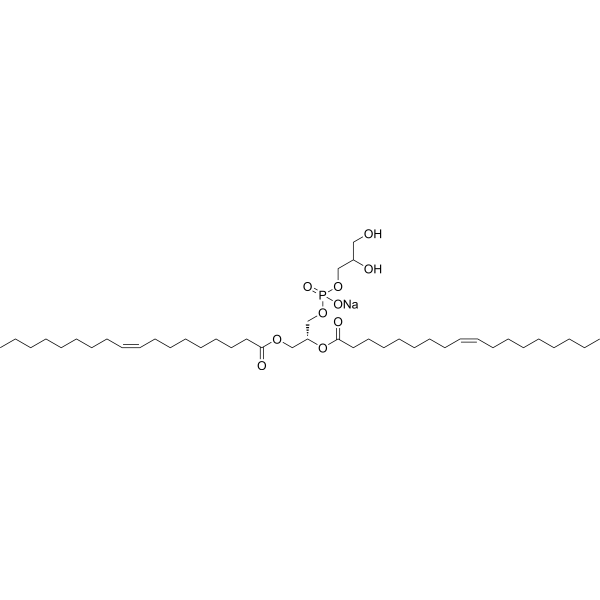
    DOPG sodium is a naturally occurring anionic phospholipid, containing oleic acid (18:1) inserted at the sn-1 and sn-2 positions. DOPG can form a lipid bilayer in an aqueous solution and is used in the generation of micelles, liposomes, and other artificial membranes. DOPG also exhibits anti-inflammatory properties .
    DOPG sodium
  • HY-125940

    1,2-Dipalmitoyl-SN-glycero-3-phosphoglycerol sodium

    Liposome Others
    DPPG (1,2-Dipalmitoyl-sn-glycero-3-phosphoglycerol sodium) is a phospholipid that contains long-chain (16:0) palmitic acid inserted at the sn-1 and sn-2 positions, and it serves as an active component to prevent BaP molecules from entering the water subphase. DPPG is used to prepare micelles, liposomes, and other types of artificial membranes that can resist damage from UV radiation [2] .
    DPPG
  • HY-16696
    SN 2
    5 Publications Verification

    Flavivirus Dengue Virus TRP Channel Infection
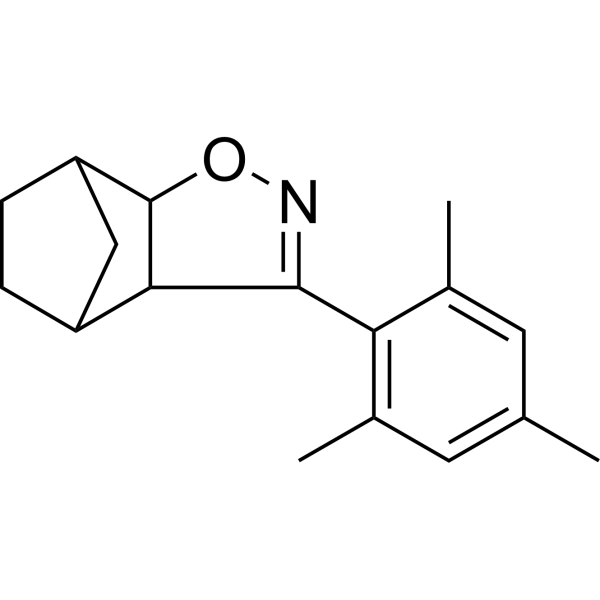
    SN 2 is a potent activator of TRPML3 ion channel with an EC50 of 1.8 μM . SN 2 also acts as a potent inhibitor of Dengue virus 2 (DENV2) and Zika virus (ZIKV) [2].
    SN 2
  • HY-19997

    TATM

    Biochemical Assay Reagents Cancer
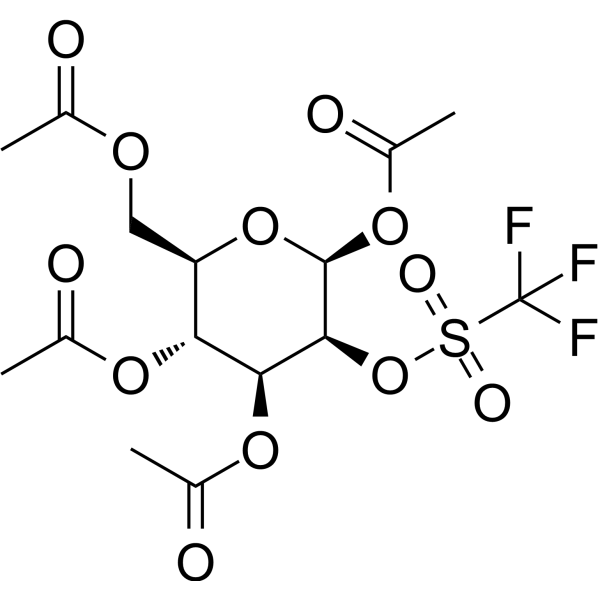
    Mannose triflate is a glucose analog. Mannose triflate is a precursor for 18F-FDG synthesis for PET applications. Mannose triflate binds to 18F via SN2 nucleophilic substitution reaction. Mannose triflate can be used for an imaging technique in detection of cancer [2] .
    Mannose triflate
  • HY-W019833

    PC(14:0/18:0); 1-Myristoyl-2-stearoyl-SN-glycero-3-phosphocholine

    Endogenous Metabolite Metabolic Disease
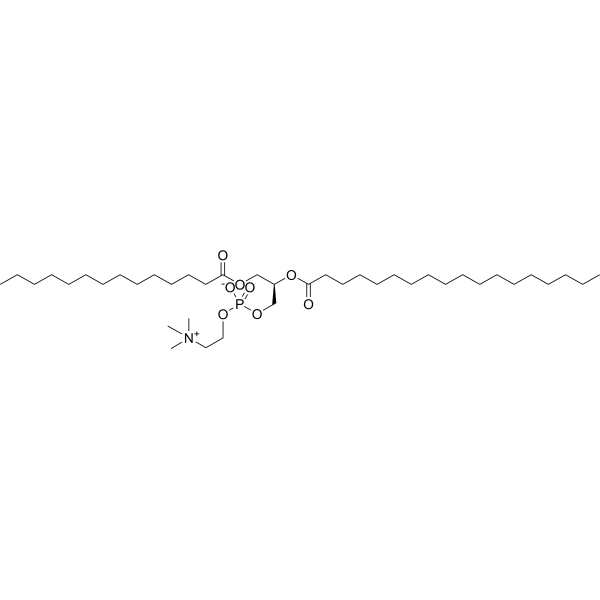
    MSPC is an asymmetrical phosphatidylcholine containing a myristic acid (14:0) at the sn-1 position and a stearic acid (18:0) at the sn-2 position. It can self assemble in water to form lipid bilayers. Reagent grade, for research purpose.
    MSPC
  • HY-175067

    DHPI-4,5-P2 sodium salt; PI(4,5)P2 (6:0/6:0) sodium salt; PIP2[4',5'](6:0/6:0) sodium salt

    Biochemical Assay Reagents Others
    PtdIns-(4,5)-P2 (1,2-dihexanoyl) (sodium salt) is a synthetic analog of natural Ptdlns with C6:0 fatty acids at the sn-1 and sn-2 positions.
    PtdIns-(4,5)-P2 (1,2-dihexanoyl) sodium salt
  • HY-P3029A

    PLA2, Crotalus adamanteus Venom

    Phospholipase Others
    Phospholipase A2, Crotalus adamanteus Venom (PLA2) catalyzes the hydrolysis of the sn-2 position of membrane glycerophospholipids to liberate arachidonic acid (AA). Phospholipase A2, Crotalus adamanteus Venom is a member of the class of heat-stable, calcium-dependent enzymes, is often used in biochemical studies .
    Phospholipase A2, Crotalus adamanteus Venom
  • HY-W674124

    TG(15:0/15:0/15:0); 1,2,3-Tripentadecanoyl glycerol

    Endogenous Metabolite Metabolic Disease
    Tripentadecanoin (TG(15:0/15:0/15:0)) is a triacylglycerol that contains pentadecanoic acid (HY-W004283) at the sn-1, sn-2, and sn-3 positions.
    Tripentadecanoin
  • HY-W040185

    1,2-DPPA sodium; PA(14:0/14:0) sodium; 1,2-Dimyristoyl-SN-glycero-3-phosphate sodium

    Liposome Metabolic Disease
    1,2-Dimyristoyl-sn-glycero-3-phosphate monosodium is a phospholipid containing the long-chain (14:0) myristic acid inserted at the sn-1 and sn-2 positions. It can be used in the generation of micelles, liposomes, and other types of artificial membranes.
    1,2-Dimyristoyl-sn-glycero-3-phosphate monosodium
  • HY-157697

    18:0p/20:4-PE; C18(Plasm)-20:4-PE; PE(P-18:0/20:4)

    Endogenous Metabolite Metabolic Disease
    1-1(Z)-Octadecenyl-2-arachidonoyl-sn-glycero-3-PE (18:0p/20:4-PE; C18(Plasm)-20:4-PE) is a plasmalogen that contains 1(Z)-octadecenoic acid and arachidonic acid (HY-109590) at the sn-1 and sn-2 positions, respectively.
    1-1(Z)-Octadecenyl-2-arachidonoyl-sn-glycero-3-PE
  • HY-141636

    1-Palmitoyl-2-arachidonoyl-SN-glycero-3-phosphocholine; PAPC; PC(16:0/20:4)

    Endogenous Metabolite Biochemical Assay Reagents Cardiovascular Disease
    1-Palmitoyl-2-arachidonoyl-sn-glycero-3-PC (PAPC) is a phospholipid containing palmitic acid (16:0) and arachidonic acid (20:4) at the sn-1 and sn-2 positions, respectively, that is found in biological membranes. PAPC is oxidized in vivo, and its oxidation products are involved in chronic inflammation and vascular disease. PAPC has been used to study signaling of oxidized phospholipids. Levels of PAPC are decreased in isolated human multiple myeloma cells.
    1-PalMitoyl-2-arachidoyllecithin
  • HY-W440981

    1-Stearoyl-2-palmitoyl-SN-glycero-3-phosphocholine

    Liposome Cancer
    SPPC is a phospholipid with different length of fatty acid. The sn-1 position contains a stearic acid (18:0) while the sn-2 position is occupied by a palmitic acid (16:0).
    SPPC
  • HY-W704966

    Endogenous Metabolite Metabolic Disease
    2-Stearoyl-sn-glycero-3-PC is a lysophospholipid that contains stearic acid (HY-B2219) at the sn-2 position. It has been found in rabbit myocardium.
    2-Stearoyl-sn-glycero-3-phosphocholine
  • HY-W440983

    PC(18:0/22:6); DHA-PC; 1-Stearoyl-2-docosahexaenoyl-SN-glyerco-3-phosphocholine

    PPAR Cardiovascular Disease Cancer
    SDPC (DHA-PC) is a new generation of omega-3 lipids, which contains an ester bond linking DHA at the sn-2 position of phospholipid. 1-Stearoyl-2-docosahexaenoyl-sn-glyerco-3-phosphocholine exerts anti-angiogenesis effect through activating PPARγ. 1-Stearoyl-2-docosahexaenoyl-sn-glyerco-3-phosphocholine significantly declines the proliferation, migration, tube formation of human umbilical vein endothelial cells. 1-Stearoyl-2-docosahexaenoyl-sn-glyerco-3-phosphocholine has the potential for anti-tumor angiogenesis research .
    SDPC
  • HY-W800805

    Liposome Cancer
    DOPE-Mal is a synthetic analog of naturally-occurring PE containing 18:1 fatty acids at the sn-1 and sn-2 positions with a terminal maliemide group. The maleimide group will react with a thiol group to form a covalent bond. The hydrophilic PEG spacer increases solubility in aqueous media.
    DOPE-Mal
  • HY-W583869

    1-Stearoyl-2-Oleoyl-SN-glycero-3-PE; 18:0-18:1 PE; PE(18:0/18:1)

    Liposome Metabolic Disease
    1-Stearoyl-2-oleoyl-sn-glycerol-3-phosphoethanolamine is a phospholipids that contains stearic acid and oleic acid at the sn-1 and sn-2 positions, respectively. It has been used in the generation of lipid nanoparticles (LNPs) for in vitro delivery of mRNA or nuclear-targeted plasmid DNA.
    1-Stearoyl-2-oleoyl-sn-glycerol-3-phosphoethanolamine
  • HY-131652

    16:0 Diether PC

    Liposome Metabolic Disease
    1,2-Di-O-hexadecyl-sn-glycero-3-phosphocholine (16:0 Diether PC) is a synthetic ether-linked phospholipid containing hexadecyl groups at the sn-1 and sn-2 positions. It is commonly used in the generation of liposomes and artificial membranes to study membrane dynamics.
    1,2-Di-O-hexadecyl-sn-glycero-3-phosphocholine
  • HY-157698

    C18(plasm)-20:4-PC; 18:0p/20:4-PC; PC(P-18:0/20:4)

    Endogenous Metabolite Metabolic Disease
    1-1(Z)-Octadecenyl-2-arachidonoyl-sn-glycero-3-PC is a plasmalogen that contains 1(Z)-octadecenoic acid and arachidonic acid (HY-109590) at the sn-1 and sn-2 positions, respectively. It scavenges singlet oxygen in a cell-free assay.
    1-1(Z)-Octadecenyl-2-arachidonoyl-sn-glycero-3-PC
  • HY-145384

    Phospholipase Inflammation/Immunology
    ROC-0929 (compound 13a) is a potent and selective inhibitor of secreted phospholipases A2 (sPLA2s) with an IC50 of 80 nM, specially targeting hGX. ROC-0929 inhibits the phosphorylation of ERK1/2 and p-38. Secreted phospholipases A2 (sPLA2s) are a family of disulfide-rich, Ca 2+-dependent enzymes that hydrolyze the sn-2 position of glycero-phospholipids to release a fatty acid and a lysophospholipid. ROC-0929 has the potential for researching inflammation related diseases .
    ROC-0929
  • HY-W440958

    PSPC; PC(16:0-18:0)

    Liposome Cancer
    1-Palmitoyl-2-stearoyl-sn-glycero-3-phosphocholine is an assymetrical phospholipid containing saturated palmitic and stearic acid at the sn-1 and sn-2 position respectively. The phosphate group is attached to choline.
    1-Palmitoyl-2-stearoyl-sn-glycero-3-phosphocholine
  • HY-134154

    PAzePC; Azelaoyl PC; 1-Palmitoyl-2-Azelaoyl PC

    Endogenous Metabolite Metabolic Disease
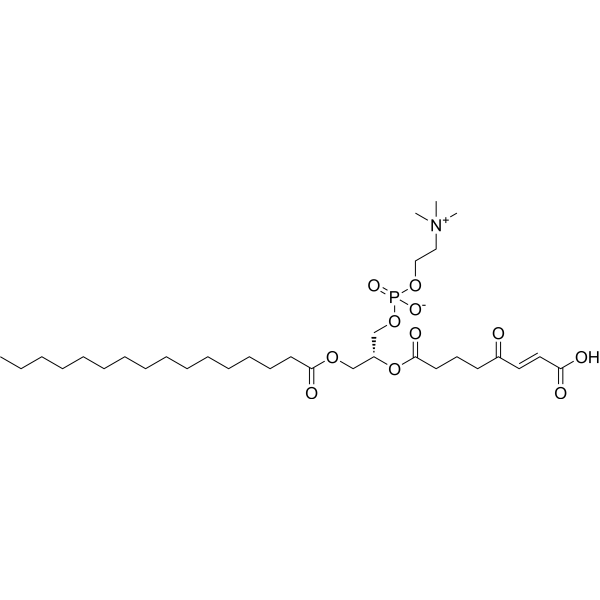
    Oxidized low-density lipoprotein (oxLDL) particles contain low molecular weight species which are cytotoxic and pro-atherogenic. Many of these substances were isolated and purified from oxLDL and identified as phosphatidylcholine species containing a fragmented, oxidized short-chain fatty acid remnant at the sn-2 position. PAz-PC (Azelaoyl PC) is one of the predominant oxLDL species and may be one of the important structural determinants of oxLDL.
    PAz-PC
  • HY-P10053

    Phospholipase Metabolic Disease
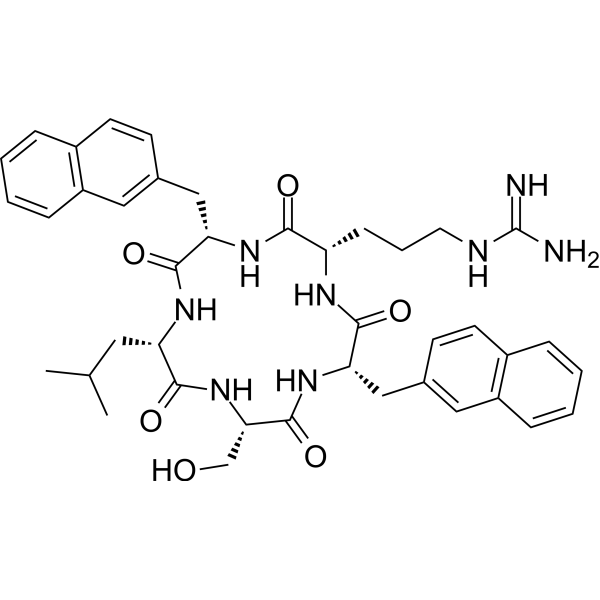
    sPLA2-IIA Inhibitor is a cyclic pentapeptide analog of FLSYK (cyclic 2-Nal-Leu-Ser-2-Nal-Arg (c2)), that binds to hGIIA (human IIA phospholipase A2) and inhibits its hydrolytic ability. sPLA2 is a member of the esterase superfamily that catalyzes the hydrolysis of the ester bond at the sn-2 position of glycerophospholipids, releasing free fatty acids such as arachidonic acid and lysophospholipids .
    sPLA2-IIA Inhibitor
  • HY-W127380

    Biochemical Assay Reagents Others
    Arachidonoyl Thio-PC is a substrate of many phospholipase A2 (PLA2), including sPLA2, cPLA2 and iPLA2. Cleavage of sn-2 fatty acids by PLA2 results in the production of free thiols, which react with chromogenic reagents such as DTNB (Ellman's reagent) and DTP, allowing quantification of PLA2 activity. Isozyme-specific cPLA2 activity can be measured by depleting or inhibiting sPLA2 and iPLA2 activity in the assay.
    Arachidonoyl thio-PC
  • HY-N7953

    Endogenous Metabolite Metabolic Disease
    1,2-Dioleoyl-3-linoleoyl-rac-glycerol (OOL) is a triacylglycerol containing oleic acid at the sn-1 and sn-2 positions and linoleic acid at the sn-3 position. It is found in a variety of seed and vegetable oils, including pumpkin seed, olive, and sesame oils.
    1,2-Dioleoyl-3-linoleoyl-rac-glycerol
  • HY-141614

    Phosphatidylcholine Diarachidoyl; 1,2-DAPC; L-α-Diarachidonoyl lecithin

    Liposome Metabolic Disease
    1,2-Diarachidoyl-sn-glycero-3-phosphocholine (1,2-DAPC) is a phospholipid containing the saturated long-chain (20:0) arachidic acid inserted at the sn-1 and sn-2 positions. It can be used in the generation of micelles, liposomes, and other types of artificial membranes.
    1,2-Diarachidoyl-sn-glycero-3-phosphocholine
  • HY-W343736

    1,3-DPPE; 1,3-Dipalmitoyl-SN-glycero-2-PE

    Liposome Cancer
    1,3-Dipalmitoyl-glycero-2-phosphoethanolamine is a phospholipid containing the saturated long-chain (16:0) stearic acid inserted at the sn-1 and sn-3 positions and PE at the sn-2 site. It can be used in the generation of micelles, liposomes, and other types of artificial membranes.
    1,3-Dipalmitoyl-glycero-2-phosphoethanolamine
  • HY-117168

    Endogenous Metabolite Metabolic Disease
    1,2-Dilinoleoyl-sn-glycerol is a diacylglycerol (DAG) with linoleic acid (HY-N0729) (18:2) side chains attached at both the sn-1 and sn-2 positions . 1,2-Dilinoleoyl-sn-glycerol can be prepared from L-dilinoleoylphosphatidylcholine via hydrolysis with phospholipase C [2] .
    1,2-Dilinoleoyl-sn-glycerol
  • HY-W440982A

    (Rac)-PC(18:0/18:1); (Rac)-2-Oleoyl-1-stearoyl-SN-glycero-3-phosphocholine

    Liposome Others
    (Rac)-SOPC ((Rac)-PC(18:0/18:1)) ((Rac)-2-Oleoyl-1-stearoyl-sn-glycero-3-phosphocholine) is the racemate of SOPC (HY-W440982). SOPC is an asymmetrical phospholipid with saturated fatty acid (stearic acid/18:0) at sn-1 position and unsaturated fatty acid (oleic acid/18:1) at sn-2 position. SOPC can stabilize the outer segment membrane of frog rods .
    (Rac)-SOPC
  • HY-141642

    Glycerol triheptadecanoate; Trimargarin

    Biochemical Assay Reagents Others
    Triheptadecanoin is a triacylglycerol that contains heptadecanoic acid at the sn-1, sn-2, and sn-3 positions .
    Triheptadecanoin
  • HY-W440957

    PC(16:0/14:0); 1-palmitoyl-2-myristoyl-SN-glycero-3-phosphocholine

    Liposome Cancer
    PMPC is a phosphatidylcholine with asymmetrical fatty acid. Palmitic acid occupies sn-1 position while myristic acid is placed at the sn-2 position.
    PMPC
  • HY-W800733

    1,2-Dilauroyl-SN-glycero-3-phosphorylglycerol; PG(12:0/12:0)

    Liposome Cancer
    DLPG is a phospholipid containing lauric acid (12 chain fatty acid) inserted at the sn-1 and sn-2 positions. Its phosphate group is attached to glycerol. It is used in the generation of micelles, liposomes, and other artificial membranes.
    DLPG
  • HY-W590536

    1-Palmitoyl-2-Lauroyl-SN-glycero-3-Phosphatidylcholine; 1-Palmitoyl-2-Lauroyl-SN-glycero-3-Phosphocholine

    Liposome Cancer
    1,2-PLPC is a phospholipid containing palmitoyl (16:0) and lauryl (12:0) acyl substituents at the sn-1 and sn-2 positions, respectively. It can be used in the generation of micelles, liposomes, and other types of artificial membranes.
    1,2-PLPC
  • HY-175120

    1,2,3-Tri-10(Z)-pentadecenoyl glycerol

    Biochemical Assay Reagents Others
    Tri-10(Z)-pentadecenoin (1,2,3-Tri-10(Z)-pentadecenoyl glycerol) is a triacylglycerol that contains 10(Z)-pentadecenoic acid at the sn-1, sn-2, and sn-3 positions.
    Tri-10(Z)-pentadecenoin
  • HY-113925

    1,2-DLPA Sodium; (2R)-2,3-bis(dodecanoyloxy)propyl hydrogen phosphate sodium

    Liposome Metabolic Disease
    1,2-Dilauroyl-sn-glycero-3-phosphate (1,2-DLPA) sodium is a phospholipid containing the medium-chain (12:0) lauric acid inserted at the sn-1 and sn-2 positions. It can be used in the generation of micelles, liposomes, and other types of artificial membranes.
    1,2-Dilauroyl-sn-glycero-3-phosphate sodium
  • HY-W713925

    Endogenous Metabolite Metabolic Disease
    Diheptanoyl Thio-PC is a substrate for all phospholipase A2s (PLA2s) with the exception of cPLA2 and PAF-acetyl hydrolase (PAF-AH).1 Interaction of this compound with a PLA2 results in cleavage of the sn-2 fatty acid generating a free thiol on the lysophospholipid. This free thiol can be detected using chromogenic substrates such as DTNB (Ellman’s reagent) and DTP.
    Diheptanoyl Thio-PC
  • HY-W643167

    Glycerol Tritridecanoyl; 13:0 TAG; 13:0/13:0/13:0-TG

    Biochemical Assay Reagents Infection
    1,2,3-Tritridecanoyl glycerol is a synthetic triacylglycerol that contains tridecanoic acid in the sn-1, sn-2, and sn-3 positions. It has been used as a standard for the relative quantification of triacylglycerols in C. elegans fat stores. It has also been used as an internal standard for the quantification of triacylglycerols in the serum and liver of adult rat offspring receiving dietary conjugated linoleic acids during and after gestation.
    1,2,3-Tritridecanoylglycerol
  • HY-W127408

    Biochemical Assay Reagents Endogenous Metabolite Others
    1,2,3-Tripalmitoleoyl-rac-glycerol is a triacylglycerol containing palmitoleic acid at the sn-1, sn-2 and sn-3 positions. It reduces erythrocyte deformability in a concentration-dependent manner in the Reid filtration assay. Hepatic levels of 1,2,3-tripalmitoleoyl-rac-glycerol are increased in a JAK2L mouse model of hepatic steatosis. 1,2,3-Tripalmitoleoyl-rac-glycerol plasma levels are reduced in patients with predialysis renal disease.
    Tripalmitolein
  • HY-157742

    Biochemical Assay Reagents Others
    1,3-Dioleoyl-2-elaidoyl glycerol (OEO) is a triacylglycerol. 1,3-Dioleoyl-2-elaidoyl glycerol can be used for the research of the effects of unsaturation and sn-2 substitution on the polymorphic behavior of triacylglycerols .
    1,3-Dioleoyl-2-elaidoyl glycerol
  • HY-157741

    Lipase Others
    1-Myristoyl-2-oleoyl-3-palmitoyl-rac-glycerol (MOP) is a triacylglycerol containing myristic acid (HY-N2041), oleic acid (HY-N1446) and palmitic acid (HY-N0830) at the sn-1, sn-2 and sn-3 positions, respectively .
    1-Myristoyl-2-oleoyl-3-palmitoyl-rac-glycerol
  • HY-N7859

    1,3-Dioleoyl-2-myristoyl-rac-glycerol

    Lipase Others
    1,3-Dioleoyl-2-myristoyl glycerol is a triacylglycerol that contains oleic acid at the sn-1 and sn-3 positions and myristic acid at the sn-2 position .
    1,3-Dioleoyl-2-myristoyl glycerol
  • HY-176085

    Phospholipase Others
    Heptanoyl thio-PC is a sn-2 thiol-labeled Phospholipase A2 (HY-P3029) (PLA2) substrate that can be used to detect the activity of Phospholipase A2 .
    Heptanoyl thio-PC
  • HY-125744

    Biochemical Assay Reagents Others
    Palmitoyl thio-PC is a chromogenic substrate specific for PLA2 with a palmitoyl thioester at the sn-2 position. Palmitoyl thio-PC could be used to measure bee-venom sPLA2 activity in a phospholipid system .
    Palmitoyl thio-PC
  • HY-W725327

    1,2-Dipropionyl-SN-glycero-3-Phosphatidylcholine; 1,2-Dipropionyl-SN-glycero-3-Phosphocholine; PC(3:0/3:0)

    Endogenous Metabolite Metabolic Disease
    1,2-Dipropionyl-sn-glycero-3-PC is a phospholipid containing propionic acid at the sn-1 and sn-2 positions. It has been used to study the interaction between water and the phosphocholine headgroup in aqueous solutions.
    1,2-Dipropionyl-sn-glycero-3-phosphocholine
  • HY-170631

    Biochemical Assay Reagents Metabolic Disease
    1,2-Dielaidoyl-3-palmitoyl-rac-glycerol is a triacylglycerol that contains Elaidic acid (HY-113016) in the sn-1 and sn-2 positions and Palmitic acid (HY-N0830) in the sn-3 position.
    1,2-Dielaidoyl-3-palmitoyl-rac-glycerol
  • HY-W777866

    Biochemical Assay Reagents Others
    (Rac)-1-Linoleoyl-2-stearoyl-3-chloropropanediol is a diacylglycerol that contains Linoleic acid at the sn-1 position and stearic acid group at the sn-2 position. The chlorine is a good leaving group and can undergo substitution reactions.
    (Rac)-1-Linoleoyl-2-stearoyl-3-chloropropanediol
  • HY-145541

    1,2-Dinonadecanoin

    Biochemical Assay Reagents Others
    12-Dinonadecanoyl-rac-glycerol is a diacylglycerol containing nonadecanoic acid (HY-W004261) at the sn-1 and sn-2 positions. Nonadecanoic acid is a 19-carbon long saturated fatty acid. Nonadecanoic acid is the major constituent of the substance secreted by Rhinotermes marginalis to defence .
    12-Dinonadecanoyl-rac-glycerol
  • HY-157683

    Biochemical Assay Reagents Others
    16:0-18:1 Diether PG is a type of glycerophospholipids, in which the hexadecane and octadecene chains are connected to the sn-1 and sn-2 positions of the glycerol backbone via ether bonds, respectively. 16:0-18:1 Diether PG can be used to prepare liposomes .
    16:0-18:1 Diether PG
  • HY-125940S

    1,2-Dipalmitoyl-SN-glycero-3-phosphoglycerol-d62 sodium

    Isotope-Labeled Compounds Others
    DPPG-d62 (sodium) is deuterium labeled DPPG. DPPG sodium (1,2-Dipalmitoyl-sn-glycero-3-PG sodium) is a phospholipid containing the long-chain(16:0) palmitic acid inserted at the sn-1 and sn-2 positions. DPPG sodium is used in the generation of micelles, l
    DPPG-d62
  • HY-168372

    Phospholipase Metabolic Disease
    1-Myristoyl-2-Linoleoyl-sn-glycero-3-PC is a phospholipid that contains Myristic acid (HY-N2041) and Linoleic acid (HY-N0729) at the sn-1 and sn-2 positions, respectively, which is found in human plasma .
    1-Myristoyl-2-Linoleoyl-sn-glycero-3-PC

Inquiry Online

Your information is safe with us. * Required Fields.

Salutation


Country or Region *

Applicant Name *


Organization Name *

Department *


Email Address *


Product Name *

Cat. No.


Requested quantity *

Phone Number *


Remarks

Inquiry Online

Inquiry Information

Product Name:
Cat. No.:
Quantity:
MCE Japan Authorized Agent:

