
11 Results for "

Scar formation

" in MedChemExpress (MCE) Product Catalog:
Products (11)

11 Results for "Scar formation" in MCE Product Catalog:

25
25 Cited Publications
Cat. No.: HY-W008574
CAS No.: 51987-99-6
Target:  

PROTAC Linkers

Research Areas:  

Inflammation/Immunology Cancer

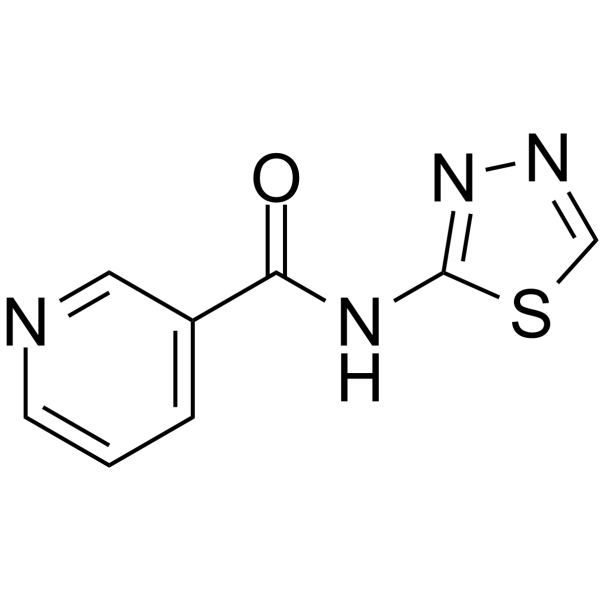
TGN-020 is a selective Aquaporin 4 (AQP4) inhibitor with an IC50 of 3.1 μM . TGN-020 is an alkyl chain-based PROTAC linker that can be used in the synthesis of PROTACs .TGN-020 alleviates edema and inhibits glial scar formation after spinal cord compression injury in rats .
loading...
    loading...
25
25 Cited Publications
Cat. No.: HY-W008574A
CAS No.: 1313731-99-5
Target:  

PROTAC Linkers

Research Areas:  

Inflammation/Immunology Cancer

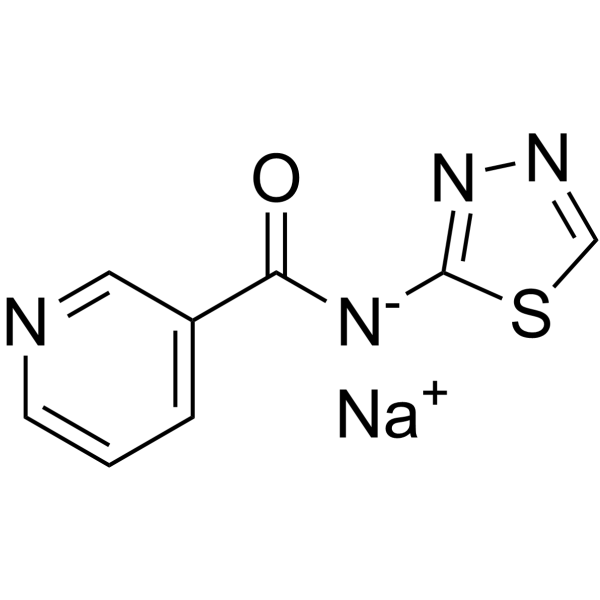
TGN-020 sodium is a selective Aquaporin 4 (AQP4) inhibitor with an IC50 of 3.1 μM . TGN-020 sodium is an alkyl chain-based PROTAC linker that can be used in the synthesis of PROTACs . TGN-020 sodium alleviates edema and inhibits glial scar formation after spinal cord compression injury in rats .
loading...
    loading...
Cat. No.: HY-113089
CAS No.: 17105-15-6
Synonyms: H-Glu(H-Lys-OH)-OH; γ-Glu-ε-Lys
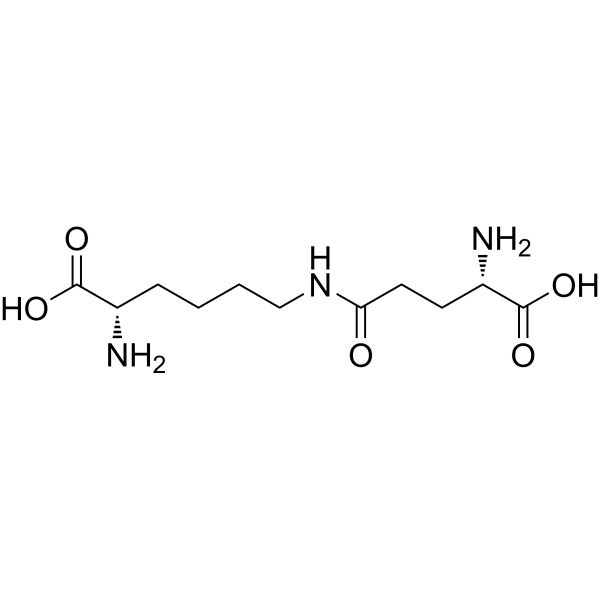
Epsilon-(gamma-glutamyl)-lysine (H-Glu (H-Lys-OH)-OH) is an isodipeptide formed during the proteolytic degradation of proteins containing Nε-(γ-glutamyl)-lysine cross-links. Epsilon-(gamma-glutamyl)-lysine serves as a substrate for γ-glutamylamine cyclotransferase, which specifically cleaves it. Epsilon-(gamma-glutamyl)-lysine is applicable to studies related to transglutaminase-mediated protein cross-linking and turnover, γ-glutamylamine cyclotransferase activity, glaucoma, and tissue scar formation .
loading...
    loading...
Cat. No.: HY-P10886
CAS No.: 1465809-36-2
Research Areas:  

Inflammation/Immunology

Zifogaptide is a gap junction protein channel regulator. Zifogaptide mimics the PDZ-binding motif at the C-terminal of Claudin C and competitively interferes with the interaction between Claudin–TJP1 (ZO-1) scaffold. Zifogaptide can promote epithelial cell migration, reduce scar formation, and accelerate wound healing. Zifogaptide can be used for radiation dermatitis, skin injuries, etc .
loading...
    loading...
Cat. No.: HY-113089A
Purity:  98.55%
Synonyms: H-Glu(H-Lys-OH)-OH TFA; γ-Glu-ε-Lys TFA
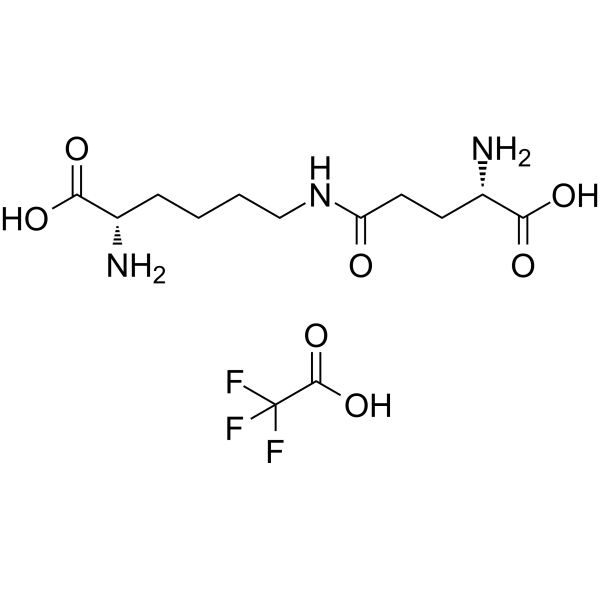
Epsilon-(gamma-glutamyl)-lysine TFA (H-Glu (H-Lys-OH)-OH) is an isodipeptide formed during the proteolytic degradation of proteins containing Nε-(γ-glutamyl)-lysine cross-links. Epsilon-(gamma-glutamyl)-lysine TFA serves as a substrate for γ-glutamylamine cyclotransferase, which specifically cleaves it. Epsilon-(gamma-glutamyl)-lysine TFA is applicable to studies related to transglutaminase-mediated protein cross-linking and turnover, γ-glutamylamine cyclotransferase activity, glaucoma, and tissue scar formation .
loading...
    loading...
Cat. No.: HY-132602
CAS No.: 1848266-71-6
Synonyms: MRG-201
Target:  

MicroRNA

Research Areas:  

Inflammation/Immunology

Remlarsen (MRG-201), a miR-29b mimic, acts a miR-29b agonist. Remlarsen has the potential for preventiong formation of a fibrotic scar or cutaneous fibrosis .
loading...
    loading...
Cat. No.: HY-132602A
Purity:  98.72%
Synonyms: MRG-201 sodium
Target:  

MicroRNA

Research Areas:  

Inflammation/Immunology

Remlarsen (MRG-201), a miR-29b mimic, acts a miR-29b agonist. Remlarsen sodium has the potential for preventiong formation of a fibrotic scar or cutaneous fibrosis .
loading...
    loading...
Cat. No.: HY-113089AR
Synonyms: H-Glu(H-Lys-OH)-OH TFA (Standard); γ-Glu-ε-Lys TFA (Standard)
Epsilon-(gamma-glutamyl)-lysine TFA (Standard) (H-Glu(H-Lys-OH)-OH TFA (Standard)) is the analytical standard of Epsilon-(gamma-glutamyl)-lysine TFA (HY-113089A). This product is intended for research and analytical applications. Epsilon-(gamma-glutamyl)-lysine TFA (H-Glu (H-Lys-OH)-OH) is an isodipeptide formed during the proteolytic degradation of proteins containing Nε-(γ-glutamyl)-lysine cross-links. Epsilon-(gamma-glutamyl)-lysine TFA serves as a substrate for γ-glutamylamine cyclotransferase, which specifically cleaves it. Epsilon-(gamma-glutamyl)-lysine TFA is applicable to studies related to transglutaminase-mediated protein cross-linking and turnover, γ-glutamylamine cyclotransferase activity, glaucoma, and tissue scar formation .
loading...
    loading...
Cat. No.: HY-110367A
CAS No.: 1228102-01-9
Target:  

Src

Research Areas:  

Others

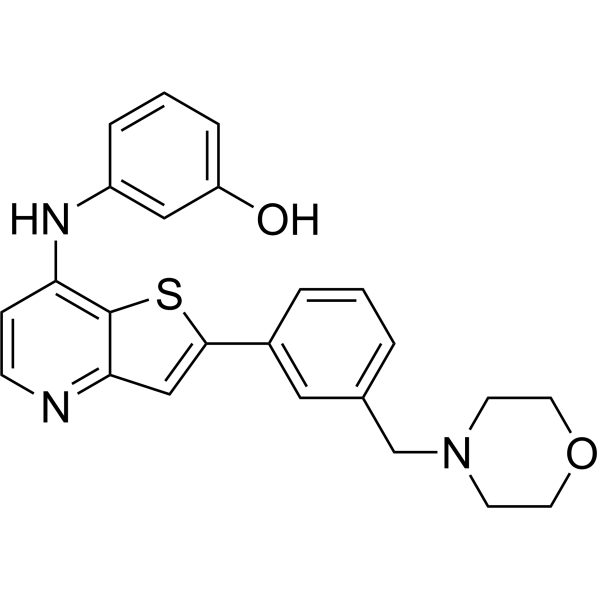
LCB 03-0110, a thienopyridine derivative, is a potent pan-discoidin domain receptor/c-Src family tyrosine kinase inhibitor. LCB 03-0110 suppresses scar formation by inhibiting fibroblast and macrophage activation .
loading...
    loading...
Cat. No.: HY-175076
Globotriaosylceramide (non-hydroxy) (porcine RBC) is a glycosphingolipid found in the cell membranes of mammals. Globotriaosylceramide (non-hydroxy) (porcine RBC) is the core pathogenic molecule of Fabry disease, and its level can be downregulated by supplementing α-galactosidase A. Globotriaosylceramide (non-hydroxy) (porcine RBC) amplifies B-cell receptor signals by regulating the localization of co-receptor CD19, and can be used as a vaccine adjuvant, capable of guiding the generation of broad-spectrum and cross-protective antibody responses. Globotriaosylceramide (non-hydroxy) (porcine RBC) promotes wound healing and reduces scar formation by regulating fibroblast heterogeneity .
loading...
    loading...
Cat. No.: HY-L185
2,568 compounds

Fibrosis is a kind of repair response to long-term tissue damage, which is mainly manifested by excessive deposition of extracellular matrix (ECM) and scar formation. Myofibroblasts are the main generating cells of extracellular matrix, and their activation process is related to various pathological mechanisms including Oxidative stress, chronic inflammation and cytokine secretion. Fibrosis can occur in many organs, such as kidneys, liver, heart, lungs, etc. Continuous fibrosis can lead to the destruction of the normal structure of tissues and organs, and if not controlled in time, may cause organ failure or even life-threatening.

MCE contains 2,568 compounds targeting ant-fibrosis targets such as TGF-β, PI3K, Wnt, MMP, etc. These compounds have clear or potential anti-fibrosis activity and can be used for mechanism research and drug screening of fibrosis diseases.

  • 1

