
24 Results for "

T helper cells

" in MedChemExpress (MCE) Product Catalog:
Products (24)

24 Results for "T helper cells" in MCE Product Catalog:

2
2 Cited Publications
Cat. No.: HY-109520
CAS No.: 147245-92-9
Purity:  ≥98.0%
Target:  

MHC

Research Areas:  

Inflammation/Immunology Cancer

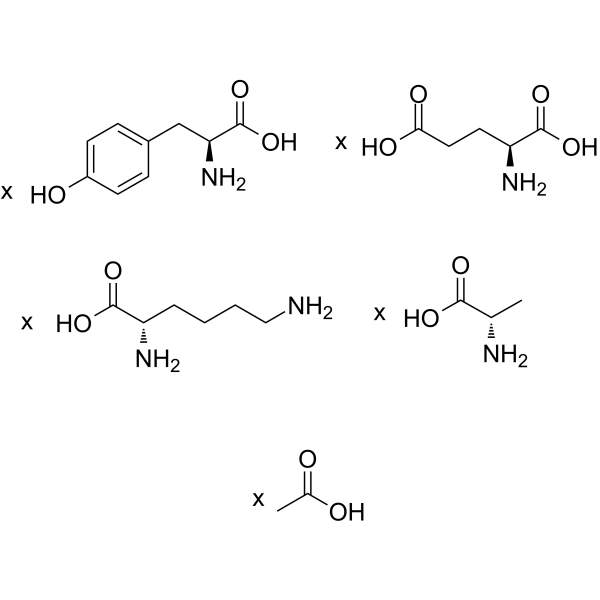
Glatiramer acetate, a synthetic analogue of myelin basic protein and an immunomodulating agent, inhibits Experimental autoimmune encephalomyelitis (EAE), and can be used for the research of multiple sclerosis. Glatiramer acetate exhibits strong and promiscuous binding to MHC molecules and consequent competition with various myelin antigens for their presentation to T cells. A further aspect of its action is potent induction of specific suppressor cells of the T helper 2 (Th2) type that migrate to the brain and lead to in situ bystander suppression .
loading...
    loading...
2
2 Cited Publications
Cat. No.: HY-138113
CAS No.: 477888-48-5
Purity:  98.61%
Pyrrothiogatain is a transcription factor GATA3 inhibitor with an IC50 of 54.7 μM. Pyrrothiogatain inhibits the DNA-binding activity of GATA3 and inhibits the T helper 2 (Th2) cell differentiation and expression of Th2 cytokines. Pyrrothiogatain shows anti-infection effect by inhibiting ACE2 expression. Pyrrothiogatain can be used for the researches of inflammation, immunology, infection and cancer, such as colon cancer and SARS-CoV-2 infection .
loading...
    loading...
Cat. No.: HY-172736
CAS No.: 3005272-36-3
Synonyms: BMS-986458
Target:  

PROTACs BCL6 CD20

Research Areas:  

Cancer

Toviblideg (BMS-986458) is a highly selective, orally active cereblon-based BCL6 PROTAC degrader and antitumor agent. Toviblideg selectively degrades BCL6 by binding cereblon to the BTB domain of BCL6, thereby regulating the cell cycle, antiproliferative and interferon signaling pathways, and upregulating the expression and distribution of CD20. Toviblideg modulates the phenotype of follicular helper T cells and reduces circulating tumor DNA levels. The combination of Toviblideg with CD20xCD3 bispecific antibody also enhances the efficiency of T cell tumor infiltration and expansion. Toviblideg induces regression of BCL6-positive tumors and prolongs survival, and it is suitable for research related to B-cell non-Hodgkin lymphoma, diffuse large B-cell lymphoma, follicular lymphoma, and relapsed/refractory lymphoma .
loading...
    loading...
Cat. No.: HY-E70562
Target:  

Bacterial

Research Areas:  

Infection Cancer

Mucinase StcE is a zinc metalloproteinase belonging to the M66 family, which is secreted by enterohemorrhagic Escherichia coli via the type II general secretion pathway. Mucinase StcE specifically recognizes and cleaves the 'T*XT' motif in mucin-type glycoproteins with α-O-glycans (such as MUC2, Mucin 7, Glycoprotein 340, CD45, CD43, C1 Esterase Inhibitor (HY-P991629), etc.). By degrading the mucus layer to reduce its viscosity, inhibiting complement cascade activation, and localizing complement regulatory factors to the cell membrane, Mucinase StcE helps bacteria penetrate the mucosal barrier, adhere to host cells, and evade immune clearance. Mucinase StcE can serve as a mucin-specific proteolytic tool for research on mucinous carcinomas derived from the colon, esophagus, and salivary glands .
loading...
    loading...
Cat. No.: HY-101096
CAS No.: 953778-58-0
Purity:  99.96%
Synonyms: MK-8998; CX-8998; JZP385
Target:  

Calcium Channel

Research Areas:  

Neurological Disease Cancer

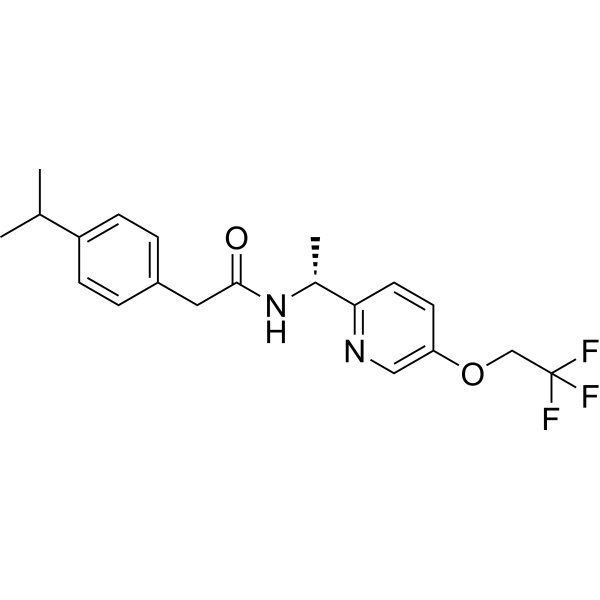
Suvecaltamide (MK-8998) is a selective T-type calcium channel inhibitor with oral efficacy. Suvecaltamide exhibits no cytotoxicity in myeloma cell lines and does not affect the antitumor efficacy of Bortezomib (BTZ). Suvecaltamide reverses BTZ-induced peripheral neuropathy (CIPN) in mouse and rat models, and helps inhibit myeloma growth .
loading...
    loading...
Cat. No.: HY-P990053
CAS No.: 2645437-82-5
Synonyms: GSK-6097608
Nelistotug (GSK-6097608) is a human IgG1κ antibody targeting CD96. Nelistotug helps T cells and natural killer cells kill cancer cells by blocking CD96 .
loading...
    loading...
Cat. No.: HY-161982
CAS No.: 3079468-41-7
Target:  

TNF Receptor

Research Areas:  

Cancer

JNU-0921 is a potent and orally active CD137 agonist. JNU-0921 increases the mRNA expression of IFN-γ and GZMB. JNU-0921 induces luciferase activity with an EC50 value of 64.07 nM.JNU-0921 enhances effector and memory function of cytotoxic CD8 + T cells (CTLs) and alleviates their exhaustion. JNU-0921 also skews polarization of helper T cells toward T helper 1 type and enhances their activity to boost CTL function. JNU-0921 shows anticancer activity .
loading...
    loading...
Cat. No.: HY-163480
CAS No.: 2796997-12-9

Target:  

CXCR

Research Areas:  

Inflammation/Immunology

PF-06835375 is a selective, humanized CXCR5-targeting immunoglobulin G1 antibody. PF-06835375 depletes CXCR5-positive B cells, follicular helper T cells and circulating Tfh-like cells. PF-06835375 is applicable to research related to autoimmune diseases .
loading...
    loading...
Cat. No.: HY-B1044
CAS No.: 20098-14-0
Synonyms: Kemantane; 5-Hydroxy-2-adamantanone
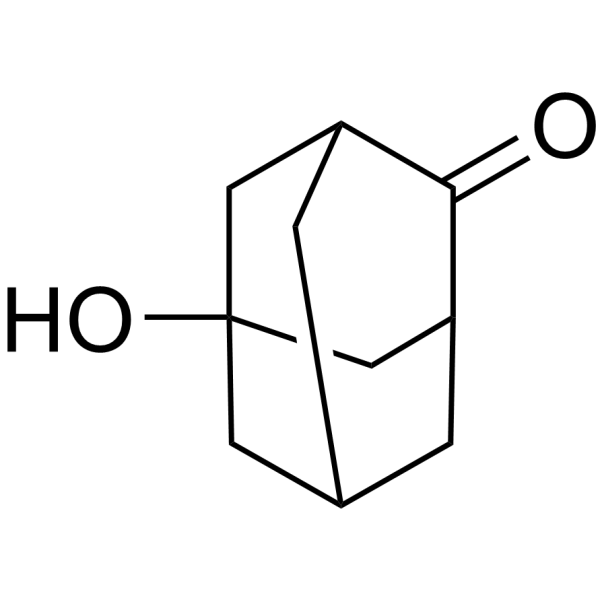
Idramantone (Kemantane, 5-Hydroxy-2-adamantanone) is an adamantane-based immunomodulator. Idramantone increases the activity of T helper cells by 1.5 to 2-fold, but exerts no significant effect on the functional activity, induction or accumulation of antigen-specific T suppressor cells. Idramantone serves as a key intermediate for the synthesis of various adamantane derivatives, and can be produced via the regioselective oxidation of 2-adamantanone catalyzed by P450cam monooxygenase, a process that relies on an NADH regeneration system to provide reducing equivalents. Idramantone can be used in studies related to immunomodulation .
loading...
    loading...
Cat. No.: HY-P10424
CAS No.: 2378606-21-2
Target:  

PD-1/PD-L1

Research Areas:  

Cancer

OPBP-1 is a D-peptide obtained by phage display screening, molecular docking and molecular dynamics simulation. OPBP-1 has high stability and strong antitumor and oral activity. OPBP-1 can selectively bind PD-L1 protein, significantly block the interaction between PD-1 and PD-L1, and this blocking effect helps to restore and improve the function of T lymphocytes and reduce the proportion of bone marrow derived suppressor cells (MDSCs) to combat tumor-induced immune escape. OPBP-1 can be used in cancer immunotherapy research .
loading...
    loading...
Cat. No.: HY-174613
Target:  

mRNA

Research Areas:  

Inflammation/Immunology

Human IL27 mRNA encodes the human interleukin 27 (IL27) protein, one of the subunits of a heterodimeric cytokine complex. IL-27 has pro- and anti-inflammatory properties, that can regulate T-helper cell development, suppress T-cell proliferation, stimulate cytotoxic T-cell activity and induce isotype switching in B-cells.
loading...
    loading...
Cat. No.: HY-106755
CAS No.: 84290-27-7
Purity:  98.95%
Synonyms: BWA589C
Target:  

HIV

Research Areas:  

Infection Cancer

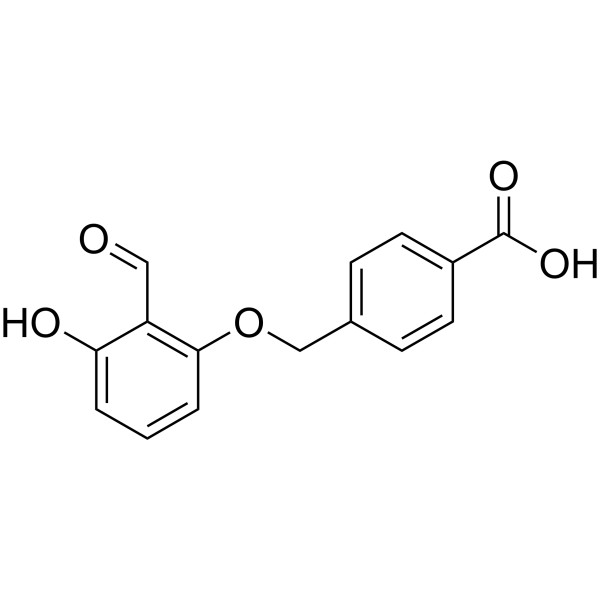
Tucaresol is an orally bioavailable immunopotentiatory drug that show to enhance T-helper-cell activity, with the induction of increased IL-2 and IFN-γ levels in mice and humans. Tucaresol has anti-HIV effect .
loading...
    loading...
Cat. No.: HY-W016773
CAS No.: 112-47-0
1,10-Decanediol is a diol compound that can react with α-ketoglutarate (aKG) to generate polymeric microparticles (termed paKG MPs) for the sustained release of aKG, thereby promoting immunosuppressive regulation. Additionally, paKG MPs can bind to dendritic cells (DCs), reducing their glycolysis and mitochondrial respiration in vitro. These metabolic changes lead to the modulation of MHC-II and CD86 expression in DCs and alter the frequency of regulatory T cells (Tregs) as well as T-helper type 1/2/17 cells in vitro. 1,10-Decanediol can be used in research within the field of immunometabolism. can be used as a surfactant/stabilizer in the synthesis of nanomaterials .
loading...
    loading...
Cat. No.: HY-P10593
CAS No.: 126779-14-4
Research Areas:  

Cancer

Influenza A NP (383-391) (HLA-B27) is a peptide sequence derived from tetanus toxin. Influenza A NP (383-391) (HLA-B27) is a broadly immunogenic CD4+ T helper cell epitope that enhances CD8+ cytotoxic T lymphocyte (CTL) responses. Influenza A NP (383-391) (HLA-B27) can be used in breast cancer research .
loading...
    loading...
Cat. No.: HY-106166
CAS No.: 28507-02-0
Synonyms: 16α-Bromoepiandrosterone
α-Epibromide (16α-Bromoepiandrosterone) is an adrenal steroid derivative. α-Epibromide decreases nitric oxide production. α-Epibromide restores T helper cell type 1 activity and accelerates chemotherapy-induced bacterial clearance in a model of progressive pulmonary tuberculosis. α-Epibromide reduces mortality related to excessive inflammation and opportunistic lung infections .
loading...
    loading...
Cat. No.: HY-D0070
CAS No.: 208850-35-5
Synonyms: Diaminofluorescein 2T
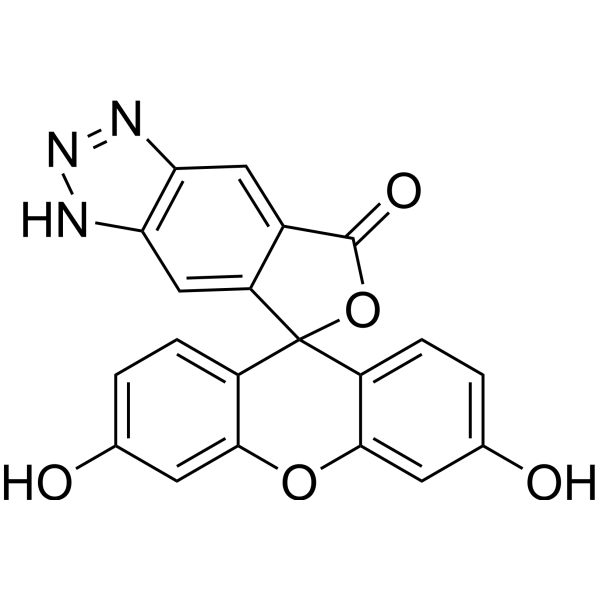
DAF-2T (Diaminofluorescein 2T) is a multifunctional dye. Dyes are important tools in biological experiments. They can help researchers observe and analyze cell structures, track biomolecules, evaluate cell functions, distinguish cell types, detect biomolecules, study tissue pathology and monitor microorganisms. Their applications range from basic scientific research to clinical A wide range of diagnostics. Dyes are also widely used in traditional fields such as textile dyeing, as well as in emerging fields such as functional textile processing, food pigments and dye-sensitized solar cells.
loading...
    loading...
Cat. No.: HY-106755R
CAS No.: 84290-27-7
Target:  

HIV Reference Standards

Research Areas:  

Infection Cancer

Tucaresol (Standard) is the analytical standard of Tucaresol. This product is intended for research and analytical applications. Tucaresol is an orally bioavailable immunopotentiatory drug that show to enhance T-helper-cell activity, with the induction of increased IL-2 and IFN-γ levels in mice and humans. Tucaresol has anti-HIV effect .
loading...
    loading...
Cat. No.: HY-W016773S
CAS No.: 347841-78-5
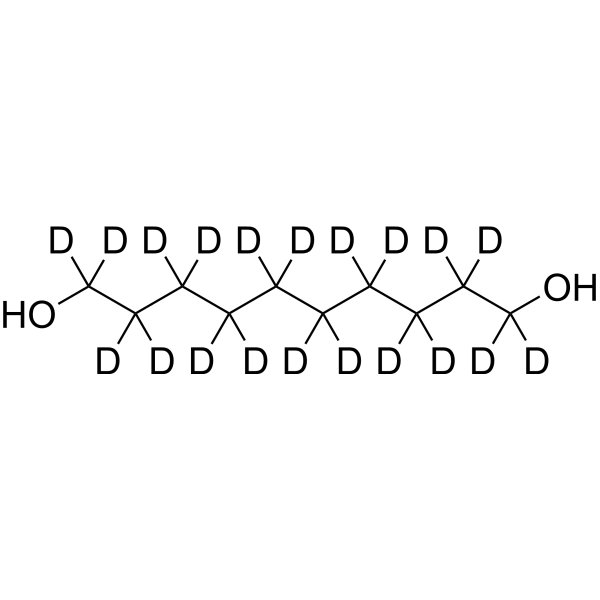
1,10-Decanediol-d20 is the deuterium labeled 1,10-Decanediol . 1,10-Decanediol is a diol compound that can react with α-ketoglutarate (aKG) to generate polymeric microparticles (termed paKG MPs) for the sustained release of aKG, thereby promoting immunosuppressive regulation. Additionally, paKG MPs can bind to dendritic cells (DCs), reducing their glycolysis and mitochondrial respiration in vitro. These metabolic changes lead to the modulation of MHC-II and CD86 expression in DCs and alter the frequency of regulatory T cells (Tregs) as well as T-helper type 1/2/17 cells in vitro. 1,10-Decanediol can be used in research within the field of immunometabolism. can be used as a surfactant/stabilizer in the synthesis of nanomaterials .
loading...
    loading...
Cat. No.: HY-155077
Target:  

JNK

Research Areas:  

Cancer

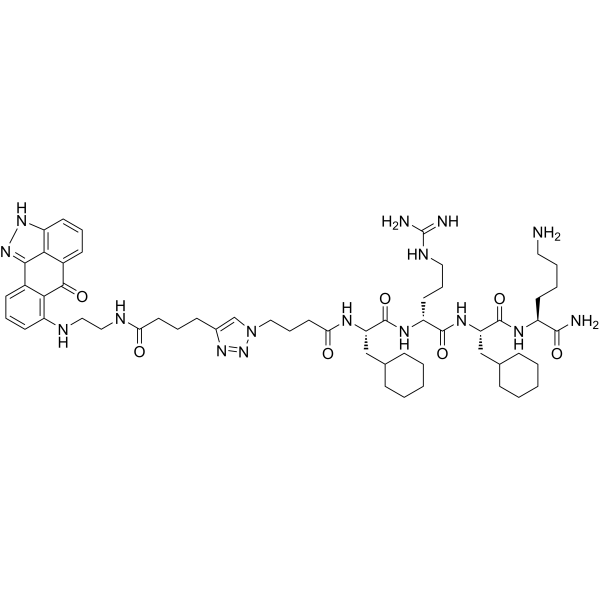
JNK-IN-12 (compound P2) is a mitochondrial-targeted JNK inhibitor (IC50=66.3 nM), consisting of a mitochondrial-specific cell-penetrating peptide and a specific inhibitor of JNK, SP600125 (HY-12041). JNK-IN-12 doesn't inhibit nuclear JNK signaling, but does inhibit mitochondrial JNK phosphorylation. JNK-IN-12 helps to improve the Parkinson's disease (PD) both in vitro and in vivo .
loading...
    loading...
Cat. No.: HY-10540
CAS No.: 908351-31-5
Synonyms: AEB071 acetate
Target:  

PKC NF-κB

Research Areas:  

Inflammation/Immunology

Sotrastaurin (AEB071) acetate is a selective, orally active PKC inhibitor. Sotrastaurin acetate inactivates NF-κB by inhibiting PKC α, β, θ, γ subtypes, thereby reducing the transcription levels of immune response-related genes. Sotrastaurin acetate effectively inhibits alloreactive T cell proliferation, conventional T cell activation, as well as the production of pro-inflammatory cytokines and B lymphocytes. Sotrastaurin acetate also maintains the functional and phenotypic stability of regulatory T cells, enhances Foxp3 expression and restores the balance of helper T lymphocytes. Sotrastaurin acetate can prolong the survival time of allografts, and alleviate inflammatory responses and myasthenic symptoms by reducing anti-AChR antibody levels. Sotrastaurin acetate is widely used in studies related to kidney transplantation, psoriasis and myasthenia gravis .
loading...
    loading...

