27 Results for "

TRPV3

" in MedChemExpress (MCE) Product Catalog:
Products (27)

27 Results for "TRPV3" in MCE Product Catalog:

  • Isoforms Recommended:
3
3 Cited Publications
Cat. No.: HY-N0808
CAS No.: 76-22-2
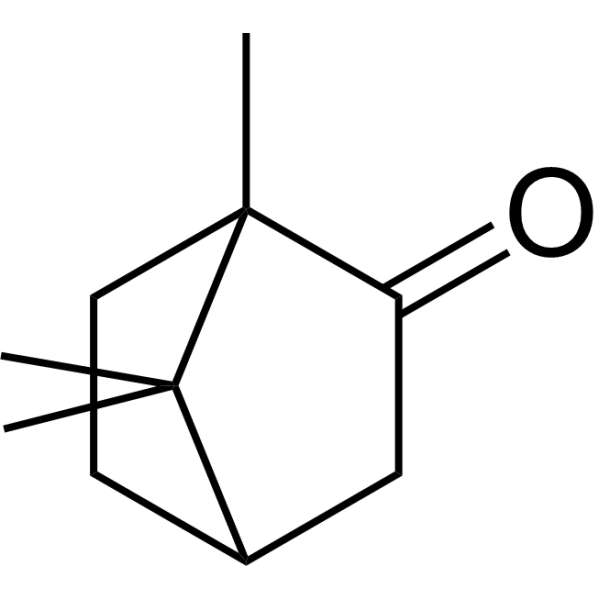
Synonyms: (±)-Camphor
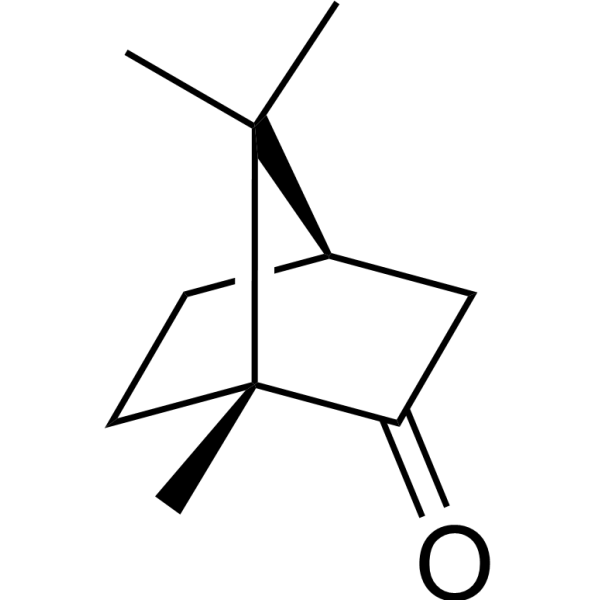
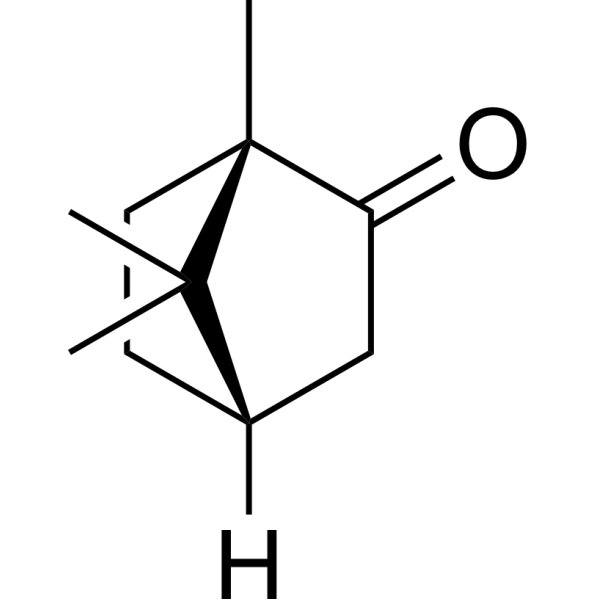
Camphor ((±)-Camphor) is a topical anti-infective and anti-pruritic and internally as a stimulant and carminative. However, Camphor is poisonous when ingested. Antiviral, antitussive, and anticancer activities . Camphor is a TRPV3 agonist .
loading...
    loading...
2
2 Cited Publications
Cat. No.: HY-157131
CAS No.: 2242724-49-6
Purity:  99.84%
Target:  

TRP Channel

Research Areas:  

Neurological Disease

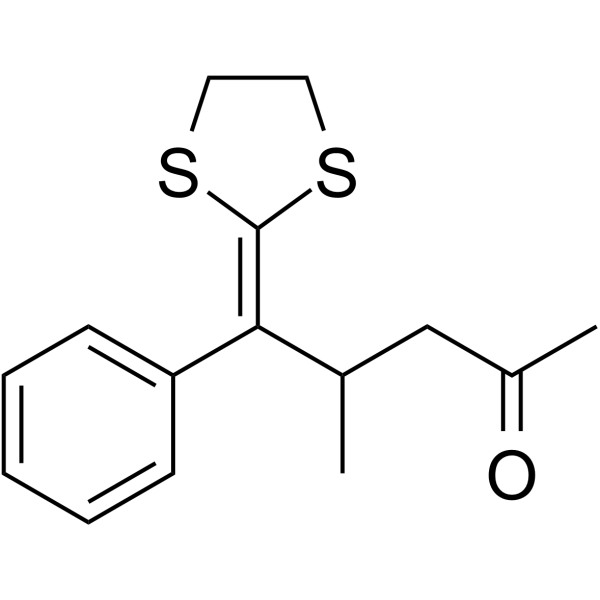
TRPV2-selective blocker 1 is a TRPV2-selective blocker that inhibits calcium influx and ionic currents. TRPV2-selective blocker 1 exhibits an IC50 of 6.3 μM against rat TRPV2, and shows no activity against TRPV1, TRPV3 or TRPV4 channels. TRPV2-selective blocker 1 attenuates macrophage phagocytosis, LPS-induced macrophage migration, and calcium microdomains generated by peripheral TRPV2. TRPV2-selective blocker 1 is non-cytotoxic and can be used to investigate the function of TRPV2 during immune processes .
loading...
    loading...
1
1 Cited Publications
Cat. No.: HY-B0364A
CAS No.: 536-43-6
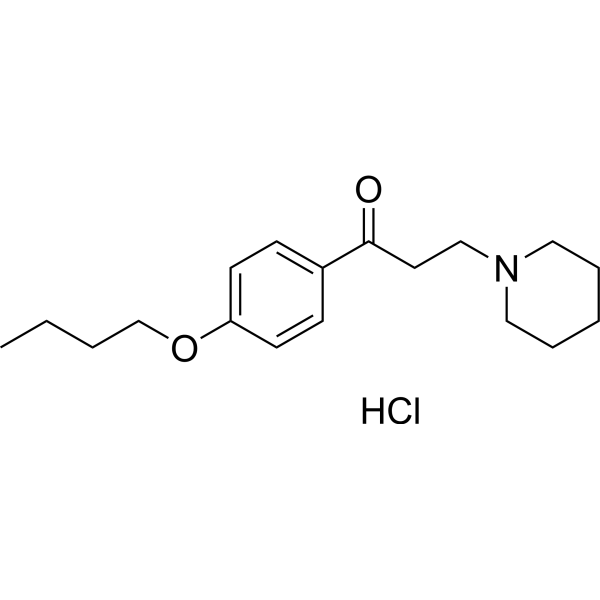
Synonyms: Dyclocaine hydrochloride
Dyclonine hydrochloride (Dyclocaine hydrochloride) is an orally active, blood-brain barrier-permeable piperidine phenylacetone small molecule commonly used as a local anesthetic. Dyclonine hydrochloride acts as a highly selective allosteric antagonist of TRPV3; it also reversibly inhibits G9a, ALDH2 and ALDH3A1, non-competitively blocks AChE. Dyclonine hydrochloride activates the Nrf2/ARE pathway, relieves the epigenetic silencing of FXN, blocks Aβ42 aggregation, and promotes remyelination and reparative polarization of microglia. Dyclonine hydrochloride alleviates pruritus via TRPV3 inhibition; it is used in studies of neurodegenerative disease models based on its AChE inhibitory, antioxidant and remyelinating effects; it sensitizes drug-resistant tumors through ALDH inhibition, and combined use with protease inhibitors induces more tumor cell apoptosis; it inhibits Candida albicans in vitro. Dyclonine hydrochloride can be used for research on multiple diseases including neurodegenerative diseases, cancer and pruritic dermatitis [3] .
loading...
    loading...
1
1 Cited Publications
Cat. No.: HY-N8264
CAS No.: 73255-40-0
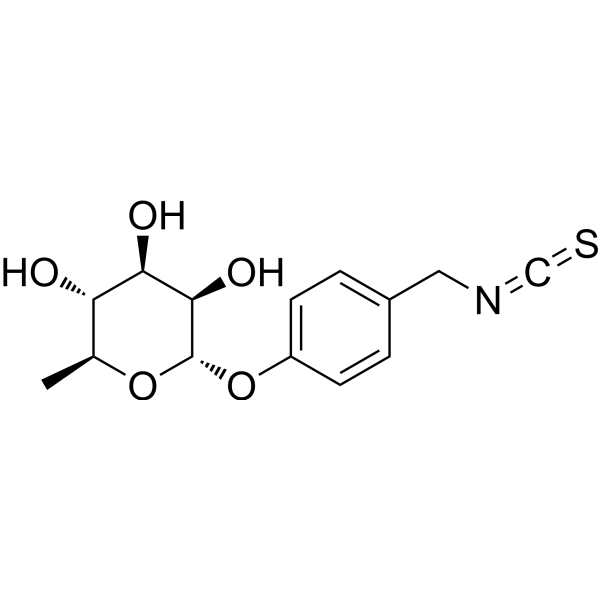
Moringin is a potent and selective TRPA1 ion channel natural agonist with an EC50 of 3.14 μM. Moringin does not activate or activates very weakly the vanilloids somatosensory channels TRPV1, TRPV2, TRPV3 and TRPV4, and the melastatin cooling receptor TRPM8. Moringin has hypoglycemic, antimicrobial, anti-inflammatory, anticancer and neuroprotection activities .
loading...
    loading...
1
1 Cited Publications
Cat. No.: HY-B1239
CAS No.: 548-66-3
Synonyms: Hexahydroadiphenine hydrochloride
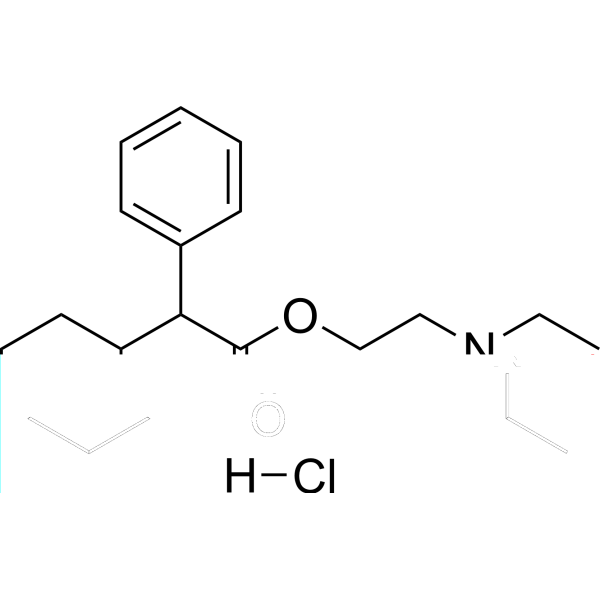
Drofenine (Cycloadiphene; Hexahydroadiphenine) hydrochloride is an brain-penetrant antispasmodic agent. Drofenine hydrochloride is a Kv2.1 channel inhibitor with human IC50 of 9.53 μM. Drofenine hydrochloride is a butyrylcholinesterase (BChE) inhibitor with Ki of 0.003 mM, and is a TRPV3 activator. Drofenine hydrochloride blocks Kv2.1-dependent potassium efflux, inhibits Kv2.1/JNK/NF-κB and IkBa/NF-kB signaling, suppresses Kv2.1 mRNA/protein expression. Drofenine suppresses oligomeric -induced microglial NLRP3 inflammasome activation and neuronal Tau hyperphosphorylation, improves cognitive impairment, promotes neurite outgrowth. Drofenine hydrochloride induces calcium influx in keratinocytes and exert cytotoxicity against keratinocytes. Drofenine hydrochloride ameliorates diabetic peripheral neuropathy -like pathology. Drofenine hydrochloride can be used for the researches of Alzheimer's disease, diabetic peripheral neuropathy and smooth muscle spasm [3] .
loading...
    loading...
1
1 Cited Publications
Cat. No.: HY-B1173
CAS No.: 464-49-3
Synonyms: D-(+)-Camphor; (1R)-(+)-Camphor
(+)-Camphor (D-(+)-Camphor; (1R)-(+)-Camphor) is an isomer of Camphor. Camphor is an agonist of monoterpenoid transient receptor potential (TRP) channels (such as TRPV1, TRPV3, TRPM8) and an inhibitor of TRPA1 channels. Camphor's derivatives have multiple biological activities, including antibacterial, antiviral, antioxidant, analgesic and anticancer. Camphor can selectively activate cold-sensitive TRP channels and inhibit TRPA1-mediated nociceptive signals. Camphor stimulates the cold-sensing nerve endings in the skin and regulates the activity of ion channels to exert analgesic, anti-inflammatory and anti-itching effects. It also has anti-proliferative and anti-mutagenic activities on tumor cells, which may be related to inhibiting ribosome function or inducing cell apoptosis. Camphor can be absorbed through the skin and (+)-Camphor can be used in the study of muscle and joint pain and inflammation .
loading...
    loading...
1
1 Cited Publications
Cat. No.: HY-160900
CAS No.: 1803003-65-7
Target:  

TRP Channel

Research Areas:  

Others

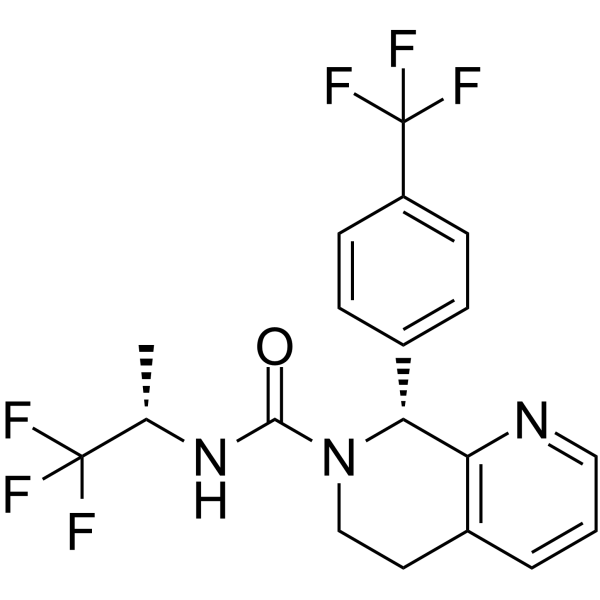
RN-1665 is an orally active TRPV4 antagonist that exhibits excellent selectivity for related TRP receptors such as TRPV1, TRPV3 and TRPM8. RN-1665 is a TRPV4 probe for focus screens, with IC50s of 0.26 μM and 0.39 μM for hTRPV4 and rTRPV4 from human and rat, respectively .
loading...
    loading...
1
1 Cited Publications
Cat. No.: HY-125527A
CAS No.: 528583-91-7
Purity:  99.1%
Synonyms: 17(R)-RvD1; AT-RvD1
Target:  

TRP Channel

Research Areas:  

Inflammation/Immunology

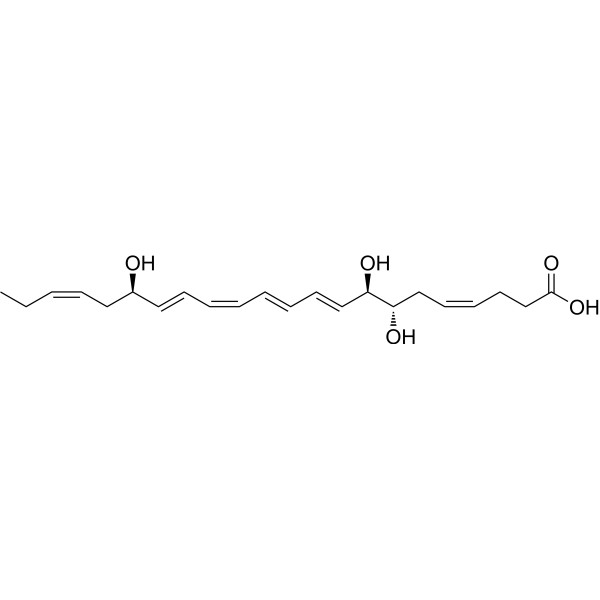
17R-Resolvin D1 (17R-RvD1; AT-RvD1) is an aspirin-triggered epimer of Resolvin D1, which exhibits anti-inflammatory activity in mice and human PMNs cells . 17R-Resolvin D1 specificially inhibits TRPV3 with an IC50 of 398 nM and exhibits peripheral anti-nociceptive efficacy .
loading...
    loading...
Cat. No.: HY-165559
CAS No.: 2019994-90-0
Target:  

TRP Channel

Research Areas:  

Inflammation/Immunology

Trpvicin is a potent and subtype-selective TRPV3 inhibitor with IC50s of 0.41 and 0.22 μM for hTRPV3-WT and hTRPV3-G573S mutant, respectively. Trpvicin exhibits minimal effects on other TRP family members (such as TRPV1/2/4/5/6, TRPA1 and TRPM8). Trpvicin inhibits the TRPV3 channel by stabilizing it in a closed state via VSLD-PD binding. Trpvicin accesses additional binding sites inside the central cavity of the G573S mutant to remodel symmetry and block the channel. Trpvicin inhibits itch and hair loss in mouse models. Trpvicin can be used for study of inflammation and immunology .
loading...
    loading...
Cat. No.: HY-131868
CAS No.: 1432051-63-2
Purity:  99.85%
Target:  

TRP Channel

Research Areas:  

Neurological Disease

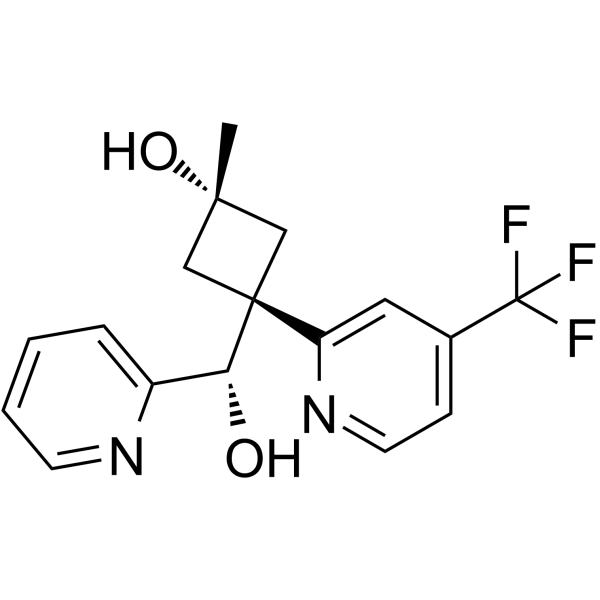
TRPV3 antagonist 74a is a potent and selective TRPV3 antagonist. TRPV3 antagonist 74a displays no significant activity against a panel of other ion channels. TRPV3 antagonist 74a can be used for the research of neuropathic pain .
loading...
    loading...
Cat. No.: HY-N0808R
CAS No.: 76-22-2
Synonyms: (±)-Camphor (Standard)
Camphor (Standard) is the analytical standard of Camphor. This product is intended for research and analytical applications. Camphor ((±)-Camphor) is a topical anti-infective and anti-pruritic and internally as a stimulant and carminative. However, Camphor is poisonous when ingested. Antiviral, antitussive, and anticancer activities . Camphor is a TRPV3 agonist .
loading...
    loading...
Cat. No.: HY-RS15123
Research Areas:  

Others

TRPV3 Human Pre-designed siRNA Set A contains three designed siRNAs for TRPV3 gene (Human), as well as a negative control, a positive control, and a FAM-labeled negative control.

loading...
    loading...
Cat. No.: HY-183281
Target:  

TRP Channel

Research Areas:  

Others

TRPV3 antagonist-1 is a selective TRPV3 channel antagonist with an IC50 of 11.97 μM. TRPV3 antagonist-1 shows selectivity over hTRPV1, hTRPV4, hTRPA1, and hTRPM8. TRPV3 antagonist-1 shows low cytotoxicity .
loading...
    loading...
Cat. No.: HY-186008
CAS No.: 311789-03-4
Target:  

TRP Channel

Research Areas:  

Neurological Disease

TRPV3 modulator-1 is a TRPV3 modulator.
loading...
    loading...
Cat. No.: HY-RS16860
Research Areas:  

Others

Trpv3 Mouse Pre-designed siRNA Set A contains three designed siRNAs for Trpv3 gene (Mouse), as well as a negative control, a positive control, and a FAM-labeled negative control.

loading...
    loading...
Cat. No.: HY-RS23301
Research Areas:  

Others

Trpv3 Rat Pre-designed siRNA Set A contains three designed siRNAs for Trpv3 gene (Rat), as well as a negative control, a positive control, and a FAM-labeled negative control.

loading...
    loading...
Cat. No.: HY-W015579
CAS No.: 464-48-2
(-)-Camphor is an enantiomer of Camphor (HY-N0808) and belongs to the class of bicyclic monoterpene ketones. Camphor ((±)-Camphor) is a topical anti-infective and antipruritic agent, and exhibits carminative effects when administered orally. However, Camphor is toxic upon ingestion. Camphor possesses antiviral, antitussive and anticancer activities. Camphor acts as a TRPV3 agonist .
loading...
    loading...
Cat. No.: HY-B1173R
CAS No.: 464-49-3
Synonyms: D-(+)-Camphor (Standard); (1R)-(+)-Camphor (Standard)
(+)-Camphor (Standard) is the analytical standard of (+)-Camphor. This product is intended for research and analytical applications. (+)-Camphor (D-(+)-Camphor; (1R)-(+)-Camphor) is an isomer of Camphor. Camphor is an agonist of monoterpenoid transient receptor potential (TRP) channels (such as TRPV1, TRPV3, TRPM8) and an inhibitor of TRPA1 channels. Camphor's derivatives have multiple biological activities, including antibacterial, antiviral, antioxidant, analgesic and anticancer. Camphor can selectively activate cold-sensitive TRP channels and inhibit TRPA1-mediated nociceptive signals. Camphor stimulates the cold-sensing nerve endings in the skin and regulates the activity of ion channels to exert analgesic, anti-inflammatory and anti-itching effects. It also has anti-proliferative and anti-mutagenic activities on tumor cells, which may be related to inhibiting ribosome function or inducing cell apoptosis. Camphor can be absorbed through the skin and (+)-Camphor can be used in the study of muscle and joint pain and inflammation .
loading...
    loading...
Cat. No.: HY-118535
CAS No.: 60374-41-6
Target:  

TRP Channel

Research Areas:  

Neurological Disease

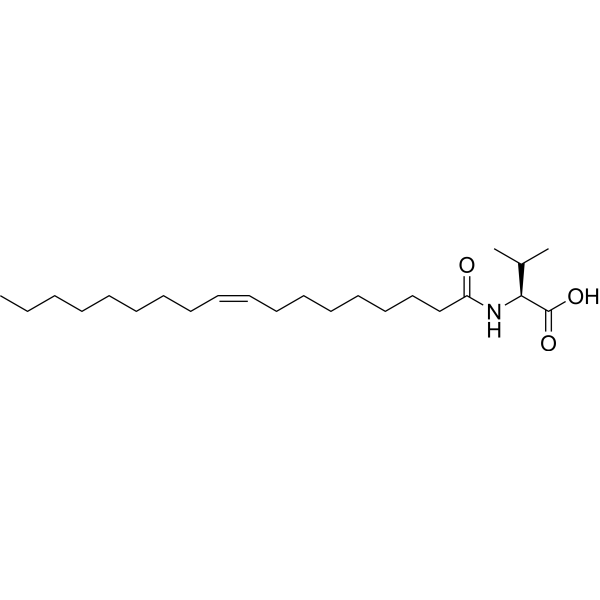
N-Oleoyl valine is a N-acyl valine compound that acts as a TRPV3 receptor antagonist .
loading...
    loading...
Cat. No.: HY-B0364AR
CAS No.: 536-43-6
Synonyms: Dyclocaine hydrochloride (Standard)
Dyclonine hydrochloride (Standard) (Dyclocaine hydrochloride (Standard)) is the analytical standard of Dyclonine hydrochloride (HY-B0364A). This product is intended for research and analytical applications. Dyclonine hydrochloride (Dyclocaine hydrochloride) is an orally active, blood-brain barrier-permeable piperidine phenylacetone small molecule commonly used as a local anesthetic. Dyclonine hydrochloride acts as a highly selective allosteric antagonist of TRPV3; it also reversibly inhibits G9a, ALDH2 and ALDH3A1, non-competitively blocks AChE. Dyclonine hydrochloride activates the Nrf2/ARE pathway, relieves the epigenetic silencing of FXN, blocks Aβ42 aggregation, and promotes remyelination and reparative polarization of microglia. Dyclonine hydrochloride alleviates pruritus via TRPV3 inhibition; it is used in studies of neurodegenerative disease models based on its AChE inhibitory, antioxidant and remyelinating effects; it sensitizes drug-resistant tumors through ALDH inhibition, and combined use with protease inhibitors induces more tumor cell apoptosis; it inhibits Candida albicans in vitro. Dyclonine hydrochloride can be used for research on multiple diseases including neurodegenerative diseases, cancer and pruritic dermatitis [3] .
loading...
    loading...

