

From 11:00 pm to 12:00 pm EST ( 8:00 pm to 9:00 pm PST ) on January 6th, the website will be under maintenance. We are sorry for the inconvenience. Please arrange your schedule properly.
Tezepelumab (anti-TSLP) is human monoclonal antibody (IgG2λ) that binds specifically to TSLP, blocking it from interacting with its heterodimeric receptor. Tezepelumab can be used for the research of severe, uncontrolled asthma .
Verekitug (ASP-7266; TRAB-1; UPB-101) is a human monoclonal antibody targeting the thymic stromal lymphopoietin receptor (TSLPR), with a mean half-life of approximately 20 days. At doses of Verekitug ≥100 mg, complete and sustained TSLPR-specific occupancy is achieved, and the antibody does not bind to IL-7Rα. By inhibiting TSLP-driven inflammatory responses, Verekitug blocks TSLP-induced cell proliferation and TARC expression, while reducing fractional exhaled NO levels, blood eosinophil counts, and levels of IL-5 and IgE. Verekitug significantly improves scores for nasal polyps, nasal congestion and olfactory dysfunction, with favorable safety and good tolerability; potential adverse reactions include headache, upper respiratory tract infection, sinusitis and nasopharyngitis. Verekitug is used in relevant studies on asthma, chronic rhinosinusitis with nasal polyps and chronic obstructive pulmonary disease .
GB-0895 is a human monoclonal antibody (mAb) targeting TSLP. GB-0895 can be used in Asthma research. Recommended isotype control: Human IgG1 kappa, Isotype Control (HY-P99001) .
Tilrekimig (PF-07275315) is a monoclonal antibody targeting human interleukin-4 (IL-4), interleukin-13 (IL-13) and thymic stromal lymphopoietin (TSLP). Tilrekimig can be used in the research of allergic and inflammatory diseases, such as asthma and atopic dermatitis .
EGR-1-IN-1 is a EGR-1 inhibitor with an IC50 of 1.86 μM. EGR-1-IN-1 binds to the zinc finger DNA-binding domain of EGR-1 and promotes the dissociation of the EGR-1-DNA complex. EGR-1-IN-1 reduces the mRNA expression levels of EGR-1-regulated inflammatory genes induced by TNFα. EGR-1-IN-1 alleviates atopic dermatitis-like lesions in the ear skin of mice. EGR-1-IN-1 serves as a lead compound for the development of targeted compounds for inflammatory skin diseases. EGR-1-IN-1 can be used in studies related to atopic dermatitis .
Lunsekimig (SAR443765) is an anti-TSLP/IL13/ALB nonobody composed of 5 sequentially linked variable region heavy chains. Lunsekimig decreases blood eosinophils and lowers plasma levels of IL-5, eotaxin-3, and IgE. Lunsekimig also improves lung function. Lunsekimig can be used for the study and treatment of type 2 inflammatory asthma .
RBN-3143 is a potent and NAD+-competitive catalytic PARP14 inhibitor with an IC50 value of 4 nM. RBN-3143 inhibits PARP14-mediated ADP-ribosylation and stabilizes PARP14 in cell lines. RBN-3143 can be used in research of lung inflammation .
Bosakitug (BSI-045B) is an TSLP-targeting IgG1κ type humanized antibody, the recommed isotype control is Human IgG1 kappa, Isotype Control (HY-P99001). Bosakitug can be used in the research of inflammatory diseases such as moderate to severe atopic dermatitis .
Ocankitug (CM-326) is a humanized IgG1κ antibody targeting thymic stromal lymphopoietin (TSLP). It can be used for research on type 2 inflammatory respiratory diseases, including moderate to severe asthma, chronic sinusitis with nasal polyps, etc.
Bempikibart (ADX-914) is a fully human anti-IL-7Rα antibody that re-regulates adaptive immune function by blocking signaling mediated by both IL-7 and thymic stromal lymphopoietin (TSLP). Bempikibart can be used for the study of atopic dermatitis and alopecia areata .
Ecleralimab (CSJ-117; NVP-CSJ117) is a Fab-IgG1-λ2 antibody targeting the thymic stromal lymphopoietin (TSLP). Ecleralimab significantly attenuates allergen-induced airway responses and inflammation. Ecleralimab can be used for the study of inhaled asthma .
EGR-1 IN-3 (Compound 36) is an early growth response 1 (EGR-1)-DNA binding disruptor. EGR-1-IN-3 inhibits TNFα-induced binding of EGR-1 to DNA and expression of genes associated with inflammation (such as TSLP, IL-31, IL-6 and CCL2). EGR-1-IN-3 can be used in the study of inflammatory diseases .
Anti-Mouse TSLP Antibody (28F12) is an anti-mouse TSLP IgG2a monoclonal antibody. Anti-Mouse TSLP Antibody (28F12) weakens skin inflammation and allergic reactions by reducing Treg cells and lymph node cells. Anti-Mouse TSLP Antibody (28F12) can be used for research on allergic conditions .
GE1111 is a MRGPRX2 antagonist (IC50 = 9.4 μM). GE1111 inhibits MRGPRX2/MRGPRB2-mediated mast cell activation. GE1111 reduces the expressions of TSLP, IL-13, MCP-1, TNF-α, IL-1β and periostin, maintains the expression levels of claudin 1 and involucrin, restores the phagocytic activity of macrophages, and attenuates the activation of STIM1 and phosphorylated AKT. GE1111 exerts anti-inflammatory and anti-allergic effects in multiple animal models. GE1111 is applicable to the research related to rosacea, atopic dermatitis and ulcerative colitis .
Sunakiment is a humanized IgG1λ monoclonal antibody inhibitor targeting Thymic stromal lymphopoietin (TSLP). Sunakiment can be used for inflammatory and immune system disorders like ulcerative colitis, rheumatoid arthritis and allergy and cancers research .
Anti-TSLP Antibody is a human-derived antibody expressed in CHO cells, targeting TSLP. The Anti-TSLP Antibody contains the huIgG1 heavy chain and huκ light chain, with a predicted molecular weight (MW) of 150 kDa. The isotype control for Anti-TSLP Antibody can refer to Human IgG1 kappa, Isotype Control (HY-P99001).
Tepilukimig is a bivalent humanized IgG1κ monoclonal antibody inhibitor targeting TSLP-IL7Rα and TSLP-CRLF2. Tepilukimig inhibits the binding of TSLP to its receptors (IL7Rα and CRLF2) on the cell surface, thereby completely interrupting the inflammatory signaling pathway driven by TSLP. Tepilukimig can be used for allergic and inflammatory diseases like atopic dermatitis and asthma research .
Halometasone is a corticosteroid compound that can reduce the expression of serum leukotriene B4 (LTB4) and thymic stromal lymphopoietin (TSLP). Halometasone can be used in research on psoriasis and eczematous skin diseases .
Tslp Mouse Pre-designed siRNA Set A contains three designed siRNAs for Tslp gene (Mouse), as well as a negative control, a positive control, and a FAM-labeled negative control.
TSLP Human Pre-designed siRNA Set A contains three designed siRNAs for TSLP gene (Human), as well as a negative control, a positive control, and a FAM-labeled negative control.
Haplopine is a substance with anti-inflammatory, antioxidant and photoactivated antibacterial activities. It also acts as an inhibitor of UGT1A7 and a photoactivated restriction endonuclease inhibitor. Haplopine inhibits the mRNA/protein expression of IL-6, TSLP, GM-CSF, G-CSF, IL-4, IL-13 and COX-2, while upregulating the mRNA/protein expression of SOD, CAT and HO-1. Haplopine inhibits the glucuronidation reaction catalyzed by UGT1A7 through competitive hydrophobic binding. Haplopine exerts photoactivated restriction endonuclease inhibitory effects by binding to DNA. Haplopine exhibits photoactivated activity against methicillin-resistant Staphylococcus aureus. Haplopine alleviates symptoms of atopic dermatitis. Haplopine can be used in research related to atopic dermatitis and methicillin-resistant Staphylococcus aureus infections .
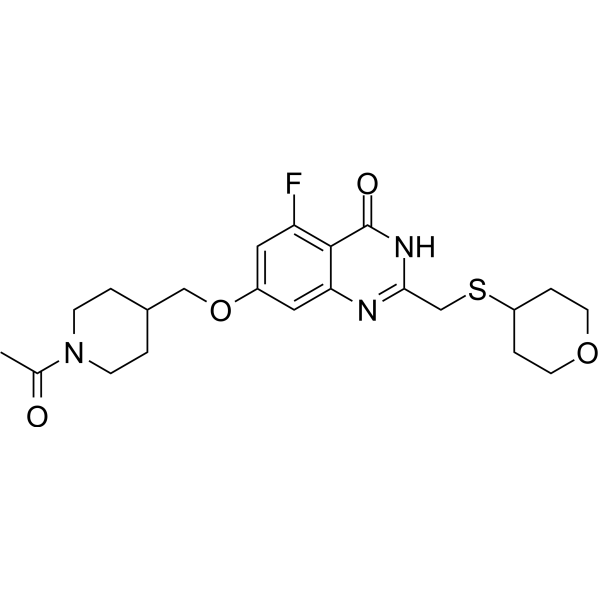
TSLP-IN-1 is a potent thymic stromal lymphopoietin (TSLP) inhibitor. TSLP-IN-1 disrupts TSLP-TSLPR protein-protein interaction, and downregulates IL-4 and IL-13. TSLP-IN-1 can be used for the research of inflammation diseases, such as skin disease, asthma, and allergies .
Tslp Rat Pre-designed siRNA Set A contains three designed siRNAs for Tslp gene (Rat), as well as a negative control, a positive control, and a FAM-labeled negative control.
QX008N is a humanized IgG1 monoclonal antibody and also a TSLP inhibitor with a KD value of 0.0175 nM. QX008N blocks TSLP-induced signaling pathways by inhibiting the interaction of TSLP-TSLPR-IL-7Rα. QX008N reduces eosinophil and IgE levels, improves pulmonary function, blocks TSLP-induced inflammation, and enhances the inhibitory effect on inflammatory mediators when administered in combination with anti-IL-4R antibodies. QX008N is applicable to relevant research on asthma .
BP79 is a potent TSLP receptor inhibitor. BP79 disrupts TSLP-mediated ternary complex formation, blocks TSLPR-IL7Rα co-localization, binds and stabilizes TSLPR, and inhibits phosphorylated STAT3/6. BP79 suppresses immune cell infiltration, secretion of IL-13, IL-4. BP79 can be used for the research of inflammation diseases, such as atopic dermatitis, allergic asthma, and allergic rhinitis .
FK3453 is a dual adenosine A1/A2 inhibitor and a TSLP inhibitor. FK3453 is also a substrate of aldehyde oxidase (AO). FK3453 can inhibit the production of TSLP and IL-33. FK3453 is useful for research on Parkinson’s disease and allergic disorders .
TK-285 is a potent TSLP inhibitor that suppresses the production of TSLP and inhibits the expression of interleukin-33 mRNA. TK-285 exhibits a selective binding preference for the BD1 domains of BRD2, BRD3, BRD4 and BRDT. TK-285 can be used in research related to atopic dermatitis .
TAVO101 is a humanized anti-TSLP antibody with an EC50 of 0.19 nM against hTSLP. TAVO101 inhibits STAT5 activation and CCL17 release. TAVO101 carries Fc region mutations that enhance its binding to FcRn while reducing its binding to FcγRI, FcγRIIIA and C1q, thereby attenuating effector functions. TAVO101 reduces the levels of inflammatory markers, cell infiltration and histopathological damage in preclinical models of asthma, psoriasis and atopic dermatitis. TAVO101 can be used for research related to asthma, psoriasis and atopic dermatitis .
ROCK2-IN-14 is an orally active, selective ROCK2 inhibitor (IC50=4.8 nM) with 212-fold selectivity over ROCK1 (IC50=1.01 μM). By inhibiting the ROCK2/S100A9 signaling pathway, ROCK2-IN-14 downregulates S100A9 expression, inhibits NM2 phosphorylation and restores cytoskeletal abnormalities. Furthermore, ROCK2-IN-14 reduces inflammatory cytokine levels, alleviates skin inflammation and exerts anti-inflammatory activity. ROCK2-IN-14 also significantly inhibits ear thickening in a mouse model of atopic dermatitis (AD), and decreases the levels of IgE, TNF-α, IL-6 and TSLP. ROCK2-IN-14 can be used for research on atopic dermatitis .
Tezepelumab (anti-TSLP) is human monoclonal antibody (IgG2λ) that binds specifically to TSLP, blocking it from interacting with its heterodimeric receptor. Tezepelumab can be used for the research of severe, uncontrolled asthma .
Verekitug (ASP-7266; TRAB-1; UPB-101) is a human monoclonal antibody targeting the thymic stromal lymphopoietin receptor (TSLPR), with a mean half-life of approximately 20 days. At doses of Verekitug ≥100 mg, complete and sustained TSLPR-specific occupancy is achieved, and the antibody does not bind to IL-7Rα. By inhibiting TSLP-driven inflammatory responses, Verekitug blocks TSLP-induced cell proliferation and TARC expression, while reducing fractional exhaled NO levels, blood eosinophil counts, and levels of IL-5 and IgE. Verekitug significantly improves scores for nasal polyps, nasal congestion and olfactory dysfunction, with favorable safety and good tolerability; potential adverse reactions include headache, upper respiratory tract infection, sinusitis and nasopharyngitis. Verekitug is used in relevant studies on asthma, chronic rhinosinusitis with nasal polyps and chronic obstructive pulmonary disease .
GB-0895 is a human monoclonal antibody (mAb) targeting TSLP. GB-0895 can be used in Asthma research. Recommended isotype control: Human IgG1 kappa, Isotype Control (HY-P99001) .
Tilrekimig (PF-07275315) is a monoclonal antibody targeting human interleukin-4 (IL-4), interleukin-13 (IL-13) and thymic stromal lymphopoietin (TSLP). Tilrekimig can be used in the research of allergic and inflammatory diseases, such as asthma and atopic dermatitis .
Lunsekimig (SAR443765) is an anti-TSLP/IL13/ALB nonobody composed of 5 sequentially linked variable region heavy chains. Lunsekimig decreases blood eosinophils and lowers plasma levels of IL-5, eotaxin-3, and IgE. Lunsekimig also improves lung function. Lunsekimig can be used for the study and treatment of type 2 inflammatory asthma .
Bosakitug (BSI-045B) is an TSLP-targeting IgG1κ type humanized antibody, the recommed isotype control is Human IgG1 kappa, Isotype Control (HY-P99001). Bosakitug can be used in the research of inflammatory diseases such as moderate to severe atopic dermatitis .
Ocankitug (CM-326) is a humanized IgG1κ antibody targeting thymic stromal lymphopoietin (TSLP). It can be used for research on type 2 inflammatory respiratory diseases, including moderate to severe asthma, chronic sinusitis with nasal polyps, etc.
Bempikibart (ADX-914) is a fully human anti-IL-7Rα antibody that re-regulates adaptive immune function by blocking signaling mediated by both IL-7 and thymic stromal lymphopoietin (TSLP). Bempikibart can be used for the study of atopic dermatitis and alopecia areata .
Ecleralimab (CSJ-117; NVP-CSJ117) is a Fab-IgG1-λ2 antibody targeting the thymic stromal lymphopoietin (TSLP). Ecleralimab significantly attenuates allergen-induced airway responses and inflammation. Ecleralimab can be used for the study of inhaled asthma .
Anti-Mouse TSLP Antibody (28F12) is an anti-mouse TSLP IgG2a monoclonal antibody. Anti-Mouse TSLP Antibody (28F12) weakens skin inflammation and allergic reactions by reducing Treg cells and lymph node cells. Anti-Mouse TSLP Antibody (28F12) can be used for research on allergic conditions .
Sunakiment is a humanized IgG1λ monoclonal antibody inhibitor targeting Thymic stromal lymphopoietin (TSLP). Sunakiment can be used for inflammatory and immune system disorders like ulcerative colitis, rheumatoid arthritis and allergy and cancers research .
Anti-TSLP Antibody is a human-derived antibody expressed in CHO cells, targeting TSLP. The Anti-TSLP Antibody contains the huIgG1 heavy chain and huκ light chain, with a predicted molecular weight (MW) of 150 kDa. The isotype control for Anti-TSLP Antibody can refer to Human IgG1 kappa, Isotype Control (HY-P99001).
Tepilukimig is a bivalent humanized IgG1κ monoclonal antibody inhibitor targeting TSLP-IL7Rα and TSLP-CRLF2. Tepilukimig inhibits the binding of TSLP to its receptors (IL7Rα and CRLF2) on the cell surface, thereby completely interrupting the inflammatory signaling pathway driven by TSLP. Tepilukimig can be used for allergic and inflammatory diseases like atopic dermatitis and asthma research .
QX008N is a humanized IgG1 monoclonal antibody and also a TSLP inhibitor with a KD value of 0.0175 nM. QX008N blocks TSLP-induced signaling pathways by inhibiting the interaction of TSLP-TSLPR-IL-7Rα. QX008N reduces eosinophil and IgE levels, improves pulmonary function, blocks TSLP-induced inflammation, and enhances the inhibitory effect on inflammatory mediators when administered in combination with anti-IL-4R antibodies. QX008N is applicable to relevant research on asthma .
TAVO101 is a humanized anti-TSLP antibody with an EC50 of 0.19 nM against hTSLP. TAVO101 inhibits STAT5 activation and CCL17 release. TAVO101 carries Fc region mutations that enhance its binding to FcRn while reducing its binding to FcγRI, FcγRIIIA and C1q, thereby attenuating effector functions. TAVO101 reduces the levels of inflammatory markers, cell infiltration and histopathological damage in preclinical models of asthma, psoriasis and atopic dermatitis. TAVO101 can be used for research related to asthma, psoriasis and atopic dermatitis .
Haplopine is a substance with anti-inflammatory, antioxidant and photoactivated antibacterial activities. It also acts as an inhibitor of UGT1A7 and a photoactivated restriction endonuclease inhibitor. Haplopine inhibits the mRNA/protein expression of IL-6, TSLP, GM-CSF, G-CSF, IL-4, IL-13 and COX-2, while upregulating the mRNA/protein expression of SOD, CAT and HO-1. Haplopine inhibits the glucuronidation reaction catalyzed by UGT1A7 through competitive hydrophobic binding. Haplopine exerts photoactivated restriction endonuclease inhibitory effects by binding to DNA. Haplopine exhibits photoactivated activity against methicillin-resistant Staphylococcus aureus. Haplopine alleviates symptoms of atopic dermatitis. Haplopine can be used in research related to atopic dermatitis and methicillin-resistant Staphylococcus aureus infections .
TSLP Protein, a cytokine, stimulates T-cell-attracting chemokine release from monocytes and enhances CD11c(+) dendritic cell maturation. It directly activates mast cells, possibly inducing allergic inflammation. TSLP may also possess antimicrobial properties in the oral cavity and on the skin. TSLP Protein, Human (HEK293, His) is the recombinant human-derived TSLP protein, expressed by HEK293 , with C-10*His labeled tag.
TSLP protein, as a cytokine, plays a key role in immune regulation. It induces monocytes to release T-cell attracting chemokines and significantly promotes the maturation of CD11c(+) dendritic cells. TSLP Protein, Rat (HEK293, His) is the recombinant rat-derived TSLP protein, expressed by HEK293 , with C-His labeled tag. The total length of TSLP Protein, Rat (HEK293, His) is 118 a.a., with molecular weight of 20-30 kDa.
TSLP Protein, a cytokine, stimulates T-cell-attracting chemokine release from monocytes and enhances CD11c(+) dendritic cell maturation. It directly activates mast cells, possibly inducing allergic inflammation. TSLP may also possess antimicrobial properties in the oral cavity and on the skin. TSLP Protein, Human (HEK293, His-Avi) is the recombinant human-derived TSLP protein, expressed by HEK293 , with C-Avi, C-His labeled tag.
TSLP protein, as a cytokine, plays a key role in immune regulation. It induces monocytes to release T-cell attracting chemokines and significantly promotes the maturation of CD11c(+) dendritic cells. TSLP Protein, Cynomolgus (Biotinylated, HEK293, His) is the recombinant cynomolgus-derived TSLP protein, expressed by HEK293 , with C-His labeled tag.
TSLP Protein, a cytokine, stimulates T-cell-attracting chemokine release from monocytes and enhances CD11c(+) dendritic cell maturation. It directly activates mast cells, possibly inducing allergic inflammation. TSLP may also possess antimicrobial properties in the oral cavity and on the skin. TSLP Protein, Human (HEK293, His-Myc) is the recombinant human-derived TSLP protein, expressed by HEK293 , with N-Myc, N-6*His labeled tag.
TSLP protein, as a cytokine, plays a key role in immune regulation. It induces monocytes to release T-cell attracting chemokines and significantly promotes the maturation of CD11c(+) dendritic cells. TSLP Protein, Cynomolgus (HEK293, His) is the recombinant cynomolgus-derived TSLP protein, expressed by HEK293 , with C-8*His labeled tag.
TSLP Protein, a cytokine, stimulates T-cell-attracting chemokine release from monocytes and enhances CD11c(+) dendritic cell maturation. It directly activates mast cells, possibly inducing allergic inflammation. TSLP may also possess antimicrobial properties in the oral cavity and on the skin. TSLP Protein, Human (Biotinylated, HEK293, His-Avi) is the recombinant human-derived TSLP protein, expressed by HEK293 , with C-Avi, C-His labeled tag.
Thymic stromal lymphopoietin (TSLP) is a hemopoietic cytokine proposed to signal through a heterodimeric receptor complex composed of the thymic stromal lymphopoietin receptor and the IL-7R alpha chain. TSLP mainly impacts myeloid cells and promotes T helper type 2 (TH2) cell responses associated with immunity in various inflammatory diseases, including asthma, allergic inflammation and chronic obstructive pulmonary disease. TSLP Protein, Cynomolgus (His) is the recombinant cynomolgus-derived TSLP protein, expressed by E. coli , with C-6*His labeled tag and Q37E mutation.
TSLP protein, as a cytokine, plays a key role in immune regulation. It induces monocytes to release T-cell attracting chemokines and significantly promotes the maturation of CD11c(+) dendritic cells. TSLP Protein, Cynomolgus (Biotinylated, HEK293, His-Avi) is the recombinant cynomolgus-derived TSLP protein, expressed by HEK293 , with C-Avi, C-His labeled tag. The total length of TSLP Protein, Cynomolgus (Biotinylated, HEK293, His-Avi) is 131 a.a., with molecular weight of ~12 kDa.
TSLP Protein, a cytokine, stimulates T-cell-attracting chemokine release from monocytes and enhances CD11c(+) dendritic cell maturation. It directly activates mast cells, possibly inducing allergic inflammation. TSLP may also possess antimicrobial properties in the oral cavity and on the skin. TSLP Protein, Human (R127A, R130A, HEK293, His-Avi) is the recombinant human-derived TSLP protein, expressed by HEK293 , with C-Avi, C-His labeled tag and R127A, R130A mutation.
TSLP protein, as a cytokine, plays a key role in immune regulation. It induces monocytes to release T-cell attracting chemokines and significantly promotes the maturation of CD11c(+) dendritic cells. TSLP Protein, Cynomolgus (R127A, R130S, HEK293, His) is the recombinant cynomolgus-derived TSLP protein, expressed by HEK293 , with C-His labeled tag.
TSLP protein, as a cytokine, plays a key role in immune regulation. It induces monocytes to release T-cell attracting chemokines and significantly promotes the maturation of CD11c(+) dendritic cells. TSLP Protein, Mouse (Biotinylated, HEK293, His-Avi) is the recombinant mouse-derived TSLP protein, expressed by HEK293 , with C-Avi, C-His labeled tag. The total length of TSLP Protein, Mouse (Biotinylated, HEK293, His-Avi) is 121 a.a., with molecular weight of 25-33 kDa.
TSLP Protein, a cytokine, stimulates T-cell-attracting chemokine release from monocytes and enhances CD11c(+) dendritic cell maturation. It directly activates mast cells, possibly inducing allergic inflammation. TSLP may also possess antimicrobial properties in the oral cavity and on the skin. TSLP Protein, Human (Biotinylated, R127A, R130A, HEK293, His-Avi) is the recombinant human-derived TSLP protein, expressed by HEK293 , with C-Avi, C-His labeled tag and R127A, R130A mutation.
TSLP protein, as a cytokine, plays a key role in immune regulation. It induces monocytes to release T-cell attracting chemokines and significantly promotes the maturation of CD11c(+) dendritic cells. TSLP Protein, Mouse (HEK293, Fc) is the recombinant mouse-derived TSLP protein, expressed by HEK293 , with C-hFc labeled tag.
TSLP Protein, a cytokine, stimulates T-cell-attracting chemokine release from monocytes and enhances CD11c(+) dendritic cell maturation. It directly activates mast cells, possibly inducing allergic inflammation. TSLP may also possess antimicrobial properties in the oral cavity and on the skin. TSLP Protein, Human (R127A, R130A, HEK293, His) is the recombinant human-derived TSLP protein, expressed by HEK293 , with C-His labeled tag and R127A, R130A, , , mutation.
TSLP Protein, a cytokine, stimulates T-cell-attracting chemokine release from monocytes and enhances CD11c(+) dendritic cell maturation. It directly activates mast cells, possibly inducing allergic inflammation. TSLP may also possess antimicrobial properties in the oral cavity and on the skin. TSLP Protein, Human (R127A, R130A, HEK293, mFc) is the recombinant human-derived TSLP protein, expressed by HEK293 , with C-mFc labeled tag and R127A, R130A mutation.
TSLP R protein is the receptor of TSLP and cooperates with IL7R to form a complex that activates STAT3 and STAT5 to stimulate cell proliferation. This receptor also activates JAK2, which is critical for the development of the hematopoietic system. TSLP R Protein, Cynomolgus (HEK293, His) is the recombinant cynomolgus-derived TSLP R protein, expressed by HEK293 , with C-His labeled tag.
TSLP R Protein, a receptor for TSLP, forms a functional complex with IL7R, activating STAT3 and STAT5 for cell proliferation. It also activates JAK2, aiding in hematopoietic system development. TSLP R forms a heterodimer with CRLF2 and IL7R, highlighting its role in intricate signaling pathways crucial for cellular responses and hematopoietic development. TSLP R Protein, Human (HEK293, Fc) is the recombinant human-derived TSLP R protein, expressed by HEK293 , with C-hFc labeled tag.
TSLP R Protein, a receptor for TSLP, forms a functional complex with IL7R, activating STAT3 and STAT5 for cell proliferation. It also activates JAK2, aiding in hematopoietic system development. TSLP R forms a heterodimer with CRLF2 and IL7R, highlighting its role in intricate signaling pathways crucial for cellular responses and hematopoietic development. TSLP R Protein, Human (HEK293, His) is the recombinant human-derived TSLP R protein, expressed by HEK293 , with C-6*His labeled tag.
Cytokine receptor-like factor 2 (Crlf2), also known as thymic stromal lymphopoietin (TSLP) receptor, is a receptor for TSLP. Crlf2 can forms a functional complex with TSLP and IL7RA, and overexpression of Crlf2 stimulates cell proliferation through activation of the JAK-STAT pathway. The expression of Crlf2 usually upregulates and mutated in populations of B-progenitor acute lymphoblastic leukemia (B-ALL). TSLP R Protein, Mouse (HEK293, Fc) is the recombinant mouse-derived TSLP R protein, expressed by HEK293 , with C-hFc labeled tag.
Cytokine receptor-like factor 2 (Crlf2), also known as thymic stromal lymphopoietin (TSLP) receptor, is a receptor for TSLP. Crlf2 can forms a functional complex with TSLP and IL7RA, and overexpression of Crlf2 stimulates cell proliferation through activation of the JAK-STAT pathway. The expression of Crlf2 usually upregulates and mutated in populations of B-progenitor acute lymphoblastic leukemia (B-ALL). TSLP R Protein, Mouse (HEK293, His) is the recombinant mouse-derived TSLP R protein, expressed by HEK293 , with C-6*His labeled tag.
Tslp Mouse Pre-designed siRNA Set A contains three designed siRNAs for Tslp gene (Mouse), as well as a negative control, a positive control, and a FAM-labeled negative control.
TSLP Human Pre-designed siRNA Set A contains three designed siRNAs for TSLP gene (Human), as well as a negative control, a positive control, and a FAM-labeled negative control.
Tslp Rat Pre-designed siRNA Set A contains three designed siRNAs for Tslp gene (Rat), as well as a negative control, a positive control, and a FAM-labeled negative control.
Inquiry Online
Your information is safe with us. * Required Fields.
Western blot analysis of extracts from THP-1(lane 2(20μg), Jurkat (lane 3(20μg) and NIH3T3(lane 4(20μg) using FOXO1A (HY-P80132) Rabbit mAb. Proteins were transferred
to a PVDF membrane and blocked with 5% non-fat milk in TBST for 2 hour at room temperature. The primary antibody (1/1000) and Loading control antibody (Beta Actin, HY-P80438, 1/10000) was
used in 5% non-fat milk in TBST at 4°C overnight. Goat Anti-Mouse/Rabbit IgG-HRP Secondary Antibody (1/10000) was used for 1 hour at room temperature.
Western blot analysis of extracts from THP-1(lane 2(20μg), Jurkat (lane 3(20μg) and NIH3T3(lane 4(20μg) using FOXO1A (HY-P80132) Rabbit mAb. Proteins were transferred
to a PVDF membrane and blocked with 5% non-fat milk in TBST for 2 hour at room temperature. The primary antibody (1/1000) and Loading control antibody (Beta Actin, HY-P80438, 1/10000) was
used in 5% non-fat milk in TBST at 4°C overnight. Goat Anti-Mouse/Rabbit IgG-HRP Secondary Antibody (1/10000) was used for 1 hour at room temperature.
Western blot analysis of extracts from THP-1(lane 2(20μg), Jurkat (lane 3(20μg) and NIH3T3(lane 4(20μg) using FOXO1A (HY-P80132) Rabbit mAb. Proteins were transferred
to a PVDF membrane and blocked with 5% non-fat milk in TBST for 2 hour at room temperature. The primary antibody (1/1000) and Loading control antibody (Beta Actin, HY-P80438, 1/10000) was
used in 5% non-fat milk in TBST at 4°C overnight. Goat Anti-Mouse/Rabbit IgG-HRP Secondary Antibody (1/10000) was used for 1 hour at room temperature.
Western blot analysis of extracts from THP-1(lane 2(20μg), Jurkat (lane 3(20μg) and NIH3T3(lane 4(20μg) using FOXO1A (HY-P80132) Rabbit mAb. Proteins were transferred
to a PVDF membrane and blocked with 5% non-fat milk in TBST for 2 hour at room temperature. The primary antibody (1/1000) and Loading control antibody (Beta Actin, HY-P80438, 1/10000) was
MedchemExpress Validation 03
Western blot analysis of extracts from THP-1(lane 2(20μg), Jurkat (lane 3(20μg) and NIH3T3(lane 4(20μg) using FOXO1A (HY-P80132) Rabbit mAb. Proteins were transferred
MedchemExpress Validation 04
Western blot analysis of extracts from THP-1(lane 2(20μg), Jurkat (lane 3(20μg) and NIH3T3(lane 4(20μg) using FOXO1A (HY-P80132) Rabbit mAb. Proteins were transferred
to a PVDF membrane and blocked with 5% non-fat milk in TBST for 2 hour at room temperature. The primary antibody (1/1000) and Loading control antibody (Beta Actin, HY-P80438, 1/10000) was
used in 5% non-fat milk in TBST at 4°C overnight. Goat Anti-Mouse/Rabbit IgG-HRP Secondary Antibody (1/10000) was used for 1 hour at room temperature.
MedchemExpress Validation
Western blot analysis of extracts from THP-1(lane 2(20μg), Jurkat (lane 3(20μg) and NIH3T3(lane 4(20μg) using FOXO1A (HY-P80132) Rabbit mAb. Proteins were transferred
to a PVDF membrane and blocked with 5% non-fat milk in TBST for 2 hour at room temperature. The primary antibody (1/1000) and Loading control antibody (Beta Actin, HY-P80438, 1/10000) was
used in 5% non-fat milk in TBST at 4°C overnight. Goat Anti-Mouse/Rabbit IgG-HRP Secondary Antibody (1/10000) was used for 1 hour at room temperature.
Western blot analysis of extracts from THP-1(lane 2(20μg), Jurkat (lane 3(20μg) and NIH3T3(lane 4(20μg) using FOXO1A (HY-P80132) Rabbit mAb. Proteins were transferred
to a PVDF membrane and blocked with 5% non-fat milk in TBST for 2 hour at room temperature. The primary antibody (1/1000) and Loading control antibody (Beta Actin, HY-P80438, 1/10000) was
used in 5% non-fat milk in TBST at 4°C overnight. Goat Anti-Mouse/Rabbit IgG-HRP Secondary Antibody (1/10000) was used for 1 hour at room temperature.
MedchemExpress Validation
Western blot analysis of extracts from THP-1(lane 2(20μg), Jurkat (lane 3(20μg) and NIH3T3(lane 4(20μg) using FOXO1A (HY-P80132) Rabbit mAb. Proteins were transferred
to a PVDF membrane and blocked with 5% non-fat milk in TBST for 2 hour at room temperature. The primary antibody (1/1000) and Loading control antibody (Beta Actin, HY-P80438, 1/10000) was
used in 5% non-fat milk in TBST at 4°C overnight. Goat Anti-Mouse/Rabbit IgG-HRP Secondary Antibody (1/10000) was used for 1 hour at room temperature.
MedchemExpress Validation
Western blot analysis of extracts from THP-1(lane 2(20μg), Jurkat (lane 3(20μg) and NIH3T3(lane 4(20μg) using FOXO1A (HY-P80132) Rabbit mAb. Proteins were transferred
to a PVDF membrane and blocked with 5% non-fat milk in TBST for 2 hour at room temperature. The primary antibody (1/1000) and Loading control antibody (Beta Actin, HY-P80438, 1/10000) was
used in 5% non-fat milk in TBST at 4°C overnight. Goat Anti-Mouse/Rabbit IgG-HRP Secondary Antibody (1/10000) was used for 1 hour at room temperature.
MedchemExpress Validation
Western blot analysis of extracts from THP-1(lane 2(20μg), Jurkat (lane 3(20μg) and NIH3T3(lane 4(20μg) using FOXO1A (HY-P80132) Rabbit mAb. Proteins were transferred
to a PVDF membrane and blocked with 5% non-fat milk in TBST for 2 hour at room temperature. The primary antibody (1/1000) and Loading control antibody (Beta Actin, HY-P80438, 1/10000) was
used in 5% non-fat milk in TBST at 4°C overnight. Goat Anti-Mouse/Rabbit IgG-HRP Secondary Antibody (1/10000) was used for 1 hour at room temperature.
MedchemExpress Validation
Western blot analysis of extracts from THP-1(lane 2(20μg), Jurkat (lane 3(20μg) and NIH3T3(lane 4(20μg) using FOXO1A (HY-P80132) Rabbit mAb. Proteins were transferred
to a PVDF membrane and blocked with 5% non-fat milk in TBST for 2 hour at room temperature. The primary antibody (1/1000) and Loading control antibody (Beta Actin, HY-P80438, 1/10000) was
used in 5% non-fat milk in TBST at 4°C overnight. Goat Anti-Mouse/Rabbit IgG-HRP Secondary Antibody (1/10000) was used for 1 hour at room temperature.
MedchemExpress Validation
Western blot analysis of extracts from THP-1(lane 2(20μg), Jurkat (lane 3(20μg) and NIH3T3(lane 4(20μg) using FOXO1A (HY-P80132) Rabbit mAb. Proteins were transferred
to a PVDF membrane and blocked with 5% non-fat milk in TBST for 2 hour at room temperature. The primary antibody (1/1000) and Loading control antibody (Beta Actin, HY-P80438, 1/10000) was
used in 5% non-fat milk in TBST at 4°C overnight. Goat Anti-Mouse/Rabbit IgG-HRP Secondary Antibody (1/10000) was used for 1 hour at room temperature.
MedchemExpress Validation
Western blot analysis of extracts from THP-1(lane 2(20μg), Jurkat (lane 3(20μg) and NIH3T3(lane 4(20μg) using FOXO1A (HY-P80132) Rabbit mAb. Proteins were transferred
to a PVDF membrane and blocked with 5% non-fat milk in TBST for 2 hour at room temperature. The primary antibody (1/1000) and Loading control antibody (Beta Actin, HY-P80438, 1/10000) was
used in 5% non-fat milk in TBST at 4°C overnight. Goat Anti-Mouse/Rabbit IgG-HRP Secondary Antibody (1/10000) was used for 1 hour at room temperature.
MedChemExpress values your privacy and your trust is important to us. We use cookies to enhance your website experience. Some cookies are necessary to run the website.
Privacy and Cookie Policy

