Search Result
Results for "
Tris buffer
" in MedChemExpress (MCE) Product Catalog:
23
Biochemical Assay Reagents
2
Isotope-Labeled Compounds
| Cat. No. |
Product Name |
Target |
Research Areas |
Chemical Structure |
-
- HY-D0227
-
THAM
1 Publications Verification
Tris; Tris(hydroxymethyl)aminomethane
|
Biochemical Assay Reagents
|
Metabolic Disease
|
|
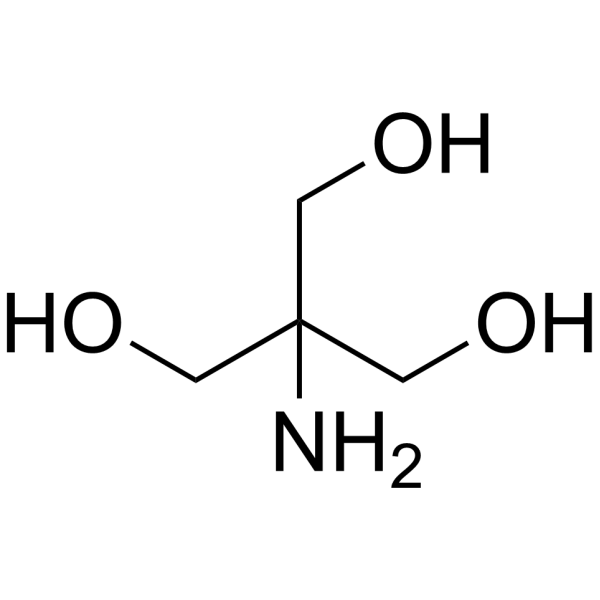
THAM (Tris) is a low-toxicity amino alcohol buffer, a specific CO2-consuming proton acceptor that buffers carbon dioxide and acid both in vitro and in vivo. THAM binds protons to form bicarbonate, reduces PaCO2, and induces intracellular alkalization, thereby ameliorating hypercapnia-induced elevation of pulmonary blood vessels and pulmonary arterial pressure. THAM may cause PaCO2 rebound, hypoglycemia, and respiratory depression. THAM removes amniotic epithelium and preserves the basement membrane, but depletes extracellular matrix and reduces the adhesion rate of limbal epithelial cells. THAM can act as a CO2 carrier to enhance the productivity and carbon utilization rate of Scenedesmus obliquus. THAM is a key component of buffer solutions used in various biological, cell culture, biochemical, and molecular biology applications .
|
-
-
- HY-D0856
-
|
|
Biochemical Assay Reagents
|
Others
|
|
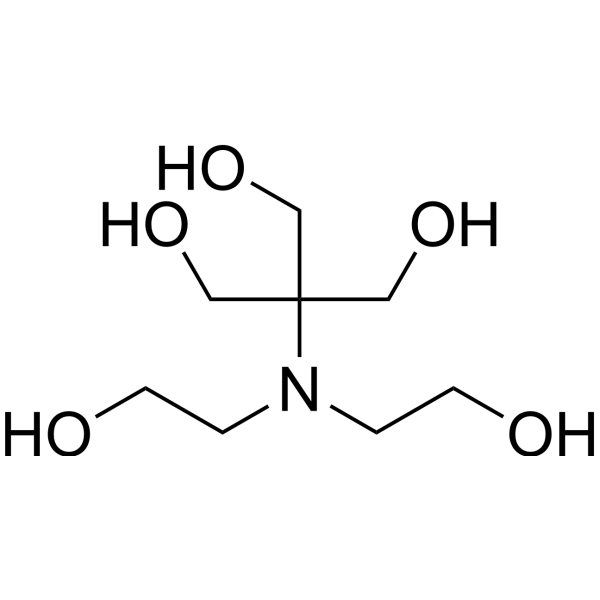
Bis-Tris is an amine buffer suitable for protein and nucleic acid systems with a pH buffer range of 5.8-7.2. Bis-Tris can also be mixed with HEPES and cacodylic acid buffer to create a pH 8 environment and monitor fluorescence emission intensity at 305 nm. Gels formulated with Bis-Tris also avoid protein degradation in samples prepared at higher pH (pH 8.5) .
|
-
-
- HY-126399
-
|
BTP
|
Biochemical Assay Reagents
|
Others
|
|
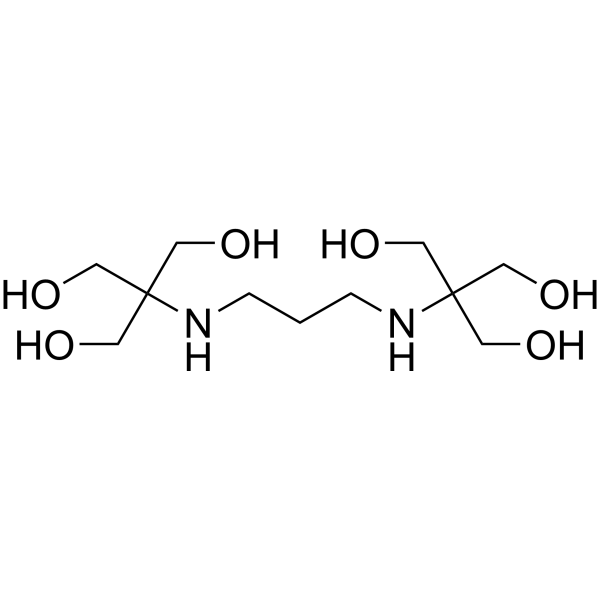
Bis-tris propane (BTP) is a water-soluble buffer substance. Bis-tris propane can be used as a suitable buffer for polymerase chain reaction (PCR). Bis-tris propane can enhance the stability or activity of restriction enzymes .
|
-
-
- HY-D0227A
-
|
Tris HCl; Tris(hydroxymethyl)aminomethane hydrochloride
|
Biochemical Assay Reagents
|
Metabolic Disease
Cancer
|
|
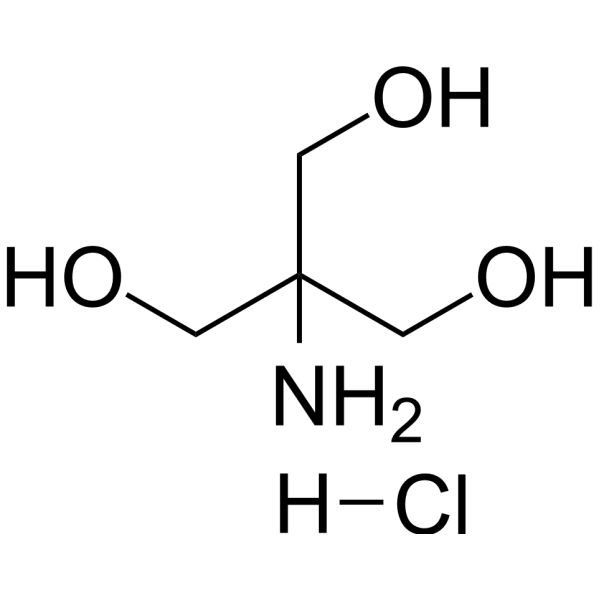
THAM hydrochloride (Tris HCl) is a biologically inert amino alcohol of low toxicity, which buffers carbon dioxide and acids in vitro and in vivo. THAM hydrochloride is an effective amine compound for pH control in the physiological range .
|
-
-
- HY-D0227F
-
|
Tris HCl (≥99%, reagent grade); Tris hydrochloride (≥99%, reagent grade)
|
Biochemical Assay Reagents
|
Others
|
|
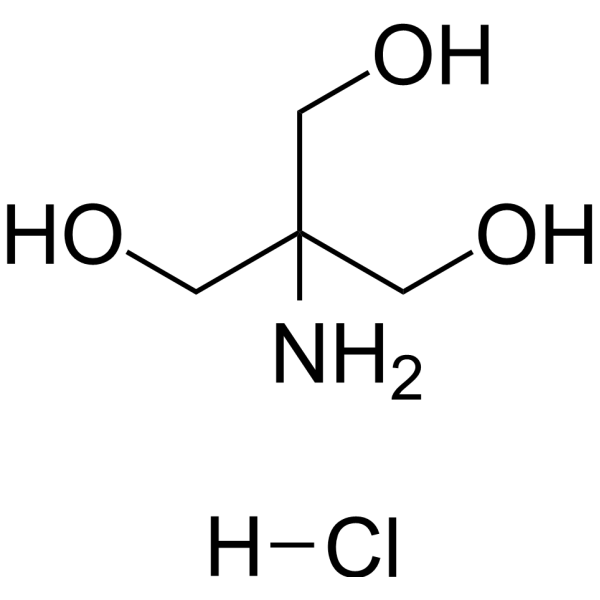
THAM hydrochloride (≥99%, reagent grade), also known as Tris-HCl, is a buffer commonly used in various biochemical and molecular biology applications to maintain a stable pH environment. Tris-HCl has unique chemical properties that allow it to resist changes in pH when acidic or basic substances are added, which makes it useful for stabilizing biological samples or reagents. It is commonly used in electrophoresis and protein purification procedures.
|
-
-
- HY-W010800A
-
|
Cholesterol hydrogen succinate Tris salt; CHS-Tris
|
Biochemical Assay Reagents
Topoisomerase
DNA/RNA Synthesis
Apoptosis
Necroptosis
|
Inflammation/Immunology
Cancer
|
|
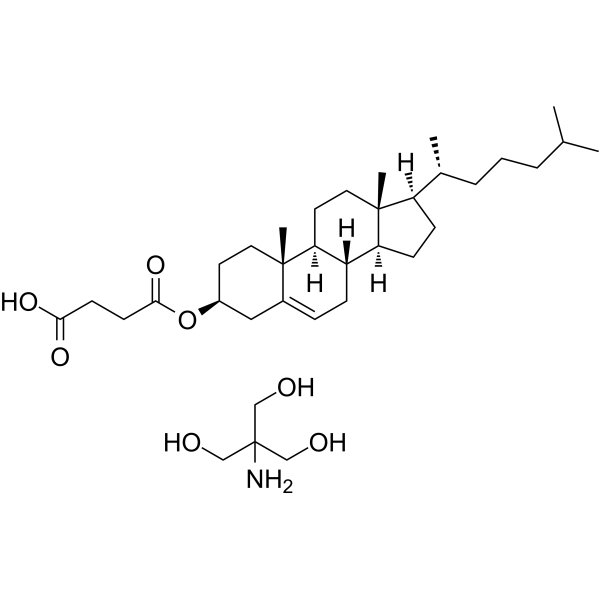
Cholesterol hemisuccinate (Cholesterol hydrogen succinate) Tris salt is a compound with hepatoprotective and anticancer activity. Cholesterol hemisuccinate Tris salt inhibits Acetaminophen (AAP) (HY-66005) hepatotoxicity, and prevents AAP-induced hepatic apoptosis and necrosis. Cholesterol hemisuccinate Tris salt inhibits DNA polymerase and DNA topoisomerase to inhibit DNA replication and repair and cell division. Cholesterol hemisuccinate Tris salt inhibits tumor growth. Cholesterol hemisuccinate Tris salt can be used for buffer preparation .
|
-
-
- HY-Y1110H
-
|
Magnogene, suitable for insect cell culture
|
Environmental Pollutants
Biochemical Assay Reagents
|
Others
|
|
Magnesium chloride anhydrous, suitable for insect cell culture is an inorganic salt and cell culture medium component that can be used to prepare Tris buffer. Magnesium chloride anhydrous, suitable for insect cell culture is a component of Hunter's Thrips medium, which supports the in vitro culture of western flower thrip embryonic cells, and promotes the adhesion of tissue fragments/cells as well as the growth of fibroblast-like and epithelial-like cells .
|
-
-
- HY-W105681
-
|
|
Biochemical Assay Reagents
|
Others
|
|
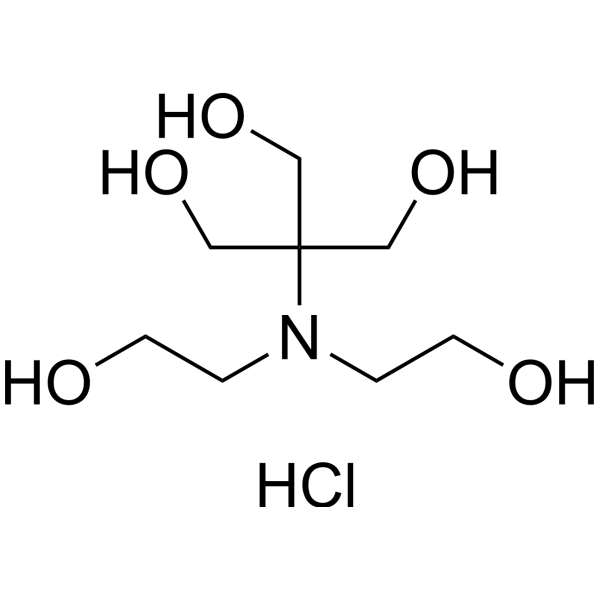
Bis-Tris hydrochloride is an amine buffer suitable for protein and nucleic acid systems with a pH buffer range of 5.8-7.2. Bis-Tris hydrochloride can also be mixed with HEPES and cacodylic acid buffer to create a pH 8 environment and monitor fluorescence emission intensity at 305 nm. Gels formulated with Bis-Tris also avoid protein degradation in samples prepared at higher pH (pH 8.5) .
|
-
-
- HY-W040088
-
|
H-Ala-Leu-OH
|
Aminopeptidase
|
Metabolic Disease
|
|
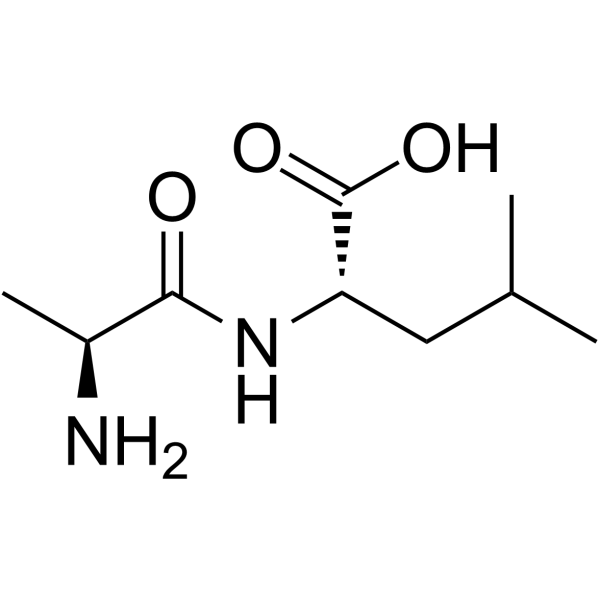
L-Alanyl-L-leucine is a competitive inhibitor of small intestinal glycyl-L-leucine hydrolase with Ki values of 0.53 mM (phosphate buffer) or 0.22 mM (Tris buffer). L-Alanyl-L-leucine can be used for research on Hartnup disease and cystinuria .
|
-
-
- HY-W460471
-
|
|
Biochemical Assay Reagents
|
Others
|
|
Tris Buffered Saline is a common buffer reagent in molecular biology, consisting of Tris and NaCl. Tris Buffered Saline can adjust pH and ionic strength and is widely used in DNA/RNA extraction, PCR and protein electrophoresis. Tris Buffered Saline can purify and protect nucleic acid materials and improve reaction efficiency and concentration. In protein electrophoresis, Tris Buffered Saline stabilizes gels and maintains pH. Overall, Tris Buffered Saline offers versatility, good solubility, and low toxicity in molecular biology applications.
|
-
-
- HY-W393372
-
-
-
- HY-179669C
-
|
|
Biochemical Assay Reagents
|
Others
|
|
1M Tris-HCl Buffer, pH 7.6 is a buffer solution commonly used in various biochemical and molecular biological applications to maintain a stable pH environment. The pH value of Tris-HCl changes with temperature; generally, the pH decreases by 0.03 units for every degree Celsius increase in temperature. The pH values indicated on the product are the pH values of the Tris-HCl buffer solution at 25°C.
|
-
-
- HY-179669
-
|
|
Biochemical Assay Reagents
|
Others
|
|
1M Tris-HCl Buffer, pH 6.8 is a buffer solution commonly used in various biochemical and molecular biological applications to maintain a stable pH environment. The pH value of Tris-HCl changes with temperature; generally, the pH decreases by 0.03 units for every degree Celsius increase in temperature. The pH values indicated on the product are the pH values of the Tris-HCl buffer solution at 25°C.
|
-
-
- HY-179669I
-
|
|
Biochemical Assay Reagents
|
Others
|
|
1M Tris-HCl Buffer, pH 8.8 is a buffer solution commonly used in various biochemical and molecular biological applications to maintain a stable pH environment. The pH value of Tris-HCl changes with temperature; generally, the pH decreases by 0.03 units for every degree Celsius increase in temperature. The pH values indicated on the product are the pH values of the Tris-HCl buffer solution at 25°C.
|
-
-
- HY-179669A
-
|
|
Biochemical Assay Reagents
|
Others
|
|
1M Tris-HCl Buffer, pH 7.0 is a buffer solution commonly used in various biochemical and molecular biological applications to maintain a stable pH environment. The pH value of Tris-HCl changes with temperature; generally, the pH decreases by 0.03 units for every degree Celsius increase in temperature. The pH values indicated on the product are the pH values of the Tris-HCl buffer solution at 25°C.
|
-
-
- HY-179669E
-
|
|
Biochemical Assay Reagents
|
Others
|
|
1M Tris-HCl Buffer, pH 8.0 is a buffer solution commonly used in various biochemical and molecular biological applications to maintain a stable pH environment. The pH value of Tris-HCl changes with temperature; generally, the pH decreases by 0.03 units for every degree Celsius increase in temperature. The pH values indicated on the product are the pH values of the Tris-HCl buffer solution at 25°C.
|
-
-
- HY-W040088R
-
|
H-Ala-Leu-OH (Standard)
|
Reference Standards
Aminopeptidase
|
Metabolic Disease
|
|
L-Alanyl-L-leucine is an endogenous metabolite. This product is used for research and analytical applications. L-Alanyl-L-leucine is a competitive inhibitor of small intestinal glycyl-L-leucine hydrolase with Ki values of 0.53 mM (phosphate buffer) or 0.22 mM (Tris buffer). L-Alanyl-L-leucine can be used for research on Hartnup disease and cystinuria .
|
-
-
- HY-179669H
-
|
|
Biochemical Assay Reagents
|
Others
|
|
1M Tris-HCl Buffer, pH 8.8 is a buffer solution commonly used in various biochemical and molecular biological applications to maintain a stable pH environment. The pH value of Tris-HCl changes with temperature; generally, the pH decreases by 0.03 units for every degree Celsius increase in temperature. The pH values indicated on the product are the pH values of the Tris-HCl buffer solution at 25°C.
|
-
-
- HY-179669J
-
|
|
Biochemical Assay Reagents
|
Others
|
|
1M Tris-HCl Buffer, pH 6.8 is a buffer solution commonly used in various biochemical and molecular biological applications to maintain a stable pH environment. The pH value of Tris-HCl changes with temperature; generally, the pH decreases by 0.03 units for every degree Celsius increase in temperature. The pH values ??indicated on the product are the pH values ??of the Tris-HCl buffer solution at 25°C.
|
-
-
- HY-D0878
-
|
|
Biochemical Assay Reagents
|
Others
|
|
TAPSO is a commonly used biological buffer and pH-stabilizing reagent, with an effective pH range of 7-8 and a pKa range of 7.5-9. TAPSO contains a Tris group, exhibits considerable reactivity, and can interact with zwitterionic glycine peptides .
|
-
-
- HY-D0856S
-
-
-
- HY-D0227R
-
|
Tris (Standard); Tris(hydroxymethyl)aminomethane (Standard)
|
Biochemical Assay Reagents
Reference Standards
|
Metabolic Disease
Cancer
|
|
THAM (Standard) is the analytical standard of THAM. This product is intended for research and analytical applications. THAM (Tris) is a biologically inert amino alcohol of low toxicity, which buffers carbon dioxide and acids in vitro and in vivo. THAM is an effective amine compound for pH control in the physiological range .
|
-
-
- HY-137798
-
|
|
Fluorescent Dye
|
Others
|
|
Chromozym PL is a chromogenic substrate for plasmin, and the enzymatic reaction can be carried out in 0.1mL Tris-HCl buffer (50 mM, pH 7.8). 100 μM Chromozym PL was dissolved and prepared. After adding the hydrolase, the generation of p-nitroaniline (pNA) at 405 nm was continuously observed, and the hydrolysis products were calculated .
|
-
-
- HY-123244
-
|
|
Bcl-2 Family
Apoptosis
|
Cancer
|
|
YC137 is a potent Bcl-2 antagonist with Kis of 1.3 μM and >100 μM for Bcl-2 and Bcl-xL when assayed in Bis-Tris buffer, respectively. YC137 inhibits the binding of the Bid BH3 peptide to Bcl-2, thus disrupting an interaction essential for the antiapoptotic activity of Bcl-2. YC137 selectively induces apoptosis of Bcl-2-dependent cells. YC137 has the potential for breast cancer research .
|
-
-
- HY-D0856R
-
|
|
Biochemical Assay Reagents
Reference Standards
|
Others
|
|
Bis-Tris (Standard) is the analytical standard of Bis-Tris. This product is intended for research and analytical applications. Bis-Tris is an amine buffer suitable for protein and nucleic acid systems with a pH buffer range of 5.8-7.2. Bis-Tris can also be mixed with HEPES and cacodylic acid buffer to create a pH 8 environment and monitor fluorescence emission intensity at 305 nm. Gels formulated with Bis-Tris also avoid protein degradation in samples prepared at higher pH (pH 8.5) .
|
-
-
- HY-D0856S1
-
|
|
Isotope-Labeled Compounds
Biochemical Assay Reagents
|
Others
|
|
Bis-Tris-d14 is the deuterium labeled Bis-Tris (HY-D0856). Bis-Tris is an amine buffer suitable for protein and nucleic acid systems with a pH buffer range of 5.8-7.2. Bis-Tris can also be mixed with HEPES and cacodylic acid buffer to create a pH 8 environment and monitor fluorescence emission intensity at 305 nm. Gels formulated with Bis-Tris also avoid protein degradation in samples prepared at higher pH (pH 8.5) .
|
-
-
- HY-W643127
-
|
N-Tris(hydroxymethyl)methyl-4-aminobutanesulfonic acid
|
Biochemical Assay Reagents
|
Others
|
|
TABS (N-Tris(hydroxymethyl)methyl-4-aminobutanesulfonic acid) is a zwitterionic chemical buffering agent, is broadly applied in cell culture .
|
-
-
- HY-179668A
-
|
|
Biochemical Assay Reagents
|
Others
|
|
10x TE buffer, pH 8.0 is weakly alkaline and protects the bases of DNA. DNA is relatively stable in TE and is not easily damaged in terms of integrity or prone to ring opening and breakage. 1x TE buffer, pH 8.0 composition concentration: 100 mM Tris-HCl, 10 mM EDTA, pH 8.0.
|
-
-
- HY-179669D
-
|
|
Biochemical Assay Reagents
|
Others
|
|
1M Tris-HCl Buffer, pH 7.8 is a buffer solution commonly used in various biochemical and molecular biological applications to maintain a stable pH environment. The pH value of Tris-HCl changes with temperature; generally, the pH decreases by 0.03 units for every degree Celsius increase in temperature. The pH values indicated on the product are the pH values of the Tris-HCl buffer solution at 25°C.
|
-
-
- HY-179669B
-
|
|
Biochemical Assay Reagents
|
Others
|
|
1M Tris-HCl Buffer, pH 7.2 is a buffer solution commonly used in various biochemical and molecular biological applications to maintain a stable pH environment. The pH value of Tris-HCl changes with temperature; generally, the pH decreases by 0.03 units for every degree Celsius increase in temperature. The pH values indicated on the product are the pH values of the Tris-HCl buffer solution at 25°C.
|
-
-
- HY-179669K
-
|
|
Biochemical Assay Reagents
|
Others
|
|
0.5M Tris-HCl Buffer, pH 8.0 is a buffer solution commonly used in various biochemical and molecular biological applications to maintain a stable pH environment. The pH value of Tris-HCl changes with temperature; generally, the pH decreases by 0.03 units for every degree Celsius increase in temperature. The pH values indicated on the product are the pH values of the Tris-HCl buffer solution at 25°C.
|
-
-
- HY-W009330
-
|
|
Biochemical Assay Reagents
|
Others
|
|
TAPSO sodium is a commonly used biological buffer and pH-stabilizing reagent, with an effective pH range of 7-8 and a pKa range of 7.5-9. TAPSO sodium contains a Tris group, exhibits considerable reactivity, and can interact with zwitterionic glycine peptides .
|
-
-
- HY-D0227AR
-
|
Tris HCl (Standard); Tris(hydroxymethyl)aminomethane hydrochloride (Standard)
|
Biochemical Assay Reagents
Reference Standards
|
Metabolic Disease
Cancer
|
|
THAM (hydrochloride) (Standard) is the analytical standard of THAM (hydrochloride). This product is intended for research and analytical applications. THAM hydrochloride (Tris HCl) is a biologically inert amino alcohol of low toxicity, which buffers carbon dioxide and acids in vitro and in vivo. THAM hydrochloride is an effective amine compound for pH control in the physiological range .
|
-
-
- HY-179668
-
|
|
Biochemical Assay Reagents
|
Others
|
|
1x TE buffer, pH 8.0 is weakly alkaline and protects the bases of DNA. DNA is relatively stable in TE and is not easily damaged in terms of integrity or prone to ring opening and breakage. 1x TE buffer, pH 8.0 composition concentration: 10 mM Tris-HCl, 1 mM EDTA, pH 8.0.
|
-
| Cat. No. |
Product Name |
Type |
-
- HY-D0856
-
|
|
Biochemical Assay Reagents
|
|
Bis-Tris is an amine buffer suitable for protein and nucleic acid systems with a pH buffer range of 5.8-7.2. Bis-Tris can also be mixed with HEPES and cacodylic acid buffer to create a pH 8 environment and monitor fluorescence emission intensity at 305 nm. Gels formulated with Bis-Tris also avoid protein degradation in samples prepared at higher pH (pH 8.5) .
|
-
- HY-126399
-
|
BTP
|
Biochemical Assay Reagents
|
|
Bis-tris propane (BTP) is a water-soluble buffer substance. Bis-tris propane can be used as a suitable buffer for polymerase chain reaction (PCR). Bis-tris propane can enhance the stability or activity of restriction enzymes .
|
-
- HY-D0227F
-
|
Tris HCl (≥99%, reagent grade); Tris hydrochloride (≥99%, reagent grade)
|
Biochemical Assay Reagents
|
|
THAM hydrochloride (≥99%, reagent grade), also known as Tris-HCl, is a buffer commonly used in various biochemical and molecular biology applications to maintain a stable pH environment. Tris-HCl has unique chemical properties that allow it to resist changes in pH when acidic or basic substances are added, which makes it useful for stabilizing biological samples or reagents. It is commonly used in electrophoresis and protein purification procedures.
|
-
- HY-Y1110H
-
|
Magnogene, suitable for insect cell culture
|
Biochemical Assay Reagents
|
|
Magnesium chloride anhydrous, suitable for insect cell culture is an inorganic salt and cell culture medium component that can be used to prepare Tris buffer. Magnesium chloride anhydrous, suitable for insect cell culture is a component of Hunter's Thrips medium, which supports the in vitro culture of western flower thrip embryonic cells, and promotes the adhesion of tissue fragments/cells as well as the growth of fibroblast-like and epithelial-like cells .
|
-
- HY-W105681
-
|
|
Biochemical Assay Reagents
|
|
Bis-Tris hydrochloride is an amine buffer suitable for protein and nucleic acid systems with a pH buffer range of 5.8-7.2. Bis-Tris hydrochloride can also be mixed with HEPES and cacodylic acid buffer to create a pH 8 environment and monitor fluorescence emission intensity at 305 nm. Gels formulated with Bis-Tris also avoid protein degradation in samples prepared at higher pH (pH 8.5) .
|
-
- HY-W460471
-
|
|
Biochemical Assay Reagents
|
|
Tris Buffered Saline is a common buffer reagent in molecular biology, consisting of Tris and NaCl. Tris Buffered Saline can adjust pH and ionic strength and is widely used in DNA/RNA extraction, PCR and protein electrophoresis. Tris Buffered Saline can purify and protect nucleic acid materials and improve reaction efficiency and concentration. In protein electrophoresis, Tris Buffered Saline stabilizes gels and maintains pH. Overall, Tris Buffered Saline offers versatility, good solubility, and low toxicity in molecular biology applications.
|
-
- HY-W393372
-
|
Tris maleate; Tris(hydroxymethyl)aminomethane maleate
|
Biochemical Assay Reagents
|
|
THAM (Tris) maleate is a biologically inert amino alcohol of low toxicity, which buffers carbon dioxide and acids in vitro and in vivo. THAM maleate is an effective amine compound for pH control in the physiological range .
|
-
- HY-179669C
-
|
|
Biochemical Assay Reagents
|
|
1M Tris-HCl Buffer, pH 7.6 is a buffer solution commonly used in various biochemical and molecular biological applications to maintain a stable pH environment. The pH value of Tris-HCl changes with temperature; generally, the pH decreases by 0.03 units for every degree Celsius increase in temperature. The pH values indicated on the product are the pH values of the Tris-HCl buffer solution at 25°C.
|
-
- HY-179669
-
|
|
Biochemical Assay Reagents
|
|
1M Tris-HCl Buffer, pH 6.8 is a buffer solution commonly used in various biochemical and molecular biological applications to maintain a stable pH environment. The pH value of Tris-HCl changes with temperature; generally, the pH decreases by 0.03 units for every degree Celsius increase in temperature. The pH values indicated on the product are the pH values of the Tris-HCl buffer solution at 25°C.
|
-
- HY-179669I
-
|
|
Biochemical Assay Reagents
|
|
1M Tris-HCl Buffer, pH 8.8 is a buffer solution commonly used in various biochemical and molecular biological applications to maintain a stable pH environment. The pH value of Tris-HCl changes with temperature; generally, the pH decreases by 0.03 units for every degree Celsius increase in temperature. The pH values indicated on the product are the pH values of the Tris-HCl buffer solution at 25°C.
|
-
- HY-179669A
-
|
|
Biochemical Assay Reagents
|
|
1M Tris-HCl Buffer, pH 7.0 is a buffer solution commonly used in various biochemical and molecular biological applications to maintain a stable pH environment. The pH value of Tris-HCl changes with temperature; generally, the pH decreases by 0.03 units for every degree Celsius increase in temperature. The pH values indicated on the product are the pH values of the Tris-HCl buffer solution at 25°C.
|
-
- HY-179669E
-
|
|
Biochemical Assay Reagents
|
|
1M Tris-HCl Buffer, pH 8.0 is a buffer solution commonly used in various biochemical and molecular biological applications to maintain a stable pH environment. The pH value of Tris-HCl changes with temperature; generally, the pH decreases by 0.03 units for every degree Celsius increase in temperature. The pH values indicated on the product are the pH values of the Tris-HCl buffer solution at 25°C.
|
-
- HY-179669H
-
|
|
Biochemical Assay Reagents
|
|
1M Tris-HCl Buffer, pH 8.8 is a buffer solution commonly used in various biochemical and molecular biological applications to maintain a stable pH environment. The pH value of Tris-HCl changes with temperature; generally, the pH decreases by 0.03 units for every degree Celsius increase in temperature. The pH values indicated on the product are the pH values of the Tris-HCl buffer solution at 25°C.
|
-
- HY-179669J
-
|
|
Biochemical Assay Reagents
|
|
1M Tris-HCl Buffer, pH 6.8 is a buffer solution commonly used in various biochemical and molecular biological applications to maintain a stable pH environment. The pH value of Tris-HCl changes with temperature; generally, the pH decreases by 0.03 units for every degree Celsius increase in temperature. The pH values ??indicated on the product are the pH values ??of the Tris-HCl buffer solution at 25°C.
|
-
- HY-D0878
-
|
|
Biochemical Assay Reagents
|
|
TAPSO is a commonly used biological buffer and pH-stabilizing reagent, with an effective pH range of 7-8 and a pKa range of 7.5-9. TAPSO contains a Tris group, exhibits considerable reactivity, and can interact with zwitterionic glycine peptides .
|
-
- HY-D0856R
-
|
|
Biochemical Assay Reagents
|
|
Bis-Tris (Standard) is the analytical standard of Bis-Tris. This product is intended for research and analytical applications. Bis-Tris is an amine buffer suitable for protein and nucleic acid systems with a pH buffer range of 5.8-7.2. Bis-Tris can also be mixed with HEPES and cacodylic acid buffer to create a pH 8 environment and monitor fluorescence emission intensity at 305 nm. Gels formulated with Bis-Tris also avoid protein degradation in samples prepared at higher pH (pH 8.5) .
|
-
- HY-W643127
-
|
N-Tris(hydroxymethyl)methyl-4-aminobutanesulfonic acid
|
Biochemical Assay Reagents
|
|
TABS (N-Tris(hydroxymethyl)methyl-4-aminobutanesulfonic acid) is a zwitterionic chemical buffering agent, is broadly applied in cell culture .
|
-
- HY-179668A
-
|
|
Biochemical Assay Reagents
|
|
10x TE buffer, pH 8.0 is weakly alkaline and protects the bases of DNA. DNA is relatively stable in TE and is not easily damaged in terms of integrity or prone to ring opening and breakage. 1x TE buffer, pH 8.0 composition concentration: 100 mM Tris-HCl, 10 mM EDTA, pH 8.0.
|
-
- HY-179669D
-
|
|
Biochemical Assay Reagents
|
|
1M Tris-HCl Buffer, pH 7.8 is a buffer solution commonly used in various biochemical and molecular biological applications to maintain a stable pH environment. The pH value of Tris-HCl changes with temperature; generally, the pH decreases by 0.03 units for every degree Celsius increase in temperature. The pH values indicated on the product are the pH values of the Tris-HCl buffer solution at 25°C.
|
-
- HY-179669B
-
|
|
Biochemical Assay Reagents
|
|
1M Tris-HCl Buffer, pH 7.2 is a buffer solution commonly used in various biochemical and molecular biological applications to maintain a stable pH environment. The pH value of Tris-HCl changes with temperature; generally, the pH decreases by 0.03 units for every degree Celsius increase in temperature. The pH values indicated on the product are the pH values of the Tris-HCl buffer solution at 25°C.
|
-
- HY-179669K
-
|
|
Biochemical Assay Reagents
|
|
0.5M Tris-HCl Buffer, pH 8.0 is a buffer solution commonly used in various biochemical and molecular biological applications to maintain a stable pH environment. The pH value of Tris-HCl changes with temperature; generally, the pH decreases by 0.03 units for every degree Celsius increase in temperature. The pH values indicated on the product are the pH values of the Tris-HCl buffer solution at 25°C.
|
-
- HY-W009330
-
|
|
Biochemical Assay Reagents
|
|
TAPSO sodium is a commonly used biological buffer and pH-stabilizing reagent, with an effective pH range of 7-8 and a pKa range of 7.5-9. TAPSO sodium contains a Tris group, exhibits considerable reactivity, and can interact with zwitterionic glycine peptides .
|
-
- HY-179668
-
|
|
Biochemical Assay Reagents
|
|
1x TE buffer, pH 8.0 is weakly alkaline and protects the bases of DNA. DNA is relatively stable in TE and is not easily damaged in terms of integrity or prone to ring opening and breakage. 1x TE buffer, pH 8.0 composition concentration: 10 mM Tris-HCl, 1 mM EDTA, pH 8.0.
|
| Cat. No. |
Product Name |
Target |
Research Area |
-
- HY-P2435
-
|
|
Peptides
|
Others
|
|
Bz-Nle-Lys-Arg-Arg-AMC can be used for protease activity assay. In 0.1mL Tris-HCl buffer (50 mM, pH 7.8), Bz-Nle-Lys-Arg-Arg-AMC was hydrolyzed, and the release rate of AMC was observed .
|
-
- HY-137798
-
|
|
Fluorescent Dye
|
Others
|
|
Chromozym PL is a chromogenic substrate for plasmin, and the enzymatic reaction can be carried out in 0.1mL Tris-HCl buffer (50 mM, pH 7.8). 100 μM Chromozym PL was dissolved and prepared. After adding the hydrolase, the generation of p-nitroaniline (pNA) at 405 nm was continuously observed, and the hydrolysis products were calculated .
|
-
- HY-K1021
-
|
|
|
MCE Tris-Glycine Powder (1 L of 1×) consists of Tris and Glycine, and is widely used as an electrophoresis buffer for Native-PAGE. The 10 pouches are defined as the base specification. All larger sizes correspond to incremental volumes of this base.
|
-
- HY-K1020
-
|
|
|
MCE Tris-Glycine-SDS Powder (1 L of 1×) consists of Tris, Glycine and SDS, and is widely used as an electrophoresis buffer for SDS-PAGE and Western Blot. The 10 pouches are defined as the base specification. All larger sizes correspond to incremental volumes of this base.
|
-
- HY-K1028
-
|
|
|
MCE Transfer Buffer (Semi Dry) Powder (1 L of 1×) consists of Tris, Glycine and SDS, and is suitable for Western Blot semi-dry electrophoresis. The 20 pouches are defined as the base specification. All larger sizes correspond to incremental volumes of this base.
|
-
- HY-K1026
-
|
|
|
MCE TBS Powder (1 L of 1×) consists of NaCl, KCl and Tris, and is widely used as washing buffer in immunocytochemistry, FISH or ELISA, and can also be used for antibody dilution and preparation of blocking solution. The 20 pouches are defined as the base specification. All larger sizes correspond to incremental volumes of this base.
|
-
- HY-K1025
-
|
|
|
MCE TBS-T Powder (1 L of 1×) consists of NaCl, KCl, Tris and Tween 20, and is widely used as washing buffer in immunocytochemistry, FISH or ELISA, and can also be used for antibody dilution and preparation of blocking solution. The 20 pouches are defined as the base specification. All larger sizes correspond to incremental volumes of this base.
|
| Cat. No. |
Product Name |
Category |
Target |
Chemical Structure |
| Cat. No. |
Product Name |
Chemical Structure |
-
- HY-D0856S
-
|
|
|
Bis-Tris-d19 is the deuterium labeled Bis-Tris . Bis-Tris is a commonly used buffer .
|
-
-
- HY-D0856S1
-
|
|
|
Bis-Tris-d14 is the deuterium labeled Bis-Tris (HY-D0856). Bis-Tris is an amine buffer suitable for protein and nucleic acid systems with a pH buffer range of 5.8-7.2. Bis-Tris can also be mixed with HEPES and cacodylic acid buffer to create a pH 8 environment and monitor fluorescence emission intensity at 305 nm. Gels formulated with Bis-Tris also avoid protein degradation in samples prepared at higher pH (pH 8.5) .
|
-
Your information is safe with us. * Required Fields.
Inquiry Information
- Product Name:
- Cat. No.:
- Quantity:
- MCE Japan Authorized Agent:

