1. Search Result
Search Result
Results for "

U937cells

" in MedChemExpress (MCE) Product Catalog:

28

Inhibitors & Agonists

2

Peptides

2

Natural
Products

2

Isotope-Labeled Compounds

Cat. No. Product Name Target Research Areas Chemical Structure
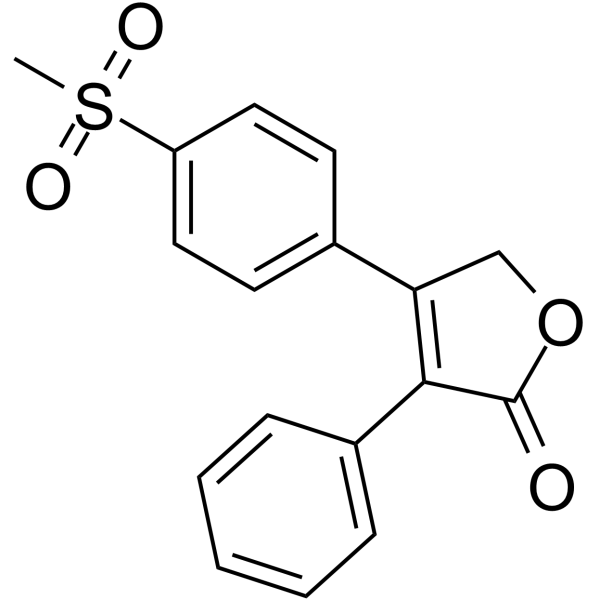
  • HY-17372
    Rofecoxib
    5 Publications Verification

    MK 966

    COX Inflammation/Immunology Cancer
    Rofecoxib is a potent, specific and orally active COX-2 inhibitor, with IC50s of 26 and 18 nM for human COX-2 in human osteosarcoma cells and Chinese hamster ovary cells, with a 1000-fold selectivity for COX-2 over human COX-1 (IC50 > 50 μM in U937 cells and > 15 μM in Chinese hamster ovary cells).
    Rofecoxib
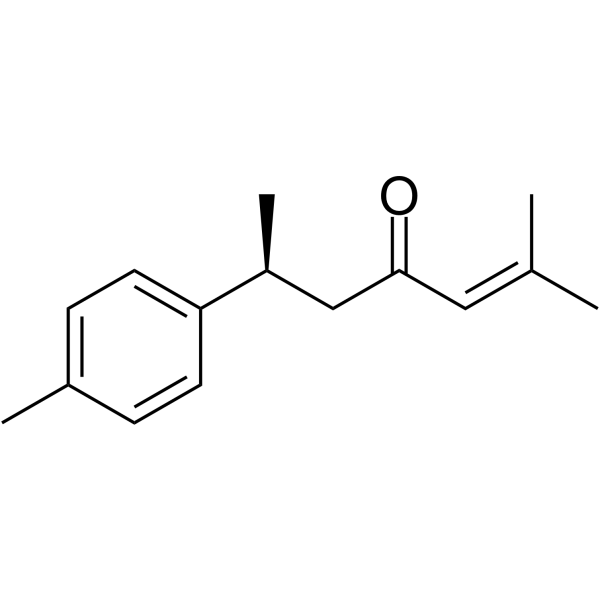
  • HY-N6703

    (+)-ar-Turmerone

    Apoptosis Neurological Disease Inflammation/Immunology Cancer
    ar-Turmerone ((+)-ar-Turmerone) is an orally active and major bioactive compound of the herb Curcuma longa with anti-tumorigenesis and anti-inflammatory activities. ar-Turmerone induces apoptosis in U937 cells. ar-Turmerone exerts positive modulation on murine DCs. ar-Turmerone induces NSC proliferation in vitro and in vivo, and can be used for various neurologic disorders study .
    ar-Turmerone
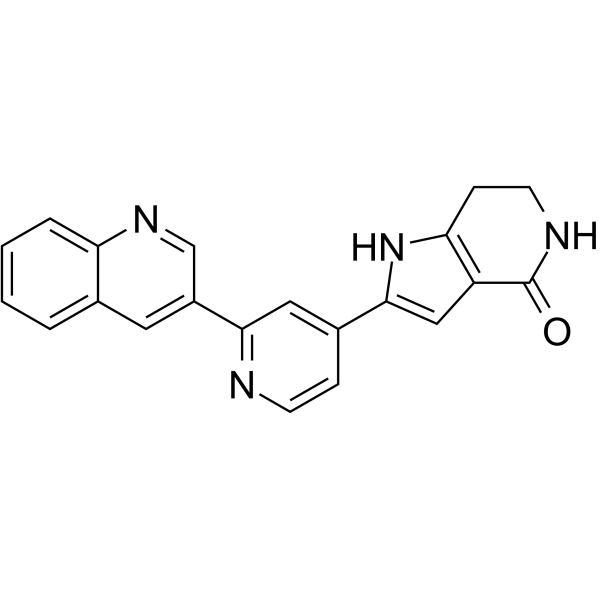
  • HY-131249
    MK2-IN-3
    4 Publications Verification

    MAPKAPK2 (MK2) Inflammation/Immunology
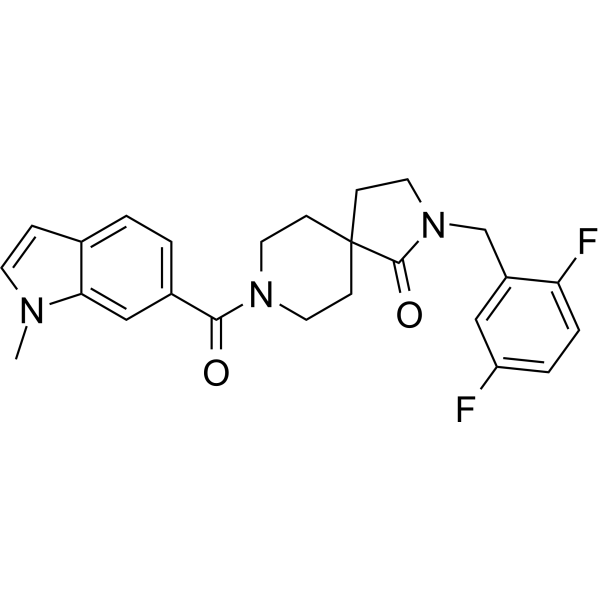
    MK2-IN-3 is a potent and selective inhibitor of MAPKAP-K2 (MK-2), with an IC50 of 8.5 nM. MK2-IN-3 shows selectivity for MK-2 over MK-3, MK-5, ERK2, MNK1, p38a (IC50s=0.21, 0.081, 3.44, 5.7, and >100 μM, respectively) and MSK1, MSK2, CDK2, JNK2, IKK2 (IC50s>200 μM). MK2-IN-3 can reduce TNFα production in both U937 cells and in vivo .
    MK2-IN-3
  • HY-103358
    KF38789
    2 Publications Verification

    P-selectin Inflammation/Immunology
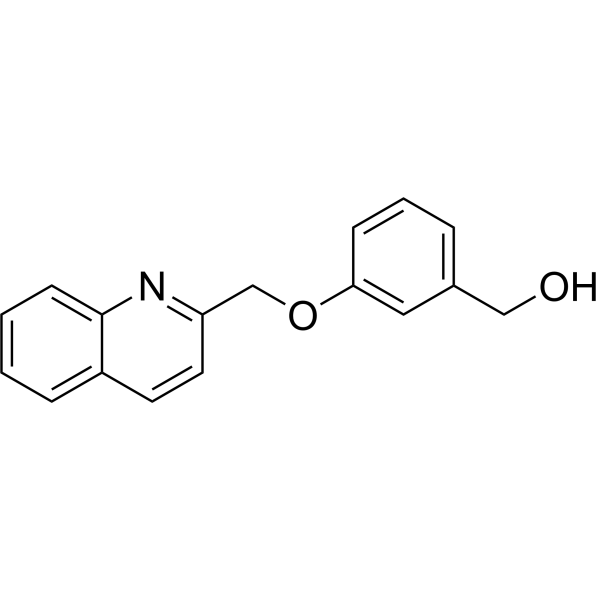
    KF38789 is a selective inhibitor of P-selectin-PSGL-1 binding. KF38789 inhibits the binding of U937 cells to immobilized P-selectin immunoglobulin G chimeric protein (P-selectin-Ig) with an IC50 value of 1.97 μM .
    KF38789
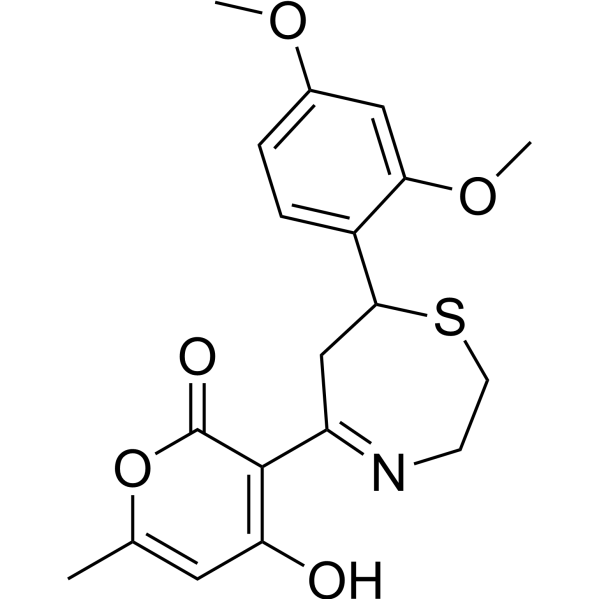
  • HY-103347

    Apoptosis Inflammation/Immunology
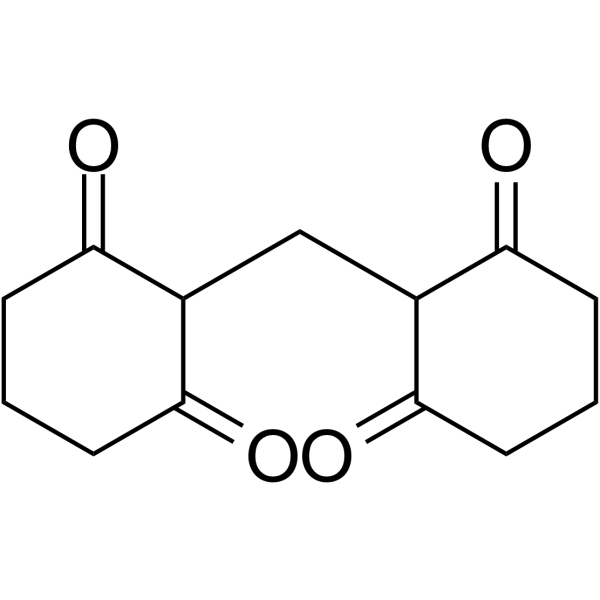
    M50054 is a potent inhibitor of apoptosis. M50054 inhibits Etoposide-induced caspase-3 activation of U937 cells with an IC50 of 79 μg/mL. M50054 does not directly inhibit the enzymatic activity of caspase-3. M50054 can be used for the research anti-Fas-antibody-induced hepatitis and chemotherapy-induced alopecia .
    M50054
  • HY-P1188

    Integrin Cancer
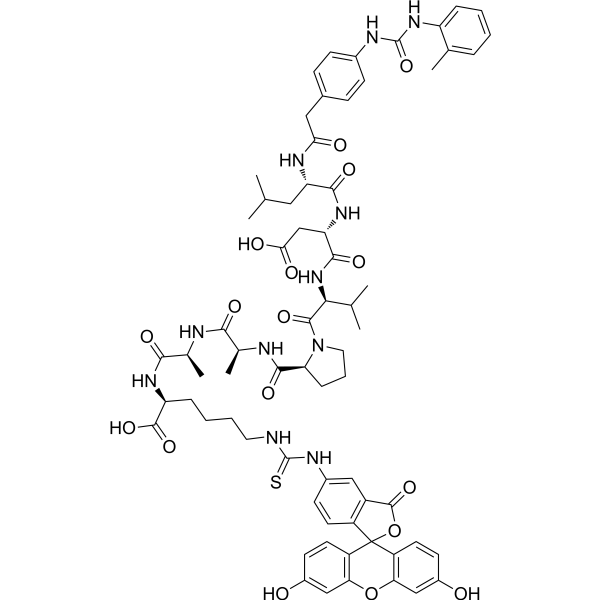
    LDV-FITC, a fluorescent peptide, is a FITC-conjugated LDV peptide (HY-P2267). LDV-FITC binds to the α4β1 integrin with high affinity (Kd: 0.3 nM and 12 nM for binding to U937 cells in the presence and absence of Mn 2+ respectively). LDV-FITC can be used to detect α4β1 integrin affinity .
    LDV-FITC
  • HY-105358

    Leukotriene Receptor Calcium Channel Inflammation/Immunology
    CP-288886 is a cysLT1 receptor antagonist with a Ki value of 0.004 μM. CP-288886 exhibits comparable activity to Zafirlukast (HY-17492) and Pranlukast (HY-B0290). CP-288886 inhibits calcium mobilization with an IC50 of 0.0005 μM in human U937 cells. CP-288886 has high oral bioavailability. CP-288886 possesses anti-asthmatic activity in a guinea pig asthma model and can be used for the research of diseases such as asthma .
    CP-288886
  • HY-147086

    Leukotriene Receptor G protein-coupled Bile Acid Receptor 1 TNF Receptor Metabolic Disease Inflammation/Immunology
    CAY10789 is a potent CysLT1R (cysteinyl leukotriene receptor 1) antagonist (IC50=2.80 μM) and GPBAR1 (G-protein-coupled bile acid receptor 1) agonist (EC50=3 μM). CAY10789 significantly reduces the adhesion of U937 cells to HAEC, reduces the expression of TNF-α. CAY10789 shows very promising metabolic stability and excellent pharmacokinetics. CAY10789 can be used for the research of colitis, metabolic syndromes, and other GPBAR1/CysLT1R-related diseases .
    CAY10789
  • HY-146758

    RIP kinase Neurological Disease Inflammation/Immunology
    RIPK1-IN-14 (Compound 41) is a potent inhibitor of RIPK1 with an IC50 value of 92 nM. RIPK1-IN-14 shows a significant anti-necroptotic effect in a necroptosis model in U937 cells .
    RIPK1-IN-14
  • HY-146581

    Cathepsin Inflammation/Immunology
    Cathepsin C-IN-4 (compound SF27) is a potent Cathepsin C (Cat C) inhibitor, with an IC50 of 65.6 nM. Cathepsin C-IN-4 also inhibits THP-1 and U937 cell, with IC50 values of 203.4 and 177.6 nM, respectively .
    Cathepsin C-IN-4
  • HY-146580

    Cathepsin Inflammation/Immunology
    Cathepsin C-IN-3 (compound SF11) is a potent Cathepsin C (Cat C) inhibitor, with an IC50 of 61.79 nM. Cathepsin C-IN-3 also inhibits THP-1 and U937 cell, with IC50 values of 101.5 and 86.5 nM, respectively .
    Cathepsin C-IN-3
  • HY-120621

    Phospholipase Inflammation/Immunology
    BMS-229724 is an orally active and tight-binding cytosolic phospholipase A2 (cPLA2) inhibitor with an IC50 of 2.8 μM. BMS-229724 can inhibit the production of arachidonic acid and eicosanoids in U937 cells, neutrophils, platelets, and other cells. BMS-229724 has anti-inflammatory activity and can be used in the research of diseases such as skin inflammation .
    BMS-229724
  • HY-17372S

    Isotope-Labeled Compounds COX Inflammation/Immunology Cancer
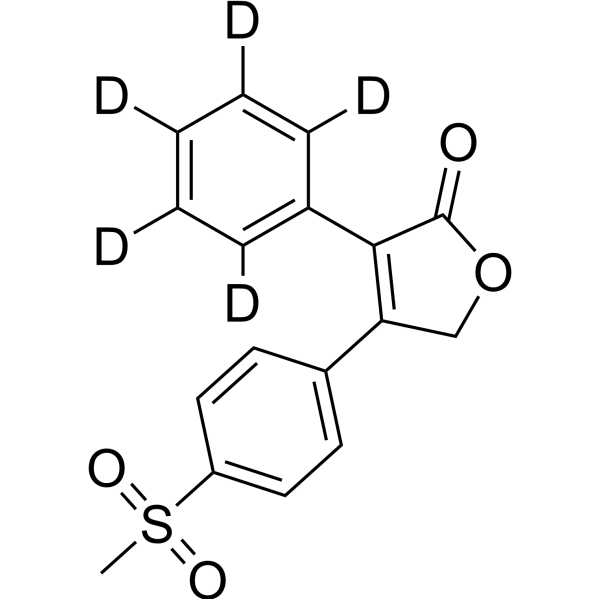
    Rofecoxib-d5 is the deuterium labeled Rofecoxib. Rofecoxib is a potent, specific and orally active COX-2 inhibitor, with IC50s of 26 and 18 nM for human COX-2 in human osteosarcoma cells and Chinese hamster ovary cells, with a 1000-fold selectivity for COX-2 over human COX-1 (IC50 > 50 μM in U937 cells and > 15 μM in Chinese hamster ovary cells) .
    Rofecoxib-d5
  • HY-173526

    Bacterial Calcium Channel Infection
    H052 is a selective Staphylococcus aureus α-hemolysin (Hla) inhibitor. H052 binds to Hla monomers, disrupts the interaction with host cell membranes to block pore formation, inhibiting calcium ion influx, cytotoxicity, and inflammatory responses. H052 exhibits potency (EC50=30 nM in U937 cells) against Hla-induced calcium influx. H052 is promising for research of lung infections caused by S. aureus .
    H052
  • HY-120765

    Isocitrate Dehydrogenase (IDH) Cancer
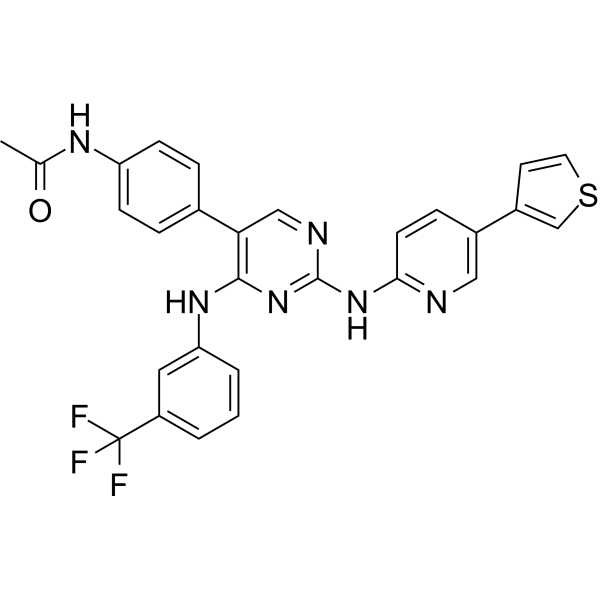
    BRD2879 is a potent IDH1-R132H inhibitor with IC50 values of 0.05, 2.5, >20, >20 µM for IDH1-R132H, IDH1-R132C, IDH1-WT, IDH2-R140Q, respectively. BRD2879 reduces (R)-2-hydroxyglutarate (R-2HG) levels .
    BRD2879
  • HY-W025074

    Sirtuin Histone Methyltransferase Cancer
    BML-278 is a SIRT1 activator (EC150: 1 μM). BML-278 increases H3K9 methylation and inhibits H3K9 acetylation in both the paternal and maternal pronucleus. BML-278 improves early embryonic development. BML-278 arrests the cell cycle at the G1/S phase, and reduces senescence in primary human mesenchymal cells. BML-278 reduces tubulin acetylation in U937 cells. BML-278 also increases mitochondrial density in murine C2C12 myoblasts .
    BML-278
  • HY-177766

    Molecular Glues Apoptosis Cancer
    GSPT1 degrader-17 (Compound 9q) is a potent and selective cereblon-based molecular glue degrader that targets G1 to S phase transition 1 (GSPT1). GSPT1 degrader-17 degrades GSPT1 in U937 cells with a DC50 of 35 nM and Dmax of 81.65%. GSPT1 degrader-17 has a strong inhibitory effect on U937, MOLT-4 and MV4-11 cells with IC50 values of 0.019, 0.006 and 0.027 μM. GSPT1 degrader-17 can induce cells apoptosis and G0/G1 phase arrest. GSPT1 degrader-17 can be used for the research of cancer, such as acute myeloid leukemia .
    GSPT1 degrader-17
  • HY-W747533

    C8 Ceramine; Ceramine (d18:1/8:0)

    Drug Derivative Others
    C8 Ceramine is an analog of ceramide in which the carbonyl group of the ceramide is replaced by a methylene group. At a concentration of 10 μM, C8 ceramine induces maximal DNA fragmentation in U937 cells after 6 hours of incubation, compared to 12 hours for C8 ceramide.
    C8 Ceramine, D-erythro
  • HY-143727

    RIP kinase Inflammation/Immunology
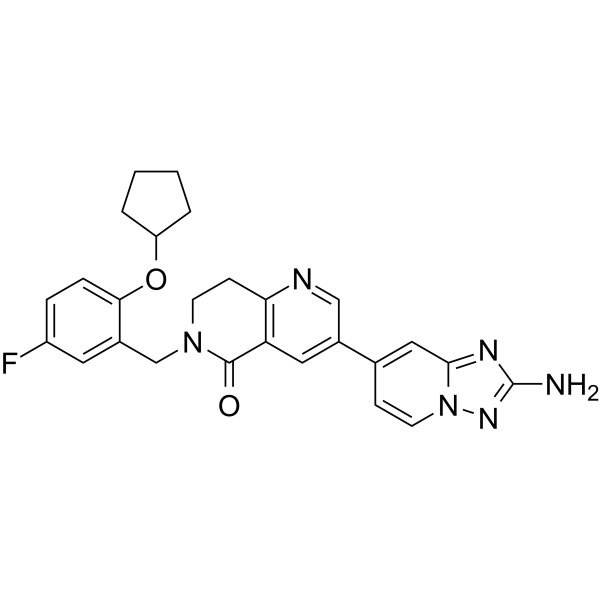
    RIPK1-IN-9 (example 45), a dihydronaphthyridone compound, is a potent and selective RIPK1 inhibitor. RIPK1-IN-9 inhibits U937 cell (IC50=2 nM) and L929 cell (IC50=1.3 nM) .
    RIPK1-IN-9
  • HY-P1188A

    Integrin Cancer
    LDV-FITC TFA, a fluorescent peptide, is a FITC-conjugated LDV peptide (HY-P2267). LDV-FITC TFA binds to the α4β1 integrin with high affinity (Kd: 0.3 nM and 12 nM for binding to U937 cells in the presence and absence of Mn 2+ respectively). LDV-FITC TFA can be used to detect α4β1 integrin affinity .
    LDV-FITC TFA
  • HY-N6703S

    (+)-ar-Turmerone-d3

    Isotope-Labeled Compounds Apoptosis Neurological Disease Inflammation/Immunology Cancer
    ar-Turmerone-d3 is the deuterium labeled ar-Turmerone. ar-Turmerone ((+)-ar-Turmerone) is an orally active and major bioactive compound of the herb Curcuma longa with anti-tumorigenesis and anti-inflammatory activities. ar-Turmerone induces apoptosis in U937 cells. ar-Turmerone exerts positive modulation on murine DCs. ar-Turmerone induces NSC proliferation in vitro and in vivo, and can be used for various neurologic disorders study .
    ar-Turmerone-d3
  • HY-103347R

    Reference Standards Apoptosis Inflammation/Immunology
    M50054 (Standard) is the analytical standard of M50054. This product is intended for research and analytical applications. M50054 is a potent inhibitor of apoptosis. M50054 inhibits Etoposide-induced caspase-3 activation of U937 cells with an IC50 of 79 μg/mL. M50054 does not directly inhibit the enzymatic activity of caspase-3. M50054 can be used for the research anti-Fas-antibody-induced hepatitis and chemotherapy-induced alopecia .
    M50054 (Standard)
  • HY-17372R

    MK 966 (Standard)

    Reference Standards COX Inflammation/Immunology Cancer
    Rofecoxib (Standard) is the analytical standard of Rofecoxib. This product is intended for research and analytical applications. Rofecoxib is a potent, specific and orally active COX-2 inhibitor, with IC50s of 26 and 18 nM for human COX-2 in human osteosarcoma cells and Chinese hamster ovary cells, with a 1000-fold selectivity for COX-2 over human COX-1 (IC50 > 50 μM in U937 cells and > 15 μM in Chinese hamster ovary cells).
    Rofecoxib (Standard)
  • HY-159513

    Bcl-2 Family Apoptosis Cancer
    Bcl-2/Mcl-1-IN-4 (compound 20) is a dual inhibitor targeting Bcl-2 (Ki=0.49 μM) and Mcl-1 (Ki=0.51 μM). Bcl-2/Mcl-1-IN-4 significantly inhibits cancer cell proliferation and effectively induces apoptosis in U937 cells. Bcl-2/Mcl-1-IN-4 can be used in cancer research .
    Bcl-2/Mcl-1-IN-4
  • HY-169795

    Apoptosis Cancer
    C8 D-threo Ceramide (d18:1/8:0) is a sphingolipid analog that can effectively induce apoptosis in U937 cells and cause fragmentation of nucleosomal DNA .
    C8 D-threo Ceramide (d18:1/8:0)
  • HY-138101

    COX Inflammation/Immunology
    Desmethyl etoricoxib (example 21) is a selective COX-2 inhibitor with an IC50 of 1 μM in whole blood. Desmethyl etoricoxib inhibits COX-1 with an IC50 of 16 μM in U937 cells. Desmethyl etoricoxib has anti-inflammatory effects .
    Desmethyl etoricoxib
  • HY-10380

    CDK Others
    (R)-DRF053 is a CDK inhibitor. (R)-DRF053 inhibits Cdk5 and promotes the formation of ductal precursor β cells. (R)-DRF053 inhibits Dil-ox-LDL uptake and CD36 gene expression induced by advanced glycation end products (AGEs) in U937 cells .
    (R)-DRF053
  • HY-N9284

    Others Cancer
    5,19-Epoxy-19R,25-dimethoxycucurbita-6,23-dien-3-ol is a triterpenoid compound derived from Momordica charantia with antitumor activity, exhibiting an IC50 of 32.52 μM against U937 cells. 5,19-Epoxy-19R,25-dimethoxycucurbita-6,23-dien-3-ol shows promise for research in the field of cancer .
    5,19-Epoxy-19R,25-dimethoxycucurbita-6,23-dien-3-ol

Inquiry Online

Your information is safe with us. * Required Fields.

Salutation


Country or Region *

Applicant Name *


Organization Name *

Department *


Email Address *


Product Name *

Cat. No.


Requested quantity *

Phone Number *


Remarks

Inquiry Online

Inquiry Information

Product Name:
Cat. No.:
Quantity:
MCE Japan Authorized Agent:

