


20538 Results for "

UM-UC-3 human bladder cancer cells

" in MedChemExpress (MCE) Product Catalog:
Products (20538)

20538 Results for "UM-UC-3 human bladder cancer cells" in MCE Product Catalog:

4206
4206 Publications Verification
Cat. No.: HY-K0301

Cell Counting Kit-8 (CCK-8) allows sensitive colorimetric assays for the determination of cell viability in cell proliferation and cytotoxicity assays.The 5 mL volume is defined as the base specification. All larger sizes correspond to incremental volumes of this base.

loading...
    loading...
862
862 Cited Publications
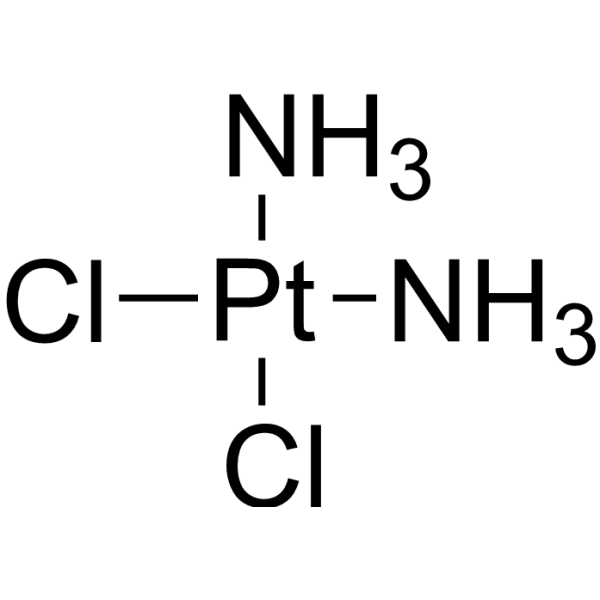
Cat. No.: HY-17394
CAS No.: 15663-27-1
Synonyms: cis-PlatinUM; CDDP; cis-DiaminodichloroplatinUM
Cisplatin (CDDP) is an antineoplastic chemotherapy agent by cross-linking with DNA and causing DNA damage in cancer cells. Cisplatin activates ferroptosis and induces autophagy [3].
loading...
    loading...
645
645 Cited Publications
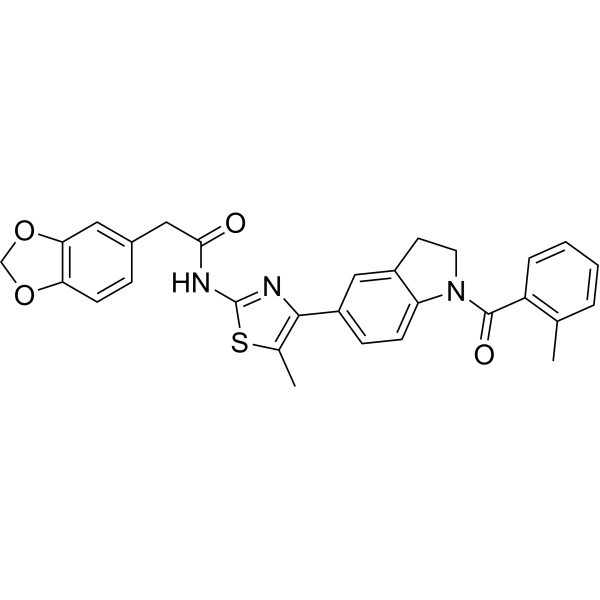
Cat. No.: HY-100523
CAS No.: 846557-71-9
Purity:  99.96%
ML385 is a potent and selective Nrf2 inhibitor with an IC50 of 1.9 μM. ML385 directly binds to the Neh1 domain of NRF2, interferes with the binding of the MAFG-NRF2 protein complex to the antioxidant response element (ARE) DNA sequence, thereby blocking the expression of downstream target genes of NRF2. ML385 can be used in studies related to adult T-cell leukemia, breast cancer, myocardial ischemia/reperfusion injury, non-small cell lung cancer, esophageal squamous cell carcinoma, head and neck squamous cell carcinoma, and lung squamous cell carcinoma [3] .
loading...
    loading...
628
628 Cited Publications
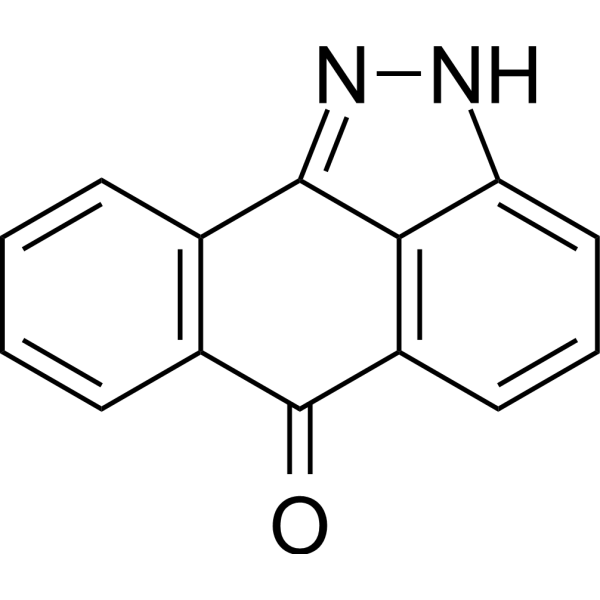
Cat. No.: HY-12041
CAS No.: 129-56-6
Purity:  99.73%
Research Areas:  

Cancer

SP600125 is an orally active, reversible, and ATP-competitive JNK inhibitor with IC50s of 40, 40 and 90 nM for JNK1, JNK2 and JNK3, respectively. SP600125 is a potent ferroptosis inhibitor. SP600125 induces the transformation of bladder cancer cells from autophagy to apoptosis [3].
loading...
    loading...
575
575 Cited Publications
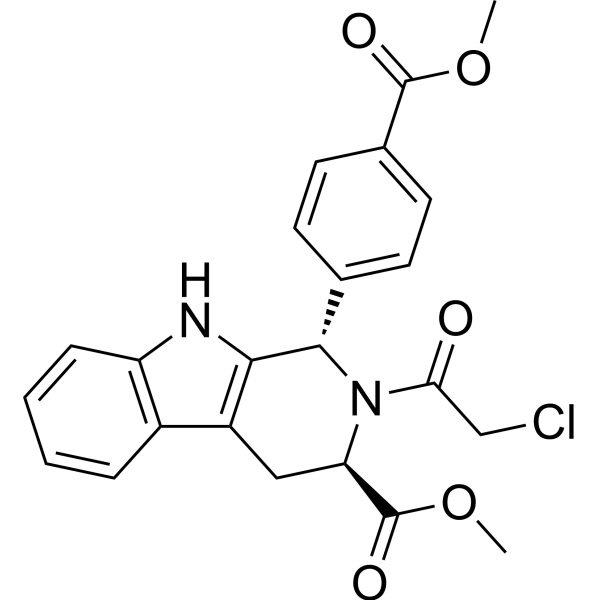
Cat. No.: HY-100218A
CAS No.: 1219810-16-8
Purity:  99.90%
Synonyms: (1S,3R)-RSL3
RSL3 ((1S,3R)-RSL3) is an inhibitor of glutathione peroxidase 4 (GPX4) (ferroptosis activator), reduces the expression of GPX4 protein, and induces ferroptotic death of head and neck cancer cell. RSL3 increases the expression of p62 and Nrf2 and inactivates Keap1 in HN3-rslR cells .
loading...
    loading...
301
301 Cited Publications
Cat. No.: HY-17026
CAS No.: 95058-81-4
Synonyms: LY 188011
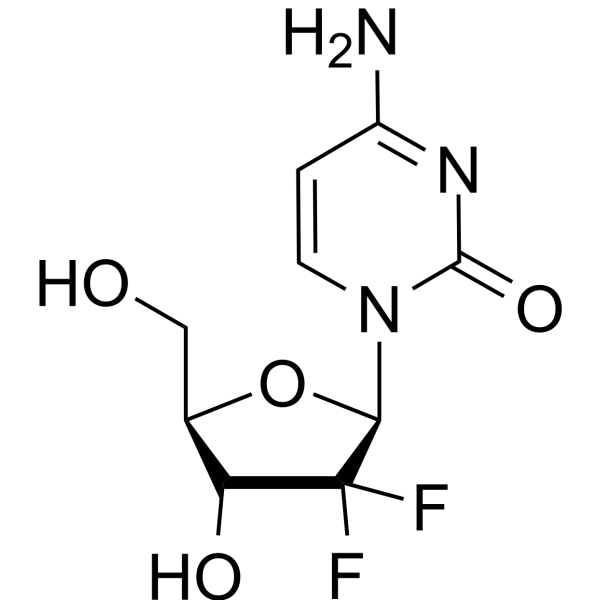
Gemcitabine (LY 188011) is a pyrimidine nucleoside analog antimetabolite and an antineoplastic agent. Gemcitabine inhibits DNA synthesis and repair, and can modulate autophagy. Gemcitabine induces apoptosis through the activation of p38 MAPK. Gemcitabine demonstrates efficacy in mouse models of pancreatic and breast cancer. Gemcitabine can be used for cancer research, such as pancreatic cancer, non-small cell lung cancer, and breast cancer [3] .
loading...
    loading...
270
270 Cited Publications
Cat. No.: HY-P0175
CAS No.: 1236188-16-1
Synonyms: 740YPDGFR; PDGFR 740Y-P
Target:  

PI3K Autophagy

Research Areas:  

Cancer

740 Y-P (740YPDGFR; PDGFR 740Y-P) is a potent and cell-permeable PI3K activator. 740 Y-P readily binds GST fusion proteins containing both the N- and C- terminal SH2 domains of p85 but fails to bind GST alone .
loading...
    loading...
266
266 Cited Publications
Cat. No.: HY-K0207

MCE Anti-Flag Magnetic Beads are used for immunoprecipitation (IP) of specific Flag-tagged (DYKDDDDK) proteins expressed in bacterial and mammalian cells and in vitro expression systems, and also suitable for Co-immunoprecipitation and purification of Flag-tagged protein. The 1 mL is defined as the base specification. All larger sizes correspond to incremental volumes of this base.

loading...
    loading...
261
261 Cited Publications
Cat. No.: HY-K1001

MCE RIPA Lysis Buffer is one of the most reliable buffers used to lyse cells from both cultured cells and tissues.

loading...
    loading...
259
259 Cited Publications
Cat. No.: HY-13948A
CAS No.: 68521-88-0
Purity:  99.62%
Synonyms: Angiotensin II acetate; Ang II acetate; DRVYIHPF acetate
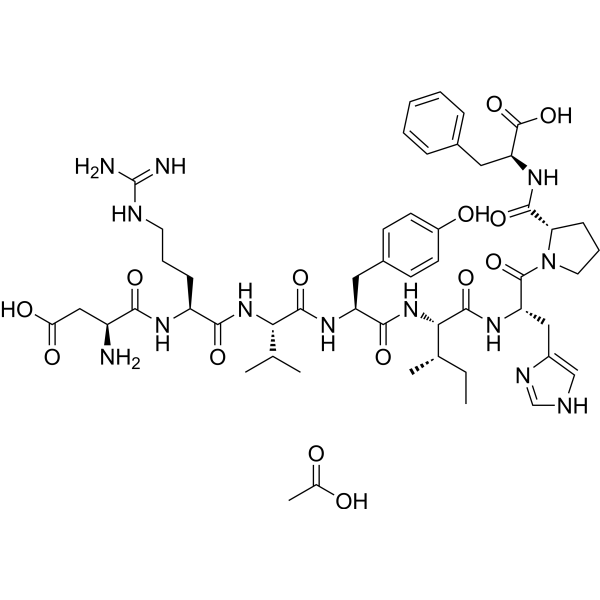
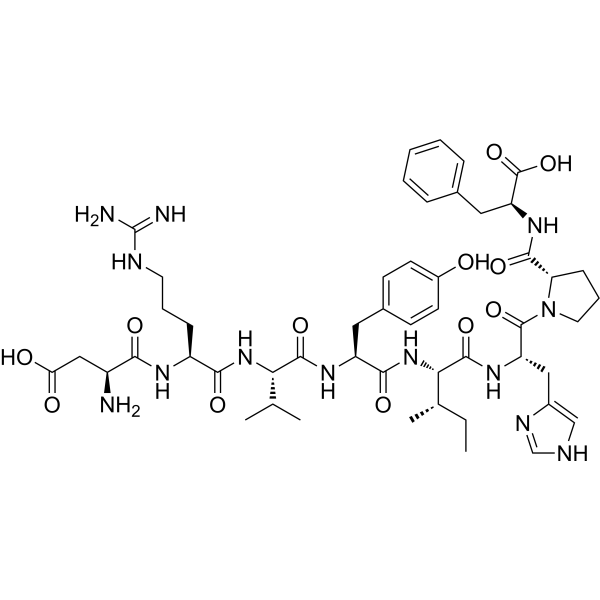
Angiotensin II human (Angiotensin II) acetate is a vasoconstrictor and a major bioactive peptide of the renin/angiotensin system. Angiotensin II human acetate plays a central role in regulating human blood pressure, which is mainly mediated by interactions between Angiotensin II and the G-protein-coupled receptors (GPCRs) Angiotensin II type 1 receptor (AT1R) and Angiotensin II type 2 receptor (AT2R). Angiotensin II human acetate stimulates sympathetic nervous stimulation, increases aldosterone biosynthesis and renal actions. Angiotensin II human acetate induces growth of vascular smooth muscle cells, increases collagen type I and III synthesis in fibroblasts, leading to thickening of the vascular wall and myocardium, and fibrosis. Angiotensin II human acetate also induces apoptosis. Angiotensin II human acetate induces capillary formation from endothelial cells via the LOX-1 dependent redox-sensitive pathway [3] .
loading...
    loading...
259
259 Cited Publications
Cat. No.: HY-13948B
CAS No.: 2761969-44-0
Purity:  98.84%
Synonyms: Angiotensin II TFA; Ang II TFA; DRVYIHPF TFA
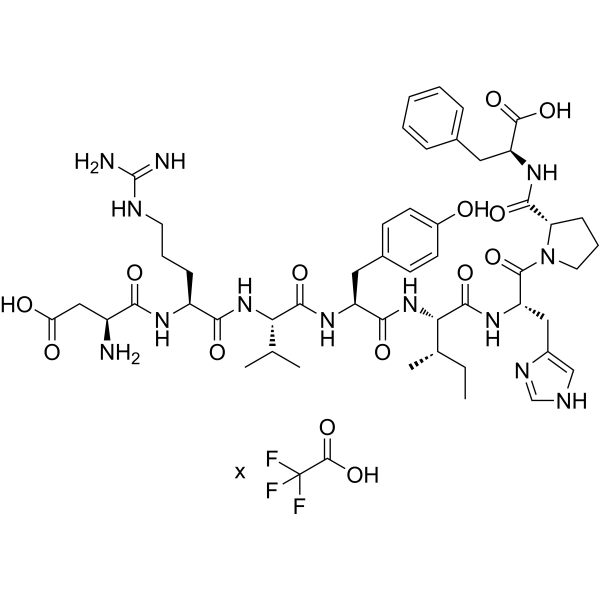
Angiotensin II human (Angiotensin II) TFA is a vasoconstrictor and a major bioactive peptide of the renin/angiotensin system. Angiotensin II human TFA plays a central role in regulating human blood pressure, which is mainly mediated by interactions between Angiotensin II and the G-protein-coupled receptors (GPCRs) Angiotensin II type 1 receptor (AT1R) and Angiotensin II type 2 receptor (AT2R). Angiotensin II human TFA stimulates sympathetic nervous stimulation, increases aldosterone biosynthesis and renal actions. Angiotensin II human TFA induces growth of vascular smooth muscle cells, increases collagen type I and III synthesis in fibroblasts, leading to thickening of the vascular wall and myocardium, and fibrosis. Angiotensin II human TFA also induces apoptosis. Angiotensin II human TFA induces capillary formation from endothelial cells via the LOX-1 dependent redox-sensitive pathway [3] .
loading...
    loading...
259
259 Cited Publications
Cat. No.: HY-13948
CAS No.: 4474-91-3
Purity:  99.98%
Synonyms: Angiotensin II; Ang II; DRVYIHPF
Angiotensin II (Angiotensin II) is a vasoconstrictor and a major bioactive peptide of the renin/angiotensin system. Angiotensin II human plays a central role in regulating human blood pressure, which is mainly mediated by interactions between Angiotensin II and the G-protein-coupled receptors (GPCRs) Angiotensin II type 1 receptor (AT1R) and Angiotensin II type 2 receptor (AT2R). Angiotensin II human stimulates sympathetic nervous stimulation, increases aldosterone biosynthesis and renal actions. Angiotensin II human induces growth of vascular smooth muscle cells, increases collagen type I and III synthesis in fibroblasts, leading to thickening of the vascular wall and myocardium, and fibrosis. Angiotensin II human also induces apoptosis. Angiotensin II induces capillary formation from endothelial cells via the LOX-1 dependent redox-sensitive pathway [3] .
loading...
    loading...
259
259 Cited Publications
Cat. No.: HY-50767
CAS No.: 571190-30-2
Synonyms: PD 0332991
Target:  

CDK

Research Areas:  

Cancer

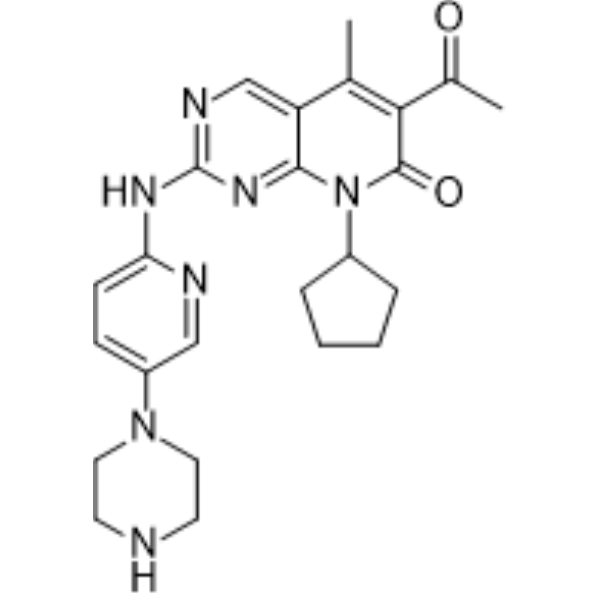
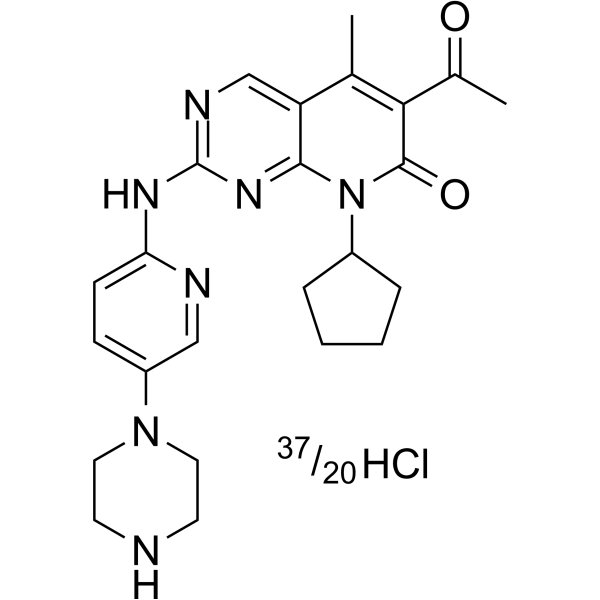
Palbociclib (PD 0332991) is an orally active selective CDK4 and CDK6 inhibitor with IC50 values of 11 and 16 nM, respectively. Palbociclib has potent anti-proliferative activity and induces cell cycle arrest in cancer cells, which can be used in the research of HR-positive and HER2-negative breast cancer and hepatocellular carcinoma [3] .
loading...
    loading...
259
259 Cited Publications
Cat. No.: HY-50767A
CAS No.: 827022-32-2
Synonyms: PD 0332991 monohydrochloride
Target:  

CDK

Research Areas:  

Cancer

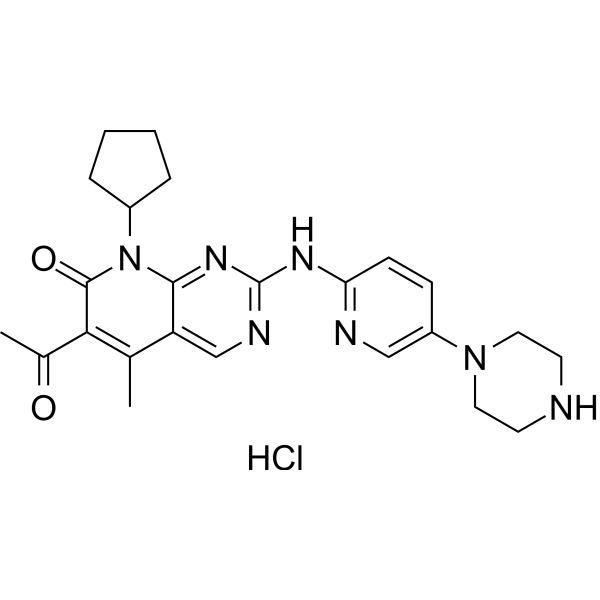
Palbociclib (PD 0332991) monohydrochloride is an orally active selective CDK4 and CDK6 inhibitor with IC50 values of 11 and 16 nM, respectively. Palbociclib monohydrochloride has potent anti-proliferative activity and induces cell cycle arrest in cancer cells, which can be used in the research of HR-positive and HER2-negative breast cancer and hepatocellular carcinoma [3] .
loading...
    loading...
255
255 Cited Publications
Cat. No.: HY-A0065
CAS No.: 827022-33-3
Synonyms: PD 0332991 isethionate
Target:  

CDK

Research Areas:  

Infection Neurological Disease Cancer

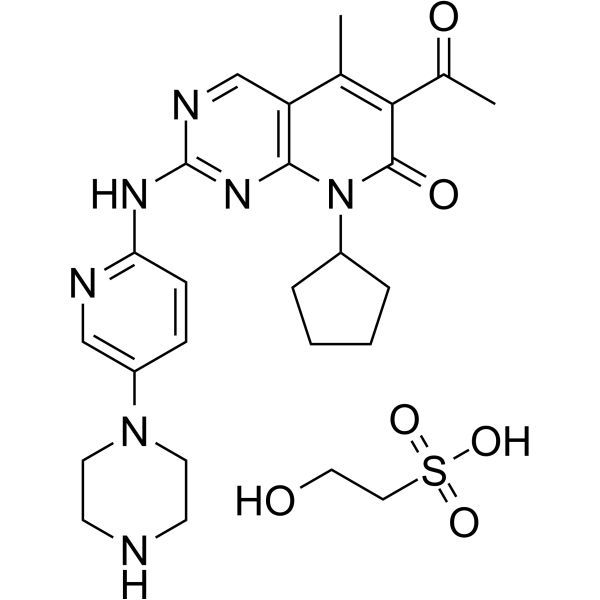
Palbociclib (PD 0332991) isethionate is an orally active selective CDK4 and CDK6 inhibitor with IC50 values of 11 and 16 nM, respectively. Palbociclib isethionate has potent anti-proliferative activity and induces cell cycle arrest in cancer cells, which can be used in the research of HR-positive and HER2-negative breast cancer and hepatocellular carcinoma [3] .
loading...
    loading...
239
239 Cited Publications
Cat. No.: HY-50767C
CAS No.: 571189-11-2
Synonyms: PD-0332991 hydrochloride
Target:  

CDK

Research Areas:  

Cancer

Palbociclib (PD 0332991) hydrochloride is an orally active selective CDK4 and CDK6 inhibitor with IC50 values of 11 and 16 nM, respectively. Palbociclib hydrochloride has potent anti-proliferative activity and induces cell cycle arrest in cancer cells. Palbociclib hydrochloride can be used in the research of HR-positive and HER2-negative breast cancer and hepatocellular carcinoma [3] .
loading...
    loading...
234
234 Cited Publications
Cat. No.: HY-10484
CAS No.: 1160295-21-5
Purity:  98.58%
Synonyms: MLN4924 hydrochloride
Research Areas:  

Cancer

Pevonedistat (MLN4924) hydrochloride is a potent and selective NEDD8-activating enzyme (NAE) inhibitor, with an IC50 of 4.7 nM. Pevonedistat hydrochloride induces the deregulation of S-phase DNA synthesis, thereby disrupting protein turnover mediated by cullin-RING ligase, leading to apoptosis of human tumor cells. Pevonedistat hydrochloride suppresses the growth of human tumour xenografts in mice .
loading...
    loading...
234
234 Cited Publications
Cat. No.: HY-70062
CAS No.: 905579-51-3
Synonyms: MLN4924
Research Areas:  

Cancer

Pevonedistat (MLN4924) is a potent and selective NEDD8-activating enzyme (NAE) inhibitor with an IC50 of 4.7 nM. Pevonedistat induces the deregulation of S-phase DNA synthesis, thereby disrupting protein turnover mediated by cullin-RING ligase, leading to apoptosis of human tumor cells. Pevonedistat suppresses the growth of human tumour xenografts in mice .
loading...
    loading...
228
228 Cited Publications
Cat. No.: HY-K0208

MCE Streptavidin Magnetic Beads provide a fast and convenient method for numerous applications, including purification of proteins and nucleic acids, protein interaction studies, immunoprecipitation, immunoassays, pull-down and cell isolation. The 1 mL is defined as the base specification. All larger sizes correspond to incremental volumes of this base.

loading...
    loading...
223
223 Cited Publications
Cat. No.: HY-50895
CAS No.: 184475-35-2
Synonyms: ZD1839
Target:  

EGFR Autophagy Apoptosis

Research Areas:  

Infection Metabolic Disease Cancer

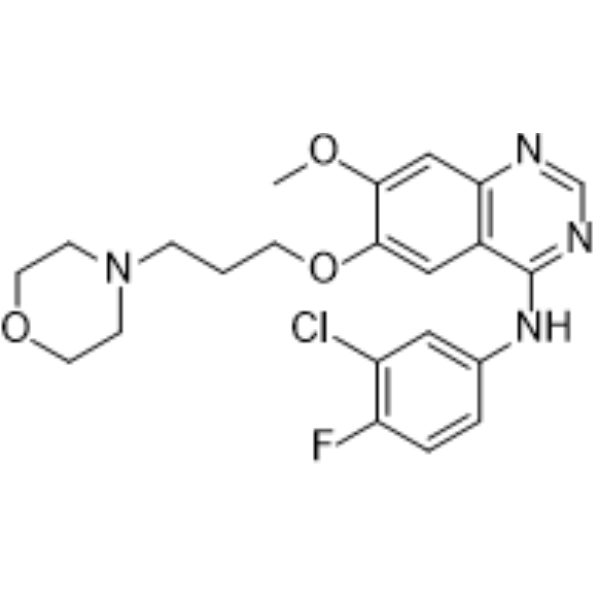
Gefitinib (ZD1839) is a potent, selective and orally active EGFR tyrosine kinase inhibitor with an IC50 of 33 nM. Gefitinib selectively inhibits EGF-stimulated tumor cell growth (IC50 of 54 nM) and that blocks EGF-stimulated EGFR autophosphorylation in tumor cells. Gefitinib also induces autophagy and cell apoptosis, which can be used for cancer related research, such as Lung cancer and breast cancer .
loading...
    loading...

