1. Search Result
Search Result
Results for "

anti-seizure

" in MedChemExpress (MCE) Product Catalog:

23

Inhibitors & Agonists

1

Peptides

5

Natural
Products

7

Isotope-Labeled Compounds

1

Oligonucleotides

Cat. No. 상품명 Target 연구분야 Chemical Structure
  • HY-W015309
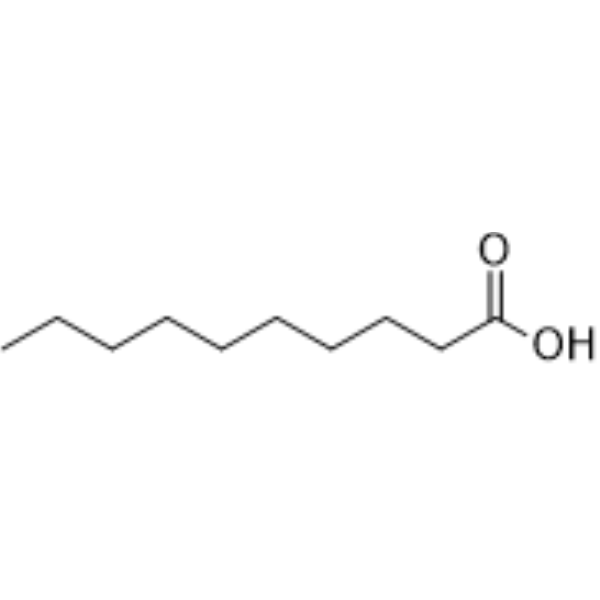
    Decanoic acid
    4 Publications Verification

    Environmental Pollutants Endogenous Metabolite iGluR Glutaminase c-Met/HGFR Tyrosinase Neurological Disease Metabolic Disease Cancer
    Decanoic acid is a key component of the medium-chain triglyceride (MCT) found in coconut oil. Decanoic acid is a brain-penetrant and non-competitive inhibitor of AMPA receptor showing antiseizure activity in rats. Decanoic acid reduces tyrosinase activity and inhibits melanosome maturation. Decanoic acid suppresses the phosphorylation of c-Met and induced apoptosis in hepatocellular carcinoma (HCC) cells by inhibiting the expression of various oncogenic proteins, which is promising for research in the field of mTORC1 signaling, HCC and epilepsy .
    Decanoic acid
  • HY-172431

    BHV-7000

    Potassium Channel Neurological Disease
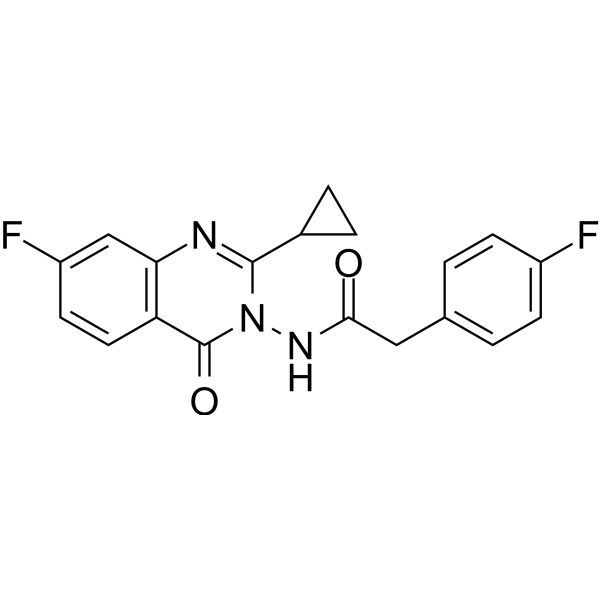
    Opakalim (BHV-7000) is a selective Kv7.2/7.3 potassium channels activator with an EC50 of 0.6 μM. Opakalim shows minimal GABAA receptor activation and exhibits potent anti-seizure efficacy in the maximal electroshock seizure (MES) model. Opakalim can be used for the study of seizures .
    Opakalim
  • HY-Y0378

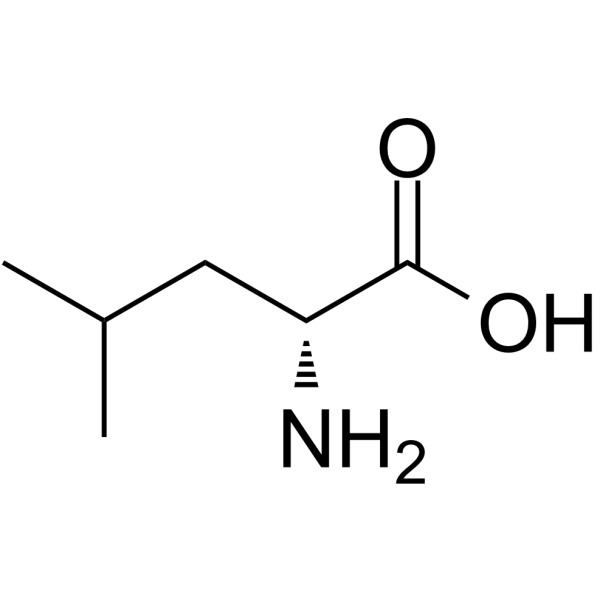
    (R)-Leucine

    Endogenous Metabolite Neurological Disease
    D-Leucine is a more potent anti-seizure agent than L-leucine. D-leucine potently terminates seizures even after the onset of seizure activity. D-leucine, but not L-leucine, reduces long-term potentiation but had no effect on basal synaptic transmission in vitro .
    D-Leucine
  • HY-103185
    CCPA
    1 Publications Verification

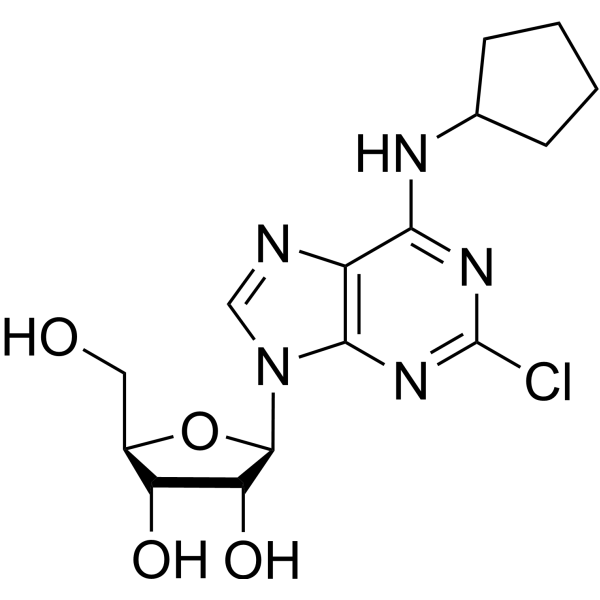
    2-Chloro-N6-cyclopentyladenosine

    Adenosine Receptor Adenylate Cyclase Cardiovascular Disease Neurological Disease
    CCPA (2-Chloro-N6-cyclopentyladenosine) a highly selective A1 adenosine receptors agonist with a Ki of 0.4 nM. CCPA inhibits adenylate cyclase with an IC50 of 33 nM. CCPA exhibits anti-seizure and cardiacprotective activity. CCPA can be used for the research of seizure and myocardial infarction .
    CCPA
  • HY-15079
    Talampanel
    1 Publications Verification

    GYKI-53773; LY-300164

    iGluR Apoptosis Neurological Disease Cancer
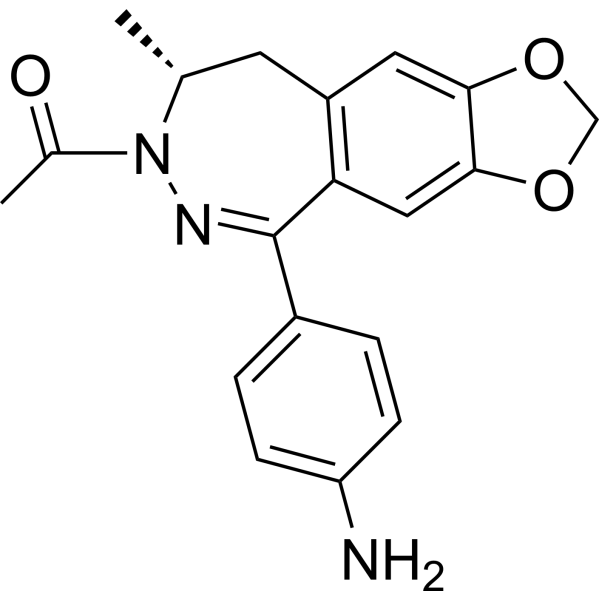
    Talampanel (LY300164) is an orally and selective α-amino-3-hydroxy-5-methyl-4-isoxazolepropionate (AMPA) receptor antagonis with anti-seizure activity . Talampanel (IVAX) has neuroprotective effects in rodent stroke models . Talampanel attenuates caspase-3 dependent apoptosis in mouse brain .
    Talampanel
  • HY-125469

    PF-04895162

    Potassium Channel Neurological Disease
    ICA-105665 (PF-04895162) is a potent and orally active neuronal Kv7.2/7.3 and Kv7.3/7.5 potassium channels opener. ICA-105665 inhibits liver mitochondrial function and bile salt export protein (BSEP) transport (IC50 of 311 μM). ICA-105665 can penetrate the blood-brain barrier and has antiseizure effects .
    ICA-105665
  • HY-W015309S1

    Isotope-Labeled Compounds iGluR Neurological Disease
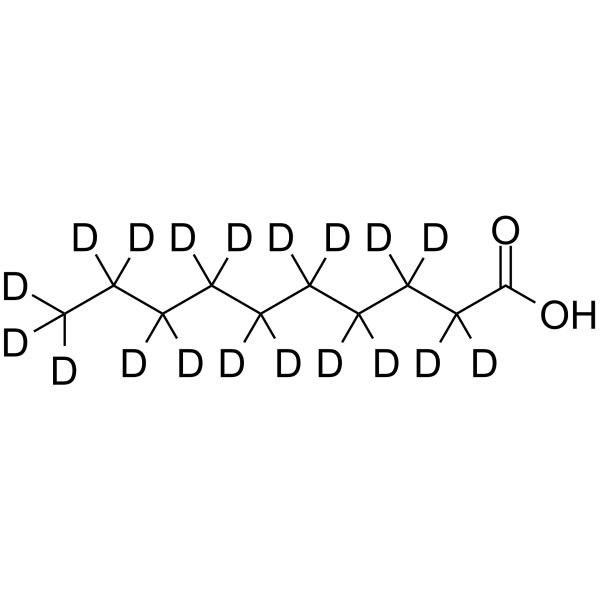
    Decanoic acid-d199 is the deuterium labeled Decanoic acid. Decanoic acid, a component of medium chain triclycerides, is a brain-penetrant and non-competitive inhibitor of AMPA receptor. Decanoic acid has antiseizure effects .
    Decanoic acid-d19
  • HY-W050162
    (E)-3,4,5-Trimethoxycinnamic acid
    1 Publications Verification

    TMCA

    GABA Receptor 5-HT Receptor Neurological Disease
    (E)-3,4,5-Trimethoxycinnamic acid (TMCA) is a cinnamic acid substituted by multi-methoxy groups. (E)-3,4,5-Trimethoxycinnamic acid is an orally active and potent GABAA/BZ receptor agonist. (E)-3,4,5-Trimethoxycinnamic exhibits favourable binding affinity to 5-HT2C and 5-HT1A receptor, with IC50 values of 2.5 and 7.6 μM, respectively. (E)-3,4,5-Trimethoxycinnamic acid shows anticonvulsant and sedative activity. (E)-3,4,5-Trimethoxycinnamic acid can be used for the research of insomnia, headache and epilepsy .
    (E)-3,4,5-Trimethoxycinnamic acid
  • HY-Y0378S

    (R)-Leucine-d10

    Isotope-Labeled Compounds Endogenous Metabolite Neurological Disease
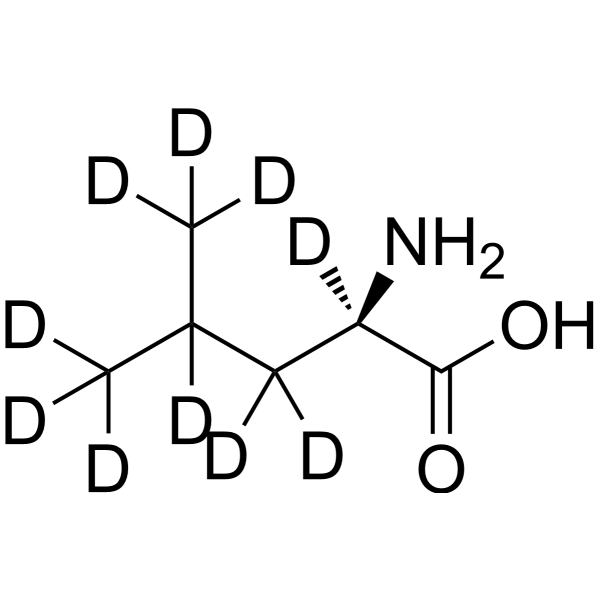
    D-Leucine-d10 is the deuterium labeled D-Leucine. D-Leucine is a more potent anti-seizure agent than L-leucine. D-leucine potently terminates seizures even after the onset of seizure activity. D-leucine, but not L-leucine, reduces long-term potentiation but had no effect on basal synaptic transmission in vitro .
    D-Leucine-d10
  • HY-W266188

    Isotope-Labeled Compounds iGluR Tyrosinase c-Met/HGFR Glutaminase Neurological Disease Metabolic Disease Cancer
    Decanoic acid- 13C is the 13C-labeled Decanoic acid (HY-W015309). Decanoic acid is a key component of the medium-chain triglyceride (MCT) found in coconut oil. Decanoic acid is a brain-penetrant and non-competitive inhibitor of AMPA receptor showing antiseizure activity in rats. Decanoic acid reduces tyrosinase activity and inhibits melanosome maturation. Decanoic acid suppresses the phosphorylation of c-Met and induced apoptosis in hepatocellular carcinoma (HCC) cells by inhibiting the expression of various oncogenic proteins, which is promising for research in the field of mTORC1 signaling, HCC and epilepsy .
    Decanoic acid-13C
  • HY-W015309S3

    iGluR Neurological Disease
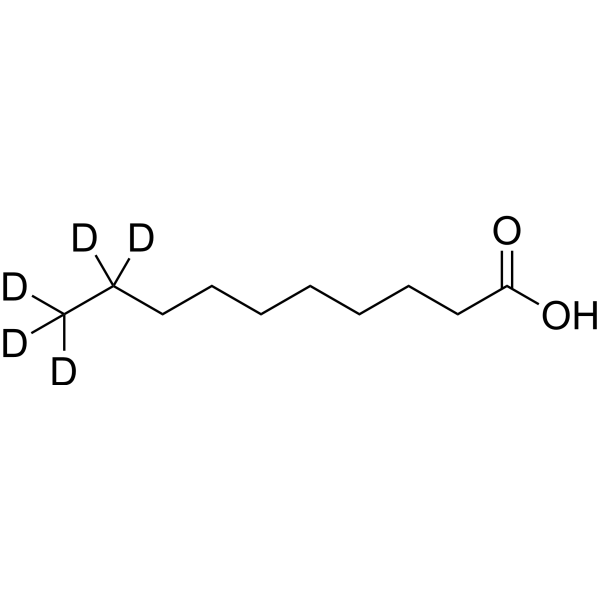
    Decanoic acid-d5 is the deuterium labeled Decanoic acid. Decanoic acid, a component of medium chain triclycerides, is a brain-penetrant and non-competitive inhibitor of AMPA receptor. Decanoic acid has antiseizure effects .
    Decanoic acid-d5
  • HY-W002299

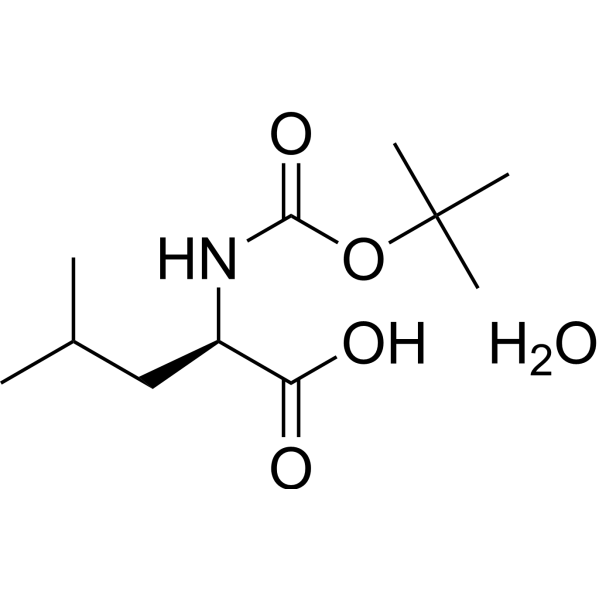
    Boc-D-Leu-OH hydrate

    Amino Acid Derivatives Neurological Disease
    Boc-D-Leucine monohydrate (Boc-D-Leu-OH hydrate) is an N-Boc-protected form of D-Leucine. D-Leucine is an unnatural isomer of L-Leucine that acts as an auto-inhibitor of lactic streptococci. D-Leucine shows potent anti-seizure effect .
    Boc-D-Leucine monohydrate
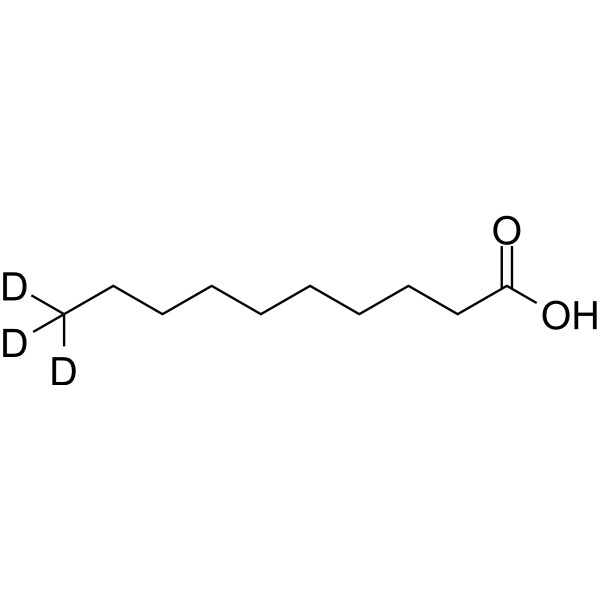
  • HY-W015309S

    iGluR Neurological Disease
    Decanoic acid-d3 is the deuterium labeled Decanoic acid. Decanoic acid, a component of medium chain triclycerides, is a brain-penetrant and non-competitive inhibitor of AMPA receptor. Decanoic acid has antiseizure effects .
    Decanoic acid-d3
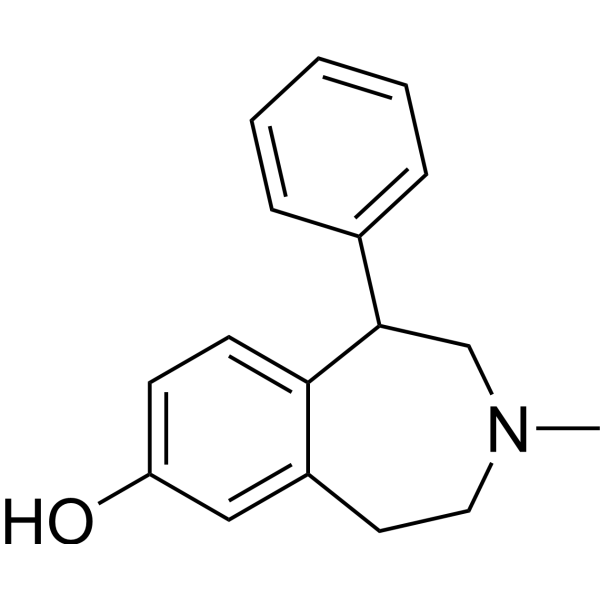
  • HY-155484

    Sigma Receptor Neurological Disease
    SOMCL-668 is a selective and potent sigma-1 receptor allosteric modulator. ?SOMCL-668 shows positive modulation of improvement in social deficits and cognitive impairment induced by the selective sigma-1 agonist PRE084.?SOMCL-668 displays anti-seizure activities and can be used for psychotic illness research .
    SOMCL-668
  • HY-155238

    GABA Receptor Neurological Disease
    E2730 is a noncompetitive but selective inhibitor of gamma-aminobutyric acid (GABA) transporter 1 (GAT1) with orally available and antiepileptic activity. E2730-mediated GAT1 inhibition is positively correlated with environmental GABA levels and selectively inhibits GAT1-mediated GABA uptake. E2730 (5-50 mg/kg; po) in rat amygdala ignition model, and in mouse cornea ignition (5-50 mg/kg), drug resistance 6Hz-44mA has demonstrated in vivo efficacy in models of psychomotor epilepsy (5-50 mg/kg), fragile X syndrome (2.5-300 mg/kg), and Dravet syndrome (10 mg/kg, 20 mg/kg) .
    E2730
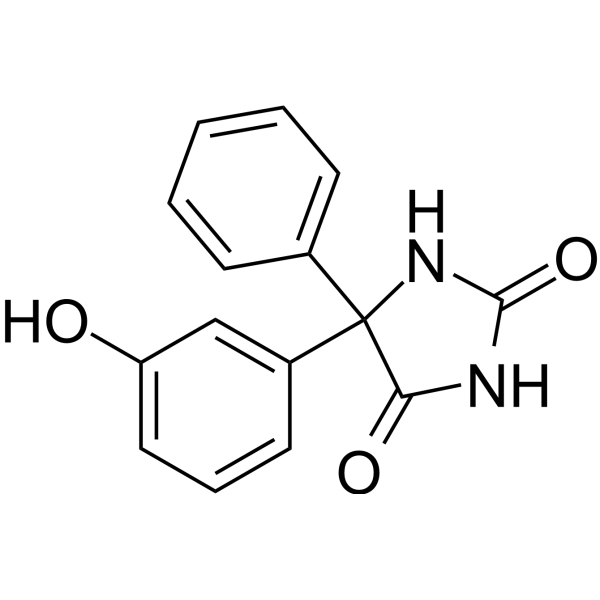
  • HY-145671

    Drug Metabolite Others
    5-(3-hydroxyphenyl)-5-phenylhydantoin, is a metabolite of anti-seizure agent Phenytoin .
    5-(3-hydroxyphenyl)-5-phenylhydantoin
  • HY-103185A

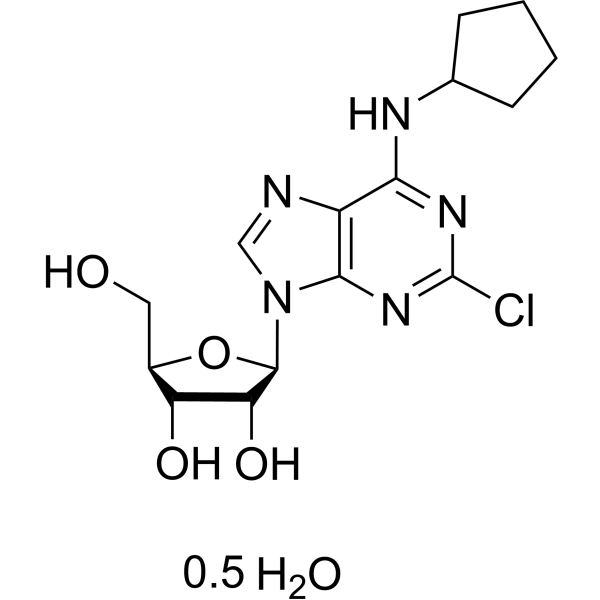
    2-Chloro-N6-cyclopentyladenosine hemihydrate

    Adenosine Receptor Adenylate Cyclase Cardiovascular Disease Neurological Disease
    CCPA (2-Chloro-N6-cyclopentyladenosine) hemihydrate a highly selective A1 adenosine receptors agonist with a Ki of 0.4 nM. CCPA hemihydrate inhibits adenylate cyclase with an IC50 of 33 nM. CCPA hemihydrate exhibits anti-seizure and cardiacprotective activity. CCPA hemihydrate can be used for the research of seizure and myocardial infarction .
    CCPA hemihydrate
  • HY-103185R

    2-Chloro-N6-cyclopentyladenosine (Standard)

    Reference Standards Adenosine Receptor Adenylate Cyclase Cardiovascular Disease Neurological Disease
    CCPA (2-Chloro-N6-cyclopentyladenosine (Standard)) is the analytical standard of CCPA (HY-103185). This product is intended for research and analytical applications. CCPA (2-Chloro-N6-cyclopentyladenosine) a highly selective A1 adenosine receptors agonist with a Ki of 0.4 nM. CCPA inhibits adenylate cyclase with an IC50 of 33 nM. CCPA exhibits anti-seizure and cardiacprotective activity. CCPA can be used for the research of seizure and myocardial infarction .
    CCPA (Standard)
  • HY-W015309S2

    Isotope-Labeled Compounds iGluR Neurological Disease
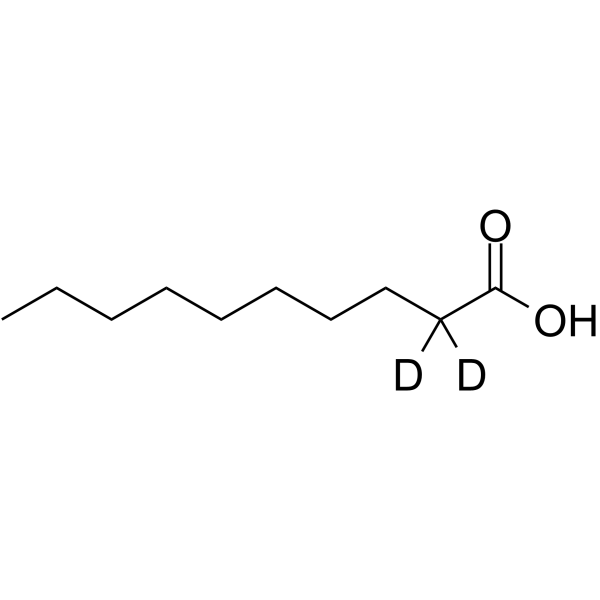
    Decanoic acid-d2 is the deuterium labeled Decanoic acid. Decanoic acid, a component of medium chain triclycerides, is a brain-penetrant and non-competitive inhibitor of AMPA receptor. Decanoic acid has antiseizure effects .
    Decanoic acid-d2
  • HY-173251S

    GABA Receptor Neurological Disease
    ENX-101 is an orally active (GABAA) receptor partial positive allosteric modulator (PAM). ENX-101 is selective to α2β2γ2L (EC50 = 0.76 nM), α2β3γ2L (EC50 = 0.61 nM), α3 (EC50 = 1.97 nM), α5 (EC50 = 0.85 nM) subunits of GABA receptor. ENX-101 possesses antiseizure activity in several animal models .
    ENX-101
  • HY-W015309R

    Reference Standards iGluR Tyrosinase c-Met/HGFR Glutaminase Neurological Disease Metabolic Disease Cancer
    Decanoic acid (Standard) is the analytical standard of Decanoic acid. This product is intended for research and analytical applications. Decanoic acid is a key component of the medium-chain triglyceride (MCT) found in coconut oil. Decanoic acid is a brain-penetrant and non-competitive inhibitor of AMPA receptor showing antiseizure activity in rats. Decanoic acid reduces tyrosinase activity and inhibits melanosome maturation. Decanoic acid suppresses the phosphorylation of c-Met and induced apoptosis in hepatocellular carcinoma (HCC) cells by inhibiting the expression of various oncogenic proteins, which is promising for research in the field of mTORC1 signaling, HCC and epilepsy .
    Decanoic acid (Standard)
  • HY-Y0378R

    (R)-Leucine (Standard)

    Reference Standards Endogenous Metabolite Neurological Disease
    D-Leucine (Standard) is the analytical standard of D-Leucine. This product is intended for research and analytical applications. D-Leucine is a more potent anti-seizure agent than L-leucine. D-leucine potently terminates seizures even after the onset of seizure activity. D-leucine, but not L-leucine, reduces long-term potentiation but had no effect on basal synaptic transmission in vitro .
    D-Leucine (Standard)
  • HY-N18014

    Drug Derivative Neurological Disease
    Naringenin 4',7-dimethyl ether, Naringenin (HY-N0100) derivative is an anti-seizure agent. Naringenin 4',7-dimethyl ether attenuates pentylenetetrazole-induced seizures in larval zebrafish and reduces seizures in the mouse 6-Hz psychomotor seizure model. Naringenin 4',7-dimethyl ether can be used for the research of epilepsy .
    Naringenin 4',7-dimethyl ether

온라인 문의

Your information is safe with us. * Required Fields.

호칭


Country or Region *

고객명 *


회사명 *

Department *


메일주소 *


상품명 *

Cat. No.


Requested quantity *

전화번호 *


비고

온라인 문의

Inquiry Information

상품명:
Cat. No.:
수량:
MCE Japan Authorized Agent:

