
22 Results for "

bacterial membrane depolarization

" in MedChemExpress (MCE) Product Catalog:
Products (22)

22 Results for "bacterial membrane depolarization" in MCE Product Catalog:

1
1 Cited Publications
Cat. No.: HY-P2460
CAS No.: 172485-26-6
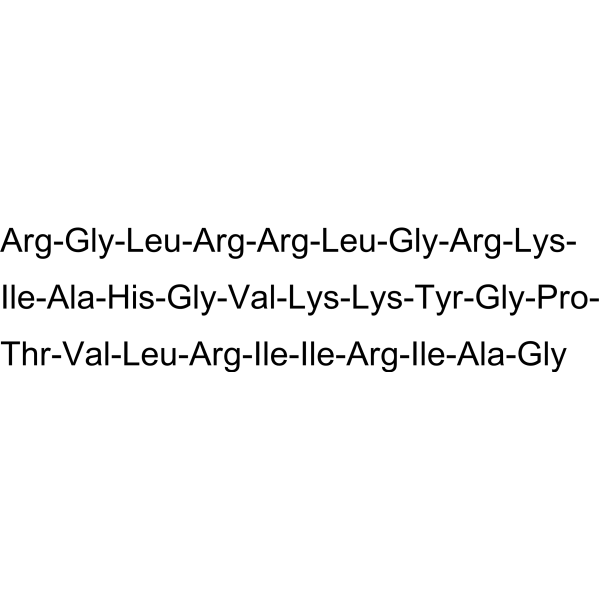
SMAP‑29 is a cathelicidin antimicrobial peptide with LPS‑binding and anti‑inflammatory properties. SMAP‑29 exerts broad‑spectrum antimicrobial activity against bacteria, fungi and multidrug‑resistant isolates. SMAP‑29 kills pathogens by permeabilizing bacterial membranes, inducing depolarization and cell lysis, and also inhibits inflammatory cytokines while reducing lethality in septic shock and pneumonia models. SMAP-29 can be used for research on bacterial infections, drug-resistant infections, septic shock .
loading...
    loading...
Cat. No.: HY-N6663
CAS No.: 13466-78-9
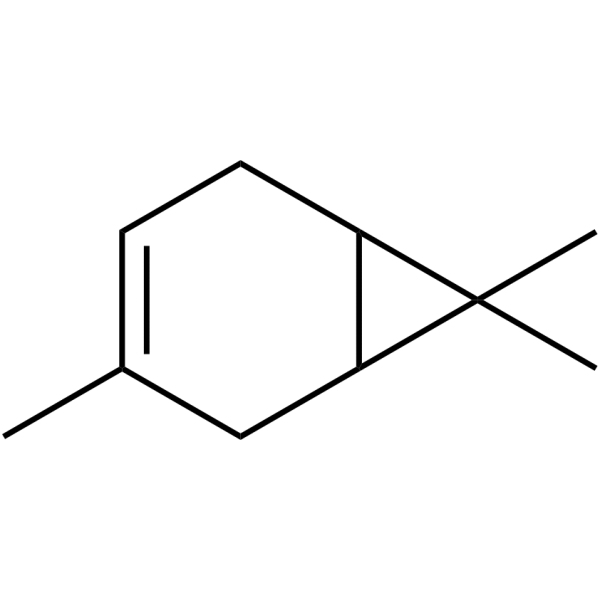
3-Carene is an orally active TCA cycle enzyme inhibitor. 3-Carene inhibits succinate dehydrogenase and malate dehydrogenase as well as pyruvate kinase, disrupting energy metabolism. 3-Carene disrupts cell wall and cell membrane integrity, leading to potassium ion leakage, protein leakage, membrane depolarization, ATP depletion, morphological disruption, and cell lysis. 3-Carene interferes with amino acid metabolism, pantothenate and CoA biosynthesis, purine and pyrimidine metabolism, and aminoacyl-tRNA biosynthesis. 3-Carene enhances GABA receptor-mediated synaptic responses. 3-Carene can be used in research on bacterial infections, inflammation, anxiety, and sleep disorders .
loading...
    loading...
Cat. No.: HY-P11165
CAS No.: 2173394-02-8
Target:  

Bacterial

Research Areas:  

Infection

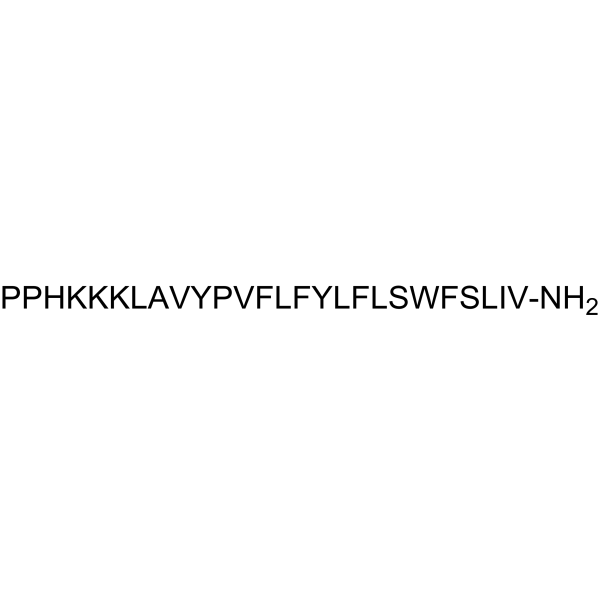
DRGN-1 is an antimicrobial peptide. DRGN-1 exhibits potent antimicrobial and anti-biofilm activities, inhibiting both Gram-negative and Gram-positive bacteria, with an EC50 range of 0.50-4.62 μM. DRGN-1 exerts its antimicrobial effect by disrupting bacterial membrane permeability and slightly depolarizing the membrane potential. DRGN-1 inhibits the formation of biofilms of single bacterial species and mixed species of Pseudomonas aeruginosa and Staphylococcus aureus. DRGN-1 can significantly promote the healing of uninfected and mixed biofilm-infected mouse wounds. DRGN-1 can be used for the study of infections .
loading...
    loading...
Cat. No.: HY-P5552
CAS No.: 709611-59-6
Target:  

Bacterial Fungal

Research Areas:  

Infection

Melimine is an antimicrobial peptide with broad-spectrum antimicrobial activity against Gram-negative/Gram-positive bacteria, fungi and protozoa. Melimine neutralizes endotoxin activity by interacting with the phosphate groups of lipid A, depolarizes and permeabilizes the cytoplasmic membrane of *Pseudomonas aeruginosa*, and induces bacterial lysis. Melimine exerts additive antiviral effects against H1N1 and MHV-1 when used in combination with RK610. Melimine retains its antimicrobial activity when conjugated to polymer and titanium surfaces. Melimine can be used in infection-related research .
loading...
    loading...
Cat. No.: HY-149095
Target:  

Bacterial

Research Areas:  

Infection

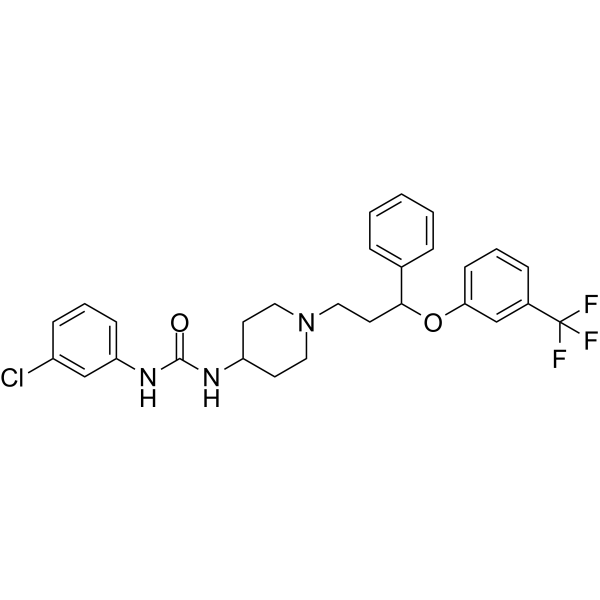
Antibacterial agent 139 has antibacterial activity against Gram-positive bacteria. Antibacterial agent 139 has anti-MRSA, anti-VISA, and anti-LRSE activities. Antibacterial agent 139 depolarizes the bacterial cell membrane .
loading...
    loading...
Cat. No.: HY-P5553
Target:  

Bacterial

Research Areas:  

Infection

cPcAMP1/26 is an antimicrobial peptide. cPcAMP1/26 effectively kills A.hydrophila and S. aureus. cPcAMP1/26 induces depolarization of the bacterial plasma membrane, and increases intracellular ROS levels .
loading...
    loading...
Cat. No.: HY-144255
Research Areas:  

Infection

Antibacterial agent 70 is an antibacterial agent that interacts with DNA, with a MIC value of 0.5 μg/mL against K. pneumonia and A. baumanii. Antibacterial agent 70 exhibits rapid bactericidal activity, low cytotoxicity to mammalian cells, and low tendency to induce drug resistance. Antibacterial agent 70 intercalates into DNA, disrupts bacterial membrane integrity, increases intracellular ROS production, reduces GSH activity, regulates membrane depolarization, enhances outer membrane permeability, and induces inner membrane damage. Antibacterial agent 70 can be used in studies related to multidrug-resistant bacterial infections and infections caused by drug-resistant Gram-negative pathogens .
loading...
    loading...
Cat. No.: HY-170991
Research Areas:  

Infection

C12-rrw-NH2 (Compound Lip7) is an antibacterial agent against gram-positive bacteria, especially against Methicillin (HY-121544)-resistant Staphylococcus aureus (MRSA). C12-rrw-NH2 induces bacterial death via depolarizing the bacterial cytoplasmic membrane, disrupting the integrity of the bacterial membrane, leading to leakage of nucleic acid and protein and promoting the generation of Reactive Oxygen Species. C12-rrw-NH2 is potential to be used for research of developing high-stability antimicrobial peptides .
loading...
    loading...
Cat. No.: HY-130282
CAS No.: 1643593-30-9
Target:  

Bacterial

Research Areas:  

Infection

Ianthelliformisamine C ditrifluoroacetate is an antibiotic enhancer with activity against resistant Gram-negative bacteria. Ianthelliformisamine C ditrifluoroacetate has been shown to improve the efficacy of doxycycline against Pseudomonas aeruginosa. Ianthelliformisamine C ditrifluoroacetate was prepared using peptide coupling, resulting in high chemical yields of 27 to 91%. Ianthelliformisamine C ditrifluoroacetate exhibits its mechanism of action by inducing ATP efflux and causing membrane depolarization in bacterial cells.
loading...
    loading...
Cat. No.: HY-N6663R
CAS No.: 13466-78-9
3-Carene (Standard) is the analytical standard of 3-Carene (HY-N6663). This product is intended for research and analytical applications. 3-Carene is an orally active TCA cycle enzyme inhibitor. 3-Carene inhibits succinate dehydrogenase and malate dehydrogenase as well as pyruvate kinase, disrupting energy metabolism. 3-Carene disrupts cell wall and cell membrane integrity, leading to potassium ion leakage, protein leakage, membrane depolarization, ATP depletion, morphological disruption, and cell lysis. 3-Carene interferes with amino acid metabolism, pantothenate and CoA biosynthesis, purine and pyrimidine metabolism, and aminoacyl-tRNA biosynthesis. 3-Carene enhances GABA receptor-mediated synaptic responses. 3-Carene can be used in research on bacterial infections, inflammation, anxiety, and sleep disorders .
loading...
    loading...
Cat. No.: HY-184584
Research Areas:  

Infection

Antibacterial agent 358 is an antibacterial agent. Antibacterial agent 358 selectively interacts with PG on bacterial cell membranes, causing membrane damage. Antibacterial agent 358 induces bacterial cell membrane depolarization, increased membrane permeability and leakage of intracellular components. Antibacterial agent 358 inhibits biofilm formation and disrupts established biofilms. Antibacterial agent 358 reduces bacterial load and alleviates tissue inflammation in a mouse skin abscess model. Antibacterial agent 358 can be used in research related to Gram-positive bacterial infections and skin abscesses .
loading...
    loading...
Cat. No.: HY-182315
Target:  

Bacterial

Research Areas:  

Infection

Antibacterial agent 334 is an antimicrobial peptide with in vitro activity against both Gram-negative and Gram-positive bacteria. Antibacterial agent 334 disrupts bacterial membrane integrity, induces membrane depolarization, impairs bacterial physiological processes without causing immediate bacterial lysis, and reduces the formation of Staphylococcus aureus biofilms. Antibacterial agent 334 can be used in studies related to Staphylococcus aureus infections .
loading...
    loading...
Cat. No.: HY-183340
CAS No.: 3023862-30-5
Target:  

Bacterial

Research Areas:  

Infection

Antibacterial agent 341 is an anti-bacterial agent. Antibacterial agent 341 shows broad-spectrum Gram-positive antibacterial activity. Antibacterial agent 341 targets phosphatidylglycerol (PG) and cardiolipin (CL) in bacterial cell membranes, induces sustained depolarization of membranes, and disrupts the cell membrane integrity. Antibacterial agent 341 exhibits anti-infection activity against S. aureus-induced subcutaneous abscesses in mice .
loading...
    loading...
Cat. No.: HY-182798
Research Areas:  

Infection

Antibacterial agent 337 is an antibacterial agent. Antibacterial agent 337 specifically interacts with PG in bacterial cell membranes, triggering membrane disruption, membrane depolarization, increased permeability, cytoplasmic leakage, ROS accumulation and rapid bacterial death. Antibacterial agent 337 inhibits biofilm formation and disrupts mature biofilms. Antibacterial agent 337 exhibits potent in vivo antibacterial efficacy in a mouse model of Staphylococcus aureus skin abscess. Antibacterial agent 337 can be used in studies of Gram-positive bacterial infections, including methicillin-resistant Staphylococcus aureus infections, vancomycin-resistant Enterococcus faecalis infections and bacterial biofilm infections .
loading...
    loading...
Cat. No.: HY-P11582
Target:  

Bacterial

Research Areas:  

Infection

CyLip-20 is a cyclic lipopeptide antimicrobial peptide that targets Gram-positive and Gram-negative bacteria. CyLip-20 exhibits low hemolytic activity and mild in vivo toxicity. CyLip-20 disrupts the integrity of bacterial outer membrane, inner membrane and cytoplasmic membrane by binding to bacterial lipopolysaccharide (LPS), triggering membrane permeabilization, depolarization and leakage of intracellular contents, and inhibits bacterial biofilm formation. In animal models, CyLip-20 reduces the bacterial load in skin wounds of mice infected with MRSA, promotes wound healing, decreases the levels of inflammatory cytokines and reduces inflammatory cell infiltration. CyLip-20 can be used in research related to MRSA skin wound infections .
loading...
    loading...
Cat. No.: HY-189648
CAS No.: 313495-77-1
Target:  

Bacterial ATP Synthase

Research Areas:  

Infection

Antimicrobial agent-61 is an Antimicrobial agent. Antimicrobial agent-61 induces bacterial membrane depolarization and inhibits ATP synthesis. Antimicrobial agent-61 reduces bacterial burden and infection-related pathological damage in mouse models of MRSA pneumonia and MRSA keratitis. Antimicrobial agent-61 can be used for research on MRSA pneumonia and MRSA keratitis .
loading...
    loading...
Cat. No.: HY-180125
Research Areas:  

Infection

Antibacterial agent 307 is an antibacterial agent. Antibacterial agent 307 shows MICs of 1-4 μg/mL against Gram-positive bacteria, moderate activity against Gram-negative bacteria, low hemolytic toxicity, and excellent plasma stability. Antibacterial agent 307 compromises bacterial membrane integrity via increased permeability and depolarization, induces endogenous ROS accumulation, causes cytoplasmic protein and nucleic acid leakage, and drives rapid bacterial cell death. Antibacterial agent 307 can be used for the research of bacterial infection .
loading...
    loading...
Cat. No.: HY-180125A
Research Areas:  

Infection

Antibacterial agent 307 hydrochloride is an antibacterial agent. Antibacterial agent 307 hydrochloride shows MICs of 1-4 μg/mL against Gram-positive bacteria, moderate activity against Gram-negative bacteria, low hemolytic toxicity, and excellent plasma stability. Antibacterial agent 307 hydrochloride compromises bacterial membrane integrity via increased permeability and depolarization, induces endogenous ROS accumulation, causes cytoplasmic protein and nucleic acid leakage, and drives rapid bacterial cell death. Antibacterial agent 307 hydrochloride can be used for the research of bacterial infection .
loading...
    loading...
Cat. No.: HY-181677
Antibacterial agent 325 is an antibacterial agent. Antibacterial agent 325 exerts potent broad-spectrum antibacterial activity and shows bactericidal activity. Antibacterial agent induces membrane depolarization, disrupts the membrane integrity, increasess ROS production and lipid peroxidation levels. Antibacterial agent 325 inhibits the metabolic activity and Lactate Dehydrogenase (LDH) activity. Antibacterial agent 325 exhibits low drug resistance development in bacteria, low hemolysis and cytotoxicity. Antibacterial agent 325 can be used for the research of bacterial infection .
loading...
    loading...
Cat. No.: HY-P11615
Target:  

Bacterial

Research Areas:  

Infection

FuK is a WK2-analog antimicrobial peptide modified with fluorinated unnatural amino acids. FuK has an LD50 of 72.34 mg/kg in mice, shows no hemolytic activity, with high stability against trypsin, chymotrypsin, and saline environments. FuK exerts bactericidal effects by enhancing the permeability of bacterial outer membranes, inducing depolarization of cytoplasmic membranes, and disrupting membrane potential balance against bacterias such as Staphylococcus aureus, Escherichia coli, Klebsiella pneumoniae, and MRSA. FuK exhibits synergistic antimicrobial activity with polymyxin B (HY-149179), vancomycin (HY-B0671), and ciprofloxacin (HY-B0356), and also inhibits Ciprofloxacin-induced bacterial drug resistance. FuK has in vivo safety, effectively reduces bacterial load and inflammatory cell infiltration in a mouse MRSA model, and promotes collagen fiber formation in skin wounds .
loading...
    loading...

