1. Search Result
Search Result
Results for "

cholesteryl esters

" in MedChemExpress (MCE) Product Catalog:

28

Inhibitors & Agonists

1

Fluorescent Dyes

4

Biochemical Assay Reagents

2

Peptides

1

Inhibitory Antibodies

3

Natural
Products

1

Isotope-Labeled Compounds

5

Oligonucleotides

Cat. No. Product Name Target Research Areas Chemical Structure
  • HY-D1168
    Oil Red O
    10+ Cited Publications

    Environmental Pollutants Fluorescent Dye Metabolic Disease
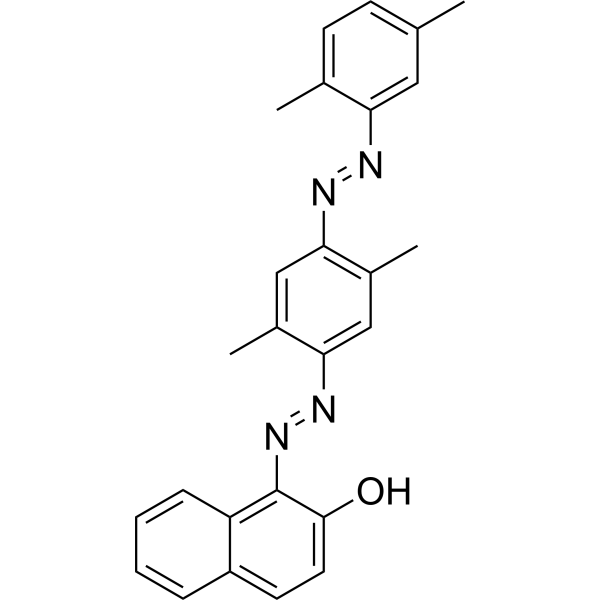
    Oil Red O is a fat-soluble diazol dye, with a maximum absorption at 518 nm. Oil Red O stains neutral lipids and cholesteryl esters but not biological membranes. Oil Red O can be used for detecting and quantifying hepatic steatosis in mouse liver biopsies. Oil Red O staining efficiently helps to visualize the radical changes that occur in tissues as metabolic disease occurs and progresses .
    Oil Red O
  • HY-134124

    Reactive Oxygen Species (ROS) Metabolic Disease
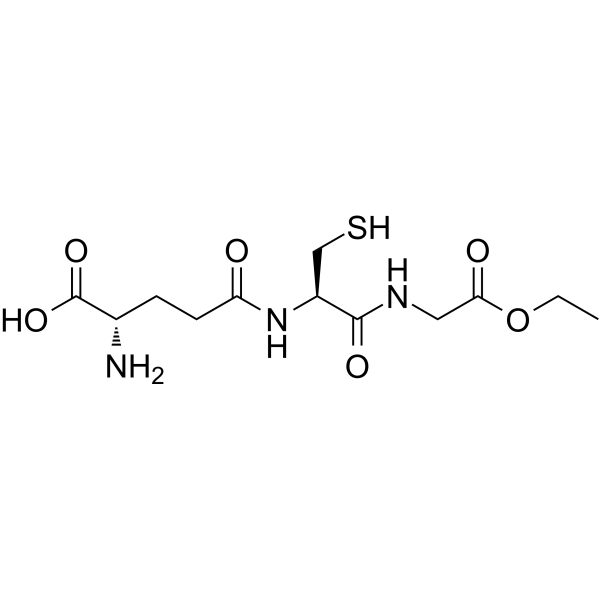
    Glutathione ethyl ester is a cell-permeable GSH donor and provides an efficient supply of GSH to the oocyte. Glutathione ethyl ester shows positive effect on the in vitro production of embryos by enhancement of the antioxidative defense .
    Glutathione ethyl ester
  • HY-18778

    TA-8995; DEZ-001; AMG-899

    CETP Apolipoprotein LPL Receptor LDLR Cardiovascular Disease
    Obicetrapib (TA-8995; DEZ-001) is an orally active cholesteryl ester transfer protein (CETP) inhibitor. Obicetrapib potently reduces atherogenic lipoproteins (such as LDL-C, ApoB, Lp (a)) and increases HDL-C. Obicetrapib can be used for the research of dyslipidemia and atherosclerotic cardiovascular disease (ASCVD) .
    Obicetrapib
  • HY-P2879A

    Biochemical Assay Reagents Metabolic Disease
    Cholesterol esterase, Porcine pancreas is an enzyme that hydrolyzes cholesteryl esters into cholesterol and free fatty acids in the intestine. Cholesterol esterase, also known as bile salt-stimulated lipase or carboxyl ester lipase, functions to promote cholesterol absorption .
    Cholesterol esterase, Porcine pancreas
  • HY-12089

    CP-529414

    CETP Endocrinology
    Torcetrapib (CP-529414) is a selective, potent cholesteryl ester transfer protein (CETP) inhibitor. A typical inhibition curve for whole human plasma, having a CETP concentration of 37 nM .
    Torcetrapib
  • HY-N10788

    Acyltransferase Inflammation/Immunology
    Pomonic acid is an acyl-coenzyme A: cholesterol acyltransferase (ACAT) inhibitor. Pomonic acid reduces the esterification of free cholesterol to cholesteryl esters and the accumulation of intracellular cholesteryl esters. Pomonic acid can be used in the research of atherosclerosis .
    Pomonic acid
  • HY-W010695

    Biochemical Assay Reagents Others
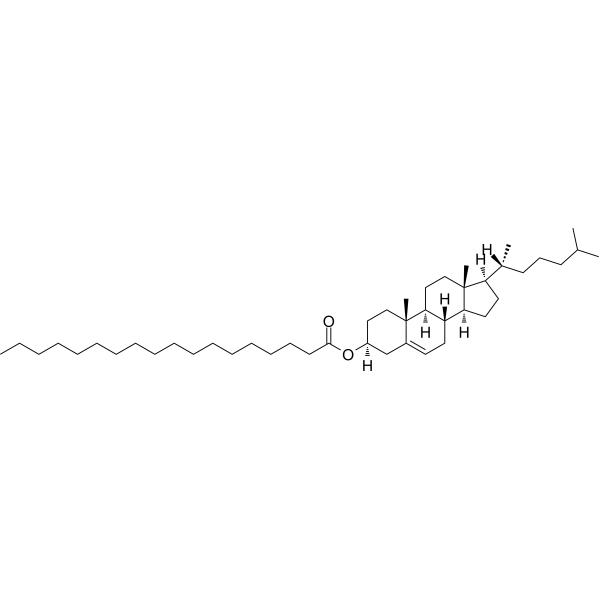
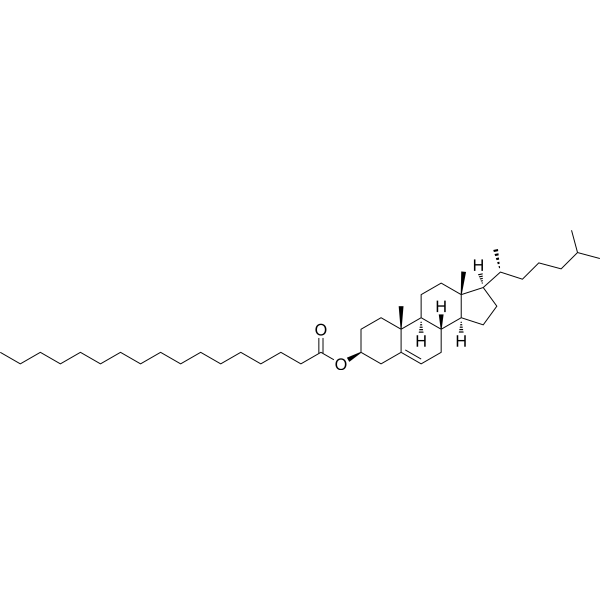
    Cholesteryl stearate is a compound belonging to the class of esters. It is a cholesterol ester commonly found in animal and plant sources. Cholesteryl stearate consists of two naturally occurring substances, cholesteryl alcohol and stearic acid. The combination of the two creates a stable compound that is commonly used in a variety of industrial and biomedical applications. Cholesteryl stearate is commonly used as a lubricant, thickener and emollient in cosmetic formulations such as lotions and creams. It is also used to produce certain types of polymers and plastics.
    Cholesteryl stearate
  • HY-107396

    Acyltransferase Cardiovascular Disease
    YM-750 is a potent acyl-CoA:cholesterol acyltransferase (ACAT) inhibitor (IC50=0.18 μM). ACAT catalyzes the formation of cholesteryl esters from cholesterol and long-chain fatty-acyl-coenzyme A .
    YM-750
  • HY-133962

    Biochemical Assay Reagents Others
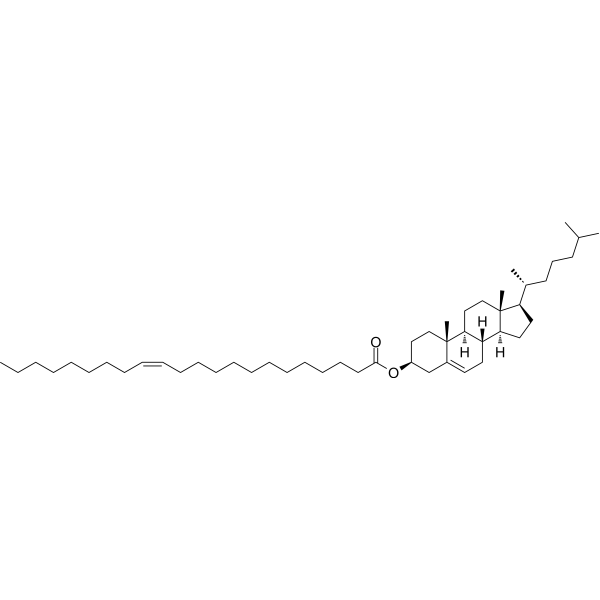
    Cholesteryl erucate is a cholesterol ester. It has been used as a standard for the quantification of cholesteryl esters in human meibomian gland secretions.
    Cholesteryl erucate
  • HY-N2339
    Cholesteryl behenate
    1 Publications Verification

    cholesteryl docosanoate; Cholesterol behenate

    Endogenous Metabolite Metabolic Disease
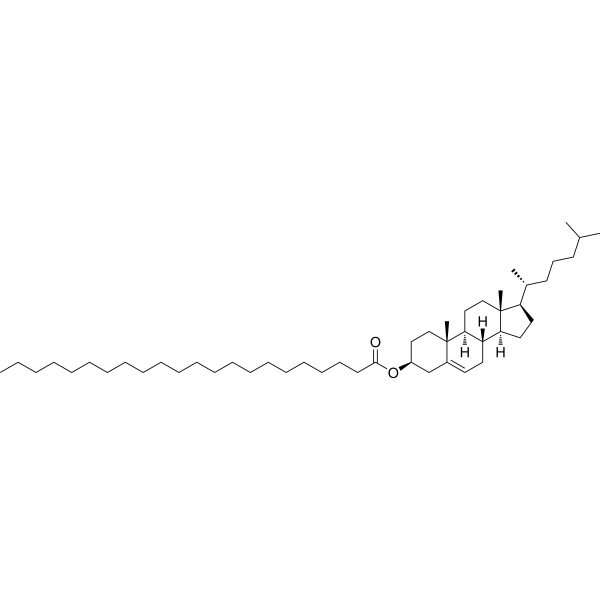
    Cholesteryl behenate is a cholesterol ester associated with the neutral core of low density lipoprotein Receptor-LDL complexes are taken up by lysosomes and hydrolyzed to release cholesterol from the esters.
    Cholesteryl behenate
  • HY-W414588

    HMG-CoA Reductase (HMGCR) CETP Metabolic Disease
    Colestolone is a 15-ketosterol compound and an orally active inhibitor of HMG-CoA reductase. Colestolone can inhibit the activity of cholesteryl ester transfer protein (CETP) in vitro (IC50 = 660 μM). Colestolone is a cholesterol-lowering agent, and can be used in the research of endocrine and metabolic diseases such as hyperlipidemia .
    Colestolone
  • HY-E70599

    Carboxylesterase (CES) Metabolic Disease
    Human CES2 Enzyme is a carboxylesterase involved in drug metabolism and lipid homeostasis. Human CES2 Enzyme hydrolyzes triglycerides, cholesteryl esters and retinyl esters to regulate lipid metabolism and energy homeostasis. Human CES2 Enzyme improves glucose tolerance and insulin sensitivity, reduces hepatic lipid accumulation, alleviates white adipose tissue steatitis, decreases plasma cholesterol levels, and reduces body weight and white adipose tissue weight. Human CES2 Enzyme can be used in the research of metabolic syndrome .
    Human CES2 Enzyme
  • HY-P991574

    REG-101

    ATGL Cardiovascular Disease
    MEDI-5884 is a humanized IgG4Pκ neutralizing monoclonal antibody targeting Endothelial lipase (EL). MEDI-5884 inhibits EL and increases quantity (particularly phosphatidylinositols and cholesteryl esters) and function of high-density lipoproteins (HDL). MEDI-5884 can be used for cardiovascular disease like coronary artery disease (CAD) research .
    MEDI-5884
  • HY-131389

    Biochemical Assay Reagents Others
    Cholesteryl heptadecanoate is a cholesteryl ester internal standard that accurately determines the concentration of free cholesterol in cells without hydrolyzing triglycerides. Cholesteryl heptadecanoate can be used for the quantitative determination of cholesteryl esters by GC or LC mass spectrometry .
    Cholesteryl heptadecanoate
  • HY-113086

    16:1(9Z) CE; 16:1(9Z) Cholesterol ester; Cholesterol Palmitoleate

    Endogenous Metabolite Cardiovascular Disease
    CE(16:1(9Z)) (16:1(9Z) CE) is a cholesterol ester. Plasma levels of cholesteryl palmitoleate are increased in ApoE -/- mice exposed to cigarette smoke and in pediatric patients with biliary atresia. Cholesteryl palmitoleate has been used as a standard for the identification of cholesterol esters in human meibomian gland secretions.
    CE(16:1(9Z))
  • HY-W127403

    cholesteryl trans-9-octadecenoate

    Biochemical Assay Reagents Others
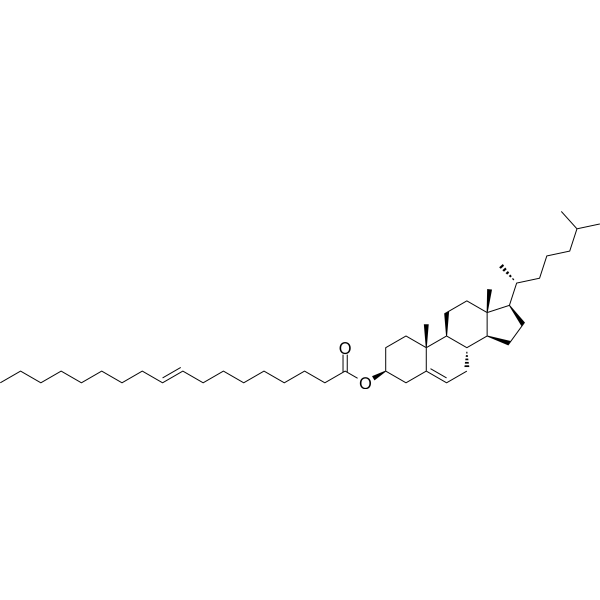
    Cholesteryl elaidate is an organic compound belonging to the class of esters. It is formed from the reaction between cholesterol and elaidic acid, producing a white crystalline solid with a mildly sweet taste. Cholesteryl elaidate has several applications in the pharmaceutical industry, particularly as a bioactive compound with potential research potential for improving a range of medical conditions, such as high cholesterol and inflammation-related diseases. Additionally, it has potential applications as a food additive to improve texture and stability.
    Cholesteryl elaidate
  • HY-P2424

    CCK-J

    Calcium Channel Others
    Cholecystokinin-J (CCK-J), a cholecystokinin, stimulates Ca 2+ release .
    Cholecystokinin-J
  • HY-45131

    Drug Intermediate Metabolic Disease
    Cholesterol absorption inhibitor 1 (compound 21) is a cholesterol absorption inhibitor that reduces liver cholesteryl ester .
    Cholesterol absorption inhibitor 1
  • HY-19614

    CETP Cardiovascular Disease
    BMS-795311 is a potent and orally bioavailable inhibitor of cholesteryl ester transfer protein (CETP), with IC50s of 4 nM in an enzyme-based scintillation proximity assay (SPA) and 0.22 μM in a human whole plasma assay (hWPA), respectively .
    BMS-795311
  • HY-123016

    Endogenous Metabolite Cardiovascular Disease
    9(S)-HODE cholesteryl ester is originally extracted from atherosclerotic lesions. It remains uncertain whether the oxidized fatty acid portion of the molecule results from enzymatic lipoxygenation or from random lipid peroxidation.2 9(S)-HODE cholesteryl ester can be used as a standard for analysis of chiral HODE cholesteryl esters.
    9(S)-HODE cholesteryl ester
  • HY-125394

    Endogenous Metabolite Cardiovascular Disease
    9(R)-HODE cholesteryl ester is originally extracted from atherosclerotic lesions. It remains uncertain whether the oxidized fatty acid portion of the molecule results from enzymatic lipoxygenation or from random lipid peroxidation.2 9(R)-HODE cholesteryl ester can be used as a standard for analysis of chiral HODE cholesteryl esters.
    9(R)-HODE cholesteryl ester
  • HY-132303

    CETP Cardiovascular Disease Metabolic Disease
    MK-8262 is an orally active and potent cholesteryl ester transfer protein (CETP) inhibitor with an IC50 of 53 nM and a log D of 5.3. MK-8262, a bistrifluoromethyl analogue, has the potential for coronary heart disease (CHD) correlated high-density lipoprotein (HDL) and low-density lipoprotein (LDL) research .
    MK-8262
  • HY-N8353

    Others Metabolic Disease
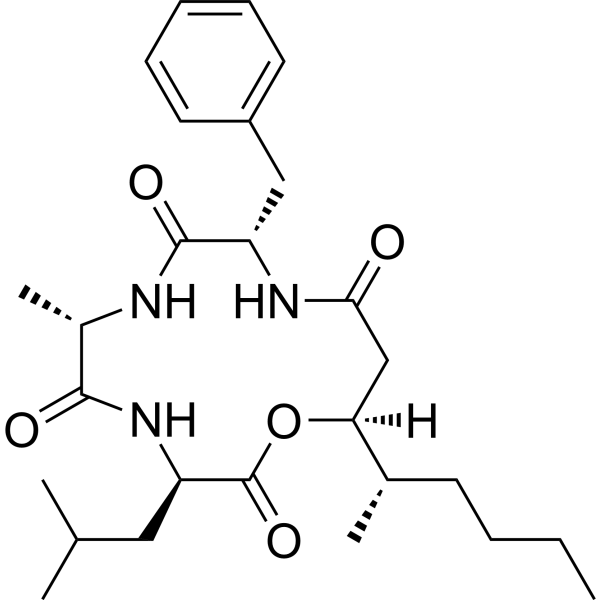
    Stachybotramide is a natural fungal metabolite with the property of modulating the activity of cholesteryl ester transfer protein (CETP). Stachybotramide stimulates the transfer of cholesteryl esters (CE) from high-density lipoprotein (HDL) to very-low-density lipoprotein (VLDL) and low-density lipoprotein (LDL), increasing the transfer efficiency by 1.3- to 1.5-fold. Stachybotramide slightly reduced the transfer of cholesteryl esters from LDL and VLDL to HDL at 0.5 mM. The effect of Stachybotramide on the transfer of triglycerides (TG) from HDL was not significant. By these results, Stachybotramide was shown to preferentially stimulate the CETP-mediated transfer of cholesteryl esters from HDL to VLDL and LDL .
    Stachybotramide
  • HY-W010695R

    Biochemical Assay Reagents Reference Standards Others
    Cholesteryl stearate (Standard) is the analytical standard of Cholesteryl stearate (HY-W010695). This product is intended for research and analytical applications. Cholesteryl stearate is a compound belonging to the class of esters. It is a cholesterol ester commonly found in animal and plant sources. Cholesteryl stearate consists of two naturally occurring substances, cholesteryl alcohol and stearic acid. The combination of the two creates a stable compound that is commonly used in a variety of industrial and biomedical applications. Cholesteryl stearate is commonly used as a lubricant, thickener and emollient in cosmetic formulations such as lotions and creams. It is also used to produce certain types of polymers and plastics.
    Cholesteryl stearate (Standard)
  • HY-W010695S1

    Isotope-Labeled Compounds Biochemical Assay Reagents Others
    Cholesteryl octadecanoate-d35 is the deuterium labeled Cholesteryl stearate (HY-W010695). Cholesteryl stearate is a compound belonging to the class of esters. It is a cholesterol ester commonly found in animal and plant sources. Cholesteryl stearate consists of two naturally occurring substances, cholesteryl alcohol and stearic acid. The combination of the two creates a stable compound that is commonly used in a variety of industrial and biomedical applications. Cholesteryl stearate is commonly used as a lubricant, thickener and emollient in cosmetic formulations such as lotions and creams. It is also used to produce certain types of polymers and plastics.
    Cholesteryl octadecanoate-d35
  • HY-183907

    Calcium Channel Cardiovascular Disease
    Cicletanine is a voltage-dependent Ca 2+ channel inhibitor. Cicletanine inhibits α-adrenoceptor-mediated Ca 2+ release pathway, and shows vasodilatory effects on isolated vascular smooth muscle. Cicletanine directly stimulates lysosomal and cytoplasmic cholesteryl ester hydrolase activity. Cicletanine can be used for the research of hypertension .
    Cicletanine
  • HY-107396R

    Reference Standards Acyltransferase Cardiovascular Disease
    YM-750 (Standard) is the analytical standard of YM-750 (HY-107396). This product is intended for research and analytical applications. YM-750 is a potent acyl-CoA:cholesterol acyltransferase (ACAT) inhibitor (IC50=0.18 μM). ACAT catalyzes the formation of cholesteryl esters from cholesterol and long-chain fatty-acyl-coenzyme A .
    YM-750 (Standard)
  • HY-18778B

    TA-8995 potassium; DEZ-001 potassium; AMG-899 potassium

    Apolipoprotein CETP LPL Receptor LDLR Metabolic Disease
    Obicetrapib (TA-8995; DEZ-001) potassium is an orally active cholesteryl ester transfer protein (CETP) inhibitor. Obicetrapib potassium potently reduces atherogenic lipoproteins (such as LDL-C, ApoB, Lp (a)) and increases HDL-C. Obicetrapib potassium can be used for the research of dyslipidemia and atherosclerotic cardiovascular disease (ASCVD) .
    Obicetrapib potassium

Inquiry Online

Your information is safe with us. * Required Fields.

Salutation


Country or Region *

Applicant Name *


Organization Name *

Department *


Email Address *


Product Name *

Cat. No.


Requested quantity *

Phone Number *


Remarks

Inquiry Online

Inquiry Information

Product Name:
Cat. No.:
Quantity:
MCE Japan Authorized Agent:

