

21 Results for "

chronic viral hepatitis

" in MedChemExpress (MCE) Product Catalog:
Products (21)

21 Results for "chronic viral hepatitis" in MCE Product Catalog:

8
8 Publications Verification
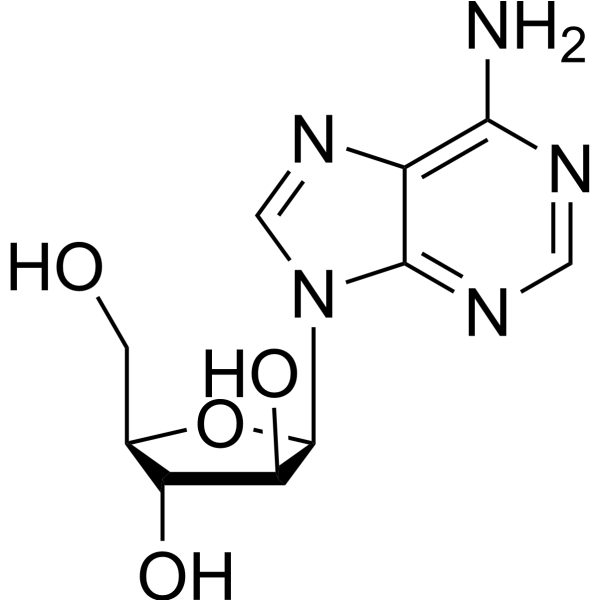
Cat. No.: HY-B0277
CAS No.: 5536-17-4
Synonyms: Ara-A; Adenine Arabinoside; 9-β-D-Arabinofuranosyladenine
Vidarabine (Ara-A) is a Purine nucleoside derivative and Antiviral agent. The triphosphate derivative of Vidarabine competitively inhibits DNA polymerase, incorporates into the terminus of elongating DNA molecules, and interferes with the early steps of viral DNA synthesis. Vidarabine inhibits the replication of herpes simplex virus, varicella-zoster virus, cytomegalovirus, Epstein-Barr virus and vaccinia virus, reduces viral shedding, and accelerates skin healing. Vidarabine is metabolized to arabinosyl hypoxanthine, causes minimal impairment of corneal wound healing in rabbit models, and is associated with recurrence of herpes simplex encephalitis. Vidarabine can be used in the research of herpetic keratoconjunctivitis, herpes simplex encephalitis, herpetic uveitis, and chronic active hepatitis associated with hepatitis B virus .
loading...
    loading...
8
8 Publications Verification
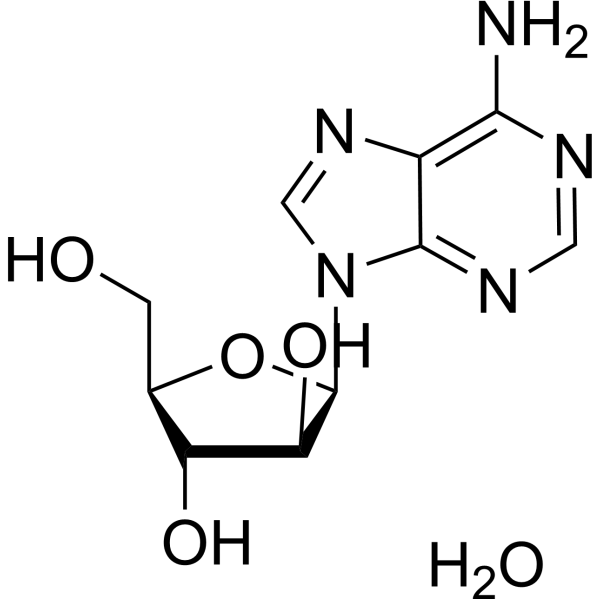
Cat. No.: HY-N6666
CAS No.: 24356-66-9
Vidarabine monohydrate is a Purine nucleoside derivative and Antiviral agent. The triphosphate derivative of Vidarabine monohydrate competitively inhibits DNA polymerase, incorporates into the terminus of elongating DNA molecules, and interferes with the early steps of viral DNA synthesis. Vidarabine monohydrate inhibits the replication of herpes simplex virus, varicella-zoster virus, cytomegalovirus, Epstein-Barr virus and vaccinia virus, reduces viral shedding, and accelerates skin healing. Vidarabine monohydrate is metabolized to arabinosyl hypoxanthine, causes minimal impairment of corneal wound healing in rabbit models, and is associated with recurrence of herpes simplex encephalitis. Vidarabine monohydrate can be used in the research of herpetic keratoconjunctivitis, herpes simplex encephalitis, herpetic uveitis, and chronic active hepatitis associated with hepatitis B virus .
loading...
    loading...
1
1 Cited Publications
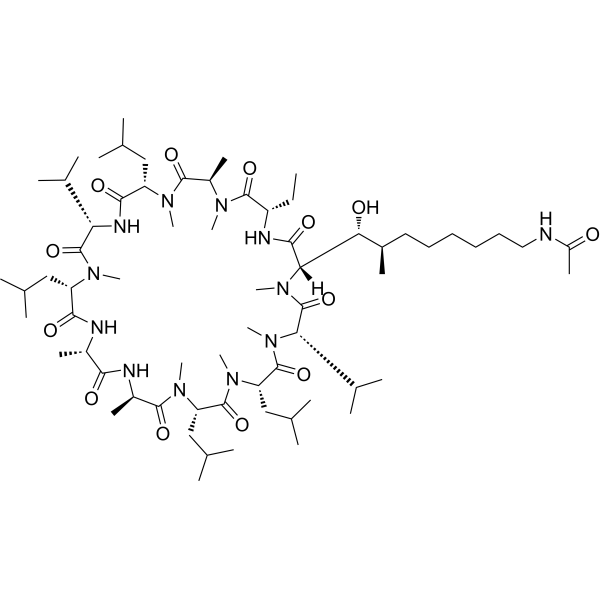
Cat. No.: HY-135644
CAS No.: 1383420-08-3
Purity:  90.29%
Synonyms: CRV431
Rencofilstat (CRV431) is an orally active pan-cyclophilin inhibitor with IC50 values of 2.5 nM, 3.1 nM, 2.8 nM, 7.3 nM for Cyp A, CypB, Cyp D and Cyp G, respectively. Rencofilstat reduces fibrosis and tumor growth in models of chronic liver disease. Rencofilstat can be used for the study of nonalcoholic steatohepatitis (NASH), hepatocellular carcinoma and viral hepatitis-induced liver disease .
loading...
    loading...
Cat. No.: HY-E70529
Research Areas:  

Infection

Ribonucleoside vanadyl complexes are a class of potent RNase and Taq polymerase inhibitors. Ribonucleoside vanadyl complexes protect RNA during RNA isolation by inhibiting ribonucleases, and also reduce the viability of bacteria and eukaryotic cells by interfering with ribosomal subunit assembly. Ribonucleoside vanadyl complexes block PCR and reverse transcription reactions templated by viral nucleic acids and enhance the effects of antibiotics against Staphylococcus aureus, but do not directly inhibit protein synthesis. Ribonucleoside vanadyl complexes can be effectively removed by phenol-chloroform extraction, thus enabling subsequent PCR analysis. Ribonucleoside vanadyl complexes can be applied in research related to chronic hepatitis C (HCV) and Staphylococcus aureus infection .
loading...
    loading...
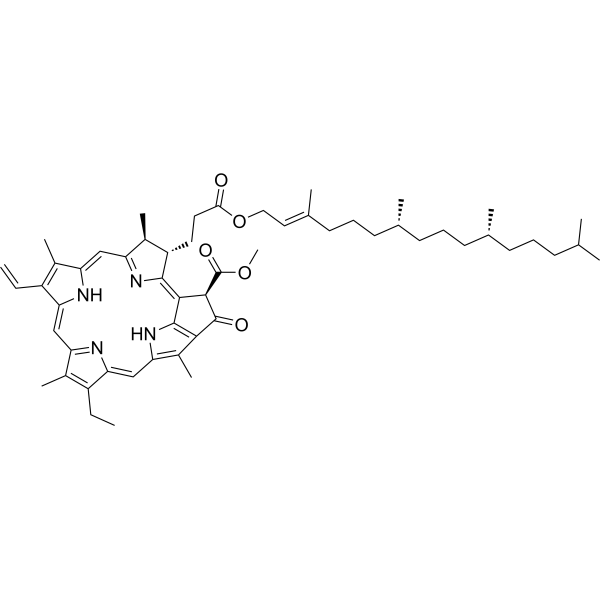
Cat. No.: HY-N12586
CAS No.: 603-17-8
Pheophytin a is a multi-target inhibitor, anticancer agent, antioxidant and antiviral agent. Pheophytin a directly binds to and inhibits HCV-NS3/4A protease (IC50=0.89 μM) to block viral replication. Pheophytin a also scavenges free radicals, reduces ferric ions, and exhibits cytotoxic activity against breast cancer cells. Pheophytin a effectively inhibits LPS-induced production of nitric oxide, prostaglandin E2, NOS2 and COX-2, as well as various pro-inflammatory cytokines, by downregulating the transcription levels of inflammatory mediators and blocking the ERK1/2 and STAT-1 pathways. In a low nerve growth factor environment, Pheophytin a also enhances ERK1/2 phosphorylation and synergistically promotes neurite outgrowth through MAPK pathway. Pheophytin a can be used to investigate the pathogenic mechanisms of diseases including chronic hepatitis C, sepsis, breast cancer and Alzheimer's disease .
loading...
    loading...
Cat. No.: HY-148348
CAS No.: 2445597-31-7
Purity:  99.13%
Target:  

HBV

Research Areas:  

Infection

AB-836 is an orally active HBV capsid inhibitor. AB-836 inhibits viral replication by interacting with HBV core protein. AB-836 can be used in research related to chronic hepatitis B .
loading...
    loading...
Cat. No.: HY-147266
Purity:  95.83%
Synonyms: VIR-2218 sodium
Research Areas:  

Infection

Elebsiran (VIR-2218) sodium is a siRNA that targets and degrades hepatitis B virus (HBV) and hepatitis D virus (HDV) RNA transcripts. Elebsiran sodium leads to a significant decrease in HBV surface antigen (HBsAg) and a reduction in viral load. Elebsiran sodium binds to the sialic acid-depleted glycoprotein receptor (ASGPR) on the surface of liver cells through the GalNAc ligand, achieving liver-targeted delivery and demonstrating improved liver safety. Elebsiran sodium can be used for the study of chronic HBV/HDV infections .
loading...
    loading...
Cat. No.: HY-W352344
CAS No.: 14365-45-8
Target:  

HBV

Research Areas:  

Infection

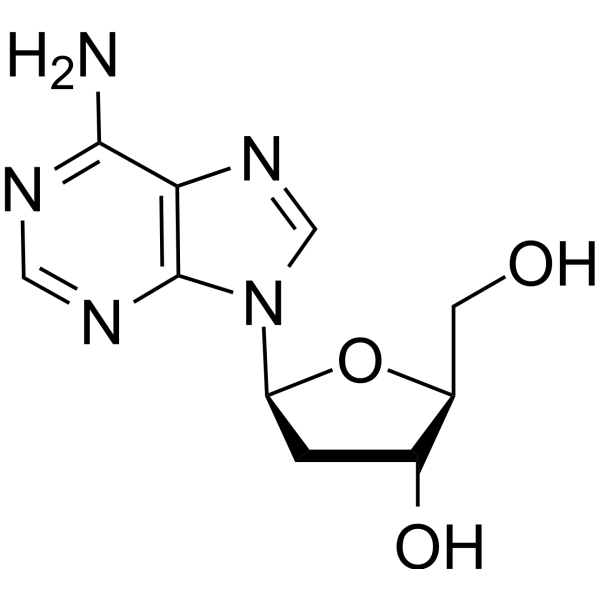
2'-Deoxy-L-adenosine is an orally active synthon for modified oligodeoxyribonucleotides. 2'-Deoxy-L-adenosine is a potent, specific and selective inhibitor of the replication of hepatitis B virus (HBV) as well as the closely related duck and woodchuck hepatitis viruses (WHV) .
loading...
    loading...
Cat. No.: HY-147266A
CAS No.: 2648009-64-5
Synonyms: VIR-2218
Research Areas:  

Infection

Elebsiran (VIR-2218) is a siRNA that targets and degrades hepatitis B virus (HBV) and hepatitis D virus (HDV) RNA transcripts. Elebsiran leads to a significant decrease in HBV surface antigen (HBsAg) and a reduction in viral load. Elebsiran binds to the sialic acid-depleted glycoprotein receptor (ASGPR) on the surface of liver cells through the GalNAc ligand, achieving liver-targeted delivery and demonstrating improved liver safety. Elebsiran can be used for the study of chronic HBV/HDV infections .
loading...
    loading...
Cat. No.: HY-118167
CAS No.: 7728-40-7
Synonyms: MEGX; Norlidocaine
Target:  

Drug Metabolite

Research Areas:  

Metabolic Disease

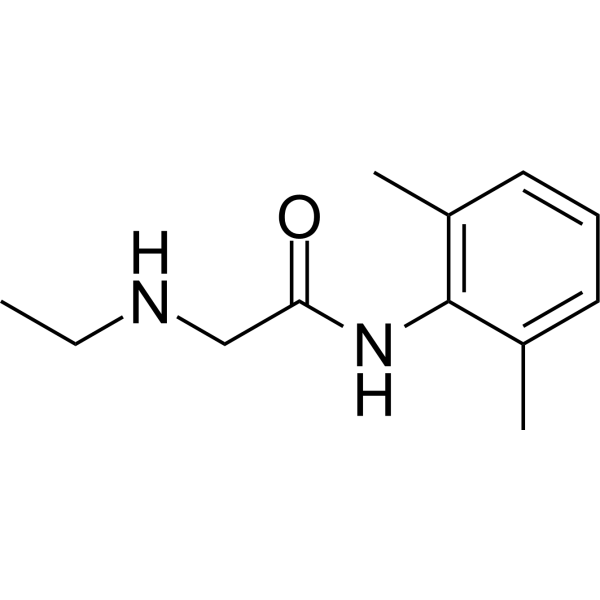
Monoethylglycinexylidide (MEGX; Norlidocaine) is the major metabolite of Lidocaine (HY-B0185), produced via oxidative metabolism by cytochrome P-450 enzymes in the liver. Monoethylglycinexylidide can be used for research on liver cirrhosis .
loading...
    loading...
Cat. No.: HY-W099331
CAS No.: 7729-94-4
Synonyms: MEGX hydrochloride; Norlidocaine hydrochloride
Target:  

Drug Metabolite

Research Areas:  

Metabolic Disease

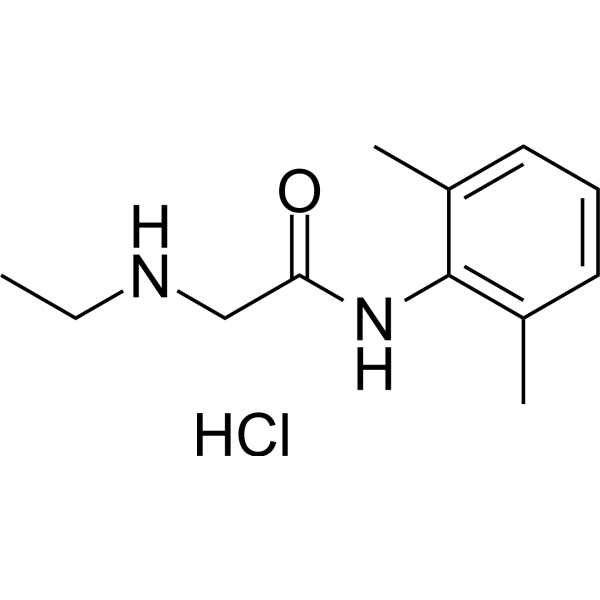
Monoethylglycinexylidide hydrochloride (MEGX hydrochloride; Norlidocaine hydrochloride) is the major metabolite of Lidocaine (HY-B0185), produced via oxidative metabolism by cytochrome P-450 enzymes in the liver. Monoethylglycinexylidide hydrochloride can be used for research on liver cirrhosis .
loading...
    loading...
Cat. No.: HY-148768
CAS No.: 2245020-50-0
Target:  

HBV

Research Areas:  

Inflammation/Immunology

AB-506 is an orally active inhibitor of HBV replication targeting the viral core protein. AB-506 can bind to HBV core protein, accelerate capsid assembly and inhibit HBV pgRNA encapsidation. AB-506 can be used in chronic hepatitis B (CHB) research .
loading...
    loading...
Cat. No.: HY-14404
CAS No.: 924270-31-5
Target:  

HBV HCV Protease

Research Areas:  

Infection

MK-1220 is a covalently reversible inhibitor of the hepatitis C virus (HCV) NS3/4A protease (NS3/4A protease) with a Ki of 0.02 nM. MK-1220 in cell models simulating viral replication exhibits EC50s of 4 (with 10% fetal bovine serum) and 11 nM (50% normal human serum). MK-1220 can be used for the study of chronic hepatitis C virus infection .
loading...
    loading...
Cat. No.: HY-B0277R
CAS No.: 5536-17-4
Synonyms: Ara-A (Standard); Adenine Arabinoside (Standard); 9-β-D-Arabinofuranosyladenine (Standard)
Vidarabine (Standard) (Ara-A (Standard)) is the analytical standard of Vidarabine (HY-B0277). This product is intended for research and analytical applications. Vidarabine (Ara-A) is a Purine nucleoside derivative and Antiviral agent. The triphosphate derivative of Vidarabine competitively inhibits DNA polymerase, incorporates into the terminus of elongating DNA molecules, and interferes with the early steps of viral DNA synthesis. Vidarabine inhibits the replication of herpes simplex virus, varicella-zoster virus, cytomegalovirus, Epstein-Barr virus and vaccinia virus, reduces viral shedding, and accelerates skin healing. Vidarabine is metabolized to arabinosyl hypoxanthine, causes minimal impairment of corneal wound healing in rabbit models, and is associated with recurrence of herpes simplex encephalitis. Vidarabine can be used in the research of herpetic keratoconjunctivitis, herpes simplex encephalitis, herpetic uveitis, and chronic active hepatitis associated with hepatitis B virus .
loading...
    loading...
Cat. No.: HY-177300
CAS No.: 1402802-45-2
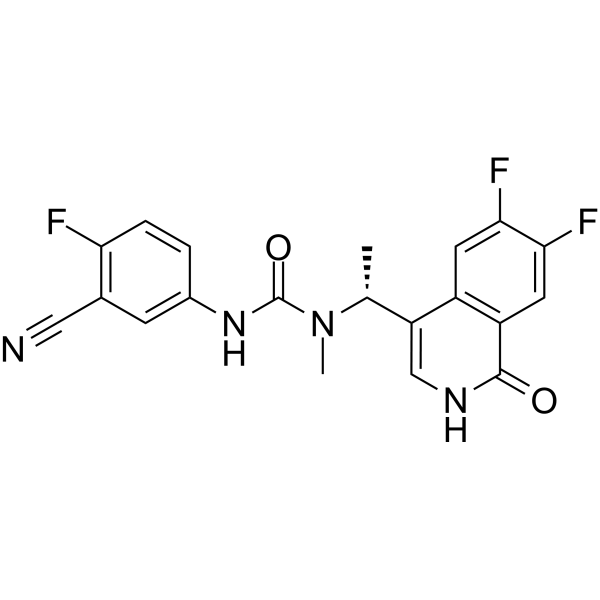
TLR7/8 agonist 13 is an orally active dual agonist of TLR7 (lowest effective concentrations (LEC) [hTLR7] = 1.6 μM) and TLR8 (LEC [hTLR8] = 1.6 μM). TLR7/8 agonist 13 exhibits agonistic activity against human peripheral blood mononuclear cells (hPBMCs) (LEC [hPBMC] = 0.5 μM). TLR7/8 agonist 13 induces endogenous IFNα, activating myeloid dendritic cells and monocytes toward a TH1 phenotype in mice and cynomolgus monkeys. TLR7/8 agonist 13 reduces viral load and HBV surface antigen expression in a mouse model of chronic AAV-HBV infection. TLR7/8 agonist 13 has the potential to indirectly induce IFNγ, which may promote HBV antigen-specific CD8 T cell-mediated responses. TLR7/8 agonist 13 can be used to study hepatitis B virus .
loading...
    loading...
Cat. No.: HY-N6666R
CAS No.: 24356-66-9
Vidarabine monohydrate (Standard) is the analytical standard of Vidarabine monohydrate (HY-N6666). This product is intended for research and analytical applications. Vidarabine monohydrate is a Purine nucleoside derivative and Antiviral agent. The triphosphate derivative of Vidarabine monohydrate competitively inhibits DNA polymerase, incorporates into the terminus of elongating DNA molecules, and interferes with the early steps of viral DNA synthesis. Vidarabine monohydrate inhibits the replication of herpes simplex virus, varicella-zoster virus, cytomegalovirus, Epstein-Barr virus and vaccinia virus, reduces viral shedding, and accelerates skin healing. Vidarabine monohydrate is metabolized to arabinosyl hypoxanthine, causes minimal impairment of corneal wound healing in rabbit models, and is associated with recurrence of herpes simplex encephalitis. Vidarabine monohydrate can be used in the research of herpetic keratoconjunctivitis, herpes simplex encephalitis, herpetic uveitis, and chronic active hepatitis associated with hepatitis B virus .
loading...
    loading...
Cat. No.: HY-118167R
CAS No.: 7728-40-7
Synonyms: MEGX (Standard); Norlidocaine (Standard)
Research Areas:  

Metabolic Disease

Monoethylglycinexylidide (Standard) is the analytical standard of Monoethylglycinexylidide (HY-118167). This product is intended for research and analytical applications. Monoethylglycinexylidide (MEGX; Norlidocaine) is the major metabolite of Lidocaine (HY-B0185), produced via oxidative metabolism by cytochrome P-450 enzymes in the liver. Monoethylglycinexylidide can be used for research on liver cirrhosis .
loading...
    loading...
Cat. No.: HY-118167S
CAS No.: 1216698-89-3
Synonyms: MEGX-d6; Norlidocaine-d6
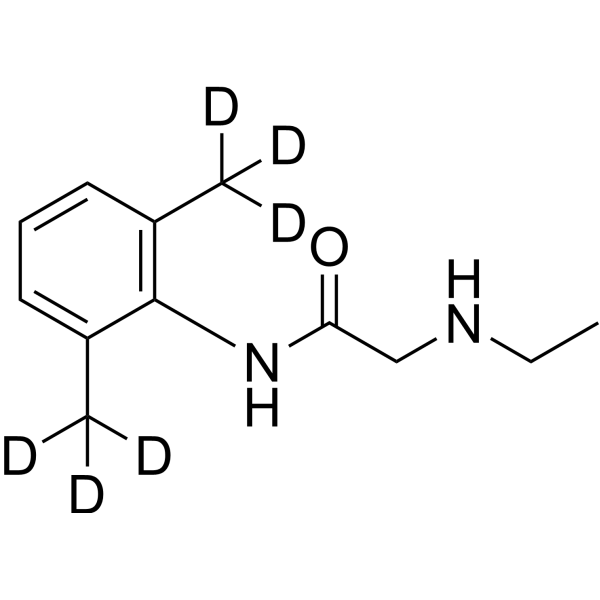
Monoethylglycinexylidide-d6 (MEGX-d6; Norlidocaine-d6) is the deuterated-labeled Monoethylglycinexylidide (HY-118167). Monoethylglycinexylidide is the major metabolite of Lidocaine (HY-B0185), produced via oxidative metabolism by cytochrome P-450 enzymes in the liver. Monoethylglycinexylidide can be used for research on liver cirrhosis .
loading...
    loading...
Cat. No.: HY-118167S1
CAS No.: 2748541-96-8
Synonyms: MEGX-d6 hydrochloride; Norlidocaine-d6 hydrochloride
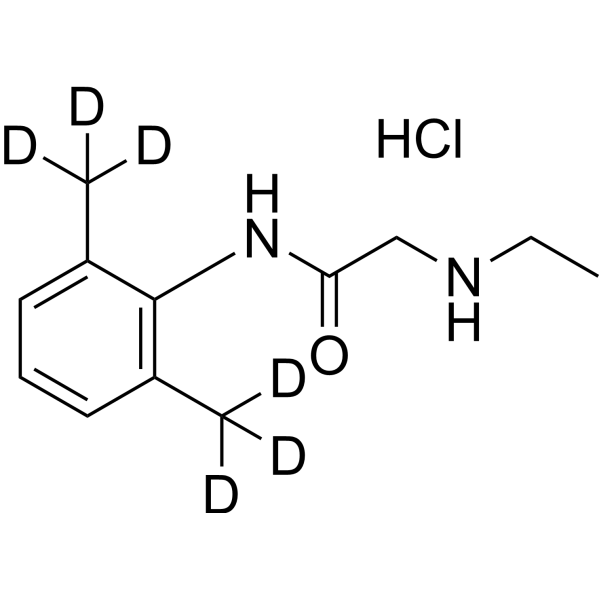
Monoethylglycinexylidide-d6 hydrochloride is the deuterated-labeled Monoethylglycinexylidide hydrochloride (HY-W099331). Monoethylglycinexylidide hydrochloride (MEGX hydrochloride; Norlidocaine hydrochloride) is the major metabolite of Lidocaine (HY-B0185), produced via oxidative metabolism by cytochrome P-450 enzymes in the liver. Monoethylglycinexylidide hydrochloride can be used for research on liver cirrhosis .
loading...
    loading...
Cat. No.: HY-W099331R
CAS No.: 7729-94-4
Synonyms: MEGX hydrochloride (Standard); Norlidocaine hydrochloride (Standard)
Research Areas:  

Metabolic Disease

Monoethylglycinexylidide hydrochloride (Standard) is the analytical standard of Monoethylglycinexylidide hydrochloride (HY-W099331). This product is intended for research and analytical applications. Monoethylglycinexylidide hydrochloride (MEGX hydrochloride; Norlidocaine hydrochloride) is the major metabolite of Lidocaine (HY-B0185), produced via oxidative metabolism by cytochrome P-450 enzymes in the liver. Monoethylglycinexylidide hydrochloride can be used for research on liver cirrhosis .
loading...
    loading...

