25 Results for "

colonic carcinoma cells

" in MedChemExpress (MCE) Product Catalog:
Products (25)

25 Results for "colonic carcinoma cells" in MCE Product Catalog:

5
5 Cited Publications
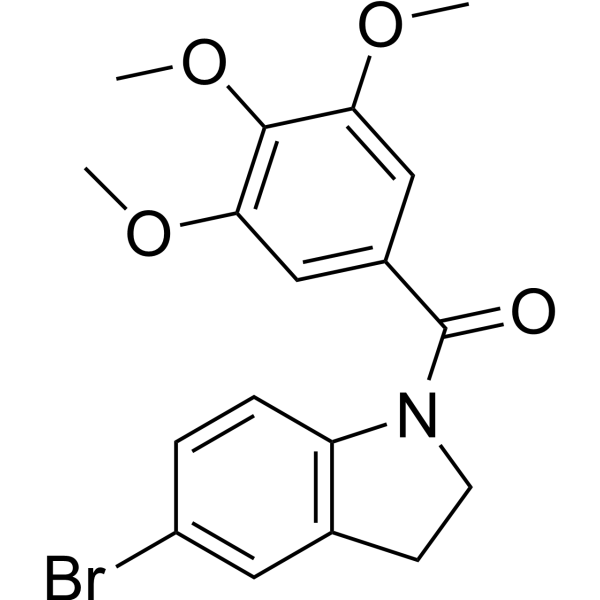
Cat. No.: HY-19832
CAS No.: 871361-88-5
Target:  

MOFs Akt Apoptosis

Research Areas:  

Cancer

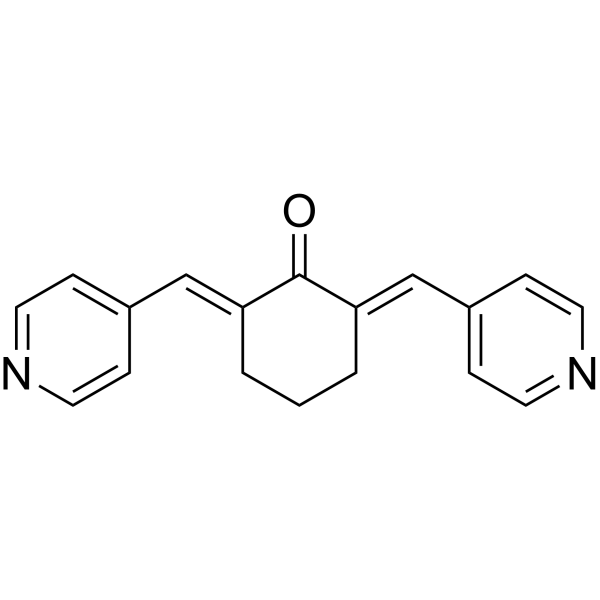
SC66 is an Akt inhibitor, reduces cell viability in a dose- and time-dependent manner, inhibits colony formation and induces apoptosis in hepatocellular carcinoma (HCC) cells.
loading...
    loading...
Cat. No.: HY-103249
CAS No.: 303957-69-9
Purity:  98.08%
Synonyms: Reutericycline
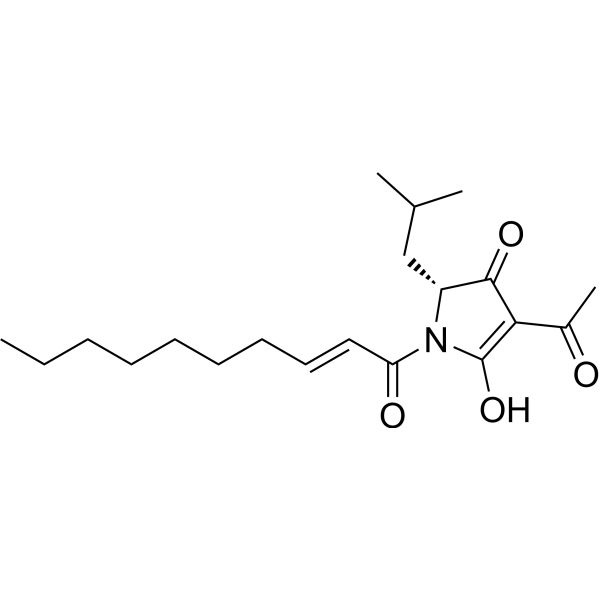
Reutericyclin (Reutericycline) is an orally active antibacterial and anti-obesity agent that selectively inhibits Gram-positive bacteria. By selectively dissipating transmembrane potential, Reutericyclin exerts non-lytic bactericidal or bacteriostatic activity against pathogens such as Clostridium difficile and Staphylococcus aureus, and rapidly kills vegetative cells and spores of Clostridium difficile. Reutericyclin possesses favorable properties including resistance to enzymatic hydrolysis, iron-chelating function, and poor absorption by colonic epithelium. Reutericyclin not only eradicates staphylococcal biofilms and inhibits drug-resistant strains, but also counteracts Risperidone (HY-11018)-induced weight gain by inducing changes in gut microbiota composition and restoring energy utilization efficiency. Reutericyclin can be used in research related to Clostridium difficile infection, Risperidone-induced weight gain, and staphylococcal superficial skin infections .
loading...
    loading...
Cat. No.: HY-19345A
CAS No.: 2309312-85-2
Synonyms: NSC13316 dihydrochloride
Target:  

p38 MAPK

Research Areas:  

Neurological Disease Cancer

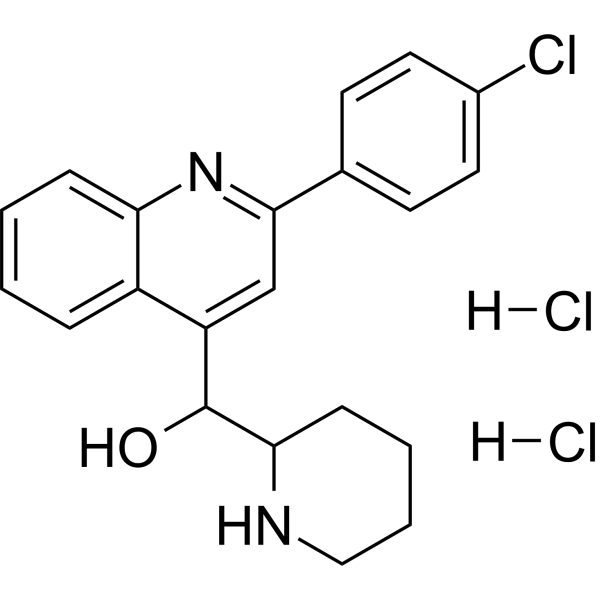
Vacquinol-1 (NSC13316) dihydrochloride is a MKK4-specific activator that activates the MAPK pathway. Vacquinol-1 dihydrochloride inhibits the growth, migration and colony formation, and induces apoptosis of cancer cells. Vacquinol-1 dihydrochloride is applicable to research related to cancers such as hepatocellular carcinoma .
loading...
    loading...
Cat. No.: HY-19345
CAS No.: 5428-80-8
Synonyms: NSC13316
Research Areas:  

Cancer

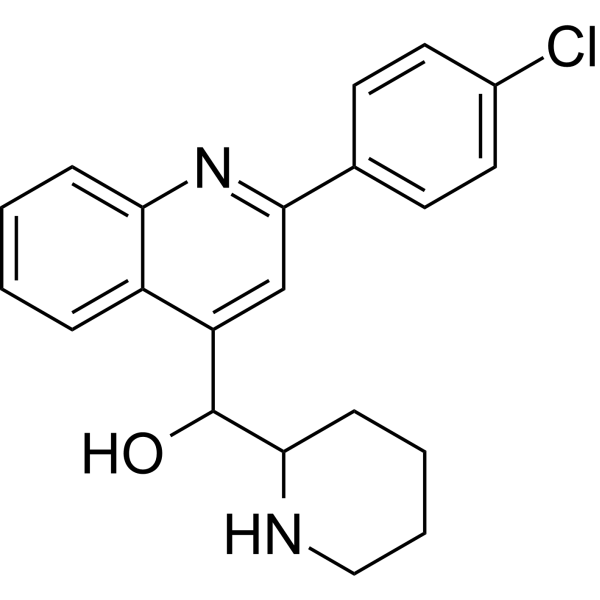
Vacquinol-1 (NSC13316) is a MKK4-specific activator that activates the MAPK pathway. Vacquinol-1 inhibits the growth, migration and colony formation, and induces apoptosis of cancer cells. Vacquinol-1 is applicable to research related to cancers such as hepatocellular carcinoma .
loading...
    loading...
Cat. No.: HY-154825
CAS No.: 651734-12-2
Synonyms: 20(OH)D3; 20S-Hydroxyvitamin D3
20-Hydroxyvitamin D3 (20(OH)D3), a product of vitamin D3 hydroxylation, is a noncalcemic immunomodulator. 20-Hydroxyvitamin D3 binds to vitamin D receptor (VDR), activates VDR and aryl hydrocarbon receptor (AhR) signaling, stimulates CYP24A1 expression, and drives VDR nuclear translocation. 20-Hydroxyvitamin D3 inhibits NF-κB activity via IκBα upregulation. 20-Hydroxyvitamin D3 acts as a substrate for CYP27B1 and rat CYP24A1, undergoing hydroxylation to form dihydroxy-derivatives. 20-Hydroxyvitamin D3 inhibits cell proliferation, colony formation, migration, and tumor growth, and induces cell differentiation in cancer cells. 20-Hydroxyvitamin D3 can be used for the research of inflammatory and autoimmune diseases, melanoma, breast carcinomas, and hepatocarcinoma .
loading...
    loading...
Cat. No.: HY-170595
CAS No.: 2763268-64-8
Research Areas:  

Cancer

PROTAC LZK degrader 1 is an LZK (MAP3K13) PROTAC degrader. PROTAC LZK degrader 1 binds LZK with a Kd of 35 nM and recruits VHL E3 ubiquitin ligase to induce ubiquitin-proteasome dependent degradation of LZK in MAP3K13-amplified HNSCC cells. PROTAC LZK degrader 1 eliminates both kinase-dependent c-MYC stabilization and kinase-independent GOF p53 accumulation downstream of LZK, suppresses colony formation of LZK-amplified head and neck squamous cell carcinoma (HNSCC) cells. PROTAC LZK degrader 1 can be used for research on LZK-driven HNSCC .
loading...
    loading...
Cat. No.: HY-175589
Research Areas:  

Cancer

XSJ81 is an orally active anti-cancer agent. XSJ81 significantly inhibits the proliferation of ampullary carcinoma (AC) DPC-X3 cells with an IC50 of 0.655 μM. XSJ81 inhibits the colony formation, arrests cell cycle at the G2/M phase and inhibits the migration in DPC-X3 cells. XSJ81 induces DNA damage and apoptosis in DPC-X3 cells. XSJ81 demonstrates significant anti-tumor efficacy in mice bearing DPC-X3 xenografts. XSJ81 can be used for the study of ampullary carcinoma .
loading...
    loading...
Cat. No.: HY-176740
CAS No.: 2930759-37-6
PROTAC Bcl-xL degrader-4 is a Bcl-xL PROTAC degrader. PROTAC Bcl-xL degrader-4 exhibits cytotoxicity against hepatocellular carcinoma cells, inhibits their migration and colony formation, and shows low cytotoxicity toward normal cells. PROTAC Bcl-xL degrader-4 induces apoptosis by reducing mitochondrial membrane potential and activating the MAPK signaling pathway. PROTAC Bcl-xL degrader-4 significantly suppresses tumor growth in xenograft tumor mouse models. PROTAC Bcl-xL degrader-4 can be used in hepatocellular carcinoma-related research .
loading...
    loading...
Cat. No.: HY-175857
Target:  

HDAC Apoptosis

Research Areas:  

Cancer

HDAC-IN-92 is a pan-HDAC inhibitor with an IC50 of 12.58 µM in A2780 cells. HDAC-IN-92 demonstrates broad-spectrum, notable cytotoxic activity against a range of human cancer cell lines, including ovarian, liver, and breast carcinomas. HDAC-IN-92 causes apoptosis and demonstrates a notable decrease in tumor cell colony formation. HDAC-IN-92 inhibits the formation of blood vessels in the chick chorioallantoic membrane (CAM). HDAC-IN-92 exhibits anti-tumor effect in a 4T1 tumor-bearing mouse model. HDAC-IN-92 can be used for research targeting solid tumor .
loading...
    loading...
Cat. No.: HY-126324
CAS No.: 2326007-49-0
Target:  

Apoptosis

Research Areas:  

Cancer

IV-23 (Compound 20) is a potent Noxa mediated apoptosis inducer, and it is a promising anticancer agent with potential. IV-23 inhibits cell growths in vitro and in vivo, reduces colony formation, arrests cell cycle at M phase, and induces esophageal squamous cell carcinoma (ESCC) .
loading...
    loading...
Cat. No.: HY-168085
Target:  

YAP Apoptosis

Research Areas:  

Cancer

CV-4-26 (Compound 22) is a covalent inhibitor of TEAD. CV-4-26 inhibits YAP/TEAD-based transcription, leading to the reduction of CTGF and CYR61 expression. CV-4-26 inhibits Huh7 and HepG2 cell colony formation, induces cell cycle arrest, and apoptosis. CV-4-26 shows antitumor activity against hepatocellular carcinoma (HCC) and hepatoblastoma (HB) .
loading...
    loading...
Cat. No.: HY-180909
TMU454 is an ASGPR-targeting GalNAc-PROTAC BRD4 degrader conjugate. TMU454 undergoes ASGPR-mediated endocytosis and CTSB cleavage to release MZ1, which selectively degrades BRD4 in ASGPR-positive hepatocellular carcinoma cells via the VHL/UPS/proteasome pathway. TMU454 inhibits cancer cell proliferation and colony formation, and suppresses tumor growth in vivo. TMU454 can be used for research related to hepatocellular carcinoma .
loading...
    loading...
Cat. No.: HY-181271
CAS No.: 3035441-37-0
Target:  

IKK Autophagy

Research Areas:  

Cancer

IKKε-IN-1 is a IKKε inhibitor. IKKε-IN-1 reduces cell viability, inhibits colony formation and cell migration. IKKε-IN-1 induces autophagy (Autophagy) in cancer cells. IKKε-IN-1 can be used in the research of cancers including colorectal cancer, hepatocellular carcinoma, bladder cancer, breast cancer, lung cancer, and cervical cancer .
loading...
    loading...
Cat. No.: HY-181675
Research Areas:  

Cancer

CHNQD-01522 is a microtubule inhibitor targeting the colchicine binding site on β-tubulin. CHNQD-01522 binds to the colchicine binding site on β-tubulin, inhibits microtubule polymerization, and evades P-glycoprotein transport in cancer cells. CHNQD-01522 inhibits proliferation, suppresses tumor cell colony formation, arrests cell cycle in G2/M phases, and induces apoptosis in cancer cells. CHNQD-01522 upregulates of Bax and activation of caspase-9 and caspase-3. CHNQD-01522 shows anti-tumor efficacy in subcutaneous and orthotopic hepatocellular carcinoma xenograft tumor models. CHNQD-01522 can be used for the research of hepatocellular carcinoma .
loading...
    loading...
Cat. No.: HY-176741
CAS No.: 2566503-77-1
MAPK ligand 1 is an apoptosis inducer and Bcl-xL/MAPK ligand that can be used to synthesize the Bcl-xL-targeted PROTAC degrader (HY-176740). MAPK ligand 1 triggers apoptosis through the mitochondrial pathway, MAPK pathway, reduction of mitochondrial membrane potential and elevation of reactive oxygen species levels. MAPK ligand 1 inhibits colony formation and migration of cancer cells, as well as angiogenesis of endothelial cells. MAPK ligand 1 can be used in the research of hepatocellular carcinoma .
loading...
    loading...
Cat. No.: HY-183783
Target:  

PROTACs RET STAT ERK Apoptosis

Research Areas:  

Endocrinology Cancer

PROTAC RET Degrader 2 is a RET degrader with a target IC50 of 0.36 nM. PROTAC RET Degrader 2 is mainly composed of RET-IN-34 (HY-183729) and Thalidomide (HY-14658). PROTAC RET Degrader 2 mediates RET degradation via the ubiquitin-proteasome system. PROTAC RET Degrader 2 induces apoptosis, inhibits colony-forming ability, and exhibits antiproliferative activity in cancer cells. PROTAC RET Degrader 2 suppresses tumor growth in xenograft models. PROTAC RET Degrader 2 can be used in research related to medullary thyroid carcinoma, papillary thyroid carcinoma, and RET fusion-positive lung adenocarcinoma .
loading...
    loading...
Cat. No.: HY-183098
Target:  

PROTACs IKK Apoptosis

Research Areas:  

Cancer

UNC8209 is a selective PROTAC-based TANK-binding kinase 1 (TBK1) degrader. UNC8209 recruits cereblon (CRBN) to mediate ubiquitin-proteasome pathway-dependent TBK1 degradation and reduces AAK1, GAK, and AURKA abundance. UNC8209 suppresses tumor cell proliferation, impairs in vivo tumor growth, inhibits colony and clonogenic growth and enhances tumor cell sensitivity to TNFα or IFN-γ. UNC8209 modulates cell cycle and induces mild apoptosis. UNC8209 can be used for the research of clear cell renal cell carcinoma, non-small cell lung cancer, pancreatic ductal adenocarcinoma .
loading...
    loading...
Cat. No.: HY-183058
CAS No.: 2140164-84-5
Research Areas:  

Cancer

EZM8266 is an orally active and selective G9a (EHMT2) histone methyltransferase inhibitor with a human EHMT2 IC50 of 1 pM. EZM8266 reduces repressive H3K9me2 marks at immune-stimulatory gene and endogenous retroviral element promoters. EZM8266 reduces colony formation, migration, and invasion of cancer cells. EZM8266 enhances IFN-γ response, increases MHC class I expression, and enhances CXCL10-mediated T cell recruitment in cancer cells. EZM8266 can be used for the research of hepatocellular carcinoma .
loading...
    loading...
Cat. No.: HY-187366
Target:  

PDGFR Apoptosis

Research Areas:  

Cancer

PDGFRβ-IN-1 is an orally active PDGFRβ inhibitor with an IC50 of 3.9 nM against human PDGFRβ. PDGFRβ-IN-1 selectively inhibits PDGFRβ, blocks its downstream signaling pathways, and promotes its degradation via a non-classical pathway. PDGFRβ-IN-1 inhibits cancer cell proliferation, migration and colony formation, and induces cancer cell apoptosis. PDGFRβ-IN-1 suppresses tumor growth in xenograft models. PDGFRβ-IN-1 can be used for the research of hepatocellular carcinoma .
loading...
    loading...
Cat. No.: HY-181152
Target:  

FGFR

Research Areas:  

Cancer

FGFR3-IN-11(compound B11) is a Fibroblast growth factor receptor 3 (FGFR3) inhibitor with a Ka value of 4.8 μM. FGFR3-IN-11 induces apoptosis, suppresses colony formation, and causes dose-dependent G0/G1 cell cycle arrest in cancer cells. FGFR3-IN-11 exerts anticancer activity against cancer cells with minimal toxicity toward normal hepatocytes and demonstrates tumor growth suppression in xenograft mouse models. FGFR3-IN-11 can be used for the research of hepatocellular carcinoma .
loading...
    loading...

