
24 Results for "

coronary flow

" in MedChemExpress (MCE) Product Catalog:
Products (24)

24 Results for "coronary flow" in MCE Product Catalog:

13
13 Publications Verification
Cat. No.: HY-B1218
CAS No.: 526-08-9
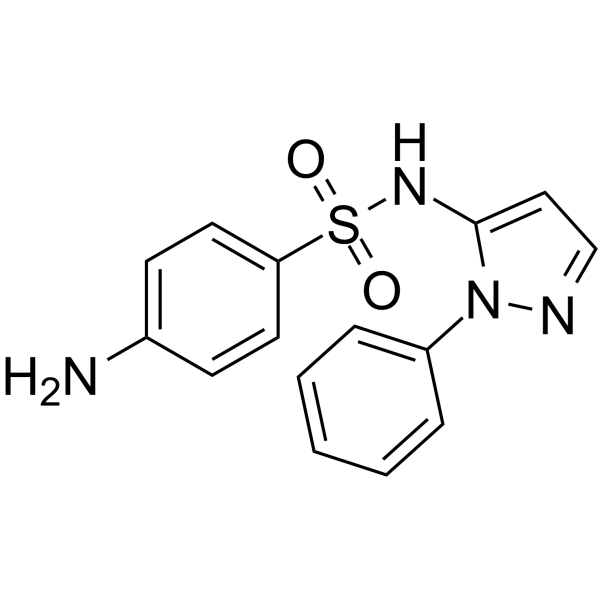
Sulfaphenazole is a selective inhibitor of human cytochrome P450 (CYP) 2C9 enzyme. Sulfaphenazole is a cytoprotective agent against light-induced death of photoreceptors. Sulfaphenazole inhibits light-induced necrosis and mitochondrial stress-initiated apoptosis. Sulfaphenazole is an off patent sulfonamide antibiotic and demonstrates bactericidal activity through enhanced M1 macrophage activity. Sulfaphenazole can significantly reduce infarct size and restore post-ischemic coronary flow following ischemia and reperfusion .
loading...
    loading...
3
3 Cited Publications
Cat. No.: HY-A0168
CAS No.: 313348-27-5
Synonyms: CVT-3146
Target:  

Adenosine Receptor

Research Areas:  

Cardiovascular Disease Cancer

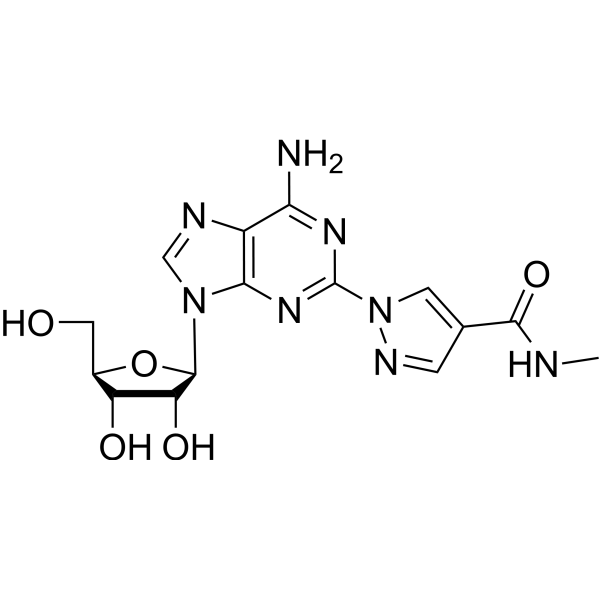
Regadenoson (CVT-3146) is a selective A2A adenosine receptor agonist and vasodilator that increases coronary blood flow, can be used in study of myocardial perfusion imaging. Regadenoson also increases the permeability of the blood-brain barrier (BBB) in rodents, can be used to study increased delivery of agents to the human CNS .
loading...
    loading...
1
1 Cited Publications
Cat. No.: HY-P2824
CAS No.: 9002-01-1
Target:  

Bacterial

Research Areas:  

Cardiovascular Disease

Streptokinase, β-hemolytic streptococcus (Lancefield Group C) is a bacteria-derived protein and a plasminogen activator. Streptokinase is widely used for the research of the blood-clotting disorders. Streptokinase improves reperfusion blood flow after coronary artery occlusion .
loading...
    loading...
Cat. No.: HY-B1218R
CAS No.: 526-08-9
Sulfaphenazole (Standard) is the analytical standard of Sulfaphenazole. This product is intended for research and analytical applications. Sulfaphenazole is a selective inhibitor of human cytochrome P450 (CYP) 2C9 enzyme. Sulfaphenazole is a cytoprotective agent against light-induced death of photoreceptors. Sulfaphenazole inhibits light-induced necrosis and mitochondrial stress-initiated apoptosis. Sulfaphenazole is an off patent sulfonamide antibiotic and demonstrates bactericidal activity through enhanced M1 macrophage activity. Sulfaphenazole can significantly reduce infarct size and restore post-ischemic coronary flow following ischemia and reperfusion .
loading...
    loading...
Cat. No.: HY-105209
CAS No.: 132722-74-8
Target:  

Endogenous Metabolite

Research Areas:  

Cardiovascular Disease

Pirsidomine is a nitric oxide donor. Pirsidomine is a sydnonimine compound. Pirsidomine can transform into a nitric oxide-releasing metabolite in vivo. Pirsidomine prevents occlusion-induced increase in flow in the non-occluded circumflex coronary artery and significantly reduces the blood flow in non-ischemic areas in myocardial infarction dog model. Pirsidomine can be studied in research on cardiovascular diseases .
loading...
    loading...
Cat. No.: HY-A0113
CAS No.: 90139-06-3
Synonyms: Ro 31-3113
Cilazaprilat is an inhibitor of angiotensin-converting enzyme (ACE; IC50=0.7 nM for the rat enzyme) and an active metabolite of Cilazapril (HY-A0043). It decreases creatine kinase release in primary neonatal rat cardiac myocytes in an in vitro model of ischemia-reperfusion injury induced by hypoxia and reoxygenation when used at a concentration of 10 μM.3 Intra-arterial administration of cilazaprilat (3 μg/kg per minute) increases coronary blood flow and fractional shortening in a dog model of coronary hypoperfusion-induced myocardial ischemia.
loading...
    loading...
Cat. No.: HY-117627
CAS No.: 133240-38-7
Target:  

Angiotensin Receptor

Research Areas:  

Cardiovascular Disease

L 158338 is an angiotensin II receptor antagonist. L 158338 alleviates acidosis and increases coronary blood flow during the ischemic period and increases coronary blood flow during the reperfusion period. L 158338 can be used to study myocardial injury during ischemia and reperfusion .
loading...
    loading...
Cat. No.: HY-118268
CAS No.: 120602-97-3
Target:  

Lipoxygenase

Research Areas:  

Cardiovascular Disease

RG 6866 is a 5-lipoxygenase (5-LOX) inhibitor with the potential to inhibit coronary artery constriction and negative cardiac inotropic effects in cardiac inflammatory states. When the heart is stimulated by antigens, RG 6866 can block the antigen-induced reduction in coronary flow in the heart.
loading...
    loading...
Cat. No.: HY-18209
CAS No.: 193420-09-6
Z-13752A is a mercaptopropanoyl amino acid. Z-13752A inhibits NEP and ACE, with Ki values of 1.8 and 3.2 nM, respectively. Z-13752A decreases the arterial blood pressure and increases coronary blood flow. Z-13752A can be used in the research of coronary artery occlusion .
loading...
    loading...
Cat. No.: HY-A0168A
CAS No.: 875148-45-1
Synonyms: CVT-3146 hydrate
Target:  

Adenosine Receptor

Research Areas:  

Cardiovascular Disease

Regadenoson hydrate (NSC 169186) is a selective A2A adenosine receptor agonist and vasodilator that increases coronary blood flow, can be used in study of myocardial perfusion imaging. Regadenoson hydrate also increases the permeability of the blood-brain barrier (BBB) in rodents, can be used to study increased delivery of agents to the human CNS .
loading...
    loading...
Cat. No.: HY-101390B
CAS No.: 102993-22-6
Target:  

Calcium Channel

Research Areas:  

Cardiovascular Disease

Niguldipine is a calcium channel blocker with activity in regulating cardiovascular function. Niguldipine can reduce systolic and diastolic blood pressure, thereby increasing heart rate and cardiac output. Niguldipine exhibits dose-dependent and sustained increases in coronary blood flow. Niguldipine also increases perfusion in the kidneys and femoral arteries, but the effect is temporary and to a lesser extent. The effect of Niguldipine on myocardial metabolism is not significant .
loading...
    loading...
Cat. No.: HY-105093
CAS No.: 141696-90-4
Target:  

Adenosine Receptor

Research Areas:  

Inflammation/Immunology

N-0861 is a novel selective A1 adenosine receptor antagonist. In studies, it has been shown to be able to inhibit the negative conduction effects (prolonged AH interval) and chest pain caused by adenosine, while having no significant effect on the increase in coronary blood flow velocity caused by adenosine. This indicates that N-0861 has the property of selectively inhibiting A1 adenosine receptors .
loading...
    loading...
Cat. No.: HY-A0168R
CAS No.: 313348-27-5
Synonyms: CVT-3146 (Standard)
Regadenoson (Standard) is the analytical standard of Regadenoson. This product is intended for research and analytical applications. Regadenoson (CVT-3146) is a selective A2A adenosine receptor agonist and vasodilator that increases coronary blood flow, can be used in study of myocardial perfusion imaging. Regadenoson also increases the permeability of the blood-brain barrier (BBB) in rodents, can be used to study increased delivery of agents to the human CNS .
loading...
    loading...
Cat. No.: HY-183138
CAS No.: 86408-45-9
Target:  

Drug Metabolite

Research Areas:  

Cardiovascular Disease

N-Demethyldiltiazem is a metabolite of Diltiazem (HY-B0632). N-Demethyldiltiazem increases coronary blood flow, modulates cardiac function, decreases systemic blood pressure and heart rate, and alters papillary muscle developed tension .
loading...
    loading...
Cat. No.: HY-W277805
CAS No.: 549-68-8
Octaverine is a synthetic isoquinoline alkaloid with oral activity and adrenergic lytic activity. Octaverine antagonizes the pressor effect of adrenaline, elevates the toxicity threshold of adrenaline, and reduces blood pressure. Octaverine increases respiratory depth, respiratory frequency, ventilation rate, and coronary blood flow. Octaverine inhibits spontaneous uterine contractions, antagonizes induced intestinal spasms, alleviates histamine-induced bronchospasm, and exhibits favorable biosafety. Octaverine can be used in research related to intestinal spasms and bronchospasm .
loading...
    loading...
Cat. No.: HY-105646A
CAS No.: 655-35-6
Synonyms: Carbocromen hydrochloride
Research Areas:  

Cardiovascular Disease

Chromonar hydrochloride (Carbocromen hydrochloride) is an orally active, selective long-acting coronary vasodilator. Chromonar hydrochloride increases coronary blood flow. Chromonar hydrochloride is used for the research of angina pectoris .
loading...
    loading...
Cat. No.: HY-118991
CAS No.: 47487-05-8
Target:  

Adenosine Receptor

Research Areas:  

Cardiovascular Disease

KT-1 is a vasodilator. KT 1 can decrease aortic pressure, renal blood flow, left ventricular enddiastolic pressure and resistances of total peripheral, vertebral, coronary and renal vasculatures and increase aortic blood flow, vertebral blood flow, coronary blood flow, peak positive left ventricular dP/dt and heart rate in anesthetized open-chest dogs. KT-1 can be used for the research of cardiovascular disease .
loading...
    loading...
Cat. No.: HY-129500
CAS No.: 81872-09-5
Target:  

Endogenous Metabolite

Research Areas:  

Cardiovascular Disease

Zofenoprilat arginine is an antihypertensive agent that enhances the effect of bradykinin on coronary flow, particularly in the presence of sulfhydryl-containing converting enzyme inhibitors.
loading...
    loading...
Cat. No.: HY-N20466
Category:  

Extract

Target:  

Others

Lignum dalbergiae odoriferae extract is an extract of Dalbergia odoriferae, used to promote blood circulation, increase coronary blood flow, and has antioxidant, anti-inflammatory, and anti-tumor effects.
loading...
    loading...
Cat. No.: HY-19066
CAS No.: 115750-37-3
Target:  

Potassium Channel

Research Areas:  

Cardiovascular Disease

KW-3407 is an antiarrhythmic agent. KW-3407 can inhibit two-stage (24 and 48 h) coronary ligation-, digitalis- and adrenaline-induced spontaneously occurring arrhythmias with IC50 values of 18.1, 14.4, 18.3 and 21.4 μg/mL. KW-3407 can decrease the sinoatrial rate and contractile force, and increase the coronary blood flow and AV conduction times .
loading...
    loading...

