








1. Search Result
Search Result
Results for "

epitope

" in MedChemExpress (MCE) Product Catalog:

388

Inhibitors & Agonists

2

Screening Libraries

1

Fluorescent Dyes

167

Biochemical Assay Reagents

408

Peptides

82

Inhibitory Antibodies

4

Natural
Products

2

Isotope-Labeled Compounds

4

Antibodies

1

Oligonucleotides

Cat. No. Product Name Target Research Areas Chemical Structure
  • HY-P1569
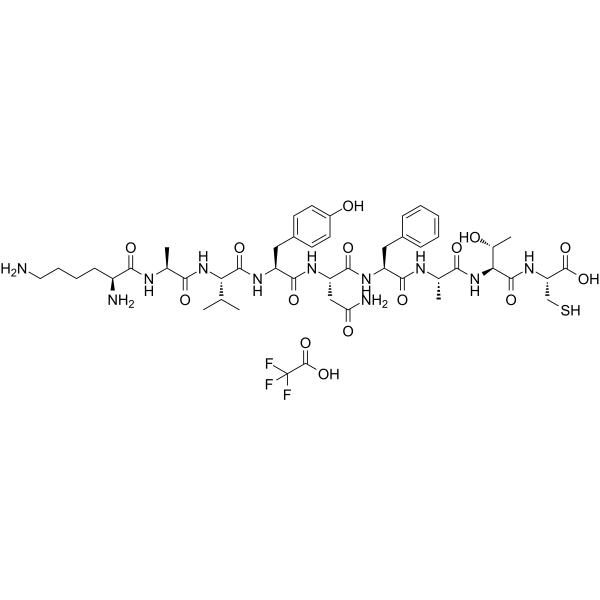
    LCMV gp33-41
    3 Publications Verification

    LCMV GP(33-41) M-peptide; gp33 epitope

    Arenavirus Infection Inflammation/Immunology
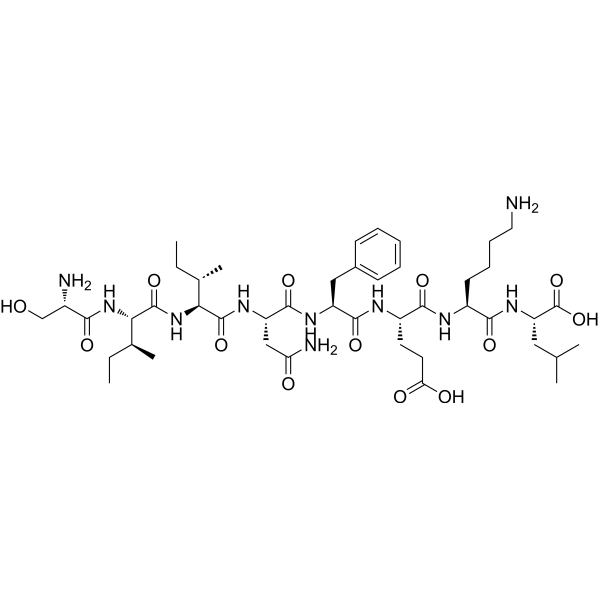
    LCMV gp33-41, the carboxyl-extended 9-aa-long peptide, is an lymphocytic choriomeningitis virus sequence restricted by MHC class I H-2Db molecules and presented to cytotoxic T lymphocytes .
    LCMV gp33-41
  • HY-P1587

    MHC Inflammation/Immunology
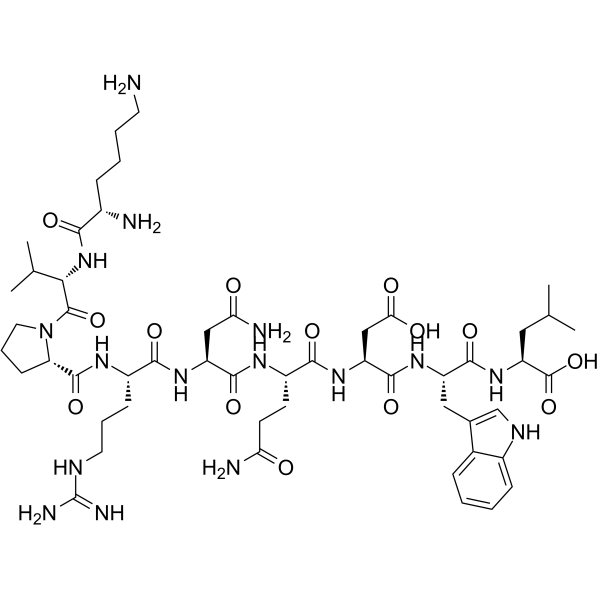
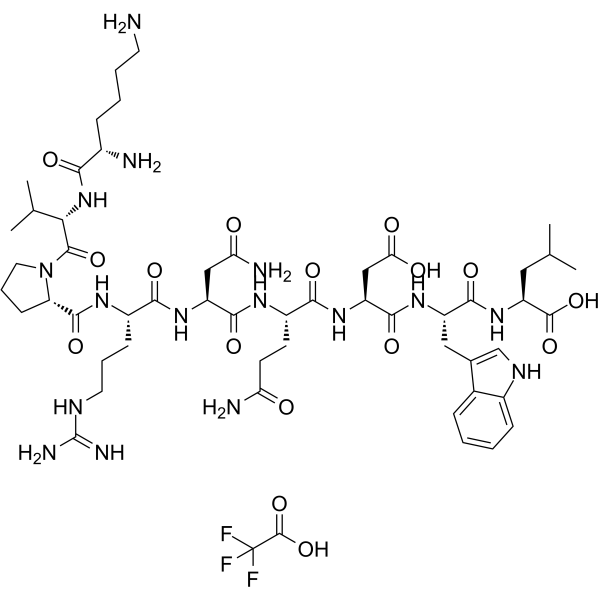
    IRBP (1-20), human contains a major epitope for the H-2 b haplotype. IRBP (1-20), human induces experimental autoimmune uveoretinitis (EAU) in H-2 b mice .
    IRBP (1-20), human
  • HY-P6312

    MHC Inflammation/Immunology
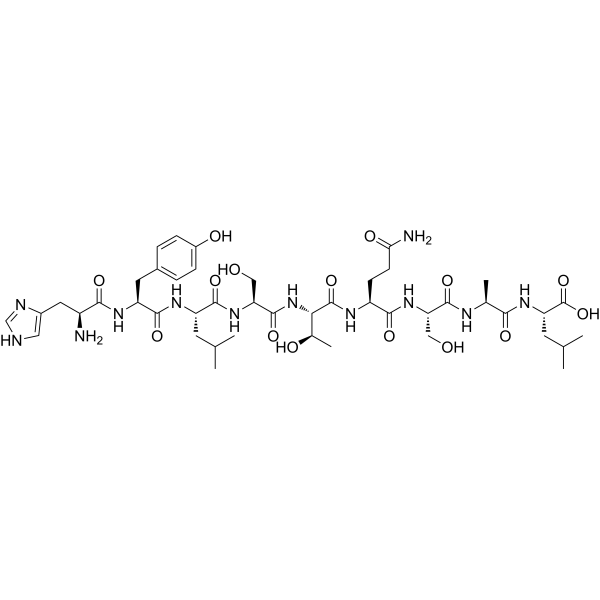
    ESAT6 Epitope is a ESAT6 CD4 + T cell epitope. ESAT6 Epitope binds to MHC class I molecules with an IC50 value of approximately 180 nM. ESAT6 Epitope has weak immunogenicity. ESAT6 Epitope can be used in studies related to pulmonary tuberculosis .
    ESAT6 Epitope
  • HY-P0325

    Biochemical Assay Reagents Others
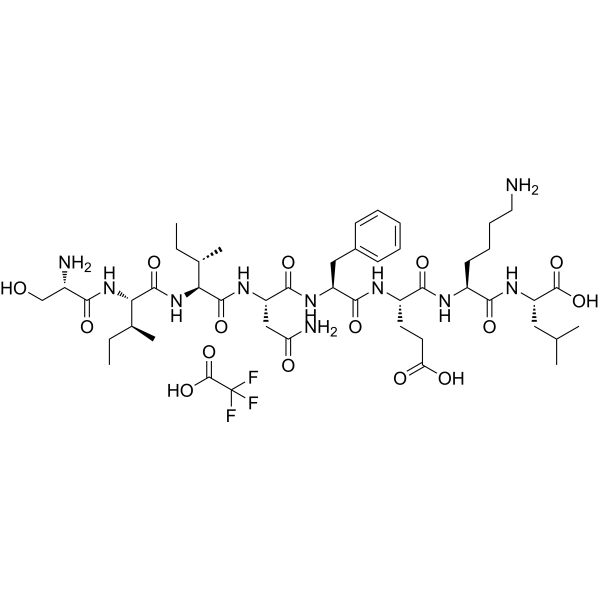
    V5 Epitope Tag Peptide TFA is a tag peptide derived from a small epitope present on the P and V proteins of the paramyxovirus of simian virus 5. V5 Epitope Tag Peptide TFA can be used for protein separation and purification, and competitive elution with target proteins .
    V5 Epitope Tag Peptide TFA
  • HY-P4279

    Angiotensin-converting Enzyme (ACE) Cholinesterase (ChE) Cardiovascular Disease
    Ovalbumin (154-159) is a protein fragment consisting of residues 154-159 of chicken ovalbumin. Ovalbumin (154-159) is also a poorly conserved sequence (Thr-Asn-Gly-Ile-Ile-Arg) in the α-subunit of the Torpedo acetylcholine receptor, located within the α150-164 epitope region, and exhibits significant angiotensin-converting enzyme (ACE) inhibitory activity .
    Ovalbumin (154-159)
  • HY-P3051

    Reverse Transcriptase Inflammation/Immunology
    CKS-17 is a synthetic retroviral envelope peptide. CKS-17 has the highly conserved amino acid sequences occurring within the transmembrane envelope protein of many animal and human retroviruses. CKS-17 acts as an immunomodulatory epitope and exhibits suppressive properties for numerous immune functions .
    CKS-17
  • HY-P99674

    GEN-3009

    Transmembrane Glycoprotein Cancer
    Ivicentamab (GEN-3009) is a bispecific antibody targeting CD37 with dual epitopes. Ivicentamab carries an E430G mutation in the Fc region, which efficiently promotes IgG hexamer formation on the surface of target cells. Ivicentamab provides the parental variable regions for an H429F-engineered anti-CD37 bispecific antibody, enabling it to exert complement-dependent cytotoxicity in Daudi lymphoma cells. Ivicentamab is mainly used in lymphoma-related research .
    Ivicentamab
  • HY-P2527

    Tyrosinase Inflammation/Immunology
    Tyrosinase-related Protein 2 (TRP-2) (181-188) is a tyrosinase-related protein 2 (TRP-2)-derived peptide, corresponding to residues 180-188. Tyrosinase-related Protein 2 (TRP-2) (181-188) is the major reactive epitope within TRP-2 recognized by anti-B16 CTLs. Tyrosinase-related Protein 2 (TRP-2) (181-188) is a peptide conforming to the MHC class I H2-Kb binding motif .
    Tyrosinase-related Protein 2 (TRP-2) (181-188)
  • HY-161543

    Biochemical Assay Reagents Inflammation/Immunology
    DHT/KLH is a conjugate of DHT (dihydrotestosterone) and keyhole limpet hemocyanin (KLH). By conjugating the antigen with a protein adjuvant, the production of antigen-specific antibodies in vaccine models can be enhanced. The conjugate does not affect protein folding or disrupt linear epitopes, and it can enhance cross-presentation and the generation of antigen-specific T cells.
    DHT/KLH
  • HY-P5470

    EBV IFNAR Inflammation/Immunology
    LMP2A (426-434) is a HLA-A2-restricted cytotoxic T lymphocyte (CTL) epitope of Epstein-Barr virus (EBV) latent membrane protein 2A (LMP2A). LMP2A (426-434) can trigger an immune response in individuals expressing different HLA-A*02 subtypes (A*02:01, A*02:03, A*02:06 and A*02:07). LMP2A (426-434) can induce a strong IFN-γ secretion response, stimulating the production of a high proportion of CD8 + IFN-γ + T cells. LMP2A (426-434) induces specific CTLs to effectively kill target cells expressing LMP2A. LMP2A (426-434) can be used to study EBV-related malignant tumors (such as Hodgkin's disease and nasopharyngeal carcinoma) .
    LMP2A (426-434)
  • HY-P3813

    Tyrosinase Inflammation/Immunology Cancer
    Tyrosinase (206-214), human (AFLPWHRLF), a 9-amino acid peptide, is a tyrosinase epitope. Tyrosinase (206-214), human can be recognized by HLA-A24 restricted, tumor-infiltrating lymphocytes (TIL) .
    Tyrosinase (206-214), human
  • HY-161553

    Biochemical Assay Reagents Inflammation/Immunology
    Biotin/KLH is an antigen-adjuvant conjugate that consists of Biotin and Keyhole Limpet Hemocyanin (KLH). By conjugating the antigen with a protein adjuvant, the production of antigen-specific antibodies in vaccine models can be enhanced. The conjugate does not affect protein folding or disrupt major epitopes, and it can enhance cross-presentation and the generation of antigen-specific T cells.
    Biotin/KLH
  • HY-161533

    Biochemical Assay Reagents Inflammation/Immunology
    Digoxin/BSA is an antigen-adjuvant conjugate of Digoxin (HY-B1049) and Bovine Serum Albumin (BSA). By conjugating the antigen with a protein adjuvant, the production of antigen-specific antibodies in vaccine models can be enhanced. The conjugate does not affect protein folding or disrupt major epitopes, and it can enhance cross-presentation and the generation of antigen-specific T cells.
    Digoxin/BSA
  • HY-161560

    Biochemical Assay Reagents Inflammation/Immunology
    Tacrolimus/BSA is the antigen-adjuvant conjugate formed by the conjugation of Tacrolimus (HY-13756) with Bovine Serum Albumin (BSA). By conjugating the antigen with a protein adjuvant, it can enhance the production of antigen-specific antibodies in vaccine models. The conjugate does not affect protein folding or disrupt major epitopes, and it can enhance cross-presentation and the generation of antigen-specific T cells.
    Tacrolimus/BSA
  • HY-P99551

    KBSA301; AR-301

    Antibiotic Bacterial Infection
    Tosatoxumab (AR-301; KBSA301) is a human immunoglobulin G1 monoclonal antibody that specifically neutralizes alpha-toxin (alpha-hemolysin; Hla) of S. aureus. Tosatoxumab binds to an N-terminal epitope of alpha-toxin, thereby preventing functional toxin pore oligomerisation. Tosatoxumab has the potential for passive immunotherapy in the S. aureus pneumonia as an adjunctive therapy to standard antibiotic agent. Recommend Isotope Control: Human IgG1 lambda1, Isotype Control (HY-P99992) .
    Tosatoxumab
  • HY-P99856

    62-71-3

    RABV Infection
    Docaravimab is an antibody, targeting ERA (Evelyn-Rockitniki-Abelseth) glycoprotein ectodomain epitope G-III. Docaravimab can be used in research of Rabies .
    Docaravimab
  • HY-P4020

    HIV Others
    2F5 epitope, a peptide gp41 (659-671), comprises the entire epitope for one of the three known antibodies capable of neutralizing a broad spectrum of primary HIV-1 isolates and is the only such epitope that is sequential. 2F5 epitope is recognized by broadly neutralizing antibodies 2F5 .
    2F5 epitope
  • HY-106374

    VEGFR Cancer
    Elpamotide is an epitope peptide derived from VEGFR2. Elpamotide induces cytotoxic T lymphocytes (CTLs) to kill VEGFR2-expressing endothelial cells. Elpamotide has potential immunostimulatory and antineoplastic activities. Elpamotide can be used in the research of cancer, such as pancreatic cancer .
    Elpamotide
  • HY-161541
    Estradiol/BSA
    1 Publications Verification

    Biochemical Assay Reagents Inflammation/Immunology
    Estradiol/BSA is the antigen-adjuvant conjugate formed by the coupling of Estradiol (HY-B0141) with Bovine Serum Albumin (BSA). By coupling the antigen with a protein adjuvant, the production of antigen-specific antibodies in vaccine models can be enhanced. The conjugate does not affect protein folding or disrupt major epitopes, and it can enhance cross-presentation and the generation of antigen-specific T cells.
    Estradiol/BSA
  • HY-161552

    Biochemical Assay Reagents Inflammation/Immunology
    T3/BSA is an antigen-adjuvant conjugate of T3 (thyroid hormone) and bovine serum albumin (BSA). By conjugating the antigen with a protein adjuvant, the production of antigen-specific antibodies in vaccine models can be enhanced. The conjugate does not affect protein folding or disrupt major epitopes, and it can enhance cross-presentation and the generation of antigen-specific T cells.
    T3/BSA
  • HY-161526

    Biochemical Assay Reagents Inflammation/Immunology
    T3/KLH is an antigen-adjuvant conjugate formed by the coupling of T3 (thyroid hormone) with keyhole limpet hemocyanin (KLH). By coupling the antigen with the protein adjuvant, the production of antigen-specific antibodies in vaccine models can be enhanced. The conjugate does not affect protein folding or disrupt major epitopes, and it can enhance cross-presentation and the generation of antigen-specific T cells.
    T3/KLH
  • HY-P1881

    HPV Cancer
    HPV16-E711-20 epitope is a well-known HLA-A *0201-restricted human cytotoxic T lymphocyte (CTL) epitope of the HPV16 E7 protein that shows high-affinity binding to HLA-A2 in vitro. HPV16 CTL epitopes may be good candidates for the development of an effective peptide-based antitumor vaccine .
    HPV16-E711-20 epitope
  • HY-P5505

    Arenavirus Others
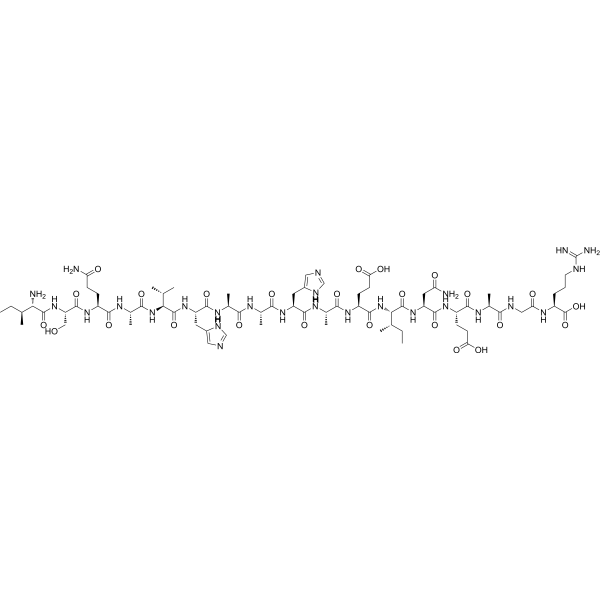
    LCMV-derived p13 epitope is a biological active peptide. (An H-2Db restricted epitope, this peptide is amino acids 61 to 80 fragment of the lymphocytic choriomeningitis virus (LCMV) pre-glycoprotein polyprotein GP complex. LCMV has been routinely used for the study of adaptive immune responses to viral infection.)
    LCMV-derived p13 epitope
  • HY-P11090

    MHC Inflammation/Immunology
    TpD is a chimeric T-helper epitope. TpD has a special site that cathepsin can cut. Immunization with TpD produces a strong antibody response. TpD promotes long-term CD4 immune responses in animals and humans. TpD binds well to many human MHC class II types, mainly HLA-DRB1. It also binds some other HLA alleles like DRB3, DRB4, DRB5, DP, and DQ. TpD can be used to improve the immune response of peptide vaccines .
    TpD
  • HY-P4032

    HCV Inflammation/Immunology
    HCV Peptide (35-44), a HCV core protein at positions 35 to 44, is a HLA-A2-restricted CTL epitope. HCV Peptide (35-44) inhibits NK cell activity via two distinct mechanisms, directly via KIR2DL2/3, and synergistically via the CD94:NKG2A receptor .
    HCV Peptide (35-44)
  • HY-P10593

    Transmembrane Glycoprotein Influenza Virus Cancer
    Influenza A NP (383-391) (HLA-B27) is a peptide sequence derived from tetanus toxin. Influenza A NP (383-391) (HLA-B27) is a broadly immunogenic CD4+ T helper cell epitope that enhances CD8+ cytotoxic T lymphocyte (CTL) responses. Influenza A NP (383-391) (HLA-B27) can be used in breast cancer research .
    Influenza A NP (383-391) (HLA-B27)
  • HY-161566

    Biochemical Assay Reagents Inflammation/Immunology
    DHT/BSA is an antigen-adjuvant conjugate formed by the coupling of DHT (dihydrotestosterone) and bovine serum albumin (BSA). By conjugating the antigen with the protein adjuvant, the production of antigen-specific antibodies in vaccine models can be enhanced. The conjugate does not affect protein folding or disrupt major epitopes, and it can enhance cross-presentation and the generation of antigen-specific T cells.
    DHT/BSA
  • HY-158279

    Antibiotic Bacterial Inflammation/Immunology
    Gentamicin/OVA is an antigen-adjuvant conjugate conjugate of Gentamicin (HY-A0276A) and ovalbumin (OVA). By conjugating the antigen with a protein adjuvant, the production of antigen-specific antibodies in vaccine models can be enhanced. The conjugate does not affect protein folding or disrupt major epitopes, and can enhance cross-presentation and the production of antigen-specific T cells.
    Gentamicin/OVA
  • HY-P5503

    HIV Others
    Pol (476-484), HIV-1 RT Epitope is a biological active peptide. (This is a reverse transcriptase (RT) epitope (Pol residues 476-484). Within HIV-1 RT the peptide appears to be the dominant HLA A*0201-restricted epitope. Was used to investigate possible mechanisms behind HIV-1 escape from CTL. IV9 is the actual epitope processed and presented in HIV-1-infected cell lines.)
    Pol (476-484), HIV-1 RT Epitope
  • HY-P5305A

    GABA Receptor Metabolic Disease
    GAD65(247-266) epitope TFA is the T cell epitopes of islet antigens,binding to I-A g7 (type I diabetes-associated molecule) competitively with poor affinity. GAD65 refers to Glutamic Acid Decarboxylase 65,involved in the conversion of glutamate to gamma-aminobutyric acid (GABA) .
    GAD65(247-266) epitope TFA
  • HY-P5472

    Transmembrane Glycoprotein Others
    Tumour-associated MUC1 epitope is a biological active peptide. (This sequence is the hallmark of MUC1 mucin. MUC1 is a highly glycosylated type I transmembrane glycoprotein with a unique extracellular domain consisting of a variable number of tandem repeats (VNTR) of this 20 amino acid peptide. It is overexpressed on the cell surface of many human adenocarcinomas and hematological malignancies, including multiple myeloma and B-cell lymphoma, making MUC1 broadly applicable target for immunotherapeutic strategies.)
    Tumour-associated MUC1 epitope
  • HY-P990814

    SARS-CoV Infection
    Anti-SARS-CoV-2 S protein Antibody (RBD epitope B, SARS2-34) is a mouse-derived IgG1 κ type antibody inhibitor, targeting to SARS-CoV-2 S protein. Anti-SARS-CoV-2 S protein Antibody (RBD epitope B, SARS2-34) reacts with the receptor binding domain (RBD) epitope B in the spike (S) protein of SARS-CoV-2 (Severe Acute Respiratory Syndrome Coronavirus 2). Anti-SARS-CoV-2 S protein Antibody (RBD epitope B, SARS2-34) can block the binding of the SARS-CoV-2 S protein to angiotensin-converting enzyme 2 (ACE2). Anti-SARS-CoV-2 S protein Antibody (RBD epitope B, SARS2-34) can be used for the research of SARS-CoV-2 infection .
    Anti-SARS-CoV-2 S protein Antibody (RBD epitope B, SARS2-34)
  • HY-P990815

    SARS-CoV Infection
    Anti-SARS-CoV-2 S protein Antibody (RBD epitope A, SARS2-01) is a mouse-derived IgG1 κ type antibody inhibitor, targeting to SARS-CoV-2 S protein. Anti-SARS-CoV-2 S protein Antibody (RBD epitope A, SARS2-01) reacts with the receptor binding domain (RBD) epitope A in the spike (S) protein of SARS-CoV-2 (Severe Acute Respiratory Syndrome Coronavirus 2). Anti-SARS-CoV-2 S protein Antibody (RBD epitope A, SARS2-01) can block the binding of the SARS-CoV-2 S protein to angiotensin-converting enzyme 2 (ACE2). Anti-SARS-CoV-2 S protein Antibody (RBD epitope A, SARS2-01) can be used for the research of SARS-CoV-2 infection .
    Anti-SARS-CoV-2 S protein Antibody (RBD epitope A, SARS2-01)
  • HY-P4045

    HBV Infection
    HBV Seq2 aa:208-216, a HBsAg derived CD8 epitope peptide, is studied as part of Large envelope protein from Hepatitis B virus .
    HBV Seq2 aa:208-216
  • HY-P10663

    EBV Infection Inflammation/Immunology
    EBV EBNA3A (379-387) is an antigenic epitope that may elicit the latent-specific CD8 + T cell response in HLA-B*07:02 + individuals .
    EBV EBNA3A (379-387)
  • HY-P10597

    Angiotensin Receptor Others
    Angiotensin II type 1 receptor (181-187) is a 9-amino acid sequence of the second extracellular loop of angiotensin II (Ang II) in the renin-angiotensin system. Angiotensin II type 1 receptor (181-187) serves as the localization epitope of angiotensin II receptor autoantibodies (AT1RaAb) and is used to detect and quantify AT1RaAb levels in serum .
    Angiotensin II type 1 receptor (181-187)
  • HY-P5745

    Transmembrane Glycoprotein Cancer
    TYVPANASL is a MHC I-binding CD8 T cell epitope of nine amino acids from HER2/neu. TYVPANASL can be used to prepare J-LEAPS vaccine .
    TYVPANASL
  • HY-P5745A

    MHC EGFR Cancer
    TYVPANASL TFA is a MHC I-binding CD8 T cell epitope of nine amino acids from HER2/neu. TYVPANASL TFA can be used to prepare J-LEAPS vaccine .
    TYVPANASL TFA
  • HY-P4025

    HIV Others
    ELDKWA is the highly conserved amino acids on the ecto-domain of gp41. ELDKWA acts as the epitope of a neutralizing monoclonal antibody 2F5 (mAb 2F5) directed against human immunodeficiency virus type 1 .
    ELDKWA
  • HY-P10382

    MHC Inflammation/Immunology
    M133 peptide is a coronavirus-specific CD4 T cell epitope. M133 peptide is immunodominant in mice infected with the neurotropic coronavirus (the JHM strain of mouse hepatitis virus). M133 peptide forms a complex with MHC II molecules, which is recognized by specific TCRs, thereby activating CD4 T cells .
    M133 peptide
  • HY-161544

    Biochemical Assay Reagents Inflammation/Immunology
    Cholyglycine/BSA is a conjugate of Cholyglycine and Bovine Serum Albumin (BSA). By conjugating the antigen with a protein adjuvant, the production of antigen-specific antibodies in vaccine models can be enhanced. The conjugate does not affect protein folding or disrupt major epitopes, and it can enhance cross-presentation and the production of antigen-specific T cells.
    Cholyglycine/BSA
  • HY-161587

    Biochemical Assay Reagents Inflammation/Immunology
    Chloramphenicol/OVA is a conjugate of Chloramphenicol (HY-B0239) and Ovalbumin (OVA). By conjugating the antigen with a protein adjuvant, the production of antigen-specific antibodies in vaccine models can be enhanced. The conjugate does not affect protein folding or disrupt major epitopes and can enhance cross-presentation and the production of antigen-specific T cells.
    Chloramphenicol/OVA
  • HY-161581

    Biochemical Assay Reagents Inflammation/Immunology
    Metronidazole/OVA is a conjugate of Metronidazole (HY-B0318) and Ovalbumin (OVA). By conjugating the antigen with protein adjuvants, the production of antigen-specific antibodies in vaccine models can be enhanced. The conjugate does not affect protein folding or disrupt the primary epitopes, and it can enhance cross-presentation and the generation of antigen-specific T cells.
    Metronidazole/OVA
  • HY-161583

    Biochemical Assay Reagents Inflammation/Immunology
    Marijuana/BSA is the antigen-adjuvant conjugate of Marijuana and Bovine Serum Albumin (BSA). By conjugating the antigen with a protein adjuvant, the production of antigen-specific antibodies in vaccine models can be enhanced. The conjugate does not affect protein folding or destroy major epitopes, and it can enhance cross-presentation and the production of antigen-specific T cells.
    Marijuana/BSA
  • HY-161549

    Biochemical Assay Reagents Inflammation/Immunology
    Phosphotyrosine/BSA is an antigen-adjuvant conjugate formed by coupling Phosphotyrosine with Bovine Serum Albumin (BSA). By conjugating the antigen with protein adjuvants, the production of antigen-specific antibodies in vaccine models can be enhanced. The conjugate does not affect protein folding or disrupt major epitopes, and it can enhance cross-presentation and the generation of antigen-specific T cells.
    Phosphotyrosine/BSA
  • HY-161548

    Biochemical Assay Reagents Inflammation/Immunology
    Metronidazole/KLH is a conjugate of Metronidazole (HY-B0318) and Keyhole Limpet Hemocyanin (KLH). By conjugating the antigen with the protein adjuvant, the production of antigen-specific antibodies in vaccine models can be enhanced. The conjugate does not affect protein folding or disrupt major epitopes and can enhance cross-presentation and the generation of antigen-specific T cells.
    Metronidazole/KLH
  • HY-161562

    Biochemical Assay Reagents Inflammation/Immunology
    PROMETON/BSA is an antigen-adjuvant conjugate formed by the coupling of PROMETON with bovine serum albumin (BSA). By coupling the antigen to the protein adjuvant, the production of antigen-specific antibodies in vaccine models can be enhanced. The conjugate does not affect protein folding or disrupt major epitopes, and it can enhance cross-presentation and the production of antigen-specific T cells.
    PROMETON/BSA
  • HY-161529

    Angiotensin Receptor Inflammation/Immunology
    Angiotensin I/BSA is an antigen-adjuvant conjugate of Angiotensin I and bovine serum albumin (BSA). By conjugating the antigen with a protein adjuvant, the production of antigen-specific antibodies in vaccine models can be enhanced. The conjugate does not affect protein folding or disrupt major epitopes, and it can enhance cross-presentation and the generation of antigen-specific T cells.
    Angiotensin I/BSA
  • HY-161531

    Biochemical Assay Reagents Inflammation/Immunology
    Diethylstilbestrol/BSA is a conjugate of Diethylstilbestrol (HY-14598) and Bovine Serum Albumin (BSA). By conjugating the antigen with a protein adjuvant, the production of antigen-specific antibodies in vaccine models can be enhanced. The conjugate does not affect protein folding or disrupt major epitopes, and it can enhance cross-presentation and the production of antigen-specific T cells.
    Diethylstilbestrol/BSA
  • HY-163556

    Biochemical Assay Reagents Inflammation/Immunology
    COT/BSA is the antigen-adjuvant conjugate of COT (cyclooctatetraene) and Bovine Serum Albumin (BSA). By conjugating the antigen with a protein adjuvant, the production of antigen-specific antibodies in vaccine models can be enhanced. The conjugate does not affect protein folding or disrupt major epitopes and can enhance cross-presentation and the generation of antigen-specific T cells.
    COT/BSA

Inquiry Online

Your information is safe with us. * Required Fields.

Salutation


Country or Region *

Applicant Name *


Organization Name *

Department *


Email Address *


Product Name *

Cat. No.


Requested quantity *

Phone Number *


Remarks

Inquiry Online

Inquiry Information

Product Name:
Cat. No.:
Quantity:
MCE Japan Authorized Agent:

