
26 Results for "

fish cell

" in MedChemExpress (MCE) Product Catalog:
Products (26)

26 Results for "fish cell" in MCE Product Catalog:

6
6 Publications Verification
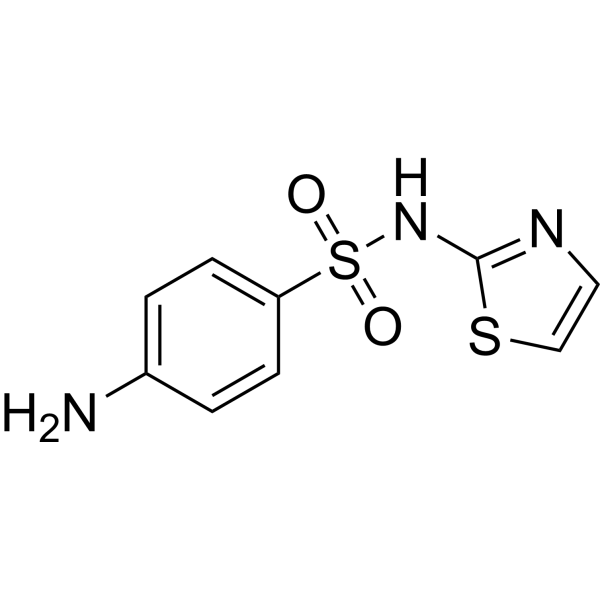
Cat. No.: HY-B0507
CAS No.: 72-14-0
Sulfathiazole is an orally active, endocrine disruptor targeting the steroidogenic pathway, specifically enhancing the activity of CYP19 in human adrenal cancer cells (H295R) and upregulating the mRN expression of CYP17, CYP19, and 3β-HSD. Sulfathiazole increases the production of 17-estradiol (E2) and has endocrine disrupting effects on aquatic organisms such as the Japanese medaka fish .
loading...
    loading...
6
6 Publications Verification
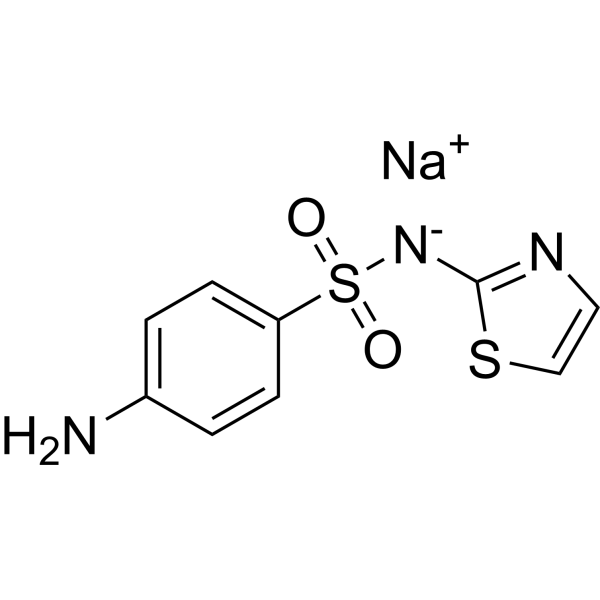
Cat. No.: HY-B0507A
CAS No.: 144-74-1
Target:  

Antibiotic Bacterial

Research Areas:  

Endocrinology Cancer

Sulfathiazole sodium is an orally active, endocrine disruptor targeting the steroidogenic pathway, specifically enhancing the activity of CYP19 in human adrenal cancer cells (H295R) and upregulating the mRN expression of CYP17, CYP19, and 3β-HSD. Sulfathiazole sodium increases the production of 17-estradiol (E2) and has endocrine disrupting effects on aquatic organisms such as the Japanese medaka fish. Sulfathiazole sodium is also a cathodic corrosion inhibitor. It inhibits the corrosion of copper by chloride ions through chemical and physical adsorption on the copper surface, reduces the corrosion current density and shifts the corrosion potential negatively .
loading...
    loading...
1
1 Cited Publications
Cat. No.: HY-D1840
Tyramide Amplification Buffer is a ready-to-use buffer primarily intended for immunostaining of cells and tissues by the technique of tyramide signal amplification (TSA). Tyramide Amplification Buffer enables the reaction between tyramide-labeled antibodies and fluorescently labeled tyramide substitutes (tyramide) using peroxidase, resulting in a highly amplified fluorescent signal. Tyramide Amplification Buffer can be used for signal enhancement in detection methods such as immunofluorescence (IF), immunohistochemistry (IHC), or in situ hybridization (FISH) .
loading...
    loading...
1
1 Cited Publications
Cat. No.: HY-122515
CAS No.: 479-66-3
Fulvic Acid is a natural product, which comes from humic substances produced by microorganisms in soil. Fulvic Acid can modulate the immune system, influence the oxidative state of cells, and improve gastrointestinal function. Fulvic Acid has the potential for researching chronic inflammatory diseases, including diabetes .
loading...
    loading...
1
1 Cited Publications
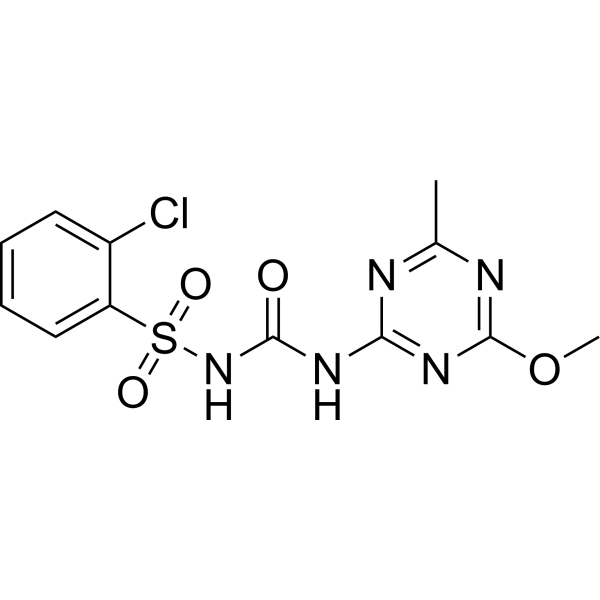
Cat. No.: HY-119737
CAS No.: 64902-72-3
Purity:  99.95%
Chlorsulfuron is an acetolactate synthase inhibitor and selective systemic herbicide. Chlorsulfuron blocks the synthesis of branched-chain amino acids (valine and isoleucine), thereby inhibiting protein synthesis, cell growth, and cell division. Chlorsulfuron blocks G1 and G2 phase cell cycle progression in plant root tip cells without directly interfering with mitosis or DNA synthesis. Chlorsulfuron completely inhibits germination of non-target terrestrial plants and is highly toxic to aquatic macrophytes. Chlorsulfuron has low toxicity to mammals, birds and bees, and moderate toxicity to fish and aquatic invertebrates. Chlorsulfuron can be used in studies related to herbicides, plant cell cycles and ecotoxicology .
loading...
    loading...
Cat. No.: HY-B2167R
CAS No.: 6217-54-5
Synonyms: DHA (Standard); Cervonic acid (Standard)
Docosahexaenoic acid (Standard) is the analytical standard of Docosahexaenoic acid. This product is intended for research and analytical applications. Docosahexaenoic Acid (DHA) is an omega-3 fatty acid abundantly present brain and retina. It can be obtained directly from fish oil and maternal milk. In Vitro: Docosahexaenoic acid (DHA) is essential for the growth and functional development of the brain in infants. DHA is also required for maintenance of normal brain function in adults. The inclusion of plentiful DHA in the diet improves learning ability and memory . DHA is an essential requirement in every step of brain development like neural cell proliferation, migration, differentiation, synaptogenesis. The multiple double bonds and unique structure allow DHA to impart special membrane characteristics for effective cell signaling. Many development disorders like dyslexia, autism spectrum disorder, attention deficit hyperactivity disorder, schizophrenia etc. are causally related to decreased level of DHA . DHA is a potent RXR ligand inducing robust RXR activation already at low micro molar concentrations. The EC50 for RXRα activation by DHA is about 5-10 μM fatty acid . In Vivo: Docosahexaenoic acid administration over 10 weeks significantly reduces the number of reference memory errors, without affecting the number of working memory errors, and significantly increases the docosahexaenoic acid content and the docosahexaenoic acid/arachidonic acid ratio in both the hippocampus and the cerebral cortex . DHA treatment exerts neuroprotective actions on an experimental mouse model of PD. There is a decrease tendency in brain lipid oxidation of MPTP mice but it does not significantly .
loading...
    loading...
Cat. No.: HY-Y1365C
CAS No.: 9000-70-8
Fish Gelatin,suitable for cell culture is an essential natural biopolymer. Fish Gelatin,suitable for cell culture can be isolated from fish processing by-products, such as fish skin, scales, bones and fish maw. Fish Gelatin,suitable for cell culture has been considered as a feasible substitute for mammalian gelatin. Modified Fish gelatin shows significant promise across various industries, including nanomaterials, 3D printing, thin films, coatings, and biopharmaceuticals. Fish Gelatin,suitable for cell culture can be used for cell culture .
loading...
    loading...
Cat. No.: HY-121447
CAS No.: 2363-71-5
Purity:  ≥98.0%
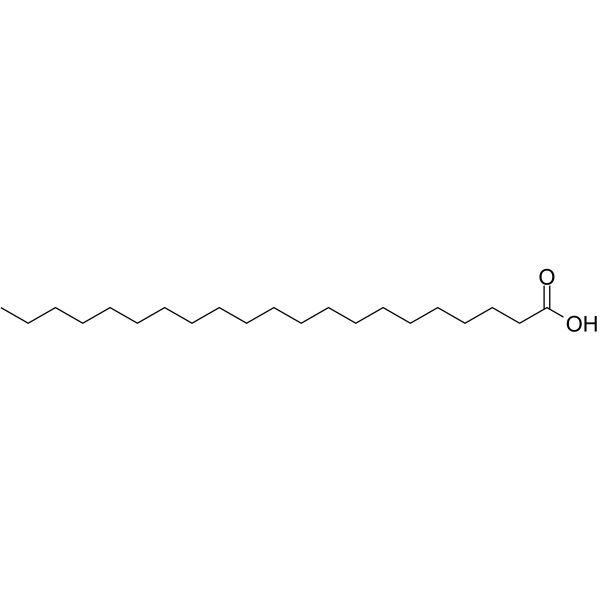
Heneicosanoic acid is an odd-chain saturated fatty acid widely present in human milk, fish, seeds, and cerebrosides in the cell membranes of the nervous system. Heneicosanoic acid can form Langmuir monolayers and is often used as a model to study lipid self-assembly and disassembly processes in biological membranes and drug delivery systems. In the low-temperature L'2 and CS crystalline phases, Heneicosanoic acid undergoes local oscillations, which in turn drive the spontaneous formation and expulsion of micelles and vesicles .
loading...
    loading...
Cat. No.: HY-113000
CAS No.: 1002-96-6
Target:  

Endogenous Metabolite

Research Areas:  

Cardiovascular Disease

Cetoleic acid is a long-chain monounsaturated fatty acid found in deep-sea fish. Cetoleic acid can promote the synthesis of ALA in human HepG2 cells and EPA in vitro in salmon liver cells, affecting cholesterol levels in rodents. Cetoleic acid has potential applications in cardiovascular disease research .
loading...
    loading...
Cat. No.: HY-119176
CAS No.: 42874-03-3
Purity:  99.69%
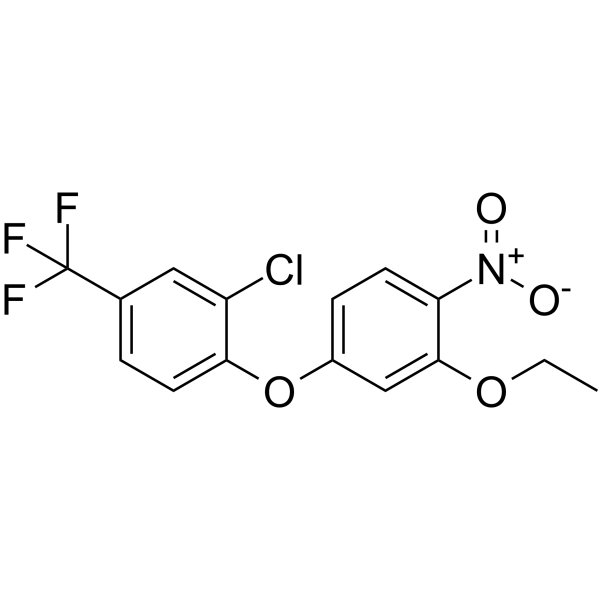
Oxyfluorfen is a pre- and post-emergence diphenyl ether herbicide to control annual broad-leaved and grass weeds. Oxyfluorfen is a protoporphyrinogen oxidase inhibitor and inhibits photosynthesis by blocking chlorophyll synthesis. Oxyfluorfen can inhibit cell growth. Oxyfluorfen induces DNA damage and exhibits toxicity toward aquatic organisms such as Paramisgurnus dabryanus. Oxyfluorfen has genome-level deleterious effects on fish that can lead to stunted skeletal growth. Oxyfluorfen induces transverse limb deficiency or craniosynostosis .
loading...
    loading...
Cat. No.: HY-B0507S
CAS No.: 1020719-89-4
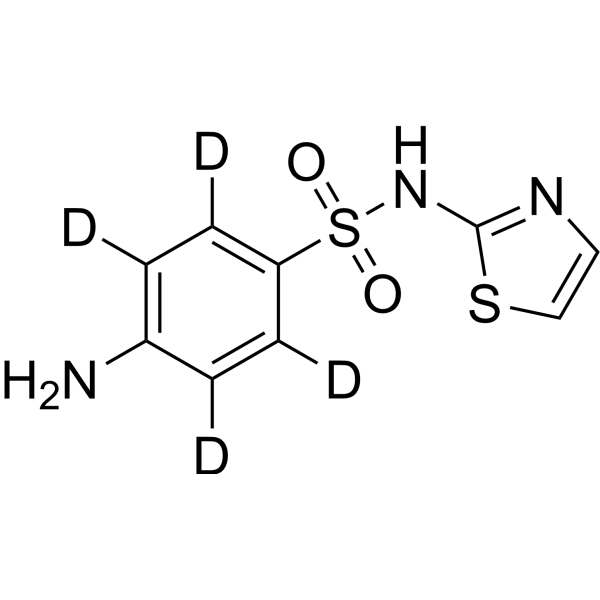
Sulfathiazole-d4 is a deuterium labeled Sulfathiazole. Sulfathiazole is an orally active, endocrine disruptor targeting the steroidogenic pathway, specifically enhancing the activity of CYP19 in human adrenal cancer cells (H295R) and upregulating the mRN expression of CYP17, CYP19, and 3β-HSD. Sulfathiazole increases the production of 17-estradiol (E2) and has endocrine disrupting effects on aquatic organisms such as the Japanese medaka fish .
loading...
    loading...
Cat. No.: HY-B0507B
CAS No.: 72-14-0
Target:  

Antibiotic Bacterial

Research Areas:  

Endocrinology Cancer

Sulfathiazole (100 μg/mL in acetonitrile) is an orally active, endocrine disruptor targeting the steroidogenic pathway, specifically enhancing the activity of CYP19 in human adrenal cancer cells (H295R) and upregulating the mRN expression of CYP17, CYP19, and 3β-HSD. Sulfathiazole (100 μg/mL in acetonitrile) increases the production of 17-estradiol (E2) and has endocrine disrupting effects on aquatic organisms such as the Japanese medaka fish. Sulfathiazole (100 μg/mL in acetonitrile) is also a cathodic corrosion inhibitor. Sulfathiazole (100 μg/mL in acetonitrile) inhibits the corrosion of copper by chloride ions through chemical and physical adsorption on the copper surface, reduces the corrosion current density and shifts the corrosion potential negatively .
loading...
    loading...
Cat. No.: HY-W144308
CAS No.: 87-87-6
Synonyms: TCHQ; Tetrachloroquinol
Tetrachlorohydroquinone (TCHQ) is a metabolite of Pentachlorophenol. Tetrachlorohydroquinone induces reactive oxidant stress (ROS), inhibits apoptosis and induces necrosis in primary mouse splenocytes. Tetrachlorohydroquinone increases DNA lesions and induces oxidative stress in rodents .
loading...
    loading...
Cat. No.: HY-P4184
CAS No.: 550-21-0
Synonyms: (Ser4,Ile8)-Oxytocin
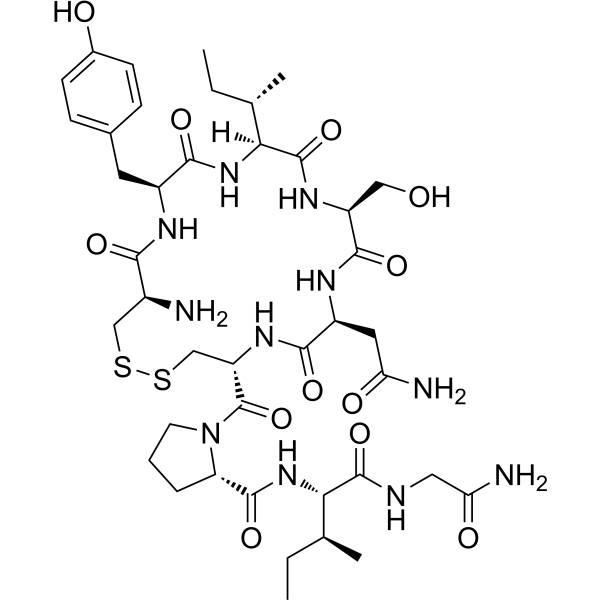
Isotocin is the homologue of mammalian oxytocin in teleost fish, belonging to the category of neurotransmitters/neuromodulators and peripheral hormones. Isotocin exerts biological effects by binding to its homologous isotocin receptor (with EC50 = 1.58e-10 mol/L in gilthead seabream) and specific G-protein-coupled receptor subtypes. Isotocin promotes paternal behavior in cichlids, regulates the expression of Foxi3a and P63, thereby controlling the differentiation of ionocyte progenitor cells and the proliferation of epidermal stem cells, and modulates whole-body ion content in zebrafish embryos. Isotocin regulates social and reproductive behaviors, synchronizes the reproductive cycles of teleost fish, and its neuronal phenotypes can be used to classify the types of reproductive systems in cichlids .
loading...
    loading...
Cat. No.: HY-W130878
CAS No.: 1806-26-4
4-Octylphenol is a hormone disruptor that has gender-specific effects on male reproductive cells, significantly reducing the mitotic index and the number of spermatogonia. 4-Octylphenol can cause inflammatory damage to fish gills by activating the complement system through the C3a/C3aR axis and the C5a/C5aR1 axis, this leads to complement activation and causes immune suppression due to the imbalance between Th1/Th2 cells and regulatory T cells (Treg)/Th17 cells, as well as inflammatory damage via the Toll-like receptor 7 (Toll-like Receptor (TLR))/IκBα/NF-κB pathway .
loading...
    loading...
Cat. No.: HY-W711035
CAS No.: 137641-05-5
Synonyms: AC 900001
Picolinafen is a pyridine-class herbicide that acts as a phytoene desaturase (PDS) inhibitor. Picolinafen effectively controls broadleaf weeds and disrupts carotenoid biosynthesis. Picolinafen exhibits cytotoxicity to porcine trophectoderm (pTr) and luminal epithelial (pLE) cells. Picolinafen induces (ROS accumulation, calcium depletion, and activates (MAPK and PI3K signaling pathways, leading to decreased cell viability, increased apoptosis, impaired migration, and altered expression of implantation-related genes. Picolinafen has an LD50 value of 2.7 mg/kg in mammals and 7 μg/L in fish. Picolinafen exhibits toxic effects during zebrafish embryogenesis [1][2].
loading...
    loading...
Cat. No.: HY-NP0219
Collagen petide (Fish) is a fish-derived peptide. Collagen petide (Fish) promotes the multidirectional differentiation of various stem cell types .
loading...
    loading...
Cat. No.: HY-W144308R
CAS No.: 87-87-6
Synonyms: TCHQ (Standard); Tetrachloroquinol (Standard)
Tetrachlorohydroquinone (Standard) is the analytical standard of Tetrachlorohydroquinone (HY-W144308). This product is intended for research and analytical applications. Tetrachlorohydroquinone (TCHQ) is a metabolite of Pentachlorophenol. Tetrachlorohydroquinone induces reactive oxidant stress (ROS), inhibits apoptosis and induces necrosis in primary mouse splenocytes. Tetrachlorohydroquinone increases DNA lesions and induces oxidative stress in rodents .
loading...
    loading...
Cat. No.: HY-P4184A
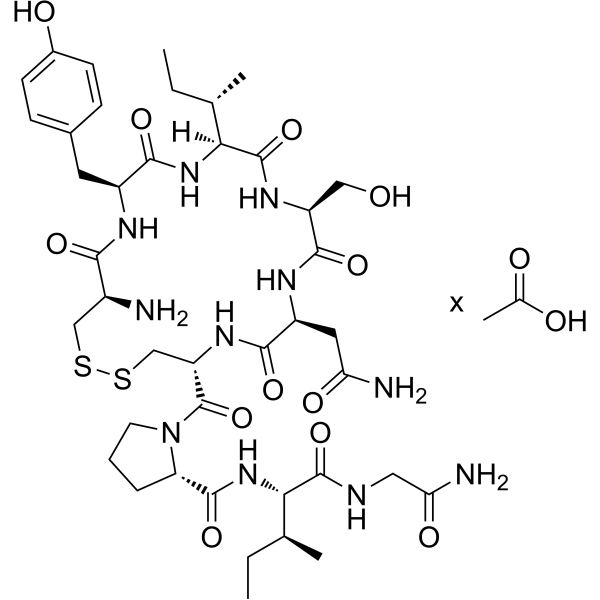
Synonyms: (Ser4,Ile8)-Oxytocin acetate
Isotocin acetate is the homologue of mammalian oxytocin in teleost fish, belonging to the category of neurotransmitters/neuromodulators and peripheral hormones. Isotocin acetate exerts biological effects by binding to its homologous Isotocin acetate receptor (with EC50 = 1.58e-10 mol/L in gilthead seabream) and specific G-protein-coupled receptor subtypes. Isotocin acetate promotes paternal behavior in cichlids, regulates the expression of Foxi3a and P63, thereby controlling the differentiation of ionocyte progenitor cells and the proliferation of epidermal stem cells, and modulates whole-body ion content in zebrafish embryos. Isotocin acetate regulates social and reproductive behaviors, synchronizes the reproductive cycles of teleost fish, and its neuronal phenotypes can be used to classify the types of reproductive systems in cichlids .
loading...
    loading...
Cat. No.: HY-P5697
CAS No.: 2026639-29-0
Target:  

Bacterial

Research Areas:  

Infection

Tilapia piscidin 3 is an antimicrobial peptide with antibacterial activity against gram-positive and -negative bacteria (MIC: 2.44, 2.44, 9.78, 19.55, 0.61 μg/mL for V. vulnificus 204, V. alginolyticus, S. agalactiae 819, E. faecalis BCRC 10066, S. agalactiae BCRC 10787). Tilapia piscidin 3 has hemolytic activity in fish red blood cells .
loading...
    loading...

