1. Search Result
Search Result
Pathways Recommended: Stem Cell/Wnt Cell Cycle/DNA Damage
Results for "

hepatoma cell proliferation inhibitor

" in MedChemExpress (MCE) Product Catalog:

8

Inhibitors & Agonists

5

Natural
Products

Cat. No. Product Name Target Research Areas Chemical Structure
  • HY-B0766

    SY801

    Autophagy Apoptosis HBV HCV HSP Reactive Oxygen Species (ROS) Bcl-2 Family Glutathione S-transferase p38 MAPK NF-κB Microtubule/Tubulin ERK JNK TNF Receptor Interleukin Related CDK Cyclin G-associated Kinase (GAK) mTOR P-glycoprotein Ferroptosis Infection Inflammation/Immunology Cancer
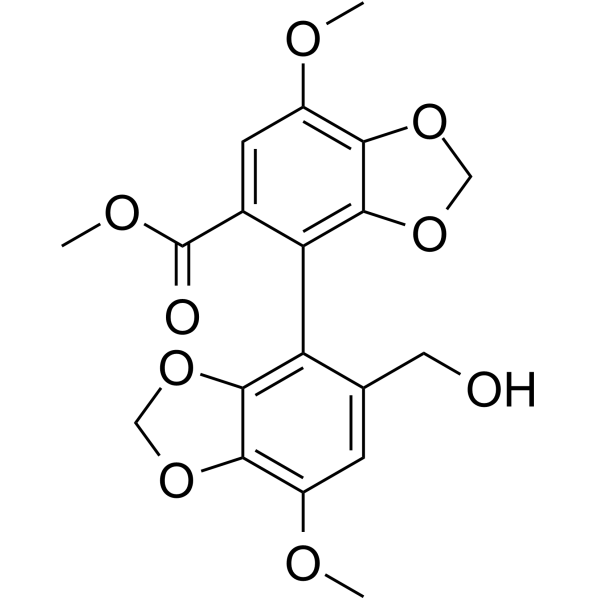
    Bicyclol (SY801) is an orally active derivative of the traditional Chinese medicine Schisandra chinensis, which has antiviral, anti-inflammatory, immunomodulatory, antioxidant, anti-steatosis, anti-fibrotic and anti-tumor activities. Bicyclol regulates the expression of heat shock proteins and plays an anti-apoptosis role in hepatocytes. Bicyclol reduces the activation of NF-κB and the levels of inflammatory factors in hepatocytes infected with hepatitis C virus (HCV) by inhibiting the activation of the ROS-MAPK-NF-κB pathway, and prevents ferroptosis in acute liver injury. Bicyclol can change the expression of Mdr-1, GSH/GST and Bcl-2, increase the intracellular concentration of anticancer drugs, and sensitize drug-resistant cells to anticancer drugs. Bicyclol inhibits the proliferation of human malignant hepatoma cells by regulating the PI3K/AKT pathway and the Ras/Raf/MEK/ERK pathway. Bicyclol can be used in the study of chronic hepatitis, acute liver injury, nonalcoholic fatty liver disease, liver fibrosis and hepatocellular carcinoma .
    Bicyclol
  • HY-116522
    AR420626
    4 Publications Verification

    Free Fatty Acid Receptor Histone Methyltransferase HDAC mTOR CaMK p38 MAPK Epigenetic Reader Domain GLUT nAChR TNF Receptor Metabolic Disease Inflammation/Immunology Cancer
    AR420626 is a selective agonist of free fatty acid receptor 3 (FFAR3) (IC50=117 nM). AR420626 has anti-inflammatory, anticancer and antidiabetic activities. AR420626 improves neurogenic diarrhea by inhibiting nAChR mediated neural pathways. AR420626 inhibits the growth of HepG2 xenografts and inhibits the proliferation of hepatoma cells by inducing apoptosis. AR420626 also suppresses allergic asthma and eczema and has the ability to activate GPR41 to increase Ca 2+ signal-mediated glucose uptake and improve diabetes .
    AR420626
  • HY-N7022

    Others Cancer
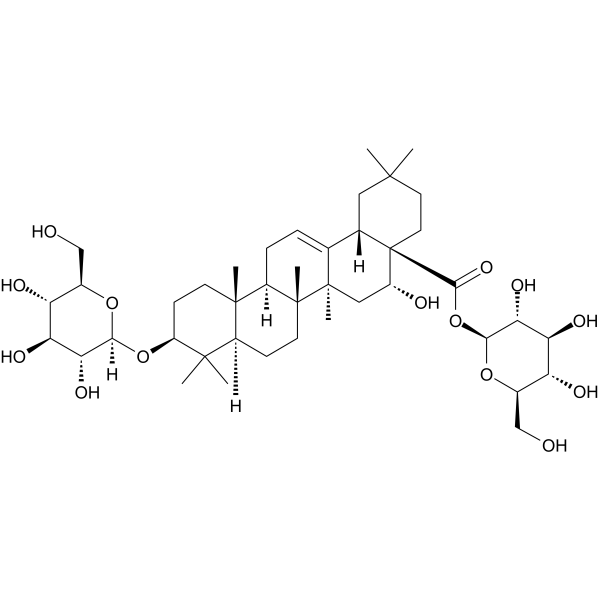
    Eclalbasaponin I is isolated from Eclipta prostrata L with antitumor activity. Eclalbasaponin I inhibits the proliferation of hepatoma cell smmc-7721 with an IC50 value of 111.1703 μg/ml .
    Eclalbasaponin I
  • HY-126412

    Apoptosis Cancer
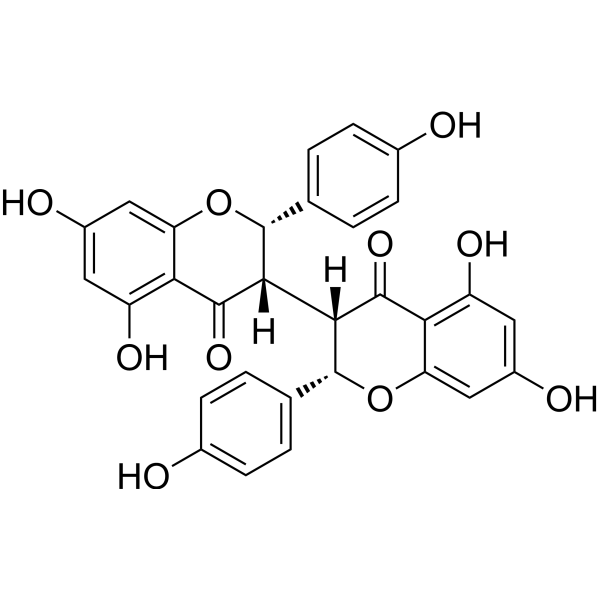
    Neochamaejasmine A is a biflavonoid that can be isolated from the roots of Stellera chamaejasme L.. Neochamaejasmine A inhibits proliferation, induces cell cycle arrest and apoptosis in tumor cells. Neochamaejasmine A can be used in the research of cancers such as prostate cancer, hepatoma cancer .
    Neochamaejasmine A
  • HY-N7022R

    Reference Standards Others Cancer
    Eclalbasaponin I (Standard) is the analytical standard of Eclalbasaponin I. This product is intended for research and analytical applications. Eclalbasaponin I is isolated from Eclipta prostrata L with antitumor activity. Eclalbasaponin I inhibits the proliferation of hepatoma cell smmc-7721 with an IC50 value of 111.1703 μg/ml .
    Eclalbasaponin I (Standard)
  • HY-156130

    Epigenetic Reader Domain Cancer
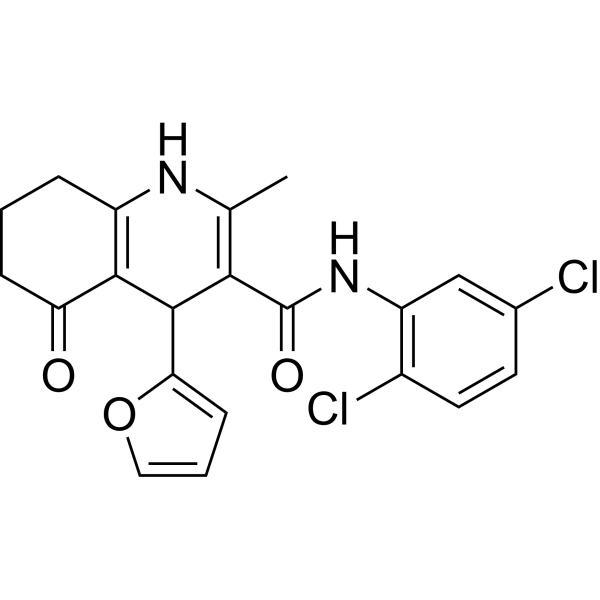
    Menin-MLL inhibitor 29 (Compound C1) is a Menin-MLL PPI inhibitor. Menin-MLL inhibitor 29 binds to Menin with a KD value of 138 nM, and inhibits the binding of Menin to MBM1 (Menin-binding motif 1) with an IC50 value of 46 nM. Menin-MLL inhibitor 29 inhibits HepG2 and Hep3B hepatoma cell proliferation (IC50s: 0.31 μM and 0.71 μM). Menin-MLL inhibitor 29 inhibits tumor growth .
    Menin-MLL inhibitor 29
  • HY-N19314

    Endogenous Metabolite Fungal Cancer
    4-Acetylantroquinonol B is a benzoquinone derivative and a hepatocellular carcinoma cell proliferation inhibitor. 4-Acetylantroquinonol B can be isolated from the mycelia of Antrodia cinnamomea cultured via submerged fermentation. 4-Acetylantroquinonol B exhibits selective activity against hepatocellular carcinoma cells and can be used in hepatocellular carcinoma research .
    4-Acetylantroquinonol B
  • HY-N19464

    PDI Inflammation/Immunology Cancer
    Dicentrinone is an orally active PDI inhibitor with an IC50 value of 43.95 μM. Dicentrinone directly binds to PDI and suppresses cell proliferation and reduces cancer cell viability. Dicentrinone elicits anti-inflammatory and antioxidant effects by suppressing leukocyte migration, plasma leakage and paw edema, and scavenging free radicals. Dicentrinone can be used in the research of hepatoma, rheumatism and arthritis .
    Dicentrinone

Inquiry Online

Your information is safe with us. * Required Fields.

Salutation


Country or Region *

Applicant Name *


Organization Name *

Department *


Email Address *


Product Name *

Cat. No.


Requested quantity *

Phone Number *


Remarks

Inquiry Online

Inquiry Information

Product Name:
Cat. No.:
Quantity:
MCE Japan Authorized Agent:

