Search Result
Results for "
hiPSC
" in MedChemExpress (MCE) Product Catalog:
7
Biochemical Assay Reagents
1
Isotope-Labeled Compounds
| Cat. No. |
Product Name |
Target |
Research Areas |
Chemical Structure |
-
- HY-12273
-
DMH-1
Maximum Cited Publications
15 Publications Verification
|
TGF-β Receptor
Organoid
Microtubule/Tubulin
|
Cardiovascular Disease
Neurological Disease
|
|
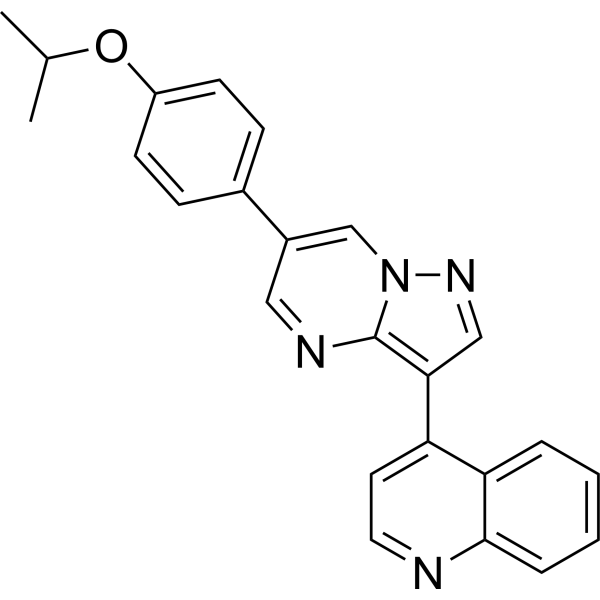
DMH-1 (GMP) is GMP grade DMH-1 (HY-12273). DMH-1 is a selective BMP inhibitor. DMH-1 upregulates the expression of SOX1. DMH-1 increases cardiomyocyte progenitor cells and promotes the differentiation of mouse embryonic stem cells into cardiomyocytes. DMH-1 induces the differentiation of hiPSC-derived neural progenitor cells into β3-tubulin-positive neurons .
|
-
-
- HY-101952G
-
|
PGE2; Dinoprostone
|
Endogenous Metabolite
|
Cardiovascular Disease
Endocrinology
|
|
Prostaglandin E2 (GMP) is Prostaglandin E2 (HY-101952) produced by using GMP guidelines. GMP small molecules work appropriately as an auxiliary reagent for cell therapy manufacture. Prostaglandin E2, an inflammatory mediator, is a endogenous hormone-like substance that participate in a wide range of body functions .
|
-
-
- HY-13027G
-
-
-
- HY-103073
-
|
|
TRP Channel
|
Others
|
|
Mesendogen is a TRPM6 inhibitor. Mesendogen enhances the mesoderm and definitive endoderm (DE) differentiations of human embryonic stem cells (hESCs) and human induced pluripotent stem cells (hiPSCs). Mesendogen can be used for the research of magnesium homeostasis during early embryonic cell development .
|
-
-
- HY-16738A
-
|
GS 6615 hydrochloride
|
Sodium Channel
Potassium Channel
|
Cardiovascular Disease
|
|
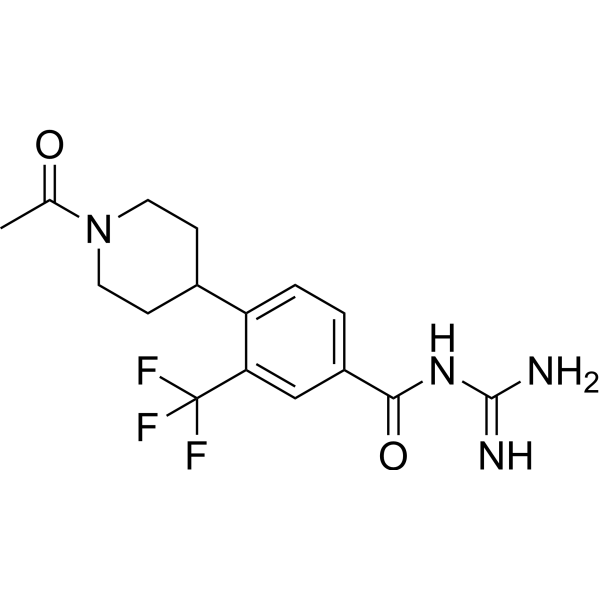
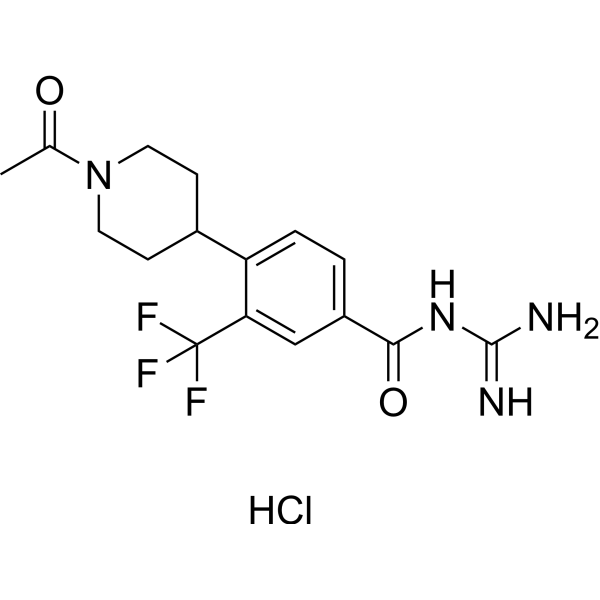
Eleclazine (GS 6615) hydrochloride is a selective cardiac late sodium current inhibitor and a weak inhibitor of potassium current with IC50 value of <1 μM and approximately 14.2 μM, respectively. Eleclazine hydrochloride shows concurrent protection against autonomically induced atrial premature beats, repolarization alternans and heterogeneity, and atrial fibrillation in porcine model. Eleclazine hydrochloride can be used to research cardiac arrhythmias .
|
-
-
- HY-13257G
-
|
|
ROCK
|
Cancer
|
|
Thiazovivin (GMP) is Thiazovivin (HY-13257) produced by using GMP guidelines. GMP small molecules work appropriately as an auxiliary reagent for cell therapy manufacture. Thiazovivin is a potent ROCK inhibitor .
|
-
-
- HY-13912G
-
IWP-2
1 Publications Verification
|
Wnt
|
Cancer
|
|
IWP-2 (GMP) is >IWP-2 (HY-13912) produced by using GMP guidelines. GMP small molecules work appropriately as an auxiliary reagent for cell therapy manufacture. IWP-2 is an inhibitor of Wnt processing and secretion with an IC50 of 27 nM. IWP-2 targets the membrane-bound O-acyltransferase porcupine (Porcn) and blocks Wnt ligand palmitoylation .
|
-
-
- HY-18071
-
BI-9627
3 Publications Verification
|
Na+/H+ Exchanger (NHE)
Autophagy
|
Cardiovascular Disease
|
|
BI-9627, a chemical probe, is a potent sodium-hydrogen exchanger isoform 1 (NHE1) inhibitor (IC50 = 6 and 31 nM in intracellular pH recovery (pHi) and human platelet swelling assays). BI-9627 displays >30-fold selectivity against NHE2 and with no measurable inhibitory activity against the NHE3 isoform. BI-9627 decreases autophagy in HTR-8/SVneo cells. BI-9627 can significantly reduce the pHi of human sperm and partially reverse the effect of DMA. BI-9627 prolongs Ca 2+ recovery time in KO hiPSC-CMs. BI-9627 shows low DDI (agent-agent interaction) potential, excellent pharmacokinetics in rat and dog, and remarkably potent activity in the isolated heart model of ischemia-reperfusion injury .
|
-
-
- HY-124815
-
|
|
Reactive Oxygen Species (ROS)
|
Others
|
|
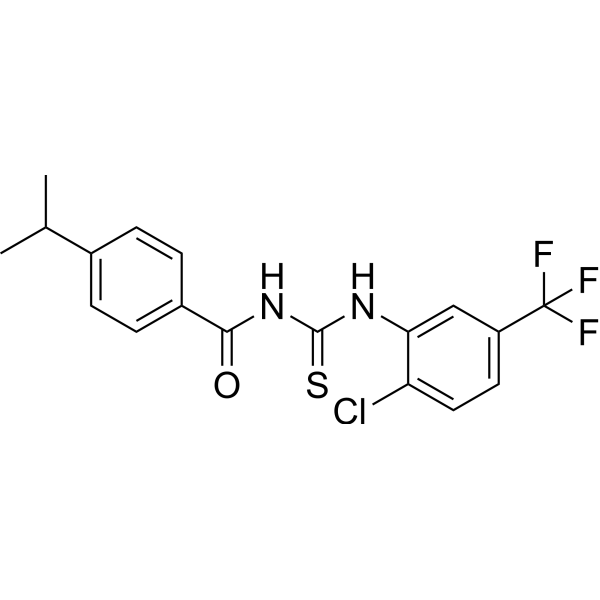
CP-312 is a potent Heme Oxygenase-1 (HO-1) inducer. CP-312 protects hiPSC-CM viability by targeting the antioxidant response network through induction of HMOX1 expression. CP-312 protects human iPSC-derived cardiomyocytes from oxidative stress .
|
-
-
- HY-15108G
-
|
|
Smo
|
Neurological Disease
Cancer
|
|
Purmorphamine (GMP) is Purmorphamine (HY-15108) produced by using GMP guidelines. GMP small molecules work appropriately as an auxiliary reagent for cell therapy manufacture. Purmorphamine is a smoothened/Smo receptor agonist with an EC50 of 1 μM .
|
-
-
- HY-12273G
-
|
|
Organoid
TGF-β Receptor
Microtubule/Tubulin
|
Cardiovascular Disease
Neurological Disease
|
|
DMH-1 (GMP) is GMP grade DMH-1 (HY-12273). DMH-1 (GMP) is a selective BMP inhibitor. DMH-1 (GMP) upregulates the expression of SOX1. DMH-1 (GMP) increases cardiomyocyte progenitor cells and promotes the differentiation of mouse embryonic stem cells into cardiomyocytes. DMH-1 (GMP) induces the differentiation of hiPSC-derived neural progenitor cells into β3-tubulin-positive neurons .
|
-
-
- HY-160842
-
|
|
c-Fms
|
Neurological Disease
|
|
CSF1R-IN-24 (Example 134) is an orally active CSF1R inhibitor. CSF1R-IN-24 significantly inhibits the survival of human ipSC-derived microglia (hiPSC-MG) .
|
-
-
- HY-N0229R
-
|
L-2-Aminopropionic acid (Standard)
|
Reference Standards
Endogenous Metabolite
|
Neurological Disease
Metabolic Disease
|
|
L-Alanine (Standard) is the analytical standard of L-Alanine. This product is intended for research and analytical applications. L-Alanine is a non-essential amino acid, involved in sugar and acid metabolism, increases immunity, and provides energy for muscle tissue, brain, and central nervous system.
In Vitro: The viability of both hiPSCs, 201B7 cells and ehiPSCs decrease with an increase in L-Alanine concentration, and reach 7.5±1.3% and 3.7±0.7% respectively at 1.2 M of L-Alanine. On the other hand, no decrease in the viability of hFBs and hSkMCs are observed. Although the viability of iCMs slightly decreases along with the increase of the L-Alanine concentration, viability of iCMs at 1.2 M concentration of L-Alanine, 49.4±6.9%, is significantly higher than that of undifferentiated iPSCs, 201B7 cells and ehiPSCs (p< 0.01). The viability of hiPSCs, 201B7 cells and ehiPSCs, drastically decrease even after 2 or 4 h treatment. In contrast, the viability of hFBs fails to decrease at 1, 2, and 4 h and shows a small decrease at 24 h treatment. The viability of 201B7 cells in suspension culture decreases to 11.8±6.0% following treatment with 1.2 M L-Alanine for 2 h, whereas that of hFBs is 72.9±14.2% .
|
-
-
- HY-18071A
-
|
|
Na+/H+ Exchanger (NHE)
Autophagy
|
Cardiovascular Disease
|
|
BI-9627 hydrochloride is a potent sodium-hydrogen exchanger isoform 1 (NHE1) inhibitor (IC50 = 6 and 31 nM in intracellular pH recovery (pHi) and human platelet swelling assays). BI-9627 hydrochloride displays >30-fold selectivity against NHE2 and with no measurable inhibitory activity against the NHE3 isoform. BI-9627 hydrochloride decreases autophagy in HTR-8/SVneo cells. BI-9627 hydrochloride can significantly reduce the pHi of human sperm and partially reverse the effect of DMA. BI-9627 hydrochloride prolongs Ca 2+ recovery time in KO hiPSC-CMs. BI-9627 hydrochloride shows low DDI (agent-agent interaction) potential, excellent pharmacokinetics in rat and dog, and remarkably potent activity in the isolated heart model of ischemia-reperfusion injury .
|
-
-
- HY-10407G
-
|
|
VEGFR
EGFR
PDGFR
|
Cancer
|
|
SU 5402 (GMP) is SU 5402 (HY-10407) produced by using GMP guidelines. GMP small molecules work appropriately as an auxiliary reagent for cell therapy manufacture. SU 5402 is a potent multi-targeted receptor tyrosine kinase inhibitor with IC50 of 20 nM, 30 nM, and 510 nM for VEGFR2, FGFR1, and PDGFRβ, respectively .
|
-
-
- HY-W700452
-
|
|
Isotope-Labeled Compounds
Apoptosis
ROCK
|
Cancer
|
|
Y-27632-d4 hydrochloride hydrate is the deuterium labeled Y-27632 hydrochloride hydrate (HY-10071A). Y-27632 hydrochloride hydrate is an orally active, ATP-competitive inhibitor of ROCK-I and ROCK-II, with Kis of 220 and 300 nM, respectively. Y-27632 hydrochloride hydrate attenuates Doxorubicin-induced apoptosis of human cardiac stem cells. Y-27632 hydrochloride hydrate also suppresses dissociation-induced apoptosis of murine prostate stem/progenitor cells. Y-27632 hydrochloride hydrate primes human induced pluripotent stem cells (hIPSCs) to selectively differentiate towards mesendodermal lineage via epithelial-mesenchymal transition-like modulation .
|
-
-
- HY-153020
-
-
-
- HY-154951
-
|
|
Oct3/4
|
Others
|
|
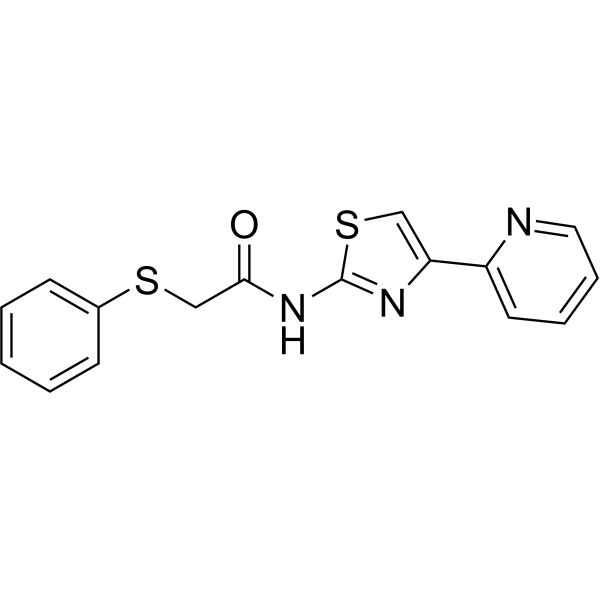
Oct4 inducer-2 is an OCT4 inducer, which can maintain the formation of hiPSCs by promoting the expression of endogenous OCT4, which can be used in anti-aging research .
|
-
-
- HY-136870
-
|
|
Fluorescent Dye
|
Others
|
|
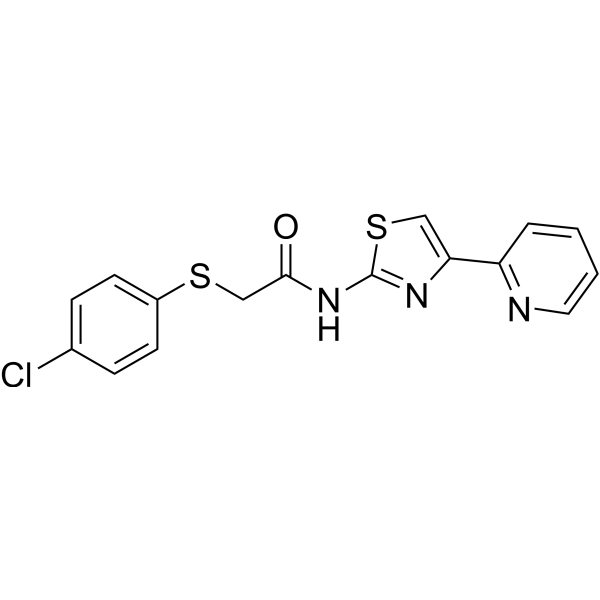
Kyoto probe 1 is a hiPSCs fluorescent probe. Kyoto probe 1 selectively labels human pluripotent stem cells. Kyoto probe 1 is primarily explained by the distinct expression patterns of ATP-binding cassette (ABC) transporters by hiPS cells and differentiated cells .
|
-
-
- HY-163324A
-
|
|
Cytochrome P450
|
Others
|
|
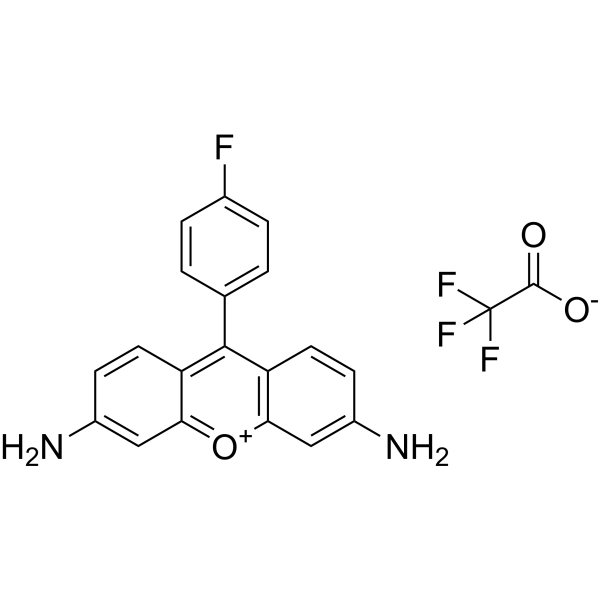
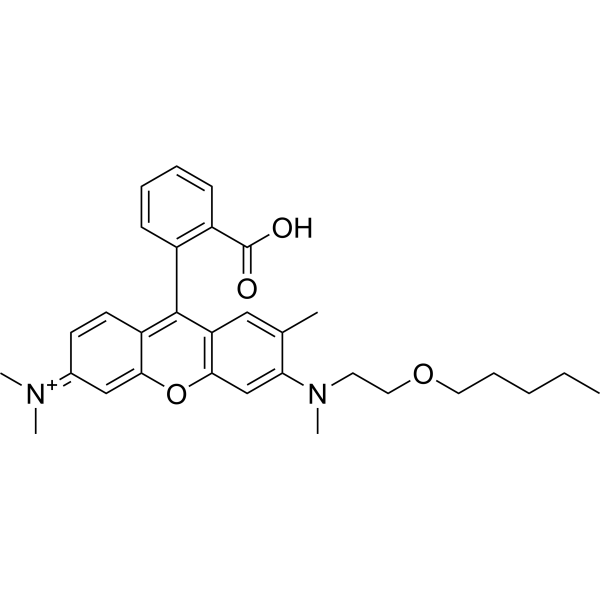
2-Me PeER is a rhodamine dye-based fluorescent probe that detects CYP3A4 activity. In fluorescence-activated cell sorting (FACS) based on CYP3A4 activity, homogeneous and functional human induced pluripotent stem cell (hiPSC)-derived hepatocytes and intestinal epithelial cells can be obtained with the aid of 2-Me PeER .
|
-
-
- HY-124815R
-
|
|
Reactive Oxygen Species (ROS)
|
Others
|
|
CP-312 (Standard) is the analytical standard of CP-312. This product is intended for research and analytical applications. CP-312 is a potent Heme Oxygenase-1 (HO-1) inducer. CP-312 protects hiPSC-CM viability by targeting the antioxidant response network through induction of HMOX1 expression. CP-312 protects human iPSC-derived cardiomyocytes from oxidative stress .
|
-
-
- HY-103073R
-
|
|
Reference Standards
TRP Channel
|
Others
|
|
Mesendogen (Standard) is the analytical standard of Mesendogen (HY-103073). This product is intended for research and analytical applications. Mesendogen is a TRPM6 inhibitor. Mesendogen enhances the mesoderm and definitive endoderm (DE) differentiations of human embryonic stem cells (hESCs) and human induced pluripotent stem cells (hiPSCs). Mesendogen can be used for the research of magnesium homeostasis during early embryonic cell development .
|
-
-
- HY-16738AR
-
|
GS 6615 hydrochloride (Standard)
|
Sodium Channel
Potassium Channel
Reference Standards
|
Cardiovascular Disease
|
|
Eleclazine (hydrochloride) (Standard) is the analytical standard of Eleclazine (hydrochloride). This product is intended for research and analytical applications. Eleclazine (GS 6615) hydrochloride is a selective cardiac late sodium current inhibitor and a weak inhibitor of potassium current with IC50 value of <1 μM and approximately 14.2 μM, respectively. Eleclazine hydrochloride shows concurrent protection against autonomically induced atrial premature beats, repolarization alternans and heterogeneity, and atrial fibrillation in porcine model. Eleclazine hydrochloride can be used to research cardiac arrhythmias .
|
-
-
- HY-180346
-
|
|
Huntingtin
|
Neurological Disease
|
|
Hepta-histidine is an inhibitor of Ku70-Huntingtin protein interaction. Hepta-histidine can reverse the morphological abnormalities of primary neurons differentiatied from hiPSCs. Hepta-histidine prolongs the lifespan in severe Huntington’s disease R6/2 mouse model. Hepta-histidine ameliorates DNA damage in vitro. Hepta-histidine can be used to study anti-aggregation agent against Tau-associated neurodegenerative diseases such as Alzheimer’s disease and Huntington’s disease .
|
-
| Cat. No. |
Product Name |
Type |
-
- HY-101952G
-
|
PGE2; Dinoprostone
|
Fluorescent Dye
|
|
Prostaglandin E2 (GMP) is Prostaglandin E2 (HY-101952) produced by using GMP guidelines. GMP small molecules work appropriately as an auxiliary reagent for cell therapy manufacture. Prostaglandin E2, an inflammatory mediator, is a endogenous hormone-like substance that participate in a wide range of body functions .
|
-
- HY-13027G
-
|
GSI-IX
|
Fluorescent Dye
|
|
DAPT (GSI-IX) (GMP) is DAPT (HY-13027) produced by using GMP guidelines. GMP small molecules works appropriately as an auxiliary reagent for cell therapy manufacture. DAPT is a potent and orally active γ-secretase inhibitor .
|
-
- HY-13257G
-
|
|
Fluorescent Dye
|
|
Thiazovivin (GMP) is Thiazovivin (HY-13257) produced by using GMP guidelines. GMP small molecules work appropriately as an auxiliary reagent for cell therapy manufacture. Thiazovivin is a potent ROCK inhibitor .
|
-
- HY-13912G
-
IWP-2
1 Publications Verification
|
Fluorescent Dye
|
|
IWP-2 (GMP) is >IWP-2 (HY-13912) produced by using GMP guidelines. GMP small molecules work appropriately as an auxiliary reagent for cell therapy manufacture. IWP-2 is an inhibitor of Wnt processing and secretion with an IC50 of 27 nM. IWP-2 targets the membrane-bound O-acyltransferase porcupine (Porcn) and blocks Wnt ligand palmitoylation .
|
-
- HY-15108G
-
|
|
Fluorescent Dye
|
|
Purmorphamine (GMP) is Purmorphamine (HY-15108) produced by using GMP guidelines. GMP small molecules work appropriately as an auxiliary reagent for cell therapy manufacture. Purmorphamine is a smoothened/Smo receptor agonist with an EC50 of 1 μM .
|
-
- HY-12273G
-
|
|
Fluorescent Dye
|
|
DMH-1 (GMP) is GMP grade DMH-1 (HY-12273). DMH-1 (GMP) is a selective BMP inhibitor. DMH-1 (GMP) upregulates the expression of SOX1. DMH-1 (GMP) increases cardiomyocyte progenitor cells and promotes the differentiation of mouse embryonic stem cells into cardiomyocytes. DMH-1 (GMP) induces the differentiation of hiPSC-derived neural progenitor cells into β3-tubulin-positive neurons .
|
-
- HY-10407G
-
|
|
Fluorescent Dye
|
|
SU 5402 (GMP) is SU 5402 (HY-10407) produced by using GMP guidelines. GMP small molecules work appropriately as an auxiliary reagent for cell therapy manufacture. SU 5402 is a potent multi-targeted receptor tyrosine kinase inhibitor with IC50 of 20 nM, 30 nM, and 510 nM for VEGFR2, FGFR1, and PDGFRβ, respectively .
|
| Cat. No. |
Product Name |
Type |
-
- HY-101952G
-
|
PGE2; Dinoprostone
|
Biochemical Assay Reagents
|
|
Prostaglandin E2 (GMP) is Prostaglandin E2 (HY-101952) produced by using GMP guidelines. GMP small molecules work appropriately as an auxiliary reagent for cell therapy manufacture. Prostaglandin E2, an inflammatory mediator, is a endogenous hormone-like substance that participate in a wide range of body functions .
|
-
- HY-13027G
-
|
GSI-IX
|
Biochemical Assay Reagents
|
|
DAPT (GSI-IX) (GMP) is DAPT (HY-13027) produced by using GMP guidelines. GMP small molecules works appropriately as an auxiliary reagent for cell therapy manufacture. DAPT is a potent and orally active γ-secretase inhibitor .
|
-
- HY-13257G
-
|
|
Biochemical Assay Reagents
|
|
Thiazovivin (GMP) is Thiazovivin (HY-13257) produced by using GMP guidelines. GMP small molecules work appropriately as an auxiliary reagent for cell therapy manufacture. Thiazovivin is a potent ROCK inhibitor .
|
-
- HY-13912G
-
IWP-2
1 Publications Verification
|
Biochemical Assay Reagents
|
|
IWP-2 (GMP) is >IWP-2 (HY-13912) produced by using GMP guidelines. GMP small molecules work appropriately as an auxiliary reagent for cell therapy manufacture. IWP-2 is an inhibitor of Wnt processing and secretion with an IC50 of 27 nM. IWP-2 targets the membrane-bound O-acyltransferase porcupine (Porcn) and blocks Wnt ligand palmitoylation .
|
-
- HY-15108G
-
|
|
Biochemical Assay Reagents
|
|
Purmorphamine (GMP) is Purmorphamine (HY-15108) produced by using GMP guidelines. GMP small molecules work appropriately as an auxiliary reagent for cell therapy manufacture. Purmorphamine is a smoothened/Smo receptor agonist with an EC50 of 1 μM .
|
-
- HY-12273G
-
|
|
Biochemical Assay Reagents
|
|
DMH-1 (GMP) is GMP grade DMH-1 (HY-12273). DMH-1 (GMP) is a selective BMP inhibitor. DMH-1 (GMP) upregulates the expression of SOX1. DMH-1 (GMP) increases cardiomyocyte progenitor cells and promotes the differentiation of mouse embryonic stem cells into cardiomyocytes. DMH-1 (GMP) induces the differentiation of hiPSC-derived neural progenitor cells into β3-tubulin-positive neurons .
|
-
- HY-10407G
-
|
|
Biochemical Assay Reagents
|
|
SU 5402 (GMP) is SU 5402 (HY-10407) produced by using GMP guidelines. GMP small molecules work appropriately as an auxiliary reagent for cell therapy manufacture. SU 5402 is a potent multi-targeted receptor tyrosine kinase inhibitor with IC50 of 20 nM, 30 nM, and 510 nM for VEGFR2, FGFR1, and PDGFRβ, respectively .
|
| Cat. No. |
Product Name |
Target |
Research Area |
-
- HY-180346
-
|
|
Huntingtin
|
Neurological Disease
|
|
Hepta-histidine is an inhibitor of Ku70-Huntingtin protein interaction. Hepta-histidine can reverse the morphological abnormalities of primary neurons differentiatied from hiPSCs. Hepta-histidine prolongs the lifespan in severe Huntington’s disease R6/2 mouse model. Hepta-histidine ameliorates DNA damage in vitro. Hepta-histidine can be used to study anti-aggregation agent against Tau-associated neurodegenerative diseases such as Alzheimer’s disease and Huntington’s disease .
|
-
- HY-K3022
-
|
|
|
MCE Recombinant Human Serum Albumin Solution (rHSA, 20%) can be widely used in various cell culture systems and is particularly suitable for maintaining the undifferentiated growth and expansion of human embryonic stem cells (hESC) and induced pluripotent stem cells (hiPSC) under both feeder-dependent and feeder-free conditions.
|
| Cat. No. |
Product Name |
Category |
Target |
Chemical Structure |
-
- HY-N0229R
-
|
L-2-Aminopropionic acid (Standard)
|
Structural Classification
Human Gut Microbiota Metabolites
Microorganisms
Disease markers
Amino acids
Endogenous metabolite
Cancer
Source Classification
|
Reference Standards
Endogenous Metabolite
|
|
L-Alanine (Standard) is the analytical standard of L-Alanine. This product is intended for research and analytical applications. L-Alanine is a non-essential amino acid, involved in sugar and acid metabolism, increases immunity, and provides energy for muscle tissue, brain, and central nervous system.
In Vitro: The viability of both hiPSCs, 201B7 cells and ehiPSCs decrease with an increase in L-Alanine concentration, and reach 7.5±1.3% and 3.7±0.7% respectively at 1.2 M of L-Alanine. On the other hand, no decrease in the viability of hFBs and hSkMCs are observed. Although the viability of iCMs slightly decreases along with the increase of the L-Alanine concentration, viability of iCMs at 1.2 M concentration of L-Alanine, 49.4±6.9%, is significantly higher than that of undifferentiated iPSCs, 201B7 cells and ehiPSCs (p< 0.01). The viability of hiPSCs, 201B7 cells and ehiPSCs, drastically decrease even after 2 or 4 h treatment. In contrast, the viability of hFBs fails to decrease at 1, 2, and 4 h and shows a small decrease at 24 h treatment. The viability of 201B7 cells in suspension culture decreases to 11.8±6.0% following treatment with 1.2 M L-Alanine for 2 h, whereas that of hFBs is 72.9±14.2% .
|
-
| Cat. No. |
Product Name |
Chemical Structure |
-
- HY-W700452
-
|
|
|
Y-27632-d4 hydrochloride hydrate is the deuterium labeled Y-27632 hydrochloride hydrate (HY-10071A). Y-27632 hydrochloride hydrate is an orally active, ATP-competitive inhibitor of ROCK-I and ROCK-II, with Kis of 220 and 300 nM, respectively. Y-27632 hydrochloride hydrate attenuates Doxorubicin-induced apoptosis of human cardiac stem cells. Y-27632 hydrochloride hydrate also suppresses dissociation-induced apoptosis of murine prostate stem/progenitor cells. Y-27632 hydrochloride hydrate primes human induced pluripotent stem cells (hIPSCs) to selectively differentiate towards mesendodermal lineage via epithelial-mesenchymal transition-like modulation .
|
-
| Cat. No. |
Product Name |
Target |
Research Areas |
Chemical Structure |
-
- HY-13912G
-
IWP-2
1 Publications Verification
|
Wnt
|
Cancer
|
|
IWP-2 (GMP) is >IWP-2 (HY-13912) produced by using GMP guidelines. GMP small molecules work appropriately as an auxiliary reagent for cell therapy manufacture. IWP-2 is an inhibitor of Wnt processing and secretion with an IC50 of 27 nM. IWP-2 targets the membrane-bound O-acyltransferase porcupine (Porcn) and blocks Wnt ligand palmitoylation .
|
-
-
- HY-13257G
-
|
|
ROCK
|
Cancer
|
|
Thiazovivin (GMP) is Thiazovivin (HY-13257) produced by using GMP guidelines. GMP small molecules work appropriately as an auxiliary reagent for cell therapy manufacture. Thiazovivin is a potent ROCK inhibitor .
|
-
-
- HY-10407G
-
|
|
VEGFR
EGFR
PDGFR
|
Cancer
|
|
SU 5402 (GMP) is SU 5402 (HY-10407) produced by using GMP guidelines. GMP small molecules work appropriately as an auxiliary reagent for cell therapy manufacture. SU 5402 is a potent multi-targeted receptor tyrosine kinase inhibitor with IC50 of 20 nM, 30 nM, and 510 nM for VEGFR2, FGFR1, and PDGFRβ, respectively .
|
-
-
- HY-101952G
-
|
PGE2; Dinoprostone
|
Endogenous Metabolite
|
Cardiovascular Disease
Endocrinology
|
|
Prostaglandin E2 (GMP) is Prostaglandin E2 (HY-101952) produced by using GMP guidelines. GMP small molecules work appropriately as an auxiliary reagent for cell therapy manufacture. Prostaglandin E2, an inflammatory mediator, is a endogenous hormone-like substance that participate in a wide range of body functions .
|
-
-
- HY-13027G
-
-
-
- HY-15108G
-
|
|
Smo
|
Neurological Disease
Cancer
|
|
Purmorphamine (GMP) is Purmorphamine (HY-15108) produced by using GMP guidelines. GMP small molecules work appropriately as an auxiliary reagent for cell therapy manufacture. Purmorphamine is a smoothened/Smo receptor agonist with an EC50 of 1 μM .
|
-
-
- HY-12273G
-
|
|
Organoid
TGF-β Receptor
Microtubule/Tubulin
|
Cardiovascular Disease
Neurological Disease
|
|
DMH-1 (GMP) is GMP grade DMH-1 (HY-12273). DMH-1 (GMP) is a selective BMP inhibitor. DMH-1 (GMP) upregulates the expression of SOX1. DMH-1 (GMP) increases cardiomyocyte progenitor cells and promotes the differentiation of mouse embryonic stem cells into cardiomyocytes. DMH-1 (GMP) induces the differentiation of hiPSC-derived neural progenitor cells into β3-tubulin-positive neurons .
|
-
Your information is safe with us. * Required Fields.
Inquiry Information
- Product Name:
- Cat. No.:
- Quantity:
- MCE Japan Authorized Agent:

