32 Results for "

hypoxia-inducible factor-1α

" in MedChemExpress (MCE) Product Catalog:
Products (32)

32 Results for "hypoxia-inducible factor-1α" in MCE Product Catalog:

115
115 Publications Verification
Cat. No.: HY-10231
CAS No.: 685898-44-6
Purity:  ≥98.0%
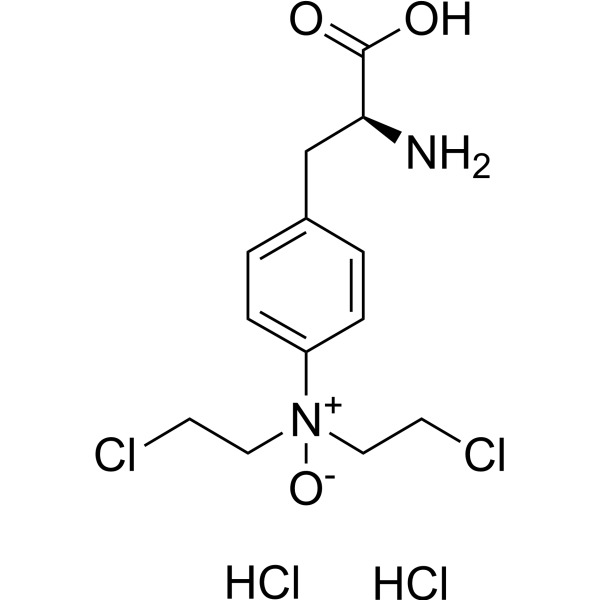
PX-478 is a multifunctional HIF-1α inhibitor with properties including radiosensitization, autophagy activation, and lipid accumulation inhibition. PX-478 also blocks hypoxia-induced VEGF production and regulates β-cell phenotypes under hypoxic conditions. PX-478 induces cell cycle arrest and DNA damage, restores autophagic function, reduces foam cell formation, and maintains glucose homeostasis. PX-478 is widely used in research on related diseases such as human tumors (e.g., prostate cancer), type 2 diabetes, and atherosclerosis .
loading...
    loading...
73
73 Cited Publications
Cat. No.: HY-16560
CAS No.: 7689-03-4
Synonyms: Campathecin; (S)-(+)-Camptothecin; CPT
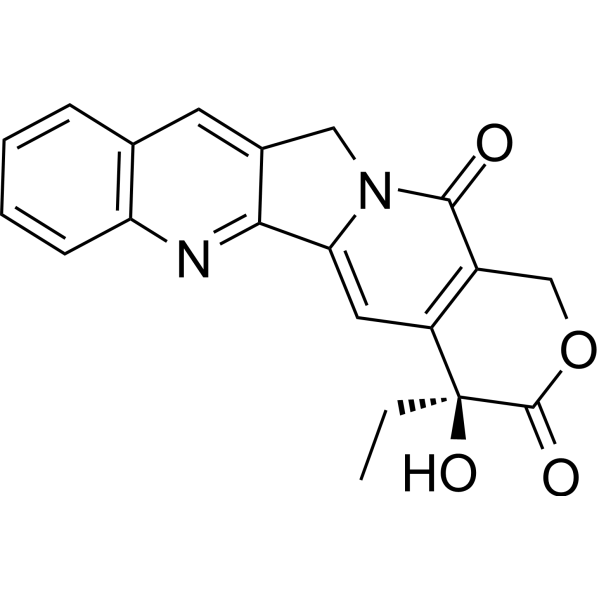
Camptothecin (CPT), a kind of alkaloid, is a DNA topoisomerase I (Topo I) inhibitor with an IC50 of 679 nM . Camptothecin (CPT) exhibits powerful antineoplastic activity against colorectal, breast, lung and ovarian cancers, modulates hypoxia-inducible factor-1α (HIF-1α) activity by changing microRNAs (miRNA) expression patterns in human cancer cells .
loading...
    loading...
19
19 Cited Publications
Cat. No.: HY-B0239
CAS No.: 56-75-7
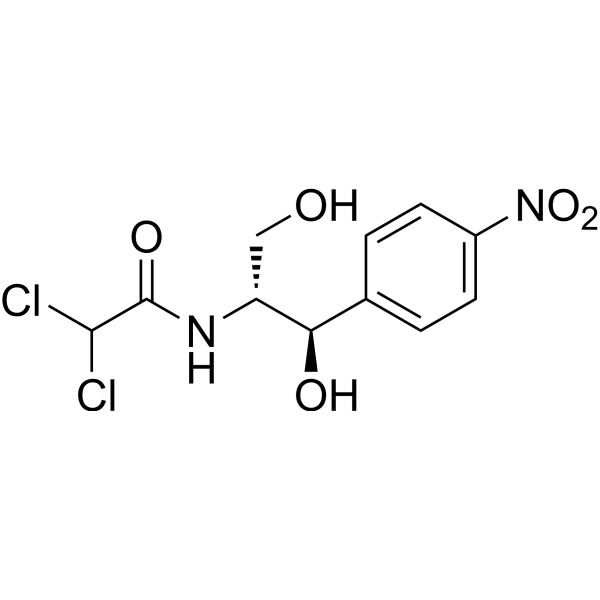
Chloramphenicol is an orally active, potent and broad-spectrum antibiotic. Chloramphenicol shows antibacterial activity. Chloramphenicol represses the oxygen-labile transcription factor and hypoxia inducible factor-1 alpha (HIF-1α) in hypoxic A549 and H1299 cells. Chloramphenicol suppresses the mRNA levels of vascular endothelial growth factor (VEGF) and glucose transporter 1, eventually decreasing VEGF release. Chloramphenicol can be used for anaerobic infections and lung cancer research .
loading...
    loading...
9
9 Cited Publications
Cat. No.: HY-P80704
Synonyms: HIF1A; BHLHE78; MOP1; PASD8; hypoxia-inducible factor 1-alpha; HIF-1-alpha; HIF1-alpha; ARNT-interacting protein; Basic-helix-loop-helix-PAS protein MOP1; Class E basic helix-loop-helix protein 78; bHLHe78; Member of PAS protein 1; PAS doma

Host:  

Rabbit

Application:  

WB, ICC/IF, ELISA

Reactivity:  

Human, Mouse, Rat

loading...
    loading...
4
4 Cited Publications
Cat. No.: HY-115903
CAS No.: 2762315-06-8
Purity:  98.45%
Research Areas:  

Cancer

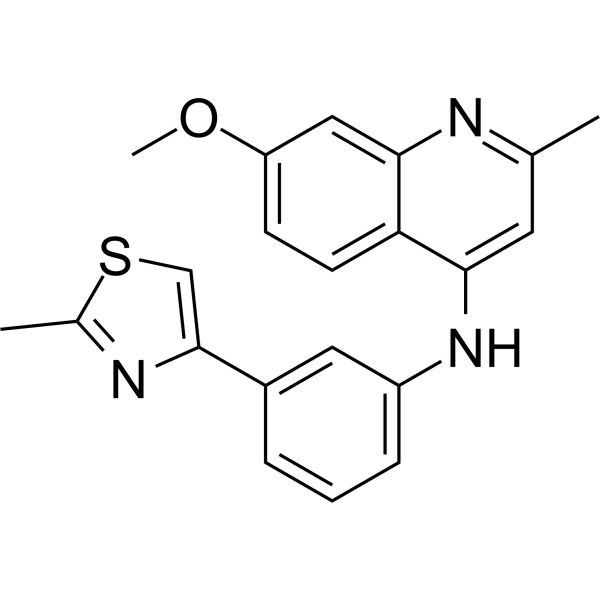
HIF-1α-IN-2 is an effective HIF-1α inhibitor with anticancer potencies (IC50s of 28 nM and 15 nM in MDA-MB-231 and MiaPaCa-2 cells, respectively). HIF-1α-IN-2 suppresses HIF-1α expression by blocking transcription and protein translation .
loading...
    loading...
4
4 Cited Publications
Cat. No.: HY-115903A
Purity:  99.16%
Research Areas:  

Cancer

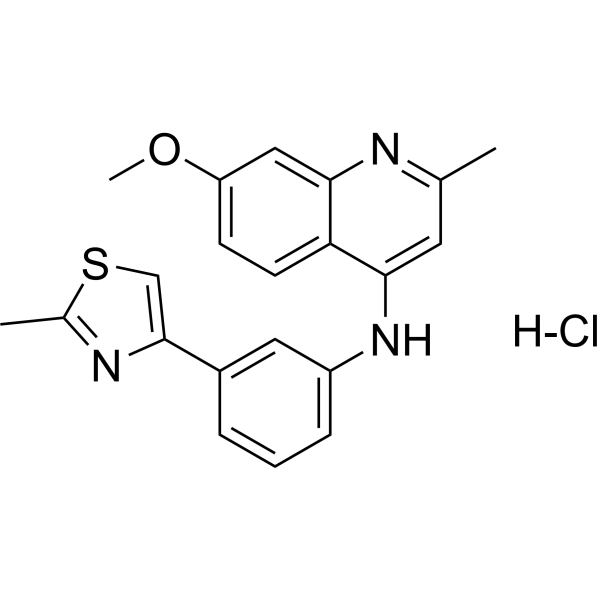
HIF-1α-IN-2 hydrochloride is an effective HIF-1α inhibitor with anticancer potencies (IC50s of 28 nM and 15 nM in MDA-MB-231 and MiaPaCa-2 cells, respectively). HIF-1α-IN-2 hydrochloride suppresses HIF-1α expression by blocking transcription and protein translation .
loading...
    loading...
4
4 Cited Publications
Cat. No.: HY-P74888
Purity:  ≥ 95%, as determined by reducing SDS-PAGE.
Synonyms: HIF1A; Basic-Helix-Loop-Helix-PAS Protein MOP1; hypoxia inducible factor 1 Subunit Alpha; HIF-1-Alpha; BHLHe78; hypoxia inducible factor 1 Alpha Subunit; PASD8; hypoxia-inducible factor1alpha; MOP1; Member Of PAS Superfamily 1; Class E Basic Helix-Loop-Helix Protein 78; ARNT Interacting Protein; hypoxia-inducible factor 1-Alpha; ARNT-Interacting Protein; PAS Domain-Containing Protein 8; HIF1-ALPHA; Member Of PAS Protein 1; HIF1-Alpha; HIF-1alpha; BHLHE78; HIF1; HIF-1A; hypoxia inducible factor 1, Alpha Subunit (Basic Helix-Loop-Helix Transcription factor)
Species:  
Human
Source:  
E. coli
loading...
    loading...
1
1 Cited Publications
Cat. No.: HY-107553
CAS No.: 1403-36-7
Purity:  95.3%
Target:  

HSP Apoptosis

Research Areas:  

Cancer

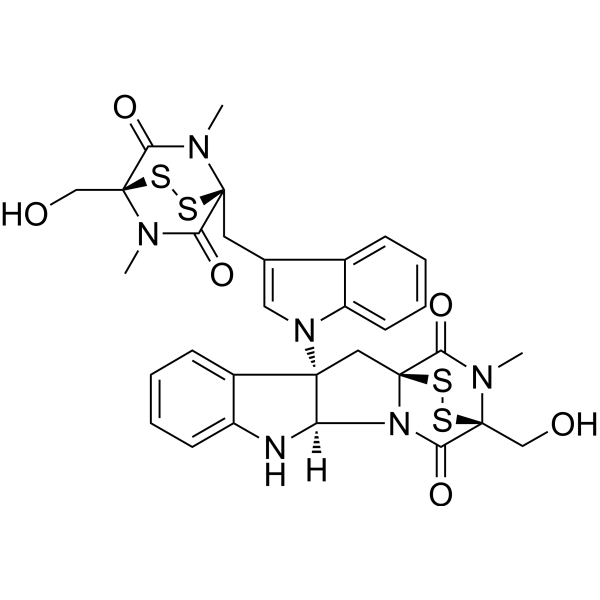
Chetomin, an active component of Chaetomium globosum, is a heat shock protein 90/hypoxia-inducible factor 1 alpha (Hsp90/HIF1α) pathway inhibitor. Chetomin is a potent, nontoxic non-small cell lung cancer cancer stem cells (NSCLC CSC)-targeting molecule .
loading...
    loading...
1
1 Cited Publications
Cat. No.: HY-P2324
CAS No.: 11029-61-1
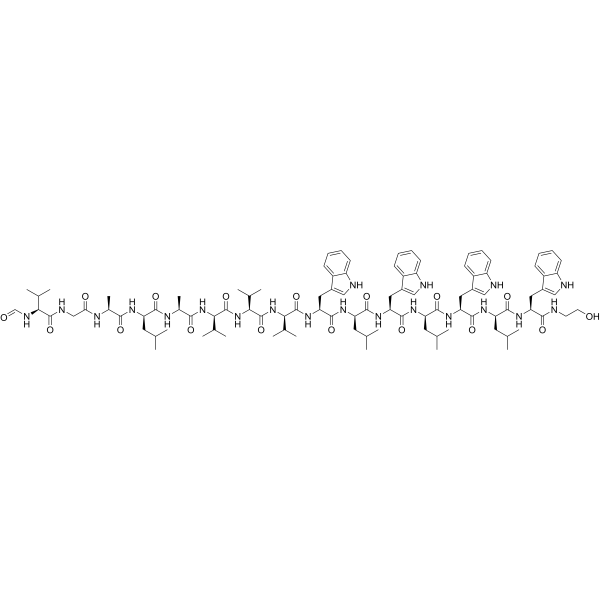
Gramicidin A is a peptide component of gramicidin, an antibiotic mixture originally isolated from B. brevis. Gramicidin A is a highly hydrophobic channel-forming ionophore that forms channels in model membranes that are permeable to monovalent cations. Gramicidin A induces degradation of hypoxia inducible factor 1 α (HIF-1α) .
loading...
    loading...
Cat. No.: HY-112253
CAS No.: 15978-08-2
D-Fructose 1-phosphate is a key intermediate metabolite in the fructose metabolic pathway. As a key signaling molecule linking fructose metabolism and glucose metabolic regulation, D-Fructose 1-phosphate acts as an allosteric modulator to counteract the inhibitory effect of the glucokinase-regulatory protein complex, thereby finely regulating the direction of hepatic glucose metabolism at the substrate level .
loading...
    loading...
Cat. No.: HY-15672
CAS No.: 329932-55-0
Purity:  98.39%
Research Areas:  

Neurological Disease Cancer

FM19G11 is a hypoxia-inducible factor-1-alpha (HIF-1α) inhibitor, and it inhibits hypoxia-induced luciferase activity with an IC50 of 80 nM in HeLa cells. FM19G11 modulates other signaling pathways, including mTOR and PI3K/Akt/eNOS, when the HIF-1α pathway is inactivated under normoxic conditions .
loading...
    loading...
Cat. No.: HY-B0239R
CAS No.: 56-75-7
Chloramphenicol (Standard) is the analytical standard of Chloramphenicol. This product is intended for research and analytical applications. Chloramphenicol is an orally active, potent and broad-spectrum antibiotic. Chloramphenicol shows antibacterial activity. Chloramphenicol represses the oxygen-labile transcription factor and hypoxia inducible factor-1 alpha (HIF-1α) in hypoxic A549 and H1299 cells. Chloramphenicol suppresses the mRNA levels of vascular endothelial growth factor (VEGF) and glucose transporter 1, eventually decreasing VEGF release. Chloramphenicol can be used for anaerobic infections and lung cancer research .
loading...
    loading...
Cat. No.: HY-168641
Research Areas:  

Cancer

PROTAC HIF-1α degrader-1 is a potent HIF-1α PROTAC degrader. PROTAC HIF-1α degrader-1 induces ubiquitination and degradation of HIF-1α protein under hypoxic conditions. PROTAC HIF-1α degrader-1 induces Apoptosis. PROTAC HIF-1α degrader-1 can be used for the research of breast cancer and hepatocellular carcinoma .
loading...
    loading...
Cat. No.: HY-122094
CAS No.: 56486-94-3
Purity:  99.49%
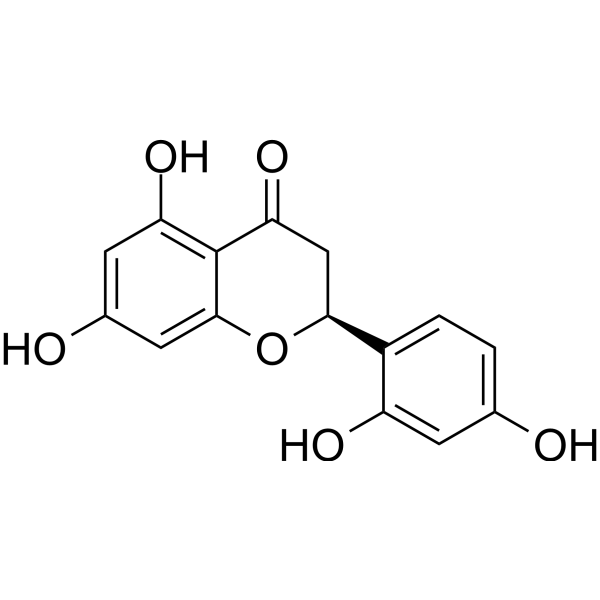
Steppogenin is a potent inhibitor of HIF-1α and DLL4, with IC50 values of 0.56 and 8.46 μM, respectively. Steppogenin can be sued for the research of angiogenic diseases, such as those involving solid tumors .
loading...
    loading...
Cat. No.: HY-15893G
CAS No.: 89464-63-1
Synonyms: Dimethyloxallyl Glycine (GMP)
DMOG (GMP) is the GMP level of DMOG (HY-15893). GMP small molecules works appropriately as an auxiliary reagent for cell therapy manufacture. DMOG (GMP) is a HIF-1α stabilizer. DMOG (GMP) promotes the osteogenic, angiogenic, and chondrogenic differentiation of stem cells by stabilizing the expression of HIF-1α. DMOG (GMP) can enhance the osteogenic and angiogenic differentiation potential of stem cells, thereby improving bone regeneration in bone defects. DMOG (GMP) can be used in the research of bone defect repair, vascularized bone regeneration, and the treatment of bone-related diseases (such as osteoporosis and femoral head necrosis) .
loading...
    loading...
Cat. No.: HY-16560S
CAS No.: 1329616-37-6
Synonyms: Campathecin-d5; (S)-(+)-Camptothecin-d5; CPT-d5
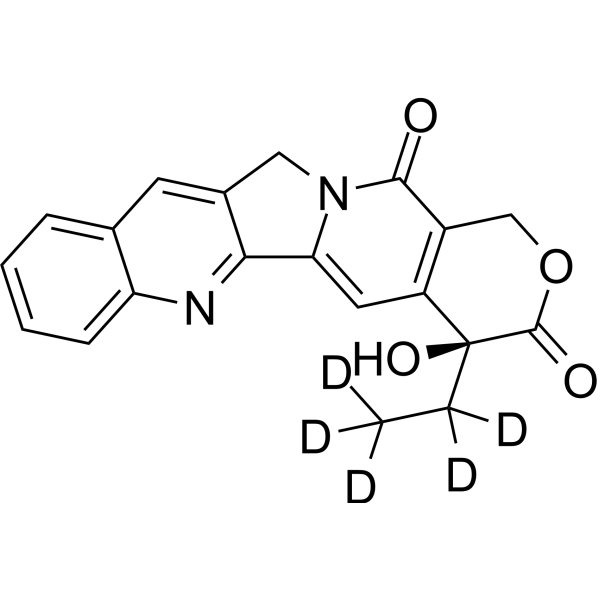
Camptothecin-d5 is the deuterium labeled Camptothecin. Camptothecin (CPT), a kind of alkaloid, is a DNA topoisomerase I (Topo I) inhibitor with an IC50 of 679 nM . Camptothecin (CPT) exhibits powerful antineoplastic activity against colorectal, breast, lung and ovarian cancers, modulates hypoxia-inducible factor-1α (HIF-1α) activity by changing microRNAs (miRNA) expression patterns in human cancer cells .
loading...
    loading...
Cat. No.: HY-179341
CAS No.: 3104302-65-7
Research Areas:  

Cancer

CHNQD-03301 is an orally active hypoxia-inducible factor-1α (HIF-1α) inhibitor (IC50 = 10.97 nM). CHNQD-03301 promotes the proteasomal degradation of HIF-1α protein, leading to its significant suppression. CHNQD-03301 can reverse HIF accumulation-induced angiogenesis and mitigate the HIF-induced erythrocytosis phenotype in zebrafish models. CHNQD-03301 can be used for the study of colon cancer .
loading...
    loading...
Cat. No.: HY-16560R
CAS No.: 7689-03-4
Synonyms: Campathecin (Standard); (S)-(+)-Camptothecin (Standard); CPT (Standard)
Camptothecin (Standard) (Campathecin (Standard)) is the analytical standard of Camptothecin (HY-16560). This product is intended for research and analytical applications. Camptothecin (CPT), a kind of alkaloid, is a DNA topoisomerase I (Topo I) inhibitor with an IC50 of 679 nM. Camptothecin (CPT) exhibits powerful antineoplastic activity against colorectal, breast, lung and ovarian cancers, modulates hypoxia-inducible factor-1α (HIF-1α) activity by changing microRNAs (miRNA) expression patterns in human cancer cells.
loading...
    loading...
Cat. No.: HY-N10330
CAS No.: 959662-26-1
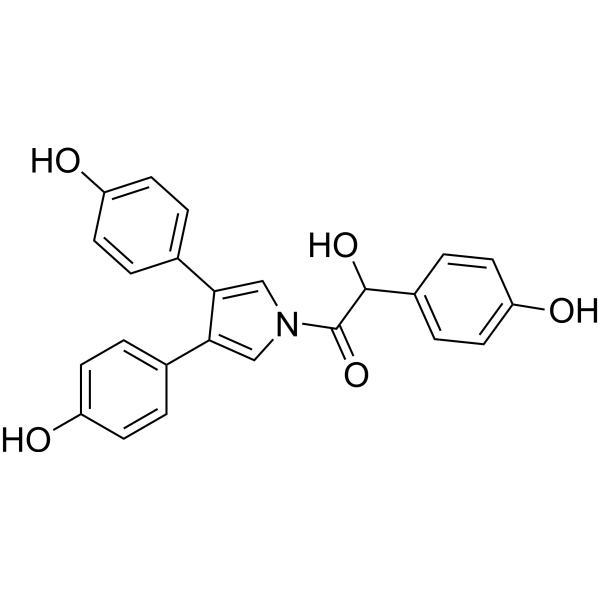
7-Hydroxyneolamellarin A is a natural product that could be derived from sponge Dendrilla nigra. 7-Hydroxyneolamellarin A is a potent hypoxia-inducible factor-1α (HIF-1α) inhibitor. 7-Hydroxyneolamellarin A attenuates the accumulation of hypoxia-inducible factor-1α (HIF-1α) protein and inhibits vascular epidermal growth factor (VEGF) transcriptional activity. 7-Hydroxyneolamellarin A can be used in research of cancer .
loading...
    loading...
Cat. No.: HY-B0239S2
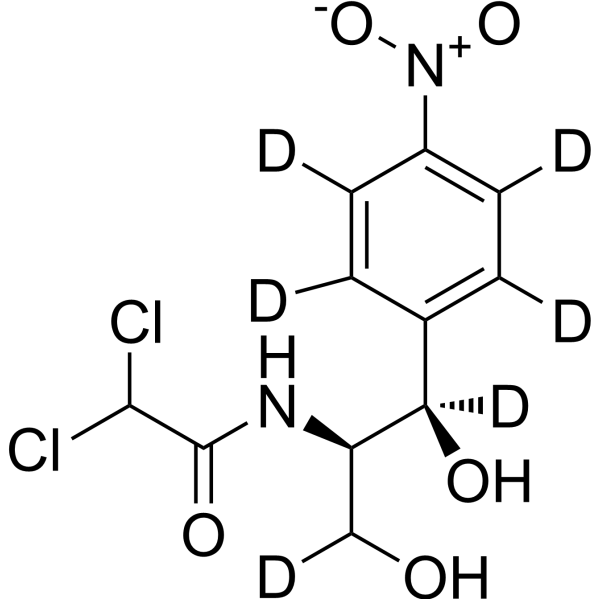
Threo-Chloramphenicol-d6 is the deuterium labeled Chloramphenicol . Chloramphenicol is an orally active, potent and broad-spectrum antibiotic. Chloramphenicol shows antibacterial activity. Chloramphenicol represses the oxygen-labile transcription factor and hypoxia inducible factor-1 alpha (HIF-1α) in hypoxic A549 and H1299 cells. Chloramphenicol suppresses the mRNA levels of vascular endothelial growth factor (VEGF) and glucose transporter 1, eventually decreasing VEGF release. Chloramphenicol can be used for anaerobic infections and lung cancer research .
loading...
    loading...

