



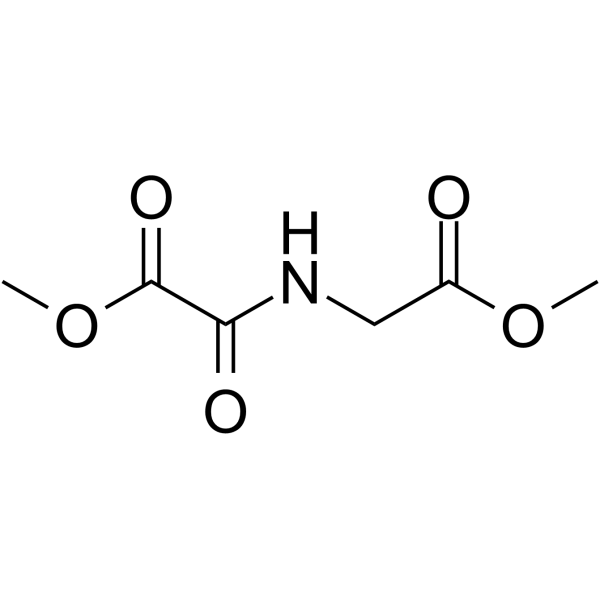
DMOG (GMP) is the GMP level of DMOG (HY-15893). GMP small molecules works appropriately as an auxiliary reagent for cell therapy manufacture. DMOG (GMP) is a HIF-1α stabilizer. DMOG (GMP) promotes the osteogenic, angiogenic, and chondrogenic differentiation of stem cells by stabilizing the expression of HIF-1α. DMOG (GMP) can enhance the osteogenic and angiogenic differentiation potential of stem cells, thereby improving bone regeneration in bone defects. DMOG (GMP) can be used in the research of bone defect repair, vascularized bone regeneration, and the treatment of bone-related diseases (such as osteoporosis and femoral head necrosis) .
For research use only. We do not sell to patients.
- CAS No.: 89464-63-1
- Formula: C6H9NO5
- Molecular Weight:175.14
-
Storage:
Please store the product under the recommended conditions in the Certificate of Analysis.


To place orders, for customer services and technical support, please contact: MedChemExpress USA
Tel: 609-228-6898 E-mail: [email protected] [email protected]


-
 Biological Activity
-
Chemical Information
- Protocols
- Purity & Documentation
- References
-
 Help & FAQs


-
HY-15893
DMOGHIF-PH Inhibitor -

HY-15893R
DMOG (Standard)HIF-PH Inhibitor -
HY-13426
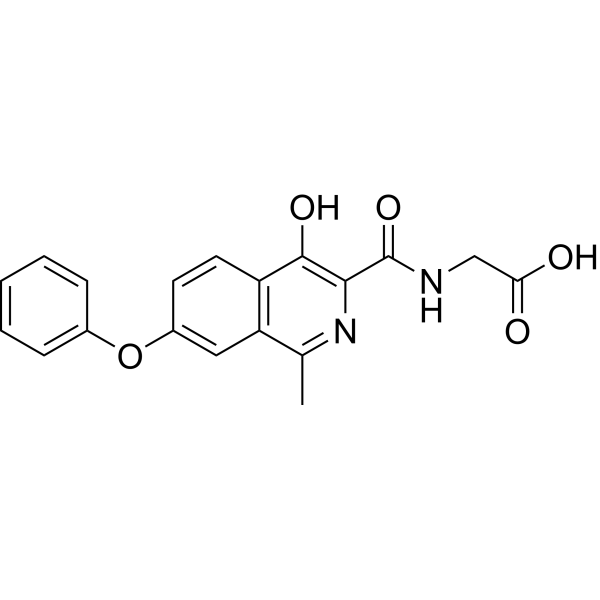
RoxadustatHIF-PH Inhibitor -
HY-15836
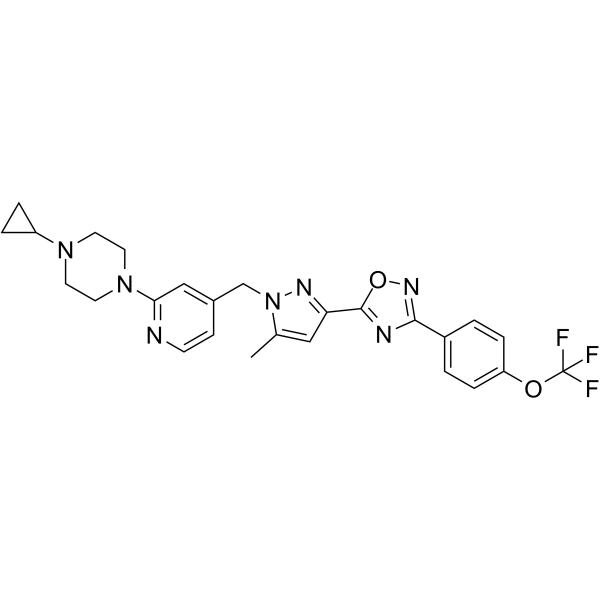
BAY 87-2243HIF-1 Inhibitor -
HY-10231
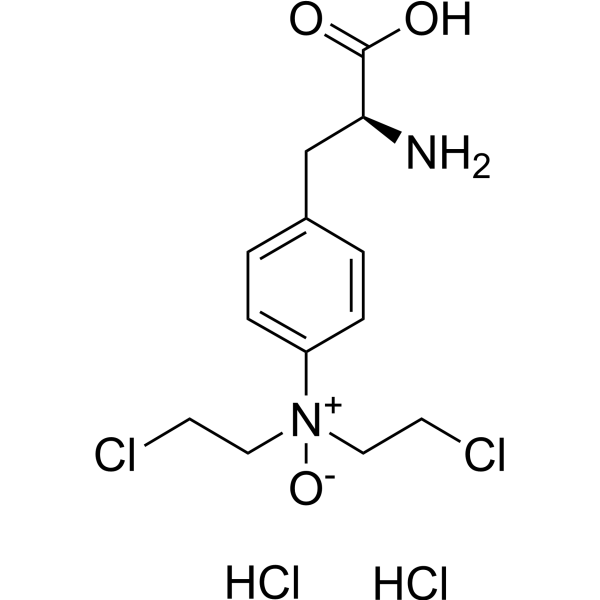
PX-478HIF-1α Inhibitor -
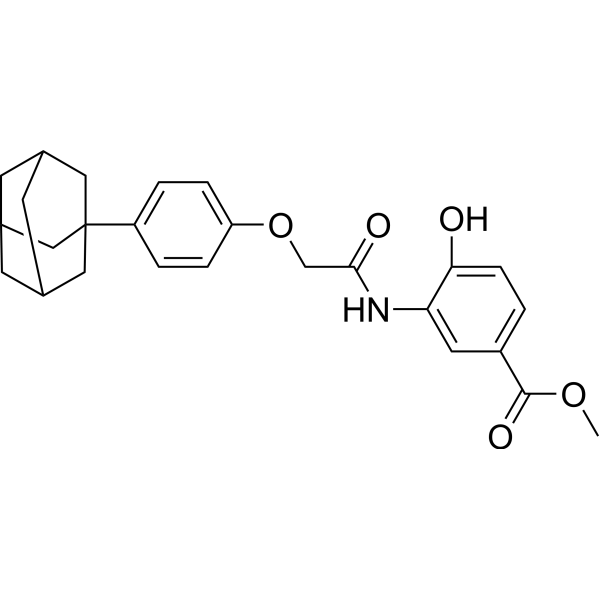
HY-13671
LW6Apoptosis Inducer -
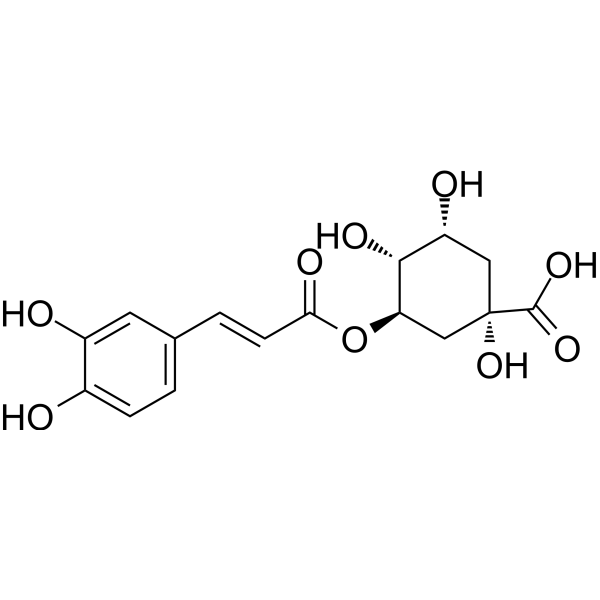
HY-N0055
Chlorogenic acidAntioxidant -
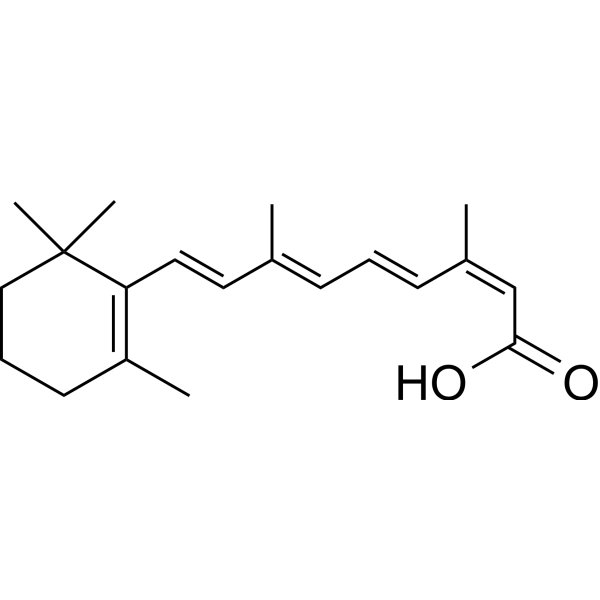
HY-15127
IsotretinoinAnti-acne Agent -
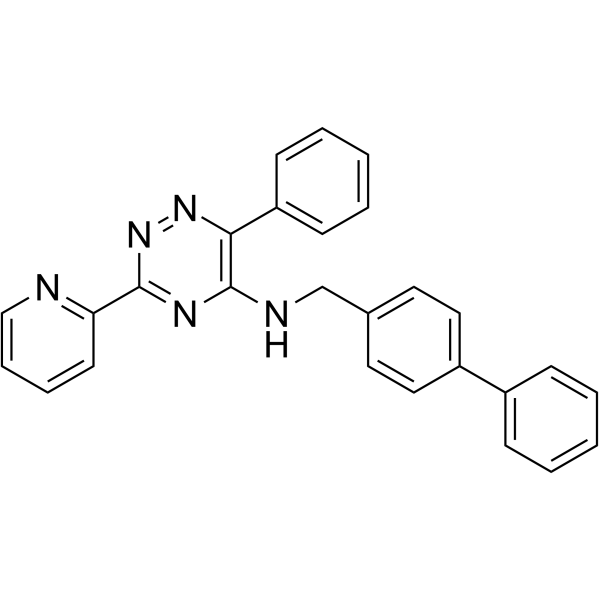
HY-12754
ML228HIF Activator -
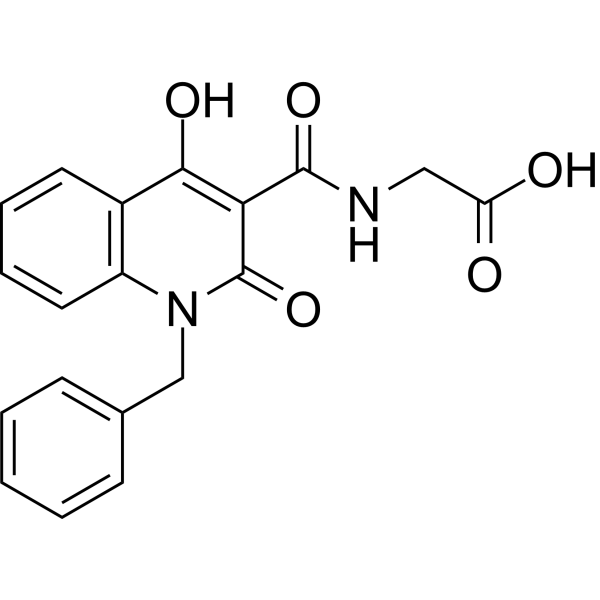
HY-15468
IOX2HIF/HIF Prolyl-Hydroxylase Inhibitor -
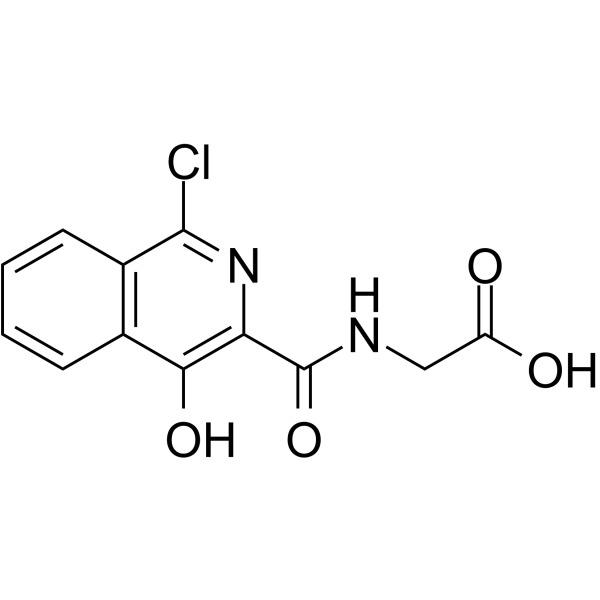
HY-15641
FG-2216HIF-PHD2 Inhibitor -
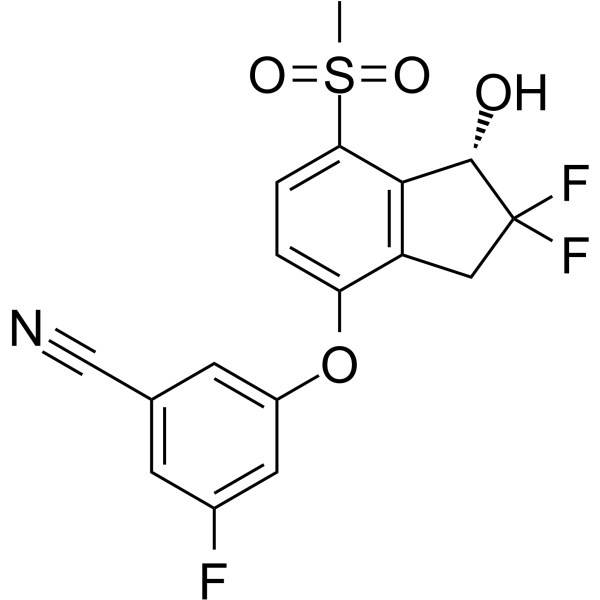
HY-12867
PT-2385HIF-2α Inhibitor


Biological Activity
Description
In Vitro
DMOG efficiently suppresses hydroxyproline synthesis in intact cells, but shows only weakly active in the microsomal system[1]. DMOG reduces FGF-2-induced proliferation and cyclin A expression by inhibiting prolyl hydroxylase activity in HPASMC[3].
MedChemExpress (MCE) has not independently confirmed the accuracy of these methods. They are for reference only.
In Vivo
MedChemExpress (MCE) has not independently confirmed the accuracy of these methods. They are for reference only.


Chemical Information
-
CAS No. 89464-63-1
-
Molecular Weight 175.14
-
Formula C6H9NO5
-
SMILES
O=C(OC)CNC(C(OC)=O)=O
-
Synonyms
Dimethyloxallyl Glycine (GMP)
-
Shipping
Room temperature in continental US; may vary elsewhere.
-
Storage
Please store the product under the recommended conditions in the Certificate of Analysis.


Purity & Documentation
References
[1]. Singh A, et al. Hypoxia-inducible factor (HIF) prolyl hydroxylase inhibitors induce autophagy and have a protective effect in an in-vitro ischaemia model.Sci Rep. 2020 Jan 31;10(1):1597. [Content Brief]
[2]. Milkiewicz M, et al. Inhibition of endogenous HIF inactivation induces angiogenesis in ischaemic skeletal muscles of mice. J Physiol. 2004 Oct 1;560(Pt 1):21-6. [Content Brief]
[3]. Baader E, et al. Inhibition of prolyl 4-hydroxylase by oxalyl amino acid derivatives in vitro, in isolated microsomes and in embryonic chicken tissues. Biochem J. 1994 Jun 1;300 (Pt 2):525-30. [Content Brief]
[4]. Li X, et al. Up-regulation of hypoxia-inducible factor-1α enhanced the cardioprotective effects of ischemic postconditioning in hyperlipidemic rats. Acta Biochim Biophys Sin (Shanghai). 2014 Feb;46(2):112-8. [Content Brief]
[5]. Schultz K, et al. Prolyl hydroxylase 2 deficiency limits proliferation of vascular smooth muscle cells by hypoxia-inducible factor-1{alpha}-dependent mechanisms. Am J Physiol Lung Cell Mol Physiol. 2009 Jun;296(6):L921-7. [Content Brief]

Calculators
Concentration (start) × Volume (start) = Concentration (final) × Volume (final)


DMOG (GMP) Related Classifications
HY-15893G Related Classifications
 Powered by Bioz