
10 Results for "

insertion into membranes

" in MedChemExpress (MCE) Product Catalog:
Products (10)

10 Results for "insertion into membranes" in MCE Product Catalog:

1
1 Cited Publications
Cat. No.: HY-D0162
CAS No.: 2437-29-8
Synonyms: MCCK1
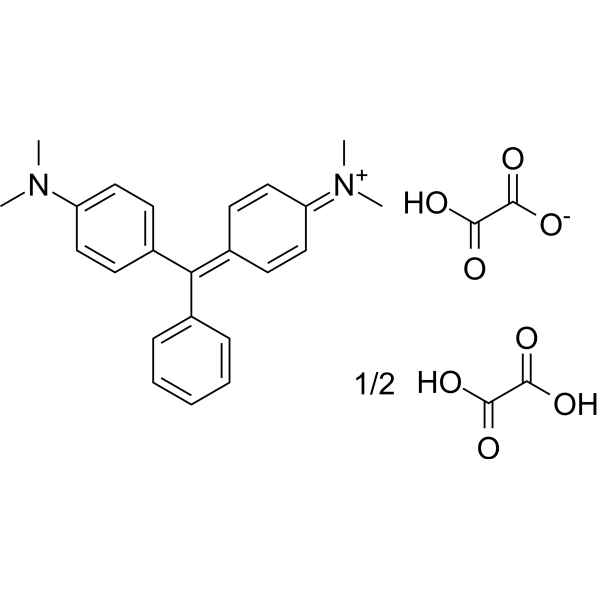
Malachite green hemioxalate (MCCK1) is a triphenylmethane dye which can be used to detect the release of phosphate in enzymatic reactions. Malachite green hemioxalate has antibacterial activity, which is attributed to inhibition of intracellular enzymes, insertion into DNA and/or interaction with cell membranes. Malachite green hemioxalate is also a potent and selective inhibitor of IKBKE, and inhibits its downstream targets such as IκBα, p65 and IRF3. Malachite green hemioxalate exhibits antitumor activity in vitro and in vivo .
loading...
    loading...
Cat. No.: HY-P4116
CAS No.: 2293160-09-3
Synonyms: pHLIP
Target:  

Inhibitory Antibodies

Research Areas:  

Metabolic Disease Cancer

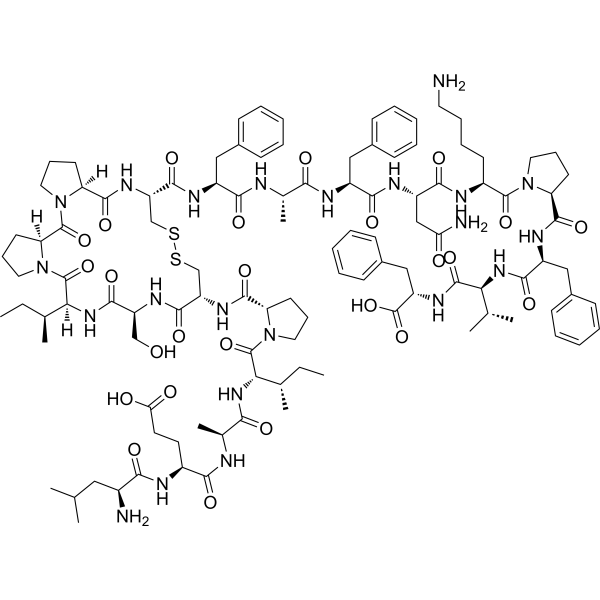
pH-Low Insertion Peptide (pHLIP) is a short, pH-responsive peptide capable of inserting across a cell membrane to form a transmembrane helix at acidic pH. pH-Low Insertion Peptide targets the acidic tumor microenvironment for tumors at early and metastatic stages with high specificity, used as a specific ligand. pH-Low Insertion Peptide successfully modify polylysine polymers to have the pH-responsive capability. pH-Low Insertion Peptide-based targeting of cancer presents an opportunity to monitor metabolic changes, and to selectively deliver imaging and therapeutic agents to tumors .
loading...
    loading...
Cat. No.: HY-132173
CAS No.: 2886772-68-3
Purity:  98.01%
Target:  

Bcl-2 Family

Research Areas:  

Cancer

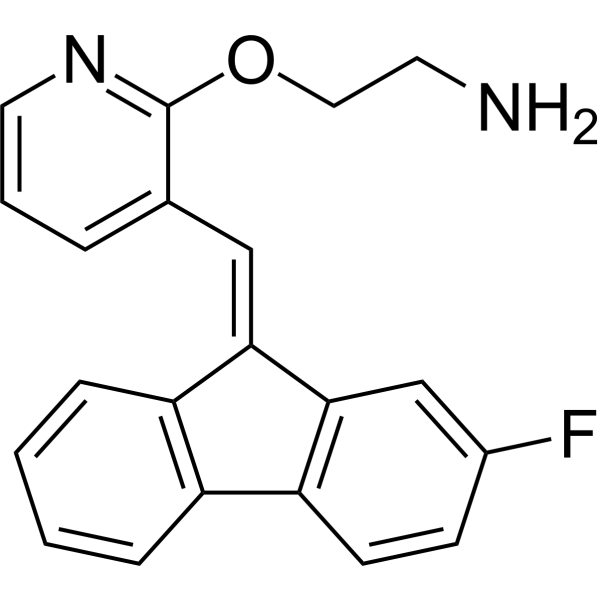
GL0388 is a Bax activator that results in Bax insertion into mitochondrial membrane. GL0388 shows antiproliferative activities against various cancer cells, with IC50s of 0.299-1.57 μM. GL0388 activates Bax and induce Bax-mediated apoptosis. GL0388 suppresses breast cancer xenograft tumor growth in vivo .
loading...
    loading...
Cat. No.: HY-P4116A
Synonyms: pHLIP TFA
Target:  

Inhibitory Antibodies

Research Areas:  

Metabolic Disease Cancer

pH-Low Insertion Peptide TFA (pHLIP TFA) is a short, pH-responsive peptide capable of inserting across a cell membrane to form a transmembrane helix at acidic pH. pH-Low Insertion Peptide TFA targets the acidic tumor microenvironment for tumors at early and metastatic stages with high specificity, used as a specific ligand. pH-Low Insertion Peptide TFA successfully modifys polylysine polymers to have the pH-responsive capability. pH-Low Insertion Peptide TFA -based targeting of cancer presents an opportunity to monitor metabolic changes and to selectively deliver imaging and therapeutic agents to tumors .
loading...
    loading...
Cat. No.: HY-P1753
CAS No.: 943790-62-3
Target:  

HIV

Research Areas:  

Infection

VIR-165 is a modified form of virus inhibitory peptide (VIRIP) that binds the fusion peptide of the gp41 subunit and prevents its insertion into the target membrane. VIRIP inhibits a wide variety of human immunodeficiency virus type 1 (HIV-1) strains .
loading...
    loading...
Cat. No.: HY-119682
CAS No.: 18304-79-5
Target:  

Bcl-2 Family Apoptosis

Research Areas:  

Cancer

Bax agonist 1 (compound SMBA2) is a Bax agonist (Ki=57.2 nM). Bax agonist 1 induces Bax conformational changes by blocking S184 phosphorylation, promoting Bax insertion into the mitochondrial membrane and forming Bax oligomers, which induce cytochrome c release and apoptosis in malignant cancer cells expressing Bax. Bax agonist 1 can be used in lung cancer research .
loading...
    loading...
Cat. No.: HY-185564
CAS No.: 118680-70-9
Research Areas:  

Others

F6OM, a nonionic fluorinated octyl maltoside derivative, is a surfactant. F6OM readily interacts with and completely solubilizes phospholipid vesicles via a heterogeneous solubilization mechanism, without compromising membrane order at subsolubilizing concentrations. F6OM promotes bilayer insertion of an integral membrane enzyme in the absence of micelles to support functional refolding of integral membrane proteins. F6OM can be used for membrane-protein applications .
loading...
    loading...
Cat. No.: HY-187529
CAS No.: 1144496-95-6
Target:  

Bacterial

Research Areas:  

Infection

PUN-96956 is an inhibitor of the β-barrel assembly machine (BAM) complex. By inhibiting the folding of β-barrel outer membrane proteins (OMPs) and their insertion into the outer membrane, PUN-96956 disrupts outer membrane integrity and induces the cell envelope stress response. PUN-96956 can be used in studies of bacterial infections caused by ESKAPE pathogens, uropathogenic Escherichia coli, and Gram-positive bacteria .
loading...
    loading...
Cat. No.: HY-D3422
Target:  

Fluorescent Dye

Research Areas:  

Others

AM1-44 is a fixable, cationic styryl fluorescent dye primarily used for labeling nerve terminals and synaptic vesicles. In its free state, AM1-44 exhibits extremely weak fluorescence; upon insertion into the cell membrane, its fluorescence increases, and after endocytosis into vesicles and release via exocytosis, its fluorescence decreases. Therefore, it can be used to study synaptic activity, synaptic vesicle cycling, neurotransmitter release, and synaptic plasticity (Ex/Em = 480/598-600 nm in membrane environment) .
loading...
    loading...
Cat. No.: HY-187415A
Synonyms: DOPE-PEG2000-Mal-Cys-TAASGVRSMH
Research Areas:  

Cancer

DOPE-PEG2000-TAASGVRSMH is an amphiphilic lipid-PEG-peptide conjugate composed of 1,2-dioleoyl-sn-glycero-3-phosphoethanolamine (DOPE) , polyethylene glycol 2000 (PEG2000) , and the TAASGVRSMH peptide.
DOPE provides a hydrophobic phospholipid anchor for membrane insertion, PEG2000 forms a hydrophilic spacer that enhances circulation stability, and the TAASGVRSMH peptide serves as a tumor-vasculature-homing ligand identified by in vivo phage display.
This conjugate can be used to functionalize liposomes and lipid nanoparticles for targeted drug delivery to tumor vasculature.
loading...
    loading...

