




Search Result
Results for "
intracellular calcium release
" in MedChemExpress (MCE) Product Catalog:
3
Biochemical Assay Reagents
| Cat. No. |
Product Name |
Target |
Research Areas |
Chemical Structure |
-
- HY-15277
-
AM966
Maximum Cited Publications
20 Publications Verification
|
LPL Receptor
|
Inflammation/Immunology
|
|
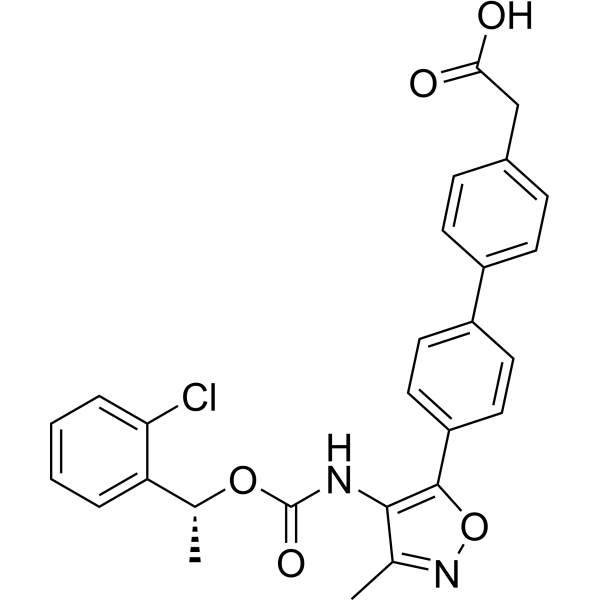
AM966 is a high affinity, selective, oral LPA1-antagonist, inhibits LPA-stimulated intracellular calcium release (IC50=17 nM).
|
-
-
- HY-W039315
-
|
|
Biochemical Assay Reagents
|
Metabolic Disease
|
2,5-Anhydro-D-mannitol, 97% is an antimetabolic fructose analogue. 2,5-Anhydro-D-mannitol, 97% depletes intracellular ATP, reduces oxygen consumption, regulates substrate oxidation, increases phosphomonoester levels, decreases inorganic phosphate levels, and promotes the release of intracellular calcium from intracellular calcium stores via phospholipase C-dependent activity in hepatocytes .
|
-
-
- HY-B1231
-
|
RP-2831 hydrochloride
|
Adrenergic Receptor
|
Cardiovascular Disease
Neurological Disease
Inflammation/Immunology
Cancer
|
|
Heptaminol (RP-2831) hydrochloride is a vasoconstrictor used in the study of hypotension, especially orthostatic hypotension. Heptaminol is also a skin cancer proliferation inhibitor that inhibits immune inflammation induced by the tumor promoting factor 12-O-tetradecanoylphorbol-13-acetate (TPA) in an NO-dependent manner. Heptaminol also acts as a sympathomimetic amine, exerting indirect sympathetic effects. Heptaminol is also an antagonist of catecholamine release and uptake and can increase intracellular free calcium levels .
|
-
-
- HY-142117
-
|
|
Calcium Channel
Chloride Channel
|
Others
|
|
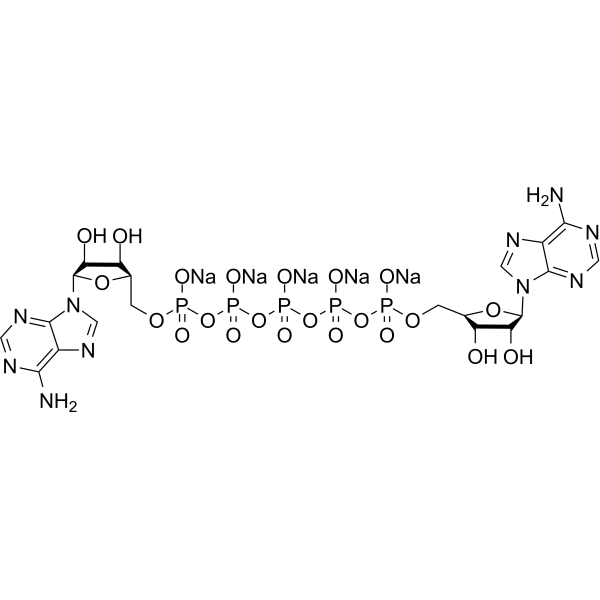
Adenophostin A is an IP3 receptor (inositol 1,4,5-trisphosphate receptors) modulator and Ca 2+ releaser, with an IC50 of 1.3 nM, an EC50 of 1.4 nM, and a Ki of 0.18 nM in rats, and an IC50 of 0.95 nM in humans. Adenophostin A activates IP3 receptors, stimulates Ca 2+ release from intracellular stores and microsomes, inhibits the binding of [ 3H]IP3 to plasma membrane receptors, and activates chloride channels. Adenophostin A resists phosphorylation and dephosphorylation by IP3 metabolic enzymes to maintain its activity, and increases cytoplasmic [Ca 2+] levels via calcium mobilization from the endoplasmic reticulum of vascular smooth muscle cells. Adenophostin A is applicable to research related to hemorrhagic shock .
|
-
-
- HY-172458
-
Z-3578
1 Publications Verification
|
Mas-related G-protein-coupled Receptor (MRGPR)
TNF Receptor
|
Inflammation/Immunology
|
|
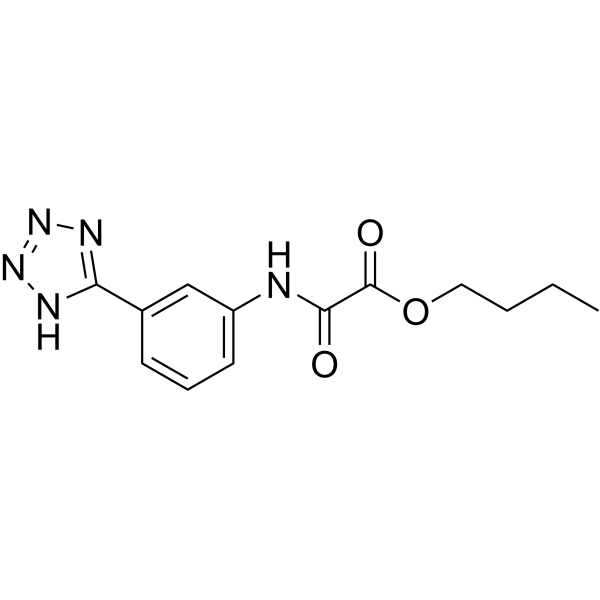
Z-3578 is an orally active small-molecule antagonist of MrgX2 with potent antipseudoallergic activity, exhibiting a KD value of 729 nM. Z-3578 effectively inhibits mast cell degranulation induced by substance P (SP) and C48/80, suppresses the release of β-hexosaminidase, significantly reduces the release of histamine and TNF-α, and decreases intracellular calcium flux. In a mouse pseudoallergy model, Z-3578 significantly alleviates paw swelling and dye extravasation, and reduces serum histamine levels. Z-3578 can be used for the study of pseudoallergic reactions .
|
-
-
- HY-P1793
-
|
|
Opioid Receptor
Biochemical Assay Reagents
|
Neurological Disease
Inflammation/Immunology
Cancer
|
|
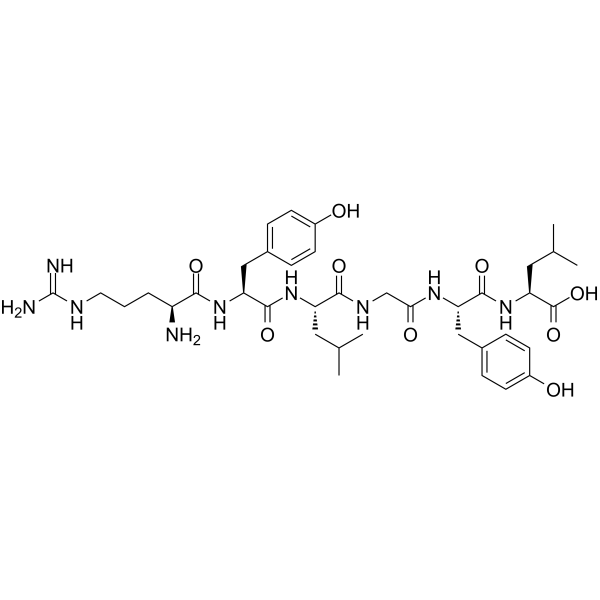
α-Casein (90-95) is a partial agonist of opioid receptors and a copper ion ligand, with opioid activity. α-Casein (90-95) inhibits the secretion of β-hexosaminidase by rat peritoneal mast cells (PMC) with IC50= 0.1 μM. α-Casein (90-95) inhibits the proliferation of prostate cancer cells LNCaP, DU145, and PC3 with IC50 of 0.94 nM, 137 nM, and 6.92 nM, respectively. α-Casein (90-95) activates Gi-like proteins through a membrane-assisted, receptor-independent pathway, or reversibly binds to opioid receptors, inducing intracellular calcium release and conformational changes, and exerts the activity of promoting mast cell secretion and inhibiting tumor cell proliferation. α-Casein (90-95) can be used in the study of the mechanisms of allergic diseases and prostate cancer .
|
-
-
- HY-B1559
-
|
|
Environmental Pollutants
Apoptosis
|
Infection
Cancer
|
|
Allethrin, a pyrethroid insecticide is a major mosquito repellent agent. Allethrin induces oxidative stress, apoptosis and calcium release in rat testicular carcinoma cells (LC540). Allethrin induces BCL-2, caspase-3 activation and release of intracellular calcium .
|
-
-
- HY-134299
-
|
8-(4-Chlorophenylthio)-cAMP-AM
|
Ras
PKA
|
Cardiovascular Disease
Metabolic Disease
Cancer
|
|
8-CPT-cAMP-AM (8-(4-Chlorophenylthio)-cAMP-AM) is an Epac/PKA activator. 8-CPT-cAMP-AM potentiates glucose-dependent first- and second-phase insulin secretion, induces β-cell depolarization, modulates intracellular calcium via influx and ryanodine-sensitive store mobilization, and facilitates calcium-induced calcium release resistant to PKA inhibition. 8-CPT-cAMP-AM can be used for the research of cardiac hypertrophy, diabetic cardiomyopathy, and melanoma .
|
-
-
- HY-17457
-
|
Levosalbutamol hemitartrate
|
Adrenergic Receptor
PI3K
|
Inflammation/Immunology
|
|
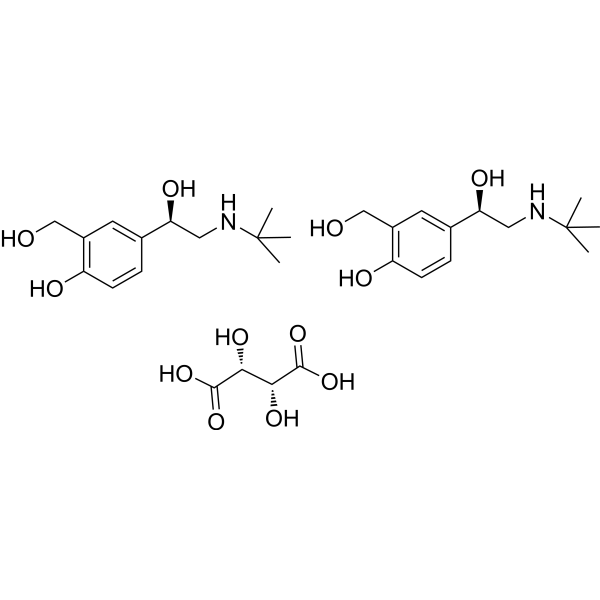
Levalbuterol (Levosalbutamol) hemitartrate is a β2-adrenergic receptor agonist and PI3K inhibitor. Levalbuterol hemitartrate inhibits PI3K activity, reduces NF-κB and Rb protein expression, activates the cAMP/PKA pathway, and stimulates cAMP release. Levalbuterol hemitartrate relaxes airway smooth muscle, reduces intracellular calcium levels, and inhibits spasmogen-induced contractions. Levalbuterol hemitartrate can be used for the research of moderate-to-severe asthma .
|
-
-
- HY-113040A
-
|
17(R),18(S)-EETeTr
|
Calcium Channel
|
Cardiovascular Disease
|
|
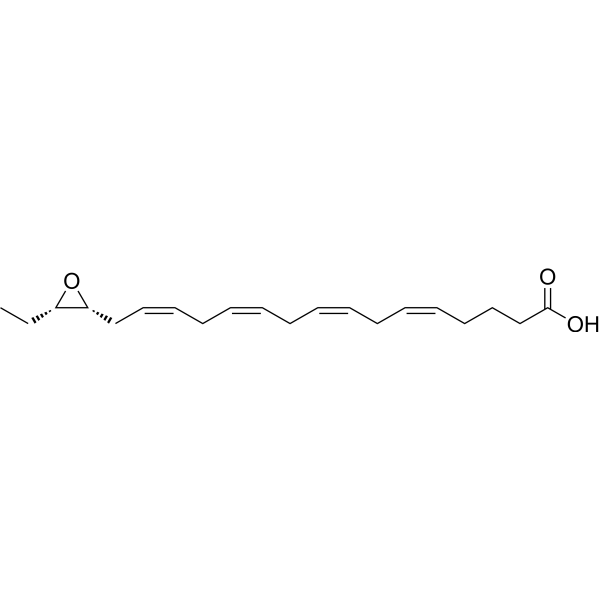
(17R,18S)-Epoxyeicosatetraenoic acid (17 (R),18 (S)-EETeTr) is a physiologically active fatty acid metabolite and also a vasodilator targeting BKα. (17R,18S)-Epoxyeicosatetraenoic acid activates the outward potassium current mediated by BK channels, and this effect is independent of the BKβ1 subunit, intracellular/extracellular calcium levels, and sarcoplasmic reticulum calcium release regulated by RyR3. (17R,18S)-Epoxyeicosatetraenoic acid is produced by the epoxidation of eicosapentaenoic acid mediated by CYP1A1 variants. (17R,18S)-Epoxyeicosatetraenoic acid is applicable to research related to arrhythmia .
|
-
-
- HY-N1989
-
|
|
Na+/K+ ATPase
CaMK
Apoptosis
Cholinesterase (ChE)
NO Synthase
NF-κB
|
Neurological Disease
Cancer
|
Bacoside A is an orally active, blood-brain barrier-permeable triterpenoid saponin that modulates the activities of ATPases, AChE, CaMK2A and iNOS. Derived from Bacopa monniera. Bacoside A exerts significant antioxidant, anti-inflammatory and anti-apoptotic effects by maintaining ion balance, scavenging reactive oxygen species, stabilizing cell membranes, and regulating the expression of NF-κB and apoptosis-related proteins. Bacoside A counteracts morphine-induced reductions in Na +/K +-ATPase, Ca 2+-ATPase and Mg 2+-ATPase activities, increases mitochondrial membrane potential, and decreases intracellular reactive oxygen species levels. Bacoside A specifically binds to calcium/calmodulin-dependent protein kinase IIA to trigger endoplasmic reticulum calcium release. Bacoside A exhibits non-apoptotic cytotoxicity against glioblastoma cells while protecting normal nerve cells from stress-induced damage. Bacoside A is applicable to the research of Parkinson's disease and glioblastoma multiforme .
|
-
-
- HY-175515
-
|
|
5-HT Receptor
|
Neurological Disease
|
|
5-HT2C agonist-11 (Compound 1) is an orally active, brain-penetrant and selective 5-HT2C receptor agonist (EC50=15 nM). 5-HT2C agonist-11 activates the Gq protein signaling pathway, promoting intracellular calcium release. 5-HT2C agonist-11 is promising for research of depression, post-traumatic stress disorder (PTSD) and neuropathic pain .
|
-
-
- HY-138951
-
-
-
- HY-N13747
-
|
|
Myosin
PKC
Calcium Channel
|
Cardiovascular Disease
|
|
Chrysosplenol C is a type of flavonoid compound. Chrysosplenol C selectively activates cardiac myosin ATPase, with its EC50 being 45 µM. Chrysosplenol C enhances the release of intracellular calcium ions by activating protein kinase C (PKC), thereby increasing the contractility of rat ventricular muscle cells. Chrysosplenol C can be used in the research of heart failure .
|
-
-
- HY-B0155
-
|
SCH 417690; SCH-D; MK-7690 free base
|
CCR
HIV
|
Infection
Cancer
|
|
Vicriviroc (SCH 417690) is an orally active CCR5 antagonist with the IC50 of 10 nM, and also inhibts MIP-1α and intracellular calcium release induced by the ligand RANTES (10 nM) with the IC50 values of 0.91 nM and 16 nM,,respectively. Vicriviroc can inhibits human immunodeficiency virus type 1 (HIV-1) infection, and can also used for study of cancer .
|
-
-
- HY-120985
-
|
|
Calcium Channel
|
Neurological Disease
|
|
Xestospongins and araguspongins are marine natural products first isolated from Pacific basin sponges, and noted to have vasodilatory properties.1 Inositol phosphates (IP) are important signal transduction messengers acting via IP3 receptors to promote the mobilization of Ca2+ from intracellular stores.2 Araguspongin B antagonizes the calcium-releasing action of inositol 1,4,5-trisphosphate at the receptor level in cerebral microsomes, with an IC50 of 0.6 μM. It is nearly as potent as xestospongin C as an antagonist of the IP3 receptor.
|
-
-
- HY-P1793A
-
|
|
Opioid Receptor
Biochemical Assay Reagents
|
Neurological Disease
Inflammation/Immunology
Cancer
|
|
α-Casein (90-95) TFA is a partial agonist of opioid receptors and a copper ion ligand, with opioid activity. α-Casein (90-95) TFA inhibits the secretion of β-hexosaminidase by rat peritoneal mast cells (PMC) with IC50= 0.1 μM. α-Casein (90-95) TFA inhibits the proliferation of prostate cancer cells LNCaP, DU145, and PC3 with IC50 of 0.94 nM, 137 nM, and 6.92 nM, respectively. α-Casein (90-95) TFA activates Gi-like proteins through a membrane-assisted, receptor-independent pathway, or reversibly binds to opioid receptors, inducing intracellular calcium release and conformational changes, and exerts the activity of promoting mast cell secretion and inhibiting tumor cell proliferation. α-Casein (90-95) TFA can be used in the study of the mechanisms of allergic diseases and prostate cancer .
|
-
-
- HY-175408
-
|
HxA3 methyl ester
|
Calcium Channel
|
Neurological Disease
|
|
Hepoxilin A3 methyl ester is the ester form of HxA3. Hepoxilin A3 methyl ester causes a receptor-induced rise in intracellular calcium through the release from intracellular stores in suspended human neutrophils .
|
-
-
- HY-121966
-
|
Riparin III
|
Calcium Channel
|
Neurological Disease
|
|
Riparin is a nonspecific smooth muscle relaxant. Riparin exerts spasmolytic effect by inhibiting Ca 2+ influx and inhibiting the release of intracellular calcium ion stores .
|
-
-
- HY-B1559R
-
|
|
Reference Standards
Apoptosis
|
Cancer
|
|
Allethrin (Standard) is the analytical standard of Allethrin. This product is intended for research and analytical applications. Allethrin, a pyrethroid insecticide is a major mosquito repellent agent. Allethrin induces oxidative stress, apoptosis and calcium release in rat testicular carcinoma cells (LC540). Allethrin induces BCL-2, caspase-3 activation and release of intracellular calcium .
|
-
-
- HY-174769
-
|
|
mRNA
|
Inflammation/Immunology
|
|
Human CCL14 mRNA encodes the human C-C motif chemokine ligand 14 (CCL14) protein, a cytokine that induces changes in intracellular calcium concentration and enzyme release in monocytes.
|
-
-
- HY-130575
-
|
|
Fluorescent Dye
|
Others
|
|
Fura-FF AM is a cell-permeable acetoxymethyl ester of fura-FF, a dluorescent calcium indicator. Fura-FF AM is hydrolyzed by intracellular esterases to release fura-FF in cells. Fura-FF is a difluorinated derivative of the calcium indicator fura-2. Compared to fura-2, fura-FF has a low affinity for calcium and is suitable for studying compartments with high concentrations of calcium.
|
-
-
- HY-100168R
-
|
|
Reference Standards
Phospholipase
|
Others
|
|
BAPTA (Standard) is the analytical standard of BAPTA. This product is intended for research and analytical applications. BBAPTA is a selective and cell-impermeant chelator for calcium. BAPTA, as calcium indicator, has high selectivity against magnesium and calcium. BAPTA is widely used as an intracellular buffer for investigating the effects of Ca 2+ release from intracellular stores or influx via Ca 2+-permeable channels in the plasma membrane. BAPTA can also inhibit phospholipase C activity independently of their role as Ca 2+ chelators .
|
-
-
- HY-100168AR
-
|
|
Reference Standards
Phospholipase
|
Others
|
|
BAPTA tetrasodium (Standard) is the analytical standard of BAPTA tetrasodium. This product is intended for research and analytical applications. BAPTA tetrasodium is a selective and cell-impermeant chelator for calcium. BAPTA tetrasodium, as calcium indicator, has high selectivity against magnesium and calcium. BAPTA tetrasodium is widely used as an intracellular buffer for investigating the effects of Ca 2+ release from intracellular stores or influx via Ca 2+-permeable channels in the plasma membrane. BAPTA tetrasodium can also inhibit phospholipase C activity independently of their role as Ca 2+ chelators .
|
-
-
- HY-B0155B
-
|
SCH 417690 malate; SCH-D malate; MK-7690
|
CCR
HIV
|
Infection
Cancer
|
|
Vicriviroc (SCH 417690) malate is an orally active CCR5 antagonist with the IC50 of 10 nM, and also inhibts MIP-1α and intracellular calcium release induced by the ligand RANTES (10 nM) with the IC50 values of 0.91 nM and 16 nM,,respectively. Vicriviroc malate can inhibits human immunodeficiency virus type 1 (HIV-1) infection, and can also used for study of cancer .
|
-
-
- HY-116295
-
|
|
P2Y Receptor
p38 MAPK
Calcium Channel
|
Cardiovascular Disease
|
|
MRS2690 is a selective P2Y14 receptor agonist. MRS2690 inhibits adenylyl cyclase activity, thereby reducing intracellular cAMP levels and mediating concentration-dependent vasoconstriction of porcine coronary arteries. MRS2690 induces intracellular calcium mobilization, activates P38 and stimulates [ 35S]GTPγS binding to RBL-2H3 cell membranes. MRS2690 enhances antigen (NP-BSA)-, C3a-induced β-hexosaminidase (β-Hex) release. MRS2690can be used for ischemic heart disease .
|
-
-
- HY-116295A
-
|
|
P2Y Receptor
p38 MAPK
Calcium Channel
|
Cardiovascular Disease
|
|
MRS2690 disodium is a selective P2Y14 receptor agonist. MRS2690 disodium inhibits adenylyl cyclase activity, thereby reducing intracellular cAMP levels and mediating concentration-dependent vasoconstriction of porcine coronary arteries. MRS2690 disodium induces intracellular calcium mobilization, activates P38 and stimulates [ 35S]GTPγS binding to RBL-2H3 cell membranes. MRS2690 enhances antigen (NP-BSA)-, C3a-induced β-hexosaminidase (β-Hex) release. MRS2690 disodium can be used for ischemic heart disease .
|
-
-
- HY-B1231R
-
|
RP-2831 hydrochloride (Standard)
|
Adrenergic Receptor
Reference Standards
|
Cardiovascular Disease
Neurological Disease
Inflammation/Immunology
Cancer
|
|
Heptaminol (hydrochloride) (Standard) is the analytical standard of Heptaminol (hydrochloride). This product is intended for research and analytical applications. Heptaminol (RP-2831) hydrochloride is a vasoconstrictor used in the study of hypotension, especially orthostatic hypotension. Heptaminol is also a skin cancer proliferation inhibitor that inhibits immune inflammation induced by the tumor promoting factor 12-O-tetradecanoylphorbol-13-acetate (TPA) in an NO-dependent manner. Heptaminol also acts as a sympathomimetic amine, exerting indirect sympathetic effects. Heptaminol is also an antagonist of catecholamine release and uptake and can increase intracellular free calcium levels .
|
-
-
- HY-182091
-
|
|
5-HT Receptor
Dopamine Receptor
Dopamine Transporter
Adrenergic Receptor
Calcium Channel
|
Neurological Disease
|
|
CYD-1-79 is a selective positive allosteric modulator of 5-HT2C receptor. CYD-1-79 potentiates 5-HT-evoked intracellular calcium release via a topographically distinct allosteric site. CYD-1-79 shows significant inhibition of binding at dopamine D3 receptor, DAT, and α2A/α2B adrenergic receptors. CYD-1-79 modulates 5-HT2C receptor-mediated spontaneous ambulation in rodents and synergizes with a low dose of a 5-HT2C receptor agonist. CYD-1-79 attenuates relapse vulnerability of psychoactive substance in a rodent self-administration model. CYD-1-79 can be used for the research of neurological disease .
|
-
-
- HY-100168BR
-
|
|
Reference Standards
Phospholipase
|
Others
|
|
BAPTA tetrapotassium (Standard) is the analytical standard of BAPTA tetrapotassium (HY-100168B). This product is intended for research and analytical applications. BAPTA tetrapotassium is a selective and cell-impermeant chelator for calcium. BAPTA tetrapotassium, as calcium indicator, has high selectivity against magnesium and calcium. BAPTA tetrapotassium is widely used as an intracellular buffer for investigating the effects of Ca 2+ release from intracellular stores or influx via Ca 2+-permeable channels in the plasma membrane. BAPTA tetrapotassium can also inhibit phospholipase C activity independently of their role as Ca 2+ chelators .
|
-
| Cat. No. |
Product Name |
Type |
-
- HY-130575
-
|
|
Fluorescent Dyes
|
|
Fura-FF AM is a cell-permeable acetoxymethyl ester of fura-FF, a dluorescent calcium indicator. Fura-FF AM is hydrolyzed by intracellular esterases to release fura-FF in cells. Fura-FF is a difluorinated derivative of the calcium indicator fura-2. Compared to fura-2, fura-FF has a low affinity for calcium and is suitable for studying compartments with high concentrations of calcium.
|
| Cat. No. |
Product Name |
Type |
-
- HY-W039315
-
|
|
Biochemical Assay Reagents
|
2,5-Anhydro-D-mannitol, 97% is an antimetabolic fructose analogue. 2,5-Anhydro-D-mannitol, 97% depletes intracellular ATP, reduces oxygen consumption, regulates substrate oxidation, increases phosphomonoester levels, decreases inorganic phosphate levels, and promotes the release of intracellular calcium from intracellular calcium stores via phospholipase C-dependent activity in hepatocytes .
|
-
- HY-100168R
-
|
|
Biochemical Assay Reagents
|
|
BAPTA (Standard) is the analytical standard of BAPTA. This product is intended for research and analytical applications. BBAPTA is a selective and cell-impermeant chelator for calcium. BAPTA, as calcium indicator, has high selectivity against magnesium and calcium. BAPTA is widely used as an intracellular buffer for investigating the effects of Ca 2+ release from intracellular stores or influx via Ca 2+-permeable channels in the plasma membrane. BAPTA can also inhibit phospholipase C activity independently of their role as Ca 2+ chelators .
|
-
- HY-100168BR
-
|
|
Biochemical Assay Reagents
|
|
BAPTA tetrapotassium (Standard) is the analytical standard of BAPTA tetrapotassium (HY-100168B). This product is intended for research and analytical applications. BAPTA tetrapotassium is a selective and cell-impermeant chelator for calcium. BAPTA tetrapotassium, as calcium indicator, has high selectivity against magnesium and calcium. BAPTA tetrapotassium is widely used as an intracellular buffer for investigating the effects of Ca 2+ release from intracellular stores or influx via Ca 2+-permeable channels in the plasma membrane. BAPTA tetrapotassium can also inhibit phospholipase C activity independently of their role as Ca 2+ chelators .
|
| Cat. No. |
Product Name |
Target |
Research Area |
-
- HY-P1793
-
|
|
Opioid Receptor
Biochemical Assay Reagents
|
Neurological Disease
Inflammation/Immunology
Cancer
|
|
α-Casein (90-95) is a partial agonist of opioid receptors and a copper ion ligand, with opioid activity. α-Casein (90-95) inhibits the secretion of β-hexosaminidase by rat peritoneal mast cells (PMC) with IC50= 0.1 μM. α-Casein (90-95) inhibits the proliferation of prostate cancer cells LNCaP, DU145, and PC3 with IC50 of 0.94 nM, 137 nM, and 6.92 nM, respectively. α-Casein (90-95) activates Gi-like proteins through a membrane-assisted, receptor-independent pathway, or reversibly binds to opioid receptors, inducing intracellular calcium release and conformational changes, and exerts the activity of promoting mast cell secretion and inhibiting tumor cell proliferation. α-Casein (90-95) can be used in the study of the mechanisms of allergic diseases and prostate cancer .
|
-
- HY-138951
-
-
- HY-P1793A
-
|
|
Opioid Receptor
Biochemical Assay Reagents
|
Neurological Disease
Inflammation/Immunology
Cancer
|
|
α-Casein (90-95) TFA is a partial agonist of opioid receptors and a copper ion ligand, with opioid activity. α-Casein (90-95) TFA inhibits the secretion of β-hexosaminidase by rat peritoneal mast cells (PMC) with IC50= 0.1 μM. α-Casein (90-95) TFA inhibits the proliferation of prostate cancer cells LNCaP, DU145, and PC3 with IC50 of 0.94 nM, 137 nM, and 6.92 nM, respectively. α-Casein (90-95) TFA activates Gi-like proteins through a membrane-assisted, receptor-independent pathway, or reversibly binds to opioid receptors, inducing intracellular calcium release and conformational changes, and exerts the activity of promoting mast cell secretion and inhibiting tumor cell proliferation. α-Casein (90-95) TFA can be used in the study of the mechanisms of allergic diseases and prostate cancer .
|
| Cat. No. |
Product Name |
Category |
Target |
Chemical Structure |
-
- HY-N1989
-
|
|
Triterpenes
Structural Classification
Classification of Application Fields
Terpenoids
Scrophulariaceae
Metabolic Disease
Plants
Disease Research Fields
Bacopa monnieri (Linn.) Wettst.
Source Classification
|
Na+/K+ ATPase
CaMK
Apoptosis
Cholinesterase (ChE)
NO Synthase
NF-κB
|
Bacoside A is an orally active, blood-brain barrier-permeable triterpenoid saponin that modulates the activities of ATPases, AChE, CaMK2A and iNOS. Derived from Bacopa monniera. Bacoside A exerts significant antioxidant, anti-inflammatory and anti-apoptotic effects by maintaining ion balance, scavenging reactive oxygen species, stabilizing cell membranes, and regulating the expression of NF-κB and apoptosis-related proteins. Bacoside A counteracts morphine-induced reductions in Na +/K +-ATPase, Ca 2+-ATPase and Mg 2+-ATPase activities, increases mitochondrial membrane potential, and decreases intracellular reactive oxygen species levels. Bacoside A specifically binds to calcium/calmodulin-dependent protein kinase IIA to trigger endoplasmic reticulum calcium release. Bacoside A exhibits non-apoptotic cytotoxicity against glioblastoma cells while protecting normal nerve cells from stress-induced damage. Bacoside A is applicable to the research of Parkinson's disease and glioblastoma multiforme .
|
-
-
- HY-N13747
-
-
| Cat. No. |
Product Name |
|
Classification |
-
- HY-174769
-
|
|
|
mRNA
Chemokine & Receptors
|
|
Human CCL14 mRNA encodes the human C-C motif chemokine ligand 14 (CCL14) protein, a cytokine that induces changes in intracellular calcium concentration and enzyme release in monocytes.
|
Your information is safe with us. * Required Fields.
Inquiry Information
- Product Name:
- Cat. No.:
- Quantity:
- MCE Japan Authorized Agent:

