
15 Results for "

irritating

" in MedChemExpress (MCE) Product Catalog:
Products (15)

15 Results for "irritating" in MCE Product Catalog:

1
1 Cited Publications
Cat. No.: HY-W110798
CAS No.: 115-39-9
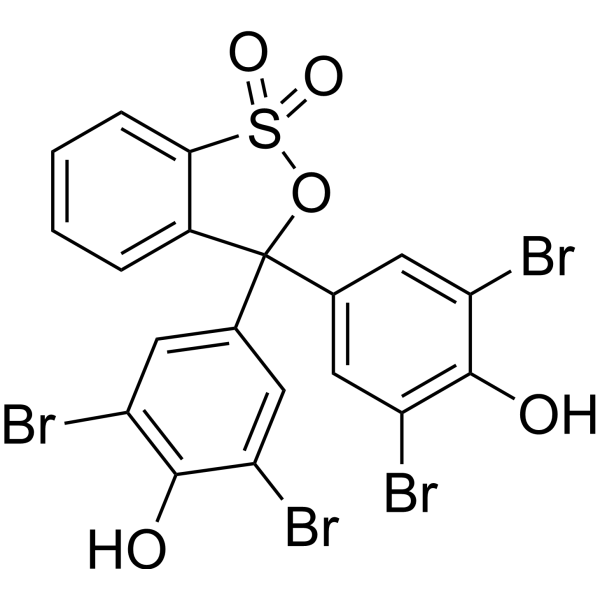
Bromophenol blue indicator (3.0-4.6) is a synthetic dye commonly used as an acid-base indicator with a transition range of pH 3.0-4.6. Bromophenol blue indicator (3.0-4.6) is water soluble and changes color from yellow to blue as the pH of the solution changes from acidic to basic. Its unique chemical properties make it an important ingredient in a variety of scientific applications, especially in biochemistry and molecular biology. In addition, it can be used as a stain in microbiology and histology. However, Bromophenol blue indicator (3.0-4.6) has potential irritating and staining properties.
loading...
    loading...
Cat. No.: HY-Y1365
CAS No.: 9000-70-8
Gelatins is a non-toxic, non carcinogenic, biodegradable, and non irritating natural polymer derived from partial hydrolysis of collagen. Due to its strong liquid absorption and swelling ability, Gelatins has excellent hemostatic properties and can be used as a matrix material for the reduction, growth, and stability of metal nanoparticles. Gelatins can also be used for tumor cell culture and tumor therapy .
loading...
    loading...
Cat. No.: HY-W145518
CAS No.: 9000-69-5
Pectin is a heteropolysaccharide, derived from the cell wall of higher plants. Pectin involves in the formation of nanoparticles as a delivery vehicle of agents. Pectin is also an adsorbent, a broad-spectrum antimicrobial agent that binds to bacteria toxins and other irritants in the intestinal mucosa, relieves irritated mucosa .
loading...
    loading...
Cat. No.: HY-141582
CAS No.: 34354-88-6
Purity:  ≥98.0%
Synonyms: N-Stearoyl phytosphingosine
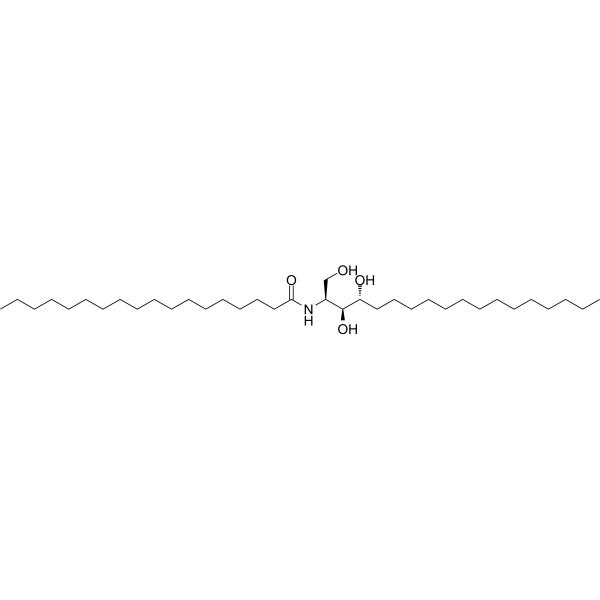
Ceramide 3 (N-Stearoyl phytosphingosine) is an orally active major component of intercellular lipids in the stratum corneum of the skin, and belongs to the ceramide family. Ceramide 3 inhibits c-jun and NF-κB activation induced by Histamine (HY-B1204), and suppresses the expression of IL-4 and TNF-α. Ceramide 3 inhibits scratching behavior and vascular permeability in mice, and exhibits antihistamine effects in guinea pig ileum. Ceramide 3 improves skin barrier function, reduces transepidermal water loss, erythema and the number of circulating epidermal cells, and accelerates barrier repair of irritated or dysfunctional skin .
loading...
    loading...
Cat. No.: HY-130313
CAS No.: 29923-31-7
Purity:  95.22%
Research Areas:  

Inflammation/Immunology

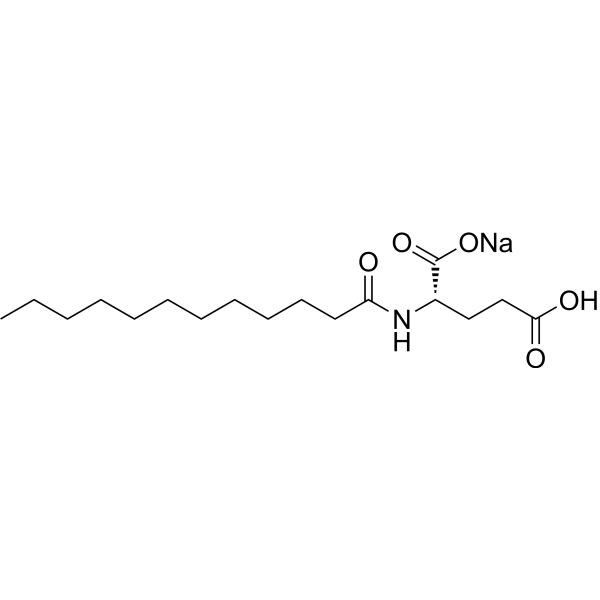
Sodium lauroyl glutamate is an anionic amino acid surfactant. Sodium lauroyl glutamate has the irritant contact dermatitis potential, and possible anti-irritating potential in a surfactant mixture on human skin .
loading...
    loading...
Cat. No.: HY-78035
CAS No.: 616-02-4
Synonyms: Methylmaleic anhydride
Citraconic anhydride (Methylmaleic anhydride) is a derivative of maleic anhydride (HY-Z0060) and novel antigen retrieval solution. Citraconic anhydride reversibly blocks protein amino groups, stabilizing specific enzymes and improving their catalytic performance. Citraconic anhydride reacts with free amino groups on proteins (especially lysine residues), converting positively charged NH3 + into carboxyl groups, thereby disrupting methylene bridge crosslinks caused by Formaldehyde during antigen retrieval. Citraconic anhydride functionalizes Isotactic polypropylene. Citraconic anhydride precisely responds to pH changes to achieve reversible modification. Citraconic anhydride is irritating to skin and eyes .
loading...
    loading...
Cat. No.: HY-W127620
CAS No.: 14933-08-5
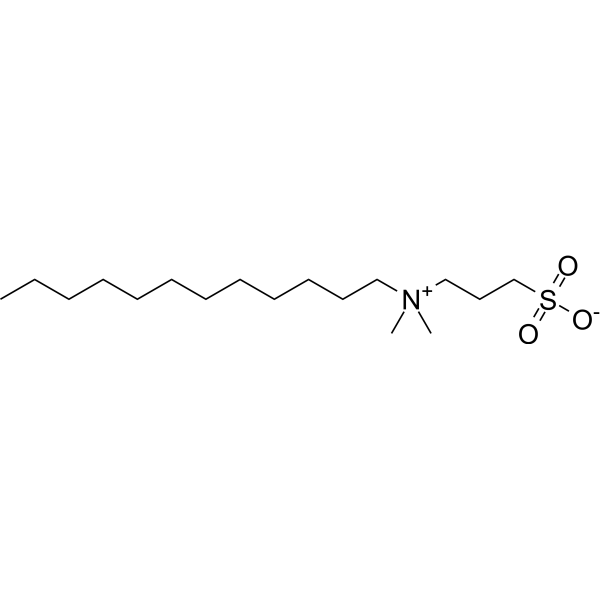
Sulfobetaine-12is a zwitterionic surfactant, which means it has both positive and negative charges in its molecules. It is used as a detergent in various industries, including pharmaceuticals, cosmetics, and personal care products. Sulfobetaine-12Often used as a mild surfactant due to its non-irritating properties and ability to stabilize emulsions. Plus, it has antistatic properties that can be used to clean electronics and other static-prone surfaces.
loading...
    loading...
Cat. No.: HY-W127621
CAS No.: 15178-76-4
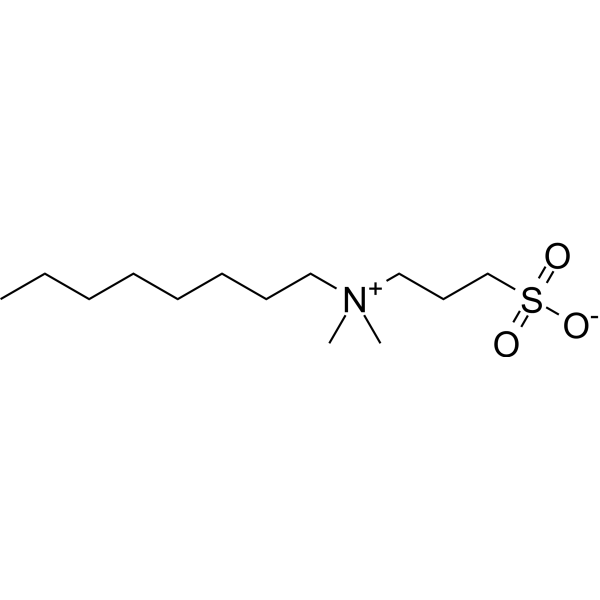
Sulfobetaine-8is a zwitterionic surfactant, which means it has both positive and negative charges in its molecules. It is used as a detergent in various industries, including pharmaceuticals, cosmetics, and personal care products. Sulfobetaine-8Often used as a mild surfactant because of its non-irritating and ability to stabilize emulsions. Plus, it has antistatic properties that can be used to clean electronics and other static-prone surfaces.
loading...
    loading...
Cat. No.: HY-174344
CAS No.: 2763372-26-3
Target:  

TRP Channel

Research Areas:  

Others

TRPV1 agonist-1 (Compound 13) is an orally active non-irritating TRPV1 agonist with EC50 values of 4.5 and 0.57 nM for human and rat. TRPV1 agonist-1 can improve swallowing function in rats. TRPV1 agonist-1 can be used in the research of dysphagia .
loading...
    loading...
Cat. No.: HY-141582S
CAS No.: 1354806-91-9
Synonyms: N-Stearoyl phytosphingosine-d3
Ceramide 3-d3 (N-Stearoyl phytosphingosine-d3) is deuterium labeled Ceramide 3. Ceramide 3 is an orally active major component of intercellular lipids in the stratum corneum of the skin, and belongs to the ceramide family. Ceramide 3 inhibits c-jun and NF-κB activation induced by Histamine (HY-B1204), and suppresses the expression of IL-4 and TNF-α. Ceramide 3 inhibits scratching behavior and vascular permeability in mice, and exhibits antihistamine effects in guinea pig ileum. Ceramide 3 improves skin barrier function, reduces transepidermal water loss, erythema and the number of circulating epidermal cells, and accelerates barrier repair of irritated or dysfunctional skin.
loading...
    loading...
Cat. No.: HY-130313R
CAS No.: 29923-31-7
Sodium lauroyl glutamate (Standard) is the analytical standard of Sodium lauroyl glutamate. This product is intended for research and analytical applications. Sodium lauroyl glutamate is an anionic amino acid surfactant. Sodium lauroyl glutamate has the irritant contact dermatitis potential, and possible anti-irritating potential in a surfactant mixture on human skin .
loading...
    loading...
Cat. No.: HY-W662724
CAS No.: 1956382-42-5
Research Areas:  

Others

3-Ethyl-2-phenylmorpholine (Phenetrazine) hydrochloride is an organic compound with irritating properties. 3-Ethyl-2-phenylmorpholine hydrochloride can be used as an or feedstock in certain catalysts for the production of specific fine chemicals, such as lubricant additives, surfactants .
loading...
    loading...
Cat. No.: HY-N18824
CAS No.: 97676-23-8
Category:  

Extract

Target:  

Bacterial

Licorice oils, derived from the roots and rhizomes of the licorice plant (Glycyrrhiza glabra), are rich in bioactive compounds like glycyrrhizin, flavonoids, and triterpenoid. Licorice oil has anti-inflammatory and antibacterial properties, which can effectively soothe irritated skin, reduce redness, control eczema, and fight acne.
loading...
    loading...
Cat. No.: HY-W700634
CAS No.: 3025668-93-0
Sulfobetaine-12-d25 is the deuterium labeled Sulfobetaine-12 (HY-W127620). Sulfobetaine-12is a zwitterionic surfactant, which means it has both positive and negative charges in its molecules. It is used as a detergent in various industries, including pharmaceuticals, cosmetics, and personal care products. Sulfobetaine-12Often used as a mild surfactant due to its non-irritating properties and ability to stabilize emulsions. Plus, it has antistatic properties that can be used to clean electronics and other static-prone surfaces.
loading...
    loading...
Cat. No.: HY-L242
494 compounds

Flavors and fragrances serve as indispensable enhancing elements in modern industries, playing multidimensional roles in the fields of food, cosmetics, and pharmaceutical development. In the food industry, flavors and fragrances are not only used to compensate for flavor loss during processing but also to create novel sensory experiences and enhance product appeal. Natural flavors such as vanilla and citrus oils impart rich, layered aromas to foods, while synthetic flavors can precisely replicate specific tastes, meeting the demands of standardized production and extending the flavor stability of food products. In the cosmetics sector, flavors and fragrances are key to emotional design. They enhance product recognition and elevate the pleasure of use through pleasant scents. In pharmaceutical development, the application of flavors and fragrances focuses on improving compliance. Especially in formulations such as oral liquids and chewable tablets, the addition of mint, fruit, and other flavoring components effectively masks the bitter or irritating taste of medications, increasing patient acceptance. Additionally, some natural flavors may themselves possess auxiliary therapeutic benefits.

MCE contains 494 kinds of flavors and fragrances, which can be used in fields such as food, cosmetics and drug development.

  • 1

